Os excertos giram em torno de dois autores contemporâneos, talvez os dois mais conhecidos hoje fora da Inglaterra em termos de literatura clássica daquele país – As Viagens de Gulliver veio ao mundo menos de quinze anos depois d’As Aventuras de Robinson Crusoe. São duas obras espantosamente similares e divergentes ao mesmo tempo. Duas narrativas, eu diria, de restless wanderers, viajantes incansáveis, espécies de maníacos tragicamente involuntários por navegar o mundo, sem propósito claro em mente…
“Assim como o novelista e ex-condenado Jeffrey Archer, a carreira de Daniel Defoe abrangeu dívidas e alta política, a profissão de escritor e o cárcere. Cronologicamente falando, a arte imitou a vida com Defoe, uma vez que ele começou a escrever maior parte de suas obras enquanto ativista. De outro ângulo, entretanto, sua vida imitou, sim, a arte, pois sua trajetória foi sensacionalista o bastante para que pudesse figurar tranquilamente como o protagonista de suas próprias novelas tumultuadas. Em diversos momentos ele se dedicou ao comércio de vestuário, vinho e tabaco, foi dono de uma fábrica de tijolos, um político vira-casaca, uma espécie de espião do submundo e dos bastidores da política, agente secreto oficial do governo, espécie de diplomata e assessor do império britânico por meio de suas publicações jornalísticas (o que na época chamavam de publicista). Não bastasse todo esse cartel, tomou parte ativa em uma rebelião armada contra Jaime II, excursionou incansavelmente pela Europa e teve um papel crucial nas históricas negociações da unificação política dos reinos da Inglaterra e da Escócia.
Defoe faliu mais de uma vez, foi preso por débitos e até exposto no pelourinho num processo de sedição após publicar um panfleto satírico. Mesmo depois dessa experiência, ele viria a publicar um Hino ao Pelourinho (Hymn to the Pillory), bem como um Hino às Massas (Hymn to the Mob), em que, escandalosamente para a época, enaltecia o povo de extrato inferior por sua extrema lucidez de julgamento. É difícil imaginar outro grande autor inglês fazendo a mesma coisa na mesma época. Entre suas obras, está também Uma História Política do Demônio (A Political History of the Devil), um estudo sobre fantasmas, motivado pela Grande Praga de Londres, um surto da peste bubônica que eclodiu em 1665 e durou até o biblicamente simbólico ano seguinte. Defoe publicou também uma apologia irrestrita da instituição do casamento intitulada Indecência Conjugal; ou da Prostituição Marital. Um tratado sobre a Utilidade e a Inconveniência da Cama de Casal (Conjugal Lewdness; or Matrimonial Whoredom. A Treatise Concerning the Use and Abuse of the Marriage Bed). De modo algum ele seria um ‘novelista’ no puro senso da palavra (o próprio termo em voga criou sua acepção muito mais tarde), muito embora ele tenha atacado os ‘Romances’ (o gênero pré-novelístico por excelência), que para ele eram estórias que não informavam, apenas entretinham (e isso era necessariamente ruim naquela Inglaterra). Suas obras mais consagradas, Moll Flanderse Robinson Crusoe, são ‘novelas’ apenas em retrospecto. Defoe só escrevia aquilo com que pensava poder lucrar, sendo uma espécie de autor oportunista altamente prolífico que ‘atirava para todos os lados’ no mercado literário em ebulição de seus dias. A imprensa da época não discriminava entre gêneros, muito menos Defoe o faria.
Escrever, para Defoe, pois, não passava de commodity, como ele próprio retrata o mundo em suas ‘novelas’, que podemos resumir como ‘uma série de coisas a que se dá um preço de alto a baixo’. Tampouco era Defoe um ‘homem literário’: ao contrário, sua escrita é apressada, não pesa as palavras, e é transparente demais. Um ‘grau zero’ do estilo como se sempre fosse um jornalista ou historiador relatando fatos que tendia a apagar as próprias pegadas, negando seu próprio status de escritor e, portanto, de criador de realidades. O próprio Defoe batizava seu estilo de ‘cáustico’ ou ‘abjeto’ (mean), pretensamente desprovido de conscienciosidade e ignorante dos próprios artifícios. Na linguagem lacônica e um tanto caseira e pré-fabricada de Defoe sentimos, quase pela primeira vez na Literatura, o idioma dos comuns. Linguagem despida de textura e densidade, que permite ao leitor atravessar as palavras e ver as coisas de frente e em si mesmas. ‘O conhecimento das coisas, não das palavras, molda o erudito’, comentou Daniel Defoe no Compleat English Gentleman.¹ Uma profusão de aventuras e incidentes tem forçosamente de compensar as narrativas de Defoe, devido à crueza de textura. A suprema fertilidade de sua técnica é de fato impressionante. Defoe quase não se preocupa com o sentir das coisas, não mais do que um merceeiro passaria o dia acariciando e apalpando seus queijos, que são apenas seu ganha-pão. Defoe é o utilitarista-padrão: mais interessado no valor de troca dos objetos, não em suas qualidades sensuais ou sensórias. Há sem dúvida sensualidade em Defoe, principalmente nas obras de protagonistas mulheres (Moll Flanders e Roxana), mas não sensualismo, voluptuosidade. O realismo defoeniano é um realismo das coisas, enquanto que o de Richardson, por exemplo, é um das pessoas e sentimentos.”
“Depois de um bom tempo exercendo seu ofício errático, pau-pra-toda-obra, escrevendo meramente para sobreviver, Defoe morreu enquanto se ocultava ou fugia de seus credores, autodeterminado, quem sabe, a acabar da mesma maneira que havia começado, ignorando outros estilos de vida. Foi um Dissidente (um imoralista) numa época em que ser Dissidente (assim, com letra maiúscula mesmo) era o mesmo que não possuir direitos civis. Como muitos de seus compatriotas novelistas, provinha da classe-média baixa econômica mas que possuía um status de pequena-burguesia, devido ao fator da formação intelectual: ilustrado, completou sua educação formal, cultivava ambições de ascensão e em seu meio os jovens eram politicamente articulados. No seu Journal of the Plague Year,ou Jornal do Ano da Peste, ele tripudia de algumas superstições do povão enquanto dá crédito irrestrito a outras. Muito parecido com William Blake em sua origem social, a rebeldia de Defoe afirmava a radical igualdade entre homens e mulheres, sustentando que o handicap feminino não passava do resultado de convenções. Desigualdades sexuais eram puramente culturais, nada naturais. O que distingue suas personagens Roxana e Moll Flanders, como outras tantas prostitutas vigaristas (seja as de luxo ou as que trabalhavam em espeluncas) e objetificadas da literatura de então, é que havia a afirmação premente, em todo o livro: elas não são propriedade de homem algum, elas não são de ninguém. No mundo de Defoe, nenhuma relação é permanente, aliás.”
“Quando Moll Flanders diz levianamente que está grata por ter se livrado de seu filho na barriga, todo leitor de época se sentia escandalizado e ao mesmo tempo representado. Roxana é a comerciante-mulher, que embora seja a própria mercadoria é a dona do negócio: recusa o casamento, mesmo com um bom nobre, pois isso seria a ruína total de sua independência financeira. Ser esposa, para Roxana, era o mesmo que ser escrava. Os puritanos da geração de Defoe prezavam tanto a felicidade doméstica quanto o individualismo econômico; o único problema era a completa incompatibilidade de ambos. Sobretudo no caso das mulheres, que em quaisquer das esferas, isoladamente consideradas, estavam de todo modo alijadas da autonomia. Isso não significa que não fosse também uma questão masculina: na prática o individualismo econômico significava uma castração, compelindo à afabilidade, afeição, lealdade e companheirismo que o pai de família devia simbolizar.
Para complementar as credenciais progressistas de Defoe, ele militava pela absoluta soberania do plebeu, cujo direito de não se curvar a uma soberania injusta era, ele pregava, inalienável. Ele defendia os quakers e já então propagava os méritos de uma sociedade etnicamente miscigenada. Estrangeiros, segundo ele, eram um precioso acréscimo para a nação. Defoe troçava das mitologias chauvinistas dos bretões em poemas como O Inglês Puro-Sangue (The True-Born Englishman), cujos versos não hesitam em caracterizar a raça britânica justamente pela sua alta mestiçagem, desdenhando a noção aristocrática de pureza de sangue e ridicularizando a própria idéia-título do ‘puro-sangue’ com suprema ironia: mera ficção e, aliás, contradição. Não é irrelevante para essa polêmica (à época) que Guilherme III, sob quem Defoe exerceu seus trabalhos panfletários, fosse um holandês.”
“‘O que significam as capacidades naturais de qualquer criança sem a educação?’, o autor questiona no Compleat English Gentleman. Apenas tories absolutamente reacionários como Henry Fielding seriam capazes de enaltecer só o lado das qualidades inatas. Defoe não se mostrava pudico em politizar a questão: por trás dessa doutrina pedagógica ‘inocente’ havia toda uma tentativa de impedir as reformas pedagógico-sociais necessárias à Inglaterra, mediante o argumento dos talentos e habilidades congênitos e inalteráveis, que sempre legitimariam só as crianças da nobreza.”
“O homem não é rico porque é honesto, mas é honesto porque é rico.
Essa é uma doutrina escandalosamente materialista avant-la-lettre, muito mais típica de um Bertolt Brecht do que de um ardoroso cristão dos Setecentos. Valores morais são o simples reflexo das condições materiais. Os ricos são apenas privilegiados o bastante para não terem de roubar. A moralidade é para aqueles que podem cultivá-la. Ideais calham muito bem a quem tem de sobra o que comer. Defoe também exigia leis que reconhecessem a condição dos miseráveis, ao invés da replicagem de um sistema que, em primeiro lugar, criou a miséria, para depois enforcar os miseráveis por serem eles o que são.”
“Se a classe média preza tanto pelo eu autônomo na teoria, como pode ser que viole tanto essa doutrina na prática? Quer ela de fato a independência de todos os seus servos, assalariados que tem tão pouco poder de barganha que são menos do que cidadãos e pouco mais que escravos, sem falar dos colonizados além-mar? Não seria preferível para o pequeno-burguês, secretamente, é claro, preferir a liberdade irrestrita para si e a negativa para todos os competidores no mercado? A pequena-burguesia acredita na autodeterminação da população; mas ao mesmo tempo seus membros, homens e mulheres, não passam de títeres de forças econômicas impessoais. Os protagonistas de Defoe – Moll, Crusoe, Roxana, Coronel Jack – estão todos enleados nessa contradição. Se eles são, num sentido, forjadores de seu próprio destino, são, inegavelmente, vítimas desafortunadas da Providência, das leis do livre comércio e de seus próprios apetites.
“No ensaio A Divindade da Troca (The Divinity of Trade), Defoe vê a Natureza como um tipo de capitalista, que – em sua infinita e inapreensível sabedoria burguesa – criou corpos capazes de flutuar sobre as águas, para que se pudessem construir navios e fomentar o comércio; criou as estrelas para nortear os navegadores; e até escavou rios no seio dos continentes que levam as embarcações direto para os recursos espoliáveis de outros países. Animais foram feitos dóceis e submissos deliberadamente para que o homem os explorasse como instrumentos e também como matéria-prima; linhas costeiras pedregosas foram criadas possibilitando a construção de fortalezas; matéria-prima conveniente foi distribuída ao longo de todo o planeta para que cada nação tivesse algo para vender e algo para comprar. Ainda que estejamos falando de um período muito aquém dos oceanos de Coca-Cola e da produção da necessidade quase que instintiva de calçar um Nike, a Natureza, para Defoe, não perdia e não perdeu nada de vista.”
“Ora, se o homem era divinizado e elevado de forma sem precedentes nessa nova ordem social, temos em contrapartida a desvantagem de que qualquer indivíduo é indiferentemente intercambiável. Parceiros comerciais, sexuais ou maritais em Defoe vêm e vão, às vezes com tanta individualidade quanto numa coletividade de coelhos. Mas o maior conflito se dá entre as práticas amorais de uma cultura plutocêntrica e autocentrada em excesso e os altos ideais morais que essa própria cultura insiste em pregar.”
“O escritor John Dunton, também do séc. XVIII, que teve ligeiro contato com Defoe, geria um jornal mensal devotado à prostituição, ou antes a denegrir a prática da prostituição ao invés de servir como Classificados do corpo humano alheio, o Night Walker: or, Evening Rambles in Search after Lewd Women (O Caminhante Noturno [/o Homem da Noite]: ou Aventuras do Entardecer em Busca de Mulheres Lascivas). Mesmo sendo vanguardista para a época, impossível que fosse um jornal politicamente correto para nossa concepção. A novela naturalista do século XIX procedia a expedientes parecidos, num meio-termo entre a objetificação degradante e gratuita da mulher da noite e a exposição de uma espécie de mal burguês: essas escapadelas maritais tinham um odor sensual e fatalista, havia um certo prazer mórbido no retrato de becos sujos e miseráveis em que todo moralista jogava a moral fora, e a mulher podia ser vista como a vítima de uma (des)ordem social; o século XIX foi cada vez mais inquirindo sobre esta questão de forma científica, menos sensacionalista, mas Defoe não chegou a testemunhar essa evolução.”
“A família, para um puritano devoto como Defoe, é um domínio sagrado, como sugere seu panfleto de costumes O Instrutor da Família (The Family Instructor). Ao mesmo tempo, ele advoga, sem constrangimento, que tais laços podem e devem ser cortados quando se tornam mais maus do que bons: quando forem sinônimo de uma degradação do casamento, quando forem sinônimo do aviltamento das relações sangüíneas, acaba sendo a conduta mais autêntica e virtuosa o corte destes laços, ignorados ou tratados como meros meios para outros fins.”
“Em Crusoe, é como se o colonialista frio e moderado desse o tom do enredo. Ele (o narrador em primeira pessoa) também é aquele que dá o matiz exótico ao objeto (cenário) em questão, isto é, sua colônia involuntária no meio dos trópicos. Essas narrativas sem adornos e sem culpa de consciência não chegam a destruir os vasos capilares do decoro ideológico da Inglaterra pós-elizabetana, mas são um primeiro desnudamento de sua lógica imperialista. Não são narrativas de uma veia polêmica, ainda, são mais cândidas que outra coisa. Não há sentimentalismo, porque sentimentos não podem ser quantificados, e nesta literatura em que só o que é quantificável é real eles ainda não aparecem. Nesta atmosfera intermediária de amoralismo, o relato é fidedignamente subversivo ou subversivamente fidedigno espelhando a existência social daquelas décadas; as relações são o que são, não o que deveram ser. Não obstante, a pura e simples descrição do fato e da matéria bruta não deixa de ser explosivo em si mesmo, ou conducente à explosão da dinamite próxima. O realismo se torna de grau em grau Política.”
“Moll Flanders termina sua história contando como prosperou e chegou ao sucesso após uma vida de crimes, mas acrescentando, com alguma urgência, em tom de confissão compungida, que ela se arrepende sinceramente de todo seu passado. A moral da história – o crime não compensa – é explicitamente contradita pelo final efetivo. O contraste é tão desconcertante que alguns críticos passaram seu tempo imaginando se Defoe foi ou não abertamente sarcástico. Quando o náufrago Crusoe considera a inutilidade de todo o ouro que conseguira trazer do navio até a ilha, mas, no fim, decide levá-lo consigo assim mesmo – isso é uma tirada irônica do autor ou humor involuntário? Quando Crusoe, testemunhando Sexta-Feira que escapa de seus ex-irmãos canibais para não ser comido, reflete acerca da utilidade de levar consigo um servo, sendo este acréscimo a seu ‘patrimônio’ coincidente com um suposto chamado da Providência para salvar um desgraçado, seria essa harmonia entre interesse capitalista e revelação divina um artifício do autor para produzir o riso do leitor? Defoe está ou não depreciando sua heroína Roxana quando ela declara que deve manter seu próprio dinheiro separado do de seu amo e marido, para não misturar seus ganhos ilícitos com o suado e honesto capital do cônjuge?”
“Porque se essa for a opinião fática do Defoe o Realista literário e Materialista radical, dificilmente seria também o credo de sua metade dissidente e religiosa. Defoe o Cristão estabelece a moral e a religião como realidades autossuficientes e inquestionáveis. Mas autossuficientes e inquestionáveis até que ponto, cara pálida? Se esses valores transcendentais existem numa esfera própria, eles pouco impactam na conduta efetiva dos personagens. Moll sente pena de uma de suas vítimas mesmo durante o ato de roubá-la, mas sua tristeza nada impede na concretização do ato. Como o Coronel Jack, que pode muito bem ser um perfeito larápio e viver com a consciência remoída. No século XVIII, piedade e nariz empinado não eram estranhos um ao outro. E não se distinguiam muito bem. Ou a moral falha porque está muito mesclada com o mundo material, ou falha porque está, justamente, dele apartada. Defoe reconhece esta última condição quando escreve: ‘Lágrimas e orações não fazem revoluções / Não derrubam tiranos, não quebram grilhões’.”
“A moralidade em Defoe é geralmente retrospectiva. Uma vez que você tenha pilhado, pode finalmente ser penitente. Como demonstra o narrador de si próprio em Crusoe, é só ao escrever seus atos que você pode julgar sua vida como um todo. Enquanto tenta entender a própria vida ao vivo, você anda ocupado demais mantendo o nariz acima do nível d’água para levar a termo qualquer reflexão, quanto mais sentir remorso. Só há dois desfechos: continuar ou se afogar. Correr e ainda assim não ganhar nenhum terreno, continuar na condição em que já estava; ou simplesmente perecer. Não é fácil se embrenhar em considerações metafísicas enquanto a necessidade imediata é fugir dos credores ou lidar com seu atual marido. A narrativa sempre ziguezagueia num passo tão frenético que um evento vai borrando o outro num contínuo. Nenhum da horda de personagens da novela Moll Flanders chega a ter um intercurso mais que casual com a heroína – a interação típica entre cosmopolitas, mas impensável na comunidade rural dos livros de uma Jane Austen ou George Eliot. As figuras que interagem com Moll entram e saem de sua vida e das páginas de sua vida como meros transeuntes cruzam pela Piccadilly. A pergunta mais premente na cabeça do leitor que atravessa este processo metonímico virtualmente infindável é: o que vem a seguir? Sentido e relato não são concordes.
Assim como um parvo, diz-se, é incapaz de mascar chiclete e caminhar ao mesmo tempo, os personagens de Defoe só podem agir ou refletir, mas nunca os dois juntos. A ação moralmente informada é rara; a reflexão moral só vem bem depois. É essa a razão da coexistência de dois formatos literários consideravelmente diferentes sob a capa do Robinson Crusoe: a história aventuresca e a autobiografia espiritual. De todos os personagens de Daniel Defoe, Crusoe é o mais feliz na combinação dessa ação racional com a reflexão moral. Mas isso se dá, em parte, por causa das circunstâncias excepcionais: Crusoe está sozinho numa ilha, tem algum trabalho a executar, mas também muito tempo ocioso para meditar.”
“Como a vida é terrivelmente material mas também uma sucessão ininterrupta e agitada de eventos, cada ato parece simultaneamente vívido e sem substância. Essas novelas são tornadas artigos fascinantes pelo processo de criação em si mesmo, pelo valor de troca, e não pelo valor de uso (intenção final). Não há uma lógica conclusiva para a narrativa de Defoe, é uma narrativa pura e simples. Não há um momento do livro em que o fechamento seria mais natural que em qualquer outro fecho de capítulo. O eu-lírico apenas prossegue acumulando narrativa(s), como um capitalista jamais cessa de acumular capital. Um pedaço de enredo, como um investimento particular, acaba levando ao próximo. Crusoe mal volta à terra natal e já está em alto-mar de novo, ainda acumulando aventuras, que serão obviamente narradas e contarão com o desejo do eu-lírico de formular um propósito. A sede de narrativa é insaciável. A acumulação de capital parece ter um propósito, mas é pura aparência. Secretamente, pelo menos no mercantilismo defoeniano, subjaz a verdade de que o único fim da acumulação é a própria acumulação. Uma novela de Defoe não tem o epílogo de facto, como têm as novelas de Fielding. Todos os finais são arbitrários, e todos poderiam ser apenas novos começos, se se quisesse.¹ O viajante inquieto só repousa a fim de se preparar para a próxima viagem…”
“E devido a essa narratividade pura poucos eventos em Defoe são fruídos com densidade o bastante para deixar uma impressão permanente ou recordação intacta. Personagens como Moll ou Roxana vivem premidas pelo pão de cada dia, contando apenas consigo próprias, flutuando conforme a maré, dançando conforme a dança, apostando tudo ou nada a cada momento. Em perfeita adaptação com o mundo altamente mutante que encontram, esses sujeitos sincopam seu ritmo. Ou seja: não há um núcleo central da personalidade, tampouco, porque memórias e aprendizados estarão sempre se acumulando sem uma síntese definitiva. A identidade é uma improvisação, um cálculo, uma estratégia de passagem. Trata-se de uma cadeia de reações possíveis para cada ação promovida pelo ambiente. Os impulsos humanos – avareza, egoísmo, autopreservação – são fixos e imutáveis, é verdade, mas para sempre alcançá-los cada personagem é obrigado a ser flexível a ponto de se converter em metamorfo. A perspicácia e cautela necessárias para lidar com o tema da epidemia no Jornal do Ano da Peste seriam versões escandalosas e exageradas das próprias exigências do cotidiano para o leitor-padrão.”
“O Coronel Jack se casa quatro vezes, a despeito de poder passar tranqüilamente sem mulheres, e rompe com uma delas porque ela dilapida sua fortuna. Na veia mais hobbesiana e pragmática possível, o interesse burguês é muito mais fundamental que a o altruísmo iluminista. Só mesmo caçar para comer seria mais premente que caçar para lucrar.”
“O eu-narrador deslinda a trama com ar imperturbável que sugere um presente consideravelmente distanciado do passado em que o eu-narrado aparece (anos de intervalo, com toda a certeza). Este último não se pode dar ao luxo dessa parcimônia glacial do primeiro. Há uma tensão constante entre as duas dimensões temporais.”
“Embora ‘Deus não esteja morto’, pareceria, a essa altura, para o bom Protestante, que Ele se recolheu deste mundo. Essa é uma das razões para as especulações de Defoe sobre a Providência ecoarem com um quê de vacilação. Ora, lembra o autor em The True-Born Englishman: ‘O que vem da Providência, consiste no interesse de todo o universo.’. Se tomarmos a frase ao pé-da-letra, estariam justificados o estupro, o assassinato, o canibalismo. Cada um desses pecados teria seu papel na manutenção da harmonia do cosmo. Defoe declama piamente no prefácio do Crusoe como devemos honrar a sabedoria da Providência e suas obras, ‘sucedam como sucedam’; mas o protagonista, muito longe de se resignar ao destino, é hiperativo e incansável na tentativa de forjar seus próprios porquês.”
“De nossa perspectiva, se Crusoe devera ser punido, não seria por ter vivido a primeira metade da vida como um pagão, mas sim por vender Xury, seu servo, à escravidão brutal e por gerir uma plantation no Brasil movida a mais trabalho escravo. Na verdade, quando naufraga, ele estava justamente prestes a comprar mais mão-de-obra escrava numa expedição clandestina para abastecer seu engenho. Mas nem o personagem nem o autor conseguiriam ver tais ações como pecaminosas, ainda que Crusoe se indigne com as condições do imperialismo espanhol nas Américas. Como com o narrador de O Coração das Trevas de Joseph Conrad, o ‘imperialismo dos outros’ é sempre mais repreensível que o nosso. O Coronel Jack defende o castigo físico dos escravos, e não há qualquer indicativo de que Defoe pensasse diferente. A liberdade era para os ingleses, não para os africanos! Como zeloso puritano, Defoe decerto cria que os ‘selvagens’ estavam condenados irremediavelmente à bestialidade nesta terra, e ao tormento eterno no além. Seu radicalismo (progressismo de vanguarda na política) tinha seus claros limites.”
“A Natureza não é mais um livro aberto, mas um texto obscuro a ser decifrado com imensa dificuldade. O Protestante tateia avidamente no escuro atrás de qualquer signo ambíguo de sua própria salvação. Mas o fato é que, num universo secularizado, tudo está entregue à própria contingência, isto é, nada no mundo visível quer dizer alguma coisa nem dá qualquer pista de nada.”
“Signos, nesse mundo dessacralizado, como também numa profusão de textos modernistas (dali a duzentos anos), são a priori e incontornavelmente ambíguos. Essa é a razão por que o crente nunca pode parar de trabalhar, porque se não se tem certeza da salvação agora, cada dia seu de labuta pode ser o fiel na balança para a absolvição no dia do Juízo. Ilhas tropicais, é bom lembrar, estão geralmente associadas à indolência, mas não no caso de Crusoe. Ele está sempre ocupado em melhorar e estender sua ‘propriedade paradisíaca’. ‘Eu realmente gostaria de um estábulo maior.’ Tanto é assim que o próprio Crusoe responde a si mesmo, vendo o quão ilógica é essa vontade: ‘Para quê?’. Crusoe não é um capitalista de verdade – é só um de mentirinha, sem mão-de-obra como Outro, sem mercado, consumidor, produto nem competidores ou divisão de trabalho. Mas, ainda que não tenha concorrentes, ele agecomo se os tivesse…”
“A ilha de Crusoe é menos a utopia da pequena-burguesia numa dimensão paralela do que uma versão piorada ou distópica da situação pequeno-burguesa inglesa. Ou, antes, o que uma classe sofre no mundo, Crusoe sofre na sua ilha. Sua solidão é uma versão exponencial da solidão de todos os indivíduos da cidade moderna. Sendo absolutamente dependente num sentido, é verdade que é possível ser absolutamente autodeterminado num outro. Quão enérgico e engenhoso pode-se chegar a ser na administração de seu próprio império seria um índice de sua inclusão entre a minoria eleita. Assim poder-se-ia resolver o conflito aparente entre ser o joguete de Deus e, pelo próprio suor, pregar, no melhor estilo puritano, que o sucesso no trabalho é o melhor sinal que o mundo poderá dar de que você achou favor aos olhos da divindade.”
UM PROBLEMA ISENTO DE QUAISQUER “MEMÓRIAS PÓSTUMAS”: “A narrativa está sempre precariamente ancorada no presente que é um fio de navalha, em que a sorte do personagem é indefinida e o futuro absolutamente duvidoso; mas tudo isso é contado com um tal desassossego e afastamento, fechando um passado, que empresta certa autoridade. Supomos então que o narrador sobreviveu, nem que apenas pelo fato de estar agora, com a maior das calmas, falando de si mesmo na época em que corria perigo. Ansiedade e segurança se acoplam perfeitamente na escrita.”
“E assim Defoe continua a insistir que sua estória existe com um fundo moral, embora isso seja obviamente uma farsa. O realismo, no sentido de uma atenção dedicada ao mundo material por si e nele mesmo, não está ainda avalizado neste período literário, embora se encontre em visível ascensão; embora a sociedade em que ele cresce e ascende demande-o cada vez mais, e encoraje-o mais que à moralidade, pois as pessoas passam a acreditar somente no que podem cheirar, tocar, provar. Samuel Johnson argumentava que o fato de um personagem ou evento ser fidedigno à natureza não servia de desculpa para incluí-lo num enredo ou obra de arte. Na teoria, essa colisão entre o moral e o real pode ser resolvida por justificações do autor, no estilo tabloide. Quão mais gráfica e escandalosa uma estória, mais fácil transmitir uma mensagem, poder-se-ia astuciosamente argumentar. Defoe escreve no prefácio para Roxana: ‘Se há qualquer parte da história, no relato de uma má ação, que pareça descrever as coisas de forma muito direta e impudica, todo o cuidado imaginável foi tomado para purificar o trabalho de todas as indecências e indecorosidades…’. Essas linhas, ao que parece, produziam, já naquele tempo, o mesmo efeito que hoje os avisos solenes, prévios a um audiovisual, acerca da presença de sexo e violência nos minutos que seguem: são só um chamariz a mais para a audiência (‘o que é proibido é melhor’), engenhosamente acrescentado pelo autor, sem transgredir nenhuma regra.
“A novela realista se torna popular num marco da história em que o cotidiano banal começa a se tornar atrativo por si mesmo. Essa mescla do ordinário e exótico é a síntese do trabalho de Defoe. Parte do prazer extraído da leitura emana da excitação que deriva do puramente mundano. Defoe viveu em tempos turbulentos, e ninguém pode dizer que ele não viveu esses tempos intensa e perigosamente. Em épocas revolucionárias, a teatralidade adquire maior importância, mesmo fora da arte. Como a nova arte imita a vida, o teatral tem de despontar também na arte. Por último: Defoe também sabia o que era sofrer uma bancarrota, ser trancafiado nas galés e embarcar em expedições insólitas das quais não se sabia se se ia voltar.”
“James Joyce, que, para nossa surpresa, enumera Defoe entre seus autores prediletos, escreveu do Crusoe que ele encarna ‘todo o espírito anglo-saxão … a independência masculina; a crueldade inconsciente; a persistência; a inteligência devagar mas eficaz; a apatia sexual; a religiosidade prática e metódica; a taciturnidade calculada’. Poderíamos dizer que essa é exatamente a visão que Sexta-Feira tem de Crusoe: Joyce é um súdito colonial da coroa britânica, e com certeza, quando alistado para a guerra, combateu muitos soldados com este perfil, em Dublin. Um ou dois assim são vistos no Ulisses. A passagem acima, que Joyce redigiu enquanto no exílio italiano, tem ainda algo do genial vislumbre do caráter imperial, que era meio-compatível com Joyce (colonizado, mas ao mesmo tempo da elite, ou seja, colonizador pela ótica dos subalternos, das massas irlandesas): outro materialista, o irlandês devia apreciar a fisicalidade intensa de Defoe. Uma vez o dublinense se descreveu como tendo a mente de um verdureiro. Defoe, por sua vez, destila em sua obra o autêntico espírito de uma nação de sapateiros.”
“Quem é ele, ele se pergunta no mesmo estilo hipocondríaco do devoto liberal ou do pós-modernista, para interferir com a prática do canibalismo num povo primitivo? Mas o fato de maior parte da novela tratar justamente do know-how do homem civilizado e prático empresta lentes peculiares à tese do universalismo. A racionalidade ortodoxa, no sentido de ensinar quando o importante é se preservar, como não cair de um precipício, por exemplo, é mais plausível como universalidade de todos os povos do que qualquer outro tipo de raciocínio utilitário. É por isso que Sexta-Feira pode ajudar Crusoe nos trabalhos braçais muito antes de poder falar Inglês, porque a lógica do mundo material é comum a todas as culturas. Pedras caem em ambas (a ocidental e a autótocne) porque obedecem à gravidade, seja no Haiti ou em Huddersfield; quatro mãos aplicadas sempre trabalham melhor que duas para carregar objetos pesados; alguém pode jogar-lhe uma corda para evitar que você se afogue ainda que no sistema cultural de quem jogou a corda a água simbolize algo totalmente diferente do que você aprendeu em seus dogmas e valores. A racionalidade prática é, nesse aspecto, o epítome do Anglicismo: se o gentleman chegar de fato aos céus, está na cara que examinarão o lugar com bastante escrutínio, para tirarem o melhor proveito do que ele terá a oferecer. Mas eis um tipo de comportamento, senão onipresente, pelo menos atemporal.”
“Não é escassa a literatura da tradição do comerciante-criminoso e vice-versa, dos vigaristas de John Gay em A Ópera do Vagabundo ao Vautrin de Balzac e o Mr. Merdle de Dickens. Como Bertolt Brecht disse: ‘O que é roubar um banco comparado com abrir um?’. A cozinha dos ladrões é a companhia de comércio sem a ideologia da respeitabilidade. O Coronel Jack começa como um ladrão de meia-tigela e termina como um bem-sucedido capitalista na Virgínia, sem nenhum talento a mais do que quando começara sua ‘carreira’. O mestre do crime de Fielding, Jonathan Wild, é um retrato satírico do político Robert Walpole, que funde em sua figura o mundo da alta política e da contravenção chic ou do colarinho branco. A idéia de ir parar numa terra virgem e construir do zero uma civilização deve constituir uma das fantasias mais intensas para a classe média. Sem dúvida isso ajuda a justificar a permanência de Crusoe como clássico sem o menor sinal de que vá ceder o posto tão cedo.”
“Ao desafiar a influência do gentil-homem e da nobreza, era necessário, para lograr êxito, desacreditar o poder da antiguidade no processo. Defoe é sardônico sobre a obsessão aristocrática com a pureza de sangue e o matrimônio: Por que – ele pergunta no Compleat English Gentleman – os nobres permitem de boa vontade que amas-de-leite plebéias amamentem seus filhos, já que, ironicamente, elas lhes estão repassando, conforme a própria teoria eugênica dos sangue-azul, um sangue degenerado? N’O Inglês Puro-Sangue ele admite explicitamente a irrelevância do tópico da ancestralidade. Destarte, é uma fantasia muito benquista pelo homem branco imaginar-se num território virgem, poder desfazer toda a história até suas origens, recomeçando-a melhor, já com a ‘classe média’ no poder.”
O MESMO EFEITO DA ESTÁTUA DA LIBERDADE NO PRIMEIRO LONGA DE PLANETA DOS MACACOS: “O que nos deixa derrotados em Robinson Crusoe, e um dos momentos mais insólitos da literatura universal, é aquela misteriosa única pegada encontrada na areia.”
“Ainda assim, Robinson Crusoe segue muitos anos sem preocupações em sua ilha; O Gulliver, de Jonathan Swift, não tem a mesma sorte.”
“Como Defoe, Swift escreve numa prosa prática, transparente, célere, com o perdão do trocadilho,¹ sem muita textura ou ressonância. Seu texto não possui, como um crítico bem apontou, recessos ou raízes e ramificações mil. Há uma alarmante ausência de metáforas. É um estilo da superfície, sem muita profundeza nem interioridade.² Swift desconfia de toda reflexividade textual como de toda metafísica ou especulação abstrusa. Essa indiferença à verdade filosófica nos conta algo sobre o clero do século XVIII, do qual Swift fazia parte. É quase como um ladrão de banco ser indiferente ao dinheiro. Um aristocrata tory da época de Swift era necessariamente um amador, não um especialista: acreditava num certo número necessário de princípios básicos que o século do Iluminismo vinha tornar acessíveis a todos. Swift não poderia entender, ainda que sobrevivesse a sua época, a era da prosa de gêneros especializada. As Viagens de Gulliver não são, no sentido hodierno da palavra, uma obra ‘literária’, e não teriam saído do papel se o autor pensasse em escrever uma novela. A linguagem de Swift, como a de Defoe, tenta apagar a si mesma desdobrando o real no real, e na época não havia palavra para batizar esse zero fictício. As palavras perdem o valor e privilegiam os objetos, que ocupam o centro do palco.A própria linguagem ideal que o autor imaginou – uma língua que abole a língua – é a transparência do modelo. Isso acontece entre os laputianos gramáticos que, ao invés de conversar entre si usando as cordas vocais e convenções aceitas unicamente pelo seu povo, carregam para um e outro lado uma sacola com diversos objetos que eventualmente precisem comunicar, e vão-nos mostrando ao interlocutor, desempenhando uma caricata ‘linguagem de Babel’. A verdade é que a linguagem humana é este saco, mas sem fundo e diáfano, uma forma de levar o mundo conosco sem carregar peso algum (ainda que com a inconveniência de cada povo ter a sua língua). Os Houyhnhnms evitam elaborações verbais e mantêm uma perfeita correspondência entre palavra e coisa – a tal ponto, aliás, que são incapazes de mentir. Perfeitos como são em sua representação do mundo, se houvera dentre eles um escritor, seria este capaz de produzir uma bela novela realista!”
¹ Swift em inglês é ágil, veloz.
² Sublinhei em verde porque não posso estar minimamente de acordo com Eagleton neste trecho!
“As Viagens de Gulliver, muito ao contrário do Crusoe, é um libelo do ‘anti-progressismo’ em que um protagonista amnesíaco parece não aprender nada ou aprender muito pouco em cada uma de suas jornadas; assim que ele parte para uma nova aventura, volta a aparentar ser uma tabula rasa. De fato as viagens de Gulliver são mais entrecortadas que as de Crusoe. Estas, mesmo que possam ser segmentadas pelo autor em capítulos e tomos, parecem bem-costuradas narrativamente. Gulliver vive literalmente episódios desconexos um do outro. Não em vão fala-se d’As Viagens como a suprema paródia do livro de viagem, gênero literário¹ usualmente otimista e cheio de ‘lições e aprendizados’.”
¹ O leitor de minha tradução deve ter percebido que em seu afã descritivo o crítico costuma se contradizer bastante. Aqui, vemos que na verdade o europeu do século XVIII contemporâneo de Defoe e Swift já reconhecia, senão o realismo ou o romantismo, pelo menos certos gêneros literários…
“O tory Swift, ao contrário do whiggiano Defoe,¹ nada quer ter a ver com indivíduos. Sua única descrição é a de uma verdade universal, enquanto Gulliver e os personagens secundários servem apenas como meios para ilustrá-la. Gulliver não passa de um dispositivo narrativo bem conveniente, não é um ‘personagem’ propriamente dito, não é possível se identificar resolutamente com ele. Crusoe é bem diferente e vai crescendo em nossa concepção conforme avançam as páginas. Gulliver apenas ‘pede’ que observemos e julguemos os lugares que ele visitou.”
¹ Ver tabelas no final.
“Os lilliputianos são cruéis, gananciosos e sectários, como se fossem réplicas em miniatura dos políticos de Westminster. Esse retrato da raça humana como corrupta e imutável é típica do conservantismo anglicano swiftiano. Ele desdenha a possibilidade de qualquer progresso dramático e mudança revolucionária para melhor no campo social, e logo se vê que a tal verdade universal que ele tenta mostrar é uma só: já conhecíamos essa verdade antes de viajarmos. Deus nos deu tudo de que precisávamos logo de partida, e velejar a esmo tropeçando em criaturinhas de uma polegada ou esbarrando no tornozelo de gigantes pouco importa nesse quadro. Talvez todos os indivíduos exóticos que encontramos não passem de distrações válidas unicamente para o momento.”
“Mas só sabemos que os lilliputianos são diferentes de nós porque conservamos com eles a identidade do conceito de tamanho. Chamamos tarântulas de tarântulas e não de humanos porque usamos a linguagem, pela qual descrevemos e nomeamos as tarântulas, e elas não. Se as tarântulas fossem tão alienígenas assim à espécie humana, não seria esse o caso. Não se pode falar da diferença sem a comparação e o diagnóstico de algo igual. Os únicos diferentes reais de nós são aqueles que passam invisíveis, de cócoras, bem diante do nosso nariz, e que jamais percebemos.”
“A escrita de uma viagem é, mais do que antes, como se vê, um gênero muito duvidoso para um tory se engajar naquele tempo. De um livro como esse esperam-se sobretudo novidades, que são indesejáveis para os conservadores. Defoe escreveu cedo na vida um Ensaio sobre Projetos (Essay on Projects),que era o perfeito contraponto dessa ânsia de imobilismo do tory: exibia grande entusiasmo quanto às reformas técnico-científicas. Crusoe rejeita implicitamente, ao querer sair de casa, os valores benquistos pela aristocracia (o lar, a coroa, a nação). Toda essa sede mercantilista de Crusoe não parece mais do que a pornografia do progresso para muitas mentes mais estreitas ou mais clássicas. Fantasiar com monstros desconhecidos é indecoroso; tudo que não é verossímil só pode nublar nosso julgamento. Crusoe encoraja caprichos tolos e emoções extravagantes que são péssimos para a lei e a ordem. Fora que, quanto mais viaja, mais Crusoe se sente um relativista cultural, algo igualmente insidioso para um tory. Pode ser perigoso para o viajante chegar a se tornar tão sonhador e apegado a coisas estrangeiras, a ponto de bradar, por exemplo, que se deparou com selvagens que, eles sim, são felizes e vivem em harmonia com a natureza. Isso seria negar o pecado original e inspirar nas gentes utopias cândidas e pueris, coisa contra a qual se deve lutar. Além do mais, de que vale, se o aventureiro acabaria sempre voltando ao solo inglês, muito longe dessas tais utopias inúteis? As alusões anti-monárquicas e anti-establishment de tais peregrinações pareceram, em todos os tempos, muito grosseiras aos tories.
“Muito do debate em curso no século XVIII girava em torno de um consenso político que pudesse superar as terríveis dissensões do século anterior, mais animoso, de guerras civis e de queda e restauração da monarquia. Swift se referiu em vida a Defoe com toda a prepotência de um patrício: ‘Aquele sujeito que foi exibido no pelourinho – esqueci o nome dele…’. Mas não podemos deixar de observar em Swift o mesmo entusiasmo pelo comércio que em Defoe. Swift é irlandês e a Irlanda estava sempre em posição mais combalida que a metrópole. Além disso, Swift também não dava crédito à teoria da pureza da raça, e gostava de se ver como um burguês em que tudo de seus antepassados já se diluíra há muito tempo, a ponto de torná-lo irreconhecível para estes. Swift foi um tory, mas um tory radical, um exemplar do animal oximorônico que muito enriqueceu a cultura inglesa se formos considerar outros escritores tories e radicais ao mesmo tempo, como William Cobbett e John Ruskin.
“Defoe era ‘progressista’ e rebelde, mas chegava a delírios de esnobeza episódicos tão altaneiros que chegou a alterar seu nome de Daniel Foe para Daniel De Foe, e que hoje escrevemos Defoe. A conjunção ‘de’ implica origem nobre. Swift e autores como Pope viam a sociedade britânica como desprovida desde os primórdios de mérito congênito, uma raça venal que além de tudo foi muito corrompida pelo poder e pelo dinheiro com o passar do tempo, atributos que eles viam encarnados pelo odioso primeiro-ministro whig Robert Walpole (já comentado). Mas Defoe não deixava, idem, de criticar a obsessão cega e sem qualquer pano de fundo pelo dinheiro.
Poderíamos ver os mesmos entrelaçamentos complementares e/ou contraditórios em pares como Henry Fielding e Samuel Richardson. Richardson era filho de um carpinteiro de Derbyshire, não completou a escola básica e se tornou impressor, enquanto Fielding era um egresso do colégio de Eton repleto de conexões com figurões. Richardson tinha estilo agressivo, era um campeão das classes médias, e afirmava que o ofício do comércio ‘é infinitamente de mais conseqüência, e devia ser muito mais estimulado que qualquer outra posição ou ranking social, sobretudo as dos títulos inócuos típicas da Inglaterra’. E não obstante Richardson se punha estupefato diante da quantidade de personalidades decrépitas e mesquinhas das novelas de Fielding: chegou a afirmar que se não soubesse quem Fielding era, pensaria se tratar de um cavalariço. Fielding rebatia. Disse uma vez que Pamela de Richardson encorajava jovens aristocratas a se casarem com as camareiras de suas mamães, e que não conseguiria por nada pôr-se no lugar dos nobres de suas novelas. Com efeito, em vez de casar-se com a empregada de sua mãe, Henry Fielding casou-se, no segundo matrimônio, com a empregada de sua primeira esposa!” HA-HA-HA-HA!
“O nome Gulliver está muito bem-dado, por sinal.¹ Sua credulidade é o mais das vezes seu ponto fraco. Ele de alguma forma se sente pateticamente (afetivamente) ligado a pessoas que conhece em suas viagens um tanto rápido demais, sem muito senso crítico. Em Lilliput, vangloria-se de seu título de Nardac, espécie de análogo a cavaleiro da rainha, lança-se como líder militar, envolve-se em intrigas as mais pavonescas, tendo de enfrentar um processo para provar que não cometeu fornicação com uma lilliputiana. A impossibilidade física do ato sexual entre seu corpo descomunal perto de um lilliputiano não parece ter passado ora alguma pela cabeça do réu que tentava, afobado, se defender. (…) De herói a vilão da pátria, Gulliver parece ser sempre o mesmo, tanto num pólo como noutro, levado unicamente pelas circunstâncias e vilezas dos outros personagens.”
¹ “Gullible” é bobo, ingênuo.
“E a despeito do inconveniente de ser um inglês e de explorar terras tão remotas, ele é um ótimo aluno de idiomas, aprendendo rápido a falar como os nativos em suas jornadas, apesar de que isso soa mais como recurso estilístico para justificar a comunicação de Gulliver nessas praças do que uma característica que Swift gostaria de ter dado sem mais a seu protagonista. Se essa parte da personalidade de Gulliver se mostra tão expedita para se adaptar aos costumes forasteiros, sua outra metade é a de um inglês chauvinista cabeça oca, complacente e cego quanto aos defeitos dos seus conterrâneos. Seu relato visivelmente galante da história do reino britânico ao rei Brobdingnag logo produz um efeito contrário ao esperado, horrorizando-o, a ponto deste rei considerar que, se Gulliver fala mesmo a verdade, todos os bretões não passam de uns vermes.”
“Ou ele é um imperialista ou um relativista cultural, sem meio-termo. A questão é que a novela serve para demonstrar a secreta afinidade entre os dois extremos. Não há tanta diferença entre defender acriticamente a Coroa inglesa ou o poder soberano de Lilliput. Se devêramos simpatizar com outras culturas, se isso fosse um imperativo, então por que não simpatizar com a própria civilização? Se devemos desculpar os canibais, por que não as grandes multinacionais que poluem a atmosfera? Se todas as culturas estão em ordem e seguem na supracitada ‘harmonia cósmica’, então na realidade não há nada o quê escolher, e nenhum indício de que os brobdingnaguianos seriam superiores, em qualquer sentido, aos ingleses.”
“Swift com certeza conhecia o que era preconceito: difamador dos bons, satirista vituperador altamente imaginativo e polemista de vocação, capaz de ignorar a verdade só para terminar com a razão, acabava inadvertidamente por levantar a bandeira da intolerância política e religiosa. Se a sátira de Fielding é genial, a de Swift é tão brusca e amalucada em contraste que parece até semipatológica. Ele era misógino, autoritário, troçador da canalha, e acima de tudo um representante da Irlanda de seu tempo, isto é, a colônia inglesa que era quase um pária e que, caso houvesse uma corrida entre todos os povos colonizados pela Inglaterra decerto não chegaria em primeiro lugar, no juízo inglês. Eis aqui, outra vez, o incômodo e involuntário papel ambíguo de diplomata e capataz, exercido, como vimos, por James Joyce.”
“Enfim, o que As Viagens parece querer ensinar? Que você deveria apreciar todas as culturas humanas em sua parcialidade, sem ser um Gulliver, mas também sem recair no niilismo. Homens e mulheres precisam cultivar ideais, como as virtudes plácidas e racionais dos Houyhnhnms, caso queiram ser mais do que reles materialistas. O problema é deixar que esses ideais exerçam um papel predatório na própria consciência. Isso seria ser tão ao revés de um materialista que representaria a negação do próprio corpo, tão ruim quanto a falta de ideais. Não se deve chegar a esse ponto, o de perceber-se com desgosto por causa do Outro. Não se conformar inteiramente com o próprio corpo, é certo, mas nem por isso chegar a reprimi-lo.”
“Se não fosse por terem 4 patas e cauda, os Houyhnhnms talvez não estivessem totalmente fora do lugar num salão janeausteniano, tomando chá com Mr. Knightley. Mas convenhamos que este é o ponto: os Houyhnhnms são menos uma possibilidade humana do que, como um ensaísta bem colocou, uma impossibilidade insultante.”
“Qual perspectiva é a correta? Difícil responder na época em que inventaram o microscópio. Quão distanciado ou aproximado dos fatos você precisa estar para vê-lo ‘direito’? O que se vê na lente de um microscópio é a verdade ou a distorção da verdade?”
“Os novelistas do Dezoito, tendo estabelecido uma distância do mundo romanesco, estão a maior parte das vezes cônscios de que a crença no fato nu e cru é tão mítica quando o próprio ideal do Romance. A novela, sendo a forma literária que é, nada pode fazer no tocante a decidir qual perspectiva é mais ‘verdadeira’, embora exerça um importante papel na definição do ‘mundo real’. Gulliver é um empiricista ultimado ou crente no fato bruto, um ponto de vista que anda de mãos dadas com seu interesse ‘progressista’ nos problemas técnicos e mecânicos (em contraponto ao próprio Swift, parecendo-se, desse ângulo, uma reedição de Crusoe). Ele é um exemplar do ‘novo homem’: cabeça-dura, ou melhor, obstinado, pragmático, aposta todas as suas fichas na religião chamada progresso, é fascinado por esquemas quiméricos e projetos de reforma social, ansioso por galardoar sua narrativa em primeira pessoa com mapas e provas documentais que para ele atestam a veracidade absoluta do que observa nas nações forasteiras.”
“Mas Swift não nos brinda com uma solução ao dilema fundamental. Ele desaparece de vista e dá espaço para o leitor lidar com as contradições postas. É da natureza de sua sátira deixar de propor qualquer resposta construtiva – em parte porque um gentleman não carece de se envolver com esses problemas, ninharia de pequeno-burguês; e em parte porque qualquer solução logo se denunciaria como parcial.”
“Swift e Defoe escrevem ambos numa sociedade que acredita na verdade, na razão e na justiça teóricas, mas cuja conduta contumaz se tornou tão falsa, injusta e irracional que já não é possível acreditar em nenhum indivíduo na prática.”
“Se ‘primitivos’ como os irlandeses (que não são civilizados como os ingleses, ainda) e os aborígenes do Pacífico Sul forem realmente Yahoos, parece que isso justificaria o imperialismo britânico. Mas se os Yahoos são a humanidade inteira, então os colonizadores são (metaforicamente) bestiais e vivem também cobertos de fezes, o que suprime qualquer direito de soberania que tanto se arrogam. Por esta via, o colonialismo se torna uma questão de um bando de selvagens hipócritas liderando outros selvagens, não-hipócritas. Os mestres seriam tão imprestáveis quanto os súditos – uma opinião que, n’O Coração das Trevas, desautoriza qualquer colonialismo mas confirma, ainda, alguns de seus preconceitos (sim, os nativos são mesmo uns imprestáveis).”
O chefe Yahoo
“No fim, o que cavalos pensam de nós não é o suficiente para nos rotular como Houyhnhnms nem Yahoos – exceto, talvez, para os antepassados dos nobres anglo-irlandeses, para quem era regra amar um cavalo mais do que seus entes queridos, quem dirá o povão.”
euhemerism: “The philosophy attributed to and named for Euhemerus, a Greek mythographer, holds that many mythological tales can be attributed to historical persons and events, the accounts of which have become altered and exaggerated over time.”
pitonisa: vidente, cartomante
zigurate: templo piramidal com terraplanagem (vários terraços configurando andares)
6 6 6
PREFÁCIOS & INTRODUÇÕES GERAIS
“Estimates of the death toll during the Inquisition worldwide range from 600,000 to as high as 9,000,000 (over its 250 year long course) (…) Thus has it been said that The Malleus Maleficarum is one of the most blood-soaked works in human history, in that its very existence reinforced and validated Catholic beliefs which led to the prosecution, torture, and murder of tens of thousands of innocent people.”
“At the height of its popularity, The Malleus Maleficarum was surpassed in public notoriety only by The Bible. Its effects were even felt in the New World, where the last gasp of the Inquisition was felt in the English settlements in America (most notably in Salem, Massachusetts during the Salem Witch Trials).”
6 6 6
A CARTA DO DIABO
“IN the name of our Lord Jesus Christ, Amen. Know all men by these presents, whosoever shall read, see or hear the tenor of this official and public document, that in the year of our Lord, 1487, upon a Saturday, being the 19th day of the month of May, at the 5th hour after noon, or thereabouts, in the third year of the Pontificate of our most Holy Father and Lord, the lord Innocent, by divine providence Pope, the 8th of that name, in the very and actual presence of me Arnold Kolich, public notary, and in the presence of the witnesses whose names are hereunder written and who were convened and especially summoned for this purpose, the Venerable and Very Reverend Father Henry Kramer, Professor of Sacred Theology, of the Order of Preachers, Inquisitor of heretical depravity, directly delegated thereto by the Holy See together with the Venerable and Very Reverend Father James Sprenger, Professor of Sacred Theology and Prior of the Dominican Convent at Cologne, being especially appointed as colleague of the said Father Henry Kramer, hath on behalf both of himself and his said colleague made known unto us and declared that the Supreme Pontiff now happily reigning, lord Innocent, Pope, as hath been set out above [tá bom, que estilo grogue até para um nOTÁRIO!], hath committed and granted by a bull duly signed and sealed unto the aforesaid Inquisitors (…) granted (…) the power of making search and inquiry into all heresies, and most especially into the heresy of witches, an abomination that thrives and waxes strong in these our unhappy days, and he has bidden them diligently to perform this duty throughout the five Archdioceses of the five Metropolitan Churches, that is to say, Mainz, Cologne, Trèves, Salzburg and Bremen, granting them every faculty of judging and proceeding against such even with the power of putting malefactors to death (…) upon the tenor of the Apostolic bull, which they hold and possess and have exhibited unto us, a document which is whole, entire, untouched, and in no way lacerated or impaired, in fine whose integrity is above any suspicion. And the tenor of the said bull commences thus: <Innocent, Bishop, Servant of the servants of God, for an eternal remembrance. Desiring with the most heartfelt anxiety, even as Our Apostleship requires, that the Catholic Faith should be especially in this Our day increase and flourish everywhere, . . .> and it concludes thus: <Given at Rome, at S. Peter’s, on the 9 December of the Year of the Incarnation of Our Lord one thousand, four hundred and eighty-four, in the first Year of Our Pontificate.>” Ou seja: dois cretinos psicopatas levaram menos de 3 anos e ½ para escreverem esse verdadeiro TRATADO DE LESA-HUMANIDADE!
6 6 6
“There is left no doubt in the reader’s mind that Rev. Summers not only believed in the existence of witches as the Medieval Church perceived them, but felt that the Inquisition, and the Malleus, were both justified and necessary. In both of his introductions (especially the original 1928 introduction), he seems more intent on using the occasion to convince us that the murder of thousands of innocent people, for the crime of witchcraft, during the Inquisition was somehow noble, and that the authors of the Malleus, Heinrich Kramer and James Sprenger, were visionaries of their time. One often finds the text of the introductions reading as if it had been written 500 years previously when the Malleus was originally published and the Inquisition was in full swing.”
“There were 14 editions between 1487 and 1520, and at least 16 editions between 1574 and 1669. There are modern translations as well: Der Hexenhammer, J.W.R. Schmidt, 1906, and this one.”
“This famous document should interest the historian, the student of witchcraft and the occult, and the psychologist who is interested in the medieval mind as it was confronted with various forces which could only be explained as witchcraft.”
“Those readers whose familiarity with The Bible comes from the King James Version may be surprised by the references to these <obscure> books of The Bible, such as Paralipomenon, Apocalypse, Judith, and Tobias. These books were originally a part of The Bible, but were cut from the King James version as it was developed. They exist today primarily as a part of the Douay Rheims Version of The Bible, which is widely used by Catholics.”
DATAÇÃO POR CARBONO-14! “Many participants in this project have questioned my determination to transcribe the text of the Malleus Maleficarum by hand, as opposed to scanning the pages and using Optical Character Recognition (OCR) software to generate the text. While it is certain that the latter would prove more expedient and see the online edition posted much sooner, transcribing the text, while more labor intensive, ensures a more accurate translation to HTML format.” “In an age in which the Malleus Maleficarum could again achieve a relevance in the hands of radical Christian leaders, the accuracy of this online translation is, I believe, all-important.” Lovelace, 1998
6 6 6
SOBRE A BULA DO CULPÊNCIO OITAVO
“It has indeed lately come to Our ears, not without afflicting Us with bitter sorrow, that in some parts of Northern Germany, as well as in the provinces, townships, territories, districts, and dioceses of Mainz, Cologne, Trèves, Salzburg, and Bremen, many persons of both sexes, unmindful of their own salvation and straying from the Catholic Faith, have abandoned themselves to devils, incubi and succubi, and by their incantations, spells, conjurations, and other accursed charms and crafts, enormities and horrid offences, have slain infants yet in the mother’s womb, as also the offspring of cattle, have blasted the produce of the earth, the grapes of the vine, the fruits of the trees, nay, men and women, beasts of burthen, herd-beasts, as well as animals of other kinds, vineyards, orchards, meadows, pasture-land, corn, wheat, and all other cereals; these wretches furthermore afflict and torment men and women, beasts of burthen, herd-beasts, as well as animals of other kinds, with terrible and piteous pains and sore diseases, both internal and external; they hinder men from performing the sexual act and women from conceiving, whence husbands cannot know their wives nor wives receive their husbands; over and above this, they blasphemously renounce that Faith which is theirs by the Sacrament of Baptism, and at the instigation of the Enemy of Mankind they do not shrink from committing and perpetrating the foulest abominations and filthiest excesses to the deadly peril of their own souls, whereby they outrage the Divine Majesty and are a cause of scandal and danger to very many. And although (…) Henry Kramer and James Sprenger (…) have been by Letters Apostolic delegated as Inquisitors of these heretical pravities, and still are Inquisitors, the first in the aforesaid parts of Northern Germany, wherein are included those aforesaid townships, districts, dioceses, and other specified localities, and the second in certain territories which lie along the borders of the Rhine, nevertheless not a few clerics and lay-folk of those countries, seeking too curiously to know more than concerns them, since in the aforesaid delegatory letters there is no express and specific mention by name of these provinces, townships, dioceses, and districts, and further since the 2 delegates themselves and the abominations they are to encounter are not designated in detailed and particular fashion, these persons are not ashamed to contend with the most unblushing effrontery that these enormities are not practised in these provinces, and consequently the aforesaid Inquisitors have no legal right to exercise their powers of inquisition in the provinces, townships, dioceses, districts, and territories, which have been rehearsed, and that the Inquisitors may not proceed to punish, imprison, and penalize criminals convicted of the heinous offences and many wickednesses which have been set forth. Accordingly in the aforesaid provinces, townships, dioceses, and districts, the abominations and enormities in question remain unpunished not without open danger to the souls of many and peril of eternal damnation.”
“We decree and enjoin that the aforesaid Inquisitors be empowered to proceed to the just correction, imprisonment, and punishment of any persons, without let or hindrance, in every way as if the provinces, townships, dioceses, districts, territories, yea, even the persons and their crimes in this kind were named and particularly designated in Our letters.”
“We grant permission to the aforesaid Inquisitors, to one separately or to both, as also to Our dear son John Gremper, priest of the diocese of Constance, Master of Arts, their notary, or to any other public notary, who shall be by them, or by one of them, temporarily delegated to those provinces, townships, dioceses, districts, and aforesaid territories, to proceed, according to the regulations of the Inquisition, against any persons of whatsoever rank and high estate, correcting, fining, imprisoning, punishing, as their crimes merit, those whom they have found guilty, the penalty being adapted to the offence.”
DISSIMULANDIBUS: “excommunication, suspension, interdict, and yet more terrible penalties, censures, and punishment, as may seem good to him, and that without any right of appeal, and if he will he may by Our authority aggravate and renew these penalties as often as he list, calling in, if so please him, the help of the secular arm.
Non obstantibus . . . Let no man therefore . . . But if any dare to do so, which God forbid, let him know that upon him will fall the wrath of Almighty God, and of the Blessed Apostles Peter and Paul.”
6 6 6
“Witchcraft was inextricably mixed with politics.Matthew Paris tells us how in 1232 the Chief Justice Hubert de Burgh, Earl of Kent, (Shakespeare’s <gentle Hubert> in King John), was accused by Peter do (sic) Roches, Bishop of Winchester, of having won the favour of Henry III through <charms and incantations>. In 1324 there was a terrific scandal at Coventry when it was discovered that a number of the richest and most influential burghers of the town had long been consulting with Master John, a professional necromancer, and paying him large sums to bring about by his arts the death of Edward II and several nobles of the court. Alice Perrers, the mistress of Edward III, was not only reputed to have infatuated the old king by occult spells, but her physician (believed to be a mighty sorcerer) was arrested on a charge of confecting love philtres and talismans. Henry V, in the autumn of 1419, prosecuted his stepmother, Joan of Navarre, for attempting to kill him by witchcraft, <in the most horrible manner that one could devise.> The conqueror of Agincourt was exceedingly worried about the whole wretched business, as also was the Archbishop of Canterbury, who ordered public prayers for the king’s safety. In the reign of his son, Henry VI, in 1441, one of the highest and noblest ladies in the realm, Eleanor Cobham, Duchess of Gloucester, was arraigned for conspiring with <a clerk>, Roger Bolingbroke, <a most notorious evoker of demons>, and <the most famous scholar in the whole world in astrology and magic>, to procure the death of the young monarch by sorcery, so that the Duke of Gloucester, Henry’s uncle and guardian, might succeed to the crown.¹ In this plot were further involved Canon Thomas Southwell, and a <relapsed witch>, that is to say, one who had previously (11 years before) been incarcerated upon grave suspicion of black magic, Margery Jourdemayne. Bolingbroke, whose confession implicated the Duchess, was hanged; Canon Southwell died in prison; the witch in Smithfield was <burn’d to Ashes>, since her offence was high treason. The Duchess was sentenced to a most degrading public penance, and imprisoned for life in Peel Castle, Isle of Man. Richard III, upon seizing the throne in 1483, declared that the marriage of his brother, Edward IV, with the Lady Elizabeth Grey, had been brought about by <sorcery and witchcraft>, and further that <Edward’s wife, that monstrous witch, has plotted with Jane Shore to waste and wither his body.> Poor Jane Shore did most exemplary penance, walking the flinty streets of London barefoot in her kirtle. In the same year when Richard wanted to get rid of the Duke of Buckingham, his former ally, one of the chief accusations he launched was that the Duke consulted with a Cambridge <necromancer> to compass and devise his death.
One of the most serious and frightening events in the life of James VII of Scotland (afterwards James I of England) was the great conspiracy of 1590, organized by the Earl of Bothwell. James with good reason feared and hated Bothwell, who, events amply proved, was Grand Master of more than 100 witches, all adepts in poisoning, and all eager to do away with the King. In other words, Francis Stewart, Earl of Bothwell, was the centre and head of a vast political plot. A widespread popular panic was the result of the discovery of this murderous conspiracy.In France as early as 583, when the infant son and heir of King Chilperic, died of dysentery, as the doctors diagnosed it, it came to light that Mumolus, one of the leading officials of the court, had been secretly administering to the child medicines, which he obtained from <certain witches of Paris>. These potions were pronounced by the physicians to be strong poisons. In 1308, Guichard, Bishop of Troyes, was accused of having slain by sorcery the Queen of Philip IV of France (1285-1314),Jeanne of Navarre, who died three years before [1305]. The trial dragged on from 1308 to 1313, and many witnesses attested on oath that the prelate had continually visited certain notorious witches, who supplied him philtres and draughts. In 1315, during the brief reign (1314-1316) of Louis X, the eldest son of Philip IV, was hanged Enguerrand de Marigny, chamberlain, privy councillor, and chief favourite of Philip, whom, it was alleged, he had bewitched to gain the royal favour. The fact, however, which sealed his doom was his consultation with one Jacobus de Lor, a warlock [bruxo], who was to furnish a nostrum warranted to put a very short term to the life of King Louis. Jacobus strangled himself in prison.
In 1317 Hugues Géraud, Bishop of Cahors, was executed by Pope John XXII, who reigned 1316-1334, residing at Avignon. Langlois says that the Bishop had attempted the Pontiff’s life by poison procured from witches.
Perhaps the most resounding of all scandals of this kind in France was the La Voison case, 1679-1682, when it was discovered that Madame de Montespan had for years been trafficking with a gang of poisoners and sorcerers, who plotted the death of the Queen and the Dauphan, so that Louis XIV might be free to wed Athénais de Montespan, whose children should inherit the throne. The Duchesse de Fontanges, a beautiful young country girl, who had for a while attracted the wayward fancy of Louis, they poisoned out of hand. Money was poured out like water, and it has been said that <the entire floodtide of poison, witchcraft and diabolism was unloosed> to attain the ends of that <marvellous beauty> (so Mme. de Sévigné calls her), the haughty and reckless Marquise de Montespan. In her thwarted fury she well nigh resolved to sacrifice Louis himself to her overweening ambition and her boundless pride. The highest names in France – the Princesse de Tingry, the Duchesse de Vitry, the Duchesse de Lusignan, the Duchesse de Bouillon, the Comtesse de Soissons, the Duc de Luxembourg, the Marguis de Cessac – scores of the older aristocracy, were involved, whilst literally hundreds of venal apothecaries, druggists, pseudo-alchemists, astrologers, quacks, warlocks, magicians, charlatans, who revolved round the ominous and terrible figure of Catherine La Voisin, professional seeress, fortune-teller, herbalist, beauty-specialist, were caught in the meshes [teias] of law. No less than 11 volumes of François Ravaison’s huge work, Archives de la Bastille, are occupied with this evil crew and their doings, their sorceries and their poisonings. [Livro-pédia que não podemos deixar de perder!]
During the reign of Urban VIII, Maffeo Barberini, 1623-1644, there was a resounding scandal at Rome when it was discovered that <after many invocations of demons> Giacinto Contini, nephew of the Cardinal d’Ascoli, had been plotting with various accomplices to put an end to the Pope’s life, and thus make way for the succession of his uncle to the Chair of Peter. Tommaso Orsolini of Recanate, moreover, after consulting with certain scryers and planetarians, readers of the stars, was endeavouring to bribe the apothecary Carcurasio of Naples to furnish him with a quick poison, which might be mingled with the tonics and electuaries prescribed for the ailing Pontiff, (Ranke, History of the Popes, ed. 1901, Vol. III, pp. 375-6).”
¹ Se essas coisas fossem mesmo dotadas do mais remoto interesse, Shakespeare usaria muito de magia negra para apimentar suas peças, o que, vê-se, passa longe de ser o caso.
“Jean Bodin, the famous jurisconsult (1530-90) whom Montaigne acclaims to be the highest literary genius of his time, and who, as a leading member of the Parlement de Paris, presided over important trials, gives it as his opinion that there existed, not only in France, a complete organization of witches, immensely wealthy, of almost infinite potentialities, most cleverly captained, with centres and cells in every district, utilizing an espionage in ever land, with high-placed adherents at court, with humble servitors in the cottage.”
“Not the least dreaded and dreadful weapon in their armament was the ancient and secret knowledge of poisons (veneficia), of herbs healing and hurtful, a tradition and a lore which had been handed down from remotest antiquity.”
“Little wonder, then, that later social historians, such as Charles MacKay and Lecky, both absolutely impartial and unprejudiced writers, sceptical even, devote many pages, the result of long and laborious research, to witchcraft. (…) The profoundest thinkers, the acutest and most liberal minds of their day, such men as Cardan; Trithemius; the encylcopædic Delrio; Bishop Binsfeld; the learned physician,Caspar Peucer; Sir Edward Coke, <father of the English law>; Francis Bacon; Malebranche; Bayle; Glanvil; Thomas Browne; Cotton Mather; all these, and scores besides, were convinced of the dark reality of witchcraft, of the witch organization.”
“The latest reprint of the original text of the Malleus is to be found in the noble 4-volume collection of Treatises on Witchcraft, <sumptibus Claudii Bourgeat>, 4to., Lyons, 1669.”
“It was implicitly accepted not only by Catholic but by Protestant legislature. In fine, it is not too much to say that the Malleus Maleficarum is among the most important, wisest, and weightiest books of the world.
It has been asked whether Kramer or Sprenger was principally responsible for the Malleus, but in the case of so close a collaboration any such inquiry seems singularly superfluous and nugatory. With regard to instances of jointed authorship, unless there be some definite declaration on the part of one of the authors as to his particular share in a work, or unless there be some unusual and special circumstances bearing on the point, such perquisitions and analysis almost inevitably resolve themselves into a cloud of guess-work and bootless hazardry and vague perhaps. It becomes a game of literary blind-man’s-bluff.
Heinrich Kramer was born at Schlettstadt, a town of Lower Alsace, situated some 26 miles south-west of Strasburg. At an early age he entered the Order of S. Dominic, and so remarkable was his genius that whilst still a young man he was appointed to the position of Prior of the Dominican House at his native town. He was a Preacher-General and a Master of Sacred Theology. P.G. and S.T.M., two distinctions in the Dominican Order. At some date before 1474 he was appointed an Inquisitor for the Tyrol, Salzburg, Bohemia, and Moravia. His eloquence in the pulpit and tireless activity received due recognition at Rome, and for many years he was Spiritual Director of the great Dominican church at Salzburg, and the right-hand of the Archbishop of Salzburg, a munificent prelate who praises him highly in a letter which is still extant.” “In 1495, the Master General of the Order, Fr. Joaquín de Torres, O.P., summoned Kramer to Venice in order that he might give public lectures, disputations which attracted crowded audiences, and which were honoured by the presence and patronage of the Patriarch of Venice. He also strenuously defended the Papal supremacy, confuting the De Monarchia of the Paduan jurisconsult, Antonio degli Roselli. At Venice he resided at the priory of Santi Giovanni e Paolo (S. Zanipolo). During the summer of 1497, he had returned to Germany, and was living at the convent of Rohr, near Regensburg. On 31 January, 1500, Alexander VI appointed him as Nuncio and Inquisitor of Bohemia and Moravia, in which provinces he was deputed and empowered to proceed against the Waldenses and Picards, as well as against the adherents of the witch-society.” “His chief works, in addition to the Malleus, are: Several Discourses and Various Sermons upon the Most Holy Sacrament of the Eucharist, Nuremberg, 1496; A Tract Confuting the Errors of Master Antonio degli Roselli, Venice, 1499; and The Shield of Defence of the Holy Roman Church Against the Picards and Waldenses, an incunabulum, without date, but almost certainly 1499-1500. Many learned authors quote and refer to these treatises in terms of highest praise.”
“James Sprenger was born in Basel, 1436-8 [que parto longo]. He was admitted a novice in the Dominican house of this town in 1452. His extraordinary genius attracted immediate attention, and his rise to a responsible position was very rapid. According to Pierre Hélyot, the Franciscan (1680-1716), Histoire des Ordres Religieux, III (1715), ch. XXVI, in 1389 Conrad of Prussia abolished certain relaxations and abuses which had crept into the Teutonic Province of the Order of S. Dominic, and restored the Primitive and Strict Obedience. He was closely followed by Sprenger, whose zealous reform was so warmly approved that in 1468 the General Chapter ordered him to lecture on the sentences of Peter Lombard at the University of Cologne, to which he was thus officially attached. A few years later he proceeded Master of Theology, and was elected Prior and Regent of Studies of the Cologne Convent, one of the most famous and frequented Houses of the Order. On 30 June, 1480, he was elected Dean of the Faculty of Theology at the University. His lecture-room was thronged, and in the following year, at the Chapter held in Roma, the Master General of the Order, Fra Salvo Cusetta, appointed him Inquisitor Extraordinary for the Provinces of Mainz, Trèves, and Cologne. His activities were enormous, and demanded constant journeyings through the very extensive district to which he had been assigned. In 1488 he was elected Provincial of the whole German Province, an office of the first importance [ah, o século!]. It is said that his piety and his learning impressed all who came in contact with him. In 1495 he was residing at Cologne, and here he received a letter from Alexander VI praising his enthusiasm and his energy.” “Among Sprenger’s other writings, excepting the Malleus, are The Paradoxes of John of Westphalia Refuted, Mainz, 1479, a closely argued treatise; and The Institution and Approbation of the Confraternity of the Most Holy Rosary, which was first erected at Cologne on 8 September in the year 1475. Sprenger may well be called the Apostle of the Rosary. None more fervent than he in spreading this Dominican elevation.”
“Certain it is that the Malleus Maleficarum is the most solid, the most important work in the whole vast library of witchcraft. One turns to it again and again with edification and interest: From the point of psychology, from the point of jurisprudence, from the point of history, it is supreme. It has hardly too much to say that later writers, great as they are, have done little more than draw from the seemingly inexhaustible wells of wisdom which the two Dominicans, Heinrich Kramer and James Sprenger, have given us”“What is most surprising is the modernity of the book. There is hardly a problem, a complex, a difficulty, which they have not foreseen, and discussed, and resolved.”
“The Malleus Maleficarum is one of the world’s few books written sub specie aeternitatis.
Montague Summers.
7 October, 1946.”
6 6 6
“Sometimes, no doubt, primitive communities were obliged to tolerate the witch and her works owing to fear; in other words, witchcraft was a kind of blackmail; but directly Cities were able to coordinate, and it became possible for Society to protect itself, precautions were taken and safeguards were instituted against this curse, this bane whose object seemed to blight all that was fair, all that was just and good, and that was well-appointed and honourable, in a word, whose aim proved to be set up on high the red standard of revolution; to overwhelm religion, existing order, and the comeliness of life in an abyss of anarchy, nihilism, and despair.In his great treatise De Civitate Dei S. Augustine set forth the theory, or rather the living fact, of the two Cities, the City of God, and the opposing stronghold of all that is not for God, that is to say, of all that is against Him. [humanity itself]”
“and nations who had never heard the Divine command put into practice the obligation of the Mosaic maxim: Thou shalt not suffer a witch to live. (Vulgate: Maleficos non patieris vivere.Douay:Wizards thou shalt not suffer to live.Exodus, 22:18.)” // “A feiticeira não deixarás viver.” Êxodo 22:18
“It is true that both in the Greek and in the earlier Roman cults, worships often directly derived from secret and sombre sources, ancient gods, or rather demons, had their awful superstitions and their horrid rites, powers whom men dreaded but out of very terror placated; fanes [templos] men loathed but within whose shadowed portals they bent and bowed the knee perforce in trembling fear. Such deities were the Thracian Bendis [a nova Ártemis; ver referências aos jogos e festivais incluindo corridas de cavalos noturnas n’A República], whose manifestation was heralded by the howling of her fierce black hounds, and Hecate the terrible <Queen of the realm of ghosts>, as Euripides calls her, and the vampire Mormo[espécie de bicho-papão da Antiguidade: mas pelo menos era uma mulher! Posteriormente, Lamia] and the dark Summanuswho at midnight hurled loud thunderbolts and launched the deadly levin [relâmpago] through the starless sky [Curiosa espécie de anti-Zeus, o Deus do Trovão Diruno. Milton e Camões equiparam-no a Hades.]. Pliny tells us that the worship of this mysterious deity lasted long, and dogs with their puppies were sacrificed to him with atrocious cruelty, but S. Augustine says that in his day <one could scarce find one within a while, that had heard, nay more, that had read so much as the name of Summanus> (De Civitate Dei, 4:23). (…) Towards the end of the 5th century, the Carthaginian Martianus Capellaboldly declares that Summanus is none other than the lord of Hell, and he was writing, it may be remembered, only a few years before the birth of S. Benedict(*); some think that he was still alive when the Father of All Monks was born.”
(*) “The Medal of S. Benedict has been found to be extremely potent against all evil spells.”
“many strange legends attached to the island of Lemnos, which is situated in the Aegaean Sea, nearly midway between Mt. Athos and the Hellespoint. It is one of the largest of the group, having an area of some 147 square miles. Lemnos was sacred to Hephaestus, who is said to have fallen here when hurled by Zeus from Olympus.” “It should further be noted that the old Italian deity Volcanus, with whom he was to be identified, is the god of destructive fire – fire considered in its rage and terror, as contrasted with fire which is a comfort to the human race, the kindly blaze on the hearth, domestic fire, presided over by the gracious lady Vesta. It is impossible not to think of the fall of Lucifer when one considers the legend of Hephaestus. Our Lord replied, when the disciples reported: Domine, etiam daemonia subiiciuntur nobis in nomine tuo (Lord, the devils also are subject to us in Thy Name), Videbam Satanam sicut fulgur de coelo cadentem (I saw Satan like lightning falling from Heaven); and Isaias says: Quomodo cecidisti de coelo, Lucifer, qui mane oriebaris? Corruisti in terram qui vulnerabas gentes? (How art thou fallen from Heaven, O Lucifer, who didst rise in the morning? How art thou fallen to the earth, that didst wound the nations?). Milton also has the following poetic allusion:
Nor was his name unheard or unador’d
In Ancient Greece; and in Ausonian land
Men called him Mulciber; and how he fell
From Heav’n, they fabl’d, thrown by angry Jove
Sheer o’er the Chrystal Battlements: from Morn
To Noon he fell, from Noon to dewy Eve,
A Summers day; and with the setting Sun
Dropt from the Zenith like a falling Star,
On Lemnos th’Ægæan Ile: thus they relate,
Erring; for he with his rebellious rout
Fell long before; nor aught avail’d him now
To have built in Heav’n high Towers; nor did he scape
By all his Engines, but was headlong sent
With his industrious crew to build in hell.”
Paraíso Perdido, 1:738-51
Levar poeta a sério é pedir pra se queimar na fogueira de São João!
“Hephaestus, especially in later days, is represented with one leg shortened to denote his lameness; and throughout the Middle Ages it was popularly believed that his cloven hoof was the one feature which the devil was unable to disguise. In this connexion with Loki, the Vulcan of Northern Europe, will be readily remembered.”
É Hefesto o Lúcifer pagão ou não seria apenas Lúcifer o Hefesto cristão, que não saberá nunca dar a volta por cima? Mas na verdade ele tinha amores, era excelente ferreiro, e foi afinal perdoado e regressou ao Olimpo, pleno de honras!
“There were also dark histories of murder and blood connected with Lemnos. When the Argonauts landed here they found it inhabited only by Amazons, who, having murdered all their husbands, had chosen as their queen Hypsipyle, daughter of Thoas, whom she secretly preserved alive. When this was discovered the unfortunate woman was compelled to leave the island, and being subsequently captured by pirates she was sold to Lycurgus, king of the sacred groves that surrounded the temple of Zeus Nemeus in a remote Argive valley. Hypsipyle here became the nurse of the mysterious child Archemorus, the Forerunner of Death, who was bitten by a magic serpent and vanished, portending the doom of the Seven who went against Thebes.”
“It is curious to remark that a certain red clay (terra Lemnia) found on the island was, as Pliny tells us, employed as a remedy for wounds, and especially the bite of a snake.”
“In Rome black magic was punished as a capital offence by the Law of the Twelve Tables, which are to be assigned to the 5th century B.C., and, as Livy records, from time to time Draconian statutes were directed against those who attempted to blight crops and vineyards or to spread rinderpest amongst flocks and cattle. Nonetheless it is evident from many Latin authors and from the historians that Rome swarmed with occultists and diviners, many of whom in spite of the Lex Cornelia almost openly traded in poisons, and not infrequently in assassination to boot. Sometimes, as in the Middle Ages, a circumstance of which the Malleus Maleficarum most particularly complains, the sorcerers were protected by men of wealth and high estate. This was especially the case in the terrible days of Marius and of Catiline, and during the extreme decadence of the latest Caesars. Yet, paradoxical as it may appear, such emperors as Augustus, Tiberius, and Septimius Severus, whilst banishing from their realms all seers and necromancers, and putting them to death, in private entertained astrologers and wizards among their retinue, consulting their art upon each important occasion, and often even in the everyday and ordinary affairs of life.”
“stern and constant official opposition to witchcraft, and the prohibition under severest penalties, the sentence of death itself, of any practice or pursuit of these dangerous and irreligious arts, was demonstrably not a product of Christianity, but had long and necessarily been employed in the heathen world and among pagan peoples and among polytheistic societies. Moreover, there are even yet savage communities who visit witchcraft with death.”
“If the disease is universal, the medicine must be sharp.”
“a song or a country dance mayhap, innocent enough on the surface, and even pleasing, so often were but the cloak and the mask for something devilish and obscene, that the Church deemed it necessary to forbid and proscribe the whole superstition even when it manifested itself in modest fashion and seemed guileless, innoxious, and of no account.”
“I knok this rage upone this stane
To raise the wind in the divellis name,
It sall not lye till I please againe.”
Cântico de bruxas escocesas
“A pagan diviner or haruspexcould only follow his vocation under very definite restrictions. He was not allowed to be an intimate visitor at the house of any citizen, for friendship with men of this kind must be avoided. The haruspex who frequents the houses of others shall die at the stake, such is the tenor of the code. It is hardly an exaggeration to say that almost every year saw a more rigid application of the laws; although even as today, when fortune-telling and peering into the future are forbidden by the Statute Book, diviners and mediums abound, so then in spite of every prohibition astrologers, clairvoyants, and psalmists had an enormous clientèle of rich and poor alike.”
“The early legal codes of most European nations contain laws directed against witchcraft. Thus, for example, the oldest document of Frankish legislation, the Salic Law (Lex salica), which was reduced to a written form and promulgated under Clovis, who died 27 November, 511, mulcts (sic) those who practise magic with various fines, especially when it could be proven that the accused launched a deadly curse, or had tied the Witch’s Knot. This latter charm was usually a long cord tightly tied up in elaborate loops, among whose reticulations it was customary to insert the feathers of a black hen, a raven, or some other bird which had, or was presumed to have, no speck of white. This is one of the oldest instruments of witchcraft and is known in all countries and among all nations. It was put to various uses. The wizards of Finland sold wind in the three knots of a rope. If the first knot were undone a gentle breeze sprang up; if the second, it blew a mackerel gale; if the third, a hurricane. But the Witch’s Ladder, as it was often known, could be used with far more baleful effects. The knots were tied with certain horrid maledictions, and then the cord was hidden away in some secret place, and unless it were found and the strands released the person at whom the curse was directed would pine and die. This charm continually occurs during the trials. Thus in the celebrated Island-Magee case, March 1711, when a coven of witches was discovered, it was remarked that an apron belonging to Mary Dunbar, a visitor at the house of the afflicted persons, had been abstracted. Miss Dunbar was suddenly seized with fits and convulsions, and sickened almost to death. After most diligent search the missing garment was found carefully hidden away and covered over, and a curious string which had nine knots in it had been so tied up with the folds of the linen that it was beyond anything difficult to separate them and loosen the ligatures. In 1886 in the old belfry of a village church in England there were accidentally discovered, pushed away in a dark corner, several yards of incle braided with elaborate care and having a number of black feathers thrust through the strands. It is said that for a long while considerable wonder was caused as to what it might be, but when it was exhibited and became known, one of the local grandmothers recognized it was a Witch’s Ladder, and, what is extremely significant, when it was engraved in the Folk Lore Journal an old Italian woman to whom the picture was shown immediately identified it as la ghirlanda delle streghe.”
“In 578, when a son of Queen Fredegonde died, a number of witches who were accused of having contrived the destruction of the Prince were executed. (…) what else was there left for the Church to do?” Yea, what else?
HISTERIA COLETIVA: “In 814,Louis le Pieuxupon his accession to the throne began to take very active measures against all sorcerers and necromancers, and it was owing to his influence and authority that the Council of Paris in 829 appealed to the secular courts to carry out any such sentences as the Bishops might pronounce. The consequence was that from this time forward the penalty of witchcraft was death, and there is evidence that if the constituted authority, either ecclesiastical or civil, seemed to slacken in their efforts the populace took the law into their own hands with far more fearful results.”
MEDIDAS PROFILÁTICAS: “It is quite plain that such a man as Frederick II, whose whole philosophy was entirely Oriental; who was always accompanied by a retinue of Arabian ministers, courtiers, and officers; who was perhaps not without reason suspected of being a complete agnostic, recked little whether heresy and witchcraft might be offences against the Church or not, but he was sufficiently shrewd to see that they gravely threatened the well-being of the State, imperilling the maintenance of civilization and the foundations of society.”
QUANTA BONDADE ECLESIÁSTICA, DEIXAR A PENA DE MORTE PARA O ESTADO! “It may be well here very briefly to consider the somewhat complicated history of the establishment of the Inquisition, which was, it must be remembered, the result of the tendencies and growth of many years, by no means a judicial curia with cut-and-dried laws and a complete procedure suddenly called into being by one stroke of a Papal pen. In the first place, S.[atan] Dominic was in no sense the founder of the Inquisition. Certainly during the crusade in Languedoc he was present, reviving religion and reconciling the lapsed, but he was doing no more than S. Paul or any of the Apostles would have done. The work of S. Dominic was preaching and the organization of his new Order, which received Papal confirmation from Honorius III, and was approved in the Bull Religiosam vitam, 22 December, 1216. S. Dominic died 6 August, 1221, and even if we take the word in a very broad sense, the first Dominican Inquisitor seems to have beenAlberic, who in November, 1232, was travelling through Lombardy with the official title of Inquisitor hereticae pravitatis. The whole question of the episcopal Inquisitors, who were really the local bishop, his arch-deacons, and his diocesan court, and their exact relationship with the travelling Inquisitors, who were mainly drawn from the two Orders of friars, the Franciscan and the Dominican, is extremely nice and complicated;whilst the gradual effacement of the episcopal courts with regard to certain matters and the consequent prominence of the Holy Office were circumstances and conditions which realized themselves slowly enough in all countries, and almost imperceptibly in some districts, as necessity required, without any sudden break or sweeping changes. In fact we find that the Franciscan or Dominican Inquisitor simply sat as an assessor in the episcopal court so that he could be consulted upon certain technicalities and deliver sentence conjointly with the Bishop if these matters were involved. Thus at the trial ofGilles de Raisin October, 1440, at Nantes, the Bishop of Nantes presided over the court with the bishops of Le Mans, Saint-Brieuc, and Saint-Lo as his coadjutors, whilstPierre de l’Hospital, Chencellor of Brittany, watched the case on behalf of the civil authorities, andFrère Jean Blouin was present as the delegate of the Holy Inquisition for the city and district of Nantes.Owing to the multiplicity of the crimes, which were proven and clearly confessed in accordance with legal requirements, it was necessary to pronounce two sentences. The first sentence was passed by the Bishop of Nantes conjointly with the Inquisitor. By them Gilles de Rais was declared guilty of Satanism, sorcery, and apostasy, and there and then handed over to the civil arm to receive the punishment due to such offences. The second sentence, pronounced by the Bishop alone, declared the prisoner convicted of sodomy, sacrilege, and violation of ecclesiastical rights. The ban of excommunication was lifted since the accused had made a clean breast of his crimes and desired to be reconciled, but he was handed over to the secular court, who sentenced him to death, on multiplied charges of murder as well as on account of the aforesaid offences.”
“Today the word heresy seems to be as obsolete and as redolent of a Wardour-street vocabulary as if one were to talk of a game of cards at Crimp or Incertain, and to any save a dusty mediaevalist it would appear to be an antiquarian term.” MORTE AOS COMUNAS! “The heretics were just as resolute and just as practical, that is to say, just as determined to bring about the domination of their absolutism as is any revolutionary of today. The aim and objects of their leaders, Tanchelin, Everwacher, the Jew Manasses, Peter Waldo, Pierre Autier, Peter of Bruys, Arnold of Brescia,and the rest, were exactly those of Lenin, Trotsky, Zinoviev, and their fellows.”
“Their objects may be summed up as the abolition of monarchy, the abolition of private property and of inheritance, the abolition of marriage, the abolition of order, the total abolition of all religion. It was against this that the Inquisition had to fight, and who can be surprised if, when faced with so vast a conspiracy, the methods employed by the Holy Office may not seem – if the terrible conditions are conveniently forgotten – a little drastic, a little severe? There can be no doubt that had this most excellent tribunal continued to enjoy its full prerogative and the full exercise of its salutary powers, the world at large would be in a far happier and far more orderly position today. Historians may point out diversities and dissimilarities between the teaching of the Waldenses, the Albigenses, the Henricans, the Poor Men of Lyons, the Cathari, the Vaudois,the Bogomiles, and the Manichees, but they were in reality branches and variants of the same dark fraternity, just as the Third International, the Anarchists, the Nihilists, and the Bolsheviks are in every sense, save the mere label, entirely identical.”
“There is an apparent absence of motive in this seemingly aimless campaign of destruction to extermination carried on by the Bolsheviks in Russia, which has led many people to inquire what the objective can possibly be. So unbridled are the passions, so general the demolition, so terrible the havoc, that hard-headed individuals argue that so complete a chaos and such revolting outrages could only be affected by persons who were enthusiasts in their own cause and who had some very definite aims thus positively to pursue. The energizing forces of this fanaticism, this fervent zeal, do not seem to be anymore apparent than the end, hence more than one person has hesitated to accept accounts so alarming of massacres and carnage, or wholesale imprisonments, tortures, and persecutions, and has begun to suspect that the situation may be grossly exaggerated in the overcharged reports of enemies and the highly-coloured gossip of scare-mongers.” EUREKA!
“Nearly a century and a half ago Anacharsis Clootz(*), <the personal enemy of Jesus Christ> as he openly declared himself, was vociferating God is Evil, To me then Lucifer, Satan! whoever you may be, the demon that the faith of my fathers opposed to God and the Church. This is the credo of the witch.”
(*) Bases constitutionnelles de la République du genre humain, Paris, 1793
Revolucionário francês de tendências cosmopolitas (globais) à frente de seu tempo.
“Naturally, although the Masters were often individuals of high rank and deep learning, that rank and file of the society, that is to say, those who for the most part fell into the hands of justice, were recruited from the least educated classes, the ignorant and the poor [já vi isso em algum lugar…]. As one might suppose, many of the branches or covens in remoter districts knew nothing and perhaps could have understood nothing of the enormous system. Nevertheless, as small cogs in a very small wheel, it might be, they were carrying on the work and actively helping to spread the infection. It is an extremely significant fact that the last regularly official trial and execution for witchcraft in Western Europe was that ofAnna Göldi, who was hanged at Glaris in Switzerland, 17 June, 1782(*). Seven years before, in 1775, the villianAdam Weishaupt, who has been truly described by Louis Blancas <the profoundest conspirator that has ever existed,> formed his <terrible and formidable sect>, the Illuminati. The code of this mysterious movement lays down: <it is also necessary to gain the common people (das gemeine Volk) to our Order. The great means to that end is influence in the schools.>” “So in the prosecutions at Würzburg we find that there were condemned boys of 10 and 11, two choir boys aged 12, <a boy of 12-years-old in one of the lower forms of the school>, <the two young sons of the Prince’s cook, the eldest 14, the younger 12>, several pages and seminarists, as well as a number of young girls, amongst whom <a child of 9 or 10 and her little sister> were involved.”
(*) Nota corretiva (do próprio reverendo na segunda edição?): “The last trial and judicial execution in Europe itself was probably that of two aged beldames, Satanists, who were burned at the stake in Poland, 1793, the year of the Second Partition, during the reign of Stanislaus Augustus Poniatowski.” Mas parece que a correção do reverendo estava errada, prevalecendo a primeira versão, conforme wiki e outras fontes…
“In England in the year 1324 no less than 27 defendants were tried at the King’s Bench for plotting against and endeavouring to kill Edward II, together with many prominent courtiers and officials, by the practice of magical arts.A number of wealthy citizens of Coventry had hired a famous <nigromauncer>, John of Nottingham, to slay not only the king, but also the royal favourite, Hugh le Despenser, and his father; the Prior of Coventry; the monastic steward; the manciple; and a number of other important personages. A secluded old manor-house, some 2 or 3 miles out of Coventry, was put at the disposal of Master John, and there he and his servant,Robert Marshall, promptly commenced business. They went to work in the bad old-fashioned way of modelling wax dolls or mommets of those whom they wished to destroy. Long pins were thrust through the figures, and they were slowly melted before a fire.(*)The first unfortunate upon whom this experiment was tried, Richard de Sowe, a prominent courtier and close friend of the king, was suddenly taken with agonizing pains, and when Marshall visited the house, as if casually, in order that he might report the results of this sympathetic sorcery to the wizard, he found their hapless victim in a high delirium. When this state of things was promptly conveyed to him, Master John struck a pin through the heart of the image, and in the morning the news reached them that de Sowe had breathed his last. Marshall, who was by now in an extremity of terror, betook himself to a justice and laid bare all that was happening and had happened, with the immediate result that Master John and the gang of conspirators were arrested. It must be remembered that in 1324 the final rebellion against king Edward II had openly broken forth on all sides. A truce of 13 years had been arranged with Scotland, and though the English might refuse Bruce his royal title he was henceforward the warrior king of an independent country. It is true that in May, 1322, the York Parliament had not only reversed the exile of the Despensers, declaring the pardons which had been granted their opponents null and void, as well as voting for the repeal of the Ordinances of 1311, and the Despensers were working for, and fully alive to the necessity of, good and stable government, but nonetheless the situation was something more than perilous; the Exchequer was well-nigh drained; there was rioting and bloodshed in almost every large town; and worst of all, in 1323 the younger Roger Mortimer had escaped from the Tower and got away safely to the Continent. There were French troubles to boot; Charles IV, who in 1322 had succeeded to the throne, would accept no excuse from Edward for any postponement of homage, and in this very year, 1324, declaring the English possessions forfeited, he proceeded to occupy the territory with an army, when it soon became part of the French dominion. There can be not doubt that the citizens of Coventry were political intriguers, and since they were at the moment unable openly to rebel against their sovran lord, taking advantage of the fact that he was harassed and pressed at so critical a juncture, they proceeded against him by the dark and tortuous ways of black magic.”
(*) “This is certainly one of the oldest and most universal of spells. To effect the death of a man, or to injure him by making an image in his likeness, and mutilating or destroying this image, is a practice found throughout the whole wide world from its earliest years. It is common both in Babylon and in the Egypt of the Pharoahs, when magicians kneaded puppets of clay or pitch moistened with honey. If it were possible to mingle therewith a drop of a man’s blood, the parings of his nails, a few hairs from his body, a thread or two from his garments, it gave the warlock the greater power over him. In ancient Greece and Rome precisely the same ideas prevailed, and allusions may be found in Theocritus (Idyll II), Virgil (Eclogue VIII, 75-82), Ovid (Heroides, VI, 91, sqq.; Amores, III, vii, 29, sqq.), and many more. (See R. Wunsch, Eine antike Rachepuppe, Philologus, lxi, 1902, pp. 26-31.) We find this charm among the Ojebway Indians, the Cora Indians of Mexico, the Malays, the Chinese and Japanese, the aborigines throughout Australia, the Hindoos, both in ancient India and at the present day, the Burmese, many Arab tribes of Northern Africa, in Turkey, in Italy and the remoter villages of France, in Ireland and Scotland, nor is it (in one shape and form or another) yet unknown in the country districts of England.”
“An astrologer, attached to the Duke’s house-hold, when taken and charged with <werchyrye of sorcery against the King,> confessed that he had often cast the horoscope of the Duchess to find out if her husband would ever wear the English crown, the way to which they had attempted to smooth by making a wax image of Henry VI and melting it before a magic fire to bring about the king’s decease. A whole crowd of witches, male and female, were involved in the case, and among these was Margery Jourdemain, a known a notorious invoker of demons and an old trafficker in evil charms.”
“In the days of Edward IV it was commonly gossiped that the Duchess of Bedford was a witch, who by her spells had fascinated the king with the beauty of her daughter Elizabeth, whom he made his bride, in spite of the fact that he had plighted his troth to Eleanor Butler, the heiress of the Earl of Shrewsbury. So open did the scandal become that the Duchess of Bedford lodged an official complaint with the Privy Council, and an inquiry was ordered, but, as might have been suspected, this completely cleared the lady.”
O Edward, Edward! fly and leave this place,
Wherein, poor silly King, thou are enchanted.
This is her dam of Bedford’s work, her mother,
That hath bewitch’d thee, Edward, my poor child.
Heywood
“Her ascendancy over the king was attributed to the enchantments and experiments of a Dominican friar, learned in many a cantrip and cabala, whom she entertained in her house, and who had fashioned 2 pictures of Edward and Alice which, when suffumigated with the incense of mysterious herbs and gums, mandrakes, sweet calamus, caryophylleae, storax, benzoin, and other plants plucked beneath the full moon what time Venus was in ascendant, caused the old king to dote upon this lovely concubine. With great difficulty by a subtle ruse the friar was arrested, and he thought himself lucky to escape with relegation to a remote house under the strictest observance of his Order, whence, however, he was soon to be recalled with honour and reward, since the Good Parliament shortly came to an end, and Alice Perrers, who now stood higher in favour than ever, was not slow to heap lavish gifts upon her supporters, and to visit her enemies with condign punishment.”
“There was nobody more thoroughly scared of witchcraft than Henry VIII’s daughter, Elizabeth, and as John Jewel was preaching his famous sermon before her in February, 1560, he described at length how <this kind of people (I mean witches and sorcerers) within these few last years are marvellously increased within this Your Grace’s realm;> he then related how owing to dark spells he had known many <pine away even to death.> <I pray God,> he unctuously cried, <they may never practise further than upon the subjects!> This was certainly enough to ensure that drastic laws should be passed particularly to protect the Queen, who was probably both thrilled and complimented to think that her life was in danger. It is exceedingly doubtful, whether there was any conspiracy at all which would have attempted Elizabeth’s personal safety.”
“That it was a huge and far-reaching political conspiracy is patent form the fact that the lives of Louis XIV, the Queen, the Dauphin, Louise de la Vallière, and the Duchesse de Fontanges had been attempted secretly again and again, whilst as for Colbert, scores of his enemies were constantly entreating for some swift sure poison, constantly participating in unhallowed rites which might lay low the all-powerful Introduction of Minister.”
“As early as 600 S. Gregory I had spoken in severest terms, enjoining the punishment of sorcerers and those who trafficked in black magic. It will be noted that he speaks of them as more often belonging to that class termed servi, that is to say, the very people from whom for the most part Nihilists and Bolsheviks have sprung in modern days.” Não consigo encontrar referências para os serui – segundo a grafia moderna poderiam ser os servi, os sérvios? Dostoievsky é o epítome da literatura niilista pré-Revolução Russa. Mas e daí? Ele queimou alguém na fogueira? Na verdade até onde eu sei era um beato (viciado em jogo, mas um beato). Nenhuma pista, só um palpite.
“On 13, December, 1258, Pope Alexander IV (Rinaldo Conti) issued a Bull to the Franciscan Inquisitors bidding them refrain from judging any cases of witchcraft unless there was some very strong reason to suppose that heretical practice could also be amply proved. On 10 January, 1260, the same Pontiff addressed a similar Bull to the Dominicans.”
DEFENDENDO O INDEFENSÁVEL: “Sixtus IV was an eminent theologian, he is the author of an admirable treatise on the Immaculate Conception, and it is significant that he took strong measures to curb [restrain]the judicial severities of Tomás de Torquemada [que bonzinho], whom he had appointed Grand Inquisitor of Castile, 11 February, 1482. During his reign he published three Bulls directly attacking sorcery, which he clearly identified with heresy, an opinion of the deepest weight when pronounced by one who had so penetrating a knowledge of the political currents of the day [ó!]. There can be no doubt that he saw the society of witches to be nothing else than a vast international of anti-social revolutionaries. (sic!!!)”
“It has been necessarily thus briefly to review this important series of Papal documents to show that the famous Bull Summis desiderantes affectibus, 9 December, 1484, which Innocent VIII addressed to the authors of the Malleus Maleficarum, is no isolated and extraordinary document, but merely one in the long and important record of Papal utterances, although at the same time it is of the greatest importance and supremely authoritative. It has, however, been very frequently asserted, not only by prejudiced and unscrupulous chroniclers, but also by scholars of standing and repute, that this Bull of Innocent VIII, if not, as many appear to suppose, is actually the prime cause and origin of the crusade against witches, at any rate gave the prosecution and energizing power and an authority which hitherto they had not, and which save for this Bull they could not ever have, commanded and possessed.” “a Bull is an instrument of especial weight and importance, and it differs both in form and detail from constitutions, encyclicals, briefs, decrees, privileges, and rescripts. It should be remarked, however, that the term Bull has conveniently been used to denote all these, especially if they are Papal letters of any early date. By the 15th century clearer distinctions were insisted upon and maintained.”
“Alexander VI published two Bulls upon the same theme, and in a Bull of Julius II there is a solemn description of that abomination the Black Mass, which is perhaps the central feature of the worship of Satanists, and which is unhappily yet celebrated today in London, in Paris, in Berlin, and in many another great city.”“Leo X, the great Pope of Humanism, issued a Bull on the subject; but even more important is the Bull Dudum uti nobis exponi fecisti, 20 July, 1523, which speaks of the horrible abuse of the Sacrament in sorceries and the charms confuted by witches.”
“There is a Constitution of Gregory XV, Omnipotentis Dei, 20 March, 1623; and a Constitution ofUrban VIII, Inscrutabilis iudiciorum Dei altitudo, 1st April [hehe], 1631, which – if we except the recent condemnation of Spiritism in the19th century – may be said to be the last Apostolic document directed against these foul and devilish practices.”
“The noble and momentous sentences are built-up word by word, beat by beat, ever growing more and more authoritative, more and more judicial, until they culminate in the minatory and imprecatory clauses which are so impressive, so definite, that no loophole is left for escape, no turn for evasion.<Nulli ergo omnino hominum liceat hanc paganim nostrae declarationis extentionis concessionis et mandati infringere vel ei ausu temeraris contrarie Si qui autem attentate praesumpserit indignationem omnipotentis Dei ac beatorum Petri et Pauli Apostolorum eius se noverit incursurum.>If any man shall presume to go against the tenor let him know that therein he will bring down upon himself the wrath of Almighty God and of the Blessed Apostles Peter and Paul.”
“infallibility is claimed on the ground, not indeed of the terms of the Vatican definition, but of the constant practice of the Holy See, the consentient teaching of the theologians, as well as the clearest deductions of the principles of faith.” “Without exception non-Catholic historians have either in no measured language denounced or else with sorrow deplored the Bull of Innocent VIII as a most pernicious and unhappy document, a perpetual and irrevocable manifesto of the unchanged and unchangeable mind of the Papacy.From this point of view they are entirely justified, and their attitude is undeniably logical and right. The Summis desiderantes affectibus is either a dogmatic exposition by Christ’s Vicar upon earth or it is altogether abominable.” Choose for the second!
“It is all the more amazing to find that the writer of the article upon Witchcraft in the Catholic Encyclopaedia quotes Hansen with complete approval and gleefully adds with regard to the Bull of Innocent VIII, <neither does the form suggest that the Pope wishes to bind anyone to believe more about the reality of witchcraft than is involved in the utterances of Holy Scripture,>a statement which is essentially Protestant in its nature, and, as is acknowledged by every historian of whatsoever colour or creed, entirely untrue. By its appearance in a standard work of reference, which is on the shelves of every library, this article upon Witchcraft acquires a certain title to consideration which upon its merits it might otherwise lack. It is signed Herbert Thurston, and turning to the list of <Contributors to the Fifteenth Volume> we duly see <Thurston, Herbert, S.J., London.> Since a Jesuit Father emphasizes in a well-known (and presumably authoritative) Catholic work an opinion so derogatory to the Holy See and so definitely opposed to all historians, one is entitled to express curiosity concerning other writings which may not have come from his pen. I find that for a considerable number of years Fr. Thurston has been contributing to The Month a series of articles upon mystical phenomena and upon various aspects of mysticism, such as the Incorruption of the bodies of Saints and Beati, the Stigmata, the Prophecies of holy persons, the miracles of Crucifixes that bleed or pictures of the Madonna which move, famous Sanctuaries, the inner life of and wonderful events connected with persons still living who have acquired a reputation for sanctity. This busy writer directly or incidentally has dealt with that famous ecstaticaAnne Catherine Emmerich; the Crucifix of Limpias; Our Lady of Campocavallo; S. Januarus; the Ven. Maria d’Agreda; Gemma Galgani; Padre Pio Pietralcina; that gentle soul Teresa Higginson, the beauty of whose life has attracted thousands, but whom Fr. Thurston considers hysterical and masochistic and whose devotions to him savour of the <snowball> prayer;Pope Alexander VI; the origin of the Rosary; the Carmelite scapular; and very many themes beside. Here was have (sic) a mass of material, and even a casual glance through these pages will suffice to show the ugly prejudice which informs the whole.The intimate discussions on miracles, spiritual graces and physical phenomena, which above all require faith, reverence, sympathy, tact and understanding, are conducted with a roughness and a rudeness infinitely regrettable. What is worse, in every case Catholic tradition and loyal Catholic feeling are thrust to one side; the note of scepticism, of modernism, and even of rationalism is arrogantly dominant.Tender miracles of healing wrought at some old sanctuary, records of some hidden life of holiness secretly lived amongst us in the cloister or the home, these things seem to provoke Fr. Thurston to such a pitch of annoyance that he cannot refrain from venting his utmost spleen. The obsession is certainly morbid. It is reasonable to suppose that a lengthy series of papers all concentrating upon certain aspects of mysticism would have collected in one volume, and it is extremely significant that in the autumn of 1923 a leading house announced among Forthcoming Books:The Physical Phenomena of Mysticism. By the Rev. Herbert Thurston, S.J.Although in active preparation, this has never seen the light. I have heard upon good authority that the ecclesiastical superiors took exception to such a publication. I may, of course, be wrong, and there can be no question that there is room for a different point of view, but I cannot divest my mind of the idea that the exaggerated rationalization of mystical phenomena conspicuous in the series of articles I have just considered may be by no means unwelcome to the Father of Lies [é coisa do demo usar a cabeça]. It really plays into his hands: first, because it makes the Church ridiculous by creating the impression that her mystics, particularly friars and nuns, are for the most part sickly hysterical subjects, deceivers and deceived, who would be fit inmates of Bedlam; that many of her most reverend shrines, Limpias, Campocavallo, and the sanctuaries of Naples, are frauds and conscious imposture; and, secondly, because it condemns and brings into ridicule that note of holiness which theologians declare is one of the distinctive marks of the true Church.” Finalmente alguém sensato na parada!
INFALIBILIDADE DOS DEMÔNIOS EM PELE DE CORDEIRO: “and Fr. Thurston for 15 nauseating pages insists upon <the evil example of his private life>. This is unnecessary; it is untrue; it shows contempt of Christ’s Vicar on earth.”
“For a full account of the Papal Bulls, see my Geography of Witchcraft, 1927” Deve ser um livro interessantíssimo. Um catálogo das páginas mais execráveis já escritos por homens de autoridade na era dos domínios de Deus-Filho sobre a superfície da redonda terra.
* * *
Verbete W I K I sobre Thurston:
“Thurston wrote more than 150 articles for the Catholic Encyclopedia(1907-1914), and published nearly 800 articles in magazines and scholarly journals, as well a dozen books. He also re-edited Alban Butler’s Lives of the Saints (1926-1938). Many of Thurston’s articles show a skeptical attitude towards popular legends about the lives of the saints and about holy relics. On the other hand, his treatment of spiritualismand the paranormalwas regarded as <too sympathetic> by some within the Catholic community.” “Thurston attributed the phenomena of stigmatato the effects of suggestion.” Livro que parece o mais interessante como inicial: The Physical Phenomena of Mysticism (1952). Vemos, portanto, que o livro foi “enrolado”, mas saiu, após a segunda e nefastérrima edição do Malleus do reverendinho SummersWinters!
* * *
VOLTANDO ÀS PATACOADAS…
“It should be borne in mind too that frequent disturbances, conspiracies of anarchists, and nascent Bolshevism showed that the district was rotted to the core, and the severities of Kramer and Sprenger were by no means so unwarranted as is generally supposed.” “Unfortunately full biographies of these two remarkable men, James Sprenger and Henry Kramer, have not been transmitted to us, but as many details have been succinctly collected in the Scriptores Ordinis Praedicatorum of Quétif and Echard, Paris, 1719, I have thought it convenient to transcribe the following accounts from that monumental work.”
PAPAS PROCRIADORES (MAS SANTOS): (*) “Burchard was only aware of two children of Innocent VIII. But Egidio of Viterbo wrote: <Primus pontificum filios filiasque palam ostentavit, primus eorum apertas fecit nuptias.>”
(*) “One writer, professing himself a Christian, declares that it is at least doubtful whether Our Lord instituted The Holy Sacrifice of the Altar. This, of course, is tantamount to a denial of Christ.”
6 6 6
“The British Museum has five editions of the 15th century: 4to., 1490? (IA 8634); folio, 1490 (IB 8615); 4to., 1494 (IA 7468); folio, 1494 (IB 5064); 4to., 1496 (IA 7503).” “Malleus Maleficarum, 8vo., Paris, an edition to which the British Museum catalogue assigns the date of <1510?>.”
“Malleus Maleficarum . . . per F. Raffaelum Maffeum Venetum et D. Jacobi a Judeca instituti Servorum summo studio illustratis et a multis erroribus vindicatus . . . Venetiis Ad Candentis Salamandrae insigne. 1576, 8vo. (This is a disappointing reprint, and it is difficult to see in what consisted the editorial care of the Servite Raffaelo Maffei [Rafael Má-fé!], who may or may not have been some relation of the famous humanist of the same name (d. 25 January, 1522)(*), and who was of the monastery of San Giacomo della Guidecca. He might have produced a critical edition of the greatest value, but as it is there are no glosses, there is no excursus, and the text is poor. For example, in a very difficult passage, Principalis Quaestio II, Pars II, where the earliest texts read <die dominico sotularia ivuenum fungia . . . perungunt,> Venice, 1576, has <die dominica sotularia ivuenum fungia . . . perungent.>)” (*) Não é Raffaello Sanzio, que morreu em 1520.
“Malleus Maleficarum, 4 vols., <sumptibus Claudii Bourgeat,> 4to., Lyons, 1669. This would appear to be the latest edition of the Malleus Maleficarum”
6 6 6
“The derivation of Femina from fe minus is notorious, and hardly less awkward is the statement that Diabolus comes <a Dia, quod est duo, et bolus, quod est morsellus; quia duo occidit, scilicet corpus et animam.>”
O show de horrores continua…
“Possibly what will seem even more amazing to modern readers is the misogynic trend of various passages, and these not of the briefest nor least pointed. However, exaggerated as these may be, I am not altogether certain that they will not prove a wholesome and needful antidote in this feministic age, when the sexes seem confounded, and it appear to be the chief object of many females to ape the man, an indecorum by which they not only divest themselves of such charm as they might boast, but lay themselves open to the sternest reprobation in the name of sanity and common-sense. For the Apostle S. Peter says: Let wives be subject to their husbands: that if any believe not the word, they may be won without the word, by the conver[sa]tion of the wives, considering your chaste conversation with fear. Whose adorning let it not be the outward plaiting of the hair, or the wearing of god, or the putting on of apparel; but the hidden man of the heart is the incorruptibility of a quiet and meek spirit, which is rich in the sight of God. For after the manner heretofore the holy women also, who trusted God, adorned themselves, being in subjection to their own husbands: as Sara obeyed Abraham, calling him lord: whose daughters you are, doing well, and not fearing any disturbance.”
(*) “The extremer Picards seem to have been an off-shoot of the Behgards and to have professed the Adamite heresy. They called their churches Paradise whilst engaged in common worship stripped themselves quite nude. Shameful disorders followed. A number of these fanatics took possession of an island in the river Nezarka and lived in open communism. In 1421 Ziska, the Hussite leader, practically exterminated the sect. There have, however, been sporadic outbreaks of these Neo-Adamites. Picards was also a name given to the <Bohemian Brethren>, who may be said to have been organized in 1457 by Gregory, the nephew of Rokyzana.”
“Montague Summers.
In Festo ExpectationisB.M.V.
1927.”
Já vai tarde, martelador de coisas erradas!
6 6 6
“It was published in 1487, but two years previously the authors had secured a bull from Pope Innocent VIII, authorizing them to continue the witch hunt in the Alps which they had already instituted against the opposition from clergy and secular authorities. They reprinted the bull of December 5, 1484 to make it appear that the whole book enjoyed papal sanction.
Anybody with a grudge or suspicion, very young children included, could accuse anyone of witchcraft and be listened to with attention; anyone who wanted someone else’s property or wife could accuse; any loner, any old person living alone, anyone with a misformity, physical or mental problem was likely to be accused.Open hunting season was declared on women, especially herb gatherers, midwives, widows and spinsters. Women who had no man to supervise them were of course highly suspicious. It has been estimated by Dr. Marija Gimbutas, professor of archaeology at the University of California, that as many as 9 million people, overwhelmingly women, were burned or hanged during the witch-craze. For nearly 250 years the Witches’ Hammer was the guidebook for the witch hunters, but again some of the inquisitioners had misgivings about this devilish book. In a letter dated November 27, 1538Salazar advised the inquisitioners not to believe everything they read in Malleus Maleficarum, even if the authors write about it as something they themselves have seen and investigated (Henningson, p.347).”
Edo Nyland – The Witch Burnings: Holocaust Without Equal
6 6 6
TRADUÇÃO ORIGINAL DO REVERENDO CATÓLICO QUE DEVE TER VIVIDO BASTANTES “VERÕES”
“every alteration that takes place in a human body – for example, a state of health or a state of sickness – can be brought down to a question of natural causes, as Aristotle has shown in his 7th book of Physics. And the greatest of these is the influence of the stars. But the devils cannot interfere with the stars. This is the opinion of Dionysius in his epistle to S. Polycarp. For this alone God can do. Therefore it is evident the demons cannot actually effect any permanent transformation in human bodies; that is to say, no real metamorphosis. And so we must refer the appearance of any such change to some dark and occult cause.”
“For devils have no power at all save by a certain subtle art. But an art cannot permanently produce a true form. (And a certain author says: Writers on Alchemy know that there is no hope of any real transmutation.) Therefore the devils for their part, making use of the utmost of their craft, cannot bring about any permanent cure – or permanent disease.”
“But the power of the devil is stronger than any human power” (Job 40) Ou a tradução para Português perde muito do sentido original ou o autor se equivoca muito ao interpretar os versos de Jó XL como sobre o demônio, quando só falam de Deus onipotente, do homem impotente e, no máximo, do animal beemote, que é um crente, age com sabedoria, não se desespera, porque conhece a própria fraqueza melhor do que o homem.
“For the imagination of some men is so vivid that they think they see actual figures and appearances which are but the reflection of their thoughts, and then these are believed to be the apparitions of evil spirits or even the spectres of witches.”
#títulodelivro
DESBATIZADO
“an infidel and worse than a heathen”
tempstation du mal, ô Être!
Deuteronômio 18:“Este, pois, será o direito dos sacerdotes, a receber do povo, dos que oferecerem sacrifício, seja boi ou gado miúdo; que darão ao sacerdote a espádua e as queixadas e o bucho.”
Ça ser dote ou não ser, eis a questão
“Entre ti não se achará quem faça passar pelo fogo a seu filho ou a sua filha, nem adivinhador, nem prognosticador, nem agoureiro, nem feiticeiro;
Nem encantador, nem quem consulte a um espírito adivinhador, nem mágico, nem quem consulte os mortos;
Pois todo aquele que faz tal coisa é abominação ao Senhor; e por estas abominações o Senhor teu Deus os lança fora de diante de ti.
(…)
estas nações, que hás de possuir, ouvem os prognosticadores e os adivinhadores; porém a ti [descendente sacerdotal] o Senhor teu Deus não permitiu tal coisa. [Daí estaria implícito que a adivinhação e o ato de aconselhar [?] estão permitidos para todas as tribos não-sacerdotais; são simplesmente naturais dentre o povaréu. Não deveriam ser os e as possuidoras de tantos e atípicos talentos vítimas de apedrejamento, apenas deixad@s em sua ‘cegueira espiritual inerente’, para serem julgad@s na Esfera competente Quando de competência!]”
“Porém o profeta que tiver a presunção de falar alguma palavra em meu nome, que eu não lhe tenha mandado falar [um Genocídio teria de advir], ou o que falar em nome de outros deuses, esse profeta morrerá.” Não disse de quê.
“Quando o profeta falar em nome do Senhor, e essa palavra não se cumprir, nem suceder assim; esta é palavra que o Senhor não falou; com soberba a falou aquele profeta; não tenhas temor dele.” Jesus tem ainda uns 30 mil anos de crédito, relaxai…
Levíticos 19:“The soul which goeth to wizards and soothsayers to commit fornication with them, I will set my face against that soul, and destroy it out of the midst of my people.”
Levíticos 20:“A man, or woman, in whom there is a pythonical or divining spirit dying, let them die: they shall stone them.”
IV Kings I // 2 Reis 1:“His brother and successor, Joram, threw down the statue of Baal, erected by Achab”
“(…) Ide, e perguntai a Baal-Zebube, deus de Ecrom, se sararei desta doença.
Mas o anjo do Senhor disse a Elias, o tisbita: Levanta-te, sobe para te encontrares com os mensageiros do rei de Samaria, e dize-lhes: Porventura não há Deus em Israel, para irdes consultar a Baal-Zebube, deus de Ecrom?
E por isso assim diz o Senhor: Da cama, a que subiste, não descerás, mas sem falta morrerás. Então Elias partiu.
(…)
Então o rei (…) disse-lhe: Homem de Deus, o rei diz: Desce.
Mas Elias respondeu, e disse ao capitão de cinqüenta: Se eu, pois, sou homem de Deus, desça fogo do céu, e te consuma a ti e aos teus cinqüenta. Então fogo desceu do céu, e consumiu a ele e aos seus cinqüenta.
(…)
E tornou a enviar um terceiro capitão de cinqüenta, com os seus cinqüenta; então subiu o capitão de cinqüenta e, chegando, pôs-se de joelhos diante de Elias, e suplicou-lhe, dizendo: Homem de Deus, seja, peço-te, preciosa aos teus olhos a minha vida, e a vida destes cinqüenta teus servos.
Eis que fogo desceu do céu, e consumiu aqueles dois primeiros capitães de cinqüenta, com os seus cinqüenta; porém, agora seja preciosa aos teus olhos a minha vida.
Então o anjo do Senhor disse a Elias: Desce com este, não temas. E levantou-se, e desceu com ele ao rei.
(…)
Assim, pois, morreu, conforme a palavra do Senhor, que Elias falara (…)”
I Paralipomenon 10 (Bíblia Vulgata, English translation – equivalente a 1 Crônicas 10): “Saul is slain for his sins: he is buried by the men of Jabes. Now the Philistines fought against Israel, and the men of Israel fled from before the Philistines, and fell down wounded in mount Gelboe. And the Philistines drew near pursuing after Saul, and his sons, and they killed Jonathan, and Abinadab, and Melchisua the sons of Saul. And the battle grew hard against Saul and the archers reached him, and wounded him with arrows. And Saul said to his armour-bearer: Draw thy sword, and kill me: lest these uncircumcised come, and mock me. But his armour-bearer would not, for he was struck with fear: so Saul took his sword, and fell upon it. [réprobo dos réprobos!] And when his armour-bearer saw it, to wit, that Saul was dead, he also fell upon his sword and died. So Saul died, and his 3 sons, and all his house fell together. And when the men of Israel, that dwelt in the plains, saw this, they fled: and Saul and his sons being dead, they forsook their cities, and were scattered up and down: and the Philistines came, and dwelt in them. And the next day the Philistines taking away the spoils of them that were slain, found Saul and his sons lying on mount Gelboe. And when they had stripped him, and cut off his head, and taken away his armour, they sent it into their land, to be carried about, and shown in the temples of the idols and to the people. And his armour they dedicated in the temple of their god, and his head they fastened up in the temple of Dagon. And when the men of Jabes Galaad had heard this, to wit, all that the Philistines had done to Saul, All the valiant men of them arose, and took the bodies of Saul and of his sons, and brought them to Jabes, and buried their bones under the oak that was in Jabes, and they fasted 7 days. So Saul died for his iniquities, because he transgressed the commandment of the Lord, which he had commanded, and kept it not: and moreover consulted also a witch, And trusted not in the Lord: therefore he slew him, and transferred his kingdom to David the son of Isai.”
“I will not mention those very many other places where S. Thomas in great detail discusses operations of this kind. As, for example, in his Summa contra Gentiles, Book 3, c. 1 and 2, in part one, question 114, argument 4. And in the Second of the Second, questions 92 and 94. We may further consult the Commentators and the Exegetes who have written upon the wise men and the magicians of Pharaoh, Exodus 7. We may also consult what S. Augustine says in The City of God, Book 18, c. 17. See further his second book On Christian Doctrine. Very many other doctors advance the same opinion, and it would be the height of folly for any man to contradict all these, and he could not be held to be clear of the guilt of heresy. For any man who gravely errs in an exposition of Holy Scripture is rightly considered to be a heretic.”
“For they say, and S. Thomas agrees with them, that if witchcraft takes effect in the event of a marriage before there has been carnal copulation, then if it is lasting it annuls and destroys the contract of marriage, and it is quite plain that such a condition cannot in any way be said to be illusory and the effect of imagination.”
DSM-0 (IMPOTENCIAS FEITICIRIVS): “they lay down whether it is to be treated as a lasting or temporary infirmity if it continued for more than the space of 3 years”
“Any person, whatsoever his rank or position, upon such an accusation may be put to torture, and he who is found guilty, even if he confesses his crime, let him be racked, let him suffer all other tortures prescribed by law in order that he may be punished in proportion to his offences.
Note: In days of old such criminals suffered a double penalty and were often thrown to wild beast to be devoured by them. Nowadays they are burnt at the stake, and probably this is because the majority of them are women.”
A tênue linha entre a Mãe Diná, David Copperfield e o Capeta.
“Here it must be noticed that there are fourteen distinct species which come under the genus superstition, but these for the sake of brevity it is hardly necessary to detail, since they have been most clearly set out by S. Isidore in his Etymologiae,(*) Book 8, and by S. Thomas in his Second of the Second, question 92.” “The category in which women of this sort are to be ranked is called the category of Pythons, persons in or by whom the devil either speaks or performs some astonishing operation, and this is often the first category in order.”
(*) “Throughout the greater part of the Middle Ages it was the text-book most in use in educational institutions. Arevalo, who is regarded as the most authoritative editor of S. Isidore (7 vols., Rome, 1797-1803), tells us that it was printed no less than ten times between 1470 and 1529.”
“it is necessary that there should be made a contract with the devil, by which contract the witch truly and actually binds herself to be the servant of the devil and devotes herself to the devil, and this is not done in any dream or under any illusion”
CAVALGAR, ASSUNTO FEMININO POR EXCELÊNCIA: “although these women imagine they are riding (as they think and say) with Diana or with Herodias, in truth they are riding with the devil, who calls himself by some such heathen name and throws a glamour before their eyes. (…) the act of riding abroad may be merely illusory, since the devil has extraordinary power over the minds of those who have given themselves up to him, so that what they do in pure imagination, they believe they have actually and really done in the body.”“Whether witches by their magic arts are actually and bodily transported from place to place, or whether this merely happens in imagination, as is the case with regard to those women who are called Pythons, will be dealt with later in this work, and we shall also discuss how they are conveyed.”
The Evil Damnation
Devi[l-]da[-]mente orden[h]ado
“that God very often allows devils to act as His ministers and His servants, but throughout all it is God alone who can afflict and it is He alone who can heal, for <I kill and I make alive> (Deuteronomy 32:39).”
(*) “<Lex Cornelia.> De Sicariis et Ueneficis.Passed circa 81 B.C. This law dealt with incendiarism as well as open assassination and poisoning, and laid down penalties for accessories to the fact.”
“Yet perhaps this may seem to be altogether too severe a judgement mainly because of the penalties which follow upon excommunication: for the Canon prescribes that a cleric is to be degraded [?] and that a layman is to be handed over to the power of the secular courts, who are admonished to punish him as his offence deserves. Moreover, we must take into consideration the very great numbers of persons who, owing to their ignorance, will surely be found guilty of this error. And since the error is very common the rigor of strict justice may be tempered with mercy. And it is indeed our intention to try to make excuses for those who are guilty of this heresy rather than to accuse them of being infected with the malice of heresy. It is preferable then that if a man should be even gravely suspected of holding this false opinion he should not be immediately condemned for the grave crime of heresy. (See the gloss of Bernard upon the word Condemned.)”
“since an idea merely kept to oneself is not heresy unless it be afterwards put forward, obstinately and openly maintained, it should certainly be said that persons such as we have just mentioned are not to be openly condemned for the crime of heresy. But let no man think he may escape by pleading ignorance. For those who have gone astray through ignorance of this kind may be found to have sinned very gravely. For although there are many degrees of ignorance, nevertheless those who have the cure of souls [padres?] cannot plead invincible ignorance, as the philosophers call it, which by the writers on Canon law and by the Theologians is called Ignorance of the Fact.” “For sometimes persons do not know, they do not wish to know, and they have no intention of knowing. For such persons there is no excuse, but they are to be altogether condemned.”
“If it be asked whether the movement of material objects from place to place by the devil may be paralleled by the movement of the spheres, the answer is No. Because material objects are not thus moved by any natural inherent power of their own, but they are only moved by a certain obedience to the power of the devil, who by the virtue of his own nature has a certain dominion over bodies and material things; he has this certain power, I affirm, yet he is not able to add to created material objects any form or shape, be it substantial or accidental, without some admixture of or compounding with another created natural object.”
“The planets and stars have no power to coerce and compel devils to perform any actions against their will, although seemingly demons are readier to appear when summoned by magicians under the influence of certain stars. It appears that they do this for two reasons. First, because they know that the power of that planet will aid the effect which the magicians desire. Secondly, They do this in order to deceive men, thus making them suppose that the stars have some divine power or actual divinity, and we know that in days of old this veneration of the stars led to the vilest idolatry.”
“alchemists make something similar to gold, that is to say, in so far as the external accidents are concerned, but nevertheless they do not make true gold, because the substance of gold is not formed by the heat of fire which alchemists employ, but by the heat of the sun, acting and reacting upon a certain spot where mineral power is concentrated and amassed, and therefore such gold is of the same likeness as, but is not of the same species as, natural gold.”
Raimundo de Sabunde, espanhol, traduzido até por Montaigne (Theologia Naturalis).
“we learn from the Holy Scriptures of the disasters which fell upon Job, how fire fell from heaven and striking the sheep and the servants consumed them, and how a violent wind threw down the four corners of a house so that it fell upon his children and slew them all. The devil by himself without the co-operation of any witches, but merely by God’s permission alone, was able to bring about all these disasters. Therefore he can certainly do many things which are often ascribed to the work of witches.”
“uma sálvia podre, arremessada numa corrente d’água, pode causar terríveis tempestades e borrascas.”
“Um dos argumentos muito repetidos: Citamos Aristóteles, que diz, no terceiro livro de sua Ética: O Mal é um ato voluntário, o que se prova pelo fato de que ninguém executa uma ação injusta, e um homem que comete um estupro o faz em busca do seu próprio prazer, não é que prejudique apenas por prejudicar ou queira cometer o mal pelo próprio mal. Mas não é assim que entende a Lei. O diabo está apenas usando a bruxa como seu instrumento; logo, neste caso a bruxa é apenas um títere; a bruxa não deveria ser punida pelo seu ato.” [!!!]
Gálatas 3: “O senseless Galatians, who hath bewitched you that you should not obey the truth?”
“And the gloss upon this passage refers to those who have singularly fiery and baleful eyes [inflamados, perniciosos], who by a mere look can harm others, especially young children.” ???
“Alguns podem seduzir e hipnotizar pelo mero olhar” Avicena
O ímã assustava os crentes até no mínimo Santo Agostinho. O “poder” feminino da maquiagem é colocado em pé de igualdade com aquele poder de atração magnética!
“Moisés atacou o Egito com dez pragas por intermédio do ministério dos bons Anjos; já os magos do Faraó foram capazes tão-só de realizar três desses milagres pela ajuda de Satanás. E a peste que caiu sobre as pessoas por 3 dias devido ao pecado de Davi, que enumerou as pessoas, e os 72 mil homens que foram massacrados numa noite, do exército de Senacheribe, foram milagres produzidos por Anjos de Deus, i.e., Anjos bons tementes a Deus e sabedores de Sua Vontade.”
“No tempo de Jó não havia feiticeiros nem bruxas. A Providência quis que o exemplo de Jó servisse para alertar sobre os poderes ocultos do Anjo caído manifestáveis mesmo contra os justos (…) lembre-se: nada ocorre senão a vontade de Deus.”
“Vincent of Beauvais(*) in his Speculum historiale, quoting many learned authorities, says that he who first practised the arts of magic and of astrology was Zoroaster, who is said to have been Cham the son of Noe. And according to S. Augustine in his book Of the City of God, Cham laughed aloud when he was born, and thus showed that he was a servant of the devil, and he, although he was a great and mighty king, was conquered by Ninus the son of Belus,¹ who built Ninive, whose reign was the beginning of the kingdom of Assyriain the time of Abraham.”
(*) “Little is known of the personal history of this celebrated encyclopaedist. The years of his birth and death are uncertain, but the dates most frequently assigned are 1190 and 1264 respectively. It is thought that he joined the Dominicans in Paris shortly after 1218, and that he passed practically his whole life in his monastery in Beauvais, where he occupied himself incessantly upon his enormous work, the general title of which is Speculum Maius, containing 80 books, divided into 9.885 chapters. The third part, Speculum Historiale, in 31 books and 3,793 chapters, bring the History of the World down to A.D. 1250.”
¹ Grego antigo Bēlos; a reencarnação antropomórfica de Marduk; e ainda suposto neto de Hércules! Belus é algumas vezes associado à Assíria, outras à Babilônia e ainda outras ao Egito como um “pai civilizacional” e mestre militar ou semideus da guerra. Na última versão (a egípcia), teria se casado com a filha do deus-rio Nilo. De 12 autores clássicos que citaram Belus, 4 atribuem sua paternidade a Poseidon. Não estão tampouco descartadas relações do nome Belus com Ba’al do Velho Testamento (conseqüentemente, Ba’al e Marduque possuem verossimilhanças e correlações).
“From this time men began to worship images as though they were gods; but this was after the earliest years of history, for in the very first ages there was no idolatry, since in the earliest times men still preserved some remembrance of the creation of the world, as S. Thomas says, Book 2, question 95, article 4. Or it may have originated with Nembroth [Nimrod], who compelled men to worship fire; and thus in the second age of the world there began Idolatry, which is the first of all superstitions, as Divination is the second, and the Observing of Times and Seasons the third.
The practices of witches are included in the second kind of superstition, since they expressly invoke the devil. And there are 3 kinds of this superstition: — Necromancy, Astrology, or rather Astromancy, the superstitious observation of stars, and Oneiromancy.” Freud bruxão
“The prophet Isaiah (6:6) says: The earth is filled with the knowledge of the Lord. And so in this twilight and evening of the world, when sin is flourishing on every side and in every place, when charity is growing cold, the evil of witches and their inequities superabound.”
“And since Zoroaster was wholly given up to the magic arts, it was the devil alone who inspired him to study and observe the stars.”
“For the eyes direct their glance upon a certain object without taking notice of other things, and although the vision be perfectly clear, yet at the sight of some impurity, such, for example, a woman during her monthly periods, the eyes will as it were contract a certain impurity. This is what Aristotle says in his work On Sleep and Waking, and thus if anybody’s spirit be inflamed with malice or rage, as is often the case with old women, then their disturbed spirit looks through their eyes, for their countenances are most evil and harmful, and often terrify young children of tender years, who are extremely impressionable.”“Os olhos dirigem sua mirada a certos objetos sem se concentrar sobre ou perceber outros, e ainda que o sentido da visão resulte perfeitamente claro, quando abstraído por alguma impureza, como, por exemplo, uma mulher em seu período menstrual, os olhos serão contaminados pela mesma impureza. Isto é o que Aristóteles diz em sua obra Sobre o Sono e a Vigília [livro contido na obra maior, Da Alma]; destarte, se a alma de alguém estiver dominada pela malícia ou fúria, o que é amiúde o caso das mulheres velhas, sua alma perturbada transparece através dos olhos; basta observar o quanto seus semblantes parecem maus e daninhos, e como assustam com tanta facilidade as crianças pequenas nos anos da inocência, que são extremamente impressionáveis.”
A lenda do “olhar letal” do basilisco: quiçá a fonte do Mito da Medusa.
EVIL NEVER DIES: “Réalité de la Magie et des Apparitions, Paris, 1819 (pp. xii-xiii), has: <Le monde, purgé par le déluge, fut repeuplé par les trois fils de Noé. Sem et Japhet imitèrent la vertu de leur père, et furent justes comme lui. Cham, au contraire, donna entrée au démon dans son coeur, remit au jour l’art exécrable de la magie, en composa les règles, et en instruisit son fils Misraim.>”
OS TRÊS REIS MAGOS VIERAM PRESENTEAR O FILHO DE DEUS (O DIABO REDENTOR) COM PRESENTES FANTÁSTICOS E ENCANTADORES.
“Caldeu, astrólogo e mago eram três sinônimos perfeitos.”
“And now with reference to the second point, namely, that blood will flow from a corpse in the presence of a murderer.” Superstição lida hoje em Tom Sawyer!
“Now there are two circumstances which are certainly very common at the present day, that is to say, the connexion of witches with familiars, Incubi and Succubi, and the horrible sacrifices of small children. (…) Now these demons work owing to their influence upon man’s mind and upon his free will, and they choose to copulate under the influence of certain stars rather than under the influence of others, for it would seem that at certain times their semen can more easily generate and beget children.”
“At first it may truly seem that it is not in accordance with the Catholic Faith to maintain that children can be begotten by devils, that is to say, by Incubi and Succubi: for God Himself, before sin came into the world, instituted human procreation, since He created woman from the rib of man to be a help-meet unto man: And to them He said: Increase, and multiply, Genesis 2:24. Likewise after sin had come into the world, it was said to Noé: Increase, and multiply, Genesis 9:1. In the time of the new law also, Christ confirmed this union: Have ye not read, that he who made man from the beginning, Made them male and female?S. Matthew 19:4. Therefore, men cannot be begotten in any other way than this.
But it may be argued that devils take their part in this generation not as the essential cause, but as a secondary and artificial cause, since they busy themselves by interfering with the process of normal copulation and conception, by obtaining human semen, and themselves transferring it.”
“to collect human semen from one person and to transfer it to another implies certain local actions. But devils cannot locally move bodies from place to place. And this is the argument they put forward. The soul is purely a spiritual essence, so is the devil: but the soul cannot move a body from place to place except it be that body in which it lives and to which it gives life: whence if any member of the body perishes it becomes dead and immovable. Therefore devils cannot move a body from place to place, except it be a body to which they give life. It has been shown, however, and is acknowledged that devils do not bestow life on anybody, therefore they cannot move human semen locally”
“the power that moves and the movement are one and the same thing according to Aristotle in his Physics. It follows, therefore, that devils who move heavenly bodies must be in heaven, which is wholly untrue, both in our opinion, and in the opinion of the Platonists.”
“as Walafrid Strabo says in his commentary upon Exodus 7:2: And Pharaoh called the wise men and the magicians: Devils go about the earth collecting every sort of seed, and can by working upon them broadcast various species. And again in Genesis 6 the gloss makes 2 comments on the words: And the sons of God saw the daughters of men. First, that by the sons of God are meant the sons of Seth, and by the daughters of men, the daughters of Cain. Second, that Giants were created not by some incredible act of men, but by certain devils, which are shameless towards women. For the Bible says, Giants were upon the earth.”
“For through the wantonness of the flesh they have much power over men; and in men the source of wantonness lies in the privy parts, since it is from them that the semen falls, just as in women it falls from the navel.”
“men may at times be begotten by means of Incubi and Succubi”
“We leave open the question whether it was possible for Venus to give birth to Aeneas through coition with Anchises. For a similar question arises in the Scriptures, where it is asked whether evil angels lay with the daughters of men, and thereby the earth was then filled with giants, that is to say, preternaturally big and strong men.” Santo Agostinho
“Satyrs are wild shaggy creatures of the woods, which are a certain kind of devils called Incubi.”
“As to that of S. Paul in I Corinthians 11, A woman ought to have a covering on her head, because of the angels, many Catholics believe that because of the angels refers to Incubi. Of the same opinion is the Venerable Bede in his History of the English; also William of Paris in his book De Universo, the last part of the 6th treatise. Moreover, S. Thomas speaks of this (I. 25 and II. 8, and elsewhere; also on Isaiah 12 and 14). Therefore he says that it is rash to deny such things. For that which appears true to many cannot be altogether false, according to Aristotle (at the end of the De somno et vigilia, and in the 2nd Ethics). I say nothing of the many authentic histories, both Catholic and heathen, which openly affirm the existence of Incubi.”
I Corinthians 11:“Every man who prays or prophesies with his head covered dishonors his head.But every woman who prays or prophesies with her head uncovered dishonors her head—it is the same as having her head shaved. For if a woman does not cover her head, she might as well have her hair cut off; but if it is a disgrace for a woman to have her hair cut off or her head shaved, then she should cover her head. A man ought not to cover his head, since he is the image and glory of God; but woman is the glory of man.”
“materially life springs from the semen, and an Incubus devil can, with God’s permission, accomplish this by coition. And the semen does not so much spring from him, as it is another man’s semen received by him for this purpose (see S. Thomas, I. 51, art. 3). For the devil is Succubus to a man, and becomes Incubus to a woman. In just the same way they absorb the seeds of other things for the generating of various thing, as S. Augustine says, de Trinitate 3.”
INNER-BREEDING HERMAPHRODITE MUTUAL CONCEPTION: “one devil, allotted to a woman, should receive semen from another devil, allotted to a man [esperma feminino, vale dizer], that in this way each of them should be commissioned by the prince of devils to work some witchcraft; since, to each one is allotted his own angel, even from among the evil ones; or because of the filthiness of the deed, which one devil would abhor to commit.”
“the soul occupies by far the lowest grade in the order of spiritual beings, and therefore it follows that there must be some proportionate relation between it and the body which it is able to move by contact. But it is not so with devils, whose power altogether exceeds corporeal power. (…) And just as the higher heavenly bodies are moved by the higher spiritual substances, as are the good Angels, so are the lower bodies moved by the lower spiritual substances, as are the devils. And if this limitation of the devils’ power is due to the essence of nature, it is held by some that the devils are not of the order of those higher angels, but are part of this terrestrial order created by God; and this was the opinion of the Philosophers. And if it is due to condemnation for sin, as is held by the Theologians, then they were thrust from the regions of heaven into this lower atmosphere for a punishment, and therefore are not able to move either it or the earth. (…) Also there is the argument that objects that the motion of the whole and of the part is the same thing, just as Aristotle in his 4th Physics instances the case of the whole earth and a clod of soil; and that therefore if the devils could move a part of the earth, they could also move the whole earth. But this is not valid, as is clear to anyone who examines the distinction.”
“through such action complete contraception and generation by women can take place, inasmuch as they can deposit human semen in the suitable place of a woman’s womb where there is already a corresponding substance. (…) wherefore the child is the son not of the devil, but of some man.”
FREEZER ANTIGO: “devils are able to store the semen safely, so that its vital heat is not lost; or even that it cannot evaporate so easily on account of the great speed at which they move by reason of the superiority of the move over the thing moved.”
I Corinthians 15: “As long as the world endures Angels are set over Angels, men over men, and devils over devils. Also in Job 40 it speaks of the scales of Leviathan, which signify the members of the devil, how one cleaves to another. Therefore there is among them diversity both of order and of action.” “It is Catholic to maintain that there is a certain order of interior and exterior actions, and a degree of preference among devils. Whence it follows that certain abominations are committed by the lowest orders, from which the higher orders are precluded on account of the nobility of their natures.”
“Dionysus also lays it down in his 10th chapter On the Celestial Hierarchythat in the same order there are 3 separate degrees; and we must agree with this, since they are both immaterial and incorporeal. See also S. Thomas (2:2).”
“For though one and the same name, that of devil, is generally used in Scripture because of their various qualities, yet the Scriptures teach that One is set over these filthy actions, just as certain other vices are subject to Another. For it is the practice of Scripture and of speech to name every unclean spirit Diabolus, from Dia, that is Two, and Bolus, that is Morsel [pedaço]; for he kills two things, the body and the soul. And this is in accordance with etymology, although in Greek Diabolus means shut in Prison, which also is apt, since he is not permitted to do as much harm as he wishes. Or Diabolus may mean Downflowing, since he flowed down, that is, fell down, both specifically and locally. He is also named Demon, that is, Cunning over Blood, since he thirsts for and procures sin with a threefold knowledge, being powerful in the subtlety of his nature, in his age-long experience, and in the revelation of the good spirits. He is called also Belial, which means Without Yoke or Master; for he can fight against him to whom he should be subject. He is called also Beelzebub, which means Lord of Flies, that is, of the souls of sinners who have left the true faith of Christ. Also Satan, that is, the Adversary; see I Peter 2: For your adversary the devil goeth about, etc.Also Behemoth, that is, Beast, because he makes men bestial.
But the very devil of Fornication, and the chief of that abomination, is called Asmodeus, which means the Creature of Judgement: for because of this kind of sin a terrible judgement was executed upon Sodom and the 4 other cities. Similarly the devil of Pride is called Leviathan, which means Their Addition; because when Lucifer tempted our first parents he promised them, out of his pride, the addition of Divinity. Concerning him the Lord said through Isaiah: I shall visit it upon Leviathan, that old and tortuous serpent. And the devil of Avarice and Riches is called Mammon, whom also Christ mentions in the Gospel (Matthew 6): Ye cannot serve God, etc.”
Segundo este panfleto, Lúcifer e os “diabos mais altos” jamais cometeriam um ato tão impuro quanto a fornicação! Demônios pudicos…
“certain men who are called Lunatics are molested by devils more at one time than at another; and the devils would not so behave, but would rather molest them at all times, unless they themselves were deeply affected by certain phases of the Moon.”
“the choleric are wrathful, the sanguine are kindly, the melancholy are envious, and the phlegmatic are slothful.”
“S. Augustine (de Civitate Dei, V), where he resolves a certain question of 2 brothers who fell ill and were cured simultaneously, approves the reasoning of Hippocrates rather than that of an Astronomer. For Hippocrates answered that it is owing to the similarity of their humours; and the Astronomer answered that it was owing the identity of their horoscopes. For the Physician’s answer was better, since he adduced the more powerful and immediate cause.”
“Saturn has a melancholy and bad influence and Jupiter a very good influence”
(*) “Although in Cicero and in Senecamathematicus means a mathematician, in later Latin it always signifies an astrologer, a diviner, a wizard. The Mathematici were condemned by the Roman law as exponents of black magic. Their art is indeed forbidden in severest terms by Diocletian (A.D. 284-305): <Artem geometriae discere atque exervere oublice interest, ars autem mathematica damnabilis interdicta est omnino.>”
“Also, as William of Paris says in his De Universo, it is proved by experience that if a harlot tries to plant an olive it does not become fruitful, whereas if it is planted by a chaste woman it is fruitful.”
“And here it is to be noted that a belief in Fate is in one way quite Catholic, but in another way entirely heretical.” “Fate may be considered to be a sort of second disposition, or an ordination of second causes for the production of foreseen Divine effects. And in this way Fate is truly something.”
“as Aristotle says, the brain is the most humid of all the parts of the body, therefore it chiefly is subject to the operation of the Moon, which itself has power to incite humours. Moreover, the animal forces are perfected in the brain, and therefore the devils disturb a man’s fancy according to certain phases of the Moon, when the brain is ripe for such influences. And these are reasons why the devils are present as counsellors in certain constellations. They may lead men into the error of thinking that there is some divinity in the stars.”
“And as for that concerning I Kings 16: that Saul, who was vexed by a devil, was alleviated when David played his harp before him, and that the devil departed, etc. It must be known that it is quite true that by the playing of the harp, and the natural virtue of that harmony, the affliction of Saul was to some extent relieved, inasmuch as that music did somewhat calm his sense through hearing; through which calming he was made less prone to that vexation.”
“parteiras, que ultrapassam todas as outras em maldade.”
“there are three things in nature, the Tongue, an Ecclesiastic, and a Woman, which know no moderation in goodness or vice; and when they exceed the bounds of their condition they reach the greatest heights and the lowest depths of goodness and vice.”
“Avoid as you would the plague a trading priest, who has risen from poverty to riches, from a low to a high estate.”
Ecclesiasticus 25: “There is no head above the head of a serpent: and there is no wrath above the wrath of a woman. I had rather dwell with a lion and a dragon than to keep house with a wicked woman.”
“O que mais é uma mulher senão um inimigo da amizade, uma punição inescapável, um mal necessário, uma tentação natural, uma calamidade desejável, um perigo doméstico, um prejuízo deleitável, um mal da natureza disfarçado de beleza?”João Crisóstomo
“Cicero in his second book of The Rhetorics says: The many lusts of men lead them into one sin, but the lust of women leads them into all sins; for the root of all woman’s vices is avarice. And Seneca says in his Medea: A woman either loves or hates; there is no third grade. And the tears of woman are a deception, for they may spring from true grief, or they may be a snare. When a woman thinks alone, she thinks evil.”
“Intelectualmente, as mulheres são como crianças.”Terêncio
“Nenhuma mulher compreendia filosofia exceto Temeste.”Lactâncio, Instituições Divinas
Provérbios 11: “Como uma jóia de ouro no focinho dum porco, assim é uma mulher bonita que não tem modos.”
“And when the philosopher Socrates was asked if one should marry a wife, he answered: If you do not, you are lonely, your family dies out, and a stranger inherits; if you do, you suffer perpetual anxiety, querelous complaints, reproaches concerning the marriage portion, the heavy displeasure of your relations, the garrulousness of a mother-in-law, cuckoldom, and no certain arrival of an heir. [fonte?] This he said as one who knew. For S. Jerome in his Contra Iovinianum says: This Socrates had 2 wives, whom he endured with much patience, but could not be rid of their contumelies and clamorous vituperations. So one day when they were complaining against him, he went out of the house to escape their plaguing, and sat down before the house; and the women then threw filthy water over him. But the philosopher was not disturbed by this, saying, <I knew the rain would come after the thunder.>”
“If we inquire, we find that nearly all the kingdoms of the world have been overthrown by women. Troy, which was a prosperous kingdom, was, for the rape of one woman, Helen, destroyed, and many thousands of Greeks slain. The kingdom of the Jews suffered much misfortune and destruction through the accursed Jezebel, and her daughter Athaliah, queen of Judah, who caused her son’s sons to be killed, that on their death she might reign herself; yet each of them was slain. The kingdom of the Romans endured much evil through Cleopatra, Queen of Egypt, that worst of women. And so with others. Therefore it is no wonder if the world now suffers through the malice of women.”
“There is no man in the world who studies so hard to please the good God as even an ordinary woman studies by her vanities to please men.”
“All witchcraft comes from carnal lust, which is in women insatiable.”
“We know of an old woman who, according to the common account of the brothers in that monastery even up to this day, in this manner not only bewitched 3 successive Abbots, but even killed them, and in the same way drove the 4th out of his mind. For she herself publicly confessed it, and does not fear to say: I did so and I do so, and they are not able to keep from loving me because they have eaten so much of my dung – measuring off a certain length on her arm. I confess, moreover, that since we had no case to prosecute her or bring her to trial, she survives to this day.”
APARENTEMENTE, A REFUTAÇÃO DO ‘FENÔMENO’ DA POSSESSÃO: “And a third kind of mutation can be added, which is when a good or bad angel enters into the body, in the same way that we say that God alone is able to enter into the soul, that is, the essence of life. But when we speak of an angel, especially a bad angel, entering the body, as in the case of an obsession, he does not enter beyond the limits of the essence of the body; for in this way only God the Creator can enter, Who gave it to be as it were the intrinsic operation of life. But the devil is said to enter the body when he effects something about the body: for when he works, there he is, as S. John Damascene says. And then he works within the bounds of corporeal matter, but not within the very essence of the body.”
“the devil can directly prevent the erection of that member which is adapted to fructification, just as he can prevent local motion.”
“And again, it was a greater thing to turn Lot’s wife into a pillar of salt than it is to take away the male organ; and that (Genesis 19) was a real and actual, not an apparent, metamorphosis (for it is said that that pillar is still to be seen), And this was done by a bad Angel; just as the good Angels struck the men of Sodom with blindness, so that they could not find the door of the house. And so it was with the other punishments of the men of Gomorrah. The gloss, indeed, affirms that Lot’s wife was herself tainted with that vice, and therefore she was punished.”
PRECISO PROVAR QUE A ODISSÉIA NÃO FOI REAL, ORA QUAL É O MEU PROBLEMA? “it is read in the books of the Gentiles that a certain sorceress named Circe changed the companions of Ulysses into beasts; but that this was due to some glamour or illusion, rather than an actual accomplishment, by altering the fancies of men”
(*) “Crohns in his Die Summa theologica des Antonin von Florenz und die Schützung des Weibes im Hexenhammer, Helsingfors, 1903, has set out to show that the very pronounced misogyny which is apparent in the Malleus Maleficarum can be traced to the Summa of S. Antoninus.”
(*) “During the 16th century in France lycanthropy was very prevalent, and cannibalism were rife in many county districts.”
“penitent witches have often told to us and to others, saying: No one does more harm to the Catholic Faith than midwives.For when they do not kill children, then, as if for some other purpose, they take them out of the room and, raising them up in the air, offer them to devils.”
“Evil will be for all time, even to the perfecting of the universe.” Dionysius
“as through the persecution of the tyrants came the patience of the martyrs, and through the works of witches come the purgation or proving of the faith of the just”
“God in His justice permits the prevalence of evil, both that of sin and that of pain, and especially now that the world is cooling and declining to its end”
SALADA MISTA TEO-GENTÍLICA: “See Apocalypse 12. The dragon falling from heaven drew with him the third part of the stars. And he lives in the form of Leviathan, and is king over all the children of pride. And, according to Aristotle (Metaph., V), he is called king of princes, inasmuch as he moves those who are subject to him according to his will and command.”
Do alto de uma montanha (Escolástica, pressentimento de Dia do Juízo iminente) é fácil dizer que “a ordem do cosmo” exige descer até o último andar do porão na escada metafísica da perfeição gradual de cada coisa a seu tempo…
“Democritus and the other natural philosophers were in error when they ascribed whatever happened to the inferior creation to the mere chance of matter.”
“the sins of witches are more grievous than those of the bad angels and our first parents. Wherefore, just as the innocent are punished for the sins of their fathers, so are many blameless people damned and bewitched for the sins of witches.”
“Adam sinned only in doing that which was wrong in one of two ways; for it was forbidden, but was not wrong in itself: but witches and other sinners sin in doing that which is wrong in both ways, wrong in itself, and forbidden, such as murders and many other forbidden things.”
“in fornication a young man sins, but an old man is mad.”
“For they are called witches (maleficae) on account of the enormity of their crimes”
“For the sin of infidelity consists in opposing the Faith; and this may come about in 2 ways, by opposing a faith which has not yet been received, or by opposing it after it has been received. Of the first sort is the infidelity of the Pagans or Gentiles. In the second way, the Christian Faith may be denied in 2 ways: either by denying the prophecies concerning it, or by denying the actual manifestation of its truth. And the first of these is the infidelity of the Jews, and the second the infidelity of Heretics.”
II Pedro 2: “the infidelity of the heretics, who while professing the faith of the Gospel fight against it by corrupting it, is a greater sin than that of the Jews and Pagans.”
“they received the prophecy of the Christian Faith in the Old Law, which they corrupt through badly interpreting it, which is not the case with the Pagans.”
“a Saracen fasts, to observe the law of Mohammed as to fasting, and a Jew observes his Feast days; but in such things he is guilty of mortal sin.”
“For, besides the punishment of excommunication inflicted upon them, Heretics, together with their patrons, protectors and defenders, and with their children to the 2nd generation on the father’s side, and to the first degree on the mother’s side, are admitted to no benefit or office of the Church. And if a Heretic have Catholic children, for the heinousness of his crime they are deprived of their paternal inheritance.And if a man be convicted, and refuse to be converted and abjure his heresy, he must at once be burned, if he is a layman.For if they who counterfeit money are summarily put to death, how much more must they who counterfeit the Faith? But if he is a cleric, after solemn degradation he is handed over to the secular Court to be put to death. But if they return to the Faith, they are to be imprisoned for life.”
“For, bodily speaking, sons are a property of the father, and slaves and animals are the property of their masters; and so the sons are sometimes punished for their parents. Thus the son born to David from adultery quickly died; and the animals of the Amalekites were bidden to be killed. Yet the reason for these things remains a mystery.”
SOBRE DEUS INFLIGIR SOFRIMENTO SEM CULPA DO “CRENTE”: “For he says that for 5 causes God scourges man in this life, or inflicts punishment. First, that God may be glorified; and this is when some punishment or affliction is miraculously removed, as in the case of the man born blind (S. John 9), or of the raising of Lazarus (S. John 11).” Ou quando ele me deu 10 graus de miopia, para se gloriar na seqüência com meus infinitos livros.
“And the species of the first form of Divination, that is, an open invocation of devils, are the following: Sorcery, Oneiromancy, Necromancy, Oracles, Geomancy, Hydromancy, Aeromancy, Pyromancy, and Soothsaying (see S. Thomas, Second of the Second, quest. 95, 26, and 5). The species of the 2nd kind are Horoscopy, Haruspicy, Augury, Observation of Omens, Cheiromancy and Spatulamancy.”
“But let no one think that such practices are lawful because the Scripture records that the soul of the just Prophet, summoned from Hades to predict the event of Saul’s coming war, appeared through the means of a woman who was a witch. For, as S. Augustine says to Simplicianus: It is not absurd to believe that it was permitted by some dispensation, or by the potency of any magic art, but by some hidden dispensation unknown to the Pythoness or to Saul, that the spirit of that just man should appear before the sight of the king, to deliver the Divine sentence against him.”
“Oneiromancy may be practised in two ways. The first is when a person uses dreams so that he may dip into the occult with the help of the revelation of devils invoked by him, with whom he has entered into an open pact. The second is when a man uses dreams for knowing the future, in so far as there is such virtue in dreams proceeding from Divine revelation, from a natural and intrinsic or extrinsic cause”
“when we study at the time of the dawn we are given an understanding of certain occult matters in the Scriptures.”
MUITA FÉ NO ARI.: “doctors are very often helped by dreams in their diagnosis (as Aristotle says in the same book).”
“when they desire to see what their fellow-witches are doing, it is their practice to lie down on their left side in the name of their own and of all devils; and these things are revealed to their vision in images.”
“The other species of divination, which are performed with a tacit, but not an open, invocation of devils, are Horoscopy, or Astrology, so called from the consideration of the stars at birth; Haruspicy, which observes the days and hours; Augury, which observes the behaviour and cries of birds; Omens, which observe the words of men; and Cheiromancy, which observes the lines of the hand, or of the paws of animals.”
“although the sin of Satan is unpardonable, this is not on account of the greatness of his crime, having regard to the nature of the Angels, with particular attention to the opinion of those who say that the Angels were created only in a state of nature, and never in a state of grace. And since the good of grace exceeds the good of nature, therefore the sins of those who fall from a state of grace, as do the witches by denying the faith which they received in baptism, exceed the sins of the Angels.”
“A certain well-born citizen of Spires had a wife who was of such an obstinate disposition that, though he tried to please her in every way, yet she refused in nearly every way to comply with his wishes, and was always plaguing him with abusive taunts. It happened that, on going into his house one day, and his wife railing against him as usual with opprobrious words, he wished to go out of the house to escape from quarrelling. But she quickly ran before him and locked the door by which he wished to go out; and loudly swore that, unless he beat her, there was no honesty or faithfulness in him. At these heavy words he stretched out his hand, not intending to hurt her, and struck her lightly with his open palm on the buttock; whereupon he suddenly fell to the ground and lost all his senses, and lay in bed for many weeks afflicted with a most grievous illness. Now it is obvious that this was not a natural illness, but was caused by some witchcraft of the woman. And very many similar cases have happened, and been made known to many.”
“it is to be said that witches are not generally rich for this reason: that the devils like to show their contempt for the Creator by buying witches for the lowest possible price. And also, lest they should be conspicuous by their riches.”
“And because we are now dealing with matters relating to morals and behaviour, and there is no need for a variety of arguments and disquisitions, since those matters which now follow under their headings are sufficiently discussed in the foregoing Questions; therefore we pray God that the reader will not look for proofs in every case, since it is enough to adduce examples that have been personally seen or heard, or are accepted at the word of credible witnesses.”
“There are 3 classes of men blessed by God, whom that detestable race cannot injure with their witchcraft. And the first are those who administer public justice against them, or prosecute them in any public official capacity. The second are those who, according to the traditional and holy rites of the Church, make lawful use of the power and virtue which the Church by her exorcisms furnishes in the aspersion of Holy Water, the taking of consecrated salt, the carrying of blessed candles on the Day of the Purification of Our Lady, of palm leaves upon Palm Sunday, and men who thus fortify themselves are acting so that the powers of devils are diminished; and of these we shall speak later. The third class are those who, in various and infinite ways, are blessed by the Holy Angels.”
FAÇA O SINAL DA CRUZ, OTÁRIO! “When I had invoked the devil that I might commit such a deed with his help, he answered me that he was unable to do any of those things, because the man had good faith and diligently defended himself with the sign of the cross; and that therefore he could not harm him in his body, but the most he could do was to destroy an 11th part of the fruit of his lands.”
“Therefore we may similarly say that, even if the administrators of public justice were not protected by Divine power, yet the devils often of their own accord withdraw their support and guardianship from witches, either because they fear their conversion, or because they desire and hasten their damnation.”
“But since self-praise is sordid and mean, it is better to pass them over in silence than to incur the stigma of boastfulness and conceit. But we must except those which have become so well-known that they cannot be concealed.”
“Not even the forbidden books of Necromancy contain such knowledge; for witchcraft is not taught in books, nor is it practised by the learned, but by the altogether uneducated; having only one foundation, without the acknowledgement or practice of which it is impossible for anyone to work witchcraft as a witch.”
“But these are only the children who have not been re-born by baptism at the font, for they cannot devour those who have been baptized, nor any without God’s permission.”
“The first method is when witches meet together in the conclave on a set day, and the devil appears to them in the assumed body of a man, and urges them to keep faith with him, promising them worldly prosperity and length of life; and they recommend a novice to his acceptance. And the devil asks whether she will abjure the Faith, and forsake the holy Christian religion and the worship of the Anomalous Woman (for so they call the Most Blessed Virgin MARY), and never venerate the Sacraments; and if he finds the novice or disciple willing, then the devil stretches out his hand, and so does the novice, and she swears with upraised hand to keep that covenant. And when this is done, the devil at once adds that this is not enough; and when the disciple asks what more must be done, the devil demands the following oath of homage to himself: that she give herself to him, body and soul, for ever, and do her utmost to bring others of both sexes into his power. He adds, finally, that she is to make certain unguents from the bones and limbs of children, especially those who have been baptized; by all which means she will be able to fulfil all her wishes with his help.”
“Another, named Walpurgis, was notorious for her power of preserving silence, and used to teach other women how to achieve a like quality of silence by cooking their 1st-born sons in an oven.”
O SUPER-HOMEM ESTUDA DEMONOLOGIA: “For just as a physician sees signs in a sick man which a layman would not notice, so the devil sees what no man can naturally see.”
As bruxas evitavam fazer bruxarias aos sábados, o dia da Santa Virgem. Hohoho, quão poderosas!
“And though we are 2 who write this book, one of us has very often seen and known such men. For there is a man who was once a scholar, and is now believed to be a priest in the diocese of Freising, who used to say that at one time he had been bodily carried through the air by a devil, and taken to the most remote parts.”
“This is clear in the case of certain men who walk in their sleep on the roofs of houses and over the highest buildings, and no one can oppose their progress either on high or below. And if they are called by their own names by the other by-standers, they immediately fall crashing to the ground.” HAHAHA
“For it is manifest that some of them, which the common people call Fauns, and we call Trolls, which abound in Norway, are such buffoons and jokers that they haunt certain places and roads and, without being able to do any hurt to those who pass by, are content with mocking and deluding them, and try to weary them rather than hurt them. And some of them only visit men with harmless nightmares.”
“Did not the devil take up Our Saviour, and carry Him up to a high place, as the Gospel testifies?”
“Indeed the natural power or virtue which is in Lucifer is so great that there is none greater among the good Angels in Heaven. For just as he excelled all the Angels in his nature, and not his nature, but only his grace, was diminished by his Fall, so that nature still remains in him, although it is darkened and bound.”
“Two objections which someone may bring forward are not valid. First, that man’s soul could resist him, and that the text seems to speak of one devil in particular, since it speaks in the singular, namely Lucifer. And because it was he who tempted Christ in the wilderness, and seduced the first man, he is now bound in chains. And the other Angels are not so powerful, since he excels them all. Therefore the other spirits cannot transport wicked men through the air from place to place.
These arguments have no force. For, to consider the Angels first, even the least Angel is incomparably superior to all human power, as can be proved in many ways. First, a spiritual is stronger than a corporeal power, and so is the power of an Angel, or even of the soul, greater than that of the body. Secondly, as to the soul; every bodily shape owes its individuality to matter, and, in the case of human beings, to the fact that a soul informs it”
(GOLDEN) WITCHING (S)HOU(E)R: “Here is an instance of a visible transportation in the day-time. In the town of Waldshut on the Rhine, in the diocese of Constance, there was a certain witch who was so detested by the townsfolk that she was not invited to the celebration of a wedding which, however, nearly all the other townsfolk were present. Being indignant because of this, and wishing to be revenged, she summoned a devil and, telling him the cause of her vexation, asked him to raise a hailstorm and drive all the wedding guests from their dancing; and the devil agreed, and raising her up, carried her through the air to a hill near the town, in the sight of some shepherds. And since, as she afterwards confessed, she had no water to pour into the trench, she made a small trench and filled it with her urine instead of water, and stirred it with her finger, after their custom, with the devil standing by.”
“Know, moreover, that the air is in every way a most changeable and fluid matter: and a sign of this is the fact that when any have tried to cut or pierce with a sword the body assumed by a devil, they have not been able to; for the divided parts of the air at once join together again. From this it follows that air is in itself a very competent matter, but because it cannot take shape unless some other terrestrial matter is joined with it, therefore it is necessary that the air which forms the devil’s assumed body should be in some way inspissated [condensado], and approach the property of the earth, while still retaining its true property as air.And devils and disembodied spirits can effect this condensation by means of gross vapours raised from the earth, and by collecting them together into shapes in which they abide, not as defilers of them, but only as their motive power which give to that body the formal appearance of life, in very much the same way as the soul informs the body to which it is joined.”
“From this there may arise an incidental question as to what should be thought when a good or bad Angel performs some of the functions of life by means of true natural bodies, and not in aerial bodies; as in the case of Balaam’s ass, through which the Angel spoke, and when the devils take possession of bodies. It is to be said that those bodies are not called assumed, but occupied. See S. Thomas, 2:8, Whether Angels assume bodies.”
“To return to the point. Devils have no lungs or tongue, though they can show the latter, as well as teeth and lips, artificially made according to the condition of their body; therefore they cannot truly and properly speak. But since they have understanding, and when they wish to express their meaning, then, by some disturbance of the air included in their assumed body, not of air breathed in and out as in the case of men, they produce, not voices, but sounds which have some likeness to voices, and send them articulately through the outside air to the ears of the hearer.And that the likeness of a voice can be made without respiration of air is clear from the case of other animals which do not breathe, but are said to make a sound, as do also certain other instruments, as Aristotle says in the De Anima. For certain fishes, when they are caught, suddenly utter a cry outside the water, and die.”“If anyone wishes to inquire further into the matter of devils speaking in possessed bodies, he may refer to S. Thomas in the Second Book of Sentences, dist. 8, art. 5. For in that case they use the bodily organs of the possessed body; since they occupy those bodies in respect of the limits of their corporeal quantity, but not in respect of the limits of their essence, either of the body or of the soul.”
HAHAHA: “Therefore it must be said that in no way does an Angel, either good or bad, see with the eyes of its assumed body, nor does it use any bodily property as it does in speaking, when it uses the air and the vibration of the air to produce sound which becomes reproduced in the ears of the hearer. Wherefore their eyes are painted eyes.”“For if the secret wishes of a man are read in his face, and physicians can tell the thoughts of the heart from the heart-beats and the state of the pulse, all the more can such things be known by devils.”
JESUS CRISTO NÃO CAGAVA: “In Christ the process of eating was in all respects complete, since He had the nutritive and metabolistic powers; not, be it said, for the purpose of converting food into His own body, for those powers were, like His body, glorified; so that the food was suddenly dissolved in His body, as when one throws water on to fire.”
“in times long past the Incubus devils used to infest women against their wills, as is often shown by Nider in his Formicarius, and by Thomas of Brabant in his books On the Universal Good, or On/About Bees.”
“And it is no objection that those of whom the text speaks were not witches but only giants and famous and powerful men; for, as was said before, witchcraft was not perpetuated in the time of the law of Nature, because of the recent memory of the Creation of the world, which left no room for Idolatry. But when the wickedness of man began to increase, the devil found more opportunity to disseminate this kind of perfidy.”
“a witch is either old and sterile, or she is not. And if she is, then he naturally associates with the witch without the injection of semen, since it would be of no use, and the devil avoids superfluity in his operations as far as he can. But if she is not sterile, he approaches her in the way of carnal delectation which is procured for the witch. And should be disposed to pregnancy, then if he can conveniently possess the semen extracted from some man, he does not delay to approach her with it for the sake of infecting her progeny.” “But this also cannot altogether be denied, that even in the case of a married witch who has been impregnated by her husband, the devil can, by the commixture of another semen, infect that which has been conceived.”
“they have greater opportunity to observe many people, especially young girls, who on Feast Days are more intent on idleness and curiosity, and are therefore more easily seduced by old witches.”
“But with regard to any bystanders, the witches themselves have often been seen lying on their backs in the fields or the woods, naked up to the very navel, and it has been apparent from the disposition of those limbs and members which pertain to the venereal act and orgasm, as also from the agitation of their legs and thighs, that, all invisibly to the bystanders, they have been copulating with Incubus devils; yet sometimes, howbeit this is rare, at the end of the act a very black vapour, of about the stature of a man, rises up into the air from the witch. And the reason is that that Schemer knows that he can in this way seduce or pervert the minds of girls or other men who are standing by.”
“Husbands have actually seen Incubus devils swiving [fodendo] their wives, although they have thought that they were not devils but men. And when they have taken up a weapon and tried to run them through, the devil has suddenly disappeared, making himself invisible. And then their wives have thrown their arms around them, although they have sometimes been hurt, and railed at their husbands, mocking them, and asking them if they had eyes, or whether they were possessed of devils.”
CARTEIRADA NAS ESTRELAS: “those changes which were miraculously caused in the Old or New Testament were done by God through the good Angels; as, for example, when the sun stood still for Joshua, or when it went backward for Hezekiah, or when it was supernaturally darkened at the Passion of Christ. But in all other matters, with God’s permission, they can work their spells, either the devils themselves, or devils through the agency of witches; and, in fact, it is evident that they do so.”
(*) “<Carnival.> These Pagan practices are sternly reprobated in the Liber Poenitentiali ofS. Theodore, 7th Archbishop of Canterbury. In Book 37 is written: <If anyone at the Kalends of January goeth about as a stag or a bull-calf, that is, making himself into a wild animal, and dressing in the skins of a herd animal, and putting on the heads of beast; those who in such wise transform themselves into the appearance of a wild animal, let them do penance for 3 years, because this is devilish.> The Council of Auxèrre in 578 (or 585) forbade anyone <to masquerade as a bull-calf or a stag on the 1st of January or to distribute devilish charms.>”
“In the town of Ratisbon a certain young man who had an intrigue with a girl, wishing to leave her, lost his member; that is to say, some glamour was cast over it so that he could see or touch nothing but his smooth body. In his worry over this he went to a tavern to drink wine; and after he had sat there for a while he got into conversation with another woman who was there, and told her the cause of his sadness, explaining everything, and demonstrating in his body that it was so. The woman was astute, and asked whether he suspected anyone; and when he named such a one, unfolding the whole matter, she said: <If persuasion is not enough, you must use some violence, to induce her to restore to you your health.> So in the evening the young man watched the way by which the witch was in the habit of going, and finding her, prayed her to restore to him the health of his body. And when she maintained that she was innocent and knew nothing about it, he fell upon her, and winding a towel tightly about her neck, choked her, saying: <Unless you give me back my health, you shall die at my hands.> Then she, being unable to cry out, and growing black, said: <Let me go, and I will heal you.> The young man then relaxed the pressure of the towel, and the witch touched him with her hand between the thighs, saying: <Now you have what you desire.> And the young man, as he afterwards said, plainly felt, before he had verified it by looking or touching, that his member had been restored to him by the mere touch of the witch.”
“As when a man who is awake sees things otherwise than as they are; such as seeing someone devour a horse with its rider, or thinking he sees a man transformed into a beast, or thinking that he is himself a beast and must associate with beasts. For then the exterior senses are deluded and are employed by the interior senses. For by the power of devils, with God’s permission, mental images long retained in the treasury of such images, which is the memory, are drawn out, not from the intellectual understanding in which such images are stored, but from the memory,¹ which is the repository of mental images, and is situated at the back of the head, and are presented to the imaginative faculty. And so strongly are they impressed on that faculty that a man has an inevitable impulse to imagine a horse or a beast, when the devil draws from the memory an image of a horse or a beast; and so he is compelled to think that he sees with his external eyes such a beast when there is actually no such beast to see; but it seems to be so by reason of the impulsive force of the devil working by means of those images.”
¹ Trecho absolutamente silogístico.
Meu problema é que fui possuído por algo maligno que começa com “D”, Diagnóstico. E essa coisa de que falei me diz que eu estou (com) outra coisa que começa com “B”. Eu (e)s(t)ou (com) uma Besta!
Me disseram que minha visão foi transtornada
Pela rigorosa fé no mais puro nada!
CRIAÇÃO DE MINHOCAS: “And what, then, is to be thought of those witches who in this way sometimes collect male organs in great numbers, as many as 20 or 30 members together, and put them in a bird’s nest, or shut them up in a box, where they move themselves like living members, and eat oats and corn, as has been seen by many and is a matter of common report?”
“But in the second sense there is a distinction to be drawn between creatures; for some are perfect creatures, like a man, and an ass, etc. And other are imperfect, such as serpents, frogs, mice, etc., for they can also be generated from putrefaction.”
TRACTATUS DE ÓTICA MEDIEVAL: “For in a glamour there may be an exterior object which is seen, but it seems other than it is. But imaginary vision does not necessarily require an exterior object, but can be caused without that and only by those inner mental images impressed on the imagination.”
“It is to be said that the soul is thought to reside in the centre of the heart, in which it communicates with all the members by an out-pouring of life. An example can be taken from a spider, which feels in the middle of its web when any part of the web is touched.”
A CONVENIÊNCIA DO DIABO NÃO PODER FAZER DE MULHERES INOCENTES BRUXAS (POIS QUALQUER PIA E LINDA MOÇA ACUSADA DE BRUXARIA É AUTOMATICAMENTE CULPADA E BOA CARNE DE CHURRASCO):“although the devil can blacken men’s reputations in respect of other vices, yet it does not seem possible for him to do so in respect of this vice [the pact] which cannot be perpetrated without his cooperation.”“it has never yet been known that an innocent person has been punished on suspicion of witchcraft, and there is no doubt that God will never permit such a thing to happen.”
“For we have often found that certain people have been visited with epilepsy or the falling sickness by means of eggs which have been buried with dead bodies, especially the dead bodies of witches, together with other ceremonies of which we cannot speak, particularly when these eggs have been given to a person either in food or drink.”
DISFIGURING DIVINE JUSTICE: “And there are witches who can bewitch their judges by a mere look or glance from their eyes, and publicly boast that they cannot be punished; and when malefactors have been imprisoned for their crimes, and exposed to the severest torture to make them tell the truth, these witches can endow them with such an obstinacy of preserving silence that they are unable to lay bare their crimes.”
“For the devil knows that, because of the pain of loss, or original sin, such children [mortas antes do batismo] are debarred from entering the Kingdom of Heaven. And by this means the Last Judgement is delayed, when the devils will be condemned to eternal torture; since the number of the elect is more slowly completed, on the fulfilment of which the world will be consumed. And also, as has already been shown, witches are taught by the devil to confect from the limbs of such children an unguent which is very useful for their spells.”
REALMENTE UM ROMANCE DIGNO DE CERVANTES: “A certain man relates that he noticed that his wife, when her time came to give birth, against the usual custom of women in childbirth, did not allow any woman to approach the bed except her own daughter, who acted as midwife. Wishing to know the reason for this, he hid himself in the house and saw the whole order of the sacrilege and dedication to the devil, as it has been described. He saw also, as it seemed to him, that without any human support, but by the power of the devil, the child was climbing up the chain by which the cooking-pots were suspended. In great consternation both at the terrible words of the invocation of the devils, and at the other iniquitous ceremonies, he strongly insisted that the child should be baptized immediately. While it was being carried to the next village, where there was a church, and when they had to cross a bridge over a certain river, he drew his sword and ran at his daughter, who was carrying the child, saying in the hearing of 2 others who were with them: <You shall not carry the child over the bridge; for either it must cross the bridge by itself, or you shall be drowned in the river.> The daughter was terrified and, together with the other women in the company, asked him if he were in his right mind (for he had hidden what had happened from all the others except the 2 men who were with him). Then he answered: <You vile drab, by your magic arts you made the child climb the chain in the kitchen; now make it cross the bridge with no one carrying it, or I shall drown you in the river.> And so, being compelled, she put the child down on the bridge, and invoked the devil by her art; and suddenly the child was seen on the other side of the bridge. And when the child had been baptized, and he had returned home, since he now had witnesses to convict his daughter of witchcraft (for he could not prove the former crime of the oblation to the devil, inasmuch as he had been the only witness of the sacrilegious ritual), he accused bot her daughter and wife before the judge after their period of purgation; and they were both burned, and the crime of midwives of making that sacrilegious offering was discovered.”
“For the devil hates above all the Blessed Virgin, because she bruised his head.”Quando a Virgem Boxista Maria golpeou o crânio do Belzebu?
“The second result to the children of this sacrilege is as follows. When a man offers himself as a sacrifice to God, he recognizes God as his Beginning and his End; and this sacrifice is more worthy than all the external sacrifices which he makes, having its beginning in his creation and its end in his glorification, as it is said: A sacrifice to God is an afflicted spirit, etc. In the same way, when a witch offers a child to the devils, she commends it body and soul to him as its beginning and its end in eternal damnation; wherefore not without some miracle can the child be set free from the payment of so great a debt.”The dead lion which is the daily miracle.
“Finally, we know from experience that the daughters of witches are always suspected of similar practises, as imitators of their mothers’ crimes; and that indeed the whole of a witch’s progeny is infected. And the reason for this and for all that has been said before is, that according to their pact with the devil, they always have to leave behind them and carefully instruct a survivor, so that they may fulfill their vow to do all they can to increase the number of witches. For how else could it happen, as it has very often been found, that tender girls of 8 or 10 years have raised up tempests and hailstorms, unless they had been dedicated to the devil under such a pact by their mothers? For the children could not do such things of themselves by abjuring the Faith, which is how all adult witches have to begin, since they have no knowledge of any single article of the Faith.”
“I have sometimes seen men coming in and out to my mother; and when I asked her who they were, she told that they were our masters to whom she had given me, and that they were powerful and rich patrons. The father was terrified, and asked her if she could raise a hailstorm then. And the girl said: Yes, if I had a little water. Then he led the girl by the hand to a stream, and said: Do it, but only on our land. Then the girl put her hand in the water and stirred it in the name of her master, as her mother had taught her; and behold! the rain fell only on that land. Seeing this, the father said: Make it hail now, but only on one of our fields.And when the girl had done this, the father was convinced by the evidence, and accused his wife before the judge. And the wife was taken and convicted and burned; but the daughter was reconciled and solemnly dedicated to God, since which hour she could no more work these spells and charms.”
“But when this is publicly preached to the people they get no bad information by it; for however much anyone may invoke the devil, and think that by this alone he can do this thing, he deceives himself, because he is without the foundation of that perfidy, not having rendered homage to the devil or abjured the Faith. I have set this down because some have thought that several of the matter of which I have written ought not to be preached to the people, on account of the danger of giving them evil knowledge; whereas it is impossible for anyone to learn from a preacher how to perform any of the things that have been mentioned. But they have been written rather to bring so great a crime into detestation, and should be preached from the pulpit, so that judges may be more eager to punish the horrible crime of the abnegation of the Faith.”
“it is very true that many cattle are said to have been bewitched in some districts, especially in the Alps; and it is known that this form of witchcraft is unhappily most widespread.”
“For in devils there are 3 things to be considered – their nature, their duty and their sin; and by nature they belong to the empyrean of heaven, through sin to the lower hell, but by reason of the duty assigned to them, as we have said, as ministers of punishment to the wicked and trial to the good, their place is in the clouds of the air. For they do not dwell here with us on the earth lest they should plague us too much; but in the air and around the fiery sphere they can so bring together the active and passive agents that, when God permits, they can bring down fire and lightning from heaven.”
“In the same work we hear of a certain leader or heresiarch of witches namedStaufer, who lived in Berne and the adjacent country, and used publicly to boast that, whenever he liked, he could change himself into a mouse in the sight of his rivals and slip through the hands of his deadly enemies; and that he had often escaped from the hands of his mortal foes in this manner. But when the Divine justice wished to put an end to his wickedness, some of his enemies lay in wait for him cautiously and saw him sitting in a basket near a window, and suddenly pierced him through with swords and spears, so that he miserably died for his crimes.”
ATÉ UM ESPIRRO DO PROSCRITO PODIA CONDENÁ-LO: “For when they use words of which they do not themselves know the meaning, or characters and signs which are not the sign of the Cross, such practices are altogether to be repudiated, and good men should beware of the cruel arts of these warlocks.”
“Also it appears that it is very rarely that men are delivered from a bewitchment by calling on God’s help or the prayers of the Saints. Therefore it follows that they can only be delivered by the help of devils; and it is unlawful to seek such help.”
“it is submitted that the exorcisms of the Church are not always effective in the repression of devils in the matter of bodily afflictions, since such are cured only at the discretion of God; but they are effective always against those molestations of devils against which they are chiefly instituted, as, for example, against men who are possessed, or in the matter of exorcising children.”
“No Angel is more powerful than our mind, when we hold fast to God. For if power is a virtue in this world, then the mind that keeps close to God is more sublime than the whole world. Therefore such minds can undo the works of the devil.” Augustine, o Sofista
“There are 7 metals belonging to the 7 planets; and since Saturn is the Lord of lead, when lead is poured out over anyone who has been bewitched, it is his property to discover the witchcraft by his power.”
“In this way we have answered the arguments that no spell of witchcraft must be removed. For the first 2 remedies are altogether unlawful. The 3rd remedy is tolerated by the law, but needs very careful examination on the part of the ecclesiastical judge. And what the civil law tolerates is shown in the chapter on witches, where it is said that those who have skill to prevent men’s labours from being vitiated by tempests and hailstorms are worthy, not of punishment, but of reward. S. Antoninus also, in his Summa, points out this discrepancy between the Canon Law and civil law. Therefore it seems that the civil law concedes the legality of such practices for the preservation of crops and cattle, and that in any event certain men who use such arts are not only to be tolerated but even rewarded.”
“With regard to the bewitchment of human beings by means of Incubus and Succubus devils, it is to be noted that this can happen in 3 ways. First, when women voluntarily prostitute themselves to Incubus devils. Secondly, when men have connection with Succubus devils; yet it does not appear that men thus devilishly fornicate with the same full degree of culpability”
“As for instances where young maidens are molested by Incubus devils in this way, it would take too long to mention even those that have been known to happen in our own time, for there are very many well-attested stories of such bewitchments. But the great difficulty of finding a remedy for such afflictions can be illustrated from a story told by Thomas of Brabant in his Book on Bees.”
“William of Paris notes also that Incubus seem chiefly to molest women and girls with beautiful hair; either because they devote themselves too much to the care and adornment of their hair, or because they are boastfully vain about it, or because God in His goodness permits this so that women may be afraid to entice men by the very means by which the devils wish them to entice men.”
“At times also women think they have been made pregnant by an Incubus, and their bellies grow to an enormous size; but when the time of parturition comes, their swelling is relieved by no more than the expulsion of a great quantity of wind. For by taking ants’ eggs in drink, or the seeds of spurge or of the black pine, an incredible amount of wind and flatulence is generated in the human stomach. And it is very easy for the devil to cause these and even greater disorders in the stomach. This has been set down in order that too easy credence should not be given to women, but only to those whom experience has shown to be trustworthy, and to those who, by sleeping in their beds or near them, know for a fact that such things as we have spoken of are true.”
“the devil can inflame a man towards one woman and render him impotent towards another; and this he can secretly cause by the application of certain herbs or other matters of which he well knows the virtue for this purpose.” “he can prevent the flow of the semen to the members in which is the motive power, by as it were closing the seminal duct so that it does not descend to the genital vessels, or does not ascend again from them, or cannot come forth, or is spent vainly.”
“He who loves his wife to excess is an adulterer [!]. And they who love in this way are more liable to be bewitched after the manner we have said.”
“it is assumed to be temporary if, within the space of 3 years, by using every possible expedient of the Sacraments of the Church and other remedies, a cure can be caused. But if, after that time, they cannot be cured by any remedy, then it is assumed to be permanent.”
“But some may find it difficult to understand how this function can be obstructed in respect of one woman but not of another.S. Bonaventuraanswers that this may be because some witch has persuaded the devil to effect this only with respect to one woman, or because God will not allow the obstruction to apply save to some particular woman. The judgement of God in this matter is a mystery, as in the case of the wife of Tobias. But how the devil procures this disability is plainly shown by what has already been said. And S. Bonaventura says that he obstructs the procreant function, not intrinsically by harming the organ, but extrinsically by impeding its use; and it is an artificial, not a natural impediment; and so he can cause it to apply to one woman and not to another. Or else he takes away all desire for one or another woman; and this he does by his own power, or else by means of some herb or stone or some occult creature. And in this he is in substantial agreement withPeter of Palude.” “Philocaption, or inordinate love of one person for another, can be caused in 3 ways. Sometimes it is due merely to a lack of control over the eyes; sometimes to the temptation of devils; sometimes to the spells of necromancers and witches, with the help of devils.” “The second cause arises from the temptation of devils. In this way Amnon loved his beautiful sister Tamar, and was so vexed that he fell sick for love of her (II Samuel 13). For he could not have been so totally corrupt in his mind as to fall into so great a crime of incest unless he had been grievously tempted by the devil.”
“when a man often puts away his beautiful wife to cleave to the most hideous of women, and when he cannot rest in the night, but is so demented that he must go by devious ways to his mistress; and when it is found that those of noblest birth, Governors, and other rich men, are the most miserably involved in this sin (for this age is dominated by women, and was foretold by S. Hildegard, as Vincent of Beauvais records in theMirror of History, although he said it would not endure for as long as it already has); and when the world is now full of adultery, especially among the most highly born; when all this is considered, I say, of what use is it to speak of remedies to those who desire no remedy?” Indeed, sir: why bother?
“Avicenna mentions 7 remedies which may be used when a man is made physically ill by this sort of love; but they are hardly relevant to our inquiry except in so far as they may be of service to the sickness of the soul. For he says, in Book III, that the root of the sickness may be discovered by feeling the pulse and uttering the name of the object of the patient’s love; and then, if the law permits, he may be cured by yielding to nature [?]. Or certain medicines may be applied, concerning which he gives instructions. Or the sick man may be turned from his love by lawful remedies which will cause him to direct his love to a more worthy object. Or he may avoid her presence, and so distract his mind from her. Or, if he is open to correction, he may be admonished and expostulated with, to the effect that such love is the greatest misery. Or he may be directed to someone who, as far as he may with God’s truth, will vilify the body and disposition of his love, and so blacken her character that she may appear to him altogether base and deformed. Or, finally, he is to be set to arduous duties which may distract his thoughts.”
(*) “No formal canonization of S. Hildegard has taken place, but many miracles were wrought at her intercession, and her name is in the Roman Martyrology. The feast is celebrated on 17 September in the dioceses of Speyer, Mainz, Trier and Limburg, and by the Solesmes monks on 18 September with a proper Office. The Relics of the Saint are at Eibingen, of which town she is patron. The convent of S. Hildegard there was formally constituted on 17 September, 1904.”
“When a sick man wishes to confess, and if on the arrival of the priest he is rendered dumb by his infirmity, or falls into a frenzy, those who have heard him speak must give their testimony. And if he is thought to be at the point of death, let him be reconciled with God by the laying on of hands and the placing of the Sacrament in his mouth. S. Thomas also says that the same procedure may be used with baptized people who are bodily tormented by unclean spirits, and with other mentally distracted persons. And he adds, in Book IV, dist. 9, that the Communion must not be denied to demoniacs unless it is certain that they are being tortured by the devil for some crime. To this Peter of Palude adds: In this case they are to be considered as persons to be excommunicated and delivered up to Satan.”
“such was the case of the Corinthian fornicator (I Corinthians 5) who was excommunicated by S. Paul and the Church, and delivered unto Satan for the destruction of the flesh, that his spirit might be saved in the day of our Lord JESUS Christ (…) For so great was the power and the grace of S. Paul, says the gloss, that by the mere words of his mouth he could deliver to Satan those who fell away from the faith.”
“For in the primitive Church, when men had to be drawn into the faith by signs, just as the Holy Spirit was made manifest by a visible sign, so also a bodily affliction by the devil was the visible sign of a man who was excommunicated. And it is not unfitting that a man whose case is not quite desperate should be delivered to Satan; for he is not given to the devil as one to be damned, but to be corrected, since it is in the power of the Church, when she pleases, to deliver him again from the hands of the devil. So says S. Thomas.”
“This man was casting a devil out of a man possessed in the monastery, and the devil asked him to give him some place to which he could go. This pleased the Brother, and he jokingly said, <Go to my privy [vaso sanitário].> So the devil went out; and when in the night the Brother wished to go and purge his belly, the devil attacked him so savagely in the privy that he with difficulty escaped with his life.” HAHAHA
“But a man possessed by a devil can indirectly be relieved by the power of music, as was Saul by David’s harp, or of a herb, or of any other bodily matter in which there lies some natural virtue. Therefore such remedies may be used, as can be argued both from authority and by reason.” “although it is good that in the liberation of a bewitched person recourse should be had to an exorcist having authority to exorcise such bewitchments, yet at times other devout persons may, either with or without any exorcism, cast out this sort of diseases.”
ETIMOLOGIA DO TERMO ENERGÚMENO: “But if anyone asks what is the difference between the aspersion of Holy Water and exorcism, since both are ordained against the plagues of the devil, the answer is supplied by S. Thomas, who says: The devil attacks us from without and from within. Therefore Holy Water is ordained against his attacks from without; but exorcism against those from within.For this reason those for whom exorcism is necessary are called Energoumenoi, from En, meaning In, and Ergon, meaning Work, since they labour within themselves. But in exorcising a bewitched person both methods are to be used, because he is tormented both within and without.”
A FÊMEA É DUAS VEZES MAIS DIABÓLICA QUE O DIABO (MORE EVIL THAN THE DEVIL): “the labour required in the case of the bewitched is twofold, whereas it is only single in the case of the possessed.”
“The miracle of the removal of a mountain was actually performed by S. Gregory Thaumaturgus, Bishop of Neocaesarea (d. circa 270-275), as the Venerable Bede tells us in his Commentary upon S. Mark XI: <Hoc quoque fieri potuisset, ut mons ablatus de terra mitteretur in mare, si necessitas id fieri poscisset. Quomodo legimus factum precibus beati patris Gregorii Neocaesareae Ponti Antistitis, viri mentis et virtutibus eximii, ut mons in terra tantum loco cederet, quantum incolae civitatis opus habebant. Cum enim volens aedificare ecclesiam in loco apto, vident eum angustiorem esse quam res exigebat, eo quod ex una parte rupe maris, ex alia monte proximo coarctaretur; venit nocte ad locum, et genibus flexis admonuit Dominum promissionis suae, ut montem longius juxta fidem petentis ageret. Et mane facto reversus invenit montem tantum spatii reliquisse structoribus ecclesiae, quantum opus habuerant.>”
“Also, because when witches wish to deprive a cow of milk they are in the habit of begging a little of the milk or butter which comes from that cow, so that they may afterwards by their art bewitch the cow; therefore women should take care, when they are asked by persons suspected of this crime, not to give away the least thing to them.”
“In addition to the setting up of the sign of the Cross which we have mentioned, the following procedure is practised against hailstorms and tempests. Three of the hailstones are thrown into the fire with an invocation of the Most Holy Trinity, and the Lord’s Prayer and the Angelic Salutation are repeated twice or 3 times, together with the Gospel of S. John, In the beginning was the Word. And the sign of the Cross is made in every direction towards each quarter of the world. Finally, The Word was made Flesh is repeated 3 times, and 3 times By the words of this Gospel may this tempest be dispersed. And suddenly, if the tempest is due to witchcraft, it will cease. This is most true and need not be regarded with any suspicion. For if the hailstones were thrown into the fire without the invocation of the Divine Name, then it would be considered superstitious.” “And for this reason it is a general practice of the Church to ring bells as a protection against storms, both that the devils may flee from them as being consecrated to God and refrain from their wickedness” “And although, according to this rule, the ceremonies and legal procedures of the Old Testament are not now observed, since they are to be understood figuratively, whereas the truth is made known in the New Testament, yet the carrying out of the Sacrament or of Relics to still a storm does not seem to militate against this rule.”
“Another terrible thing which God permits to happen to men is when their own children are taken away from women, and strange children are put in their place by devils. And these children, which are commonly called changelings, or in the German tongue Wechselkinder, are of 3 kinds. For some are always ailing and crying, and yet the milk of four women is not enough to satisfy them. Some are generated by the operation of Incubus devils, of whom, however, they are not the sons, but of that man from whom the devil has received the semen as a Succubus, or whose semen he has collected from some nocturnal pollution in sleep. For these children are sometimes, by Divine permission, substituted for the real children. And there is a third kind, when the devils at times appear in the form of young children and attach themselves to the nurses. But all 3 kinds have this in common, that though they are very heavy, they are always ailing and do not grow, and cannot receive enough milk to satisfy them, and are often reported to have vanished away.”
“Again in Deuteronomy 22: God says that men shall not put on the garments of women, or conversely; because they did this in honour of the goddess Venus, and others in honour of Mars or Priapus.”
(*) “So in Ireland the fairies are called <good people>, and traditionally seem to be of a benevolent and capricious and even mischievous disposition. In some parts of Highland Scotland fairies are called daoine sithe or men of peace, and it is believed that every year the devil carries off a 10th part of them. It will be readily remembered that to the Greeks the Fairies were the gracious goddesses.”
ACENDE A BANANA DE DINAMITE E SAI CORRENDO: “Certainly those whose high privilege it is to judge concerning matters of the faith ought not to be distracted by other business; and Inquisitors deputed by the Apostolic See to inquire into the pest of heresy should manifestly not have to concern themselves with diviners and soothsayers, unless these are also heretics, nor should it be their business to punish such, but they may leave them to be punished by their own judges. Nor does there seem any difficulty in the fact that the heresy of witches is not mentioned in that Canon.”
“Again, Solomon showed reverence to the gods of his wives out of complaisance, and was not on that account guilty of apostasy from the Faith; for in his heart he was faithful and kept the true Faith. So also when witches give homage to devils by reason of the pact they have entered into, but keep the Faith in their hearts, they are not on that account to be reckoned as heretics.” But should be burnt!
“a heretic is different from an apostate, and it is heretics who are subject to the Court of the Inquisition” “Let the Bishops and their representatives strive by every means to rid their parishes entirely of the pernicious art of soothsaying and magic derived from Zoroaster; and if they find any man or woman addicted to this crime, let him be shamefully cast out of their parishes in disgrace.”
“But if, just as these arguments seem to show it to be reasonable in the case of Inquisitors, the Diocesans also wish to be relieved of this responsibility, and to leave the punishment of witches to the secular Courts, such a claim could be made good by the following arguments. For the Canon says, c. ut inquisitionis: We strictly forbid the temporal lords and rulers and their officers in any way to try to judge this crime, since it is purely an ecclesiastical matter: and it speaks of the crime of heresy. It follows therefore that, when the crime is not purely ecclesiastical, as is the case with witches because of the temporal injuries which they commit, it must be punished by the Civil and not by the Ecclesiastical Court. Besides, in the last Canon Law concerning Jews it says: His goods are to be confiscated, and he is to be condemned to death, because with perverse doctrine he opposed the Faith of Christ.But if it is said that this law refers to Jews who have been converted, and have afterwards returned to the worship of the Jews, this is not a valid objection. Rather is the argument strengthened by it; because the civil Judge has to punish such Jews as apostates from the Faith; and therefore witches who abjure the Faith ought to be treated in the same way; for abjuration of the Faith, either wholly or in part, is the essential principle of witches.” A canalhice do clero de que Montesquieu tão bem falou: aplicar o N.T. na esfera civil para se apropriar dos próprios bens e terras judias.
“Besides, if the trial and punishment of such witches were not entirely a matter for the civil Judge, what would be the purpose of the laws which provide as follows?” “But in contradiction of all these arguments, the truth of the matter is that such witches may be tried and punished conjointly by the Civil and the Ecclesiastical Courts.” “And again, although a secular prince may impose the capital sentence, yet this does not exclude the judgement of the Church, whose part it is to try and judge the case. Indeed this is perfectly clear from the Canon Law in the chapters de summa trin. and fid. cath., and again in the Law concerning heresy, c. ad abolendam and c. urgentis and c. excommunicamus, 1 and 2. For the same penalties are provided by both the Civil and the Canon Laws, as is shown by the Canon Laws concerning the Manichaean and Arian heresies. Therefore the punishment of witches belongs to both Courts together, and not to one separately.”
MAS NÓS, OS OPERADORES DO CADAFALSO, TEMOS NOSSA PRÓPRIA CÔRTE: “If it is an ecclesiastical crime needing ecclesiastical punishment and fine, it shall be tried by a Bishop who stands in favour with God, and not even the most illustrious Judges of the Province shall have a hand in it. And we do not wish the civil Judges to have any knowledge of such proceedings; for such matters must be examined ecclesiastically and the souls of the offenders must be corrected by ecclesiastical penalties, according to the sacred and divine rules which our laws worthily follow.”
“Our main object here is to show how, with God’s pleasure, we Inquisitors of Upper Germany may be relieved of the duty of trying witches, and leave them to be punished by their own provincial Judges; and this because of the arduousness of the work: [!!!] provided always that such a course shall in no way endanger the preservation of the faith and the salvation of souls. And therefore we engaged upon this work, that we might leave to the Judges themselves the methods of trying, judging and sentencing in such cases.
Therefore in order to show that the Bishops can in many cases proceed against witches without the Inquisitors; although they cannot so proceed without the temporal and civil Judges in cases involving capital punishment [o melhor dos mundos para o Inquisidor]; it is expedient that we set down the opinions of certain other Inquisitors in parts of Spain, and (saving always the reverence due to them), since we all belong to one and the same Order of Preachers, to refute them, so that each detail may be more clearly understood.”‘Com todo o respeito, mas discordo de vossas eminências espanholas latinas e frouxas’, parecem dizer os inquisidores saxões a cada linha…
“so many more burdens are placed upon us Inquisitors which we cannot safely bear in the sight of the terrible Judge who will demand from us a strict account of the duties imposed upon us.” “the presbyterUdalricuswent to a secret place with a certain infamous person, that is, a diviner, says the gloss, not with the intention of invoking the devil, which would have been heresy, but that, by inspecting the astrolabe, he might find out some hidden thing. And this, they say, is pure divination or sortilege.”
(*) “As Clement V died before the collection had been generally published, John XXII promulgated it anew, 25 October, 1317, and sent it to the University of Bologna as the authoritative Corpus of decretals to be used in the courts and schools.”
BEM QUE ALEMÃES SÃO REPUTADOS POR GOSTAR DE ENCHER LINGÜIÇA: “This being the case, it follows that however serious and grave may be the sin which a person commits, if it does not necessarily imply heresy, then he must not be judged as a heretic, although he is to be punished. Consequently an Inquisitor need not interfere in the case of a man who is to be punished as a malefactor, but not as a heretic, but may leave him to be tried by the Judges of his own Province.”
“For a person rightly to be adjudged a heretic he must fulfill five conditions. First, there must be an error in his reasoning. Secondly, that error must be in matters concerning the faith, either being contrary to the teaching of the Church as to the true faith, or against sound morality and therefore not leading to the attainment of eternal life [fé da igreja e fé verdadeira explicitamente diferenciadas?]. Thirdly, the error must lie in one who has professed the Catholic faith, for otherwise he would be a Jew or a Pagan, not a heretic. [Benza Pan!] Fourthly, the error must be of such a nature that he who holds it must confess some of the truth of Christ as touching either His Godhead or His Manhood; for if a man wholly denies the faith, he is an apostate. Fifthly, he must pertinaciously and obstinately hold to and follow that error.”
REPENT!“if a man commits fornication or adultery, although he is disobeying the command Thou shalt not commit adultery, yet he is not a heretic unless he holds the opinion that it is lawful to commit adultery.”
EU NÃO SABIA QUE PODIA HAVER DISCUSSÕES MAIS ESTÉREIS DO QUE “FOI PÊNALTI OU NÃO FOI”, MAS EI-LAS: “a simonist is not in the narrow and exact sense of the word a heretic; but broadly speaking and by comparison he is so, according to S. Thomas, when he buys or sells holy things in the belief that the gift of grace can be had for money. But if, as is often the case, he does not act in this belief, he is not a heretic. Yet he truly would be if he did believe that the gift of grace could be had for money.”
“For according to Aristotle every wicked man is either ignorant or in error. Therefore, since they who do such things have evil in their wills, they must have an error in their understandings.”
“A Theologian will say that it is in the first instance a matter for the Apostolic See to judge whether a heresy actually exists or is only to be presumed in law. And this may be because whenever an effect can proceed from a two-fold cause, no precise judgement can be formed of the actual nature of the cause merely on the basis of the effect. Therefore, since such effects as the worship of the devil or asking his help in the working of witchcraft, by baptizing an image, or offering to him a living child, or killing an infant, and other matters of this sort, can proceed from 2 separate causes, namely, a belief that it is right to worship the devil and sacrifice to him, and that images can receive sacraments; or because a man has formed some pact with the devil, so that he may obtain the more easily from the devil that which he desires in those matters which are not beyond the capacity of the devil; it follows that no one ought hastily to form a definite judgement merely on the basis of the effect as to what is its cause, that is, whether a man does such things out of a wrong opinion concerning the faith. So when there is no doubt about the effect, still it is necessary to inquire farther into the cause; and if it be found that a man has acted out of a perverse and erroneous opinion concerning the faith, then he is to be judged a heretic and will be subject to trial by the Inquisitors together with the Ordinary. But if he has not acted for these reasons, he is to be considered a sorcerer, and a very vile sinner.”
(*) “Extravagantes. This word designates some Papal decretals not contained in certain canonical collections which possess a special authority, that is, they are not found in (but <wander outside>, <extra vagari>) the Decree of Gratian, or the 3 great official collections of the Corpus Iuri (the Decretals of Gregory IX; the 6th Book of the Decretals; and the Clementines). The term is now applied to the collections known as the Extravagantes Joannis XXII and the Extravagantes Communes. When John XXII (1316-34) published the Decretals already known as Clementines, there also existed various pontifical documents, obligatory upon the whole Church indeed, but not included in the Corpus Juris, and these were called Extravagantes. In 1325, Zenselinus de Cassanis added glosses to 20 constitutions of John XXII, and named this collection Viginti Extravagantes papae Joannis XXII. Chappuis also classified these under 14 titles containing all 20 chapters.”
“And a Bishop can proceed without an Inquisitor, or an Inquisitor without a Bishop; or, if either of their offices be vacant, their deputies may act independently of each other, provided that it is impossible for them to meet together for joint action within 8 days of the time when the inquiry is due to commence; but if there be no valid reason for their not meeting together, the action shall be null and void in law.”
“we treat of 20 methods of delivering sentence, 13 of which are common to all kinds of heresy, and the remainder particular to the heresy of witches.”
“The first method is when someone accuses a person before a judge of the crime of heresy, or of protecting heretics, offering to prove it, and to submit himself to the penalty of talion if he fails to prove it. The second method is when someone denounces a person, but does not offer to prove it and is not willing to embroil himself in the matter” “The third method involves an inquisition, that is, when there is no accuser or informer, but a general report that there are witches in some town or place; and then the Judge must proceed, not at the instance of any party, but simply by the virtue of his office. Here it is to be noted that a judge should not readily admit the first method of procedure. For one thing, it is not actuated by motives of faith, nor is it very applicable to the case of witches, since they commit their deeds in secret. Then, again, it is full of danger to the accuser, because of the penalty of talion which he will incur if he fails to prove his case.” “Note also that in the case of the 2nd method the following caution should be observed. For it has been said that the 2nd method of procedure and of instituting a process on behalf of the faith is by means of an information, where the informer does not offer to prove his statement and is not ready to be embroiled in the case, but only speaks because of a sentence of excommunication, or out of zeal for the faith and for the good of the State. Therefore the secular Judge must specify in his general citation or warning aforesaid that none should think that he will become liable to a penalty even if he fails to prove his words; since he comes forward not as an accuser but as an informer.”Invejável engenharia do clima de denuncismo impune – laboratório avant-la-lettre do fascismo!
A figura do “laico-religioso” (com conhecimento de Direito): “if a Notary is not to be procured, then let there be two suitable men in the place of the Notary. For this is dealt with in the c. ut officium, § verum, lib. 6, where it is said: But because it is expedient to proceed with great caution in the trial of a grave crime, that no error may be committed in imposing upon the guilty a deservedly severe punishment; we desire and command that, in the examination of the witnesses necessary in such a charge, you shall have 2 religious and discreet persons, either clerics or laymen.”
O PRO-FORMA DA INQUISIÇÃO (Manual de Redação da Caça às Bruxas)
“In the Name of the Lord. Amen.
In the year of Our Lord —, on the — day of the — month, in the presence of me the Notary and of the witnesses subscribed, N. of the town of — in the Diocese of —, as above, appeared in the person at — before the honourable Judge, and offered him a schedule to the following effect.”
“And if he says that he has seen anything, as, for example, that the accused was present at such a time of tempest, or that he had touched an animal, or had entered a stable, the Judge shall ask when he saw him, and where, and how often, and in what manner, and who were present. If he says that he did not see it, but heard of it, he shall ask him from whom he heard it, where, when, and how often, and in whose presence, making separate articles of each of the several points above mentioned. And the Notary or scribe shall set down a record of them immediately after the aforesaid denunciation”
“The third method of beginning a process is the commonest and most usual one, because it is secret, and no accuser or informer has to appear.But when there is a general report of witchcraft in some town or parish, because of this report the Judge may proceed without a general citation or admonition as above, since the noise of that report comes often to his ears; and then again he can begin a process in the presence of the persons, as we have said before.”
“Since we have said that in the 2nd method the evidence of the witnesses is to be written down, it is necessary to know how many witnesses there should be, and of what condition. The question is whether a Judge may lawfully convict any person of the heresy of witchcraft on the evidence of 2 legitimate witnesses whose evidence is entirely concordant, or whether more than 2 are necessary. And we say that the evidence of witnesses is not entirely concordant when it is only partially so; that is, when 2 witnesses differ in their accounts, but agree in the substance or effect: as when one says <She bewitched my cow>, and the other says, <She bewitched my child>, but they agree as to the fact of witchcraft.” “although 2 witnesses seem to be enough to satisfy the rigour of law (for the rule is that that which is sworn to by 2 or 3 is taken for the truth); yet in a charge of this kind2 witnesses do not seem sufficient to ensure an equitable judgement, on account of the heinousness of the crime in question. For the proof of an accusation ought to be clearer than daylight; and especially ought this to be so in the case of the grave charge of heresy.” “the prisoner is not permitted to know who are his accusers. But the Judge himself must by virtue of his office, inquire into any personal enmity felt by the witnesses towards the prisoner; and such witnesses cannot be allowed, as will be shown later. And when the witnesses give confused evidence on account of something lying on their conscience, the Judge is empowered to put them through a 2nd interrogatory.” “if the prisoner is the subject of an evil report, a period should be set for his purgation; and if he is under strong suspicion on account of the evidence of 2 witnesses, the Judge should make him abjure the heresy, or question him, or defer his sentence. For it does not seem just to condemn a man of good name on so great a charge on the evidence of only 2 witnesses, though the case is otherwise with a person of bad reputation. This matter is fully dealt with in the Canon Law of heretics, where it is set down that the Bishop shall cause 3or+ men of good standing to give evidence on oath to speak the truth as to whether they have any knowledge of the existence of heretics in such a parish.” “But when, in spite of certain discrepancies, the witnesses agree in the main facts, then the matter shall rest with the Judge’s discretion”
“But it may be asked whether the Judge can compel witnesses to sweat an oath to tell the truth in a case concerning the Faith or witches, or if he can examine them many times. We answer that he can do so, especially an ecclesiastical Judge, and that in ecclesiastical cases witnesses can be compelled to speak the truth, and this on oath, since otherwise their evidence would not be valid. For the Canon Law says: The Archbishop or Bishop may make a circuit of the parish in which it is rumoured that there are heretics, and compel 3or+men of good repute, or even, if it seems good to him, the whole neighbourhood, to give evidence.And if any through damnable obstinacy stubbornly refuse to take the oath, they shall on that account be considered as heretics.”
“Note that persons under a sentence of excommunication, associates and accomplices in the crime, notorious evildoers and criminals, or servants giving evidence against their masters, are admitted as witnesses in a case concerning the Faith. And just as a heretic may give evidence against a heretic, so may a witch against a witch; but this only in default of other proofs, and such evidence can only be admitted for the prosecution and not for the defence: this is true also of the evidence of the prisoner’s wife, sons and kindred; for the evidence of such has more weight in proving a charge than in disproving it.”Wit(chn)ess.
“The case of evidence given by perjurers, when it is presumed that they are speaking out of zeal for the faith, is dealed with in the Canon c. accusatus, § licet, where it says that the evidence of perjurers, after they have repented, is admissible; and it goes on to say: If it manifestly appears that they do not speak in a spirit of levity, or from motives of enmity, or by reason of a bribe, but purely out of zeal for the orthodox faith, wishing to correct what they have said, or to reveal something about which they had kept silence, in defence of the faith, their testimony shall be as valid as that of anyone else”“So great is the plague of heresy that, in an action involving this crime, even servants are admitted as witnesses against their masters, and any criminal evildoer may give evidence against any person soever.”“But if it is asked whether the Judge can admit the mortal enemies of the prisoner to give evidence against him in such a case, we answer that he cannot; for the same chapter of the Canon says: You must not understand that in this kind of charge a mortal personal enemy may be admitted to give evidence.” “And a mortal enmity is constituted by the following circumstances: when there is a death feud or vendetta between the parties, or when there has been an attempted homicide, or some serious wound or injury which manifestly shows that there is mortal hatred on the part of the witness against the prisoner. And in such a case it is presumed that, just as the witness has tried to inflict temporal death on the prisoner by wounding him, so he will also be willing to effect his object by accusing him of heresy; and just as he wished to take away his life, so he would be willing to take away his good name.” “But there are other serious degrees of enmity (for women are easily provoked to hatred), which need not totally disqualify a witness, although they render his evidence very doubtful, so that full credence cannot be placed in his words unless they are substantiated by independent proofs, and other witnesses supply an indubitable proof of them. For the Judge must ask the prisoner whether he thinks that he has any enemy who would dare to accuse him of that crime out of hatred, so that he might compass his death; and if he says that he has, he shall ask who that person is; and then the Judge shall take note whether the person named as being likely to give evidence from motives of malice has actually done so. And if it is found that this is the case, and the Judge has learned from trustworthy men the cause of that enmity, and if the evidence in question is not substantiated by other proofs and the words of other witnesses, then he may safely reject such evidence. But if the prisoner says that he hopes he has no such enemy, but admits that he has had quarrels with women; or if he says that he has an enemy, but names someone who, perhaps, has not given evidence, in that case, even if other witnesses say that such a person has given evidence from motives of enmity, the Judge must not reject his evidence, but admit it together with the other proofs.§ There are many who are not sufficiently careful and circumspect, and consider that the depositions of such quarrelsome women should be altogether rejected, saying that no faith can be placed in them, since they are nearly always actuated by motives of hatred. Such men are ignorant of the subtlety and precautions of magistrates, and speak and judge like men who are colour-blind.”
PROCESSO DE CONDENAÇÃO SUMÁRIA: “It often happens that we institute a criminal process, and order it to be conducted in a simple straightforward manner without the legal quibbles and contentions which are introduced in other cases.(…) The Judge to whom we commit such a case need not require any writ, or demand that the action should be contested; he may conduct the case on holidays for the sake of the convenience of the public, he should shorten the conduct of the case as much as he can by disallowing all dilatory exceptions, appeals and obstructions, the impertinent contentions of pleaders and advocates, and the quarrels of witnesses, and by restraining the superfluous number of witnesses; but not in such a way as to neglect the necessary proofs” “the Judge ought to advise the accuser to set aside his formal accusation and to speak rather as an informer, because of the grave danger that is incurred by an accuser. And so he can proceed in the 2nd manner, which is commonly used, and likewise in the 3rd manner, in which the process is begun not at the instance of any party.”
“…Asked further how he could distinguish the accused’s motive, he answered that he knew it because he had spoken with a laugh. § This is a matter which must be inquired into very diligently; for very often people use words quoting someone else, or merely in temper, or as a test of the opinions of other people; although sometimes they are used assertively with definite intention.” “Here it must always be noted that in such an examination at least 5 persons must be present, namely, the presiding Judge, the witness of informer, the respondent or accused, who appears afterwards, and the 3rd is the Notary or scribe: where there is no Notary the scribe shall co-opt another honest man, and these 2, as has been said, shall perform the duties of the Notary; and this is provided for by Apostolic authority” “For this is a common custom of witches, to stir up enmity against themselves by some word or action, as, for example, to ask someone to lend them something or else they will damage his garden, or something of that sort, in order to make an occasion for deeds of witchcraft; and they manifest themselves either in word or in action, since they are compelled to do so at the instance of the devils, so that in this way the sins of Judges are aggravated while the witch remains unpunished.”
“Asked why she touched a child, and afterwards it fell sick, she answered. Also she was asked what she did in the fields at the time of a tempest, and so with many other matters. Again, why, having 1 or 2 cows, she had more milk than her neighbours who had 4 or 6. Let her be asked why she persists in a state of adultery or concubinage; for although this is beside the point, yet such questions engender more suspicion than would the case with a chaste and honest woman who stood accused.”
“It is asked 1st what is to be done when, as often happens, the accused denies everything. We answer that the Judge has 3 points to consider, namely, her bad reputation, the evidence of the fact [nada mais genérico], and the words of the witnesses; and he must see whether all these agree together. And if, as very often is the case, they do not altogether agree together, since witches are variously accused of different deeds committed in some village or town; but the evidences of the fact are visible to the eye, as that a child has been harmed by sorcery, or, more often, a beast has been bewitched or deprived of its milk [o ser humano babaca vê o que quer ver; aliás, o ser humano em geral!]; and if a number of witnesses have come forward whose evidence, even if it show certain discrepancies (as that one should say she had bewitched his child, another his beast, and a 3rd should merely witness to her reputation, and so with the others), but nevertheless agree in the substance of the fact, that is, as to the witchcraft [substância etérea!], and that she is suspected of being a witch; although those witnesses are not enough to warrant a conviction without the fact of the general report, or even with that fact, yet, taken in conjunction with the visible and tangible evidence of the fact, the Judge may decide that the accused is to be reputed, not as strongly or gravely under suspicion, but as manifestly taken in the heresy of witchcraft; provided, that is, that the witnesses are of a suitable condition and have not given evidence out of enmity, and that a sufficient number of them, say 6 or 8 or 10, have agreed together under oath. And then, according to the Canon Law, he must subject her to punishment, whether she has confessed her crime or not.”
“It is true that S. Bernardspeaks of an evident fact, and we here speak of the evidence of the fact; but this is because the devil does not work openly, but secretly.”O diabo é igualzinho deus.
“If [s]he confesses and is impenitent, he is to be handed over to the secular courts to suffer the extreme penalty, according to the chapter ad abolendam, or he is to be imprisoned for life, according to the chapter excommunicamus. But if he does not confess, and stoutly maintains his denial, he is to be delivered as an impenitent to the power of the Civil Court to be punished in a fitting manner, asHenry of Segusioshows in his Summa, where he treats of the manner of proceeding against heretics.” “he should consign the accused to prison for a time, or for several years, in case perhaps, being depressed after a year of the squalor of prison, she may confess her crimes.”
“This gives rise to the question whether the method employed by some to capture a witch is lawful, namely, that she should be lifted from the ground by the officers, and carried out in a basket or on a plank of wood so that she cannot again touch the ground. This can be answered by the opinion of the Canonists and of certain Theologians, that this is lawful in 3 respects. First, because it is clear from the opinion of such Doctors as Duns Scotus, Henry of Segusio andGodfrey of Fontaines, that it is lawful to oppose vanity with vanity. Also we know from experience and the confessions of witches that when they are taken in this manner they more often lose the power of keeping silence under examination: indeed many who have been about to be burned have asked that they might be allowed at least to touch the ground with one foot; and when it had been asked why they made such a request, they’d answered that if they had touched the ground they would have liberated themselves, striking many other people dead with lightning.”
“But if it is only a slight matter of which she is accused, and she is not of bad reputation, and there is no evidence of her work upon children or animals, then she may be sent back to her house. But because she has certainly associated with witches and knows their secrets, she must give sureties; and if she cannot do so, she must be bound by oaths and penalties not to go out of her house unless she is summoned. But her servants and domestics, of whom we spoke above, must be kept in custody, yet not punished.”
(*) “House should be searched.”Thus in the famous witch trial of Dame Alive Kyteler and her coven before the Bishop of Ossory in 1324, John le Poer, the husband of Dame Alice, deposed that in her closet were discovered mysterious vials and elixirs, strange necromantic instruments and ghastly relics of mortality which she used in her horrid craft. Holinshed in his Chronicle of Ireland (London, 1587, p. 93), sub anno 1323, has: <In rifling the closet of the ladie, they found a wafer of sacramental bread, having the divels name stamped thereon in steed of JESUS Christ, and a pipe of ointment, wherewith she greased a staffe, upon whish she ambled and gallopped through thicke and thin when and in what manner she wished.>”
“If the accused says that she is innocent and falsely accused and wishes to see and hear her accusers, it is a sign that she is asking to defend herself. But it is an open question whether the Judge is bound to make the deponents known to her and bring them to confront her face to face.(…) Although different Popes have had different opinions on this matter, none of them has ever said that in such a case the Judge is bound to make known to the accused the names of the informers or accusers. But, finally, Bonifice VIII(*) decreed as follows: If in a case of heresy it appear to the Bishop or Inquisitor that grave danger would be incurred by the witnesses of informers on account of the powers of the persons against whom they lay their depositions, should their names be published, he shall not publish them.” “any such Judge, even if he be secular, has the authority of the Pope, and not only of the Emperor.”
(*) “the collection of Bonifice VIII is known asLiber Sixtus”
BELA APLICAÇÃO DE PONTA-CABEÇA DA “BOA-NOVA” E DO PARAÍSO AOS POBRES!“it is more dangerous to make known the names of the witnesses to an accused person who is poor, because such a person has many evil accomplices, such as outlaws and homicides, associated with him, who venture nothing but their own persons, which is not the case with anyone who is nobly born or rich, and abounding in temporal possessions.”
“let the Judge take notice that he must keep the names of the witnesses secret, under pain of excommunication. It is in the power of the Bishop thus to punish him if he does otherwise. Therefore he should very implicitly [!???] warn the Judge not to reveal the name from the very beginning of the process.”
“IF, therefore, the accused asked to be defended, how can this be admitted when the names of the witnesses are kept altogether secret? It is to be said that 3 considerations are to be observed in admitting any defence. First, that an Advocate shall be allotted to the accused. Second, that the names of the witnesses shall not be made known to the Advocate even under an oath of secrecy, but that he shall be informed of everything contained in the depositions. Third, the accused shall as far as possible be given the benefit of every doubt, provided that this involves no scandal to the faith nor is in any way detrimental to justice (…) and the Advocate can act also in the name of procurator.
As to the first of these points: it should be noted that an Advocate is not to be appointed at the desire of the accused, as if he may choose which Advocate he will have; but the Judge must take great care to appoint neither a litigious nor an evil-minded man, nor yet one who is easily bribed (as many are), but rather an honourable man to whom no sort of suspicion attaches.” “Henry of Segusio holds an opposite view concerning the return of the fee in a case in which the Advocate has worked very hard. Consequently if an Advocate has wittingly undertaken to defend a prisoner whom he knows to be guilty, he shall be liable for the costs and expenses”
“First, his behaviour must be modest and free from prolixity or pretentious oratory.” Acaba-se de abolir qualquer advogado no mundo de defender uma “bruxa”!
“if he unduly defends a person already suspect of heresy, he makes himself as it were a patron of that heresy, and lays himself under not only a light but a strong suspicion”
“though these means may savour of cunning and even guile, yet the Judge may employ them for the good of the faith and the State; for even S. Paul says: But being crafty, I caught you by guile.And these means are especially to be employed in the case of a prisoner who has not been publicly defamed, and is not suspected because of the evidence of any fact; and the Judge may also employ them against prisoners who have alleged enmity on the part of the deponents, and wish to know all the names of the witnesses.”
“Common justice demands that a witch should not be condemned to death unless she is convicted by her own confession. But here we are considering the case of one who is judged to be taken in manifest heresy for direct or indirect evidence of the fact, or the legitimate production of witnesses; and in this case she is to be exposed to questions and torture to extort a confession of her crimes.”
“and behold! he was suddenly bewitched so that his mouth was stretched sideways as far as his ears in a horrible deformity, and he could not draw it back, but remained so deformed for a long time.” :O :T
“indirect evidence of the fact is different from direct evidence; yet though it is not so conclusive, it is still taken from the words and deeds of witches, and it is judged from witchcraft which is not so immediate in its effect, but follows after some lapse of time from the utterance of the threatening words. May we conclude that this is the case with such witches who have been accused and have not made good their defence (or have failed to defend themselves because this privilege was not granted them; and it was not granted because they did not ask for it). But what we are to consider now is what action the Judge should take, and how he should proceed to question the accused with a view to extorting the truth from her so that sentence of death may finally be passed upon her.” “he must not be too quick for this reason: unless God, through a holy Angel, compels the devil to withhold his help from the witch, she will be so insensible to the pains of torture that she will sooner be torn limb from limb than confess any of the truth. But the torture is not to be neglected for this reason, for they are not all equally endowed with this power, and also the devil sometimes of his own will permits them to confess their crimes without being compelled by a holy Angel.”“For there are some who obtain from the devil a respite of 6 or 8 or 10 years before they have to offer him their homage, that is, devote themselves to him body and soul; whereas others, when they first profess their abjuration of the faith, at the same time offer their homage. And the reason why the devil allows that stipulated interval of time is that, during that time, he may find out whether the witch has denied the faith with her lips only but not in her heart, and would therefore offer him her homage in the same way.”
“we may say that it is as difficult, or more difficult, to compel a witch to tell the truth as it is to exorcise a person possessed of the devil. Therefore the Judge ought not to be too willing or ready to proceed to such examination, unless the death penalty is involved.” “very often meditation, and the misery of imprisonment, and the repeated advice of honest men, dispose the accused to discover the truth.” “let the accused be stripped; or if she is a woman, let her first be led to the penal cells and there stripped by honest women of good reputation. And the reason for this is that they should search for any instrument of witchcraft sewn into her clothes; for they often make such instruments, at the instruction of devils. And when such instruments have been disposed of, the Judge shall use his own persuasions and those of other honest men zealous for the faith to induce her to confess the truth voluntarily; and if she will not, let him order the officers to bind her with cords, and apply her to some engine of torture; and then let them obey at once but not joyfully, rather appearing to be disturbed by their duty. Then let her be released again at someone’s earnest request, and taken on one side, and let her again be persuaded; and in persuading her, let her be told that she can escape the death penalty.” “she may be promised her life on the following conditions: that she be sentenced to imprisonment for life on bread and water, provided that she supply evidence which will lead to the conviction of other witches.And she is not to be told, when she is promised her life, that she is to be imprisoned in this way; but should be led to suppose that some other penance, such as exile, will be imposed on her as punishment. And without doubt notorious witches, especially such as use witches’ medicines and cure the bewitched by superstitious means, should be kept in this way, both that they may help the bewitched, and that they may betray other witches. But such a betrayal by them must not be considered of itself sufficient ground for a conviction, since the devil is a liar, unless it is also substantiated by the evidence of the fact, and by witnesses.
Others think that, after she has been consigned to prison in this way, the promise to spare her life should be kept for a time, but that after a certain period she should be burned.”
“But if neither threats nor such promises will induce her to confess the truth, then the officers must proceed with the sentence, and she must be examined, not in any new or exquisite manner, but in the usual way, lightly or heavily according as the nature of her crimes demands. And while she is being questioned about each several point, let her be often and frequently exposed to torture, beginning with the more gentle of them; for the Judge should not be too hasty to proceed to the graver kind. And while this is being done, let the Notary write all down, how she is tortured and what questions are asked and how she answers.
And note that, if she confesses under torture, she should then be taken to another place and questioned anew, so that she does not confess only under the stress of torture.
The next step of the Judge should be that, if after being fittingly tortured she refuses to confess the truth, he should have other engines of torture brought before her, and tell her that she will have to endure these if she does not confess. If then she is not induced by terror to confess, the torture must be continued on the 2nd or 3rd day, but not repeated at that present time unless there should be some fresh indication of its probable success.”
“The Judge should also take care that during that interval there should always be guards with her, so that she is never left alone, for fear lest the devil will cause her to kill herself. But the devil himself knows better than anyone whether he will desert her of his own will, or be compelled to do so by God.”
“THE Judge should act as follows in the continuation of the torture.First he should bear in mind that, just as the same medicine is not applicable to all the members, but there are various and distinct salves for each several member, so not all heretics or those accused of heresy are to be subjected to the same method of questioning, examination and torture as to the charges laid against them; but various and different means are to be employed according to their various natures and persons. Now a surgeon cuts off rotten limbs; and mangy sheep are isolated from the healthy; but a prudent Judge will not consider it safe to bind himself down to one invariable rule in his method of dealing with a prisoner who is endowed with a witch’s power of taciturnity, and whose silence he is unable to overcome. For if the sons of darkness were to become accustomed to one general rule they would provide means of evading it as a well-known snare set for their destruction.”
“For we are taught both by the words of worthy men of old and by our own experience that this is a most certain sign, and it has been found that even if she be urged and exhorted by solemn conjurations to shed tears, if she be a witch she will not be able to weep: although she will assume a tearful aspect and smear her cheeks and eyes with spittle to make it appear that she is weeping; wherefore she must be closely watched by the attendants.” Não que uma sincera torrente de lágrimas garanta algo além de uma vida encarcerada ou a cremação numa fogueira…
“I conjure you by the bitter tears shed on the Cross by our Saviour the Lord JESUS Christ for the salvation of the world, and by the burning tears poured in the evening hour over His wounds by the most glorious Virgin MARY, His Mother, and by all the tears which have been shed here in this world by the Saints and Elect of God, from whose eyes He has now wiped away all tears, that if you be innocent you do now shed tears, but if you be guilty that you shall by no means do so. In the name of the Father, and of the Son, and of the Holy Ghost, Amen.”
“for S. Bernard tells us that the tears of the humble can penetrate to heaven and conquer the unconquerable. Therefore there can be no doubt that they are displeasing to the devil, and that he uses all his endeavour to restrain them, to prevent a witch from finally attaining to penitence.
But it may be objected that it might suit with the devil’s cunning, with God’s permission, to allow even a witch to weep; since tearful grieving, weaving and deceiving are said to be proper to women. We may answer that in this case, since the judgements of God are a mystery, if there is no other way of convicting the accused, by legitimate witnesses or the evidence of the fact, and if she is not under a strong or grave suspicion, she is to be discharged”
“they must not allow themselves to be touched physically by the witch, especially in any contact of their bare arms or hands; but they must always carry about them some salt consecrated on Palm Sunday and some Blessed Herbs.”
“And we know from experience that some witches, when detained in prison, have importunately begged their gaolers to grant them this one thing, that they should be allowed to look at the Judge before he looks at them; and by so getting the first sight of the Judge they have been able so to alter the minds of the Judge or his assessors that they have lost all their anger against them and have not presumed to molest them in any way, but have allowed them to go free.”
“And no one need think that it is superstitious to lead her in backwards”
RAPE AS TORTURE: “The 3rd precaution to be observed in this 10th action is that the hair should be shaved from every part of her body. The reason for this is the same as that for stripping her of her clothes, which we have already mentioned; for in order to preserve their power of silence they are in the habit of hiding some superstitious object in their clothes or in their hair, or even in the most secret parts of the their bodies which must not be named.
But it may be objected that the devil might, without the use of such charms, so harden the heart of a witch that she is unable to confess her crimes; just as it is often found in the case of other criminals, no matter how great the tortures to which they are exposed, or how much they are convicted by the evidence of the facts and of witnesses. We answer that it is true that the devil can affect such taciturnity without the use of such charms; but he prefers to use them for the perdition of souls and the greater offence to the Divine Majesty of God.
This can be made clear from the example of a certain witch in the town of Hagenau,. She used to obtain this gift of silence in the following manner: she killed a newly-born first-born male child who had not been baptized, and having roasted it in an oven together with other matters which it is not expedient to mention, ground it to powder and ashes; and if any witch or criminal carried about him some of this substance he would in no way be able to confess his crimes.”
MANUAL DO GUERRILHEIRO DAS CRUZADAS:“this power of taciturnity can proceed from 3 causes. First, from a natural hardness of heart; for some are soft-hearted, or even feeble-minded, so that at the slightest torture they admit everything, even some things which are not true; whereas others are so hard that however much they are tortured the truth is not to be had from them; and this is especially the case with those who have been tortured before, even if their arms are suddenly stretched or twisted.”
“But what is to be said of a case that happened in the Diocese of Ratisbon? Certain heretics were convicted by their own confession not only as impenitent but as open advocates of that perfidy; and when they were condemned to death it happened that they remained unharmed in the fire. At length their sentence was altered to death by drowning, but this was no more effective. All were astonished, and some even began to say that their heresy must be true; and the Bishop, in great anxiety for his flock, ordered a 3 days fast. When this had been devoutly fulfilled, it came to the knowledge of someone that those heretics had a magic charm sewed between the skin and the flesh under one arm; and when this was found and removed, they were delivered to the flames and immediately burned. Some say that a certain necromancer learned this secret during a consultation with the devil, and betrayed it; but however it became known, it is probably that the devil, who is always scheming for the subversion of faith, was in some way compelled by Divine power to reveal the matter.”
“Now in the parts of Germany such shaving, especially of the secret parts, is not generally considered delicate, and therefore we Inquisitors do not use it; but we cause the hair of their head to be cut off, and placing a morsel of Blessed Wax in a cup of Holy Water and invoking the most Holy Trinity, we give it them to drink 3 times on a fasting stomach, and by the grace of God we have by this means caused many to break their silence. But in other countries the Inquisitors order the witch to be shaved all over her body. And the Inquisitor of Como has informed us that last year, that is, in 1485, he ordered 41 witches to be burned, after they had been shaved all over. And this was in the district and county of Burbia, commonly called Wormserbad, in the territory of the Archduke of Austria, towards Milan.”
(*) “Our Lady of Tears, Santa Maria delle Lagrime, is the Patroness of Spoleto.A picture of Our Lady, painted upon the wall of the house belonging to Diotallevio d’Antonio, which stood on the road from Spoleto to Trevi, was seen to shed tears in great abundance. Many graces and favours were obtained before the miraculous picture. A small chapel was erected on the spot in August 1485, and Mass was daily offered therein. On 27 March 1487, the large basilica was begun, which on its completion, 8 March 1489, was entrusted to the Olivetans.”
(*) “Helen Guthrie, in 1661 dug up the body of an unbaptized infant, which was buried in the churchyard near the southeast door of the church and took several pieces thereof, as the feet, hands, part of the head, and a part of the buttocks, and made a pie thereof, that she might eat of it and by this means might never make a confession of witchcraft.” Talento para ser comunista…
“Finally, if he sees that she will not admit her crimes, he shall ask her whether, to prove her innocence, she is ready to undergo the ordeal by red-hot iron. And they all desire this, knowing that the devil will prevent them from being hurt; therefore a true witch is exposed in this manner. The Judge shall ask her how she can be so rash as to run so great a risk, and all shall be written down; but it will be shown later that they are never to be allowed to undergo this ordeal byred-hot iron.”Medinho?
“Let the Judge also note that when witches are questioned on a Friday, while the people are gathered together at Holy Mass to await our Saviour, they very often confess.”
“As a 5th precaution, when all the above have failed, let her, if possible, be led to some castle; and after she has been kept there under custody for some days, let the castellan pretend that he is going on a long journey. And then let some of his household, or even some honest women, visit her and promise that they will set her entirely at liberty if she will teach them how to conduct certain practices. And let the Judge take note that by this means they have very often confessed and been convicted.”
“For trial by combat is allowable in a criminal case for the protection of life, and in a civil case for the protection of property; then wherefore not the trial by red-hot iron or boiling water? (…) Again, a judge, who is responsible for the safety of the community, may lawfully allow a smaller evil that a greater may be avoided; as he allows the existence of harlots in towns in order to avoid a general confusion of lust. For S. Augustine On Free Will says: Take away the harlots, and you will create a general chaos and confusion of lust. So, when a person has been loaded with insults and injuries by any community, he can clear himself of any criminal or civil charge by means of a trial by ordeal.”
PAVOR DA SANTIFICAÇÃO MILAGROSA E INAUDITA DA BRUXA: “the Canon says in that chapter not that they who use such practices tempt God, but that they appear to tempt Him, so that it may be understood that, even if a man engage in such a trial with none but good intentions, yet since it has the appearance of evil, it is to be avoided.” “That which is not sanctioned in the writings of the Sainted Fathers is to be presumed superstitious.” “And it is not wonderful witches are able to undergo this trial by ordeal unscathed with the help of devils; for we learn from naturalists that if the hands be anointed with the juice of a certain herb they are protected from burning. Now the devil has an exact knowledge of the virtues of such herbs: although he can cause the hand of the accused to be protected from the red-hot iron by invisibly interposing some other substance, yet he can procure the same effect by the use of natural objects.”
“An incident illustrative of our argument occurred hardly 3 years ago in the Diocese of Constance. For in the territory of the Counts of Fuerstenberg and the Black Forest there was a notorious witch who had been the subject of much public complaint. (…) she was released from her chains and lives to the present time, not without grave scandal to the Faith in those parts.”
(*) “When scandalous reports were circulated concerning her honour, although her husband could not for a moment suspect her purity, she insisted upon an appeal to the trial by ordeal, and having walked unhurt over the red-hot plough-shares, publicly testified her innocence. The story is immensely popular in German poetry and German art. A print by Hans Burgkmair shows her stepping over the shares, one of which she holds in her hand. Upon her shrine in the Cathedral at Bamburg a bas-relief by Hans Thielmann of Warzburg depicts the same incident. Having already retired to a Benedictine cloister, upon the death of her husband S. Cunegondshe took the veil.” Como eu disse, trata-se de um milagre de santa!
“S. Augustine says that we must not pronounce sentence against any person unless he has been proved guilty, or has confessed. Now there are 3 kinds of sentence – interlocutory, definitive, and preceptive. These are explained as follows by S. Raymond. An interlocutory sentence is one which is given not on the main issue of the case, but on some other side issues which emerge during the hearing of a case; such as a decision whether or not a witness is to be disallowed, or whether some digression is to be admitted, and such matters as that. Or it may perhaps be called interlocutory because it is delivered simply by word of mouth without the formality of putting it into writing. A definitive sentence is one which pronounces a final decision as to the main issue of the case. A preceptive sentence is one which is pronounced by a lower authority on the instruction of a higher.
Now it is laid down by law that a definitive sentence which has been arrived at without a due observance of the proper legal procedure in trying a case is null and void in law; and the legal conduct of a case consists in 2 things. One concerns the basis of the judgement; for there must be a due provision for the hearing of arguments both for the prosecution and the defence, and a sentence arrived at without such a hearing cannot stand. The other is not concerned with the basis of the judgement, but provides that the sentence must not be conditional; for example, a claim for possession should not be decided conditionally upon some subsequent claim of property; but where there is no question of such an objection the sentence shall stand.”
“the Judge need not require a writ, or demand that the case should be contested. But he must allow opportunity for the necessary proofs, and issue his citation, and exact the protestation of the oath concerning calumny, etc. Therefore there has lately been a new law made as to the method of procedure in such cases.”
“the sentence should be pronounced by the Judge and no one else, otherwise it is not valid. Also the Judge must be sitting in a public and honourable place; and he must pronounce it in the day-time and not in the darkness; and there are other conditions to be observed; for example, the sentence must not be promulgated upon a Holy Day, nor yet merely delivered in writing.”
Note again that, although in criminal actions the execution of the sentence is not to be delayed, this rule does not hold good in 4 cases, with 2 of which we are here concerned. First, when the prisoner is a pregnant woman; and then the sentence shall be delayed until she has given birth. Secondly, when the prisoner has confessed her crime, but has afterwards denied it again”
“And the Canonists note that suspicion is of 3 kinds. The first of which the Canon says, You shall not judge anyone because he is suspect in your own opinion. The second is Probably; and this, but not the first, leads to a purgation. The third is Grave, and leads to a conviction; and S. Jerome understands this kind of suspicion when he says that a wife may be divorced either for fornication or for a reasonably suspected fornication.” “Applying this to our discussion of the heresy of witches and to the modern laws, we say that in law there are 3 degrees of suspicion in the matter of heresy: the first slight, the second great, and the third very great.”
“As an example of simple heresy, if people are found to be meeting together secretly for the purpose of worship, or differing in their manner of life and behaviour from the usual habits of the faithful; or if they meet together in sheds and barns, or at the more Holy Seasons in the remoter fields or woods, by day or by night, or are in any way found to separate themselves and not to attend Mass at the usual times or in the usual manner, or form secret friendships with suspected witches: such people incur at least a light suspicion of heresy, because it is proved that heretics often act in this manner. And of this light suspicion the Canon says: They who are by a slight argument discovered to have deviated from the teaching and path of the Catholic religion are not to be classed as heretics, nor is a sentence to be pronounced against them.”
“And here are especially to be noted those men or women who cherish some inordinate love or excessive hatred, even if they do not use to work any harm against men or animals in other ways. For those who behave in this way in any heresy are strongly to be suspected.”
“Those who have been found to rest under a probable suspicion should prove their innocence by a fitting purgation; if not, they are to be stricken with the sword of anathema as a worthy satisfaction in the sight of all men. And if they continue obstinate in their excommunication for the period of a year, they are utterly condemned as heretics.”
ERRAR É HUMANO, PERSISTIR É PECAR! “He who has been involved in one kind or sect of heresy, or has erred in one article of the faith or sacrament of the Church, and has afterwards specifically and generally abjured his heresy: if thereafter he follows another kind or sect of heresy, or errs in another article or sacrament of the Church, it is our will that he be judged a backslider.”
Let care be taken not to put anywhere in the sentence that the accused is innocent or immune, but that it was not legally proved against him; for if after a little time he should again be brought to trial, and it should be legally proved, he can, notwithstanding the previous sentence of absolution, then be condemned.”
“that you may be in good odour among the company of the faithful we impose upon you as by law a canonical purgation, assigning to you such a day of such a month at such hour of the day, upon which you shall appear in person before us with so many persons of equal station with you to purge you of your defamation. Which sponsors must be men of the Catholic faith and of good life who have known your habits and manner of living not only recently but in time past. And we signify that, if you should fail in this purgation, we shall hold you convicted, according to the canonical sanctions.”
“We N., by the mercy of God Bishop of such a town, or Judge in the territory subject to the rule of such a Prince, having regard to the merits of the process conducted by us against you N., of such a place in such a Diocese, and after careful examination, find that you are not consistent in your answers, and that there are sufficient indications besides that you ought to be exposed to the question and torture. Therefore, that the truth may be known from your own mouth and that from henceforth you may not offend the ears of your Judges with your equivocations, we declare, pronounce, and give sentence that on this present day at such an hour you are to be subjected to an interrogatory under torture. This sentence was given, etc.”
“Neither are they to be branded with the sign of the Cross, for such is the sign of a penitent heretic; and they are not convicted heretics, but only suspected, therefore they are not to be marked in this way. But they can be ordered either to stand on certain solemn days within the doors of a church, or near the altar, while Holy Mass is being celebrated, bearing in their hands a lighted candle of a certain weight; or else to go on some pilgrimage, or something of the kind, according to the nature and requirements of the case.”
“Therefore inasmuch as you are bound by the chain of excommunication from the Holy Church, and are justly cut off from the number of the Lord’s flock, and are deprived of the benefits of the Church, the Church can do no more for you, having done all that was possible. We, the said Bishop and Judges on behalf of the Faith, sitting in tribunal as Judges judging, and having before us the Holy Gospels that our judgement may proceed as from the countenance of god and our eyes see with equity, and having before our eyes only God and the truth of the Holy Faith and the extirpation of the plague of heresy, on this day and at this hour and place assigned to you for the hearing of your final sentence, we give it as our judgement and sentence that you are indeed an impenitent heretic, and as truly such to be delivered and abandoned to the secular Court: wherefore by this sentence we cast you away as an impenitent heretic from our ecclesiastical Court, and deliver or abandon you to the power of the secular Court: praying the said Court to moderate or temper its sentence of death against you.” Ah, com certeza…
“but you have been given up to your sin and led away and seduced by an evil spirit, and have chosen to be tortured with fearful and eternal torment in hell, and that your temporal body should here be consumed in the flames, rather than to give ear to better counsels and renounce your damnable and pestilent errors, and to return to the merciful bosom of our Holy Mother Church.”
6 6 6
BIBLIOGRAFIA DO “OUTRO MUNDO”
Agostinho – De Natura Daemonis, 411 d.C.
Beothius – De Consolatione Philosophiae
Caesarius – Dialogue magnus visionum atque miraculorum, Libri XII.
Collin de Plancy – Dictionnaire Infernal, sixième édition, 1863.
“Biographies of gay men and lesbian women discuss their orientation only when unavoidable, as with Oscar Wilde. There have been several encyclopedias and dictionaries of sexuality (beginning with a German one of 1922, the Handbuch der Sexualwissenschaft), but this work is the first to treat homosexuality in all its complexity and variety.”
“all the efforts of church and state over the centuries to obliterate homosexual behavior and its expression in literature, tradition, and subculture have come to naught, if only because the capacity for homoerotic response and homosexual activity is embedded in human nature, and cannot be eradicated by any amount of suffering inflicted upon hapless individuals.”
“The editors are persuaded that the phenomenology of lesbianism and that of male homosexuality have much in common, especially when viewed in the cultural and social context, where massive homophobia has provided a shared setting, if not necessarily an equal duress.”
“Perhaps the most difficult obstacle to a simple focus on <homosexuality> is the growing realization that what has been lumped together under that term since its coinage in 1869 is not a simple, unitary phenomenon. The more one works with data from times and cultures other than contemporary middle-class American and northern European ones, the more one tends to see a multiplicity of homosexualities.”
“The Greeks who institutionalized pederasty and used it for educational ends take a prominent role, as does the Judeo-Christian tradition of sexual restriction and homophobia that prevailed under the church Fathers, Scholasticism, and the Reformers, and – in altered form – during the 20th century under Hitler and Mussolini, Stalin and Castro.”
ACHILLES
“He is a tragic hero, being aware of the shortness of his life, and his devoted friendship for Patroclus is one of the major themes of the epic. Later Greek speculation made the two lovers, and also gave Achilles a passion for Troilus. The homoerotic elements in the figure of Achilles are characteristically Hellenic. He is supremely beautiful, kalos as the later vase inscriptions have it; he is ever youthful as well as short-lived, yet he foresees and mourns his own death as he anticipates the grief that it will bring to others. His attachment to Patroclus is an archetypal male bond that occurs elsewhere in Greek culture: Damon and Pythias, Orestes and Pylades, Harmodius and Aristogiton are pairs of comrades who gladly face danger and death for and beside each other. From the Semitic world stem Gilgamesh and Enkidu, as well as David and Jonathan. The friendship of Achilles and Patroclus is mentioned explicitly only once in the Iliad, and then in a context of military excellence; it is the comradeship of warriors who fight always in each other’s ken: <From then on the son of Thetis urged that never in the moil of Ares [nas confusões da guerra] should Patroclus be stationed apart from his own man-slaughtering spear.>”
“The friendship with Patroclus blossomed into overt homosexual love in the fifth and fourth centuries, in the works of Aeschylus, Plato, and Aeschines, and as such seems to have inspired the enigmatic verses in Lycophron’s third-century Alexandra that make unrequited love Achilles’ motive for killing Troilus. By the IV century of our era this story had been elaborated into a sadomasochistic version in which Achilles causes the death of his beloved by crushing him in a lover’s embrace. As a rule, the post-classical tradition shows Achilles as heterosexual and having an exemplary asexual friendship with Patroclus. The figure of Achilles remained polyvalent. The classical Greek pederastic tradition only sporadically assimilated him, new variations appeared in pagan writings after the Golden Age of Hellenic civilization, and medieval Christian writers deliberately suppressed the homoerotic nuances of the figure.”
W. M. Clarke, Achilles and Patroclus in Love (1978)
AESCHINES
“Athenian orator. His exchanges with Demosthenes in the courts in 343 and 330 reflect the relations between Athens and Macedon in the era of Alexander the Great. Aeschines and Demosthenes were both members of the Athenian boule (assembly) in the year 347-46, and their disagreements led to 16 years of bitter enmity. Demosthenes opposed Aeschines and the efforts to reach an accord with Philip of Macedon, while Aeschines supported the negotiations and wanted to extend them into a peace that would provide for joint action against aggressors and make it possible to do without Macedonian help. In 346-45 Demosthenes began a prosecution of Aeschines for his part in the peace negotiations – Aeschines replied with a charge that Timarchus, Demosthenes’ ally, had prostituted himself with other males and thereby incurred atimia,<civic dishonor>, which disqualified him from addressing the assembly. Aeschines’ stratagem was successful, and Timarchus was defeated and disenfranchised. The oration is often discussed because of the texts of the Athenian laws that it cites, as well as such accusations that Timarchus had gone down to Piraeus, ostensibly to learn the barber’s trade.”
AESCHYLUS
QUEM DISSE, JAEGER, QUE NÃO SE PODE SER SOLDADO E POETA AO MESMO TEMPO? “First of the great Attic tragedians. Aeschylus fought against the Persians at Marathon and probably Salamis. Profoundly religious and patriotic, he produced, according to one catalogue, 72 titles, but 10 others are mentioned elsewhere. He was the one who first added a second actor to speak against the chorus. Of his 7 surviving tragedies, none is pederastic. His lost Myrmidons, however, described in lascivious terms the physical love of Achilles for Patroclus’ thighs, altering the age relationship given in Homer’s Iliad – where Patroclus is a few years the older, but as they grew up together, they were essentially agemates – to suggest that Achilles was the lover (erastes)of Patroclus.
Plato had Phaedrus point out the confusion, and argue that Patroclus must have been the older and therefore the lover, while the beautiful Achilles was his beloved (Symposium, 180a). Among Attic tragedians Aeschylus was followed by Sophocles, Euripides, and Agathon.
Sophocles (496-406 B.C.), who first bested Aeschylus in 468 and added a third actor, wrote 123 tragedies of which 7 survive, all from later than 440.At least 4 of his tragedies were pederastic. Euripides (480-406 B.C.) wrote 75 tragedies of which 19 survive, and the lost Chrysippus,and probably some others as well, were pederastic. Euripides loved the beautiful but effeminate tragedian Agathon until Agathon was 40. The latter, who won his first victory in 416, was the first to reduce the chorus to a mere interlude, but none of his works survive.
All four of the greatest tragedians wrote pederastic plays but none survive, possibly because of Christian homophobia. The tragedians seem to have shared the pederastic enthusiasm of the lyric poets and of Pindar, though many of their mythical and historical source-themes antedated the formal institutionalization of paiderasteiain Greece toward the beginning of the sixth century before our era.”
(o artigo de William Percyfoi transcrito na íntegra)
AFRICA, NORTH
“Pederasty was virtually pandemic in North Africa during the periods of Arab and Turkish rule. Islam as a whole was tolerant of pederasty, and in North Africa particularly so. (The Islamic high-water points in this respect may tentatively be marked out as Baghdad of The Thousand and One Nights, Cairo of the Mamluks, Moorish Granada, and Algiers of the 16th and 17th centuries.) The era of Arabic rule in North Africa did, however, witness occasional puritan movements and rulers, such as the Almohads and a Shiite puritanism centered in Fez (Morocco). This puritanism continues with the current King Hassan II of Morocco, who is, however, hampered by an openly homosexual brother.”
“400 Franciscan friars left the Spain of Isabel the Catholic and embraced Islam rather than <mend their ways>, as she had commanded them to do.”
“Universal throughout pre-colonial North Africa was the singing and dancing boy, widely preferred over the female in café entertainments and suburban pleasure gardens. A prime cultural rationale was to protect the chastity of the females, who would instantly assume the status of a prostitute in presenting such a performance. The result was several centuries of erotic performances by boys, who were the preferred entertainers even when female prostitutes were available, and who did not limit their acts to arousing the lust of the patrons. A North African merchant could stop at the café for a cup of tea and a hookah[narguilé], provided by a young lad, listen to the singing, and then proceed to have sex with the boy right on the premises, before returning to his shop.”
“The present writer has spoken with a Tunisian supervisor of schools who firmly believes in the death penalty for all homosexuals. Thus, in their rush to modernism, Third World leaders often adopt the sexual standards of medieval Christendom, even as Europe and America are moving toward legalization and tolerance of same-sex activity. Such, at least in part, is also the plight of modern North Africa.”
“Tunisia. A small and impoverished country of some 4 million, Tunisia’s high birthrate keeps the country very young – about half the people are under 18. Although it is common to see men walking hand-in-hand (as in all Islamic countries), it would not be wise for a foreigner to adopt the practice with a male lover. Tunisians can easily tell the difference between two friends of approximately equal status (where hand-holding is expected) and a sexual relation (which is <officially> disapproved of and therefore not to be made public).” “In the days of Carthage, the city was known for its perfumed male prostitutes and courtesans. After Carthage was destroyed in the Punic wars, Tunisia became a Roman colony. The country did not regain its independence until modern times. The Romans were supplanted by the Vandals, who in turn surrendered the country to the Byzantine Empire. The rise of the followers of Muhammad swept Tunisia out of Christendom forever, and the country eventually passed into the Turkish Empire, where it remained until the French protectorate.”
“Marxist societies abominate homosexuality, and this influence has had a chilling effect on Algeria. The passing tourist will see nothing of such activity, although residents may have a different experience. Another fact is that Algerians do not like the French (because of the war) and this dislike is frequently extended to all people who look like Frenchmen, though they may be Canadian or Polish. It is a strange country, where you can spot signs saying <Parking Reserved for the National Liberation Front> (the stalls are filled with Mercedes Benzes), and also the only place in all of North Africa where the present writer has even seen a large graffito proclaiming <Nous voulons vivre français!> (We want to live as Frenchmen!).
The adventures of Oscar Wilde and André Gide in Tunisia and Algeria before the war are good evidence that this modern difference between the two countries was in fact caused by the trauma of the war. There is better evidence in the history of Algiers long before. During the 16th and 17th centuries, Algiers was possibly the leading homosexual city in the world. It was the leading Ottoman naval and administrative center in the western Mediterranean, and was key to Turkey’s foreign trade with every country but Italy. Of the major North African cities, it was the furthest from the enemy – Europe. It was the most Turkish city in North Africa, in fact the most Turkish city outside Turkey.”
“The bath-houses (hammams) of Fez were the object of scandalous comments around 1500. Two factors assume a bolder relief in Morocco, although they are typical of North Africa as a whole. One is a horror of masturbation. This dislike, combined with the seclusion of good women and the diseases of prostitutes, leads many a Maghrebi [africano setentrional] to regard anal copulation with a friend as the only alternative open to him, and clearly superior to masturbation. It also leads
to such behavior being regarded as a mere peccadillo. The other, more peculiarly Moroccan tradition is that of baraka, a sort of <religious good luck>. It is believed that a saintly man can transmit some of this baraka to other men by the mechanism of anal intercourse. (Fellatio has traditionally been regarded with disgust in the region, although the 20th century has been changing attitudes.)”
Malek Chebel, L’Esprit de sérail: Perversions et marginalités sexuelles au
Magreb, Paris: Lieu Commun, 1988.
ALCIBIADES
“Reared in the household of his guardian and uncle Pericles, he became the eromenos and later intimate friend of Socrates, who saved his life in battle. His, brilliance enabled him in 420 to become leader of the extreme democratic faction, and his imperialistic designs led Athens into an alliance with Argos and other foes of Sparta, a policy largely discredited by the Spartan victory at Mantinea. He sponsored the plan for a Sicilian expedition to outflank Sparta, which ended after his recall in the capture of thousands of Athenians, most of whom died in the salt mines where they were confined, but soon after the fleet reached Sicily his enemies recalled him on the pretext of his complicity in the mutilation of the Hermae, the phallic pillars marking boundaries between lots of land. He escaped, however, to Sparta and became the adviser of the Spartan high command. Losing the confidence of the Spartans and accused of impregnating the wife of one of Sparta’s two kings, he fled to Persia, then tried to win reinstatement at Athens by winning Persian support for the city and promoting an oligarchic revolution, but without success. Then being appointed commander by the Athenian fleet at Samos, he displayed his military skills for several years and won a brilliant victory at Cyzicus in 410, but reverses in battle and political intrigue at home led to his downfall, and he was finally murdered in Phrygia in 404 [Sócrates, mais velho, foi condenado apenas em 399]. Though an outstanding politician and military leader, Alcibiades compromised himself by the excesses of his sexual life, which was not confined to his own sex, but was uninhibitedly bisexual, as was typical of a member of the Athenian aristocracy. The Attic comedians scolded him for his adventures; Aristophanes wrote a play (now lost) entitled Triphales (The man with three phalli), in which Alcibiades’ erotic exploits were satirized. In his youth, admired by the whole of Athens for his beauty, he bore on his coat of arms an Eros hurling a lightning bolt. Diogenes Laertius said of him that <when a young man, he separated men from their wives, and later, wives from their husbands,> while the comedian Pherecrates declared that <Alcibiades, who once was no man, is now the man of all women>. He gained a bad reputation for introducing luxurious practices into Athenian life, and even his dress was reproached for extravagance. He combined the ambitious political careerist and the bisexual dandy, a synthesis possible only in a society that tolerated homosexual expression and even a certain amount of heterosexual licence in its public figures. His physical beauty alone impressed his contemporaries enough to remain an inseparable part of his historical image.”
Walter Ellis, Alcibiades, New York: Routledge, 1989;
Jean Hatzfeld, Alcibiade: Étude sur l’histoire d’Athènes à la fin du Ve siècle, Paris: Presses Universitaires de France, 1951.
ANARCHISM
“Étienne de la Boétie (1530-1563) and William Godwin (1756-1836) wrote two proto-anarchist classics. Boétie’s Discours de la servitude voluntaire (1552-53) (translated as The Politics of Obedience and as The Will to Bondage) is still read by anarchists.” Ver excertos em Português em http://xtudotudo6.zip.net/arch2012-11-01_2012-11-30.html.
“Pederasty comes not so much from lack of marriage bed as from a hazy yearning for masculine beauty.”Proudhon
“The boy-lover John Henry Mackay (1864-1933), who wrote widely on both pederastic (under the pseudonym Sagitta) and anarchist topics, prepared the first (and only) biography of Stirner in 1898.”
“Karl Marx & Frederick Engels had a personal disgust for homosexuality (Engels told Marx to be grateful that they were too old to attract homosexuals). Marx published full-length diatribes against Proudhon, Stirner, and Bakunin. He used Bakunin’s relationship to Nechaev as an excuse for expelling the anarchists from the International in 1872. Lenin later denounced anarchists as politically <infantile>, just as Freudians argued that homosexuality was an arrested infantile (or adolescent) development.”
“Thomas Bell, a gay secretary of Frank Harris and a trick[?] of Wilde’s, has written a book on Wilde’s anarchism, available only in Portuguese.[!]”
“In Spain during the Civil War (1936-39), anarchists fought against both the fascists and the communists, and for a time dominated large areas of the country. Many gay men and lesbians volunteered to fight in the war, while others worked as ambulance drivers and medics.”
“Emma Goldman (1869-1940) is unquestionably the first person to lecture publicly in the United States on homosexual emancipation”
“Whether from choice or necessity, anarchists have written extensively against prisons and in favor of prisoners, many of whom either from choice or necessity have experienced prison homosexuality. William Godwin opposed punishment of any kind and all anarchists have opposed any enforced sexuality.”
“Both anarchists and gays can be found in the Punk Rock movement. Since many anarchists do not really believe in organizations, they can often be as hard to identify as homosexuals once were. During the early 80s at the New York Gay Pride marches, gay anarchists, S/M groups, gay atheists, NAMBLA, Pag Rag and others all marched together with banners as individual members drifted back and forth between all the groups.”
“A major question is whether homosexuals are inherently attracted to anarchism or whether homosexuals have been equally attracted to democracy, communism, fascism, monarchy, nationalism or capitalism. Because of the secrecy, no one can ever figure what percentage of homosexuals are anarchists and what percentage of anarchists are homosexual. But only among anarchists has there been a consistent commitment, rooted in basic principles of the philosophy, to build a society in which every person is free to express him- or herself sexually in every way.”
ANDERSEN, HANS CHRISTIAN
“His fame rests upon the 168 fairy tales and stories which he wrote between 1835 and 1872. Some of the very first became children’s classics from the moment of their appearance; the tales have since been translated into more than 100 languages. Some are almost child-like in their simplicity; others are so subtle and sophisticated that they can be properly appreciated only by adults.”
“It has been speculated that the fairy tale The Little Mermaid, completed in January 1837, is based on Andersen’s self-identification with a sexless creature with a fish’s tail who tragically loves a handsome prince, but instead of saving her own future as a mermaid by killing the prince and his bride sacrifices herself and commits suicide – another theme of early homosexual apologetic literature.”
ANDROGYNY
“There is a tendency to consider androgyny primarily psychic and constitutional, while hermaphroditism is anatomical.”
“with reference to male human beings <androgynous> implies effeminacy. Logically, it should then mean <viraginous, masculinized> when applied to women, but this parallel is rarely drawn.Thus there is an unanalyzed tendency to regard androgynization as essentially a process of softening or mitigating maleness. Stereotypically, the androgyne is a half-man or incomplete male. In addition to these relatively specific usages there is a kind of semantic halo effect, whereby androgyny is taken to refer to a more all-encompassing realm. Significantly, in this broader, almost mystical sense the negative connotations fall away, and androgyny may even be a prized quality. For example the figures in the Renaissance paintings of Botticelli and Leonardo are sometimes admired for their androgynous beauty. It comes as no surprise that these aspects of the artists were first emphasized by homosexual art critics of the 19th century.”
“In Hinduism and some African religions there are male gods who have female manifestations or avatars. A strand of Jewish medieval interpretation of Genesis holds that Adam and Eve were androgynous before the Fall. If this be the case, God himself must be androgynous since he made man <in his own image>. Working from different premises, medieval Christian mystics found that the compassion of Christ required that he be conceived of as a mother. Jakob Böhme (1575-1624), the German seer, held that all perfect beings, Christ as well as the angels, were androgynous. He foresaw that ultimately Christ’s sacrifice would make possible a restoration of the primal androgyny.”
“androgyny points the way to a return to the Golden Age, an era of harmony unmarred by the conflict and dissension of today which are rooted in an unnatural polarization.”
Mircea Eliade, Mephistopheles and the Androgyne, New York: Harper and Row, 1965.
ANIMAL HOMOSEXUALITY
“In the 1970s the well-publicized reports of the German ethologist Konrad Lorenz drew attention to male-male pair bonds in greylag geese. Controlled reports of <lesbian> behavior among birds, in which two females share the responsibilities of a single nest, have existed since 1885. Mounting behavior has been observed among male lizards, monkeys, and mountain goats. In some cases one male bests the other in combat, and then mounts his fellow, engaging in penile thrusts – though rarely with intromission. In other instances, a submissive male will <present> to a dominant one, by exhibiting his buttocks in a receptive manner. Mutual masturbation and fellatio have been observed among male stump-tailed macaques. During oestrus female rhesus monkeys engage in mutual full-body rubbing. Those who have observed these same-sex patterns in various species have noted, explicitly or implicitly, similarities with human behavior. It is vital, however, not to elide differences. Mounting behavior may not be sexual, but an expression of social hierarchy: the dominant partner reaffirms his superiority over the presenting one. In most cases where a sexual pairing does occur, one partner adopts the characteristic behavior of the other sex. While this behavioral inversion sometimes occurs in human homosexual conduct, it is by no means universal. Thus while (say) Roman homosexuality, which often involved slaves submitting to their masters, may find its analogue among animals, modern American androphilia largely does not. This difference suggests that the cultural matrix is important.” “In the light of this complexity, a simple identification of human homosexual behavior with same-sex interactions among animals is reductive, and may block or misdirect the search for an understanding of the remaining mysteries of human sexuality. Still, for those aspects to which they have relevance, animal patterns of homosexual behavior help to place human ones in a phylogenetic perspective – in somewhat the same way as animal cries and calls have a relation to human language, and the structures built by birds and beavers anticipate the feats of human architecture.”
ARISTOCRATIC VICE
“In the 17th century Sir Edward Coke attributed the origin of sodomy to <pride, excess of diet, idleness and contempt of the poor>. The noted English jurist was in fact offering a variation on the prophet Ezekiel (16:49). This accusation reflects the perennial truism that wealth, idleness, and lust tend to go together – a cluster summed up in the Latin term luxuria.”
“The stereotype of aristocratic vice has a sequel in the early 20th-century Marxist notion that the purported increase of homosexuality in modem industrial states stems from the decadence of capitalism; in this view the workers fortunately remain psychologically healthy and thus untainted by the debilitating proclivity. In the Krupp and von Moltke-Eulenburg scandals in Germany in 1903-08, journalists of the socialist press did their best to inflame their readership against the unnatural vices of the aristocracy, which were bringing the nation to the brink of ruin.”
ARISTOTLE
“As a thinker Aristotle is outstanding for the breadth of his interests, which encompassed the entire panorama of the ancient sciences, and for his efforts to make sense of the world through applying an organic and developmental approach. In this way he departed from the essentialist, deductive emphasis of Plato. Unfortunately, Aristotle’s polished essays, which were noted for their style, are lost, and the massive corpus of surviving works derives largely from lecture notes. In these the wording of the Greek presents many uncertainties”
“Although Aristotle is known to have had several male lovers, in his writings he tended to follow Plato’s lead in favoring restraints on overt expression of homoerotic feelings. He differs, however, from Plato’s ethical and idealizing approach to male same-sex love by his stress on biological factors. In a brief but important treatment in the Nicomachean Ethics (7:5) he was the first to distinguish clearly between innate and acquired homosexuality. This dichotomy corresponds to a standard Greek distinction between processes which are determined by nature (physis) and those which are conditioned by culture or custom (nomos).The approach set forth in this text was to be echoed a millennium and a half later in the Christian Scholastic treatments of Albertus Magnus and Thomas Aquinas (Summa Theologiae, 31:7). In The History of Animals (9:8), Aristotle anticipates modem ethology by showing that homosexual behavior among birds is linked to patterns of domination and submission. In various passages he speaks of homosexual relations among noted Athenian men and boys as a matter of course. His treatment of friendship (Nicomachean Ethics, books 8 and 9) emphasizes its mutual character, based on the equality of the parties, which requires time for full consolidation. He takes it as given that true friendship can occur only between two free males of equal status, excluding slaves and women. Aristotle’s ideas on friendship were to be echoed by Cicero, Erasmus, Michel de Montaigne, and Francis Bacon.
The Problems (4:26), a work attributed to Aristotle but probably compiled by a follower, attributes desire for anal intercourse in men to the accumulation of semen in the fundament. This notion derives from the common Greek medical view that semen is produced in the region of the brain and then transferred by a series of conduits to the lower body.
In England and America a spurious compilation of sexual and generative knowledge, Aristotle’s Masterpiece, enjoyed a long run of popularity. Compiled from a variety of sources, including the Hippocratic and Galenic medical traditions, the medieval writings of Albertus Magnus, and folklore of all kinds, this farrago was apparently first published in English in 1684. A predecessor of later sex manuals, the book contains such lore as the determination of the size of the penis from that of the nose.”
ART, VISUAL
“Before the 16th century, we find only representations of friendship between women; then in the Venetian school there begins an imagery of lesbian dalliance – but only for male entertainment. Only in recent decades has there been a substantial production of lesbian art by lesbians and for lesbians.”
pe(re)nial tradition
“In antiquity the Greeks were noted for their national peculiarity of exercising in the nude. Out of this custom grew the monumental nude statue, a genre that Greece bequeathed to the world. The tradition began a little before 600 B.C. with the sequence of nude youths known as kowoi. (Monumental female nudes did not appear until ca. 350 B.C.) Although archeologists have maintained a deafening silence on the matter, it seems clear that the radiance of these figures can only be explained in the light of the Greek homoerotic appreciation of the male form. Whatever else they may have been, the kowoi were the finest pin-ups ever created.”
“The Romans did not share the Greek fondness for nude exercise and their attitude toward homosexual behavior was more ambiguous. Perhaps it is not surprising that they favored the old religious subject of the hermaphrodite, the double-sexed being, but now reduced largely to a subject of titillation [erotização – vulgarização]. They also were capable of depicting scenes of peeping toms [machos, provavelmente felinos] that recall the atmosphere of Petronius’s Satyricon.”
“After the reign of Hadrian, who died in 138, the great age of ancient homoerotic art was over. Consequently, the adoption of Christianity cannot be said to have killed off a vibrant tradition, but it certainly did not encourage its revival.”
“Since Freud’s essay of 1910 the enigmatic figure of Leonardo has offered a special appeal.”
“By the turn of the century magazines began to appear in Germany presenting, by means of photographic reproduction, works appealing exclusively to male homosexual taste; lesbian magazines were only to emerge after World War I. Exceptionally, the American George Piatt Lynes (1907-1955) pursued a career in both mainstream and gay media (the latter in his extensive work for the Swiss magazine, Dei Kreis).”
“Although the Surrealists sought to explore sexuality, the homophobia of their leader André Breton placed a ban on gay subjects – or at least male ones. Two related figures did explore in this realm however, the writer Jean Cocteau (1889-1963), with his drawings of sailors, and the Argentine-born painter Leonor Fini (b. 1908), with enigmatic scenes of women. The ambitious Russian-born Pavel Tchelitchev (1898-1957), connected with several avant-garde circles in Europe and America, also belongs in this company.”
“It may be doubted that the long-standing premises of the modernist aesthetic – its sense of discontinuity, irony, and high seriousness – have been definitively overcome, but there is no doubt that the boundaries of the acceptable have been broadened. This enlargement creates opportunities for gay and lesbian artists. At the same time, however, the tyranny of the market and of critical stereotypes is as great as ever, so that artists are under great pressure to settle into niches that have been prepared for them. It should be remembered that many painters, sculptors, and photographers whose personal orientation is homosexual are as reluctant to be styled <gay artists> as they are to be called neo-expressionist, neo-mannerist, or some other label.”
BALZAC
“Vautrin’s secret is that he does not love women, but when and how does he love men? He does so only in the rents of the fabric of the narrative, because the technique of the novelist lies exactly in not speaking openly, but letting the reader know indirectly the erotic background of the events of his story. The physical union of Vautrin with Lucien he presents with stylistic subtlety as a predestined coupling of two halves of one being, as submission to a law of nature. The homosexual aspect of the discourse must always be masked, must hide behind a euphemism, a taunting ambiguity that nevertheless tells all to the knowing reader. The pact struck between Vautrin and Lucien is a Faustian one. Vautrin dreams of owning a plantation in the American South (sic) where on a 100,000 acres he can have absolute power over his slaves – including their bodies. Balzac refers explicitly to examples of the pederasty of antiquity as a creative, civilization-building force by analogy with the Promethean influence of Vautrin upon his beloved Lucien. Vautrin is almost diabolical as a figure of exuberant masculinity, while Lucien embodies the gentleness and meekness of the feminine. The unconscious dimension of their relationship Balzac underlines with magnificent symbolism. He characterizes Vautrin as a monster, <but attached by love to humanity>.Homosexual love is not relegated to the margin of society, as in the dark underworld of the prison, but expresses the fullness of affection with all its physical demands and its spiritual powers.”
“Having revealed to the hero and heroine an ideal love, Séraphitus-Séraphita departs for a heaven free of the earthly misery that human beings must endure.”
BARTHES, ROLAND
“Barthes introduced into the discussion of literature an original interpretation of semiotics based on the work of the Swiss linguist Ferdinand de Saussure. His work was associated with the structuralist trend as represented by Claude Lévi-Strauss, Julia Kristeva, Tzvetan Todorov, and others. Attacked by the academic establishment for subjectivism, he formulated a concept of criticism as a creative process on an equal plane with fiction and poetry. Even those favorable to his work conceded that this could amount to a <sensuous manhandling> of the text. The turning point in his criticism is probably the tour de forceS/Z (Paris, 1970), analyzing Balzac’s novella about an aging castrato, Sarrasine. Here Barthes turns away from the linear, goal-oriented procedures of traditional criticism in favor of a new mode that is dispersed, deliberately marginal, and <masturbatory>. In literature, he emphasized the factor of jouissance, a word which means both <bliss> and <sexual ejaculation>. Whether these procedures constitute models for a new feminist/gay critical practice that will erode the power of patriarchy, as some of his admirers have asserted, remains unclear.”
“Barthes, who never married, was actively homosexual during most of his life. Although his books are often personal, in his writing he excluded this major aspect of his experience, even when writing about love. Because of the attacks launched against him for his critical innovations, he was apparently reluctant to give his enemies an additional stick with which to beat him. Barthes’ posthumously published Incidents (Paris, 1987) does contain some revealing diary entries. The first group stems from visits he made, evidently in part for sexual purposes, to North Africa in 1968-69. The second group of entries records restless evenings in Paris in the autumn of 1979 just before his death. These jottings reveal that, despite his great fame, he frequently experienced rejection and loneliness. Whatever his personal sorrows, Barthes’ books remain to attest a remarkable human being whose activity coincided with an ebullient phase of Western culture.”
Sanford Freedman, Roland Barthes: A Bibliographical Reader’s Guide, New York: Garland, 1983.
BEAT GENERATION
“The origins of this trend in American culture can be traced to the friendship of three key figures in New York City at the beginning of the 1940s. Allen Ginsberg (1926-[1997]) and Jack Kerouac (1922-1969) met as students at Columbia University, where both were working at becoming writers. In 1944 Ginsberg encountered the somewhat older William Burroughs (1914-[1997]), who was not connected with the University, but whose acquaintance with avant-garde literature supplied an essential intellectual complement to college study. Both Ginsberg and Burroughs were homosexual; Kerouac bisexual. At first the ideas and accomplishments of the three were known only to a small circle. But toward the end of the 1950s, as their works began to be published and widely read, large numbers of young people, <beatniks> and <hippies>, took up elements of their life-style.”
“The word beat was sometimes traced to <beatific>, and sometimes to <beat out> and similar expressions, suggesting a pleasant exhaustion that derives from intensity of experience. Its appeal also reflects the beat and improvisation of jazz music, one of the principal influences on the trend. Some beat poets tried to match their writings with jazz in ballroom recitals, prefiguring the more effective melding of words and music in folk and rock. The ideal of spontaneity was one of the essential elements of the beat aesthetic. These writers sought to capture the immediacy of speech and lived experience, which were, if possible, to be transcribed directly as they occurred. This and related ideals reflect a new version of American folk pragmatism, preferring life to theory, immediacy to reflection, and feeling to reason. Contrary to what one might expect, however, the beat generation was not anti-intellectual, but chose to seek new sources of inspiration in neglected aspects of the European avant-garde and in Eastern thought and religion.”
“First published in Paris in 1959, his novel Naked Lunchbecame available in the United States only after a series of landmark obscenity decisions. With its phantasmagoric and sometimes sexually explicit subject matter, together with its quasi-surrealist techniques of narrative and syntactic disjunction, this novel presented a striking new vision. This novel was followed by The Soft Machineand The Ticket That Explodedto form a trilogy. Nova Express (1964) makes extensive use of the <cut-up> techniques, which Burroughs had developed with his friend Brion Gysin. A keen observer of contemporary reality in several countries, Burroughs has sought to present a kind of <world upside down> in order to sharpen the reader’s consciousness. One of his major themes has been his anarchist-based protest against what he sees as increasingly repressive social control through such institutions as medicine and the police. Involved with
drugs for some years, he managed to kick the habit, but there is no doubt that such experiences shaped his viewpoint. His works have been compared to pop art in painting and science fiction in literature. Sometimes taxed for misogyny, his world tends to be a masculine one, sometimes exploiting fantasies of regression to a hedonistic world of juvenile freedom. Burroughs’s hedonism is acerbic and ironic, and his mixture of qualities yields a distorting mirror of reality which some have found, because perhaps of the many contradictions of later 20th-century civilization itself, to be a compelling representation.”
Ted Morgan, Literary Outlaw: The Life and Times of William Burroughs, New York: Henry Holt, 1988.
BEATS AND HIPPIES
“The journalistic word <beatnik> is a pseudo-Slavic coinage of a type popular in the 1960s, the core element deriving from <beat> (generation), the suffix -nik being the formative of the noun of agent in Slavic languages. The term <hippie> was originally a slightly pejorative diminutive of the beat <hipster>, which in turn seems to derive from 1940s jivetalk adjective <hep>, meaning <with it, in step with current fashions>. The original hippies were a younger group with more spending money and more flamboyant dress. Their music was rock instead of the jazz of the beats. Despite differences that seemed important at the time, beats and hippies are probably best regarded as successive phases of a single phenomenon.”
“Attracted by the prestige of the beat writers, many beats/hippies cultivated claims to be poets and philosophers. In reality, once the tendency became modish only a few of the beat recruits were certifiably creative in literature and the arts; these individuals were surrounded by masses of people attracted by the atmosphere of revolt and experiment, or just seeking temporary separation – a moratorium as it was then called – from the banalities of ordinary American life. At its height the phenomenon supported scores of underground newspapers, which were read avidly by curious outsiders as well.”
“Significantly, the street term for the Other, <straight>, could refer either to non-drug users or heterosexuals.”
“Mysticism exerted a potent influence among beats and hippies, and some steeped themselves in Asian religions, especially Buddhism, Taoism, and Sufism. This fascination was not new, inasmuch as ever since the foundation of Theosophy as an official movement in 1875, American and other western societies had been permeated by Eastern religious elements. Impelled by a search for wisdom and cheap living conditions, many hippies and beatniks set out for prolonged sojourns in India, Nepal, and North Africa. Stay-at-homes professed their deep respect for American Indian culture.”
“Most hippies were heterosexual, but their long hair exposed them to jibes of effeminacy. In this way they could experience something of the rejection that had always been the lot of homosexuals.”
“With its adoption of a variant of jive talk, largely derived from black urban speech, the movement has left a lasting impression on the English vernacular, as seen in such expressions as <cool>, <spaced out>, and <rip off>.”
Marco Vassi, The Stoned Apocalypse, New York: Trident, 1972.
BENTHAM, JEREMY (1748-1832)
“English philosopher and law reformer. Bentham was the founder of the Utilitarian school of social philosophy, which held that legislation should promote the greatest happiness of the greatest number. (…) His Principles of Morals and Legislation (1789) was eventually extremely influential in England, France, Spain, and Latin America where several new republics adopted constitutions and penal codes drawn up by him or inspired by his writings.
Bentham’s utilitarian ethics led him to favor abolition of laws prohibiting homosexual behavior. English law in his day (and until 1861) prescribed hanging for sodomy and during the early 19th century was enforced with, on the average, 2 or 3 hangings a year. Bentham held that relations between men were a source of sexual pleasure that did not lead to unwanted pregnancies and hence a social good rather than a social evil. He wrote extensive notes favoring law reform about 1774 and a 50-page manuscript essay in 1785. In 1791, the French National Assembly repealed France’s sodomy law but in England the period of reaction that followed the outbreak of the French Revolution made reforms impossible. In 1814 and 1816 Bentham returned to the subject and wrote lengthy critiques of traditional homophobia which he regarded as an irrational prejudice leading to <cruelty and intolerance>. In 1817-18 he wrote over 300 pages of notes on homosexuality and the Bible. Homophobic sentiment was, however, so intense in England, both in the popular press and in learned circles, that Bentham did not dare to publish any of his writings on this subject. They remained in manuscript until 1931 when C.K. Ogden included brief excerpts in an appendix to his edition of Bentham’s Theory of Legislation. Bentham’s manuscript writings on this subject are excerpted and described in detail in Louis Crompton’s 1985 monograph on Byron. Bentham’s views on homosexuality are sufficiently positive that he might be described as a precursor of the modern gay liberation movement. Bentham not only treats legal, literary, and religious aspects of the subject in his notes, but also finds support for his opinions in ancient history and comparative anthropology.”
BIBLIOGRAPHY
“The emergence of systematic bibliographical control had to await the birth of the first homosexual emancipation movement in Berlin in 1897. This movement firmly held that progress toward homosexual rights must go hand in hand with intellectual enlightenment. Accordingly, each year’s production was noted in the annual volumes of the Jahrbuch fur sexuelle Zwischenstufen (1899-1923); by the end of the first ten years of monitoring over 1,000 new titles had been recorded. Although surveys were made of earlier literature, up to the time of the extinction of the movement by National-Socialism in 1933, no attempt had been made to organize this material into a single comprehensive bibliography of homosexual studies. Nonetheless, much valuable material was noted in the vast work of Magnus Hirschfeld, Die Homosexualität des Mannes und des Weisses (Berlin, 1914).”
Athenaeus (fl. ca. A.D. 200), Deipnosophists, Book 13;
Félix Buffiére, Eros adolescent: la pederastie dans la Grece antique (Paris, 1980);
Vern Bullough et al., Annotated Bibliography of Homosexuality(2 vols., New York, 1976);
Wayne R. Dynes, Homosexuality: A Research Guide (New York, 1987).
BRAZIL [HOMOPHOBIA NEWLAND] & PORTUGAL
“The Colonial Era.When the Portuguese reached Brazil in 1500, they were horrified to discover so many Indians who practiced the <unspeakable sin of sodomy>. In the Indian language they were called tivira, and André Thevet, chaplain to Catherine de Medici, described them in 1575 with the word bardache, perhaps the first occasion on which this term was used to describe Amerindian homosexuals. The native women also had relations with one another: according to the chroniclers they were completely <inverted> in appearance, work, and leisure, preferring to die rather than accept the name of women. Perhaps these cacoaimbeguire contributed to the rise of the New World Amazon myth.
In their turn the blacks – more than 5 million were imported during almost 4 centuries of slavery – made a major contribution to the spread of homosexuality in the <Land of the Parrots>. The first transvestite in Brazilian history was a black named Francisco, of the Mani-Congo tribe, who was denounced in 1591 by the Inquisition visitors, but refused to discard women’s clothing. Francisco was a member of the brotherhood of the quimbanba, homosexual fetishists who were well known and respected in the old kingdom of Congo-Angola. Less well established than among the Amerindians and Africans, the Portuguese component (despite the menace of the Tribunal of the Holy Office, 1536-62) continued unabated during the whole history of the kingdom, involving 3 rulers and innumerable notables, and earning sodomy the sobriquet of the <vice of the clergy>. If we compare Portugal with the other European countries of the Renaissance – not excluding England and the Netherlands – our documentation (abundant in the archives of the Inquisition) requires the conclusion that Lisbon and the principal cities of the realm, including the overseas metropolises of Bahia and Rio de Janeiro, boasted a gay subculture that was stronger, more vital, and more stratified than those of other lands, reflecting the fact that Luso-Brazilian gays were accorded more tolerance and social acceptance. Thirty sodomites were burned by the Inquisition during 3 centuries of repression, but none in Brazil, despite the more than 300 who were denounced for practicing the <evil sin>. They were referred to as sodomitas and fanchonos.
Independence. With Brazilian independence and the promulgation of the first constitution (1823) under the influence of the Napoleonic Code, homosexual behavior ceased to be criminal, and from this date forward there has been no Brazilian law restricting homosexuality[Bolsonaro e seu séquito se encontram quase 200 anos enterrados na História; me admira que não tenham morrido asfixiados em seu ideal de mundo até agora!] – apart from the prohibition with persons less than 18 years of age, the same as for heterosexuals. Lesbianism, outlawed by the Inquisition since 1646, had always been less visible than male homosexuality in Brazil, and there is no record of any mulher-macho (<male woman>) burned by the Portuguese Inquisition. In the course of Brazilian history various persons of note were publicly defamed for practicing homosexuality: in the 17th century 2 Bahia governors, Diogo Botelho and Câmara Coutinho, both contemporaries of the major satirical poet, Gregorio de Matos, author of the oldest known poem about a lesbian in the Americas, Nise. He himself was brought before the Inquisition for blasphemy in saying that <Jesus Christ was a sodomite>. [HAHAHA!] In the 19th century the revolutionary leader Sabino was accused of homosexual practices. A considerable surviving correspondence between Empress Leopoldina, consort of the Brazil’s first sovereign, Dom Pedro, with her English lady in waiting, Maria Graham, attests that they had both a homosexual relationship and an intense homoemotional reciprocity. Such famous poets and writers as Álvares de Azevedo (1831-1852), Olavo Bilac (1865-1918), and Mário de Andrade (1893-1945) rank among the votaries of Ganymede. The list also includes the pioneer of Brazilian aeronautics, Alberto Santos-Dumont (1873-1932), after whose airship the pommes Santos-Dumont were named. At the end of the 19th century homosexuality appears as a literary theme. In 1890 Aluizio Azevedo included a realistic lesbian scene in O Cortiço, and in 1895 Adolfo Caminha devoted the entire novel O Bom Crioulo(which has been translated into English) to a love affair between a cabin boy and his black protector. In the faculties of medicine of Rio de Janeiro and Bahia various theses addressed the homosexual question, beginning with O Androfilismo of Domingos Firmínio Ribeiro (1898) and O Homosexualismo: A Libertinagem no Rio de Janeiro (1906) by Pires de Almeida – both strongly influenced by the European psychiatrists Moll, Krafft-Ebing, and Tardieu. From 1930 comes the first and most outspoken Brazilian novel on lesbianism, O Terceiro Sexo, by Odilon Azevedo, where lesbian workers founded an association intended to displace men from power, thus setting forth a radical feminist discourse.”
“In 1976 appeared the main gay journal of Brazilian history, O Lampião (The Lantern)[!], which had a great positive effect on the rise of the Brazilian homosexual movement.” “One of the chief battles of gay activists is to denounce the repeated murders of homosexuals – about every 10 days the newspapers report a homophobic crime.”
“Recently the transvestite Roberta Close appeared on the cover of the main national magazines, receiving the accolade of <the model of the beauty of the Brazilian woman>. In the mid-1980s more than 400 Brazilian transvestites could be counted in the Bois de Boulogne in Paris; many also offer themselves in Rome. When they hear the statistics of the Kinsey Report, Brazilian gays smile, suggesting through experience and <participant observation> that in Brazil the proportion of predominantly homosexual men is as high as 30%.”
“Brazil, once the paradise of gays, has entered a difficult path.” Premonitório. Mas falava apenas da AIDS.
BUDDHISM
“Among world religions, Buddhism has been notable for the absence of condemnation of homosexuality as such.”
“For an account of the earliest form of Buddhism, scholars look to the canonical texts of the Tipitaka preserved in the Pali language and transmitted orally until committed to writing in the 2nd century B.C. These scriptures remain authoritative for the Theravada or Hinayana school of Buddhism, now dominant in Southeast Asia and Sri Lanka. The Pali Canon draws a sharp distinction between the path of the lay-person and that of the bhikkhu (mendicant monk, an ordained member of the Buddhist Sangha or Order). The former is expected primarily to support the Sangha and to improve his karmic standing through the performance of meritorious deeds so that his future lives will be more fortunate than his present one. The bhikkhu, in contrast, is expected to devote all his energies to self-liberation, the struggle to cast off the attachments which prevent him from attaining the goal of nirvana in the present lifetime.”
“all acts involving the intentional emission of his semen are prohibited for the monk; the insertion of the penis into a female or male is grounds for automatic expulsion from the Sangha, while even masturbation is a (lesser) offense.” “there is no law against a monk receiving a penis into his own body.”
“The full rules of the vinaya are not applied to the samanera or novice monk, who may be taken into the Sangha as early as 7 years old and who is generally expected though not obligated to take the Higher Ordination by the age of 21. In this way the more intense sexual drive of the male teenager is tacitly allowed for. A samanera may masturbate without committing an offense. Interestingly, while a novice commits a grave offense if he engages in coitus with a female, requiring him to leave the Sangha, should he instead have sex with a male he is only guilty of a lesser offense requiring that he reaffirms his samanera vows and perform such penance as is directed by his teacher. This may be the only instance of a world religion treating homosexual acts more favorably than heterosexual ones.”
“it has been speculated that homosexual orientation may arise from the residual karma of a previous life spent in the opposite gender from that of the body currently occupied by the life-continuum. This explanation contains no element of negativity but rather posits homosexuality as a <natural> result of the rebirth cycle.”
“The form of Buddhism which spread northward into Tibet, China, Japan, Korea, and Mongolia from its Indian heartland came to be known as the Mahayana. It de-emphasized the dichotomy between monk and lay-person and relaxed the strict vinaya codes, even permitting monks to marry (in Japan). The Mahayana doctrinally sought to obliterate categorical thinking in general and resolutely fought against conceptual dualism. These tendencies favored the development of positive attitudes toward homosexual practices, most notably in Japan.”
“When Father Francis Xavier arrived in Japan in the mid-16th century with the hope of converting the Japanese to Christianity, he was horrified upon encountering many Buddhist monks involved in same-sex relationships; indeed, he soon began referring to homoeroticism as the <Japanese vice>. Although some Buddhist monks condemned such relationships, notably the monk Genshin, many others either accepted or participated in same-sex relationships. Among Japanese Buddhist sects in which such relationships have been documented are the Jishu, Hokkeshu, Shingon, and Zen.”
“Zen, that form of Buddhism perhaps most familiar to Westerners, emerged during the 9th century. In the Zen monasteries of medieval Japan, same-sex relations, both between monks and between monks and novices (known as kasshiki and shami), appear to have been so commonplace that the shogun Hojo Sadatoki (whom we might now refer to as <homophobic>) initiated an unsuccessful campaign in 1303 to rid the monasteries of same-sex love. Homoerotic relationships occurring within a Zen Buddhist context have been documented in such literary works as the Gozan Bungaku, Iwatsutsuji, and Comrade Loves of the Samurai [1972]. The blending of Buddhism and homoeroticism has continued to figure prominently in the works of contemporary Japanese writers, notably Yukio Mishima and Mutsuo Takahashi.”
“the Gelugpas [seita tibetana dos Lamas que se sucedem] condemned heterosexual intercourse for monks, believing that the mere odor resulting from heterosexual copulation could provoke the rage of certain deities. Such misogynistic and anti-heterosexual notions may have encouraged same-sex bonding.”
“Among those who may be credited with introducing the West to Buddhism are Walt Whitman and Henry David Thoreau, both of whom are thought to have loved members of the same sex and both of whom blended elements of Buddhism with elements of other spiritual traditions in their work. In the latter half of the 20th century, many American gays are practitioners of Buddhism, and the blending of homoeroticism and Buddhism may be found in the work of a number of gay American writers and musicians including Allen Ginsberg, Harold Norse, Richard Ronan, Franklin Abbott, and Lou Harrison.”
BYRON
“The most influential poet of his day, with a world-wide reputation, Byron became famous with the publication of Childe Harold’s Pilgrimage (1812-
18), an account of his early travels in Portugal, Spain, Albania, and Greece. The proud, gloomy, guilt-ridden, alienated Harold defined the <Byronic hero> who was to reappear in various guises in Byron’s later poems, notably in Manfred, The Corsair, and Lara. The type became a defining image for European and American romanticism. Forced into exile in 1816 because of the scandal caused by his wife’s leaving him, Byron settled in Italy, principally in Venice. There he wrote his sparkling satire on cant and hypocrisy, Don Juan. He spent the last months of his life in Greece, trying to help the Greeks in their struggle to gain independence from the Turks.”
“Because of the intense homophobia of English society these poems were ostensibly addressed to a woman, as the name Thyrza and Byron’s use of feminine pronouns implied.”
“publicity about his love affair with his half-sister, Augusta Leigh, compounded the scandal [of his homosexuality].”
“Byron’s last three poems, On This Day I Complete My 36th Year, Last Words on Greece, and Love and Death, poignantly describe his love for Loukas, which was not reciprocated.”
“A surreptitiously published erotic poem, Don Leon, purporting to be Byron’s lost autobiography, probably written in 1833, had set forth many of the facts about Byron’s homosexuality but was dismissed as an unwarranted libel. An edition appeared in 1866 but it remained unknown to all but a few specialists. When the Fortune Press reprinted it in 1934, the publication was confiscated by the British police.”
CAESAR
“In addition to his three wives and several mistresses, Julius Caesar had a number of homosexual affairs.”
Arthur D. Kahn, The Education of Julius Caesar: A Biography, a Reconstruction, New York: Schocken, 1986;
“American novelist and journalist. Capote became famous at the age of 24 with his elegant, evocative book Other Voices, Other Rooms, which concerns the growing consciousness of a boy seeking to comprehend the ambivalent inhabitants of a remote Mississippi house. Dubbed <swamp baroque>, this short novel was easily assimilated into then-current notions of Southern decadence. (…) In 1966 he published In Cold Blood, a <non-fiction novel> about the seemingly senseless murder of a Kansas farm family by two drifters. In preparing for the book, Capote gained the confidence of the murderers, and was thus able to make vivid their sleazy mental universe.”
“Capote became the confidant of rich and famous people, especially women, and he gathered their stories for incorporation in a major work which was intended to rival Marcel Proust. Yet when excerpts from this work-in-progress were published in magazines, not only were they found to be vulgar and lacking in insight, but Capote began to be dropped by the socialites he had so unsubtly satirized. Dismayed, the writer sank more and more into a miasma of alcohol, cocaine, and valium – his only consolation the devoted love, or so he claimed, of a succession of straight, proletarian young men whom he prized because of their very ordinariness.”
CARAVAGGIO
“Caravaggio came under the protection of Cardinal Francesco Maria del Monte, a homosexual prelate. During this period he painted several works showing ambiguous or androgynous young men, including The Musicians (New York, Metropolitan Museum). Efforts have been made to deny the homoerotic implications of these works, but they seem feeble.”
“Only after World War II did his reputation begin to climb, attaining remarkable heights in the 1980s, when even the abstract artist Frank Stella praised him. In 1986 Derek Jarman’s stylish film Caravaggio was released, presenting the artist as bisexual, but emphasizing the homosexual side.”
Baco/Dionísio pelas mãos do pintor bissexual italiano.
CASTRATI
“The castrati were male singers emasculated in boyhood to preserve the soprano or contralto range of their voices, who from the 16th century to the 19th played roles in Italian opera.” “Boys are commonly mischievous, unruly, and troublesome, and by the time they have really been trained their voices are usually on the edge of breaking; falsettists do not share these drawbacks, but their voices have a peculiar, unpleasant quality, and as a rule cannot attain as high a range as the soprano.”
“The elaborate a cappella style, which began to flourish about the middle of the 15th century, required a much wider range of voices and a higher degree of virtuosity than anything that had gone before, and for this task the existing singers were inadequate. The first response took the form of Spanish falsettists of a special kind, but by the end of the 16th century these had yielded to the castrati, who also dominated the new baroque art form – the opera, which was the principal musical activity of the Italian nation in the next two centuries. Opera was unlike legitimate theatre in that it traveled well; it was the first form of musical entertainment that was both popular and to a certain degree international, so that a star system transcending national borders arose. Leading singers were discussed, criticized, and compared in fashionable drawing rooms from Lisbon to St. Petersburg. (…) If other nations had some form of native opera, this ranked lower on the cultural scale and was indifferently sung, while the Italian version enjoyed the highest standard of singing that had ever been known, and will in all likelihood never again be attained. France alone refused admission to Italian singers, and virtually banned the castrati; but Frenchmen, like other Europeans, were full of praise for the opera of Italy.
Since no recording devices existed in the heyday of the castrati, the modern critic has no way of judging the quality of their performance, yet 6 generations of music-lovers preferred the voices of these <half-men> to those of women themselves and of whole men.”
“In this economic stratum, however, it was accepted that any male child who betrayed the slightest aptitude for music should be sold into servitude, just as in modern Thailand children are sold by their parents to labor in factories or serve in brothels. The successful castrato naturally tried to conceal his humble origins and pose as the scion of an honorable family. The singing-masters of that era were responsible for the perfection of the art of the castrati; no one since has rivaled them in perseverance and thoroughness, and in their perfect command of the capabilities and shortcomings of the human vocal organs. They usually worked in a conservatorio, though sometimes they had their own singing schools or tutored pupils on the side.
Since canon law condemned castration and threatened anyone involved in it with excommunication, which could be reinforced by civil penalties, the business had to be carried on more or less clandestinely, and everywhere prying questions brought only misleading and deceitful answers. The town of Lecce in Apulia, and Norcia, a small town in the Papal States about 20 miles east of Spoleto, are mentioned as notorious for the practice, though the castrati themselves came from all parts of the peninsula. The doctors most esteemed for their skill in the operation were those of Bologna, and their services were in demand not just in Italy but abroad as well.”
“The curriculum entailed much hard work, and was thorough and comprehensive; as much attention was given to the theory of singing as to its actual practice. Between the ages of 15 and 20, a castrato who had retained and embellished his voice, and passed the various tests with greater or lesser distinction, was considered ready for his debut. On contract to some opera house, he would often first be seen in a female part, for which his youth and fresh complexion would particularly suit him. His looks and unfamiliarity would perhaps gain him greater success than his art would have merited, to the rage and envy of his senior colleagues. Once his name was made, he would have his clique of admirers who attended en masse his every performance and extolled him as their idol; aristocratic ladies and gentlemen would fancy themselves in love with him and manipulate a piquant interview. Backstage, the rivalry with other singers could rage with intense virulence; and a castrato who was too vain and insolent might be assassinated by the hirelings of a rival’s protector. If, however, the performer did not please his audience, he would be doomed to touring small provincial opera houses, or to performing in a church choir. Dissatisfied with his situation, he could set off for Bologna, the marketplace for the musical profession in Italy, to better his fortunes. The castrati came in for a great amount of scurrilous and unkind abuse, and as their fame increased, so did the hatred of them. They were often castigated as malign creatures who lured men into homosexuality, and there were admittedly homosexual castrati, as Casanova’s accounts of XVIII century Italy bear witness. He mentions meeting an abbé whom he
took for a girl in disguise, but was later told that it was a famous castrate. In Rome in 1762, he attended a performance at which the prima donna was a castrato, the minion of Cardinal Borghese, who supped every evening with his protector. From his behavior on stage, <it was obvious that he hoped to inspire the love of those who liked him as a man, and probably would not have done so as a woman.> He concludes by saying that the holy city of Rome forces every man to become a pederast, even if it does not believe in the effect of the illusion which the castrati provoke.”
“Opponents of castration have claimed that the practice caused its victims an early loss of voice and an untimely death, while others have affirmed that castration prolonged the life of the vocal cords, and even that of their owner. There is no solid evidence for either contention: the castrati had approximately the same life span as their contemporaries, and retired at roughly the same age as other singers. The operation appears to have had surprisingly little effect on the general health and well-being of the subject, any more than on his sexual impulses. The trauma was largely a psychological one, in an age when virility was deemed a sovereign virtue.” A castração tardia não elimina a libido, ao contrário da crença vulgar. Não há solução fácil para o dilema da energia! Eu-nuco El-niño or neverminds…
“Toward the end of the XVIII century castrati went out of fashion, and new styles in musical composition led to the disappearance of these singers. Meyerbeer was the last composer of importance to write for the male soprano voice; his Il Crociato in Egitto, produced at Venice in 1824, was designed especially for a castrato star. Succeeding generations regarded their memory with derision and disgust, and were happy to live in an age when such products of barbarism were no longer possible. A few castrati performed in the Vatican chapel and some other Roman churches until late in the XIX century, but their vogue on the operatic stage had long passed.”
Angus Heriot, The Castrati in Opera
CATAMITE
“The Latin common noun, catamitus, designating a minion or kept boy, is usually derived from the Greek proper name Ganymede(s), the favorite of Zeus. Another possible source is Kadmilos, the companion of the Theban god Kabeiros. The word entered English in 16th century as part of the Renaissance revival of classical literature, and has always retained a learned, quasi-exotic aura. The term could also be used as a verbal adjective, as <a catamited boy>.” “In modern English the termination -ite tends to be perceived as pejorative, as in Trotskyite (vs. Trotskyist) and sodomite.”
CATULLUS
“Born at Verona, he spent most of his life in Rome, but kept a villa near his birthplace at Smirno on Lake Garda. Often considered the best Republican poet, he imitated Sappho as well as other archaic, classical, and Hellenistic models, upon which he often improved, and which he combined with native Latin traditions to create stunning, original pieces. He wrote poems, 250 of which survive, of happiness and bitter disappointment. Some are addressed to his mistress Clodia, 10 years his senior, whom he addressed as Lesbia(though with no insinuation of what we now call lesbianism), and who was unfaithful to him with other men. Homophobic Christians and modern schoolmasters have, however, greatly exaggerated the importance of the poems to Lesbia, which amount to no more than 1/8 of the Catullan corpus.”
“Sophisticated and fastidious, he set the standard for the Augustan poets of love Ovid, Horace, Vergil, and Propertius. In the Silver Age even Martial acknowledged his debt to Catullus’ epigrams. Like those poets, and most specifically Tibullus, he showed little inhibition and equal attraction to boys and women, but also shared the traditional attitude that the active, full-grown male partner degraded the passive one, and that the threat to penetrate another male symbolized one’s superior virility and power. On the other hand, the accusation of having been raped by another male has a largely negative force”
CENSORSHIP AND OBSCENITY
“The practice of tolerating certain hand-produced materials clearly shows that censorship is concerned not simply with the prohibition of materials, but with the size of the audience. It is for this reason that medical and other books dealing with sexual matters formerly had the crucial details in Latin.”
“The urge to censor is probably ultimately rooted in fear of blasphemy, the apprehension that if utterances offensive to the gods are tolerated their wrath will fall on the whole society. It was impiety toward the gods for which Socrates was tried and condemned in 399 B.C. The Roman erotic poet Ovid was banished by the puritanical emperor Augustus in A.D. 8.”
“Since the monasteries had a monopoly on producing manuscripts, it was assumed that such oversight was not necessary. In fact the abbey scriptoria not only copied erotic materials from Greco-Roman times, but created their own new genres of this type. In any event, the medieval authorities were concerned more with doctrinal deviation than with obscenity.” “The centralization of printing in the hands of a relatively few firms made it possible to scrutinize their intended productions before publication; only those that had passed the test and bore the imprimatur [seal] could be printed. It was then only necessary to make sure that heretical materials were not smuggled in from abroad. In Catholic countries this system was put in place by the establishment, under the Inquisition, with the Index of Prohibited Books in 1557. In countries where the Reformation took hold the control of books was generally assumed by the government. In England the requirement that books should be licenced for printing by the privy council or other agents of the crown was introduced in 1538. These origins explain why the activity of censors was for long chiefly concerned with the printed word. Revealingly, this system is still in force in Communist countries today [1990].”
“The French author Nicolas Chorier contrived an even more ambitious ruse for his pansexual dialogues of Aloisia Sigea (1658(?)), which purported to be a translation into Latin by a Dutch author (Jan de Meurs) working from a Spanish original by a learned woman.” Entendeu? Uma tradução para o latim (língua culta) de um escrito erudito (mas vulgar) de uma espanhola, feito por um holandês, para circular na França!
“Many French books, unwelcome to throne and altar, were published in Geneva, in Amsterdam, and in Germany. With the coming of the French revolution, however, all restraints were off. Thus the large works which the Marquis de Sade had composed in prison were published, as well as two fascinating homosexual pamphlets, Les enfans de Sodome and Les petits bougres au manège. Although controls were eventually tightened again, Paris gained the reputation (which lasted until about 1960) among English and American travelers as the place where <dirty books> could be obtained.”
“Through his prudish editions of Shakespeare, Thomas Bowdler (1754-1825) gave rise to the term <bowdlerize>. At the ports, an efficient customs service kept all but a trickle of works deemed to be obscene from coming in. In the United States, the morals crusader Anthony Comstock (1844-1915) not only fought successfully for stringent new legislation, but as head of the New York Society for the Suppression of Vice [haha] he claimed responsibility for the destruction of 160 tons of literature and pictures. The restrictions on malleability proved to be particularly hard on publishers of homosexual material, and this problem was not overcome until the ONE, Inc. case in 1954. A landmark in freedom to read books in the United States was the 1931 Ulysses case. Shortly thereafter, however, Hollywood instituted a system of self-censorship known as the Hays Office. This device effectively prevented any direct representation of homosexual love on the silver screen for decades, the only exceptions being a very few foreign films shown at art houses. During this period book publishers practiced their own form of self-censorship by insisting that novels featuring homosexual characters must doom them to an unhappy end.
Only after World War II did the walls begin to come tumbling down in English-speaking countries. In Britain the publishers of Lady Chatterley’s Lover by D.H. Lawrence were acquitted after a spectacular trial in 1960. In America Grove Press had obtained a favorable court decision on the availability of Lady Chatterley in 1959; three years later the firm went on to publish Henry Miller’s Tropic of Cancer without difficulty. The travails of a book containing explicit homosexual passages, William Burroughs’ Naked Lunch, were more extended. In 1958 authorities at the University of Chicago refused to permit publication of excerpts in a campus literary review. This led to the founding of a new journal, largely to publish the Burroughs text; once this had been done, a lengthy court battle ensued. Only in 1964 was the way clear for the whole novel to be issued by Grove Press. (The book had been published in Paris in 1959.)
Subsequently, a series of United States Supreme Court decisions made censorship impractical, and for all intents and purposes it has ceased nationally, though local option is sometimes exercised. This cessation permitted the appearance and sale of a mass of sexually explicit
books, films, and magazines. The only restriction that is ubiquitously enforced is the ban on <kiddy porn>, photographs and films of children engaging in sexual acts. In an unlikely de facto alliance, two groups emerged at the end of the 1970s in America to reestablish some form of censorship: one consisting of fundamentalists and other religious conservatives; the other of feminist groups [haha].”
Michael Barry Goodman, Contemporary Literary Censorship: The Case of Burroughs’ Naked Lunch, Metuchen, NJ: Scarecrow, 1981;
Rocco, Alcibiades The Schoolboy (1652) (diálogo êmulo de Platão apólogo da pederastia)
CERVANTES
“For 5 years he was a captive in Algiers, where he was on surprisingly good terms with a homosexual convert to Islam; he refers several times in his writings to the pederasty that flourished in the Ottoman empire – on his return from Algiers he was accused of unspecified filthy acts. His marriage was unhappy, and women in his works are treated distantly. Like Manuel Azaña, he put a very high value on freedom.
While Cervantes presented the male-female relationship as the theoretical ideal and goal for most people, the use of pairs of male friends is characteristic of his fiction, and questions of gender are often close to the surface. In his masterpiece Don Quixote (1605-15), which includes cross-dressing by both sexes, the middle-aged protagonist has never had, and has no interest in, sexual intercourse with a woman. A boy servant who appears fleetingly at the outset is replaced by the unhappily-married companion Sancho Panza. The two men come to love each other, although the love is not sexual.”
Verbete por Daniel Eisenberg
Louis Combet, Cervantes ou les incertitudes du désir, Lyon: Presses Universitaires, 1982 (review in MLN, 97 [1982], 422-27);
Rosa Rossi, Ascoltare Cervantes, Milan: Riuniti, 1987 (Spanish translation: Escuchar a Cervantes, Valladolid: Ámbito, 1988);
Luis Rosales, Cervantes y la libertad, 2ed., Madrid: Cultura Hispánica, 1985;
Ruth El Saffar, Cervantes and the Androgyne, Cervantes, III (1983);
______. Beyond Fiction: The Recovery of the Feminine in the Novels of Cervantes, Berkeley: University of California Press, 1984.
CHINA
“The civilization of China emerged from pre-history during the first half of the 2nd millennium B.C. in the valley of the Huang-He (Yellow River), spreading gradually southwards. Over the centuries China has exercised extensive influence on Korea, Japan, and southeast Asia. Inasmuch as Chinese society has traditionally viewed male homosexuality and lesbianism as altogether different, their histories are separate and are consequently treated in sequence in this article.”
“During the latter part of the Zhou, homosexuality appears as a part of the sex lives of the rulers of many states of that era. Ancient records include homosexual relationships as unexceptional in nature and not needing justification or explanation. This tone of prosaic acceptance indicates that these authors considered homosexuality among the social elite to be fairly common and unremarkable. However, the political, ritual and social importance of the family unit made procreation a necessity. Bisexuality therefore became more accepted than exclusive homosexuality, a predominance continuing throughout Chinese history.
The Eastern Zhou produced several figures who became so associated with homosexuality that later generations invoked their names as symbols of homosexual love, much in the same way that Europeans looked to Ganymede, Socrates, and Hadrian. These famous men included Mizi Xia, who offered his royal lover a half-eaten peach, and Long Yang, who compared the fickle [volúvel] lover to a fisherman who tosses back a small fish when he catches a larger one. Rather than adopt scientific terminology, with associations of sexual pathology, Chinese litterateurs preferred the aesthetic appeal of these literary tropes [figures of speech].”
“One incident in the life of Dong Xian became a timeless metaphor for homosexuality. A tersely worded account [relato oral sucinto] relates how Emperor Ai [last Han] was sleeping with Dong Xian one afternoon when he was called to court. Rather than wake up his beloved, who was reclining across the emperor’s sleeve [manga, sobra de tecido], Ai took out a dagger and cut off the end of his garment. When courtiers inquired after the missing fabric, Emperor Ai told them what had happened. This example of love moved his courtiers to cut off the ends of their own sleeves in imitation, beginning a new fashion trend.”
“The Jin dynasty (265-420) poet Zhang Hanbian wrote a glowing tribute to the 15-year-old boy prostitute Zhou Xiaoshi. In it he presents the boy’s life as happy and care-free, <inclined toward extravagance and festiveness, gazing around at the leisurely and beautiful>. A later poet, the Liang dynasty (502-557) figure Liu Zun, tried to present a more balanced view in a poem entitled Many Blossoms. In this piece he shows the dangers and uncertainty associated with a boy prostitute’s life. His Zhou Xiaoshi
<knows both wounds and frivolity
Withholding words, ashamed of communicating.>
Although these poems take opposite perspectives on homosexual prostitution, the appearance of this theme as an inspiration for poetry points to the presence of a significant homosexual world complete with male prostitutes catering [sendo ofertados] to the wealthy.”
“The high profile of male prostitution led the Song rulers to take limited action against it. Many Confucian moralists objected to male prostitution because they saw the sexual passivity of a prostitute as extremely feminizing. In the early 12th century, a law was codified which declared that male prostitutes would receive 100 strokes of a bamboo rod and pay a fine of 50,000 cash. Considering the harsh legal penalties of the period, which included mutilation and death by slicing, this punishment was actually quite lenient. And it appears that the law was rarely if ever enforced, so it soon became a dead letter.”
“Legal intervention peaked in the Qing dynasty (1644-1911) when the Kang Xi Emperor (r. 1662-1723) took steps against the sexual procurement of young boys, homosexual rape, and even consensual homosexual acts.” “it seems that the traditional government laissez-faire attitude toward male sexuality prevented enforcement of the law against consensual homosexual acts.”
“A thirst for knowledge of homosexual history led to the compilation of the anonymous Ming collection Records of the Cut Sleeve (Duan xiu pian) which contains vignettes of homosexual encounters culled from nearly two millennia of sources. This anthology is the first history of Chinese homosexuality, perhaps the first comprehensive homosexual history in any culture, and still serves as our primary guide to China’s male homosexual past.”
“In Fujian province on the South China coast, a form of male marriage developed during the Ming. Two men were united, the older referred to as an <adoptive older brother> (qixiong) and the younger as <adoptive younger brother> (qidi). The younger qidi would move into the qixiong’s household, where he would be treated as a son-in-law by his husband’s parents. Throughout the marriage, which often lasted for 20 years, the qixiong was completely responsible for his younger husband’s upkeep. Wealthy qixiong even adopted young boys who were raised as sons by the couple. At the end of each marriage, which was usually terminated because of the familial responsibilities of procreation, the older husband paid the necessary price to acquire a suitable bride for his beloved qidi.” [!!!]
“The famous 17th century author Li Yu wrote several works featuring male homosexuality and lesbianism. The greatest Chinese work of prose fiction, Dream of the Red Chamber (Honglou meng), features a bisexual protagonist and many homosexual interludes. And the mid-19th century saw the creation of A Mirror Ranking Precious Flowers (Pinhua baojian), a literary masterpiece detailing the romances of male actors and their scholar patrons.”
“Within a few generations, China shifted from a relative tolerance of homosexuality to open hostility. The reasons for this change are complex and not yet completely understood. First, the creation of colloquial baihua literary language removed many potential readers from the difficult classical Chinese works which contained the native homosexual tradition. Also, the Chinese reformers early in the century began to see any divergence between their own society and that of the West as a sign of backwardness. This led to a restructuring of Chinese marriage and sexuality along more Western lines. The uncritical acceptance of Western science, which regarded homosexuality as pathological, added to the Chinese rejection of same-sex love. The end result is a contemporary China in which the native homosexual tradition has been virtually forgotten and homosexuality is ironically seen as a recent importation from the decadent West.
Communist China.In the People’s Republic of China, homosexuality is taken as a sign of bourgeois immorality and punished by <reeducation> in labor camps. Officially the incidence of homosexuality is quite low. Western psychologists, however, have noted that the official reporting of impotence is much higher in mainland China than in the West. It seems that many Chinese men, unfamiliar with homosexual role models, interpret their sexuality solely according to their attraction to women. Nevertheless, a small gay subculture has begun to develop in the major cities since the end of the Maoist era [?]. Fear of discovery and lack of privacy tend to limit the quality and duration of homosexual relationships. And for the vast majority of Chinese living in the conservative country-side, homosexual contacts are much more difficult to come by.” “With the 1997 return of Hong Kong to China approaching, British liberals have supported a last minute repeal of the sodomy law.”
“Traditionally, Chinese people have viewed male homosexuality and lesbianism as unrelated. Consequently, much of the information we have on male homosexuality in China does not apply to the female experience. Piecing together the Chinese lesbian past is frustrated by the relative lack of source material. Since literature and scholarship were usually written by men and for men, aspects of female sexuality unrelated to male concerns were almost always ignored.” “Sex manuals of the period Ming include instructions integrating lesbian acts with heterosexual intercourse as a way of varying the sex lives of men with multiple concubines.”
“Li Yu’s first play, Pitying the Fragrant Companion (Lianxiangban), describes a young married woman’s love for a younger unmarried woman. The married woman convinces her husband to take her talented beloved as a concubine. The 3 then live as a happy ménage-à-trois free from jealousy. A more conventional lesbian love affair is detailed in Dream of the Red Chamber, in which a former actress regularly offers incense to the memory of her deceased beloved.”
The most highly developed form of female relationship was the lesbian marriages formed by the exclusively female membership of Golden Orchid Associations. A lesbian couple within this group could choose to undergo a marriage ceremony in which one partner was designated <husband> and the other <wife>. After an exchange of ritual gifts, a wedding feast attended by female friends served to witness the marriage. These married lesbian couples could even adopt young girls, who in turn could inherit family property from the couple’s parents. This ritual was not uncommon in 19th-century Guangzhou province. Prior to this, the only other honorable way for a woman to remain unmarried was to enter a Buddhist nunnery.” “The existence of Golden Orchid Associations became possible only by the rise of a textile industry in south China which enabled women to become economically independent. The traditional social and economic attachment of women to the home has so far prevented the emergence in modem China of a lesbian community on even so limited a scale as that of male homosexuals.”
Lanling Xiaoxiao Sheng, Golden Lotus ou The Plum [Ameixa] in The Golden Vase (2013) (título original: Jin ping mei)(novela de costumes, considerada o “Lolita” oriental), s/ data precisa (~séc. XVI; ed. por Zhang Zhupo no século seguinte). trad. francesa: La merveilleuse histoire de Hsi Men avec ses six femmes (1), Fleur en fiole d’or (2);
Pai Hsien-yung, The Outsiders (Niezi) (inspirou um filme homônimo, de 1986)
CHRISTIANITY
“ORÍGENES” DO MAL II: “By about A.D. 200, the church had come to recognize the texts making up the New Testament as a single canon. After some hesitation, the Hebrew Bible, known to Christians as the Old Testament, was taken from Judaism and also accepted as divinely inspired. From this point onwards, Christian doctrines were elaborated by a group of intellectuals, known as the Fathers of the Church or the Patristic writers, beginning with such figures as Origen, Clement of Alexandria and Tertullian.” “Though they based their exegesis upon the Bible, they were inevitably influenced by philosophical and religious currents of their own time, especially Greek Stoicism and Neo-Platonism and by rival mystery cults such as Manichaeanism and Gnosticism.” “Still today there are differences on such sexually related topics as divorce, celibacy, and so forth between Roman Catholics and members of various eastern branches of Christianity which date from the foundations of Christianity, including Coptic, Nestorian, and various Orthodox Churches. In practice, most of these churches have been more tolerant of homosexuality than the Roman Catholic Church and its Protestant off-shoots.”
RESUMO DAS CONFISSÕES DE UM HOMEM POUCO SANTO
“St. Augustine (d. 430), one of the great scholars of the ancient world, had converted to the austere faith of Manichaeanism after receiving a classical education. It seemed to his mind more suited to his Neo-Platonic and Stoic ideals than the Christianity of his mother. In Manichaean belief, which drew heavily from Zoroastrianism, intercourse leading to procreation was particularly evil because it caused other souls to be imprisoned in bodies, thus continuing the cycle of good versus evil.
Augustine was a member of the Manichaean religion for some 11 years but never reached the stage of the Elect in part because of his inability to control his sexual appetites. He kept a mistress, fathered a child, and according to his own statement, struggled to overcome his lustful appetites everyday by praying: <Give me chastity, and continence, but do not give it yet>. Recognizing his own inability to give up sexual intercourse, Augustine finally arrived at the conclusion that the only way to control his venereal desire was through marriage. He expelled his mistress and his son from his house, became engaged to a young girl not yet of age for wedlock (probably under 12 years of age), and planned a marriage. Unable to abstain from sex, he turned to prostitutes, went through a religious crisis, and in the process became converted to Christianity.”
HA-HA: “All other sex was sinful including coitus within marriage not performed in the proper position (the female on her back and facing the male) and using the proper appendages and orifices (penis in vagina). St. Augustine’s views became the views of the western church centered in Rome.” “In general there was no extensive discussion of homosexuality by any of the early Church Fathers, and most of the references are incidental.”
“The Augustinian views were modified in the 13th century [o que houve nestes 7 séculos além de monges devassos e burros?] by St. Thomas Aquinas, who held that homosexual activities, though similar to other sins of lust, were more sinful because they were also sins against nature. The sins against nature in descending order were (I) masturbation, (2) intercourse in an unnatural position, (3) copulation with the same sex (homosexuality and lesbianism), and (4) sex with non-humans (bestiality).”
One of the key sources in the early medieval Church is the penitential literature. Originally penance had been a way of reconciling the sinner with God and had taken place through open confession. The earliest penitentials put sexual purity at a high premium, and failure to observe the sexual regulations was classified as equal to idolatry (reversion to paganism) and homicide. Ultimately public penance was replaced by private penance and confession which was regulated by the manuals or penitentials designed to guide those who were hearing them. Most of the early penitentials classified homosexual and lesbian activities as equivalent to fornication. Later ones classified such activities as equivalent to adultery although some writers distinguished between interfemoral intercourse and anal intercourse and between fellatio or oral-genital contacts. Anal intercourse was regarded as being the most serious sin.” “Sodomy came to be regarded as the most heinous of sexual offenses, even worse than incest, and as civil law began to take over from canon law, it could be punished as a capital crime.”
Antes só dormia, hoje sodomia.
Só dormia, ou será que prazer também? No lato sensucht
Calvin & Child Harolde: “Catholics denounced Calvin for his supposed pederasty, a charge that was completely unfounded.”
NADA COMO COMER O BRIOCO DUMA INDIAZINHA: “In 1730-31 the great Dutch persecution of sodomites occurred, and in the accompanying propaganda the old charges against Roman Catholicism were revived. In Catholic countries themselves, the dissolution of the Jesuit order in 1773 was preceded by accusations of sodomy.”
Graciano, A Harmony of Discordant Canons (1140)
St. Peter Damián (1007-1072), Liber Gomorrhianus
CHURCHES, GAY
“The emergence of Christian churches with predominantly gay and lesbian congregations, as well as interest groups within or allied to existing denominations, is a recent phenomenon, centered in the English-speaking world. There are records of homosexual monks, nuns, and priests, especially in the later Middle Ages and in early modern times, but no indication that they even thought of organizing on the basis of their sexual preference. Christian homosexuals drawn to particular parishes, where cliques [panelinhas] occasionally even became a visible segment of the congregation, would not openly avow this shift in the church’s character: they remained closeted gay Christians, so to speak.”
“Some maintain that Jesus – an unmarried man in a Jewish milieu where marriage and procreation were de rigueur even for the religious elite – had a passionate relationship with John, the beloved disciple. Liturgically and sociologically the UFMCC tends to be of a <low church> character, with notable exceptions in some congregations. The evangelical fundamentalist domination of the UFMCC may be regarded as a response to the homophobic vehemence of the mainstream fundamentalist churches, which drives gay Christians out of their fold with a vengeance and forces them into an external redoubt, in contrast to the relatively more tolerant atmosphere, hospitable to internal gay caucuses [panelinhas, partidos], of the more liberal churches.”
CICERO
“Roman politician, orator, and writer, who left behind a corpus of Latin prose (speeches, treatises, letters) that make him one of the great authors of classical antiquity. Unsuccessful in politics, he was overestimated as a philosopher by the Middle Ages and the Renaissance and underestimated in modern times, but was and is ranked as one of the greatest masters of Latin style. His career as an orator began in 81 B.C., and from the very beginning his speeches revealed his rhetorical gifts. His denunciation ofVerres, the proconsul who had plundered the province of Sicily, opened the way to his election as aedile, praetor, and then consul, but subsequently the intrigues of his enemies led to his banishment from Rome (58/57), followed by his triumphal return. In the civil war he took the side of Pompey and so failed again, but was pardoned by the victorious Caesar, after whose death he launched a rhetorical attack on Mark Antony. The formation of the triumvirate meant that Cicero was to be proscribed by his opponent and murdered by his henchmen.”
“In the last turbulent century of the Roman republic in which he lived, a contrast between the austere virtue of earlier times and the luxury and vice of the present had become commonplace. Also, as we know from the slightly later genre of satirical poetry, a taste for salacious gossip had taken root in the metropolis. In his orations Cicero remorselessly flays the homosexual acts of his enemies, contrasting homosexual love with the passion inspired by women which is <far more of natural inspiration>.”
“Something of the Roman antipathy to Greek paiderasteia transpires from Cicero’s condemnation of the nudity which the Greeks flaunted in their public baths and gymnasia, and from his assertion that the Greeks were inconsistent in their notion of friendship. He pointedly noted: <Why is it that no one falls in love with an ugly youth or a handsome old man?> Effeminacy and passive homosexuality are unnatural and blameworthy in a free man, though Cicero remained enough under the influence of Greek mores to express no negative judgment on the practice of keeping handsome young slaves as minions of their master.” “The Judaic condemnation of homosexuality per se had not yet reached Rome, but the
distinction that had existed in Hellenic law and custom between acts worthy and unworthy of a citizen was adopted and even heightened by the com[cu]bination of appeal to Roman civic virtue and his own rhetorical flair.”
SMEAR CAMPAIGN: “Cicero’s rhetoric thus had two sides: the attempt to discredit opponents by inflammatory imputations of homosexual conduct and of sexual immorality in general – a type of smear to be followed in political life down to modern times”
CIRCUMCISION
GENEALOGIA DA PROFILAXIA: “Male circumcision, or the cutting away of the foreskin [prepúcio] of the penis, has been practiced by numerous peoples from remotest antiquity as a religious custom, while to some modern homosexuals it has an aesthetic and erotic significance. It has been speculated that the custom originated somewhere in Africa where water was scarce and the ability to wash was limited. Thus the Western Semites (Israelites, Canaanites, Phoenicians, Arabs, Edomites, Syrians), who lived in an area where water was never really plentiful, also observed the custom, while the Eastem Semites (Assyrians and Babylonians), in an area where water was more abundant, did not circumcise. This is true also of the Greeks and other Aegean peoples who always lived near the water.”
“Jesus never mentioned circumcision, though the Jewish rite was (Luke 2:21) performed upon him on his 8th day as it was with all other males of his community of faith – hence the designation of the calendar in which the first day of the year is January 1 as <circumcision style>. In the early church the party of Paul of Tarsus which opposed circumcision was victorious, and uncircumcised Greeks and Romans poured into the new faith, so that to this day the majority of European men have retained their foreskins. With the coming of the faith of Islam, however, in the VII century the Middle East and North Africa became a stronghold of the practice of circumcision. Hindus and Buddhists avoid it, hence East Asians – and Amerindians – retain their foreskins.”
“In the late 20th century the trend is being reversed in America as more and more medical articles – and some books – have argued that the operation in most cases is needless.”
“There are even groups of men who have retained their foreskins (and others who admire them); these individuals with generous or pronounced <curtains> are in demand.”
Bud Berkeley & Joe Tiffenbach, Circumcision: Its Past, Its Present, and Its Future, San Francisco: Bud Berkeley, 1983-84;
Rosemary Romberg, Circumcision: The Painful Dilemma, South Hadley, MA: Bergin & Garvey, 1985;
Edward Wallerstein, Circumcision: An American Health Fallacy, New York: Springer Publishing Co., 1980.
CLASS
“When there are no children to raise there is more discretionary income, so that adopting a homosexual lifestyle provides a margin for class enhancement.” “An established gay man or lesbian may put resources which parents would use for raising the status of their children into helping a lover-protegé. The mentor may also provide private lessons in manners and business acumen.” “Curiously, some parents seem to tolerate same-sex alliances by their offspring more easily than those that cross class or racial lines. § Internalizing the folk belief that homosexuals are more <artistic>, some gay men cultivate musical, theatrical, and culinary tastes that are above their <station> – and above their income. Acquisition of these refined preferences, together with <corrected> speech patterns, hinders easy communication with former peers, though there are many factors that work for geographical and psychological distance between homosexuals, on the one hand, and their families and original peer groups, on the other. Given their relative freedom, some individuals may be inclined to experiment with <class bending>, [sinuosidade de classe] sometimes with paradoxical results.”
“There is class, and there is class fantasy.”
CLEMENT OF ALEXANDRIA
“Greek church father. Born in Athens, probably of pagan and peasant ancestry, he is not to be confused with Clement, bishop of Rome, author of the New Testament epistle. After his conversion, Clement of Alexandria traveled widely to study under Christians, finally under the learned Pantaenus in Alexandria. Of the early Fathers, he had the most thorough knowledge of Greek literature. He quoted Homer, Hesiod, the dramatists, and (most of all) Platonic and Stoic philosophers. Sometime before 200 he succeeded Pantaenus, whom he praised for his orthodoxy, as head of the catechetical school at Alexandria, but in 202 he had to flee the persecution unleashed by the emperor Septimius Severus and perhaps died in Asia Minor.”
“Although Clement’s christianity has been criticized as being too Hellenized, his serene hope and classical learning helped convert the upper classes. His pseudo-Platonic doctrine that homosexuality was particularly noxious because it was <against nature> served to combine that strand of classical philosophy with Hellenistic Jewish homophobia, most trenchantly exemplified by the Alexandrian philosopher Philo Judaeus (20 B.C.-A.D. 45), to justify persecution of sodomites. He thus preceded and stimulated the homophobia of the Christian emperors, from Constantine’s sons to Justinian, and of the two most influential Fathers, John Chrysostom and Augustine of Hippo.”
CLERGY, GAY
“that there is a psychological affinity between religious ministry and hemophilia”Edward Carpenter
“The patrician John XII (938-964) went so far as to model himself on the scandalous Roman emperor Heliogabalus, holding homosexual orgies in the papal palace – a practice imitated by Benedict IX (1021-ca. 1052).” “paradoxically the enforcement of celibacy on priests and even attempts to impose it on those in lesser orders increased the danger of homosexuality.”
“Friars, who unlike the monks were free to wander among the laity without much supervision, became notorious as seducers of boys as well as women, whose confessions they often heard to the disgruntlement [desabono] of parish priests. Many homosexual clergy, then as now, confessed to one another and were formally absolved. Indeed, the confessional at times became the locus of seduction.”
“Philip IV of France charged Boniface VIII not only with heresy, usury, and simony, but with sodomy and masturbation as well.”
“The Renaissance in Italy, with its revival of classical antiquity and love of art, saw a number of popes who were interested in their own sex. Among them were the anti-pope John XXIII (d. 1419), who began his career as a pirate. Entering the clergy he quickly acquired the reputation of an unblushing libertine. The humanist pope Pius II (1405-1464) watched boys run naked in a race at Pienza, noting a boy <with fair hair and a beautiful body, though disfigured with mud>. The vain Venetian Paul II (1417-1471) toyed with adopting the name Formosus. Affecting the most lavish costumes, he was attacked by his enemies as <Our Lady of Pity>. His successor, Sixtus IV (1414-1482), made his mark as an art patron, erecting the Sistine chapel. He also elevated to the cardinalate a number of handsome young men. Julius II (1443-1513), another art-loving pope, provoked such scandal that he was arraigned under various charges, including that of sodomy, but he managed to survive the attempt to depose him. His successor, the extravagant Medici Leo X (1475-1521), became embroiled in intrigues to advance favorite nephews, a hobby that strained the treasury to the utmost. Julius III (1487-1555), who had presided over the Council of Trent before his pontificate, was nonetheless sometimes seen at official functions with catamites [<coroinhas>], one of whom he made a cardinal.”
“The anticlerical literature of the last decades of that century delighted in exposing cases in which a clergyman had committed a sexual offense, to the point where in 1911 the Pope had to issue the motu proprio decree Quamvis diligenter forbidding the Catholic laity to bring charges against the clergy before secular courts. This step unilaterally abolished the principle of the equality of all citizens before the law established by the French Revolution, reinstating the <benefit of clergy> of the Middle Ages. The anticlerical literature of that period still needs study for the light that it can shed on the homosexual subculture of the clerical milieux.”
The Bible for Believers and Unbelievers (1922)(clássico anticlerical russo)
The Rule of St. Benedict, chapter 22.
Transcrição completa do capítulo 22 das regras de São Benedito (regulamento dos monges na alta idade média):
“CHAPTER XXII: HOW THE MONKS ARE TO SLEEP
Let them sleep singly in separate beds. Let them receive bedding suitable to their manner of life, at the discretion of the abbot. If it can be done, let all sleep in one room: but if their number does not allow of this, let them repose by tens or by twenties with their seniors who have charge of them. Let a candle burn continually in the dormitory until morning. Let them sleep clothed and girded with girdles or cords, but let them not have knives at their sides while they sleep, lest by chance while dreaming they wound a sleeper; and let them be monks always ready; and upon the signal being given let them rise without delay and hasten one after the other, yet with all gravity and decorum, to be ready in good time for the Work of God. Let not the younger brethren have their beds by themselves, but among those of the seniors: and let them be allowed gently to encourage one another as they rise for the Work of God, because some may feel drowsy and listless.”
COCTEAU, JEAN
The Infernal Machine (peça)
COLETTE
“A happy childhood is a bad preparation for contact with human beings.”
COLOR SYMBOLISM
“A current Russian term for a gay man is golubchik, from goluboy, <blue>, evidently through association with the <blue blood> of the aristocracy of the Old Régime.”
“According to Havelock Ellis, one could not safely walk down the streets of late 19th century New York wearing a red tie without being accosted, since this garment was then the universal mark of the male prostitute.” “Because of the <scarlet woman>, the great Whore of Babylon of the book of Revelation, that color has acquired a strong association with prostitution and adultery”
“In American culture the word lavender – a blend of red and blue (as in <lavender lover>, The Lavender Lexicon, etc.) – almost speaks for itself.”
“The mid-1980s saw public display at rallies and marches of a rainbow Gay Pride Flag, consisting of six parallel stripes ranging from bright red to deep purple. The juxtaposition of colors stands for the diversity of the gay/lesbian community with regard to ethnicity, gender, and class – perhaps also connoting, in the minds of some, the coalition politics of the Rainbow Alliance headed by Jesse Jackson.”
COMICS
“The first true comic strips were introduced in 1897 as a circulation-building device in the Sunday supplements of the Hearst newspapers. The now-familiar pulp comic book was a creation of the Depression: the first commercial example is Famous Funnies of 1934. Although these strips generally affirmed middle-class values, and certainly contained not the slightest overt indication of sex, they were regularly denounced by pundits as a pernicious influence on the young.”
“Batman, appearing in 1939, featured the adventures of a playboy detective and his teenage ward, Robin. Although the relationship is portrayed as a simple mentor-protegé one, some teenage male readers were able to project something stronger into it. This aspect was certainly flirted with in the campy television off-shoot beginning in 1966, though this series reflects a much changed cultural climate. In 1941 there appeared Wonder-woman, featuring an Amazon with special powers living on an all-woman island. This strip – contrary to the expressed wishes of its creators – served as a focus for lesbian aspirations. In the 1970s it was rediscovered by the women’s movement as a proto-feminist statement.
In the late 1940s Blade drew several illustrated stories, including The Barn and Truck Hiker, that can be considered predecessors of the gay comics. Circulated underground, they have been officially published only in recent years. Somewhat later the wordless strips of supermacho types created by Tom of Finland began to circulate in Europe.
It was the American counterculture of the 1960s, however, which first made possible the exploration of taboo subjects in a context of crumbling censorship restrictions. In 1964 a Philadelphia gay monthly, Drum, began serializing Harry Chess by Al Shapiro (A. Jay). Modeled on a popular television series, Harry Chess was both macho and campy, though explicit sex scenes were veiled. In the 1970s no-holds-barred examples appeared drawn by such artists as Bill Ward, Sean, and Stephen (Meatman).”
COMING OUT
“A few gays and lesbians report no memory of a coming out process; they always considered themselves homosexual and were never <in the closet>. Others have reported a sudden revelation of their own homosexuality which does not fit into any theory of stages but has brought them from apparently heterosexual to comfortably homosexual virtually overnight.”
“The self-help literature for gay and lesbian youth is quite explicit in designating parents as the crucial factor in the youth’s coming out process. Those who do not come out to their family, according to G.B. MacDonald, become <half-members of the family unit: afraid and alienated, unable ever to be totally open and spontaneous, to trust or be trusted… This sad stunting of human potential breeds stress for gay people and their families alike – stress characterized by secrecy, ignorance, helplessness, and distance.> The scientific literature, however, has largely ignored the role of parents, having centered on gay and lesbian adults.”
CONTEST LITERATURE
Diálogos.
Achilles Tatius, Leucippe and Clitophon
Pseudo-Lucian, Affairs of the Heart
CONTRARY SEXUAL FEELING
“the linguistic remnant of the first, uncertain psychiatric attempt to grapple with the problem of homosexuality.”
COUNTERCULTURE
“Apparently the term counterculture is an adaptation of the slightly earlier <adversary culture>, an expression coined by the literary critic Lionel Trilling (1905-1975). In many respects the counterculture constituted a mass diffusion – fostered by diligent media exploitation – of the prefigurative beat/hippie phenomenon. As American involvement in the Vietnam War increased, in the wake of opposition to it the counterculture shifted from the gentle <flower-child> phase to a more aggressive posture, making common cause with the New Left, which was not, like the radicalism of the 30s, forced by economic crisis to focus on issues of unemployment and poverty. Of course radical political leaders were accustomed to decry the self-indulgence of the hippies, but their followers, as often as not, readily succumbed to the lure of psychedelic drugs and the happy times of group togetherness accompanied by ever present rock music.”
MESSIANISMO EPIDÊMICO: “The counterculture shamelessly embraced ageism: <Don’t trust anyone over thirty.> Observing this precept cut young people off from the accumulated experience and wisdom of sympathetic elders. Moreover, it meant that the adherents of the movement themselves quickly became back numbers as they crossed over the 30-year line. In regard to gay adherents, the distrust of older people tended to reinforce the ageism already present in their own subculture. To be sure, the full force of such problematic effects has become evident only in retrospect. Although outsiders, and some insiders as well, exaggerated the fusion of the counterculture and the New Left, still the convergence of massive cultural innovation with hopes for fundamental political change gave the young generation a heady sense of imminent revolution.”
“The psychiatrist Thomas Szasz and others correctly perceived the link between the campaign to decriminalize marijuana and the efforts to reform sex laws.” “many assumed that homosexuals were essentially counterculturist, leftist, and opposed root and branch to the established order. Subsequent observation has shown, not surprisingly perhaps, that a majority of gay men and lesbians were (and are) liberal-reformist and even conservative, rather than revolutionary in then-overall political and social outlook.”
CROWLEY, ALEISTER
“After the turn of the century Crowley’s public career began, and he was regularly attacked in the press as <The Great Beast> and <The Wickedest Man in the World>.”
Raulseixismo: <There is no law beyond Do what thou wilt.>
“In a 1910 memoir Aleister Crowley proclaimed, <I shall fight openly for that which no Englishman dare defend, even in secret – sodomy! At school I was taught to admire Plato and Aristotle, who recommend sodomy to youths – I am not so rebellious as to oppose their dictum; and in truth there seems to be no better way to avoid the contamination of woman and the morose pleasures of solitary vice.>”
“he advanced beyond the grade of Magus to the supreme status of Ipsissimus.” E o Quico?
“Scarcely known today outside occult circles, Crowley is an extravagant instance of the concern with heterodox religion that has flourished among some male homosexuals who could find no peace within established Christianity, and more recently among female adherents of <the craft>. Through his voluminous writings Crowley foreshadowed the emergence of the <Age of Aquarius>.”
Israel Regardie, The Eye in the Triangle: An Interpretation of Aleister Crowley, St. Paul: Llewellen Publications, 1970.
CRUISING
Nicole Ariana, How to Pick up Men, New York: Bantam, 1972;
Mark Freedman & Harvey Mayes, Loving Man, New York: Hark, 1976, chapter 2;
John A. Lee, Getting Sex, Toronto: General, 1978 [Tinder on paper for human beings as archaic as those from a century ago];
Publius Ovid, Art of Love [~1A.D., obra seminal do “flerte” e “sondagens de sexo casual”, homo e heteronormativas!]
CUBA
“The largest island of the Antilles chain, home to 10 million Spanish-speaking people” Para 2017, o censo ainda não aponta população superior a 11.5 milhões.
“The British, French, and Dutch seized islands from the Spanish or colonized vacant ones as naval bases or sugar plantations; like the pirates they seldom brought women along. All 3 European powers were involved in the notorious triangular trade, shipping molasses or rum to Europe, guns and trinkets from there to Africa, and slaves back to the West Indies.”
“Cuba began to excel in sugar production after 1762. Havana became a glittering metropolis, rivaling New York and Rio de Janeiro, by 1800. The slave population, including huge numbers of males imported for work in the cane fields or molasses manufacturing, grew from fewer than 40,000 in 1770 to over 430,000 seventy years later. The census of 1841 reported that more than half the population was non-white (black and mixed blood) and that 43% were slaves. Males outnumbered females by 2 to 1 in the center and west and were just equal in the east. Other islands in the Caribbean had even greater sexual imbalances. Documentation for the homosexuality that must have abounded is scarce but the earlier prevalence can be assumed from attitudes and customs that still survive.”
“With Spain’s adoption of the Napoleonic Code in 1889, homosexuality was decriminalized 3 years after the abolition of slavery.”
“During World War I, Europe was closed to North Americans and Cuba, especially Havana, became a resort for the more adventurous. Prosperity increased with a rise in commodity prices. Also, the Prohibition in the United States after 1920 left Cuba as an oasis where liquor still flowed freely. Casino gambling and prostitution were also legal. A favorite port of call of cruise ships [pun intended!], Havana flourished as a mecca for pleasure-seekers.”
“The post-war collapse of commodity prices was to some extent offset by tourism. Everything was for sale in Havana under the dictator Fulgencio Batista, whose 1952 coup ousted an outwardly democratic but venal and nepotistic predecessor.
Old Havana had gay bars. Moral laxity, characteristic of the slave-rooted Caribbean economy, the Napoleonic Code, and the weakness of the Catholic Church (which was mainly Spanish, urban and upper class) produced an environment where gays were only mildly persecuted and could buy protection from corrupt officials. Drugs, especially marijuana, which flourished throughout the Caribbean, were available in Cuba long before they won popularity in the United States.”
“Exploiting popular revulsion against continuing political corruption as well as resentment of the diminishing but still important American domination, Fidel Castro led an ill-assorted group of liberals, patriots, and Marxists, including some gays, to victory over Batista in 1959. Only after he came to power did the United States realize that Castro was an avowed Communist. The American Central Intelligence Agency then tried and failed to assassinate him. His triumph was sealed by the missile crisis of 1962 when Khrushchev agreed to withdraw the missiles in return for Kennedy’s promise never to try to invade Cuba.”
“Soviet hostility toward homosexuality since 1934, when Stalin restored the penal laws against male homosexuals, combined with traditional Latin American machismo and Catholic homophobia, made the existence of Cuban homosexuals wretched and oppressive. To prevent their <contamination> of youth, thousands of gays in the 1960s were placed in work camps known as Military Units to Increase Production (UMAP). Although the camps were abolished by the end of the decade, other forms of discrimination continued. Article 359 of the Cuban penal code prohibits public homosexuality. Violations are punished with a minimum of 5 and a maximum of 20 years. Parents must discourage their children from homosexuality or report their failure to officials as Articles 355-58 mandate. Articles 76-94 punish with 4 years imprisonment sexual deviation regarded by the government as contrary to the spirit of Socialism.”
“The gifted playwright and fiction writer Virgilio Piñera (1912-1967) returned from Argentina in 1957 and after Castro’s triumph worked for several of the newspapers of the regime. On October 11, 1961, he was arrested and jailed for homosexuality. Che Guevara personally denounced him.”
Allen Young, Gays under the Cuban Revolution
DANDYISM
“The dandy has been since antiquity the man who prides himself on being the incarnation of elegance and of male fashion. The word itself stems from the Romantic period in the 19th century, when the character type reached its apogee; England and France were the principal countries in which it flourished. Charles Baudelaire (1821-1867) was one of the first to perceive that the type was not limited to the age just preceding his own, but had emerged across the centuries in some celebrated historical figures. Jules Barbey d’Aurevilly (1808-1889) wrote an Essay on Dandyism and George Brummel (1845), dealing with Beau Brummell (1778-1840), the most famous English representative of the dandy in the London of George IV.
History of the Type. Ancient Greece saw two classical specimens of the dandy: Agathon and Alcibiades. In Plato’s Symposium Agathon is a poet and tragedian, not merely handsome, but obsessed with the most trivial details of his wardrobe. Aristophanes shows him using a razor to keep his cheeks as smooth and glistening as marble, wearing sumptuous clothing in the latest Ionian fashion. Later in the same dialogue Alcibiades also enters the stage, the most dazzling figure of the jeunesse dorée of Athens, richer and more influential than Agathon, and never sparing any expenditure that would enhance his renown.”
“Another aesthete of this era, Oscar Wilde, affected a particularly striking costume when he made a lecture tour of the United States, capitalizing on a character featured in the Gilbert and Sullivan opera Patience (1881).”
“Rationale. The relation of the dandy to male homosexuality is complicated. As a rule the homosexual – more than the male who is attracted to women – feels the need to distinguish his person in some way, is more conscious of the world of male fashion and more likely to be narcissistically preoccupied with his image. Naturally not all the dandies of the past were homosexual or bisexual, and an element of leisure class self-demarcation and snobbery enters into the picture. Since it is usually the male of the species whom nature makes physically more noteworthy, the male-female antithesis in style of dress that has prevailed in Western culture since the French Revolution reverses the immemorial state of affairs. The notion that only a woman may be preoccupied with her wardrobe and that a man should dress simply and even unobtrusively is of recent date.”
DANTE ALIGHIERI
“As a youth he had a profound spiritual experience in an encounter with the young Beatrice Portinari; after her death he submerged himself in the study of philosophy and poetry. In 1302 Dante was banished from Florence, pursuing his literary career in various other cities of Italy.”
“The presence in both the Inferno and the Purgatorio of groups of <sodomites> has given rise to a series of debates over the centuries. These passages must be interpreted in the larger context of the great poem’s situations and personnel.” “The sodomites of the Inferno (cantos 15 and 16) are seen running under a rain of fire, condemned never to stop if they wish to avoid the fate of being nailed to the ground for a hundred years with no chance of shielding themselves against the flames. Having recognized Dante, Brunetto Latini (ca. 1212-1294) called him to speak with him, voicing an important prophecy of Dante’s future. In describing his fellow sufferers, Latini mentioned a number of famous intellectuals, politicians, and soldiers.
In the Purgatorio (canto 26) the sodomites appear in a different context – together with lustful heterosexuals. The two categories travel in opposite directions, yelling out the reason for their punishment.
How can one account for the striking deference and sympathy that Dante shows for the sodomites? This matter began to puzzle commentators only a few years after the poet’s death.”
“Dante’s education took place in the 13th century when Italy was beginning to change its attitudes toward homosexual behavior. Conduct which had been a transgression condemned by religion but viewed with indulgence by everyday morality assumed increasing seriousness in the eyes of the laity. For Dante it was still possible – as it had commonly been through the first half of the 13th century – to separate human and divine judgment with respect to sodomy.”
IDADE DAS LUZES E O BURACO ESCURO: “For Dante’s commentators sodomy was a sin of such gravity that it was inconceivable for them to treat with respect men seared with such <infamy>.”
“That Dante had spoken of Brunetto Latini and the sodomites with too much sympathy because he too shared their feelings was the conclusion of one anonymous commentator of the 14th century. Another wild suggestion is that the shameless Latini had made an attempt on Dante’s own virtue, and that hence Dante’s gentle words are in reality sarcasm that must be understood <in the opposite sense> (Guiniforto dei Bargigi; 1406-ca. 1460). Then, foreshadowing a thesis that would be favored by medical opinion in the 12th century, it was suggested that there were two types of sodomites, those by <choice> and those who are such by <necessity>.”
“The debate on Dante’s motives has continued until our own day. In 1950Andre Pezard devoted a whole book, Dante sous la pluie de feu, to an effort to show that the sin for which Brunetto and his companions were being punished was sodomy not in the usual sense, but in an allegorical one: sodomie spirituelle, which in Brunetto’s case meant having used the French language as a medium for one of his works.”
“The authoritative Encyclopedia Dantesca has sought to bring the conflict to an end, taking adequate account of Dante’s indulgent judgment as the correct key for solving the supposed <enigma> of the band of sodomites. As regards the reason for Brunetto Latini’s presence among the sodomites, Avalle D’Arco’s recent confirmation of the attribution to him of a long love poem directed to a man, S’eo son distretto inamoramente, shows that it was probably on the basis of facts that were publicly known in Dante’s time that he was consigned to Hell.” Aposto o cu que você já deu o cu.
DICKINSON, EMILY (1830-1886)
“American poet. After brief periods at Amherst Academy and Holyoke Female Seminary, she settled into an outwardly uneventful life keeping house for her family. Dickinson never married. The real events in her life are her writings, which have assumed classic status in American literature.”
“These homoerotic poems are never joyous, but that is to be expected in a society where heterosexual marriage was virtually believed inevitable and there was little possibility of two unrelated women establishing a life together if they were not wealthy through independent inheritance.”
DIONYSUS
“Greek god associated with wine and emotional exuberance. Although the name occurs in linear B tablets [?] from the end of the second millennium B.C., his figure absorbed additional elements from Thrace and the East in the following centuries. Dionysus, called Bacchus in Latin, was the son of Zeus and a mortal, Semele. When his mother unwisely besought Zeus to reveal himself in his true form, she was incinerated, but the embryo of her son escaped destruction. Zeus then inserted it into his own thigh and carried the child to term. This quality of being <twice born>, once from a woman and once from a man, points to the ambiguity of the god, who though male had effeminate traits. In literary and artistic representations, he sometimes served as a vehicle for questioning sex roles, otherwise strongly polarized in ancient Greece.
According to the late-antique writer Nonnus, Dionysus fell in love with a Phrygian boy, Ampelos, who became his inseparable companion. When the boy was killed in a bull-riding accident, the grief-stricken Dionysus turned him into a vine. As a result, the practices of vine cultivating and grape harvesting, of wine making and drinking, commemorate this deeply felt pederastic relationship: in honoring the vine (ampelos in Greek), one honors the god through his beloved.
In historic times Dionysus attracted a cult following consisting largely of women, the Bacchae or maenads. During the ritual followers abandoned their houses and work to roam about in the mountains, hair and clothing in disarray, and liberally imbibing wine, normally forbidden to women. At the height of their ecstasy they would seize upon an animal or even a child, tear it to pieces, and devour the uncooked flesh, by ingesting which they sought to incorporate the god and his powers within themselves. From a sociological point of view, the Bacchic cult is a <religion of the oppressed>, affording an ecstatic relief to women, whose status was low. Occurring only once during the year, or once every two years, these Dionysiac rites were bracketed off from the normal life of the Greek polis, suggesting comparison with such later European customs as the feast of fools, the carnival, the charivari, and mardi gras.
The maenads assume a major role in Euripides’ tragedy, The Bacchae (406 BC). Accompanied by his female followers, Dionysus appears in Thebes as a missionary. Unwisely, King Pentheus insults and arrests the divine visitor; after he has been rendered mad and humiliated, the transgressor is dismembered by the maenads. Interpretations of the play differ: a warning of the consequences of emotional excess versus a reaffirmation of the enduring presence of humanity’s irrational side. The subject probably attracted Euripides as a phenomenon of individual and group psychology in its own right, but it is unlikely that he intended it as a forecast of modern gay liberation in the <faery spirituality> mode, as Arthur Evans has argued. Inasmuch as the sexuality of The Bacchae was not pederastic, the Greek audience would not have seen the play as homosexual (a concept foreign to their mentality), but rather as challenging gender-role assumptions about men and women, whatever their sexual orientation. That the parts of the maenads were taken by men was not exceptional: women never appeared on the Greek stage.
Bacchanalian rites were introduced into Rome during the Republic. Men joined women in the frenzied gatherings, and (according to the historian Livy) there was more debauchery among the men with each other than with the women. Apart from their orgiastic aspects, the rites caused concern because they crossed class lines, welcoming citizens, freed men and slaves alike. Condemned as a subversive foreign import, the Senate suppressed the Bacchanalia in 186 BC, but they evidently were soon revived. Roman sarcophagi of the 2nd and 3rd century of our era show Bacchic scenes, projecting hopes for an afterlife spent in Dionysic bliss. In its last phases the cult of Dionysus emerged as an other-worldly mystery religion, showing affinities with Mithraism, the religion of Isis, and Christianity. Meeting now behind closed doors, members of the sect recognized one another by passwords and signs.
Although the early Christians regarded all pagan worship as demonic, they were not averse to purloining the Bacchic wine harvest imagery for their own sarcophagi and mosaics. Some Bacchic reminiscences recur in drinking songs of medieval goliardic poets, notably the Carmina Burana.”
“At the end of the 16th century the flamboyant bisexual painter Caravaggio created a notably provocative image of Bacchus-Dionysus (Florence, Uffizi Gallery).” Veja pintura no verbete do pintor mais acima.
“The most influential latter-day evocation of the god occurs in The Birth of Tragedy (1872) of Friedrich Nietzsche, who exalted the category of the Dionysiac as an antidote for excessive rationality in the interpretation of ancient Greece and, by implication, in modern life as well.
Nietzsche’s ideas were modernized and correlated with anthropology and psychoanalysis by the classical scholar E.R. Dodds, who in turn influenced the poet W.H. Auden. Together with his lover, Chester Kallman, Auden turned Euripides’ play into an opera libretto entitled The Bassarids.”
Karl Kerenyi, Dionysus: Archetypal Image of Indestructible Life, London: Routledge, 1976.
DREAMS
“When a dream has homosexual content, the hermeneutic process is complicated by the ethical assumptions of the dreamer and the interpreter, which reflect the attitudes of society toward same-sex experience.
To understand their dream experiences human beings have formulated a lore to which the ancients gave the name oneirocritical. Because the ancient world accepted homosexual interest and activity as part of human sexuality, the dream interpreters of the eastern Mediterranean cultures could calmly explain the homoerotic episodes in dreams in terms of their overall system of signs and meanings and without anxiety. Such was the work of Artemidorus of Daldis (middle of the 2nd century), which alludes to pédérastie and homosexual dream sequences and assigns them a specific, often prophetic meaning. Not so the Christian Middle Ages; the literature of dreams became exclusively heterosexual because the taboo with which theology had tainted sexual attraction to one’s own sex imposed a censorship that is only now being lifted.”
DRUGS
“It should be noted that there has never been a country or society in which unrestricted use of all psychoactive drugs has been permitted over any period of time.”
“In some users hallucinogens cause terrifying experiences; psychological problems can be exacerbated, and brain damage caused. The action of stimulants is often followed by a compensatory negative experience through which the body restores its equilibrium.”
“Society can tolerate drug use if it is encapsulated within an artistic, recreational, religious, or therapeutic context; while some are able to so control their usagé, for many that is a daunting or impossible condition, at least in our present culture”
“education is more effective than prohibition. Exaggeration of drugs’ harmful effects reduces respect for law, overwhelms the courts and prisons, inhibits research on any therapeutic use of drugs, makes drugs of controlled strength and purity unavailable, gives drugs the glamour of the forbidden, and encourages progression to ever more dangerous yet legally equal substances. As with alcohol during America’s Prohibition (1920-33), the supply of illegal drugs has become a very profitable industry, and not a passive or benign one. Foreigners who supply drugs sometimes justify their actions to themselves and their countrymen as a means of striking back at the political and economic power of the United States.”
“during the 1960s, there were a considerable number of reports of people becoming aware of homoeroticism for the first time while under the influence of LSD especially. Drugs have also been used by musicians, artists, and writers who claim that the substances help them create, although this claim is controversial, perhaps because if substantiated it would be a powerful argument for drug use.”
“The use of hashish (cannabis), eaten in sweets rather than smoked, is found in the Bible (Song of Songs 5:1; I Samuel 14:25-45), and there is evidence of psychic use of hemp (marijuana), from which hashish is made, from pre-historic times. Herodotus, for example, reports its popularity among the Scythians. However, widespread use of hashish begins in Islam in the 12th and 13th centuries. While the Koran prohibited wine, which because of distribution costs was somewhat more expensive than today, it was silent on hashish, which was also much less expensive. There was debate about whether the Koran’s silence was to be taken as approval, or whether prohibition was to be inferred from the treatment of wine; still, as long as it remained a minority indulgence it was tolerated, as wine usually was. Hashish users became a subculture; in particular it is linked to the mystical Sufis, who made a cult and ritual of its use. However, almost every Islamic poet from the 13th to the 16th centuries produced at least some playful poems on hashish, although wine poetry is much more abundant.”
“Hashish was thought to cause effeminacy, a preference for the passive sexual role, and a loss of interest in sex. However, it was also prized as the drug of scholars and lovers of young men, and an aid in seduction of the latter. Turkish soldiers frequently ate hashish together before going into battle.
Coffee was introduced to Europe in the 17th century from the Turkish empire. Both within Islam and in Europe coffee was at first a similarly controversial drug, subject to occasional legal restriction or suppression. Its use in coffee-houses, later cafés, was typical of intellectuals and dissidents.”
“The first half of the 20th century was characterized by a wave of reaction against drugs and the establishment of legal controls throughout Westem Europe and North America. However, the tensions of the 1960s, against a backdrop of the Holocaust and the invention and use of the atomic bomb, brought on a new wave of drug use. The hedonistic use of cannabis increased greatly; its enthusiasts promoted it as an aid to sensual and sexual enjoyment. The Beat generation, especially William Burroughs and Allen Ginsberg, had already turned to potent psychedelics as a means of self-improvement; they became part of the short-lived counterculture of the late 1960s. The discovery of psychedelics was in part due to progress in anthropology and archeology. The use by native peoples of mescaline (peyote), psilocybin (mushrooms), and other psychedelics became known, and the possible role of such substances in visions and oracles of the ancient Mediterranean world was proposed by scholars. The hallucinogenic properties of the most potent psychedelic yet known, lysergic acid diethylamine-25 (LSD), were discovered in 1943” “until it became too controversial, it was manufactured by a pharmaceutical company for research in psychotherapeutic treatment.”
“The gay bar remains the only gay institution in many American communities, as it was almost everywhere until the 1970s.”
“Poppers are a vasodilator of transitory effect, and cause a <high> from a drop in blood pressure; users say that the intensity and/or duration of orgasm is increased, that muscles (such as throat and anal sphincters) and gag reflexes are relaxed, and that feelings of increased union or <melting> with the sex partner result. Many users report that continued use (a single inhalation produces effects only for a few minutes) inhibits erections, while other users seem unaffected. Likewise, some users say the poppers encourage passivity and complete relaxation, while others report no such effect. Headaches and dizziness are sometimes reported as side effects.” “In the early 1980s poppers were accused of being a co-factor in the development of AIDS, and they were made illegal in some areas, although the accusation remains unproven.”
EFFEMINACY, HISTORICAL SEMANTICS OF
“In reading older texts it is important to bear these differences in mind, for the term effeminate can be used slightingly of a womanizer [mulherengo] as well as of a <womanish> man.
The ancient Greeks and Romans sharply differentiated the active male homosexual, the paiderastes (in the New Testament arsenokoites, literally <man-layer>), from the passive partner, the cinaedus or pathicus (New Testament Greek malakos; Hebrew, rakha). The Greeks also sometimes used the term androgynos, <man-woman>, to stigmatize the passive homosexual. Beginning with the Old Attic comedies of Aristophanes, the passive is a stock figure of derision and contempt, the active partner far less so. Because of the military ideals on which ancient societies were founded, passivity and softness in the male were equated with cowardice and want of virility. A seeming exception is the god Dionysus – whose effeminate characteristics are, however, probably an import from the non-Greek East.
In ancient Rome the terms mollis (soft) and effeminatus acquired special connotations of decadence and enervating luxury. By contrast the word virtus meant manliness. The Roman satirists took sardonic delight in flagellating the vices of luxury that were rampant among the upper classes of a nation that, once rude and war-like, had succumbed to the temptations that followed its successful conquest and plunder of the entire ancient world. The classical notion of effeminacy as the result of luxury, idleness, and pampered self-indulgence is thus far removed from the claim of some gay liberationists today to kinship with the exploited and down-trodden.”
“The old Icelandic literature stemming from medieval Scandinavia documents the condemnation of the argr, the cowardly, unwar-like effeminate (compare Modern German arg, <bad>). The Latin term mollities (softness) entered early Christian and medieval writings, but often with reference to masturbation. It may be that the 18th-century English term molly for an effeminate homosexual is a reminiscence of Latin mollis.”
“In the 16th century the French monarch Henri III assembled an entourage of favorites whose name mignon connotes effeminacy and delicacy. In French also the original meaning of bardache was the passive partner of the active bougre. English writings of the 17th and 18th century frequently denounced foppery [dandismo], sometimes homosexual but more often heterosexual.”
“Restoration times also witnessed the popularity of the self-referencing habit of male homosexuals adopting women’s names: Mary, Mary-Anne, Molly, Nance or Nancy, and Nelly. The habit occurs in other languages as well – Janet in Flemish; Checca (from Francesca) in Italian; Maricón (from Maria) in Spanish; and Adelaida in Portuguese.”
“19th-century English witnessed a semantic shift of a number of terms originally applied to women to provide opprobrious designations of male homosexuals. Thus gay had the meaning of a loose woman, prostitute; faggot, a slatternly woman –, and queen (or quean), a trollop. Even today the popular mind tends to the view that gay men seek to imitate women, or even become women –, the considerable number of unstereotypical, masculine homosexuals are not taken into account.”
“Termagant and virago, though pejorative, do not suggest variance of sexual orientation. The girl who is a tomboy has always been treated more indulgently than the boy who is a sissy.”
“Men who cross-dress as women are of two kinds. Some go to great lengths to make the simulation credible, an effort that may be a prelude to transsexualism. In other instances the simulation is imperfect, a kind of send-up. Although some feminists have interpreted such cross-dressing exercises as mockery of women, it is more likely that they signify a questioning of gender categories. In any event, transvestism is not normally held to lie within the province of effeminacy, which is thought to be the adjunction of feminine traits in a person otherwise fully recognizable as masculine.”
Hans Herter, Reallexikon fur Antike und Christentum, 4 (1959).
EGYPT
“Traditionally the pharaohs married their half-sisters, a custom that other peoples considered curious. Self-confident in their cherished habits and customs, the Egyptians nonetheless cherished a distinct sense of privacy, which restricted discussion of erotic themes in the documents that have come down to modern times. Most of our evidence stems from temples and tombs, where a full record of everyday life could scarcely be expected. Unfortunately, Egypt had no law codes comparable to those known from ancient Mesopotamia.”
“The realm of mythology provides several instances of homosexual behavior. In order to subordinate him, the god Seth attempted to sodomize his brother Horus, but the latter foiled him, and tricked Seth into ingesting some of his (Horus’s) own semen. Seth then became pregnant. In another myth the ithyphallic god Min anally assaulted an enemy, who later gave birth to the god Thoth. Both these stories present involuntary receptive homosexuality as a humiliation, but the act itself is not condemned; in the latter incident the god of wisdom is born as a result. (In another myth the high god engenders offspring parthenogenetically by masturbation.) While it is sometimes claimed that the ancient Egyptians were accustomed to sodomize enemies after their defeat on the battlefield, the evidence is equivocal.”
“In what is surely history’s first homosexual short story, King Pepy II Neferkare (2355-2261) makes nocturnal visits to have sex with his general Sisinne. This episode is significant as an instance of androphilia – sex between two adult men – rather than the pederasty that was dominant in the ancient world. From a slightly earlier period comes the Tomb of the Two Brothers at Thebes, which the excavators have explained as the joint sepulcher of two men, Niankhnum and Khnumhotep, who were lovers. Bas reliefs on the tomb walls show the owners embracing affectionately.”
“Queen Hatshepsut (reigned 1503-1482 BC) adopted male dress and even wore a false beard; these male attributes probably stem from her decision to reign alone, rather than from lesbianism.
A figure of particular interest is the pharaoh Akhenaten (Amenhotep IV; reigned ca. 1372-1354 BC), who was a religious and artistic reformer. Although this king begat several daughters with his wife, the famous Nefertiti, in art he is often shown as eunuch-like, with swollen hips and feminine breasts. According to some interpreters these somatic features reflect a glandular disorder. Other scholars believe that they are a deliberate artistic stylization, so that the appearance of androgyny may convey a universal concept of the office of kingship, uniting the male and the female so as to constitute an appropriate counterpart of the universal god Aten he introduced. Scenes of Akhenaten caressing his son-in-law Smenkhkare have been interpreted, doubtfully, as indicating a homosexual relation between the two.”
ELLIS, HAVELOCK
“Pioneering British writer on sexual psychology. Descended from a family with many generations of seafarers, Henry Havelock Ellis was named after a distinguished soldier who was the hero of the Indian Mutiny. Early in life he sailed twice around the world and spent some years in Australia. In boarding school he had some unpleasant experiences suggesting a passive element in his character, and his attachments to women were often more friendships than erotic liaisons. At the age of 32 he married Edith Lees, a lesbian; after the first year of their marriage all sexual relations ceased, and both went on to a series of affairs with women. By nature an autodidact, Ellis obtained in 1889 only a licentiate in Medicine, Surgery, and Midwifery from the Society of Apothecaries – a somewhat inferior degree that always embarrassed him. More interested in his literary studies than in the practice of medicine, he nevertheless collected case histories mainly by correspondence, as his autobiography makes no mention of clinical practice.”
ERA DE AQUARIUS: “In the atmosphere that prevailed after the disgrace of Oscar Wilde (May 1895), publication in England was problematic, but under doubtful auspices the English edition was released in November 1897.”
“Sexual Inversion was the first book in English to treat homosexuality as neither disease nor crime, and if he dismissed the current notion that it was a species of <degeneracy> (in the biological sense), he also maintained that it was inborn and unmodifiable – a view that he never renounced. His book, couched in simple language, urged public toleration for what was then regarded as unnatural and criminal to the highest degree. To a readership conditioned from childhood to regard homosexual behavior with disgust and abhorrence, the book was beyond the limits of comprehension, and a radical publisher and bookseller named George Bedborough was duly prosecuted for issuing <a certain lewd wicked bawdy scandalous and obscene libel>” “The book was to appear in two later editions as the second volume of Ellis’ Studies in the Psychology of Sex, which in its final format extended to 7 volumes covering the whole of sexual science as it existed in the first three decades of the 20th century.” “Ellis never endorsed the explanations offered by Freud and the psychoanalytic school, so that the third edition of Sexual Inversion (1915), which was supplemented by material drawn from Magnus Hirschfeld’s Die Homosexualität des Mannes und des Weibes, published a year earlier, presented essentially the standpoint of 1904. The next in radical character was the measured discussion of masturbation, which Victorian society had been taught to regard with virtual paranoia as the cause of numberless ills.”
EPHEBOPHILIA
“The term ephebophilia seems to have been coined by Magnus Hirschfeld in his Wesen der Liebe (1906)”
ANTI-AQUILINO (BANQUETE): “those with bearded faces who had outgrown the stage at which they were appropriate as the younger partners in pederasty, but not yet old enough to marry: the prime age for military service. The ancient Greek age of puberty was likely in the mid-teens rather than the younger ages typical of contemporary Western society.”
“In other societies, ephebes are legally on a par with younger children, but in practice sexual activities with them are not as harshly repressed as with the younger group.”
“The combination of heightened sexual energy with a lack of heterosexual outlets (owing to marriage ages in the twenties and restrictions on pre-marital opportunities) and low incomes (characteristic of males still in school, military service, or just beginning to acquire work experience) has in many societies made heterosexual ephebes more available for trade (one-sided) relationships with homosexuals than any other group of heterosexual males.
For many ephebophiles, the naïveté of ephebes is a source of attraction, their enthusiasm for new experiences (including sexual and romantic involvements) contrasted with what is perceived to be the more jaded and skeptical attitudes of other adults.”
“The ancient Greeks acknowledged this trait with the term philephebos (fond of young men) and philoboupais (one who is fond of over-matured boys, <bull-boys> or <husky young men>), but generally slighted it in favor of the pederastic preference. Nevertheless, the athletic games of which the Greeks were so fond featured nude ephebes, the size of whose members received public acclaim, and the victors basked in adulation; Pindar wrote odes to them.”
“In the 20th century, the dominance of the androphile model of male homosexuality has tended to subsume, appropriate, and obscure the ephebophile current, and to consider it as a mode of adult-adult relationships rather than as a distinctive type of preference.”
EPICUREANISM
“Knowledge of Epicureanism, the classical rival of Stoicism, is fragmentary because Christians, disliking its atheistic materialism, belief in the accidental existence of the cosmos, and ethical libertarianism, either failed to copy or actually destroyed the detested works. Of all the numerous works composed in antiquity, only Lucretius’ philosophical poem De rerum natura survives intact. Diogenes Laertius reported that Epicurus wrote more than anyone else, including 37 books On Nature. A typical maxim: <We see that pleasure is the beginning and end of living happily>.
Epicurus (341-270 BC), the founder of the school, served as an ephebe in Athens at 18 and then studied at the Academy, a fellow classmate of Menander, when Aristotle was absent in Chalcis. Having taught abroad, where he combatted the atomist philosophy of Democritus, he returned to Athens and bought his house with a garden in 307-6. There he taught until his death, allowing women and slaves to participate in his lessons – to the shock of traditionalists. Only a few lines of his works survive. Apparently he likened sexual object choice, whether of women or boys, to food preferences – a parallel that often recurred in later times. His beloved Metrodorus predeceased him.
[O LEITMOTIF INCONSCIENTE DO BLOG] The Epicurean school, consisting of scholars who secluded themselves from society in Epicurus’ garden, lived modestly or even austerely. Stoics, however, libeled the secretive Epicureans because of their professed hedonism, accusing them of profligacy of every kind despite the fact that Epicurus felt that pleasure could be attained only in restraint of some pursuits that in the long run bring more pain than the temporary pleasure they seem to offer. Natural pleasures are easily satisfied, others being unnecessary. The ideal was freedom from destiny by satisfying desire and avoiding the pain of desires too difficult or impossible to satisfy. By freeing man from fear of gods and an afterlife and by teaching him to avoid competition in politics and business it liberates him from emotional turmoil. Friendship was extremely important to Epicureans.”
“Lucretius (ca. 94-55 BC) seems not to have added any ideas to those taught by Epicurus himself. But others, like the fabulously rich general Lucullus, whose banquets became proverbial, excused their gross sensuality by references to Epicurus’ maxims. Julius Caesar proclaimed himself an Epicurean. Under the Empire Stoicism vanquished its rival and vied with Christianity, which when triumphant anathematized Epicureanism.”
“the Soviet Communists, who naturally ranked Epicurus above Plato as the greatest philosopher of antiquity.” ???
“Gassendi (1592-1655) [neo-epicurean] exerted enormous influence on both Newton and Leibniz.”
FAGGOT
“One of the most persistent myths that have gained a foot-hold in the gay movement is the belief that faggot derives from the basic meaning of <bundle of sticks used to light a fire>, with the historical commentary that when witches were burned at the stake, <only presumed male homosexuals were considered low enough to help kindle the fires>.
The English word has in fact three forms: faggot, attested by the Oxford English Dictionary from circa 1300; fadge, attested from 1588; and faggald, which the Dictionary of the Older Scottish Tongue first records from 1375. The first and second forms have the additional meaning <fat, slovenly woman> which according to the English Dialect Dictionary survived into the 19th century in the folk speech of England.
The homosexual sense of the term, unknown in England itself, appears for the first time in America in a vocabulary of criminal slang printed in Portland, Oregon in 1914, with the example <All the fagots (sissies) will be dressed in drag at the ball tonight>. The apocopated (clipped) form fag then arose by virtue of the tendency of American colloquial speech to create words of one syllable; the first quotation is from the book by Neis Anderson, The Hobo (1923): <Fairies or Fags are men or boys who exploit sex for profit.> The short form thus also has no connection with British fag as attested from the 19th century (for example, in the novel Tom Brown’s Schooldays) in the sense of <public school boy who performs menial tasks for an upper-classman>.
In American slang faggot/fag usurped the semantic role of bugger in British usage, with its connotations of extreme hostility and contempt bordering on death wishes. In more recent decades it has become the term of abuse par excellence in the mouths of heterosexuals, often just as an insult aimed at another male’s alleged want of masculinity or courage, rather than implying a sexual role or orientation.
The ultimate origin of the word is a Germanic term represented by the Norwegian dialect words fagg, <bundle, heap>, alongside bagge, <obese, clumsy creature> (chiefly of animals). From the latter are derived such Romance words as French bagasse and ltalian bagascia, <prostitute>, whence the parallel derivative bagascione whose meaning matches that of American English faggot/fag, while Catalan bagassejar signifies to faggot, <to frequent the company of loose women>.
The final proof that faggot cannot have originated in the burning of witches at the stake is that in English law both witchcraft and buggery were punishable by hanging, and that in the reign of the homosexual monarch James I the execution of heretics came to an end, so that by the time American English gave the word its new meaning there cannot have been in the popular mind even the faintest remnant of the complex of ideas credited to the term in the contemporary myth. It is purely and simply an Americanism of the 20th century.
Given the fact that the term faggot cannot refer to burning at the stake, why does the myth continue to enjoy popularity in the gay movement? On the conscious level it serves as a device with which to attack the medieval church, by extension Christianity in toto, and finally all authority. On another level, it may linger as a <myth of origins>, a kind of collective masochistic ritual that willingly identifies the homosexual as victim.”
FASCISM
“The term fascism derives from fasces, the bundles of rods carried by the lictors of ancient Rome to symbolize the unity of classes in the Republic. Fascism is the authoritarian movement that arose in Italy in the wake of World War I. Although Hitler admired its founder Mussolini and imitated him at first – the term Führer is modeled on Duce – one cannot simply equate his more radical National Socialist movement with the Italian phenomenon, as writers of the left are prone to do.”
“Not essentially racist like Nazism or anti-bourgeois like Marxism, Italian fascism, with its corporative binding of workers and employers, has been less consistently hostile to homosexuals.”
“Mussolini also argued in a discussion of a draft penal code in 1930 that because Italians, being virile, were not homosexuals, Italy needed no law banning homosexual acts, which he believed only degenerate foreigners to practice. A ban would only frighten such tourists away, and Italy needed the money they spent to improve its balance of payments and shore up its sagging economy. Napoléon had promulgated his code, which did not penalize homosexual acts between consenting adults, in northern Italy in 1810, and thus decriminalized sodomy. It had already been decriminalized in Tuscany by Grand Duke Leopold, the enlightened brother of Joseph II. The Albertine Code of 1837 for Piedmont-Sardinia was extended to all its dominions after the House of Savoy created a united Kingdom of Italy, a task completed in 1870. Pervasive was the influence of the jurist MarquisCesare Beccaria, who argued against cruel and unusual punishments and against all offenses motivated by religious superstition and fanaticism.
Thus Italy with its age-old <Mediterranean homosexuality> in which women were protected, almost secluded – upper-class girls at least in the South being accompanied in public by dueñas –, had like other Latin countries allowed female prostitution and closed its eyes to homosexuality. As such it had became the playground par excellence during the grand tour of the English milords, and also the refuge of exiles and émigrés from the criminal sanctions of the Anglo-American common law and the Prussian code. The Prussian Code was extended in 1871-72 to the North and then South German territories incorporated in the Reich, including ones where the Code Napoleon had prevailed in the early part of the century. Byron and John Addington Symonds took refuge in Italy, as William Beckford did in Portugal and Oscar Wilde in Paris. Friedrich Alfred Krupp’s playground was in Capri, Thomas Mann’s in Venice, and Count Adelswárd Fersen’s also in Capri.”
“Personally, Mussolini was somewhat of a sexual acrobat, in that he had a succession of mistresses and often took time out in the office to have sex with one or another of his secretaries.”
“Believing in military strength through numbers, Mussolini did more than Hitler to subsidize parents of numerous progeny, thus hoping to increase Italy’s population from 40 to 60 million.”
“However, after he formed the Rome-Berlin Axis with Hitler in 1936, Mussolini began, under Nazi influence, to persecute homosexuals and to promulgate anti-Semitic decrees in 1938 and 1939, though these were laxly enforced, and permitted exceptions, such as veterans of World War I.”
“Oppressing homosexuals more than Jews, Mussolini’s regime rounded up and imprisoned a substantial number, a procedure poignantly depicted in Ettore Scola’s excellent film A Special Day (1977).” “Even exclusive homosexuals, if they were not unlucky, survived fascism unscathed.”
“Admiral Horthy seized control of Hungary from the communist Bela Kun in 1920 and as Regent unleashed a <White Terror> largely directed against Jews, two years before Mussolini marched on Rome with his black-shirts.”
“Fascists were less consistent and more divided among themselves than even communists or Nazis. After all, they had no sacred text like Das Kapital or Mein Kampf, and further were not ruling only a single powerful country.” “Czechoslovakia, the only democracy in Central Europe to survive this period, simply continued the Austrian penal code of 1852 that penalized both male and female homosexuality.”
“The great homosexual poet Federico García Lorca was shot by a death squad near Granada in 1936; it is said that they fired the bullets through his backside to <make the punishment fit the crime>.” “More than Mussolini, Franco resisted the theories and pressures of Hitler, whom he regarded as a despicable (and perhaps deranged) upstart. It has been argued that Franco was not a fascist at all and that he actually maintained a pro-Jewish policy, granting asylum to refugees from Nazi-occupied Europe and attempting to protect Sephardic Jews in the Balkan countries. In his last years he in fact liberalized Spain to a certain extent, allowing among other things a resurgence of gay bars, baths, and culture even before the accession of King Juan Carlos upon his death in 1975. Today Spain is one of the freest countries in Europe.”
“Naturally Latins, like Slavs, being considered inferior peoples by Hitler, did not in general espouse racism (Hitler had to make the Japanese honorary Aryans to ally with them in the Tripartite Pact of 1937), so they had no reason to think of homosexuals in his terms.”
FASCIST PERVERSION, BELIEF IN
“Fascism and National Socialism (Nazism) were originally distinct political systems, but their eventual international ties (the <Rome-Berlin axis>) led to the use of <fascist> as an umbrella term¹ by Communist writers anxious to avoid the implication that <National Socialism> was a type of socialism. Neither in Italy nor in Spain did the right-authoritarian political movements have a homosexual component. Rather it was in Weimar Germany that the right-wing paramilitary groups which constituted the nucleus of the later National Socialist German Workers Party (NSDAP) attracted a considerable number of homosexuals whose erotic leanings overlapped with the male bonding of the party. This strong male bonding, in the later judgment of their own leaders, gave the Nazis a crucial advantage in their victory over the rival Social Democratic and communist formations in the early 1930s.
The most celebrated of the homosexuals in the Nazi Party of the 1920s was Ernst Rohm, whose sexual proclivities were openly denounced by left-wing propagandists, but this did not deprive him of Hitler’s confidence until the putsch of June 30, 1934, in which he and many of his homosexual comrades in arms were massacred.”
¹ Discordo, mas segue o jogo.
“theorists such as Wilhelm Reich who were opposed to homosexuality [?] could claim that the right-wing youth were <becoming more homosexual>. The victory of National Socialism at the beginning of 1933 then reinforced Communist and émigré propagandists in their resort to <fascist perversion> as a rhetorical device with which they could abuse and vilify the regime that had defeated and exiled them – and which they hoped would be transient and unstable.
In particular, the statute by which Stalin restored the criminal sanctions against homosexuality that had been omitted from the penal codes of 1922 and 1926 was officially titled the <Law of March 7, 1934> – a pointed allusion to the anniversary of the National Socialist consolidation of power one year earlier.”
“In the United States Maoists charged that the gay liberation movement of 1969 and the years following was an example of <bourgeois décadance> that would vanish once the triumph of socialism was achieved. “
Samuel Igra, Germany’s National Vice, London: Quality Press, 1945.
FILM
“Adolescent alienation was the theme of Rebel without a Cause (1955), in which, however, the delicate Sal Mineo character dies so that James Dean can be united with Natalie Wood.”
“In the book Midnight Express the hero admitted to a gay love affair in prison, but in the movie version (1978) he rejects a handsome fellow inmate’s advances.”
“Screen biographies of gay people have had similar fates. Michelangelo and Cole Porter appear as joyful heterosexuals; Oscar Wilde could not be sanitized, to be sure, but he was presented in a <tasteful> manner (3 British versions, 2 in 1960, one in 1984). Recent screen biographies have been better; the documentary on the painter Paul Cadmus (1980) is open without being sensational; Prick Up Your Ears, on the life of Joe Orton, is as frank as one can wish, though it somehow misses the core of his personality.”
“In The Third Sex (West Germany, 1959) a sophisticated older man has an entourage of teenage boys. Although this film purveys dated ideas of homosexuality, it went farther in explicitness than anything that Hollywood was able to do for over a decade. Federico Fellini’s celebrated La Dolce Vita (1960) is a multifaceted portrait of eternal decadence in chic circles in Rome.”
“One breakthrough came in 1967 when the legendary Marlon Brando portrayed a closeted homosexual army officer in John Huston’sReflections in a Golden Eye, a film which drew a <Condemned> rating from the Catholic Church.” Who gives a fuck (literally)!
“Sunday Bloody Sunday: this film was notable for the shock experienced by straight audiences at a kissing scene between Peter Finch and Murray Head. Perhaps the most notorious of the gay directors was Rainer Werner Fassbinder, whose Fox and His Friends (1975) deals with homosexuality and class struggle. Fassbinder’s last film was his controversial version of a Genet novel, Querelle (1982). The death of Franco created the possibility of a new openness in Spanish culture, including a number of gay films. Influenced by Luis Buñuel, Law of Desire (1986) by Pedro Almodóvar is surely a masterpiece of comic surrealism.”
“Already in the 1920s some major directors were known to be gay, including the German Friedrich W. Murnau and the Russian Sergei Eisenstein.”
“During their lifetimes Charles Laughton and Montgomery Clift had to suffer fag-baiting taunts from colleagues, while Rock Hudson remained largely untouched by public scandal until his death from AIDS in 1985. Tyrone Power and Cary Grant were decloseted after their deaths. The sexuality of others, such as Errol Flynn and James Dean, remains the subject of argument. In Germany the stage actor and film director Gustav Grundgens managed to work through the Nazi period, even though his homosexuality was known to the regime.”
“In 1969, however, hardcore porno arrived, apparently to stay. Some 50 theatres across the United States specialized in the genre, and where the authorities were willing to turn a blind eye, sexual acts took place there, stimulated by the films.”
“Much of the early production was forgettable, but in 1971, in Boys in the Sand starring Casey Donovan (Cal Culver), the director-producer Wakefield Poole achieved a rare blend of sexual explicitness and cinematographic values.”
“In the later 80s AIDS began to devastate porno-industry workers, gay and straight, and safe sex procedures became more rigorous on the set (it should be noted, however, that long before AIDS, by strict convention, pornographic film ejaculations were always conducted outside the body, so as to be graphically visible; hence film sex was always basically <safe sex>).”
PROVAVELMENTE ULTRAPASSADO: “Lesbian porno exists only as scenes within films addressed to heterosexual males, their being, thus far, no market for full-length lesbian films of this nature. A number of independent lesbian film-makers have made candid motion pictures about lesbian life, but they are not pornographic.”
Carel Rowe, The Baudelairean Cinema: A Trend Within the American Avant-Garde, Ann Arbor, MI: UMI Research Press, 1982.
FLAUBERT
“From his early years at the lycée onward, he preferred the pen to his father’s scalpel, and single-handedly edited a minor journal, the Colibri, that clumsily but clearly foretold his future talent. In Paris he read Law but never took the degree for reasons of health, and there met Maxime Du Camp, with whom he formed a close friendship. Together they traveled through Brittany and Normandy in 1847, bringing back a volume of reminiscences that was to be published only after Flaubert’s death (Par les champs et par les grèves, 1885). Between October of 1849 and May of 1851 the two traveled in Egypt and Turkey, and there Flaubert had a number of pédérastie experiences which he related in his letters to Louis Bouilhet.”
BORING FASHION: “On his return to France Flaubert shut himself up in his country house at Croisset, near Rouen. Instead of aspiring to self-discovery in the manner of the Romanticists, Flaubert sought to bury his own personality by striving for the goal of art in itself, and he devoted his entire life to the quest for its secrets. His ferocious will to be in his works <like God>, everywhere and nowhere, explains the nerve-wracking effort that went into each of his novels, in which nothing is left to the free flow of inspiration, nothing is asserted without being verified, nothing is described that has not been seen.” “This explains the multiple versions that are periodically uncovered of almost every one of his works, with the sole exception of Madame Bovary (1857), which led to his being tried for offending public decency.”
“In 1857 he traveled to Tunisia to collect material for a historical novel set in Carthage after the First Punic War. Salammbô (1862), abundantly documented, is so rich in sadistic scenes, including one of a mass child-sacrifice, that it horrified some contemporary readers.”
“In 1874 he published La tentation de saint Antoine, a prose poem of great power and imagination. His last work, Bouvard et Pécuchet (issued posthumously in 1881), is an unfinished study in male bonding.”
“Sodomy is a subject of conversation at table. You can deny it at times, but everyone starts ribbing you and you end up spilling the beans. Traveling for our own information and entrusted with a mission by the government, we regarded it as our duty to abandon ourselves to this manner of ejaculation. The occasion has not yet presented itself, but we are looking for one. The Turkish baths are where it is practiced. One rents the bath for 5 fr., including the masseurs, pipe, coffee, and linen, and takes one’s urchin into one of the rooms. – You should know that all the bath attendants are bardaches [homossexuais passivos].”
FOUCAULT
“at the end of his life he surprised the world with 2 successor volumes with a different subject matter: the management of sexuality in ancient Greece and Rome. While completing these books he was already gravely ill, a fact that may account for their turgid, sometimes repetitive presentation. In June 1984 Michel Foucault died in Paris of complications resulting from AIDS.”
O CONTINENTE SE ESMIGALHA: “Discontent with the systems of Marx and Freud and their contentious followers had nonetheless left an appetite for new <mega-theories>, which the Anglo-Saxon pragmatic tradition was unable to satisfy.”
“This concept of discontinuity was all the more welcome as the ground had been prepared by an influential American philosopher of science, Thomas Kuhn, whose concept of radical shifts in paradigm had been widely adopted. In vain did Foucault protest toward the end of his life that he was not the philosopher of discontinuity; he is now generally taken to be such.”
“Not since Jean-Paul Sartre had France given the world a thinker of such resonance. Yet Foucault’s work shows a number of key weaknesses. Not gifted with the patience for accumulating detail that since Aristotle has been taken to be a hallmark of the historian’s craft, he often spun elaborate theories from scanty empirical evidence. He also showed a predilection for scatter-gun concepts such as episteme, discourse, difference, and power; in seeking to explain much, these talismans make for fuzziness. Foucauldian language has had a seductive appeal for his followers, but repetition dulls the magic and banalization looms.”
FOURIER
“French Utopian philosopher and sexual radical. Fourier spent much of his life in Lyon, trapped in a business world which he hated with a passion. Disillusioned in childhood by the dishonesty and hypocrisy of the people around him, he gradually formulated an elaborate theory of how totally to transform society in a Utopian world of the future known as Harmony, in which mankind would live in large communes called Phalansteries.
Fourier hid his sexual beliefs from his contemporaries, and it was more than a century after his death before his main erotic work, Le nouveau monde amoureux, was first published. (…) Fourier did not believe that anyone under 16 had any sexual feelings, nor did he understand the psychology of sadism, pedophilia, or rape, so that his sexual theories are not entirely suitable for modem experimentation. (…) He recognized male homosexuals and lesbians as biological categories long before Krafft-Ebing created the modern concept of immutable sexual <perversions>.” “He wrote some fictional episodes in the vein of William Beckford, one of which describes the seduction of a beautiful youth by an older man.”
FRANCE
“French politics and literature have exercised an incalculable influence on other countries, from England to Quebec, from Senegal to Vietnam. Whether justified or not, a reputation for libertine hedonism clings to the country, and especially to its capital, Paris – by far the largest city of northern Europe from the 12th to the 18th centuries (when London surpassed it), making France a barometer of changing sexual mores.”
“The heavy-drinking later Merovingians, descendants of the Frankish king Merovech and his grandson Clovis, who conquered all Gaul, were barbarians who indulged their sensual appetites freely. Lack of control allowed considerable sexual license to continue into the more Christianized Carolingian period (late 8th-9th centuries), and probably to increase during the feudal anarchy that followed the Viking invasions of the 9th and 10th, but in the 11th century the church moved to regulate private conduct according to its own strict canons.”
“The term sodomia, which appears in the last decades of the 12th century [?], covered bestiality, homosexual practices, and <unnatural> heterosexual relations of all kinds.” “Popes organized the Inquisition against them and invoked the bloody Albigensian Crusade which devastated much of Languedoc, homeland of a sensual culture tinged by Moslem influences from the south. The word bougre itself survives to this day as English bugger, which in Great Britain, apart from legal usage, remains a coarse and virtually obscene expression.”
“The guilt of the Templars remains moot to this day; while some may have been involved in homosexual liaisons, the political atmosphere surrounding the investigation and the later controversy made impartial judgment impossible. A persistent fear of sexuality and a pathetic inability to stamp out its proscribed manifestations, even with periodic burning of offenders at the stake and strict regulations within the cloister, plagued medieval society to the end.”
“Henri III was celebrated for his mignons, the favorites drawn from the ranks of the petty nobility – handsome, gorgeously attired and adorned adolescents and magnificent swordsmen ready to sacrifice their lives for their sovereign. Although the king had exhibited homosexual tendencies earlier in life, these became more marked after a stay in Venice in 1574. Yet neither he nor the mignons scorned the opposite sex in their pursuit of pleasure, and there is no absolute proof that any of this circle expressed their desires genitally. Yet a whole literature of pamphlets and lampoons by Protestants and by Catholic extremists, both of whom disapproved of the king’s moderate policy, was inspired by the life of the court of Henri III until his assassination in 1589.”
“Even the entourage of Cardinal Richelieu included the Abbé Boisrobert, patron of the theatre and the arts, and founder of the French Academy, the summit of French intellectual life. His proclivities were so well known that he was nicknamed <the mayor of Sodom>, while the king who occupied the throne, Louis XIII, was surnamed <the chaste> because of his absolute indifference to the fair sex and to his wife Marie de Medici.”
“In his posthumously published novel La religieuse, Denis Diderot indicted convents as hot-houses of lesbianism.”
“The Revolution secured the release (though only for a time) of the imprisoned pansexual writer and thinker, the Marquis D.A.F. de Sade, who carried the transgressive strain in the Enlightenment to the ultimate limits of the imagination.”
“The novels of Jean Genet, a former professional thief, treated male homosexuality with a pornographic frankness and style rich in imagery unparalleled in world literature. Genet enjoyed the patronage of the dominant intellectual of the time, the heterosexual Jean-Paul Sartre, who also wrote about homosexuality in other contexts.”
“Innovations such as a computerized gay bulletin board – the Minitel – reached France, but also the tragic incursion of AIDS (in French, SIDA), spread in no small part from Haiti and the United States.”
FREE-MASONRY
“The fraternal order of Free and Accepted Masons is a male secret society having adherents throughout the world. The order is claimed to have arisen from the English and Scottish fraternities of stone-masons and cathedral builders in the late Middle Ages. The formation of a grand lodge in London in 1717 marked the beginning of the spread of free-masonry on the continent as far east as Poland and Russia. From its obscure origins free-masonry gradually evolved into a political and benevolent society that vigorously promoted the ideology of the Enlightenment, and thus came into sharp and lasting antagonism with the defenders of the Old Régime.”
“The slogan Liberty, Equality, Fraternity immortalized by the French Revolution is said to have begun in the lodges of the Martinist affiliate.”
FREUDIAN CONCEPTS
“Five aspects of Freud’s psychoanalytic work are relevant to homosexuality, though by no means have all of them been fully appreciated in the discussion of the legal and social aspects of the subject. These include: (1) the psychology of sex; (2) the etiology of paranoia; (3) psychoanalytic anthropology; (4) the psychology of religion; and (5) the origins of Judaism and Christianity. In regard to the last two the psychoanalytic profession in the United States has notably shied away from the implications of the founder’s ideas, in no small part because of its accommodation to the norms of American culture, including popular Protestant religiosity.”
“Freud pointed out that the pederast is attracted only to the male youth who has not yet lost his androgynous quality, so that it is the blend of masculine and feminine traits in the boy that arouses and attracts the adult male” “with a narcissistic starting point they seek youthful sexual partners resembling themselves, whom they then love as the mother loved them. He also determined that alleged inverts were not indifferent to female stimuli, but transferred their arousal to male objects.”
“Recent investigations have sought to confirm this insight for paranoia in male subjects only, and in all likelihood it is related not just to the phenomenon of homosexual panic but to the generally higher level of societal anxiety and legal intolerance in regard to male as opposed to female homosexuality. This would also explain why lesbianism is invisible to the unconscious: the collective male psyche experiences no threat from female homosexuality.”
“The outcome of Freud’s explorations in this direction [anthropology] was Totem and Taboo (1913), which despite the break with his Swiss colleague in that year is the most Jungian of all his works.” “While Hellenic civilization could distinguish between father-son and erastes-eromenos relationships, Biblical Judaism could not, and expanded its earlier prohibition of homosexual acts with a father or uncle to a generalized taboo. It is perhaps pertinent that pedophilia (sex with pre-pubertal children), as distinct from pederasty, usually involves members of the same family, not total strangers. Also, extending this mode of thinking, the fascination which some homosexual men have for partners of other races may be owing to the unconscious guilt that still adheres to a sexual relationship with anyone who could be even remotely related to them, which is to say a member of the same ethnic or racial group.” “Totemism and exogamy are the two halves of the familiar Oedipus complex, the attraction to the mother and the death wishes against the rival father.” “Freud then appealed to Robertson Smith’s writings on sacrifice and sacrificial feasts in which the totem is ceremonially slain and eaten, thus reenacting the original deed. The rite is followed by mourning and then by triumphant rejoicing and wild excesses –, the events serve to perpetuate the community and its identity with the ancestor. After thousands of years of religious evolution the totem became a god, and the complicated story of the various religions begins. This work of Freud’s has been condemned by anthropologists and other specialists, yet it may throw considerable light on aspects of Judeo-Christian myth and legend that cluster around the rivalry of the father and his adolescent son – in which the homosexual aggressor is, ostensibly, seeking to destroy the masculinity of his rival by <using him as a woman>.”
“Obsessional neurosis is a pathological counterpart of religion, while religion may be styled a collective obsessional neurosis.”
“From the secondary sources that he had read, Freud surmised that the lawgiver Moses was an Egyptian who had opted for exile after religious counter-revolution had undone the reforms of the first monotheist, Akhenaten. His Egyptian retinue became the Levites, the elite of the new religious community which received its law code, not from him, but from the Midianite priest of a volcanic deity, Jahweh, at the shrine of Kadesh Barnea. This last site, amusingly enough, presumably took its name from the bevy of male and female cult prostitutes who ministered at its shrine. The Biblical Moses is a fusion of the two historic figures.
Freud also, on the basis of a book published by the German Semiticist Ernst Sellin, posited the death of Moses in an uprising caused by his autocratic rule and apodictic pronouncements. The whole notion was based upon a reinterpretation of some passages in the book of Hosea, which because of its early and poetic character, not to speak of the problems of textual transmission, poses enormous difficulties even for the expert.” “Judaism is a religion of the father, Christianity a religion of the son, whose death on the cross and the institution of the eucharist are the last stage in the evolution that began with the slaying and eating of the totem animal by the primal horde.”
“The particular emphasis with which Freud contradicted Magnus Hirschfeld’s notion that homosexuals were a biological third sex led – together with a tendency (not confined to psychoanalysis) to deny the constitutional bases of behavior – to the assertion that homosexuality was purely the result of <fixation> in an infantile stage of sexual development provoked by the action or inaction of the parents. (…) Thus in the popular mind the belief that homosexuality is somehow a failure of psychological development has its underpinning in the Freudian concepts.”
“his legacy has quietly worked in favor of toleration”
FRIENDSHIP, FEMALE ROMANTIC
“When Sarah’s family discovered that she had run off with a woman instead of a man, they were relieved – her reputation would not suffer any irreparable harm (as it would have had her accomplice been male). Her relative Mrs. Tighe observed, <Sarah’s conduct, though it has an appearance of imprudence, is I am sure void of serious impropriety. There were no gentlemen concerned, nor does it appear to be anything more than a scheme of Romantic Friendship.> The English, during the second half of the 18th century, prized sensibility, faithfulness, and devotion in a woman, but forbade her significant contact with the opposite sex before she was betrothed. It was reasoned, apparently, that young women could practice these sentiments on each other so that when they were ready for marriage they would have perfected themselves in those areas. It is doubtful that women viewed their own romantic friendships in such a way, but – if we can place any credence in 18th century English fiction as a true reflection of that society – men did. Because romantic friendship between women served men’s self-interest in their view, it was permitted and even socially encouraged. The attitude of Charlotte Lennox’s hero in Euphemia (1790) is typical. Maria Harley’s uncle chides her for her great love for Euphemia and her obstinate grief when Euphemia leaves for America, and he points out that her fiancé <has reason to be jealous of a friendship that leaves him but second place in Maria’s affection>; but the fiancé responds, <Miss Harley’s sensibility on this occasion is the foundation of all my hopes. From a heart so capable of a sincere attachment, the man who is so happy as to be her choice may expect all the refinements of a delicate passion, with all the permanence of a generous friendship.>”
“The most complete fictional blueprint for conducting a romantic friendship is Sarah Scott’s A Description of Millennium Hall (1762), a novel which went through four editions by 1778.”
“Mrs. Delany’s description of her own first love (in The Autobiography and Correspondence of Mrs. Delany, ed. Sara L. Woolsey) is typical of what numerous autobiographies, diaries, letters, and novels of the period contained. As a young woman, she formed a passionate attachment to a clergyman’s daughter, whom she admired for her <uncommon genius … intrepid spirit … extraordinary understanding, lively imagination, and humane disposition.> They shared <secret talk> and <whispers> together –, they wrote to one another every day, and met in the fields between their fathers’ houses at every opportunity. <We thought that day tedious,> Mrs. Delany wrote years later, <that we did not meet, and had many stolen interviews>. Typical of many youthful romantic friendships, it did not last long (at the age of 17, Mrs. Delany was given in marriage to an old man), but it provided fuel for the imagination which idealized the possibilities of what such a relationship might be like without the impingement of cold marital reality. Because of such girlhood intimacies (which were often cut off in an untimely manner), most women would have understood when those attachments were compared with heterosexual love by the female characters in 18th century novels, and were considered, as Lucy says in William Hayley’s The Young Widow, <infinitely more valuable>. They would have had their own frame of reference when in those novels, women adopted the David and Jonathan story for themselves and swore that they felt for each other (again as Lucy says) <a love passing the Love of Men>, or proclaimed as does Anne Hughes, the author of Henry and Isabella (1788), that such friendships are <more sweet, interesting, and to complete all, lasting, than any other which we can ever hope to possess; and were a just account of anxiety and satisfaction to be made out, would, it is possible, in the eye of rational estimation, far exceed the so-much boasted pleasure of love.>”
“Saint Mery, who recorded his observations of his 1793-1798 journey, was shocked by the <unlimited liberty> which American young ladies seemed to enjoy, and by their ostensible lack of passion toward men. The combination of their independence, heterosexual passionlessness, and intimacy with each other could have meant only one thing to a Frenchman
in the 1790s: that <they are not at all strangers to being willing to seek unnatural pleasures with persons of their own sex>. It is as doubtful that great masses of middle and upper-class young ladies gave themselves up to homosexuality as it is that they gave themselves up to heterosexual intercourse before marriage. But the fiction of the period corroborates that St. Mery saw American women behaving openly as though they were in love with each other. Charles Brockden Brown’s Ormand, for example, suggests that American romantic friends were very much like their English counterparts.”
“But love between women, at least as it was lived in women’s fantasies, was far more consuming than the likes of Casanova could believe. Women dreamed not of erotic escapades but of a blissful life together. In such a life a woman would have choices; she would be in command of her own destiny; she would be an adult relating to another adult in a way that a heterosexual relationship with a virtual stranger (often an old or at least a much older man), arranged by a parent for consideration totally divorced from affection, would not allow her to be. Samuel Richardson permitted Miss Howe to express the yearnings of many a frustrated romantic friend when she remarked to Clarissa, <How charmingly might you and I live together and despise them all>.”
FRIENDSHIP, MALE
“For Plato, friendship is rather part of the philosopher’s quest: a link between the world of the senses in which we live and the eternal world.”
“How could the masculinity of a youth be preserved in a homosexual relationship with an older man? That was the kernel of the problem for the Greeks. For the Romans it was the perennial anxiety that a free citizen might take a passive role in a sexual relationship with a slave. Homosexuality in itself was not the problem for either: it was in the forms that homosexuality might take that the difficulty lay.”
“Homosexuality and friendship: they may well appear at first as two discrete histories, one of society and the other of sexuality. But if one tries to follow their subterranean currents in the Europe of the Middle Ages and the Renaissance, one will end by finding oneself drawn into writing about something larger. One will find oneself writing about power and the power not only of judges but of words.”
“Marriage itself was redefined, with implicit consequences for friendship. A society that had observed the tradition of arranged marriages between unequal partners was confronted with a need for change. Under the influence of the middle-class ideology of the 18th century, society now accepted the principle of a marriage founded upon the affinity of equals, upon love rather than family interest. In this sense husband and wife could now be friends, and friendship was no longer invested with an exclusively homo-social character. The decisive shift in this direction occurred in England, where the Industrial Revolution and the ideology of classical liberalism went hand in hand.”
“So Romanticism revived the classical model of friendship for which Hellenic antecedents could always be held up as an ideal by such homosexual admirers of antiquity as Johann Joachim Winckelmann, a thinker who in Goethe’s words <felt himself born for a friendship of this kind> and <became conscious of his true self only under this form of friendship>.”
“While Ernst Röhm could boast, late in 1933, that the homoerotic component in the SA and SS had given the Nazis the crucial edge in their struggle against the Weimar system, homophobic writers could call for the suppression of all forms of overt male homosexuality and the enactment of even more punitive laws – which were in fact adopted in 1935.”
“Certain women feel more comfortable in their dealings with gay men, just because they know that they do not have to be constantly on guard against sexual aggression, but can have close relationships, both social and professional, that attain high levels of creativity and imagination.”
“The use of friend or friendship as an euphemism for the homosexual partner (lover) and the liaison itself persists. Recently the compilers of newspaper obituary columns have taken to describing the lifelong companion of a deceased homosexual as <his friend>, in contexts where a heterosexual would be survived by the spouse and children.” Haha
Edward Carpenter, Ioläus: An Anthology of Friendship (1902)
GAMES, GAY
“Anyone was allowed to compete regardless of race, sex, age, nationality, sexual orientation, religion, or athletic ability. In keeping with the Masters Movement in sports, athletes competed with others in their own age group. The track and field and swimming events were officially sanctioned by their respective national masters programs. Athletes participated, not as representatives of their respective countries, but as individuals on behalf of cities and towns. There were no minimum qualifying standards in any events.”
“The organizers of the Gay Games have experienced considerable legal difficulties. Before the 1982 Gay Games, the United States Olympic Committee (USOC) filed a court action against the organizers of the Gay Games, which were going to be called the Gay Olympic Games. In 1978, the United States Congress passed the Amateur Sports Act which, among other things, granted the USOC exclusive use of the word Olympic. Although the USOC had allowed the Rat Olympics, Police Olympics, and Dog Olympics, it took exception to the term Gay Olympic Games. Two years later, the USOC continued its harassment of the Gay Games and filed suit to recover legal fees in the amount of $96,600.”
GAY
“The word gay (though not its 3 later slang meanings) stems from the Old Provençal gai, <high spirited, mirthful>. A derivation of this term in turn from the Old High German gahi, <impetuous> (cf. modem German jah, <sudden>), though attractive at first sight, seems unlikely. Gai was a favorite expression among the troubadours, who came to speak of their intricate art of poetry as gai saber, <gay knowledge>. Despite assertions to the contrary, none of these uses reveals any particular sexual content. In so far as the word gay or gai has acquired a sexual meaning in Romance languages, as it has very recently, this connotation is entirely owing to the influence of the American homosexual liberation movement as a component of the American popular culture that has swamped the non-Communist world.
Beginning in the 17th century, the English word gay began to connote the conduct of a playboy or dashing man about town, whose behavior was not always strictly moral but not totally depraved either; hence the popularity of such expressions as <gay lothario>, <gay deceiver>, and <gay blade>. Applied to women in the 19th century (or perhaps somewhat before), it came to mean <of loose morals; a prostitute>: <As soon as a woman has ostensibly lost her reputation we, with grim inappositeness, call her gay> (Sunday Times, London, 1868).”
“The expansion of the term to mean homosexual man constitutes a tertiary stage of modification, the sequence being lothario, then female prostitute, then homosexual man.”
“The word (and its equivalents in other European languages) is attested in the sense of <belonging to the demimonde> or <given to illicit sexual pleasures>, even specifically to prostitution, but nowhere with the special homosexual sense that is reinforced by the antonym straight, which in the sense of heterosexual was known exclusively in the gay subculture until quite recently.”
“Although it has not been found in print before 1933 (when it appears in Noel Ersine’s Dictionary of Underworld Slang as gay cat, <a homosexual boy>), it is safe to assume that the usage must have been circulating orally in the United States for a decade or more. (As Jack London explains in The Road of 1907, gay cat originally meant – or so he thought – an apprentice hobo, without reference to sexual orientation.) In 1955 the English journalist Peter Wildblood defined gay as <an American euphemism for homosexual>, at the same time conceding that it had made inroads in Britain. Grammatically, the word is an adjective, and there has been some resistance to the use of gay, gays as nouns, but this opposition seems to be fading.”
“Many lesbian organizations now reject the term gay, restricting it to men, hence the spread of such binary phrases as <gay and lesbian> and <lesbian and gay people>.”
GAY STUDIES
“Karl Heinrich Ulrichs (1825-1895), whose Forschungen zur mannmännhchen Liebe (Researches on Love between Males), published from 1864 to 1870, ranged in an encyclopedic manner over the history, literature, and ethnography of past and present.”
“In England John Addington Symonds may be considered the first gay scholar, since he composed two privately printed works, A Problem in Greek Ethics and A Problem in Modern Ethics, the latter of which introduced to the English-speaking world the recent findings of continental psychiatrists and the new vision of Ulrichs and Walt Whitman. Symonds was also a major contributor to the first edition of Havelock Ellis’ Sexual Inversion (German 1896, English 1897). At the same time the American university president Andrew Dickson White quietly inserted into his 2-volume History of the Warfare of Science with Theology in Christendom (1896) a comprehensive analysis and demolition of the Sodom legend. In the same year Marc-André Raffalovich published his Uranisme et unisexualité (Uranism and unisexuality), with copious bibliographical and literary material, some from German authors of the 19th century, which he supplemented at intervals in a series of articles in the Archives d’anthropologie criminelle down to World War I.”
“psychoanalytic biographies of famous homosexuals, a genre initiated by Freud’s philologically rather weak Eine Kindheitserinnerung des Leonardo da Vinci (A Childhood Reminiscence of Leonardo da Vinci; 1910).”
“The interest of geneticists in twin studies led to some papers on the sexual orientation of monozygotic and dizygotic twins, a field pioneered by Franz Kallmann. While certain issues continue to be disputed, the study of monozygotic twin pairs has revealed concordances as marked as those for intelligence and other character traits, albeit with a complexity in the developmental aspect of the personality that earlier thinkers had not fully appreciated.”
“black studies and women’s studies are by their very nature interdisciplinary. In 1976, for example, ONE Institute, the independent Los Angeles homophile education foundation, articulated the subject in the following fields: anthropology, history, psychology, sociology, education, medicine and biology, psychiatry, law and its enforcement, military, religion and ethics, biography and autobiography, literature and the arts, the homophile movement, and transvestism and transsexualism (An Annotated Bibliography of Homosexuality, New York, 1976).”
“In anthropology there is a continuing temptation to ethno-romanticism, that is over-idealizing the exotic culture one is studying, viewing it as natural, non-repressive, organic, and so forth.”
GENET, JEAN
“The homosexuality of Genet’s characters is explicit, and the scenes of love-making attain the limit of physical and psychological detail, recounted in the argot of the French criminal underworld (which largely defies English translation) and in a style once possible only in pornographic novels sold <under the counter>. If the homosexuality of the heroes of Genet’s novels has a strong sado-masochistic component, their love is depicted with honesty and tenderness. The plot construction borders on free association, while the sordid and brutal aspects of male love are not suppressed or denied.” “Since French writing shapes literary trends throughout the world, the influence of Genet on future depictions of homosexual experience is likely to mount.”
GERMANY
“In the Passion of Saint Pelagius composed in Latin by Roswitha (Hrotswith) of Gandersheim, there is the story of the son of the king of Galicia in Spain who, captured by the Moslem invaders, was approached by Abderrahman with offers of the highest honors if he would submit to his pederastic advances but violently refused – at the cost of his life. The Latin poem on Lantfrid and Cobbo relates the love of two men, one homosexual, the other bisexual. A High German version of Solomon and Mololf composed about 1190 makes an allusion to sodomy, while the Eneid of Heinrich von Veldeke has the mother of Lavinia, the daughter of King Latinus of Italy accuse Aeneas of being a notorious sodomite to dissuade her from marrying him. Moriz von Craun, a verse narrative of ca. 1200, makes the emperor Nero the archetype of the mad sodomite, who even wishes to give birth to a child. In his rhymed Flauenbuch (1257), Ulrich von Lichtenstein presents a debate between a knight and a lady, in which the latter accuses men of preferring hunting, drinking, and boy-love to the service of women. About the same time the Austrian poet Der Strieker used references to Sodom and Gomorrah in his negative condemnation.”
“Prussia was the first German state that in 1794 abolished the death penalty for sodomy and replaced it with imprisonment and flogging. After 1810 many states (including Bavaria, Württemberg, and Hannover) followed the model of the Code Napoleon in France and introduced complete impunity for homosexual acts, a policy reversed in 1871 in favor of the anti-homosexual Paragraph 175 of the uniform Imperial Penal Code.”
“In German poetry, however, the homosexual theme was rare before the 19th century. Friendship between men is, to be sure, a frequent subject of poetry (especially in Friedrich Gottlieb Klopstock, Johann Wilhelm Ludwig Gleim, Wilhelm Heinse, even in Hans Jakob Christoffel von Grimmelshausen and others), but the amicable feelings depicted in them are clearly demarcated from the longing of pederasts and sodomites, and the boundary between friendship and sexuality is seldom if ever crossed (though possibly in F.W.B. von Ramdohr, Venus Urania, 1798, Part 2, pp. 103ff.)”
“The flowering of a gay movement in the first third of the 20th century was the outstanding feature that set the homosexuals in Germany apart from those in other countries.”
“The campaign for the abolition of Paragraph 175 provoked an enormous literature of books, pamphlets, and articles pro and con, so extensive that by 1914 the criminologist Hans Gross could write that everything that anyone could ever have to say on the subject had by then appeared in print. There was also a profusion of gay and lesbian poetry, short stories, and novels. Such mainstream authors as Hans Henny Jahnn, Klaus Mann, Thomas Mann, Anna Elisabet Weihrauch, and Christa Winsloe also discussed the theme. This cultural efflorescence lent substance to the claim of Weimar Germany to be a land of cultural innovation, though to be sure the Republic had its dark side as well.”
“If until then Germany was probably unique and unparalleled in the world in terms of governmental liberalism and of opportunities for homosexual life, then the same was true in reverse for the Nazi era from 1933 to 1945: at least 10,000 homosexual men, stigmatized with the pink triangle, were confined in German concentration camps under the Holocaust during those 12 years, and many of them were killed.”
“In West Germany after about 1948 conditions returned to what they had been before 1933. Although the Nazi version of Paragraph 175 remained on the books, homosexual organizations, bars, and gay magazines were tolerated in many West German cities and in West Berlin. In East Germany, to be sure, only the milder pre-1933 version of paragraph 175 was in force, but homosexual life was subject to restrictions on the part of the state and the police, so that gay men and lesbians had scarcely any opportunity to organize and express their views freely.”
Richard Plant, The Pink Triangle, New York: Henry Holt, 1986.
GIDE, ANDRÉ
“In 1891 Gide met Oscar Wilde, the flamboyant aesthete, who set about ridding him of his inhibitions – with seductive grace. Gide’s first really striking work of moral <subversion> was Les Nourritures terrestres (The Fruits of the Earth, 1897), a set of lyrical exhortations to a fictional youth, Nathanaël, who is urged to free himself of the Christian sense of sin and cultivate the life of the senses with sincerity and independence. During the political turmoil of the 1930s Gide returned to the same themes and stylistic manners in Les nouvelles nourritures (1935).”
“In 1895 he married his cousin, Madeleine Rondeaux, and suffered an acute conflict between her strict Christian values and his own yearning for self-liberation, together with his awakening homosexual drives. The never-ending battle within himself between the puritan and the pagan, the Biblical and the Nietzschean, caused his intellect to oscillate between two poles that are reflected in his succeeding books. In Les Caves du Vatican (The Vatican Cellars, 1914), the hero, Lafcadio, <lives dangerously> according to the Gidean formula and commits a seemingly senseless murder as a psychologically liberating <gratuitous act>. A further series of short novels have an ironic structure dominated by the viewpoint of a single character, while his major novel, Les Fauxmonnayeurs (The Counterfeiters, 1926) has a Chinese-box like structure meant to reflect the disorder and complexity of real life.”
“Limited in scope as they were, Gide’s four dialogues constituted a remarkable achievement for their time by blending personal experience, the French literary mode of detached presentation of abnormal behavior, the traditional appeal to ancient Greece, and the then quite young science of ethology – the comparative study of the behavior of species lower on the evolutionary scale.”
Gide, Retour de l’U.R.S.S. (Back from the USSR, 1936)
GILGAMESH
“This Mesopotamian figure ranks as the first tragic hero in world literature. The Epic of Gilgamesh has survived in Sumerian, Akkadian, and Hittite versions that go back to the 3rd millennium before our era. Lost from sight until the decipherment of the cuneiform script retrieved the literatures of early Mesopotamia, the epic is a blend of pure adventure, morality, and tragedy. Only the final version, that of Assurbanipal’s library in Nineveh, has survived in virtually complete form, but all the episodes in the cycle existed as separate poems in Sumerian. The setting of the story is the 3rd millennium, and the original language was Sumerian, the Paleoeurasian speech of the first literate civilization of Mesopotamia, which continued like Latin to be copied as a dead language of past culture even after it was displaced by the Eastern Semitic Akkadian.”
“Gilgamesh is announced at the outset as a hero: two-thirds god and one-third man, endowed by the gods with strength, with beauty, with wisdom. His sexual demands upon the people of Uruk are insatiable: <No son is left with his father, for Gilgamesh takes them all . . . His lust leaves no virgin to her lover, neither the warrior’s daughter nor the wife of the noble.> In reply to their complaints Aruru, the goddess of creation, forms Enkidu out of clay. <His body was rough, he had long hair like a woman’s. He was innocent of mankind; he knew not the cultivated land.> To tame the wild man a harlot offers her services, <she made herself naked and welcomed his eagerness, she incited the savage to love and taught him the woman’s art.> At the conclusion, the transforming power of eros has humanized him; the wild animals flee from him, sensing that as a civilized man he is no longer one of them. The metamorphosis from the subhuman and savage to his new self proves strikingly how love is the force behind civilization.”
“Gilgamesh has two dreams with symbolism which presages the homoerotic relationship which the gods have planned for him and the challenger Enkidu. In the Akkadian text there are puns on the words lusru, <ball (of fire), meteorite>, andiezru, <male with curled hair>, the counterpart of the harlot, and on hassinu, <axe>, and assinu, <male prostitute>. Gilgamesh’s superior energy and wisdom set him apart from others and make him lonely; he needs a male companion who can be his intimate and his equal at the same time, while their male bond stimulates and inspires them to action. After a wrestling match between Enkidu and Gilgamesh in which the latter triumphs, the two become comrades. Their erotic drive is not lost, but rather transformed and directed to higher objects; it leads to a homoerotic relationship that entails the rejection of Ishtar, the goddess of love. A liaison of this kind is not contingent on the physical beauty of the lover, it endures until death. Gilgamesh himself abandons his earlier oppressive conduct toward Uruk and comes to behave like a virtuous ruler who pursues the noble goals of fame and immortality through great deeds. But a dream warns Gilgamesh: <The father of the gods has given you kingship (but) everlasting life is not your destiny … Do not abuse this power, deal justly with your servants in the palace.>”
“To obtain the secret of everlasting life he journeys far across the sea to Utnapishtim, who tells him the Babylonian version of the story of the Deluge. On his return he carries with him a flower that has the power of conferring eternal youth, but loses it to a serpent lying beside a pool and so reaches Uruk empty-handed, yet still able to engrave the tale of his journey in stone. Gilgamesh has been transformed by a love that makes him seek not the pleasures of the moment, but virtue, wisdom, and immortality, hence the motif of the epic is that male bonding is a positive ingredient of civilization itself.”
George F. Held, “Parallels between The Gilgamesh Epic and Plato’s Symposium”, Journal of Near Eastern Studies, 42 (1983) (artigo)
GOETHE
BIOGRAFIAS PARTE II & III: “Settling at Weimar under the patronage of the ducal heir and elected to the Privy Council, he became leader in that intellectual center, associating with Wieland, Herder, and later Schiller. His visit to Italy recorded in Italienische Reise and probably involving pederastic adventures inspired him anew as did his intimate friendship with Schiller. Even after he married in 1806 he continued his frequent love affairs with women. His autobiographical Wilhelm Meister, a Bildungsroman or novel of character formation [probably boring…], and the second part of Faust (in 1832), exalted his reputation further, although he was already first in German literature. The non-exhaustive Weimar edition of his works extends to over 130 volumes.”
Knaben hebt ich wohl auch, doch
lieber sind mir die Mädchen,
Hab ich als Mädchen sie sätt, dient
sie als Knabe mir noch.
“If I have had enough of one as a girl, she still serves me as a boy.”
“In the play Egmont (1788) the hero’s enemy Alba is embarrassed by his son’s intense emotional bonding with Egmont. The figure of Mignon, the waif girl in Wilhelm Meister, could be androgynous. In his Travels in Switzerland [DV] he waxed rapturous over the sight of a nude comrade bathing in the lake, and in the West Eastern Divan (1819, enlarged edition, 1827), he used the pretext of being inspired by Persian poetry to allude to the <pure> love which a handsome cupbearer evokes from his master (sec. 9).”
GREECE, ANCIENT
“Paiderasteia, or the love of an adult male for an adolescent boy, was invested with a particular aura of idealism and integrated firmly into the social fabric. The erastes or lover was a free male citizen, often a member of the upper social strata, and the eromenos or beloved was a youth between 12 and 17, occasionally somewhat older. Pedophilia, in the sense of erotic interest in young children, was unknown to the Greeks and the practice never approved by them. An interesting question, however, is what was the average age of puberty for ancient Greek boys? For some men (the philobupais type), the boy remained attractive after the growth of the first beard, for most he was not – exactly as with the modern pederast.”
“It formed part of the process of initiation of the adolescent into the society of adult males, of his apprenticeship in the arts of the hunter and warrior. The attachment of the lover to his boy eroticized the process of learning, making it less arduous and more pleasurable, while reinforcing the bond between the mentor and his pupil.”
“a biological universal – the physical beauty and grace of the adolescent that invest him with an androgynous quality soon lost when he reaches adulthood.”
“The achievements of their own history necessarily rested upon the legacy of 3,000 years of cultural evolution in the Semitic and Hamitic nations. In technology and material culture they – and their successor peoples – never went far beyond the accomplishments of the non-Indo-European civilizations of the East. It was in the realm of theory and philosophy that the Greeks innovated – and created a new model of the state and society, a new conception of truth and justice that were the foundations of Western civilization.”
“Sir Francis Galton calculated in the late 19th century that in the space of 200 years the population of Athens – a mere 45,000 adult male citizens [número controverso] – had produced 14 of the 100 greatest men of all time. This legacy – the <Greek miracle> – owed no small part of its splendor to the pederastic ethos that underlay its educational system and its civic ideal.”
“Marriage and fatherhood were part of the life cycle of duties for which the initiation and training prepared the eromenos. Needless to say, family life did not hinder a male from pursuing boys or frequenting the geisha-like hetairai. Down to the 4th century BC, however, the really intense and reciprocal passion that the modern world calls romantic love was reserved for relationships between males. Only in the Hellenistic period (after 323 BC) was the additional possibility of love between man and wife recognized.”
A INSÂNIA E O RANCOR DO MESTRE: “The misinterpretations have been reinforced by the strictures of the elderly Plato in the Laws, where an element of resentment toward the young and of embitterment at his own failures and disappointments as a teacher seems to have been at work. This text, however it may anticipate later judeo-Christian attitudes and practices, was never typical of Greek thought on the subject. The evidence of the classical authors shows that as late as the early 3rd century of our era the Greeks accepted pederasty non-chalantly as part of the sexual order, without condemnation or apprehension.”
“The Greeks knew nothing of the Book of Leviticus, cared nothing for the injunctions it contained, and scarcely even heard of the religious community for which it was meant down to the beginning of the Hellenistic era, when Judea was incorporated into the empire of Alexander the Great. On the other hand,there is evidence that in the Zoroastrian religion pederasty was ascribed to a demonic inventor and regarded as an inexpiable sin, as a vice of the Georgians, the Caucasian neighbors of the Persians – just as the Israelites identified homosexual practices with the religion of the heathen Canaanites whose land they coveted and invaded. However, the antagonism between the Greeks and the Persians precluded any adoption of the beliefs and customs of the <evil empire> – against which they won their legendary victories. The Greek spirit – of which pederasty was a vital component – stood guard over the cradle of Western civilization against the encroachments of Persian despotism. Only on the eastern periphery of the Hellenic world – where Greeks lived as subject peoples under Persian rule – could the Zoroastrian beliefs gain a foothold.”
“Oral-genital sexuality seems not to have been popular, but this was probably for hygienic reasons specific to the ancient world.”
“The career of Sappho suggests that lesbian relations in ancient Greece took the same pattern, that is to say, they were corophile – between adult women and adolescent girls who were receiving their own initiation into the arts of womanhood. But the paucity of evidence makes it difficult to assay the incidence of the phenomenon, especially as Greek sexual mores were entirely androcentric – everything was seen from the standpoint of the adult male and free citizen. The subordinate status of women and children was taken for granted, and the effeminate man was the object of ridicule if not contempt, as can be seen in the plays of Aristophanes and his older contemporary Cratinus.”
“It is true that the more abstract thinking of the Greeks ultimately recognized the parallel between male and female homosexuality, beginning with a passage in Plato’s Laws (636bc) in which both are stigmatized as <against nature> – a concept which the Semitic mind, incidentally, lacked until it was adopted from the Greek authors translated in the Middle Ages.”
“Toward the end of the 2nd millennium the Mycenean era closed with a series of disasters, both natural catastrophes and wars – of which the Trojan war sung by Homer was an episode. During this period the Dorians invaded Greece, blending with the older stocks. One landmark paper on Greek pederasty, Erich Bethe’s article of 1907, ascribed pederasty to the military culture of the Dorian conquerors, an innovation ostensibly reflected in the greater prominence of the institution among the Dorian city-states of history.”
“The sexual lives of the Greeks were free of ritualistic taboos, but enacted in a context of comrade simplified in the devotion of Achilles and Patroclus, which foreshadowed the pederastic ideal of the Golden Age. The lyric poetry composed in the dawn of Greek literature was rich in allusions to male love, between gods and between mortals.”
“In a mere 4 centuries Greek civilization had matured into a force that intellectually and militarily dominated the world – and laid the foundations not just for Western culture, but for the entire global meta-system of today. What followed was the Hellenistic era, in which Greek thought confronted the traditions of the peoples of the east with whom the colonists in the new cities founded in Egypt and Syria mingled. The emergence of huge bureaucratic monarchies effectively crushed the independence of the city-states, eroding the base of the pederastic institution with its emphasis on civic initiative. The outcome of this period, once Rome had begun its eastward expansion, was Roman civilization as a derivative culture that blended Greek and indigenous elements. Even under Roman rule the position of the Greek language was maintained, and the literary heritage of previous centuries was codified in the form in which, by and large, it has been transmitted to modern scholars and admirers.”
“For nearly 200 years scholars have argued the Homeric question: Did one, two, or many authors create the two great epic poems known as the Illiad and the Odyssey? What were the sources and techniques of composition of the author (or authors)? The current consensus favors a single author utilizing a traditional stock of legends and myths – the final redaction may have taken place as late as 640 BC. A second question arises in connection with these epic poems: Did they recognize homoerotic passion as a theme, or was this an accretion of later times?” “Homer may not have judged the details of their intimacy suitable for epic recitation, but he was not oblivious to a form of affection common to all the warrior societies of the Eastern Mediterranean in antiquity. The peculiar resonance of the Achilles-Patroclus bond probably is rooted in far older Near Eastern epic traditions, such as the liaison between Gilgamesh and Enkidu in the Mesopotamian texts.”
PLATÃO CHATEADÍSSIMO: “The famous Athenian lawgiver Solon was also a poet, and in two surviving fragments (13 and 14) he speaks of pederasty as absolutely normal.”
“Despite the mutilated and fragmentary state in which Sappho’s poetry has been transmitted, she was hailed in antiquity as the <tenth Muse>, and her poetry remains one of the high points of lyric intensity in world literature. In the 19th century philologists tried to reconcile her with the Judeo-Christian tradition by dismissing the lesbian interpretation of her poems as libelous, and misinterpreting or misusing bits of biographical data to make her nothing but the strait-laced mistress of a girls’ finishing school.”
“Anacreon of Teos [Ceos?], who flourished in the mid-6th century, owes his fame to his drinking songs, texts composed for performance at the symposia, which inspired an entire genre of poetry: anacreontic.”
“Herodotus, the <Father of History>, used the data that he gathered on his
extensive travels to point up the relativism of moral norms. Among the phenomena that he reported was the Scythian institution of the Enarees, a shift in gender that puzzled the Greeks, who called it the nousos theleia or <feminine disease>, but can now be identified as akin to the shaman and the berdache/bardache of the sub-Arctic and New World cultures. Profiting from the insights of the pre-Socratic thinkers, Herodotus anticipated the findings of modern anthropology in regard to the role of culture in shaping social norms. The consequence of his relativistic standpoint was to discredit absolutist concepts of <revealed> or <natural> morality and to allow for a pluralist approach to sexual ethics.”
“Thanks to a surviving oration of Aeschines, the Contra Timarchum of 346 BC, we know of the restrictions that Athenian law placed on the homosexual activity of male citizens: the male who put his body in the power of another by prostituting himself incurred atimia or infamy, the gymnasia anathose who had authority over youth were subject to legal control, and a slave could not be the lover of a free youth. There is no evidence for parallel statutes elsewhere, and certainly no indication that homosexual behavior per se was ever the object of legal prohibition, or more stringently regulated than heterosexual, which had its own juridical norms.”
“In the writings of Plato and Xenophon, Socrates basks in a strongly homophile ambiance, as his auditors are exclusively male, even if he was no stranger to heterosexuality and had a wife named Xanthippe who has come down in history as the type of the shrewish wife. His chief disciple, Plato (ca. 429-347 BC), whose thought cannot easily be disentangled from that of his teacher, never married, and left a record of ambivalence toward sexuality and homosexuality in particular that is one of the problematic sides of his thinking. His influence on Western civilization has been incalculable. One of the ironies of history is that the atypical hostility to pederasty in the elderly Plato, probably reflecting both personal resentment and envy and the decline of the institution in the 4th century (while anticipating later <puritan> attitudes), was often received with enthusiasm in later centuries, becoming a Hellenic source of Christian homophobia.” “he inculcated the notion of sexual activity as ignoble and demeaning, which was integrated with the absolute <purity> of biblical Judaic ascetic ideal of complete asexuality which was to have fateful consequences for homosexuals in later centuries. A completely negative approach to pederasty emerges in one of his last works, the Laws, the product of the pessimism of old age disappointed by Athenian democracy and the failure of his ambitions at statecraft in Sicily. In the 1st book Plato calls homosexual acts <against nature> (para physin) because they do not lead to procreation, and in the 8th book (836b-839a) he proposes that homosexual activity can be repressed by law and by constant and unrelenting defamation, likening this procedure to the incest taboo. The designation of homosexual acts as <contrary to nature> found its way into the New Testament in a text that intertwined Judaic myth with Hellenic reasoning, Romans 1:18-32. This passage argues that <the wrath of God is revealed from heaven> in the form of the rain of water that drowned the Watchers and their human paramours and the rain of fire that obliterated the homosexual denizens of Sodom and Gomorrah. Later Christian thinkers were to insist that the morality of sexual acts was coterminous with procreation, and that any non-procreative gratification was <contrary to nature>, but this view never held sway in pagan antiquity, so that Plato himself cannot be charged with the tragic aftermath of this belief and the attempt to impose it upon the entire population by penal sanctions and by ostracism. The attempt of modern Christian historians to prove that Plato’s idiosyncratic later attitude corresponded to the mores of Athenian society, or of Greece as a whole, is unfounded.
Plato was succeeded by the almost equally influential Aristotle (384-322 BC), who sought to correct some of the imbalances in his teacher’s work and bring it more in line with experience.” “In the Nicomachean Ethics (1148b) he undertook to differentiate two types of homosexual inclination, one innate or constitutionally determined (<by nature>) and one acquired from having been sexually abused (<by habit>). He stated categorically that no fault attached to behavior that flowed from the nature of the subject (thereby contradicting Plato’s assertion that homosexuality per se was unnatural), while in the second type some moral fault could be imputed. In the 13th century Thomas Aquinas utilized this passage in arguing that sodomy was unnatural in general, but connatural in some human beings; yet in quoting Aristotle he suppressed the mention of homosexual urges as determined <by nature>, so that Christian theology has never been able to accept the claims of gay activists that their behavior had innate causes. At all events, Aristotle can be cited in favor of the belief that in some forms, at least, homosexuality is inborn and unmodifiable.
The successors of Plato and Aristotle, the Stoics, are sometimes regarded as condemnatory of pederasty, but a closer examination of their texts shows that they approved of boy-love and engaged in it, but counseled their followers to practice it in moderation and with ethical concern for the interests of the younger partner [= Epicureans].”
“the pseudo-Aristotelian Problemata (IV, 26) claims that the propensity to take the passive role in anal intercourse is caused by an accumulation of semen in the rectum that stimulates activity to relieve the tension.”
“pangenesis – the belief that the semen incorporated major parts of the body in microscopic form; yet the belief that the male seed alone determines the formation of the embryo (only in the 19th century was the actual process of fertilization of the ovum observed and analyzed).”
“The Hippocratic treatise On Airs, Waters, and Places touched upon the effeminacy of the Scythians, the so-called nasos theleia, which it ascribed to climate – a view that was to recur in later centuries. The Greek adaptation of late Babylonian astrology created the individual horoscope – which included the factors determining sexual characterology. Such authors as Teucer of Babylon and Claudius Ptolemy of Alexandria named the planets whose conjunctions foretold that an individual would prefer his or her own sex or would be effeminate or viraginous. Because Greek religion and law did not condemn homosexual behavior, it fell into the category of an idiosyncrasy of temperament which the heavenly bodies had ordained, not of a pathological condition that entitled the bearer to reprieve from the severity of the law. Ptolemy taught, for example, that if the influence of Venus is joined to that of Mercury, the individuals affected <become restrained in their relations with women but more passionate for boys> (Tetrabiblos, III, 13). The astrological texts make it abundantly clear that the ancients were familiar with the whole range of sexual preferences – a knowledge that psychiatry was to recoup only in modern times.”
GREECE, MODERN
“The modern Greeks derived their sexual mores, like their music, cuisine, and dress, from their overlords the Turks rather than from ancient Greece. During the long Ottoman domination from the fall of Byzantium in 1453 to 1821 and in Macedonia and Crete until 1911, and in Anatolia and Cyprus even today, the descendants of the Byzantines who did not convert to Islam preserved their language and religion. Orthodox bishops were given wide political authority over their flocks whom they helped the Turks fleece. The black (monastic) clergy were forbidden to marry, and they were often inclined to homosexuality. Greeks, like Armenians, often rose in the hierarchy at the Sublime Porte, sometimes as eunuchs. Also they served as Janissaries in the Ottoman regiments which were taught to revere the Sultan as their father, the regiment as their family, and the barracks as their home. Forbidden to marry, they engaged in sodomy, particularly pederasty, and in such Ottoman vices as opium and bribery. Along with the Armenians, Greeks became the chief merchants of the Empire, especially dominating the relatively backward Balkan provinces where they congregated in the cities and towns as Jews did in the Polish-Lithuanian commonwealth.”
Winckelmann e Byron morreram durante a guerra de independência da Grécia.
GREEK ANTHOLOGY
“The Greek Anthology is another name for the Palatine Anthology preserved in a unique manuscript belonging to the Palatine Library in Heidelberg. It was assembled in the 10th century by the Byzantine scholar Constantine Cephalas on the basis of 3 older collections: (1) the Garland of Meleager, edited at the beginning of the 1st century BC; (2) the Garland of Philippus, which probably dates from the reign of Augustus; and (3) the Cycle of Agathias, collected in the reign of Justinian (527-535) and including only contemporary works. But in addition Cephalas incorporated in his anthology the Musa Puerilis or <Boy-love Muse> of Strato of Sardis, who probably flourished under Hadrian (second quarter of the 2nd century). It is probable that the segregation of the poems on boy-love from the rest of the anthology (with the mistaken inclusion of some heterosexual pieces) reflects the Byzantine attitude, quite different from that of the pagan Meleager who indifferently set the two themes side by side. These poems, assembled in the 12th book of the Anthology (with others scattered elsewhere in the collection), are monuments of the passion of an adult male for an adolescent boy (never another adult, as some modern scholars have suggested; XII, 4 is the most explicit testimony on this matter) that was an integral part of Greek civilization. The verses frankly reveal the mores and values of Greek pederasty, exalting the beauty and charm of the beloved youth, sounding the intensity of the lover’s attachment, and no less skillfully describing the physical practices to which these liaisons led, so that it is not surprising that the complete set of these poems was not published until 1764.”
HANDBALLING
“This sexual practice involves the insertion of one partner’s hand – and sometimes much of the arm – into the rectum of the other. Before attempting such insertion the nails are pared and the hand lubricated. Sometimes alcohol and drags are used by the receptive partner as relaxants. This practice acquired a certain popularity – and notoriety under the name of fistfucking – in a sector of the gay male leather/S&M community in the 1970s. A few lesbians have also reported engaging in it. A medical term, apparently uncommon, has been proposed for handballing: brachiproctic eroticism.
It need scarcely be stressed that handballing is dangerous in all its variations, as puncturing of the rectal lining may lead to infection and even death. Although handballing does not directly expose the passive partner to AIDS or to sexually transmitted diseases, by scratching or scarring the rectal wall it may create tiny portals for the invasion of microbes during a subsequent penetration. With the new emphasis on safe sex in the 1980s, handballing has greatly declined, and it will probably be relegated to history as one of the temporary excesses of the sexual revolution.”
“It may be conjectured that the recent resort to the practice is due to medical knowledge of operations in which the anus is dilated, since the ordinary individual scarcely credits that such enlargement is possible or desirable. In a late Iranian version of the binding and riding of the god of darkness Ahriman by the hero Taxmoruw, the demonic figure breaks loose by means of a trick and swallows the hero; by pretending to be interested in anal intercourse the brother of Taxmoruw manages to insert his arm into Ahriman’s anus and retrieve the body from his belly. The brother’s arm – the one that entered the demon’s anus – becomes silvery white and stinking, and the brother has to exile himself voluntarily so that others will not become polluted. The myth is interesting as linking the forbidden sexual activity with stigmatization and outlawry of the perpetrator. There seems to have been no term for handballing in the Greek language, though siphniazein (from the island of Siphnos) has been defined as to <insert a finger in the anus>. This harmless practice has long been known, and it may have served as a kind of modest precedent.”
HELIOGABALUS / ELAGABALUS
O imperador teria vivido apenas 18 anos – como regente, 4!
“he reigned in a style of luxury and effeminacy unprecedented even in the history of Rome. He sent out agents to comb the city for particularly well-hung partners for his couch, whom he made his advisers and ministers. His life was an endless search for pleasure of every kind, and he had his body depilated so that he could arouse the lusts of the greatest number. His extant portraits on coins suggest a sensual, even African type evolving through late adolescence. The refinements which he innovated in the spheres of culinary pleasure and of sumptuous interior decoration and household furnishing are mentioned by the historians of his reign as having survived him and found emulators among the Roman aristocracy of later times. For what Veblen called <conspicuous consumption> he set a standard probably unequaled until the Islamic middle ages.
His sexual personality cannot be reduced to a mere formula of passive-effeminate homosexuality, although this aspect of his erotic pleasure-seeking is the one stressed by his ancient biographers. He loved the role of Venus at the theatre and the passive role in his encounters with other men, yet he was married several times and even violated a Vestal virgin, but remained childless.”
“As high priest of the Syrian deity Elagabal he sought to elevate the cult of the latter to the sole religion of the Empire, yet he did not persecute the Christians. Family intrigues ultimately cost him the favor of the soldiers who murdered him and his mother on March 11, 222. Unique as he was in the history of eroticism and of luxury, he has inspired writers from the 3rd century biographer Aelius Lampridius in the Scriptores Historiae Augustas through the later treatments of Jean Lombard, Louis Couperus, and Stefan George to Antonin Artaud and Alberto Arbasino.”
HOLOCAUST, GAY
“The genocide of Jews and Gypsies in Nazi-occupied Europe has overshadowed the persecution and murder of male homosexuals, which is only now beginning to be recognized and analyzed from the few surviving documents and memoirs. Regrettably, in the immediate post-war period most of those who wrote about the concentration and extermination camps, and even courts which dealt with the staffs and inmates of the camps, treated those sent there for violating the laws against homosexual offenses as common criminals deserving the punishment meted out to them by the Third Reich. The final insult to the victims of Nazi intolerance was the decision of the Bundesverfassungsgericht (Federal Constitutional Court) in Karlsruhe on May 10, 1957, which not only upheld the constitutionality of the more punitive 1935 version of Paragraph 175 of the Penal Code because it <contained nothing specifically National-Socialist> and homosexual acts <unquestionably offended the moral feelings of the German people>, but even recommended doubling the maximum penalty – from 5 to 10 years. If any other victims of National-Socialism had been rebuffed in this manner by a West German court, there would have been outraged demonstrations around the globe; but this one went unprotested and ignored – above all by the psychiatrists who until recently never missed an opportunity to assert that <homosexuality is a serious disease> – for which ostracism and punishment were the best if not the only therapy. Until the late 1980s homosexuals, along with Gypsies, were denied compensation by the West German authorities for their suffering and losses under the Nazis.”
“Günther (1891-1968), professor of rural sociology and racial science first at Berlin and then at Freiburg im Breisgau, the chief authority on such matters in the Third Reich, held that the genetically inferior elements of the population should be given complete freedom to gratify their sexual urges in any manner that did not lead to reproduction because they would painlessly eliminate themselves from the breeding pool.”
“National-Socialism in Germany, like Marxism-Leninism in Russia, was a conspiracy of the 17th and the 19th centuries against the 18th-century Enlightenment” OK
“Among all modern states for which figures can be compiled, Nazi Germany offers the horrible example of suicides increasing rather than decreasing in wartime.”
HOMER
“Although dramatically dated to Mycenean times, the late 2nd millennium BC, the epics sometimes refer to things that cannot predate 650 or even 570, because interpolations existed in one form or another when 7th century poets cited the epics.”
“It is difficult to detect all interpolations and changes, especially additions of Attic terms as high culture became increasingly centered in Athens, where the Peisistratids in the mid-6th century had the epics recited annually at a festival, and many believe the first texts written well over a century after the latest possible date for Homer’s death. A definitive text resulted only from the efforts of 2nd century editors in Alexandria. These texts became almost sacred to the Greeks, whose education was based on them even until the fall of Constantinople to the Turks in 1453.”
“Homer failed to depict institutionalized pederasty, to which almost all subsequent writers referred, many making it central. Though poets and artists around 600 BC make the earliest unmistakable references to institutionalized pederasty, Homer mentioned Ganymede twice, <the loveliest born of the race of mortals, and therefore the gods caught him away to themselves, to be Zeus’ wine-pourer, for the sake of his beauty, so he might be among the immortals> (Iliad, 20, 233-35) and Zeus’ giving Tros, Ganymede’s father, <the finest of all horses beneath the sun and the daybreak> (Iliad, 5, 265ff.) as compensation for his son. Sir Moses Finley concluded that <the text of the poems offers no directly affirmative evidence at any point; even the two references to the elevation of Ganymede to Olympus speak only of his becoming cup-bearer to Zeus.>Sir Kenneth Dover denied that these passages implied pederasty: <It should not be impossible for us … to imagine that the gods on Olympus, like the souls of men in the Muslim paradise … simply rejoiced in the beauty of their servants as one ingredient of felicity.> However, the Abrahamic religions’ taboo on homosexuality did not exist in Hellenic and Etruscan antiquity. Societies that had the formula <eat, drink, and be merry> held that banquets should fittingly issue in sexual revelry. Anachronisms such as those of Finley and Dover should therefore be dismissed, even though Homer’s allusions to Ganymede may be pederastic interpolations like those ordered by the Peisistratids – successors of Solon, who introduced institutionalized pederasty into Athens – to antedate the cultural prominence of Athens.”
HUMBOLDT
MAGNUM OPUS: Voyage aux regions equinoxiales du nouveau continent (30 vols.!)
Mas não só: Cosmos: Outline of a Physical Description of the World (5 vols.!) (1862)
O FIM DE UMA ERA: “It was the last attempt by a single individual to collect within the pages of a work of his own the totality of human knowledge of the universe; after his time the increasing specialization of the sciences and the sheer accumulation of data made such a venture impossible.” Embora Le Bon seja um respeitável polímata, outrossim.
“Through the accounts of his findings – models for all subsequent undertakings – he made significant contributions to oceanography, meteorology, climatology, and geography, and furthered virtually all the natural sciences of his time; but above all else he was responsible for major advances in the geographical and geological sciences.”
HYDRAULIC METAPHOR
“The idea that sexual energy accumulates in the body until sufficient pressure is generated to require an outlet has over the centuries had considerable appeal. The notion acquires plausibility through observation of the wet dream, which eventually occurs in males if the semen is not evacuated through intercourse or masturbation.”
“The first statement of the doctrine is probably owing to the Roman philosopher-poet Lucretius who says that the semen gradually builds up in the body until it is discharged in any available body (On the Nature of Things, IV, 1.065).”
“As a device for relieving erotic tension, a homosexual outlet stands on the same plane as a heterosexual one. A curious attestation of the hydraulic concept comes from colonial America. In his reflections on an outbreak of <sodomy and buggery> in the Bay Colony, William Bradford (1590-1637) noted: <It may be in this case as it is with water when their streams are stopped or dammed up; when they get passage they flow with more violence and make more noise and disturbance, than when they are suffered to run quietly in their own channels.>”
“Some Victorians defended prostitution as a necessary evil. Without this safety valve, they held, the pent-up desires of men would be inflicted on decent women, whose security depends, ironically, on their <fallen> sisters. The Nazi leader Heinrich Himmler even extended this belief by analogy to hustlers and male homosexuals.”
“Despite its appeal, the metaphor is not unproblematic. The hydraulic idea rests upon materialist reductionism, identifying the accumulation of semen with the strengthening of sexual desire. Yet the two do not necessarily act in concert, as anyone knows who has visited some sexual resort such as a sauna and felt sexual desire far more frequently than the body is able to replenish its supply of semen.”
INCARCERATION MOTIF
“This term refers not to literal incarceration or confinement but to an aspect of gender dysphoria – the idea that a human body can contain, locked within itself, a soul of the other gender. In their adhesion to this self-concept, many pre and post-operative transsexuals unknowingly echo a theme that has an age old, though recondite history.”
“Foreign as this idea is to the rationalistic Jew of the 20th century, and to the Biblical and Talmudic periods of Judaism as well, it is first mentioned by Saadiah Gaon (882-942), the spiritual leader of Babylonian Jewry, who rejected it as an alien doctrine that had found its way into Judaism from the Islamic cultural milieu.”
“The transmigration of a man’s soul into the body of a woman was considered by some Kabbalists a punishment for the commission of heinous sins, such as man’s refusing to give alms or to communicate his own wisdom to others.”
“In the Hollywood film Dog Day Afternoon (1975), which was based upon a real incident in Brooklyn a few years earlier, the character Leon asserts that <My psychiatrist told me I have a female soul trapped in a male body> (…) So a doctrine of medieval Jewish mysticism has entered the folklore of the gay subculture, and thence passed into the mainstream of American popular culture as a metaphor for a profound state of alienation.”
JUNG
“The two thinkers increasingly diverged, particularly after Jung published his own ideas in a book entitled The Psychology of the Unconscious (1912), later renamed Symbols of Transformation. At the first meeting of the International Psychoanalytic Association in Munich in 1913, the rift between Jung and Freud turned to open hostility, and the two never met again. In April 1914 Jung resigned as President of the Association. Between 1913 and 1917 Jung went through a period of deep and intensive self-analysis; he now asserted that he had never been a Freudian, and set about creating his own school, which he dubbed analytical psychology in contrast to psychoanalysis.” Diferentão…
“his Collected Works amount to eighteen volumes.” “He treated not only psychology and psychotherapy, but also religion, mythology, social issues, art and literature, and such occult and mystical themes as alchemy, astrology, telepathy and clairvoyance, yoga, and spiritualism.”
KEYNES
“A polymath [raça resiliente!], Keynes cultivated many interests, from book collecting to probability theory. His real importance, however, stems from the epistemic break he achieved with the classical theory of economics, changing the landscape of that discipline for all time. Keynes was no ivory-tower theorist, and the 30-year boom in Western industrial countries (1945-75) has been called the Age of Keynes.”
“In the Apostles he met his lifelong friends Lytton Strachey and Leonard Woolf. Believing himself ugly, Keynes tended to be shy in the presence of the undergraduates he admired. In 1908, however, he began a serious affair with the painter Duncan Grant, whom he later said to be the only person in whom he found a truly satisfying combination of beauty and intelligence.”
“In 1908, however, he obtained a lecturer-ship in economics at King’s College, and the courses he gave there were the foundation of his later writings in the field. As editor of the Economic Journal he actively promoted new trends in the discipline outside of Cambridge. Yet he did not turn immediately to the core of the subject, as he spent a number of years writing a challenging Treatise on Probability, which was published in 1921.”
ESCASSEZ DE RECURSOS (GAYS) & SEMENTES DO NAZISMO: “Keynes elected to enter the Treasury where, despite the chronic disapproval of the Prime Minister, David Lloyd George, he worked wonders in managing the wartime economy. During this period the homosexual members of Bloomsbury (Keynes included) found their supply of eligible young men cut off, and began to engage in flirtations and even liaisons with women. After the end of the war Keynes spent a frustrating period as an adviser at the Paris peace conference [for British to see!], trying to limit voracious Allied demands for reparations from defeated Germany. Returning to London, he set down his pungent reflections on the event in what became his most widely read book, The Economic Consequences of the Peace (1919), which eroded the resolve of the Allies to enforce the Treaty of Versailles, at least in its financial provisions.
In 1925 Keynes, now famous, married the noted ballerina Lydia Lopokova. He became an adviser to government and business, consolidating his practical knowledge of economic affairs. These experiences contributed to his great book, General Theory of Employment, Interest and Money (1936).”
[PET-ROYAL]TIES: “Economic difficulties after 1975 subjected Keynesian views, which had become orthodoxy, to contemporary reassessment.”
“Surprisingly, in the decades after the conviction of Oscar Wilde, his numerous affairs with young men never caused the slightest legal or even social trouble. This charmed life can be explained only by his combination of extreme personal brilliance, family and professional connections, and remarkable self-confidence.”
KLEIST HEINRICH VON (1777-1811)
“German playwright and short story writer, whose The Broken Pitcher is esteemed as possibly the greatest of (and among the few) German comedies. Overshadowed by his contemporary, Johann Wolfgang von Goethe, Kleist’s significance came to light only after his suicide at age 34, a secretive joint pact made with a terminally ill female friend.
Kleist’s slim literary production (8 plays and 8 short stories) vividly and violently captures the historical break between Enlightenment rationalism and Romantic mysticism, often framed as either a psychological conflict (Das Käthchen von Heilbronn, Penthesilea) or a political one (Prinz Friedrich von Homburg, Die Hermannsschlacht). A profound sense of the irrational and absurd permeates Kleist’s works. In stories such as Michael Kohlhaas or Earthquake in Chile, individuals stand powerless before arbitrary circumstances. Kleist’s remarkable heroines, who bear uncanny resemblance to Kleist psychologically, act from the unconscious, for example when The Marquise of O. places a newspaper ad in hopes of discovering the gentleman responsible for her pregnant condition, or when Penthesilea’s confusion between love and war leads her, while intending to kiss her lover Achilles, instead to tear him from limb to limb with her bare hands and teeth.”
LAUTRÉAMONT, o Conde que faltava ao Marquês
“Ducasse [nome de batismo] certainly shows more strongly the influence of Baudelaire and Sade than does any other writer. Like Sade, he is rarely studied in universities.”
LAWRENCE, DAVID HERBERT (1885-1930)
“Born in a mining area of Nottinghamshire, Lawrence derived much of the problematic of his work from the tension between his coal-miner father, representing for him the physical and the elemental, and his mother, a former school-teacher, who stood for the world of higher culture, politeness, and civilization. Having attended a 2-year teacher training course in Nottingham (his only higher education), Lawrence wrote two early novels, The White Peacock (1911) and The Ties-passer (1912), while teaching at Croydon. In 1912 he eloped with the German-born Frieda von Richthofen Weekley, and the two led a bohemian life of wandering on the continent until the outbreak of World War I. During this period he wrote and published his first masterpiece, Sons and Lovers (1913), an intensely autobiographical novel [more so?].
“Women in Love(1921) [currently reading!] has, despite the title, an extraordinary emphasis on the male love affair (though it is non-genitally expressed [forçação de barra, i.m.o.]) between the wealthy Gerald Crich and the school-teacher Rupert Birkin. These aspects were further explored in the Prologue to the book [!], which Lawrence withheld from publication.”
LORCA
“In the famous Residencia de Estudiantes, he met and collaborated with such future celebrities as Luis Buñuel and Salvador Dalí, with the latter of whom he had an amorous relationship of several years’ duration.”
“An extensive literature exists concerning the mechanics of and motives for his death, which immediately became an international incident and a symbol of fascist stupidity and anti-intellectualism. Lorca’s leftist sympathies, friends, and relatives would be sufficient to explain his execution, but much evidence suggests that his sexual orientation, activities, and writings were at least as important.”
A CANALHA (ESPERO QUE NÃO CUIDEM DO MEU ESPÓLIO!): “The House of Bernarda Alba, suppressed by his family, in 1945.”
MCCARTHYISM (BOECHATISMO NO BRASIL CONTEMPORÂNEO)
“The political tactics of the United States Senator from Wisconsin Joseph R. McCarthy (1908-1957)(*) have since the 50s been labeled McCarthyism. They consisted in poorly founded but sensationally publicized charges against individuals in government service or public life whom McCarthy accused on the Senate floor of being Communists, security risks, or otherwise disloyal or untrustworthy. Senator McCarthy’s campaign did not spare <sex perverts in government>, and so it made homosexuality an issue in American political life for the first time since the founding of the republic.” Homossexualidade restrita ao Triângulo das Bermudas.
(*) Oxalá nosso expoente morresse tão jovem! (P.S.: Escrito antes de sua inesperada – hoho, que clichê – morte!)
“It is also noteworthy that the danger of blackmail which Magnus Hirschfeld and his Berlin Scientific-Humanitarian Committee had used as an argument for the repeal of Paragraph 175 was now turned against homosexuals to deny them employment in the name of <national security>. This factor and others worked so strongly in McCarthy’s favor that despite bitter opposition he was reelected in 1952 in the Eisenhower landslide that brought the Republican Party back to the White House after 20 years of Democratic rule.
Once the Republicans had become the majority party for a brief time, McCarthy’s tactics became a source of embarrassment to them [huhu, quantas semelhanças…], and in 1954 a campaign was launched against him in the Senate which included the (true) accusation that a young University of Wisconsin graduate employed in his office in 1947 to handle veterans’ affairs had been arrested as a homosexual and then promptly fired, and the (probably false) accusation that McCarthy himself was a homosexual, which Senator Ralph Flanders of Vermont included in his denunciation. However, it was alleged that McCarthy’s marriage in 1953 at the age of 45 was motivated by his need to squelch the rumors of his own sexual deviation; the marriage remained childless, though the couple did adopt a little girl. What is significant in retrospect is that Roy Cohn, a young attorney who was one of McCarthy’s chief aidés [sponsored by him] during his heyday, was a lifelong homosexual who died of AIDS in 1986 [meme Cazuza de direita]. Censured by the Senate in 1954, McCarthy thereafter faded in political importance, and when he died in 1957 no great wave of emotion went through the ranks of either his friends or his enemies.”
“The policy of denying employment to homosexuals on moral grounds and as security risks, however, remained long after McCarthy himself.”
“In France, after André Gide published his negative reflections on his trip to the Soviet Union in 1936-37, he was attacked by his former Communist associates as a pédé (faggot).”
“The sexual aspect of McCarthyism has an ancestry going as far back as Aeschines, Cicero, and the Byzantine Emperor Justinian (r. 527-565), whose laws against sodomites forged the <crime of those to whom no crime could be imputed>, a weapon for political intimidation and blackmail that even the enlightened 20th century has not deprived of its cutting edge.”
PEDOPHILIA
“the term <p(a)edophilia> was first used in English only as recently as 1906, by Havelock Ellis. It had previously appeared as a specific form of sexual pathology in a German article of 1896 by Richard von Krafft-Ebing. Because the term <pedophilia> originated in a medical context and today connotes disease, efforts have been made to replace it. Pederasty is sometimes used as a synonym, or as a term restricted to post-pubescent adolescents, but in the present writers’ view, it should properly be restricted to the Greek custom it originally designated, which, though a form of pedophilia as we understand it, is not congruent with it.” “The earlier average age for puberty within the last century also means that classical texts (and even more recent ones) which speak of relations with mid-teenage boys were not necessarily referring to sexually mature individuals. (The term ephebophile has been used to describe erotic attraction to boys in their late teens, who are considered adults in many if not all cultures.)” “woman/girl (korophile)” “<Child molestation> or <abuse>, terms current in the media, and in psychological and legal discourse, are neither descriptive of the phenomenon, nor value-free, as academic discourse requires.
That variant of pedophilia occurring between men and boys – male homosexual pedophilia – will be the chief focus of this article. This choice is dictated by several considerations, including the context of the article, the dearth [escassez] of research on korophile relationships, and the fact that until very recently man/boy relationships were accepted as a part, and indeed were a major part, of male homosexuality.”
“pedophilia might be considered a remnant, more evident in some persons than others, of the instinct to nurture and protect the young of the species, which in human development has come to serve an educational (including sex-educational) or initiatory purpose in some societies. The attempt to root pedophilia in man’s biological inheritance is controversial, but a cross-cultural survey of man/boy pedophilia at least suggests that it is a universal phenomenon, which, when accepted by a society, generally carries a socially constructed meaning related to the acculturation process for boys.”
“Several of these societies (as the Melanesians) believe that without receiving the man’s semen through fellatio the boy cannot physically mature.”
TRANSIÇÃO GRÉCIA-ROMA: “As the function of same-sex relationships increasingly became hedonistic, the age limits broke down: we find increasing references to homosexuality between men (particularly in the satiric poets, who make it clear that this was still scorned) and, to a lesser extent, to the sexual use of very young children.”
“That Ganymede was more than an artistic convention is shown by the number of artists who were charged with sodomy with boys, especially their studio assistants. Histories of the Renaissance record similar charges involving popes, poets, and nobles.”
“Incarcerated pedophiles continue to be subject to coercive procedures to alter their sexual interest or reduce its level. Although surgical castration is no longer employed, chemical dosages and aversion therapy may be used without the subject’s consent.”
“Much of the <research> that exists on pedophilia today reflects a predetermination that adult-child sexual contacts are evil or pathological, and merely documents the point of view with which the authors began. There has been no lack of evidence by which such negative pre-suppositions could be supported, because in the same way that studies of homosexuality until quite recently were limited by the source of their research subjects, resulting in a portrayal of homosexuals as criminal, troubled, and unhappy, most studies of pedophilia examine only cases which have come before either courts or psychiatrists, precisely those where the subjects are most under stress or disturbed. In many countries, research into pedophile relationships under other circumstances is legally
impossible: if a researcher should find a healthy, quietly functioning relationship he or she would be required to report it for prosecution under <child protection> laws. These factors, plus the sensationalism surrounding the topic, assure that much of what is written on the subject is, and will continue to be, worthless.”
“Pedophile organizations have linked their arguments to support of the rights of children. While emphasizing that these rights most certainly include the power to say ‘no’ to any unwanted sexual contact as well as the opportunity to say ‘yes’ to contacts children desire, some groups go further than others in espousing a broad range of children’s liberation issues. Related to the question of legal rights for children is the issue of the child’s consent in pedophile relationships. Those speaking for the protection of children frequently assert that children are incapable of consenting to such sexual relationships, sometimes justifying this assertion by the child’s lack of experience or knowledge of long-range consequences of an act. It has been answered that children can and do consent, or at least are quite capable of rejecting experiences they find distasteful, and that the proper response is to empower children to be able to say ‘no’ effectively. This impasse raises the issue of what consent means – freedom to refuse, simple assent, or an <informed> consent that is probably not realized in most human relationships? Closely related to this is the issue of power, and the assertion that the power imbalance between the adult and the younger partner in a pedophile relationship is so great that it inevitably leads to coercion and exploitation. Various responses have been made: either that the power imbalance is not so clear-cut as the critics state, particularly citing the power of the child to terminate the relationship; or that while power imbalances are inherent in all human relationships, they do not necessarily lead to exploitation, but can be used for benevolent ends, and the real issue is not the power imbalance but the use of power.
Child pornography is the sharpest point of attack on pedophilia and pedophiles. Included in this attack are the imputation that children are always abused in the production of such images, and the fear that such images will stimulate the abuse of children. It has been shown that this issue has been exploited for political purposes, and the statistics on the amount of such material exaggerated beyond proportion. Despite rhetoric, it has not been demonstrated that any more connection exists between pedophilia and child pornography than between any other sexuality and its pornography: either to show that pedophiles are more likely to create or use pornography than other persons, or that child pornography encourages sexual contacts with children. Indeed, the Kutschinsky study of the Danish experience with pornography, which has never been refuted, demonstrated that sexual assaults on children declined with the availability of pornography. Pedophiles who have responded to this issue have noted that there is no reason that depictions of children nude or even engaged in sexual actions should be any more or less objectionable than such depictions of adults, and argue that the true issue, as with all pornography, is whether coercion actually is employed in making it. The issues of child prostitution and the sexual exploitation of children in Third World countries have also been used to attack pedophiles and, by implication, pedophilia. Once it is acknowledged that pedophiles are by no means the only persons who engage in <sex tourism> or patronize prostitutes, the debate again seems to resolve itself into issues of power and consent. A defense has been offered that the right of self-determination in sexual behavior for the individual choosing prostitution should apply here. Poverty, however, may diminish the individual freedom of choice in these situations.”
???, Men and Boys[“America’s first anthology of homosexual poetry”];
Bleibtreu-Ehrenberg, Tabu Homosexualität: Die Geschichte eines Vorurteils (The taboo of homosexuality: The history of a prejudice), 1978;
______., Mannbarkeitsriten: Zur institutionellen Päderastie bei Papuas und Melanesiern (Rites of passage into manhood: On institutional paederasty in Papuas and Melanesians), 1980;
______., Der Weibmann: Kultischer Geschlechtswechsel im Schamanismus, eine Studie zur Transvestition und Transsexualität bei Naturvölkern (Androgynous: Cultic sex change in shamanism, a study on transvestism and transsexualism in primitives), 1984;
______., Paidika 1/3 (The Journal of Paedophilia): Der pädophile Impuls: Wie lernt ein junger Mensch Sexualität? (The paedophile impulse: Toward the Development of an Aetiology of Child-Adult Sexual Contacts from an Ethological and Ethnological Viewpoint), 1988;
Cook & Howells, Adult Sexual Interest in Children, 1981;
Fraser, Death of Narcissus, 1976;
Mackay, Books of the Nameless Love, 1913(sécs. XIX-XX; o pai do “associacionismo pedofílico”);
Theo Sandfort, The sexual aspect of paedosexual relations: The experiences of 25 boys with men, 2000.
SCHOPENHAUER
“Through a large inheritance from his father the celebrated misanthrope enjoyed financial independence so that he could devote his life completely to philosophy. Even today Schopenhauer’s ethic of compassion possesses great philosophical significance.”
“Schopenhauer’s teleologically oriented conception of nature therefore had to assume in male homosexual behavior – the only form he discussed – a <stratagem of nature> (in the words of Oskar Eichler). Referring to Aristotle he hypothesized that young men (supposedly boys just past puberty) and likewise men who are too old (the magic boundary is here the age of 54) are not capable of begetting healthy and strong offspring, because their semen is too inferior. As nature is interested in perfecting every species, in men older than 54 <a pédérastie tendency gradually and imperceptibly makes its appearance>. When he formulated this argument Schopenhauer himself was 71 years old, so that he could have harbored a homosexual tendency for some years.”
“Schopenhauer was himself the father of at least two illegitimate children and had many unhappy affairs with women. He passionately admired Lord Byron and like him came to the conclusion that women could be considered beautiful only by <the male intellect clouded by the sexual instinct>. In intellectual and aesthetic respects Schopenhauer had homosexual preferences. In a letter to his admirer Julius Frauenstadt he stressed that <even women’s faces are nothing alongside those of handsome boys>. Bryan Magee hypothesizes that the philosopher systematically suppressed his gay tendencies, a view shared by Oskar Eichler and others. Thirty years after the publication of the third edition ofThe World as Will and RepresentationOswald Oskar Hartmann adopted Schopenhauer’s teleological explanation of homosexuality, suggesting that the first champions of homosexual rights voluntarily followed Schopenhauer’s arguments.”
SEPARATISM, LESBIAN
“In its strongest form, lesbian separatism means social, cultural, and physical separation from all who are not lesbians. As society is now constituted this option is possible only for a very few. Many lesbians who regard themselves as separatists seek to live and work in circumstances that are as far as possible <women’s space>, without insisting on the absolute exclusion of men.”
“Aristophanes’ play Lysistrata (411 BC) shows Athenian women seceding from their city in a <sex strike>, but only temporarily – until the men agree to make peace. Charlotte Perkins Gilman (1860-1935), a pioneering American socialist and feminist, wrote a novel, Herland (1915; reprinted 1979), depicting a Utopia in Africa populated only by women.”
“Outsiders tend to label lesbian separatists as <women who hate men>. In their defense, separatists often say that what they are opposed to are the domineering, aggressive aspects of male behavior, rather than men themselves. They wish to make a clear statement that will set them apart from the ambivalent stance of heterosexual women, even those who profess feminism. Separatists believe that such straight women enter too readily into complicity with the power structure of patriarchy; by continuing to meet the sexual and emotional needs of men, these women give aid and comfort to the enemy.
Some women choose to form communes on <women’s land>, setting themselves apart from all males, including male children and animals. In so doing they hold that they are creating liberated zones in which their natures can grow unhampered by the dictates of patriarchy.”
“Some women have entered lesbian separatism for a number of years as part of a process of personal growth, only to emerge later with a more complex position. This seems to have been the experience of a principal theorist of the movement, Charlotte Bunch, who remains a radical lesbian feminist.”
SHAKESPEARE
“Of tenant farmer stock and the son of a glover, Shakespeare was born in the provincial town of Stratford-upon-Avon in England; however, the very few facts known about his life are derived from various legal documents. In 1582, he married Anne Hathaway, with whom he had 3 children within the next 3 years; the following 5 years are unaccounted for, but by 1594 he was involved in the theatre world in London as both an actor and a playwright. He enjoyed an increasingly successful theatrical career until his retirement in 1612 and his return to Stratford.”
“Shakespeare’s prolonged separation from his wife and the stipulation in his will that she inherit his <second best bed> has sparked much debate about his sexuality.”
“Historically, theatrical companies of Shakespeare’s time did not employ women; instead, their roles were played by boys, apprentices to the companies. In adherence to the laws and sympathies of the times, the plays were, therefore, unable to display any overtly sexual behavior, but one of Shakespeare’s most frequent plot devices was to have his heroines disguise themselves as boys, particularly in the comedies. Thus, what in reality was a boy pretending to be a woman pretending to be a boy leads to some psychologically acute and complex scenes with homoerotic suggestions, such as the encounters between Rosalind (as Ganymede, a name rich in suggestiveness) and Orlando in As You Like It and Viola (as Caesario) and Orsino in Twelfth Night.
“For more substantive evidence, one must turn instead to Shakespeare’s sequence of 154 poems in the form of sonnets, published surreptitiously in 1609 and immediately protested by their author. Probably intended as a personal exercise for private circulation, the sonnets may be the works that reveal something of the man himself; in them, Shakespeare names the persona Will, an obviously personal and intimate diminution of William, and, as in most of the Renaissance sonnet sequences, their subject is erotic love. Dedicated to Mr. W.H., who has been variously identified as the Earl of Southampton, a boy actor named Willy Hewes, Shakespeare himself (in a misprint of his initials), someone unknown to history, or someone invented, the first 126 are clearly homoerotic, while most of the others concern a woman conventionally called <the Dark Lady>. Historically, those scholars who begrudgingly admit to their subject matter try to discount their message. Most claim that the attraction the persona feels for the fair young man is either platonic or unconsummated; others assert that the poems are only examples of the Renaissance male friendship tradition. Still others insist on the fallacy of equating the persona with the poet and confusing literature with autobiography.”
Joseph Pequigney, Such Is My Love: A Study of Shakespeare’s Sonnets, Chicago: University of Chicago Press, 1985.
SOCRATES
“In early life he was interested in the scientific philosophy of his time and is said to have associated with Archelaus the physicist, but in the period best known to posterity he had abandoned these interests and was concerned solely with the right conduct of life, a quest which he conducted by the so-called <Socratic> method of cross-examining the individuals whom he encountered. While serving in the army he gained a great reputation for bravery, and as one of the presidents of the Athenian Assembly at the trial of the generals after the battle of Arginusae, he courageously refused to put an illegal motion to the vote despite the fury of the multitude.”
“There has been considerable dispute over the precise meaning of the indictment, but the first part seems not to have been serious, while the second amounted to a charge that he had a <subversive> influence on the minds of the young, which was based on his known friendship with some of those who had been most prominent in their attacks on democracy in Athens. He made no attempt to placate the jury and was found guilty and sentenced to die by drinking a cup of hemlock.”
“He probably rejected the conventional Greek religious beliefs of his time, yet professed or created no heterodox religious doctrines. From time to time he had paranormal experiences, signs, or warnings which he interpreted as guideposts to his own conduct.
His sexual life, apart from the unhappy marriage, reflected the Greek custom of paiderasteia to the fullest. He was both the teacher of the young men who frequented his circle and the lover of at least some of them. As a boy of 17 he had been the favorite of Archelaus, because he was in the bloom of youthful sensuality, which later gave place to serious intellectual concerns.”
“he was never given to a coarse and purely sensual pederasty; if the beauty of the young Alcibiades made an intense and lasting impression on him, he never forgot his duty as a teacher to guide his youthful pupils toward perfection.” “As a bisexual Hellene, Socrates was always responsive to the beauty of the male adolescent and craved the companionship of young men; as a philosopher he practiced and taught the virtues of moderation and self-control. He endures as one of the outstanding examples in antiquity of a teacher for whom eros was an inspiration and a guide.
Because Socrates is a major figure in Western tradition, his sexual nature posed a continual problem. From Ficino to Johann Matthias Gesner (1691-1761) scholars sought to address the question discreetly. The Marquis de Sade was bolder, using socratiser as a verb meaning to sodomize. Even today, however, many classicists choose to evade the problem.”
SODOM AND GOMORRAH
“These legendary cities have been traditionally located in the vicinity of the Dead Sea, where they constituted two members of a pentapolis, the Cities of the Plain. According to the Old Testament account in Genesis 14, 18, and 19, God overthrew 4 of the 5 cities in a rain of brimstone and fire. The names of Sodom and Gomorrah, especially the former, have become proverbial. Echoes of the episode recur in the Bible and in the Koran, as well as in Jewish, Christian, and Islamic exegetical and homiletic writings. From the first city, Jewish Hellenistic Greek formed the derivative sodomites, from which medieval Latin obtained the noun of agent sodomita – as a result, the connection with male homosexuality is for many axiomatic. However the matter is more complex.”
“The ancient world’s rudimentary science of geology correctly related this barrenness to the circumstance that the water level of the Dead Sea had in prehistoric times been far higher; the sinking of the water level had exposed the previously inundated, now strikingly arid and sterile region to the gaze of the traveler.”
“to the Bedouin living east and south of the Dead Sea it suggested the etiological inference that at one time the area surrounding this salinized body of water had been a fruitful garden belt. Yet the inhabitants of the cities of the plain had even in the midst of their abundance and prosperity denied hospitality to the poverty-stricken and the wayfarer, while the luxury in which they wallowed led them inevitably into effeminacy and vice (the parallel in the Hellenistic world was the city of Sybaris, whose proverbial self-indulgence gave the English language the word sybaritic). For this reason they were punished by the destruction of their cities and the conversion of the whole area into a lifeless desert.”
“In Genesis 14:12 Lot is taken captive when Sodom is conquered by the 4 kings who have allied themselves against the Cities of the Plain; Abraham saves him by military intervention in the manner of a tribal sheikh with his retinue of 318 warriors. In 19:4-9 the Sodomites threaten Lot’s guests with gang rape, but are miraculously blinded and repelled, and in 19:13, 15 the angelic visitors warn Lot of the imminent destruction of the city so that he and his family can leave just in time to escape the rain of brimstone and fire. This underlying motif explains why Lot later <feared to dwell in Zoar> (19:30), even though God has spared the place as a reward for his model hospitality toward the 2 visitors. Over the centuries Sodom and Gomorrah, along with the Babylon of the Book of Revelation, came to symbolize the corruption and depravity of the big city as contrasted with the virtue and innocence of the countryside, a notion cherished by those who idealized rural life and is still present, though fading in 20th century America.”
“These volcanic eruptions, which have left traces still to be seen at the present day, inspired the <rain of brimstone and fire> (burning sulfur) of Genesis 19:24, which supplemented the notion that the 4 cities had been <overthrown> (destroyed by an earthquake) that figures in Genesis 19:25.” Sempre o nº 4!
+ Judges 19; Romans 1:18
“the currency in antiquity of world destruction legends, in which the earth is annihilated either by water (kataklysmos) or by fire (ekvyrosis). The story of Noah and the deluge is the rendering of the first in the book of Genesis, while the destruction of Sodom and Gomorrah is a localization of the second, in which the catastrophe is limited to 4 cities in the vicinity of the Dead Sea (Sodom, Gomorrah, Admah, and Zeboiim) even though the epilogue involving Lot and his daughters clearly derives from a universal conflagration myth.”
“If the human race were annihilated with the exception of a single family, the earth could be repeopled only by means of sexual unions ordinarily condemned as incestuous.”
“World destruction fantasies [are] associated in modern clinical experience with the early stages of schizophrenia.”
“Astrological literature supplied the ancients with an entire list of calamities that betokened divine wrath, as in Luke 21:11, all of which were later ascribed to retribution for <sodomy>. Fear of homosexual aggression plays a role in these paranoid fantasies, of the sort analyzed by Freud in the classic Schreber case.”
“The notion of sodomy is an innovation of Latin Christianity toward the end of the 12th century; it is not found in Jewish or Byzantine writings.” “In the late Middle Ages the tendency of the allegorizing mind to parallelism led to the notion that Gomorrah, the twin city of Sodom, had been a hotbed of lesbianism, even though there was nothing in either Testament that would suggest such a construction.”
TURING, ALAN (1912-1954)
“He seems to have been a brilliant, awkward boy whose latent genius went unnoticed by all his teachers; he also had no friends until his very last years at Sherborne. Then he fell in love with a fellow science enthusiast, Christopher Morcom: the Platonic friendship was returned, and Alan Turing was for the first time in his life a happy young man. He had dreams of joining Christopher at Trinity, to pursue science together – unfortunately, Christopher Morcom suddenly died (from a much earlier infection with bovine tuberculosis).”
“Turing spent two years in America, at Princeton University, and, on his return to Britain, was drafted into British cryptanalysis for the war effort. Turing was already unusual among mathematicians for his interest in machinery; it was not an interest in applied mathematics so much as something which did not really have a name yet – applied logic. His contribution to the design of code-breaking machines during the war led him deeper and deeper into the field of what would now be called computer programming, except that neither concept existed at the time. He and a colleague named Welshman designed the Bombe machines which were to prove decisive in breaking the main German Enigma ciphers. For his contribution to the Allied victory in World War II Turing was named an Officer of the British Empire (O.B.E.) in 1946. (…) He was elected as a Fellow of the Royal Society in 1951.”
“The earliest inventor of such a device was the eccentric 19th century Charles Babbage, who could not obtain the necessary hardware to implement his ideas.”
“He was brought to trial and sentenced to a year’s probation under the care of a psychiatrist, who proceeded to administer doses of female hormone to his patient, this being the current <wonder-therapy> which replaced castration as an attempt to kill the sexual instinct. For the entire year, Turing underwent the humiliation of femininization (<I’m growing breasts!>, he confided to a friend), but emerged seemingly intact from the public ordeal. He committed suicide in 1954, by eating an apple he had laced with cyanide.”
WHITMAN, WALT
A VIDA TEM DESSAS: “Often acclaimed as America’s greatest poet, Whitman, of working-class background, was self-taught, but as a printer, school teacher, journalist, and editor he contributed fiction and verse in the worst modes of the day to the best literary journals. There is no evidence of his genius until he suddenly began to write scraps of what was to become Leaves of Grassin his notebooks.”
“It has in fact been argued that Leaves is an inverted mystical experience. This work, which encompassed his complete poetic opus, was first published in 1855 with 12 poems (Song of Myself being rather lengthy); the second edition (1857) had 32, the third (1860) 156, and so on through various printings and editions until 1881. Beginning in 1860, Whitman not only added poems (including the homoerotic Calamus collection), but dropped them, changed them, and rearranged the order. He has often been criticized for making changes, but he clearly did not do so for purposes of concealment.”
“In his more programmatic poems, Whitman was always careful to say he and she, him and her. Women are permitted to have sexual lives, and he sympathizes with a prostitute, but they are generally thought of and idealized as perfect mothers for the new race of Americans.”
“It was his explicitness about male-female sex that shocked his early readers. Only a few homosexuals in England and some readers in Germany caught what is now obvious to any reader who can admit what he sees on the page. The 2nd and 3rd sections of Song of Myself are homosexual in their imagery, as is the subsequent discussion of the body and soul, which climaxes in the intercourse between body and soul in the 5th section. One might also cite the tremendous sweep of eroticism from section 24 to the climax of fulfillment in male intercourse in section 29.”
“He was not merely the poet of an idealized Jacksonian democracy nor of a new political structure, but of a culture bound together by love and religious faith in which each person could fulfill his or her own sexual nature.”
“Whitman, who was disappointed at his contemporary reception, would have been gratified by his reputation in the 20th century, which is too widespread to more than mention. He is the democratic poet and a progenitor of the development of poetry beyond traditional metrical practice in the United States and foreign countries. A remarkable number of modern poets have paid him tribute in prose or verse, among the most notable being Ezra Pound, Pablo Neruda, Federico García Lorca, Fernando Pessoa, and Allen Ginsberg.”
WOOLF, VIRGINIA
“Virginia Woolf was educated largely through reading books in the family library. Unlike her brothers, she did not go to university, and this perceived slight was later to sustain her feminist critique of discrimination against women. In 1912 she married Leonard Woolf, a brilliant Cambridge graduate who had served as a judge in Ceylon, and her sister Vanessa married the art critic Clive Bell. The two couples were major figures in the Bloomsbury group, which also included such male homosexual writers as E.M. Forster, John Maynard Keynes, and Lytton Strachey. Through much of her life Virginia suffered from severe spells of mental depression, and it was partly to provide work therapy that she and Leonard founded the Hogarth Press in 1917.”
“Virginia Woolf remained a virgin until her marriage, and found the idea of sex with a man repellent. At the time of their engagement she warned Leonard of this aversion, and their sexual relations seem to have been rare. Before marriage Virginia Stephen was closely attached to her sister Vanessa – loving her almost to the point of <thought-incest> –, and was deeply involved platonically with Madge Vaughan, a daughter of John Addington Symonds, and Violet Dickinson, to whom she wrote an enormous number of letters. Throughout her life, Woolf was to draw emotional sustenance from her intense relations with other women.
Her first novel, The Voyage Out (1915), concerns the trip of a young Englishwoman to South America, followed by her engagement and death there. While this novel was conventional in form, Jacob’s Room (1922) joined the mainstream of innovative modernism through its poetic impressionism and indirection of narrative development. After this work, which marks her real beginning as a literary artist, Woolf secured her place in modernism by a series of carefully wrought books. Mrs. Dalloway (1925) blends interior monologue with the sights and sounds of a single day in central London. To the Lighthouse (1927) explores the tensions of the male-female dyad in the form of a holiday trip of Mr. and Mrs. Ramsey. Its fantastic form notwithstanding, Orlando (1928) is of great personal significance, tracing the biography of the hero-heroine through 4 centuries of male and female existence. This book is a tribute to, and portrait of, her lover Vita Sackville-West, whom she had met in 1922. Woolf’s most ambitious novel is probably The Waves (1931) which presents the contrasting personalities of 6 characters through a series of <recitatives> in which their inner consciousness is revealed.
Shortly after completing her last book, Between the Acts (1941), she suffered a final bout of mental illness and drowned herself in a river near her country home. The posthumous publication of Virginia Woolf’s Letters and Diaries have revealed some unattractive aspects of her personality: she was xenophobic and snobbish, sometimes given to expressions of personal malice, as well as anti-Semitic and homophobic sides. Yet she participated wholeheartedly in the Bloomsbury ethic of individual fulfillment and social enlightenment. Her use of stream-of-consciousness techniques, and other sophisticated literary devices, places her very near the front rank – if not within it – of modernist writers in English.
With the general decline of the Bloomsbury ethos in the middle decades of the century, Woolf’s reputation seemed to fade. In the 1970s, however, feminist critics hailed her as a major champion of then-cause. There is no doubt that A Room of One’s Own (1929), and its sequel, Three Guineas (1938), are powerful pleas for women’s creative independence. Yet her own feminism was fluid and variable, and thus not easily accommodated to present-minded uses. Throughout her life she struggled valiantly against mental illness, succeeding in building up an imposing corpus of writings while expressing her own emotional feelings in her deep relationships with women.”
WORKING CLASS, EROTICIZATION OF
“One of the reasons why Walt Whitman had such an impact on English homosexuals of this period was that his praise of democracy was (mis)understood in large part as a veiled plea for such prince-and-pauper liaisons.”
Meu primeiro contato com o autor francês e a realização deste empreendimento estão separados por uma década!
Notas preliminares sobre as cores e convenções utilizadas
Grifos em azul: conteúdo autorreferente – normalmente estou conversando com o leitor em tom mais direto ao usar esse recurso, quando não apenas comigo mesmo! Seria agora um desses momentos?!
Grifos em verde: marmotagens do nosso querido autor (quando não há clima para leitores contemporâneos concordarem com o que ele diz!).
Grifos em vermelho: trechos, autores e vidas importantes, para levar para a vida toda.
(*) Notas precedidas por um asterisco: intervenções do tradutor (Melville). Oportunamente, aviso que alterei trechos pouco concisos da tradução e abreviei outros, para facilitar a digestão pelo leitor, e a minha própria, nas minhas intensas horas de estudo!
[Notas de Montesquieu, o verdadeiro Autor] Sempre precedidas de colchetes explicativos.
¹ Eu também comento a obra e aprofundo alguns assuntos, em notas numeradas após os parágrafos que as contêm. Estes trechos também se destacam por não estar entre aspas, lembre-se bem!
Títulos mais importantes de capítulos
Desta maneira serão apresentados os títulos, no topo das passagens selecionadas no interior do respectivo capítulo. Mas só os títulos mais relevantes constam desta versão abreviada. Eles estão em numeração romana, como na edição-base.
* * *
Os capítulos titulados não-consecutivos e os capítulos comuns (não-titulados) serão sempre separados por três asteriscos centralizados.
PRIMEIRA PARTE
LIVRO PRIMEIRO
Das leis (…)
Estes cabeçalhos destacam as macro-seções da obra, que reúnem vários capítulos temáticos. Nota-se que “o livro” DO ESPÍRITO DAS LEIS de Montesquieu são em verdade “vários livros”, volumes ou tomos, por ele denominados simplesmente PARTES (PRIMEIRA À SEXTA). Estas se subdividem em seções aglutinadoras de capítulos, os LIVROS. Apesar do nome confuso (capítulos dentro de livros, livros dentro de partes, as partes contidas no LIVRO EM SI), o mantivemos, por respeito. Um dado importante é que em meu resumo a SEXTA PARTE ficou com 20% do conteúdo.
GLOSSÁRIO
Alódio
Propriedade isenta de impostos entre os bárbaros europeus da transição Império Romano-Alta Idade Média. Formação pré-feudal, mas que no contexto desta obra pode se referir ao primeiro tipo de feudo existente. O terreno não podia ser sublocado nem dividido, e não permanecia licenciado pelo senhor por muito tempo.
Antrustião
“Da palavra treu, que significa <fiel> entre os alemães; e, entre os ingleses, true, verdadeiro.” Era um serviçal voluntário da côrte entre os anglo-saxões. A denominação parece vir de São Marculfo. Outro sinônimo em português caído em desuso é leudo (da raiz latina leudes). Eis uma pista valiosa (se não certa, ao menos com uma boa probabilidade de ser) sobre a origem do termo feudo.
Bonzo
Sacerdote budista, neste livro; em outros contextos, pode se referir aos jesuítas ou aos hipócritas.
Capitular(es)
“(latim medieval capitulare, fazer um pacto, do latim capitulum, -i, capítulo, artigo)
(…)
4. [História] Decretos reais e ordenanças emanadas na França medieval, das assembleias nacionais.”
2. [Direito] Compilação de regras ou decisões jurídicas.
3. [Direito] Compilação de leis romanas (Corpus Iuris Civilis), organizada por ordem do imperador Justiniano. (Geralmente com inicial maiúscula.) = PANDECTAS
“(Antigo) Ato de abandonar uma criança num lugar público.”
“exposição”, in Dicionário Priberam da Língua Portuguesa.
Ingênuo(a)
Dizia-se do cidadão com plenos direitos, i.e., de quem não fosse escravo ou servo na época em que esta condição era normal.
Lama
Cada mestre de um monastério devotado ao budismo tibetano.
Leis suntuárias
Criadas para proibir o luxo e incentivar a moderação.
Paxá
Governador nomeado para cada porção territorial de uma administração despótica, subordinado direto da vontade do tirano.
Primeira raça
Faz-se necessário esclarecer, breve conquanto detalhadamente, conceitos de suma importância para o entendimento deste livro d’O Espírito das Leis (este e os dois próximos), uma vez que Montesquieu jamais dá definições exatas ou definitivas, senão que descortina pouco a pouco o sentido que atribui às expressões, e isso mesmo fora da ordem cronológica ou mais didática para o apreciador hodierno. Contei com bibliografia externa em meu auxílio quando julguei necessário (Ivan Hannaford).
A primeira raça nada mais é do que o povo bárbaro franco (que queria dizer livre), uma de várias tribos germânicas, a mais proeminente em termos de conquistas e disseminação das populações, que coexistia, dominado porém deixado sob suas próprias leis (com relativamente pouca interferência e submissão, ou seja, com autonomia), com o Império Romano, a partir mais ou menos do século III da era cristã. Seguidores de uma tradição oral, procuravam manter-se alheios ao cristianismo, então em ascensão; embora não conseguissem evitar de todo a influência da lei cristã-romana e da nova religião, preservavam o quanto podiam a essência das leis tribais ou “nacionais”, bastante diluídas pelos territórios que são hoje os da França, Alemanha, Holanda e Bélgica.
A primeira raça é, portanto, o que mais se aproximaria das utopias chamadas “bárbaro germânico puro” ou “besta-loira”, sem conotações eugênicas, que seriam estranhas à época de Montesquieu, embora o homem branco se considerasse efetivamente superior às outras raças (não obstante, a questão, nesse contexto, é que o europeu moderno seria o herdeiro da cultura helênica, nascida na Grécia Antiga e apropriada pelos romanos, e nisso consistiria sua verdadeira superioridade – sobretudo jurídica –, não em qualquer origem mítica ligada, por exemplo, à cor da pele ou aos traços fisionômicos, como quereria um membro do vulgar Partido Nacional-Socialista séculos depois).
Segunda raça
Aqui, há uma “invasão ideológica” da igreja sobre parcelas do povo franco, sobretudo as tribos dos visigodos, lombardos e burguinhões ou borguinhões. Muitas destas leis caracterizaram a decadência dos costumes pagãos dos bárbaros como um todo, resultando em práticas exageradas e viciosas. Montesquieu enxerga a influência indireta (note o lapso temporal implicado nesta idéia, uma vez que a segunda raça pertence ainda à Alta Idade Média) das leis visigodas ou visigóticas nos excessos e descalabros da Inquisição.¹ Com a decadência e, posteriormente, a queda de Roma, a lei romana, na sua forma laica, não poderia mais atingir estes povos bárbaros. Faltando a lei escrita, os salutares costumes da República e do Império romanos foram olvidadas por longos e obscuros séculos na parte setentrional do continente europeu. Só o que podia exercer influência sobre esses bandos rústicos, a essa altura, eram, sem dúvida, o legado sentimental e a fé incubados naquele império, enfim, falo da moral cristã, da lenta e corrosiva atuação da Escolástica e da Patrística.
¹ O PERIGO DOS MITÔMANOS – Soa até irônico como pode haver na atualidade folcloristas e puristas europeus (eufemismos para xenófobos e racistas, foras-da-lei) que combatam visceralmente o Cristianismo, o qual denominam inimigo supremo da (sua) humanidade, quando na verdade a síntese entre mitologia(s) nórdica(s) e esta religião milenar-popular se deu muito antes do que imaginam os próprios extremistas, e foi uma síntese no verdadeiro sentido da palavra, quase podendo ser chamada de harmônica, e não uma fagocitose cultural, processo unilateral que teria soterrado seu “perfeito modo antigo de viver” (o paraíso adâmico inconsciente destes pagãos arianos), substituindo-o por falácias como o “amor universal” e a “idéia semita e cigana do pecado original”, como clamam estes boçais!
Terceira raça
Período de maior força dos senhores feudais; os monarcas não são reis mais poderosos que muitos daqueles, mas apenas seus iguais; e até mesmo códigos orais como a lei sálica, a lei dos burguinhões e a leivisigótica foram bastante negligenciadas, a depender do território ou feudo (vide conceito específico). Portanto, esta é a última fase da raça dos bárbaros antes do renascimento da lei romana¹ e da emergência dos Estados-nações com administração forte e centralizadora: nesta época, quem manda no indivíduo (gentil-homem ou servo) é sem dúvida o juiz de província ou paróquia. Não há o que se possa chamar de “mundo europeu”, mas centenas ou milhares de mundos quase incomunicáveis, apenas geograficamente situados no que hoje chamamos de continente europeu.
¹ Graças, em grande medida, à revolução da imprensa, que, quase podemos dizer, “secularizou o mundo”, fosse o racional-legal (jurídico), fosse o irracional (ou religioso), uma vez que o Protestantismo nada mais foi do que “a maior rebeldia contra a Roma espiritual”, isto é, a autoridade do Papa, e nasceu da vulgarização da palavra escrita e da alfabetização das massas. O irônico é que a própria lei sálica, por exemplo, e a religião católica apostólica romana também se imortalizariam através dos mesmos instrumentos. O mundo se tornou um palco ou arena onde os mais destoantes credos se digladiam e compartilham a preferência alternada do grande público, espetáculo sem fim aparente, mesmo para nós do terceiro milênio, tão afastados da terceira raça!
Publicano
Coletor de impostos na Roma antiga.
INÍCIO PROPRIAMENTE DITO!
Prefácio
“Platão agradecia ao céu por haver nascido no tempo de Sócrates.”
“não julgue, na leitura de um momento, um trabalho de 20 anos e sim aprovem, ou condenem, o livro inteiro, e não algumas frases.”
“Quando me reportei à Antiguidade, esforcei-me por apreender seu espírito”
“em uma época de ignorância, não temos nenhuma dúvida, mesmo quando se cometem os piores males; em uma época de luzes, trememos mesmo quando os maiores bens são praticados.”
“Comecei e abandonei várias vezes esta obra [assim como eu na leitura, que levou metade do tempo]; 1000x abandonei ao vento as folhas que havia escrito (…) mas descobri meus princípios, tudo o que procurava veio a mim”
“Se esta obra lograr êxito, devê-lo-ei, em grande parte, à grandiosidade do assunto; no entanto, não creio que me haja faltado o gênio.”
“E eu também sou pintor”Correggio (1489-1534), considerado um mestre do chiaroscuro e precursor, com 200 anos de antecedência, do estilo Rococó (*) “Diz-se que Corrégio pronunciou essas palavras quando, diante de um quadro de Rafael, descobriu sua vocação.”
Advertência do autor
“[nos] 4 primeiros livros desta obra (…) o que denomino virtude na república é o amor à pátria, o amor à igualdade. Não é, em absoluto, virtude moral, nem virtude cristã, e sim virtude política (…) assim como a honra é a mola que faz mover a monarquia.” “a honra existe na república, embora a virtude política seja sua mola; a virtude política existe na monarquia, embora a honra seja sua mola.” “o homem de bem, referido no livro III, capítulo V, não é o homem de bem cristão” Nesta condensação da obra clássica de Montesquieu, que apresenta tão-só o mais importante e indispensável, esta expressão não aparece, pelo livro III merecer poucas passagens.
* * *
PRIMEIRA PARTE
LIVRO PRIMEIRO
Das leis em geral
O FAMOSO ESQUEMA DAS TRÊS LEIS
“Os que afirmaram que <uma fatalidade cega produziu todos os efeitos que vemos no mundo>, disseram um grande absurdo; pois poderia existir absurdo maior que uma fatalidade cega ter produzido seres inteligentes?” “Dessa, forma, a criação, que parece ser um ato arbitrário, supõe regras tão invariáveis quanto a fatalidade dos ateus.” “cada diversidade é uniformidade, cada mudança é constância.”
“Dizer que não existe nada de justo nem de injusto senão o que as leis positivas ordenam ou proíbem é o mesmo que afirmar que, antes de ser traçado o círculo, todos os seus raios não eram iguais.”
“Não se sabe se os animais são governados pelas leis gerais do movimento ou por uma moção particular. De qualquer modo, não mantêm com Deus relações mais íntimas do que o restante do mundo material”
“Os animais, pela atração do prazer, conservam seu ser particular; e pela mesma atração conservam sua espécie. Têm leis naturais porque são unidos pelo sentimento, e não têm leis positivas porque não são unidos pelo conhecimento. Mas não seguem invariavelmente suas leis naturais”
“Os animais não têm nossas esperanças, mas também não têm nossos temores; como nós, estão sujeitos à morte, mas sem dela ter conhecimento”
“O ser inteligente, sujeito ao erro, poderia a todo momento esquecer seu criador. Deus chamou-o a si pelas leis da religião.”
* * *
“é necessário considerar o homem antes do estabelecimento das sociedades.” O não-homem
“buscaria a conservação de seu ser antes de procurar sua origem.”
“O desejo que Hobbes atribui aos homens, de subjugarem-se mutuamente, não é razoável. A idéia de prevalência e de dominação é tão complexa, e depende de tantas outras idéias, que jamais poderia ser a primeira idéia que o homem teria.
Hobbes pergunta: <Por que os homens, quando não estão em estado de guerra, mesmo assim estão sempre armados, e por que usam chaves para fechar sua casa?>” “Mas não percebe que por essa pergunta está-se atribuindo aos homens, antes do estabelecimento das sociedades, o que só lhes poderia acontecer depois de tal estabelecimento, o qual os leva a descobrir razões para atacar e defender-se mutuamente.”
“o prazer que sente um animal à aproximação de um outro de sua espécie. E, ainda, essa fascinação que os dois sexos inspiram-se mutuamente, em razão da sua diferença, aumentaria esse prazer”
* * *
“Logo que os homens se reúnem em sociedade, perdem o sentimento da própria fraqueza; a igualdade que entre eles existia desaparece, e principia o estado de guerra” [!]
“O objetivo da guerra é a vitória; o da vitória, a conquista; o da conquista, a conservação.” Não!
“o mal é que o direito dos povos primitivos não está fundado em princípios verdadeiros, vide os iroqueses canibais.”
“Sem um governo, nenhuma sociedade poderia subsistir.”
“Pensam alguns(*) que, tendo a natureza estabelecido o poder paterno, o governo de um só estaria mais conforme à natureza. Mas o exemplo do poder paterno nada prova”
(*) “Como, p.ex., Robert Filmer (1604-1688), autor de Patriarca, obra que John Locke (1632-1704) refuta em seu livro Dois tratados sobre o governo.”
“A lei, em geral, é a razão humana”
“As leis devem ser adequadas ao povo”
“As leis devem ser relativas ao físico do país e à religião de seus habitantes”
“Não separei as leis políticas das civis, pois, como não trato, em absoluto, das leis, e sim do espírito das leis, e como esse espírito consiste nas diferentes relações que as leis podem manter com diversas coisas, vi-me forçado a seguir menos a ordem natural das leis, que a ordem dessas relações e a dessas coisas.”
LIVRO SEGUNDO
Das leis que derivam diretamente da natureza do governo
“em Atenas um estrangeiro que se imiscuísse na assembléia do povo era punido com a morte.”Libanius, Declamações, 17 e 18
“É essencial fixar-se o nº de cidadãos que devem compor as assembléias: caso contrário, poder-se-ia ignorar se o povo, ou se somente uma parte do povo, votou. Na Lacedemônia [Esparta] eram necessários 10 mil cidadãos. Em Roma, que nasceu pequena para ascender às alturas; em Roma, feita para experimentar todas as vicissitudes da fortuna; em Roma, que às vezes tinha quase todos os seus cidadãos fora de seus muros, não se fixara esse nº,¹ e essa foi uma das principais causas de sua ruína.”
¹ “[Nota do Autor] Vede as minhas Considérations sur les Causes de la Grandeur des Romains et de leur Décadence, cap. IX.”
“Esses ministros somente lhe pertencerão se ele os nomear; assim, é uma máxima fundamental desse governo que o povo nomeie seus ministros, i.e., seus magistrados.”
“o povo aprende melhor na praça pública do que o monarca em seu palácio.”
“É preciso que os negócios se desenvolvam, mas dentro de um certo ritmo, não muito lento nem muito acelerado. Mas o povo sempre tem ou muita ou pouca ação. Às vezes, com 100 mil braços, tudo transforma; outras, com 100 mil braços, caminha apenas como os insetos.
No Estado popular, o povo divide-se em determinadas classes. É no modo de fazer essa divisão que os grandes legisladores se revelaram; e é daí que sempre dependeram a duração e a prosperidade da democracia.”
“O sufrágio pelo sorteio é da natureza da democracia, e o sufrágio pela escolha é da natureza da aristocracia. O sorteio é um modo de eleger que não aflige a ninguém: deixa a cada cidadão uma esperança razoável de servir a sua pátria.”
“Constitui uma questão de grande importância saber se os sufrágios devem ser públicos ou secretos. Cícero escreveu que as leis que tornaram secretos os sufrágios nos últimos tempos da república romana,¹ vieram a ser uma das grandes causas de sua queda.”
¹ “[Nota do Autor] Denominadas leis tabulares. A cada cidadão eram dadas duas tábuas ou boletins; uma era assinalada com um <A>, para significar antiquo; a outra era assinalada com um <U> e um <R>, significando uti rogas.” [Veja mais detalhes no verbete “A” da Encyclopédie, no Seclusao.art.blog, subtítulo “lettre de suffrage” –https://seclusao.art.blog/2018/03/24/lencyclopedie-a/]
“Não há dúvida de que, quando o povo vota, os votos devem ser públicos,¹ e isso deve ser considerado como uma lei fundamental da democracia. É preciso que o povo miúdo seja esclarecido pelos principais e contido pela gravidade de certos personagens. Assim, na república romana, estabelecendo-se o sufrágio secreto, destruiu-se tudo. Não foi mais possível esclarecer o populacho que se arruinava.”
¹ “[Nota do autor] Em Atenas, levantavam-se as mãos.”
“Os trinta tiranos de Atenas quiseram que os sufrágios dos areopagitas fossem públicos, para os dirigir a seu capricho. Lísias, Orat. contra Agoratus, cap. 8 [gmail, vários formatos, e em gutenberg.org]. (ver obra completa do autor)” [Lísias aparece na República e no Fedro de Platão]
“A desgraça de uma república sobrevém quando não há mais conluios, e isso ocorre apenas quando se corrompe o povo por meio do dinheiro”
“Os decretos do senado tinham força de lei durante um ano; as leis somente se tornavam perpétuas pela vontade do povo.”
* * *
III. Das leis relativas à natureza da aristocracia
“em uma república em que um cidadão faz com que seja atribuído a si mesmo¹ um poder exorbitante, o abuso desse poder é maior, pois as leis que o não previram nada fizeram para limitá-lo.
A exceção a essa regra ocorre quando a constituição do Estado é tal que este necessita de uma magistratura que tenha um poder exorbitante. Assim sucedia em Roma com os seus ditadores, e igualmente em Veneza com os seus inquisidores de Estado; essas são magistraturas terríveis que conduzem violentamente o Estado à liberdade. Mas por que essas magistraturas eram tão diferentes nessas duas repúblicas?É porque Roma defendia, contra o povo, os restos de sua aristocracia, ao passo que em Veneza se servia de seus inquisidores de Estado para manter sua aristocracia contra os nobres. Daí resulta que, em Roma, a ditadura só deveria durar por pouco tempo, porque o povo agia levado por seu entusiasmo, e não por seus planos. Cumpria que essa magistratura fosse exercida com brilho, visto que se tratava de intimidar o povo, e não de o punir; era também necessário que o ditador fosse criado para uma só questão, e só tivesse uma autoridade sem limites por causa dessa função, pois ele era sempre criado para umcaso imprevisto. Em Veneza, pelo contrário, era necessário que existisse magistratura permanente, e só assim os planos podiam ser iniciados, continuados, suspensos, recomeçados; a ambição de um só torna-se de uma família, e a ambição de uma família, a de muitos. Precisa-se aí de uma magistratura oculta, porque os crimes que ela pune, sempre profundos, formam-se no segredo e no silêncio. Essa magistratura deve possuir um inquisidor geral, porque ela não pode evitar os males que se conhecem, mas pode evitar mesmo aqueles que se não conhecem.”
¹ “[Nota do Autor] Foi essa a causa da ruína da república romana.”
“É preciso, em toda magistratura, compensar a grandeza do poder pela brevidade da sua duração. Um ano é o tempo que a maioria dos legisladores determinou: um prazo mais longo seria perigoso, mas um mais curto seria contra a natureza das coisas.”
“A melhor forma de aristocracia é aquela em que a parte do povo que não participa do poder é tão pequena e tão pobre, que a parte dominante não tem interesse algum em oprimi-la. Dessa forma, quando Antipater estabeleceu, em Atenas, que aqueles que não possuíssem 2 mil dracmas seriam excluídos do direito de sufrágio, formou a melhor aristocracia possível, pois esse censo era tão baixo que somente excluiria poucos indivíduos, e não excluiria ninguém que gozasse de alguma consideração na cidade.”
“Quanto mais uma aristocracia se aproximar da democracia, tanto mais perfeita ela será; e tornar-se-á menos perfeita à proporção que se aproximar da monarquia.”
IV. Das leis em sua relação com o governo monárquico
“O poder intermediário mais natural é o da nobreza. Esta, de algum modo, faz parte da essência da monarquia”
“Houve pessoas que imaginaram, na Europa, em alguns Estados, abolir toda a justiça dos senhores. Tais pessoas não percebiam que, desse modo, pretendiam fazer o mesmo que fez o parlamento da Inglaterra. Aboli, em uma monarquia, as prerrogativas dos senhores, do clero, da nobreza e das cidades, e logo tereis um Estado popular, ou então um Estado despótico.”
PRIVILÉGIOS ECLESIÁSTICOS: “Da mesma forma que o poder do clero é perigoso em uma república, torna-se tal poder conveniente em uma monarquia, em especial nas que tendem ao despotismo. Que seria da Espanha e Portugal, desde a perda de suas leis, sem esse poder? (…) assim como o despotismo humano causa à natureza humana males terríveis, assim também o próprio mal que o limita é um bem.
Do mesmo modo que o mar, que parece querer cobrir toda a terra, é contido pelas ervas e pequeninos seixos que se encontram sobre a praia, assim também os monarcas, cujo poder parece ilimitado, são detidos pelos menores obstáculos e submetem seu orgulho natural às lamentações e às súplicas.
Os ingleses, a fim de favorecer a liberdade, suprimiram todos os poderes intermediários que formavam sua monarquia. Eles têm muita razão em conservar essa liberdade; se a perdessem, tornar-se-iam um dos povos mais escravizados da terra.
Law [irônico!], por ignorar tanto a constituição republicana quanto a monárquica, foi um dos maiores promotores do despotismo já vistos na Europa. Além das modificações que promoveu, tão bruscas, espantosas e inauditas, pretendia ainda abolir as classes intermediárias e dissolver as corporações políticas: dissolvia a monarquia por seus quiméricos reembolsos e parecia querer comprar a própria constituição.”
“A ignorância natural à nobreza, sua desatenção, seu desprezo pelo governo civil, exigem que haja um órgão que, sem cessar, faça surgir as leis do pó em que elas estariam enterradas. O Conselho do príncipe não é um repositório conveniente [de leis]. Ele é, por sua natureza, o repositório da vontade momentânea do príncipe que executa, e não o repositório das leis fundamentais. Ademais, o conselho do monarca muda constantemente; não é, em absoluto, permanente; não poderia ser numeroso; não tem, em grau alto, a confiança do povo”
V. Das leis relativas à natureza do Estado despótico
“Um homem a quem os seus 5 sentidos dizem incessantemente que ele é tudo, e que os outros nada são, é naturalmente preguiçoso, ignorante e voluptuoso. Ele abandona, assim, os negócios. Porém, se ele os confiasse a diversos indivíduos, surgiriam disputas entre eles, almejando cada qual ser o primeiro escravo; o príncipe seria obrigado, pois, a cuidar da administração. Seria mais simples, portanto, que o príncipe a entregue a um vizir, o qual teria, a princípio, o mesmo poder que ele.”
“Dizem que um certo papa, na ocasião de sua eleição, compenetrado de sua incapacidade, apresentou infinitas dificuldades, relutando em aceitar. Por fim, concordou e entregou a seu sobrinho todos os negócios. E admirado dizia: <nunca pensei que isso fosse tão fácil>.”
OS EUNUCOS: ESTADISTAS INVISÍVEIS: Haverá extensa bibliografia na área?
“de início ficam espantados. Todavia, depois de escolherem um vizir, entregarem-se, em seus haréns, às paixões mais brutais, e uma côrte corrompida, realizarem os seus mais estúpidos caprichos, ficam sempre admirados de como tudo foi tão simples.
Quanto mais aumenta o seu império, tanto mais aumenta o seu harém e, por conseguinte, mais o príncipe está embriagado de prazeres. Desse modo, nesses Estados, quanto maior o número de súditos que o príncipe tem para governar, menos ele pensa no governo; quanto em maior número forem os negócios, menos se delibera sobre eles.”
LIVRO TERCEIRO
Dos princípios dos três governos
“Entre a natureza do governo e seu princípio existe esta diferença: que sua natureza é aquilo que o faz ser tal como é, e o seu princípio é aquilo que o faz agir. A primeira constitui a sua estrutura particular; o segundo constitui as paixões humanas que o fazem se movimentar.”
* * *
III. Do princípio da democracia
“é claro que, em uma monarquia onde quem manda executar as leis se julga acima destas, necessita-se menos virtude que em um governo popular, no qual aquele que manda executar as leis sente que ele próprio a elas está submetido, e o peso delas terá de suportar.”
“quando em um governo popular as leis não são mais executadas, o Estado já estará perdido, pois isso só pode ser conseqüência da corrupção da república.
Constituiu um belo espetáculo, no século passado, a vista dos esforços impotentes dos ingleses para implantar entre eles a democracia. Como aqueles que participavam dos negócios não possuíam virtude, como sua ambição irritava-se com o sucesso do que era mais ousado (Cromwell), e como o espírito de uma facção havia sido contido pelo espírito de uma outra, o governo mudava sem cessar; o povo, perplexo, procurava a democracia e não a encontrava em parte alguma. Finalmente, após muitos movimentos, choques e abalos, foi necessário que ele confiasse no próprio governo que se proscrevera.
Quando Sila quis devolver a Roma sua liberdade, ela não pôde mais recebê-la, pois já então não tinha mais que um débil remanescente de virtude, e como essa virtude diminuía sempre, em vez de despertar, depois de César, Tibério, Caio, Cláudio, Nero, Domiciano, tornou-se cada vez mais escrava; todos os golpes caíram sobre os tiranos, mas nenhum sobre a tirania.”
“Antes o indivíduo era livre, vivendo segundo as leis; hoje quer-se ser livre, trabalhando contra elas; cada cidadão é semelhante ao escravo que fugiu da casa do senhor; aquilo que antes era máxima, hoje chama-se rigor; o que era regra, chama-se imposição; o que era respeito, hoje chama-se temor. (…) Outrora, os bens dos particulares constituíam o tesouro público; no entanto, nesse tempo, o tesouro público tornava-se o patrimônio dos particulares. A república é um despojo, mas sua força não é mais do que o poder de alguns cidadãos e a licença de todos.”
ATENAS: GLÓRIA E VEXAME
“Atenas tinha 20 mil cidadãos¹ quando defendeu os gregos contra os persas, quando disputou o império à Lacedemônia e quando atacou a Sicília. Tinha 20 mil quando Demétrio de Falero os contou,² do mesmo modo como num mercado se enumeram os escravos. Quando Filipe ousou submeter a Grécia, quando ele surgiu nas portas de Atenas, esta não havia perdido senão o tempo. Pode-se verificar, em Demóstenes, quanto esforço foi necessário para despertá-la: temia-se então Filipe, não como inimigo da liberdade, mas como inimigo dos prazeres.³ Essa cidade, que havia resistido a tantos reveses e que vimos renascer após suas destruições, foi vencida em Queronéia, e para sempre.Que diferença faz que Filipe tenha restituído todos os prisioneiros, se o que ele restituiu já não eram mais homens? Sempre havia sido mais fácil vencer as forças de Atenas que vencer sua virtude.”
¹ O dobro de Esparta. “[Nota do Autor] Plutarco, in Péricles; Platão, in Crítias.”
² A relação era de 1 indivíduo livre para 20 escravos, conforme nota do autor: “[N. do A.] Existiam ali 400 mil escravos.”
³ “[N. do A.] Eles haviam estabelecido uma lei para punir com a morte aquele que propusesse usar para a guerra o dinheiro destinado aos teatros.”
* * *
“Do mesmo modo que é preciso que exista virtude no governo popular, assim também é necessário que essa mesma virtude exista na aristocracia.” “A moderação é a alma desses governos.”
* * *
IMPORTADO DE MAQUIAVEL: “Nas monarquias, a política faz com que se executem as grandes coisas, com o mínimo de virtude possível, do mesmo modo como, nas máquinas mais perfeitas, a arte emprega a menor soma possível de movimentos, forças e rodas.”
CRIMES PRIVADOS: “Ora, nas repúblicas, os crimes particulares são mais públicos; i.e., atentam mais contra a constituição do Estado do que [contra] os particulares; e, nas monarquias, os crimes públicos são mais particulares, i.e., atingem mais as fortunas particulares do que a constituição do próprio Estado.”
* * *
“Apresso-me e caminho a largos passos para que não se acredite que eu esteja fazendo uma sátira ao governo monárquico. Não; se a ele falta essa mola, resta-lhe contudo uma outra: a honra, i.e., o preconceito de cada pessoa e de cada condição, toma o lugar da virtude política à qual já me referi e a representa em toda a parte.”
* * *
“A ambição é perniciosa em uma república, porém produz bons resultados em uma monarquia” “É verdade que, filosoficamente falando, é uma falsa honra que dirige todas as partes do Estado; contudo, essa falsa honra é tão útil ao público quanto o seria a verdadeira honra”
* * *
“A honra se vangloria de menosprezar a vida, e o déspota só é poderoso porque lhe é dado tirar a vida. Como poderia a honra suportar o déspota? Ela possui regras determinadas e caprichos obstinados, enquanto o déspota não segue regra alguma, e seus caprichos destroem todos os demais.”
* * *
“em um governo despótico é preciso que exista o temor”
“o grão-senhor não era, em absoluto, obrigado a manter sua palavra ou seu juramento, quando isso limitava a sua autoridade. É mister que o povo seja julgado segundo leis, e os poderosos, pelo arbítrio do príncipe; a cabeça do último súdito deve estar em segurança, e a dos paxás, sempre ameaçada. Não se pode falar, sem tremer, desses governos monstruosos. O sufi da Pérsia, destronado, em nossos dias, por Mirivéis, viu o governo perecer antes da conquista, porque não fez derramar bastante sangue.”
“uma torrente que devasta tudo em uma margem deixa, na outra, campos onde o olhar percebe, ao longe, alguns prados.”
* * *
X. Da diferença da obediência nos governos moderados e nos governos despóticos
“De nada valerá opor os sentimentos naturais, o respeito para com o pai, a ternura pelos filhos e pelas mulheres, as leis da honra, o estado de saúde: recebeu-se a ordem, e é o que basta.
Na Pérsia, quando o rei condena alguém, deste não se lhe pode mais falar, nem rogar-lhe perdão. E se o rei estava embriagado ou fora de si, é preciso que a sentença seja executada, a despeito disso; de outra forma, ele contradir-se-ia, e a lei não pode contradizer-se. Esse modo de pensar sempre existiu nesse país: não podendo ser revogada a ordem que deu Assuero¹ de exterminar os judeus, preferiu-se conceder a eles o direito de defesa.”
¹ Tudo indica tratar-se de (Arta)Xerxes I (ou quem sabe Cambises II ou Ciaxares). É muito citado desde o Antigo Testamento (Ester, Esdras, Daniel, Tobias), embora traduções para o Grego gerem conflitos com a versão hebraica do nome próprio.
“Pode-se abandonar o próprio pai, ou mesmo matá-lo, se o príncipe assim o ordenar, mas não se beberá vinho se ele o ordenar. As leis da religião são de um preceito superior, porque elas recaem tanto sobre a cabeça do príncipe como sobre a de seus súditos.”
“Embora a maneira de obedecer seja diferente nesses 2 governos, o poder, porém, é o mesmo. Para qualquer lado que o monarca se volte, fará pender e precipitar a balança, sendo, então, obedecido. Toda a diferença reside no seguinte: na monarquia, o príncipe é esclarecido e os seus ministros são infinitamente mais hábeis e versados nos negócios do que no Estado despótico.” ‘Déspota Esclarecido’ é uma contradição em termos, produzida pela decadência do princípio da honra.
* * *
LIVRO QUARTO
De como as leis da educação devem ser relativas aos princípios do governo
“As ações do homem não são, na monarquia, julgadas como boas, mas sim como belas; não como justas, mas como grandiosas; não como razoáveis, mas como extraordinárias.”
“Permite a galanteria, quando a esta está associada a idéia dos sentimentos do coração, ou a idéia da conquista, e esta é a verdadeira razão pela qual os costumes não são nunca tão puros nas monarquias, como nos governos republicanos.
Permite a astúcia quando a esta se liga a idéia da grandeza de espírito, ou da grandeza do assunto, como p.ex. na política, cujas sutilezas não a ofendem.”
“Do desejo que cada um sente de se distinguir: é por causa de nosso orgulho que somos polidos: sentimo-nos lisonjeados de possuir boas maneiras, que demonstram que não nos encontramos nas camadas mais baixas, e que não convivemos com essa espécie de gente que desde sempre se desdenhou.” “modéstia soberba, que se espalha ao longe, mas cujo orgulho diminui insensivelmente na medida da distância em que está a origem dessa grandeza.”
“Crillon recusou-se a assassinar o Duque de Guise, contudo ofereceu-se a Henrique III, para bater-se contra ele. Depois da noite de São Bartolomeu, Carlos IX, tendo determinado a todos os governadores que fizessem massacrar a todos os huguenotes, o Visconde d’Orte, que governava em Bayonne, escreveu ao rei (D’Aubigné, Histoire): <Senhor, encontrei entre os habitantes e os homens de guerra apenas bons cidadãos e corajosos soldados, e nenhum carrasco; desse modo, tanto eu quanto eles suplicamos a Vossa Majestade que empregue os nossos braços e nossa vida em coisas lícitas>. Essa grande e generosa coragem considerava uma covardia como se esta fosse impossível.”
“A terceira regra suprema da honra diz que as coisas que a honra proíbe são mais rigorosamente proibidas quando as leis não concorrem para determiná-las; e que aquelas que a honra exige são mais fortemente exigidas quando não são requeridas pela lei.”
* * *
“ninguém será tirano, sem que ao mesmo tempo seja escravo.”
“cada casa é um império separado.”
* * *
IV. Dos diferentes efeitos da educação entre os antigos e nós
“Epaminondas,¹ no último ano de sua vida, dizia, escutava, via e fazia as mesmas coisas que fazia na idade em que começara a ser instruído.
Hoje, recebemos 3 educações diferentes ou contrárias [Victor Hugo, meu psicanalista]: a de nossos pais, a de nossas mães e a do mundo.² O que nos é dito na última faz com que desmoronem todas as idéias das primeiras. Isso decorre, em parte, do contraste que existe entre as obrigações da religião e as da sociedade, coisa que os antigos não conheciam.”
¹ Grande político e estrategista tebano do séc. IV a.C., que conseguiu vencer Esparta e conquistar a liberdade de sua polis. Mereceu muitas ovações de Cícero e Montaigne, que o alçaram a exemplo moral universal. Hoje Epaminondas é mais lembrado por ter “preparado terreno” para as conquistas alexandrinas que ocorreram após sua morte, uma vez que deu-se um último brilho do helenismo, que não perdurou. Neste aspecto – de ascensão meteórica e desperdício do legado –, lembra Napoleão.
² No meu caso, posso dizer que a educação que recebi dos meus pais (tanto do meu pai como da minha mãe, homogênea) e a do mundo são meu dualismo-constituinte: “Honra teu bolso! Trata-te por fora, apareça! / Obstina-te, resigna-te, endivida-te, socializa! Não, trata-te por dentro, desoprime-te. Deslava esta lavagem cerebral!”
* * *
“a virtude política é uma renúncia a si próprio, o que é sempre uma coisa muito penosa.”
“Somos, via de regra, senhores de proporcionar a nossos filhos os nossos conhecimentos; e ainda mais o somos senhores de lhes incutir nossas paixões.
Quando isso não acontece, é porque tudo o que foi feito na casa paterna é destruído pelas impressões externas.
Não é a nova geração que degenera: esta não se perde senão quando os homens maduros já estão corrompidos.”
* * *
VI. De algumas instituições dos gregos
DA DURA E DOCE ESPARTA AOS TRISTES E BRUTAIS TRÓPICOS
“As leis de Creta eram o original das leis da Lacedemônia, e as de Platão, sua correção.
Peço que se preste um pouco de atenção à grandeza de gênio de que eram dotados esses legisladores, para que se veja que, contrariando todos os hábitos recebidos, e confundindo todas as virtudes, eles puderam mostrar ao universo sua sabedoria. Licurgo, associando o latrocínio com o espírito de justiça, a mais dura escravidão com a extrema liberdade, os sentimentos mais atrozes com a maior moderação, deu estabilidade à sua cidade.” “tinha-se ali ambição sem esperança de progresso [o inverso da growthmania, nossa doença]” “até mesmo a castidade era destituída de pudor.” “Filopêmen obrigou os espartanos a abandonar a forma de alimentar seus filhos, sabendo que, se não fosse assim, teriam sempre a alma grande e o ânimo elevado. Plutarco, Vida de Filopêmen. Vede ainda Tito Lívio, livro 38.”
“Creta e a Lacônia foram governadas por essas leis. A Lacedemônia foi a última a capitular aos macedônios, e Creta foi a última presa dos romanos. Os samnitas tinham essas mesmas instituições, que foram para esses romanos o motivo de 24 triunfos.
Este aspecto extraordinário que encontramos nas instituições da Grécia, observamo-lo nas festas e na corrupção dos tempos modernos.”
“O americano William Penn é um verdadeiro Licurgo, e embora o primeiro tenha adotado a paz como objetivo, do mesmo modo que o outro adotou a guerra, ambos se assemelham pelo caminho singular em que conduziram seu povo, na ascendência que tiveram sobre homens livres, nos preconceitos que venceram, nas paixões que subjugaram.
O Paraguai pode nos dar um outro exemplo. Houve quem recriminasse a Companhia dos Jesuítas pelo fato de esta ter considerado o prazer de comandar como o único bem da vida; entretanto, será sempre belo governar os homens, tornando-os felizes.
Foi glorioso para essa Companhia ter sido ela a primeira a mostrar, nessas regiões, a idéia da religião unida à da humanidade. Reparando as devastações dos espanhóis, ela começou a sanar um dos maiores ferimentos que até hoje atingiram o gênero humano.”
“Aqueles que quiserem criar instituições semelhantes deverão estabelecer a comunidade de bens da República de Platão, o respeito que ele exigia para com os deuses, a separação dos estrangeiros, tendo em vista a conservação dos costumes, devendo o comércio caber à cidade e não aos cidadãos; deverão implantar as nossas artes sem o nosso luxo, e as nossas necessidades sem os nossos desejos.
Deverão abolir o dinheiro, cujo efeito é o de aumentar a fortuna dos homens além dos limites que a natureza estabeleceu, e ensinar a conservar ìnutilmente o que se acumulou dessa forma; multiplicar ao infinito os próprios desejos, e suprir a natureza que nos proporcionara meios muito limitados de estimularmos nossas paixões e nos corrompermos uns aos outros.”
* * *
“As leis de Minos, de Licurgo e de Platão supõem uma atenção geral de todos os cidadãos uns para com os outros. Mas isso não pode se obter na confusão, nas negligências, na extensão dos negócios de um povo numeroso.”
* * *
VIII. Explicação de um paradoxo dos antigos, relativo aos costumes
“os de Cineta, que negligenciaram a música, superaram em crueldade a todos os gregos, e não há cidade em que se tenham visto tantos crimes. Platão não receia dizer que não se pode fazer mudança alguma na música sem que haja outra também na constituição do Estado. Aristóteles, que parece ter escrito a sua Política apenas para opor seus sentimentos aos de Platão, está, todavia, de acordo com este no que concerne à influência da música sobre os costumes. Teofrasto, Plutarco, Estrabão, todos os antigos pensaram do mesmo modo. Não é, portanto, uma opinião lançada sem reflexão”
“A maioria das artes, diz Xenofonte (Sentenças Memoráveis e Econômica, cap. IV), corrompe o corpo daqueles que as exercem, obrigando-os a sentarem-se à sombra, ou junto ao fogo, não sobrando a eles tempo para dedicar nem aos amigos nem à república.”
“A agricultura era também uma profissão servil, e via de regra era sempre um povo vencido que a exercia; os hilotas, entre os lacedemônios; os periecos entre os cretenses; os penestos entre os tessálios; e outros¹ povos escravos, em outras repúblicas.”
¹ “[Nota do Autor] Também Aristóteles e Platão querem que os escravos cultivem a terra. Leis, livro VII; Política, livro VII, cap. X. É verdade que a agricultura não era por toda parte exercida pelos escravos; pelo contrário, conforme Aristóteles, as melhores repúblicas eram aquelas cujos cidadãos a ela se dedicavam. Entretanto, isso apenas ocorreu com a corrupção dos antigos governos que se tornaram democráticos, pois, nos primeiros tempos, as cidades gregas viviam na aristocracia.”
“todo o baixo comércio era considerado degradante entre os gregos. (…) Isso trazia confusão às repúblicas gregas. Não se admitia que os cidadãos trabalhassem no comércio, na agricultura, nem nas artes, mas não se desejava também que ficassem ociosos. Eles encontravam ocupação nos exercícios que dependiam da ginástica e nos que se relacionavam com a guerra.¹”
¹ “[Nota do Autor] Ars corporum, exercendorum gymnastica; variis certaminibus terendorum, poedotribica. – Aristóteles”
“Aristóteles diz que as crianças lacedemônias, que se iniciavam nesses exercícios desde a mais tenra idade, adquiriam muita ferocidade. Política, livro 8, cap. 4.”
“A música constituía um meio-termo entre os exercícios do corpo, que tornam os homens rudes, e as ciências de especulação, que os tornam selvagens [?]. Não se pode dizer que a música inspirasse a virtude; isso seria inconcebível; ela, entretanto, impedia o efeito da brutalidade da instituição e fazia com que a alma exercesse na educação um papel que não teria tido.”
SOCIEDADE EMO
“Nossos autores moralistas que, entre nós, condenam tão enfaticamente os teatros, nos fazem compreender muito bem o poder que a música exerce sobre o nosso espírito.” Na onipresença dos iPods os cidadãos estão bonequinhos demais. O soma huxleyano: “Se à sociedade à qual eu me referi déssemos, não tambores e toques de trombeta, mas música suave, não é verdade que desse modo alcançaríamos melhor nosso propósito? Os antigos tinham, pois, razão quando, em certas circunstâncias, preferiam empregar, para modificar os costumes, uma modalidade em vez de outra.”
* * *
LIVRO QUINTO
De como as leis que o legislador decreta devem ser relativas aos princípios do governo
“Raramente a corrupção começa pelo povo. Este com freqüência tira da mediocridade de conhecimentos um apego mais forte pelo que já se acha estabelecido.”
“Por que é que os monges amam tanto a sua Ordem? Justamente pelo que ela tem de insuportável.”
* * *
“O bom senso e a felicidade dos indivíduos consiste, em grande parte, na mediocridade de seus talentos e de suas fortunas.”
* * *
“Os que se acham corrompidos pelas delícias não amarão a vida frugal; e se isso fosse natural ou comum, Alcibíades não teria provocado a admiração do universo.”
* * *
V. De que modo as leis estabelecem a igualdade na democracia
“Alguns legisladores antigos, como Licurgo e Rômulo, dividiram igualmente as terras. Isso só poderia ter ocorrido na fundação de uma república nova, ou então quando a antiga estava tão corrompida, e os espíritos em uma tal disposição, que os pobres se julgassem obrigados a procurar uma tal solução, e os ricos obrigados a resignar-se a ela.”
“a desigualdade se fará sentir pelo lado que as leis não tenham obstado, e a república estará perdida.”
“Era uma boa lei para a democracia aquela que proibia a posse de duas heranças. Filolau de Corinto estabeleceu em Atenas [Nota do tradutor: Na verdade foi em Tebas que Filolau legislou] que o nº de porções de terra e das heranças seria sempre o mesmo. Aristóteles, Polit., livro 2, cap. 12.”
“A lei que ordenava que o parente mais próximo desposasse a herdeira tinha uma origem semelhante. Era praticada entre os judeus, depois de tal partilha. Platão, que fundamentava suas leis baseado nessa partilha, também a preconizava, e essa era uma lei ateniense.
Existia em Atenas uma lei cujo espírito não sei se alguém compreendeu. Era permitido ao cidadão desposar sua irmã consangüínea, mas não a irmã uterina.¹ Esse costume tinha sua origem nas repúblicas, cujo espírito era o de impedir que duas glebas de terras (ou seja, duas heranças) ficassem nas mãos de uma mesma pessoa. Quando um homem desposava sua irmã paterna, não podia receber senão uma herança, que vinha a ser a de seu pai; todavia, quando desposava a irmã uterina, podia ocorrer que o pai dessa irmã, não tendo filhos varões, lhe deixasse a sua sucessão e, por conseguinte, seu irmão, que a havia desposado, vinha a receber as duas.
Que não me objetem aquilo que diz Filon², que, embora em Atenas se desposasse a irmã consangüínea, e não a irmã uterina, em Esparta podia-se desposar a irmã uterina e não se podia desposar a irmã consangüínea, pois encontrei em Estrabão que quando, em Esparta, uma irmã desposava o próprio irmão, recebia por dote a metade da parte que cabia a este. É claro que essa lei era feita para prevenir as conseqüências negativas da primeira. Desse modo, para impedir que os bens da família passassem para o irmão, dava-se como dote para a irmã a metade dos bens do irmão.
Sêneca³, referindo-se a Silano, que desposou a irmã, diz que em Atenas a permissão era restrita, e em Alexandria, generalizada. No governo de um só, não se fazia absolutamente questão de conservar a partilha dos bens.
Para assegurar essa partilha de terras na democracia, era uma boa medida aquela que exigia que um pai que tivesse diversos filhos escolhesse um para herdar a sua parte, e desse os outros em adoção a alguém que não tivesse filhos, a fim de que o nº de cidadãos fosse sempre igual ao das partilhas.
Faleas de Caledônia havia imaginado um modo de tornar iguais todas as fortunas em uma república em que elas não fossem iguais. Ele queria que os ricos oferecessem dotes aos pobres e não os recebessem; e que os pobres recebessem dinheiro por suas filhas e não o dessem. Que eu saiba, porém, não existe nenhuma república que se tenha acomodado com semelhante regulamento. Aquele ao qual nos referíamos punha os cidadãos, cujas diferenças são tão visíveis, sob condições tais que eles próprios odiariam essa igualdade que se tentava introduzir. Muitas vezes é preciso que as leis não pareçam ir tão diretamente ao fim que se propõem.
Embora na democracia a igualdade real seja a alma do Estado, ela é, porém, tão difícil de ser estabelecida, que uma exatidão extrema, a esse respeito, nem sempre é conveniente. Basta que se estabeleça um censo4 que reduza as diferenças até um certo ponto”
¹ “[Nota do Autor] Cornelius Nepos, in praefat. (Neque enim Cimoni fuit turpe, Atheniensium summo viro, sororem germanam habere in matrimonio, quippe quum cive ejus eodem uterentur instituto. At id quidem nostris moribus nefas habetur.) Esse costume data dos primeiros tempos. Assim, Abraão diz a Sara: <Ela é minha irmã, filha de meu pai, e não de minha mãe> (Gênesis 20:12). As mesmas razões tinham feito estabelecer essa mesma lei entre diferentes povos.”
² “[Nota do Autor] De Specialibus Legibus quae Pertinent ad Praecepta Decalogi.”
³ “[Nota do Autor] Athenis dimidium licet, Alexandriae totum.De Morte Claudii. [Nota do Tradutor] na passagem citada, Sêneca apenas insinua uma suspeita de incesto. Na verdade, tal casamento não seria oficialmente tolerado em Roma.”
4 “[Nota do Autor] Sólon estabeleceu 4 classes: a 1ª, dos que possuíam 500 minas de rendimento, tanto em grão como em frutos líquidos; a 2ª, dos que possuíam 300 minas, e podiam sustentar um cavalo; a 3ª, dos que possuíam 200 minas; e a 4ª, dos que viviam de seu trabalho. – Plutarco.”
“Só as riquezas medíocres podem dar ou suportar essas espécies de compensações, pois, para as fortunas desmedidas, tudo o que não lhes é concedido em poder e em honra é considerado como uma injúria.”
“pode-se temer que os escravos que foram libertos se tornem mais poderosos que os antigos cidadãos. Nesses casos, a igualdade entre os cidadãos¹ deve ser suprimida na democracia, para o bem da democracia.”
¹ “[Nota do Autor] Sólon exclui dos impostos todos aqueles relativos ao 4º censo.”
* * *
SMITH & KEYNES AVANT LA LETTRE
“Para conservar o espírito do comércio, é necessário que os principais cidadãos o pratiquem; que esse espírito seja o único a reinar e não seja atravessado por nenhum outro; que todas as leis o favoreçam; que essas mesmas leis, mediante seus dispositivos, dividindo as fortunas à proporção que o comércio as torna maiores, ponha cada cidadão pobre em uma situação de algum bem-estar para que ele possa trabalhar como os outros; e ponha cada cidadão rico em uma situação medíocre, para que ele tenha necessidade de seu trabalho, tanto para conservar como para adquirir.
É uma lei muito sábia, em uma república de comerciantes, a que dá a todos os filhos uma parte igual da herança dos pais. Decorre daí que, seja qual for a fortuna que o pai tenha acumulado, seus filhos, sempre menos ricos do que ele, serão obrigados a evitar o luxo e a trabalhar como o pai.”
O PAI DO FISCO: “Sólon considerava a ociosidade um crime, e queria que todos os cidadãos prestassem contas da maneira pela qual ganhavam a vida.”
* * *
“lembrar aos homens as antigas máximas significa, em geral, reconduzi-los à virtude.”
“Durante um duradouro governo, chega-se ao mal descendo por um declive imperceptível, e só se retorna ao bem mediante um esforço.
Pôs-se em dúvida se os membros do senado aos quais nos referimos deviam ser vitalícios ou escolhidos para um certo tempo. Não restam dúvida de que eles devem ser vitalícios, tal qual se fazia em Roma, em Esparta e na própria Atenas, onde constituíam um corpo que mudava de 3 em 3 meses, com o Areópago, cujos membros eram estabelecidos vitaliciamente, como modelos perpétuos.”
“A lei romana que determinava que a acusação do adultério fosse pública era admirável porque mantinha a pureza dos costumes; intimidava as mulheres, e intimidava também aqueles que deviam velar por elas.
Nada conservava mais os costumes que uma extrema subordinação dos jovens aos anciãos. Ambos refrear-se-ão, os primeiros pelo respeito que terão pelos anciãos, e os últimos pelo respeito que terão por si próprios.”
“A autoridade paterna é também muito eficaz para a manutenção dos costumes. Já dissemos que, em uma república, não há uma força tão coercitiva como nos outros governos. É, portanto, necessário que as leis procurem supri-la: é o que elas fazem pela autoridade paterna.
Em Roma, os pais tinham o direito de vida e de morte sobre os seus filhos. Em Esparta, todo pai tinha o direito de punir o filho de outrem.”
“As leis de Roma, que habituaram os jovens à dependência, estabeleceram uma longa minoridade. Talvez tenhamos incorrido em erro, ao adotar esse costume: uma monarquia não requer tanto constrangimento.”
* * *
“O espírito de moderação é aquilo que na aristocracia se chama virtude; tal espírito ocupa o lugar do espírito de igualdade no Estado popular.”
“[exemplo de] privilégios vergonhosos para o povo: em Roma a lei que proibia aos patrícios unirem-se aos plebeus pelo casamento.”
“Se não se distribuírem as rendas ao povo, é necessário fazê-lo ver que estas são bem-administradas”
“É necessário que exista, temporariamente ou sempre, um magistrado que faça tremer os nobres, como os éforos em Esparta e os inquisidores de Estado em Veneza, magistraturas que não estão submetidas a quaisquer formalidades. Esse governo necessita de regulamentos violentos.”
“Cf. Tito Lívio, livro 49. Um censor não podia ser influenciado, mesmo por um outro censor. Cada qual tomava sua nota sem saber a opinião de seu colega, e quando se procedeu de modo diferente, a censura foi, por assim dizer, anulada.”
* * *
X. Da presteza da execução na monarquia
“O governo monárquico tem uma grande vantagem sobre o republicano: sendo os negócios dirigidos por um só, haverá maior presteza na sua execução: porém, como essa presteza poderia degenerar em rapidez, as leis introduziram aí uma certa morosidade. Elas devem não só favorecer a natureza de cada constituição, mas, ainda, remediar os abusos que poderiam resultar dessa mesma natureza [a rapidez].
O cardeal de Richelieu (Testament politique) queria que se evitassem nas monarquias os inconvenientes das companhias, que tudo dificultavam. Se esse homem não tivesse tido o despotismo no coração, tê-lo-ia no cérebro [!].”
* * *
“a força do povo que não tem chefe é mais terrível.” Cícero
“nossas histórias estão cheias de guerras civis sem revoluções, ao passo que as dos Estados despóticos estão repletas de revoluções sem guerras civis.”
* * *
XIII. Idéia do despotismo
“Quando os selvagens da Louisiana querem colher um fruto, cortam a árvore pela raiz e apanham-no. Eis o governo despótico.”
* * *
“Um tal Estado estará na melhor das situações quando puder ser considerado como o único no mundo, quando estiver cercado de desertos e separado dos povos, aos quais chamará <bárbaros>. Não podendo contar com a milícia, será vantajoso que destrua uma parte de si mesmo.”
“Peço-vos que observeis com que astúcia o governo moscovita procura sair do despotismo que lhe é mais pesado do que aos seus próprios povos. Destituíram-se os grandes corpos de guarda, diminuíram-se as penas dos crimes, estabeleceram-se tribunais, começou-se, enfim, a tomar conhecimento das leis e a instruir-se o povo. Existem, porém, causas particulares que talvez o reconduzam à desgraça da qual ele queria escapar.
Nesses Estados, a religião tem maior influência do que em quaisquer outros; é um temor acrescido ao temor. Nos impérios maometanos, é da religião que os povos tiram, em parte, o extraordinário respeito que têm por seu príncipe.”
“Tira-se tudo da terra, sem que nada lhe seja restituído; tudo permanece inculto”
“Pela lei de Bantam, o rei recebe a sucessão e inclusive a mulher, os filhos e a casa. É-se obrigado, com a intenção de burlar a mais cruel das disposições dessa lei, a casar as crianças aos 8, 9 ou 10 anos, e às vezes até mais jovens, para que estas não sejam transformadas na parte mais infeliz da sucessão paterna.”
“Em vão ter-se-ia estabelecido que o primogênito é que sucederia; o príncipe sempre poderia escolher outro. O sucessor é declarado pelo príncipe, ou pelos ministros, ou por uma guerra civil.” “aquele que sobe ao trono manda, primeiramente, estrangular seus irmãos, como na Turquia, ou manda cegá-los, como na Pérsia, ou torna-os loucos, como na Mongólia, ou então, se não forem tomadas essas precauções, como no Marrocos, cada vaga do trono é seguida de uma terrível guerra civil.”
“Os príncipes dos Estados despóticos sempre abusaram do casamento. Em geral, eles tomam diversas mulheres, principalmente na parte do mundo onde o despotismo está, por assim dizer, naturalizado, ou seja, na Ásia. Ali eles têm tantos filhos que quase não podem ter afeição por eles, nem estes por seus irmãos.” “Não é verossímil que 50 filhos conspirem contra o pai, e menos ainda que conspirem porque o pai não quis ceder sua concubina ao filho mais velho. É mais simples acreditar que tivesse havido ali alguma dessas intrigas dos serralhos do Oriente, desses lugares onde a intriga, a malevolência e a astúcia reinam no silêncio e se escondem na espessa noite; onde um velho príncipe, que vai se tornando cada dia mais imbecil, é o primeiro prisioneiro do palácio.
Depois de tudo o que acabamos de dizer, parece que a natureza humana dever-se-ia revoltar incessantemente contra o governo despótico; entretanto, a despeito do amor dos homens pela liberdade e de seu ódio contra a violência, os povos, em sua maior parte, estão a ele submetidos.”
“Nos climas quentes, onde geralmente reina o despotismo (…) pode-se alcançar a maioridade mais cedo que em nossos climas da Europa. Na Turquia a maioridade começa aos 15 anos (La Guilletière, Lacédémone Ancienne et Nouvelle).”
* * *
“Baseado nas idéias da república, Platão queria que aqueles que recebessem presentes para cumprir o próprio dever fossem punidos com a morte.” Só quando o governante é o sábio. O autor mais mal-interpretado e descontextualizado da história foi sem dúvida Platão!
“Aqueles a quem nada se dá, nada desejam; aqueles a quem se dá pouco, desejarão um pouco mais, e em seguida, muito.”
* * *
“Os piores imperadores romanos foram aqueles que mais concederam recompensas, como, p.ex., Calígula, Cláudio, Nero, Otão, Vitélio, Cômodo, Heliogábalo e Caracala. Os melhores, como Augusto, Vespasiano, Antonino Pio, Marco Aurélio e Pertinax, foram comedidos. Sob os bons imperadores, o Estado recuperava seus princípios: o tesouro da honra supria os outros tesouros.”
* * *
“Primeira questão. As leis devem forçar um cidadão a aceitar empregos públicos? Respondo que elas devem fazê-lo no governo republicano, mas não no monárquico. No primeiro, as magistraturas são testemunhos de virtudes, depósitos que a pátria confia a um cidadão, que só deve viver, agir e pensar para ela; ele não pode, então, recusá-los. No segundo, as magistraturas são testemunhos de honrarias; ora, a singularidade da honraria é que ela se compraz em aceitar algumas apenas quando o quer, e da maneira que o quer.”
“Segunda questão. É uma boa máxima aquela que determina que um cidadão possa ser obrigado a aceitar, no exército, um lugar inferior àquele que já ocupou? No ano seguinte, via-se freqüentemente, entre os romanos, o capitão servir, sob as ordens de seu tenente. (…) nas monarquias, a honra, verdadeira ou falsa, não pode sofrer aquilo que chamamos degradação.”
“Terceira questão. Dever-se-ão colocar sob a responsabilidade de uma mesma pessoa os empregos civis e os militares? É necessário uni-los na república e separá-los na monarquia. Nas repúblicas seria muito perigoso fazer-se da profissão das armas um estado particular, diferente daquele das funções civis; e, nas monarquias, não haveria menos perigo em confiar as duas funções à mesma pessoa.” “Se houvesse dois estados distintos, far-se-ia sentir ao que, estando no exército, julga-se cidadão, que ele é apenas soldado. § Nas monarquias, os milicianos têm apenas por objetivo a glória, ou pelo menos a honra ou a fortuna. É mister que se evite dar empregos civis a tais homens; pelo contrário, cumpre fazer com que eles sejam refreados pelos magistrados civis, e que esses homens não possuam ao mesmo tempo a confiança do povo e força para deste abusarem.”
“Causa admiração a punição desse areopagita que matara um pardal que, perseguido por um milhafre, se refugiara em seu colo. É espantoso haver o areópago mandado matar uma criança que havia furado os olhos de um pássaro. Note-se que não se trata aqui de uma condenação por crime, mas sim de um julgamento de costumes em uma república fundada sobre os costumes.”
“Todo homem que falta com a honra é alvo das censuras mesmo daqueles que não a têm.”
* * *
LIVRO SEXTO
Conseqüências dos princípios dos diversos governos em relação à simplicidade das leis civis e criminais, à forma dos julgamentos e ao estabelecimento das penas
“No Masulipatão [província indiana] não foi possível descobrir se ali existiu lei escrita. Vede Recueil des voyages qui ont servi à l’Établissement de la Compagnie des Indes, tomo IV, primeira parte, p. 391 [auto-propaganda de Montesquieu].Os indianos, em seus julgamentos, apenas se baseiam em certos costumes. Os Vedas e outros livros semelhantes não contêm leis civis, mas preceitos religiosos. Vede Lettres Édifiantes, coletânea 44ª.
* * *
CURIOSA DISTINÇÃO: “Nos Estados monárquicos, o príncipe é a parte que processa os acusados, e os pune ou absolve; se ele julgasse por si próprio, seria concomitantemente o juiz e a parte.”
“Quando Luís XIII quis ser juiz no processo do Duque de la Valette¹ e convocou em seu gabinete, com esse propósito, alguns oficiais do parlamento e alguns conselheiros de Estado, tendo-os obrigado a opinar sobre o decreto da prisão, o presidente de Bellièvre declarou: <Que via nessa causa uma coisa estranha, o príncipe opinar no processo de um de seus súditos; que os reis haviam reservado para si o direito de conceder o perdão, e que remetiam as condenações para seus oficiais. E Vossa Majestade desejaria ver diante de si, sentado no banco dos réus, um homem que, em virtude de seu julgamento, fosse conduzido à morte, dentro de uma hora? Que a face do príncipe, que concede os perdões, não poderia suportar tal coisa; que bastava sua presença para que fossem suspensos os interditos nas igrejas; que ninguém deveria se retirar da presença de seu príncipe senão satisfeito>. Quando se julgou essa causa, esse presidente disse em seu relatório: <Este é um julgamento sem exemplo, e é até mesmo contra todos os exemplos do passado, até hoje, que um rei da França, na qualidade de juiz, haja condenado à morte um gentil-homem>.”
¹ “[Nota do Autor] Vede a relação do processo ao qual foi submetido o Duque de la Valette. Está publicada nas Mémoires de Montrésor, tomo II, p. 62.
“Alguns imperadores romanos ficaram possuídos pelo entusiasmo de julgar; nenhum outro reino espantou tanto o universo com as suas injustiças.”
* * *
“Nas leis de Platão, aqueles que negligenciassem avisar os magistrados, ou prestar-lhes auxílio, deveriam ser punidos. Em nossos dias, isso não seria conveniente. A parte pública vela pelos cidadãos: ela age, e eles vivem tranqüilos.”
“Constitui uma perpétua observação dos autores chineses¹ a de que quanto mais se via, em seu império, aumentar os suplícios, tanto mais a revolução estava próxima. Isso porque aumentavam os suplícios à medida que desaparecia a moral.
Seria fácil provar que, em todos ou quase todos os Estados da Europa, as penas diminuíram ou aumentaram à medida que tais Estados se aproximavam ou se afastavam da liberdade.”
¹ “[Nota do Autor] Na seqüência farei ver que a esse respeito a China está no caso de uma república ou de uma monarquia. [!]”
“Os homens extremamente felizes e os extremamente infelizes são inclinados à crueldade; e disso servem de testemunho os monges e os conquistadores. Somente a mediocridade e a mistura de boa e de má fortuna produzem a brandura e a piedade.” Rafael, O Piedoso
“Quando lemos nas histórias exemplos da justiça atroz dos sultãos, sentimos com uma espécie de amargura os males da natureza humana.”
* * *
“Os assaltos nas grandes estradas eram comuns em alguns Estados; procurou-se extingui-los; inventou-se o suplício da roda que os reprimiu por algum tempo. Contudo, depois os assaltos continuaram, como antes, nas grandes estradas.”
* * *
“As penas exageradas podem corromper o próprio despotismo. Vejamos o Japão. Nesse país a pena de morte é aplicada contra quase todos os crimes, porque a desobediência a um imperador tão poderoso como o do Japão é considerada como um crime terrível. Já não se trata de corrigir o culpado, mas sim de vingar o príncipe.”
“É verdade que o caráter singular desse povo obstinado, caprichoso, disposto, bizarro, e que enfrenta todos os perigos e todas as desgraças, parece, à primeira vista, absolver seus legisladores da atrocidade de suas leis. Mas pessoas que naturalmente desprezam a morte e que amiúde rasgam o próprio ventre pelo menor capricho, serão corrigidas ou refreadas pela visão constante dos suplícios? Não irão se familiarizar com eles?
As Relações nos informam, acerca do assunto da educação dos japoneses, que é preciso tratar as crianças com carinho, porque elas se tornam obstinadas contra os castigos; que os escravos não devem ser tratados com muita severidade, pois eles logo se preparam para resistir. Pelo espírito que deve reinar no governo doméstico, não se teria podido julgar o que deve existir no governo político e civil?”
“Conseguiram destruir o cristianismo, mas seus esforços tão inauditos confirmam sua impotência.”
* * *
“as pessoas que aspiram à tirania não se importam em seguir o espírito da república. Tito Lívio diz, referindo-se ao suplício de Mécio Sufécio, ditador de Alba, o qual foi condenado por Túlio Hostílio a ser estirado por 2 carros, que este foi o primeiro e último suplício em que se testemunhou uma perda de respeito pela humanidade. Ele enganou-se: as leis das Doze Tábuas estão repletas de disposições muito cruéis.
A pena capital pronunciada contra os autores dos libelos e contra os poetas é a que mais faz transparecer a intenção dos decênviros. Essa lei não estava, de modo algum, em conformidade com o espírito da república, na qual o povo tem prazer em ver os poderosos humilhados.” “Sila, animado pelo mesmo espírito que os decênviros, aumentou, como eles, as penas contra os escritores satíricos.” “Após a exclusão dos decênviros, quase todas as leis que haviam fixado as penas foram revogadas. (…) a lei Pórcia proibiu a condenação à morte de um cidadão romano.
Eis a época em que se pode aplicar o que Tito Lívio disse dos romanos, a saber, que nenhum outro povo amou mais do que este a moderação das penas.”
“Sila, que confundiu a tirania, a anarquia e a liberdade, elaborou as leis cornelianas. Parecia que seus regulamentos apenas eram feitos para estabelecer crimes. (…) qualificando uma infinidade de ações como assassinatos, encontrou, por toda parte, assassinos. E também, mediante uma prática que foi logo seguida, estabeleceu as ciladas, semeou espinhos, cavou abismos no caminho de todos os cidadãos.
Quase todas as leis de Sila somente continham a interdição da água e do fogo [?]. César acrescentou-lhe o confisco dos bens”
“Os imperadores tinham estabelecido um governo militar; logo perceberam que este era menos terrível para seus súditos que para si próprios”
* * *
“Ao passar, Carlos II, rei da Inglaterra, viu um homem no pelourinho, e perguntou por que o puseram lá. <Sir>, responderam-lhe, <Foi porque ele escreveu libelos contra os vossos ministros>. Retorquiu o rei: <Que grande tolo! Por que ele não os escreveu contra mim? Nada lhe teria acontecido>.”
* * *
“o depoimento de 2 testemunhas é o bastante para a punição de todos os crimes. (…) Desse modo, supõe-se que toda criança concebida durante o casamento seja legítima: a lei confia na mãe como se ela fosse a própria pudicícia. Mas a inquirição dos criminosos não se inclui em casos extremos como os acima citados.”
“Os cidadãos de Atenas não podiam ser submetidos à tortura (Lísias, op. cit.), exceto por crime de lesa-majestade. Aplicava-se então a tortura 30 dias depois da condenação. (Cúrio Fortunato, Retórica escolar, Livro II). Não existia inquirição preparatória.”
* * *
“Nossos antepassados, os germânicos, apenas admitiam castigos pecuniários. Esses homens, guerreiros e livres, entendiam que o seu sangue apenas poderia ser derramado em combate.”
* * *
XIX. Da lei de talião
“Os Estados despóticos, que apreciam as leis simples, usam freqüentemente a lei de talião. Esta lei está estabelecida no Alcorão.¹ Vede o capítulo Da Vaca.”
¹ Aqui, Montesquieu, além de excessivamente esquemático e superficial em suas considerações, erra – por muito – em questão de pioneirismo: o Alcorão apenas repete princípios contidos na lei mosaica que, por sua vez, é mais recente que o Código de Hamurabi da Babilônia, de onde procede o primeiro registro histórico, inclusive, de qualquer lei escrita, talhada em pedra.
* * *
XX. Da punição dos pais pelos erros dos filhos
“Na China, punem-se os pais pelas faltas dos filhos. Esse costume era adotado também no Peru.¹ Tal costume é igualmente originado das idéias despóticas.”
¹ [Nota do Autor] Vede Garcilaso, História das guerras civis dos espanhóis.
* * *
“Os poderosos são tão severamente punidos pelo desagrado, pela perda, muitas vezes imaginária, de sua fortuna, de seu crédito, de seus hábitos, de seus prazeres, que a seu respeito o rigor se torna inútil, só servindo para fazer extinguir o amor dos súditos à pessoa do príncipe, e o respeito que deveriam ter pelas hierarquias.” “quando se deve punir? Quando é necessário perdoar? É uma coisa que se faz melhor sentir do que prescrever.”
* * *
LIVRO SÉTIMO
Conseqüências dos diferentes princípios dos 3 governos em relação às leis suntuárias, ao luxo e à condição das mulheres
I. Do luxo
“Supondo-se o necessário material igual a uma soma determinada, o luxo daqueles que têm apenas o necessário será igual a zero; o que possuir o dobro terá um luxo igual a 1; e o que tiver o dobro dos bens deste último, possuirá um luxo igual a 3; quando se tiver ainda o dobro, ter-se-á um luxo igual a 7; de forma que os bens do indivíduo imediatamente superior, e sempre calculado o dobro do que o precede, o luxo aumentará também em dobro mais a unidade, na progressão seguinte: 0, 1, 3, 7, 15, 31, 63, 127.
Na República de Platão o luxo poderia ser calculado em seu justo termo. Havia 4 espécies estabelecidas de censo. O primeiro era precisamente o termo no qual terminava a pobreza; o segundo era o seu dobro; o terceiro, o triplo; o quarto, o quádruplo do primeiro [equivalente ao 3 da progressão acima]. No 1º censo o luxo era igual a 0; era igual a 1, no 2º; a 2, no 3º; a 3, no 4º; e ele seguia assim a proporção aritmética.”
“Na Polônia, p.ex., as fortunas são extremamente desiguais, mas a pobreza da totalidade não impede que ali haja tanto luxo quanto em um Estado mais rico.”
“Quanto maior for a aglomeração de homens, tanto mais estes serão vaidosos e sentirão nascer em si o desejo de sobressair por pequenas coisas. Em uma grande cidade, diz Mandeville, o autor de Fable des Abeilles (Fábula das abelhas), tomo I, p. 133, cada qual se veste acima de sua qualidade com o propósito de ser mais estimado pela multidão. É um prazer para um espírito fraco, quase tão grande como o prazer da realização de um desejo. Quando estão em nº tão grande que na maior parte as pessoas sejam desconhecidas entre si, o desejo de se distinguir redobra, pois então existirá maior possibilidade de destaque. O luxo confere essa esperança; cada um toma os atributos da condição que precede a sua. Mas, à força de almejar se distinguir, todos se tornam iguais, e ninguém mais logrará se destacar.
Resulta de tudo isso um incômodo geral. Os que sobressaem em uma profissão dão à sua arte o preço que bem entenderem; os talentos menores seguirão esse exemplo; e desse modo não existirá mais harmonia entre as necessidades e os recursos. Quando sou forçado a litigar, é necessário que eu possa pagar um advogado; quando estiver doente, é necessário que eu possa ter um médico.
Algumas pessoas pensam que, reunindo tanto povo em uma capital, diminuir-se-ia o comércio, porque, nesse caso, os homens já não estariam a certa distância uns dos outros. Não o creio: quando se está reunido há mais desejo, mais necessidade, mais capricho.”
* * *
“O luxo não existia entre os primeiros romanos, nem entre os lacedemônios.”
“As leis da nova partilha dos campos, reclamada com tanta instância em algumas repúblicas, eram salutares pela sua própria natureza. São perigosas apenas como ação súbita. Suprimindo repentinamente as riquezas de uns, e aumentando da mesma forma as de outros, provoca-se em cada família uma revolução, a qual produzirá uma revolução geral em todo o Estado.” “Para os indivíduos para os quais o necessário é o suficiente nada resta a desejar senão a sua própria glória.”
“Um cântaro de vinho de Falerno era vendido por 100 denários romanos; 1 barril de carne salgada do Ponto custava 400; um bom cozinheiro, 4 talentos; os homens jovens não tinham preço.”
* * *
III. Das leis suntuárias na aristocracia
“Na aristocracia só há indivíduos muito pobres que não podem receber e indivíduos muito ricos que não podem gastar.” “As boas repúblicas gregas tinham, a este respeito, instituições admiráveis. Os ricos empregavam seu dinheiro em festas, coros musicais, cavalos de corrida e magistraturas onerosas. As riquezas eram ali tão pesadas quanto a pobreza.”
* * *
“<Os suiãos(*) rendem homenagens às riquezas>, diz Tácito (De Moribus Germanorum), <o que faz com que vivam sob o governo de um só>. Isso demonstra muito bem que o luxo é singularmente próprio das monarquias, e que nelas não se tornam necessárias as leis suntuárias.”
(*) “Povo que ocupava a região da Europa hoje denominada Suécia.”
“Se, nas monarquias, os ricos não despenderem muito, os pobres morrerão de fome. É mesmo necessário que os ricos gastem proporcionalmente à desigualdade das fortunas, e, conforme dissemos, que o luxo aumente nessa mesma proporção.”
“Quando um escravo é escolhido pelo seu senhor para tiranizar os outros escravos, inseguro quanto à sorte de seu futuro, a única felicidade para ele é a de saciar o seu orgulho, desejos e voluptuosidade de cada dia.”
* * *
“As leis suntuárias podem também ter como objetivo uma frugalidade relativa, quando um Estado, notando que mercadorias estrangeiras de um preço muito elevado exigiriam uma tal exportação das suas próprias mercadorias, que ele se privaria mais das suas necessidades do que se satisfaria com as outras, proíbe terminantemente a entrada das mercadorias vindas de fora. É esse o espírito das leis que têm sido feitas atualmente na Suécia.” “Em geral, quanto mais pobre for um Estado, tanto mais arruinado ficará por seu luxo relativo; e por causa disso, ser-lhe-ão ainda mais necessárias as leis suntuárias.”
* * *
VI. Do luxo na China
“para saber se é necessário encorajar o luxo ou proibi-lo, dever-se-á em 1º lugar observar as relações entre o nº de indivíduos e a facilidade de obtenção dos meios para fazê-los viver. Na Inglaterra, o solo produz muito mais cereais do que é necessário para sustentar os que cultivam as terras e os que se dedicam à indústria dos vestuários. É possível, portanto, aí se cultivar artes frívolas e, conseqüentemente, o luxo. Na França há muito trigo para a alimentação dos lavradores e dos empregados de manufaturas. Ademais, o comércio com os estrangeiros pode obter com coisas frívolas outras tantas coisas necessárias, que nesse país quase não se deve temer o luxo.
Na China, pelo contrário, as mulheres são tão fecundas, e a espécie humana multiplica-se a tal ponto, que as terras, por mais cultivadas que sejam, mal são suficientes para a alimentação de seus habitantes. Ali, portanto, o luxo é muito nocivo, e o espírito de trabalho e de economia é tão necessário quanto em qualquer outra república. É preciso, então, que cada qual se dedique aos ofícios necessários e fuja da voluptuosidade.
Eis o espírito das belas ordenações dos imperadores chineses: <Nossos antepassados>, diz um imperador da família dos Tang, <adotaram a máxima que, havendo um homem que não lavrasse, uma mulher que não fiasse, alguém padeceria de frio ou fome no império…>. E com base nesse princípio, mandou destruir grande nº de mosteiros de bonzos.
O 3º imperador da 21ª dinastia, a quem levaram pedras preciosas encontradas em uma mina, mandou-a fechar, não querendo que seu povo se fatigasse com a exploração de uma coisa que não podia alimentá-lo nem vesti-lo.”
“Existindo tantos homens ocupados em fazer roupas para um só, como não haveria tantos homens sem roupas? Há 10 homens que usufruem o rendimento das terras, para um lavrador: como não haveria carência de alimento para muitas pessoas?”
VII. Conseqüência fatal do luxo na China
“Na história da China vê-se que ela teve 22 dinastias sucessivas, o que quer dizer que experimentou 22 revoluções gerais, sem considerar uma infinidade de revoluções particulares. As 3 primeiras dinastias duraram muito tempo, porque foram sabiamente governadas, e o império era muito menos extenso do que se tornou mais tarde. Mas, de uma forma geral, pode-se dizer que todas essas dinastias começaram muito bem. Na China, a virtude, a atenção, a vigilância são necessárias. Existiram no princípio das dinastias e faltaram no final. Era natural, com efeito, que os imperadores educados nas fadigas da guerra lograssem destronar uma família imersa em uma vida de comodidades, conservassem a virtude que haviam verificado ser tão útil, e temessem as voluptuosidades que reconheciam ser tão funestas. Contudo, depois dos 3 ou 4 primeiros príncipes, a corrupção, o luxo, a ociosidade, as delícias se apoderavam dos sucessores. Eles encerravam-se em seus palácios; seu espírito enfraquecia, sua vida tornava-se mais curta. Os poderosos se fortalecem, os eunucos adquirem crédito, e apenas crianças sobem ao trono; o palácio torna-se inimigo do império; um povo ocioso que o habita arruína os que trabalham; o imperador é morto ou destronado por um usurpador, que funda uma dinastia, cujo 3º ou 4º sucessor enclausurar-se-á ainda no mesmo palácio.”
VIII. Da continência pública
“E assim, os bons legisladores exigiram das mulheres uma certa severidade de costumes. Eles proscreveram de suas repúblicas, não apenas o vício, como também a aparência do vício. Baniram até mesmo esse comércio da galanteria que produz a ociosidade e faz com que as mulheres se corrompam mesmo antes de estarem corrompidas, que dá um preço a todas as futilidades e rebaixa aquilo que tem importância, fazendo com que as pessoas se conduzam apenas pelasmáximas do ridículo, que as mulheres têm tanto talento em estabelecer.”
IX. Da condição das mulheres nos diversos governos
“As mulheres são pouco recatadas nas monarquias, porque as distinções sociais, chamando-as à côrte onde o espírito de liberdade é quase o único que ali é tolerado, por este tomam gosto. Todos se utilizam de seus méritos e de suas paixões para aumentar a própria fortuna; e como sua fraqueza não lhes permite o orgulho, mas a vaidade, o luxo reinará sempre com elas.
Nos Estados despóticos, as mulheres não introduzem o luxo, uma vez que elas próprias constituem objetos de luxo e permanecem totalmente escravizadas. Cada qual adota o espírito do governo, e leva para o seu Estado aquilo que vê estabelecido em outros lugares. Como as leis são severas e executadas imediatamente, teme-se que a liberdade das mulheres suscite problemas. Suas intrigas, suas indiscrições, suas repugnâncias, suas inclinações, seus ciúmes, suas implicâncias, essa arte que possuem as almas pequenas de interessar as grandes, não poderiam deixar de ter conseqüências.
Ademais, como nesses Estados os príncipes abusam da natureza humana, eles possuem diversas mulheres, e mil considerações os obrigam a mantê-las encerradas.
Nas repúblicas, as mulheres são livres pelas leis e escravizadas pelos costumes. O luxo não é permitido, e tampouco a corrupção e os vícios.”
“nas cidades gregas, onde um vício cego reinava de um modo desenfreado, em que o amor tinha apenas uma forma que não ouso nomear, enquanto somente a amizade se havia refugiado no casamento,¹ a virtude, a simplicidade, a castidade das mulheres eram tais que jamais existiu povo que tenha tido, a esse respeito, melhores costumes.”
¹ “[Nota do Autor] <Quanto ao verdadeiro amor>, diz Plutarco, <as mulheres não o têm em parte alguma>, em Obras Morais, no tratado <Do Amor>, p. 600. Ele falava como o seu século pensava. Vede Xenofonte no diálogo Hieron.”
* * *
“tudo o que se relaciona aos costumes e com as regras da modéstia não pode absolutamente ser abrangido em um código de leis.”
“O tribunal doméstico regulamentava a conduta moral das mulheres. Entretanto, existia ainda um crime que, além da animadversão desse tribunal, estava também submetido a uma acusação pública – era o de adultério; fosse porque, em uma república, uma tão grande violação de costumes interessasse o governo, ou porque o desregramento das mulheres pudesse fazer suspeitar o do marido; ou, finalmente, porque se temesse que mesmo as pessoas honestas preferissem ocultar esse crime a puni-lo, ignorá-lo a vingá-lo.”
* * *
XI. De como as instituições romanas transformaram-se com o governo
“Temia-se que um homem desonesto, ofendido pelo desprezo de uma mulher, indignado com suas recusas, e mesmo irritado contra a sua virtude, resolvesse arquitetar sua perda. A lei Júlia ordenou que só se pudesse acusar uma mulher de adultério depois de haver acusado seu marido de favorecer seus desregramentos; isso veio a restringir bastante essa acusação, ou melhor, acabou por anulá-la. Constantino aboliu-a inteiramente. <É uma coisa indigna>, dizia ele, <que matrimônios sejam perturbados pela ousadia de estranhos>. Mas Sisto V pareceu querer renovar a acusação pública. Ele ordenou que o marido que não fosse queixar-se a ele dos desregramentos da esposa seria punido com a morte [!]. Vede Leti, Vida de Sisto V.”
* * *
XIII. Das penas estabelecidas pelos imperadores contra os desregramentos das mulheres
“A lei Júlia estabeleceu uma lei contra o adultério. Mas longe de ser esta lei e as outras, nesse mesmo sentido, que se seguiram, um sinal de pureza dos costumes, foram, pelo contrário, um sinal da sua depravação.
Todo o sistema político relativo às mulheres mudou na monarquia. Não se tratava mais de estabelecer entre elas a pureza de costumes, mas de punir seus crimes. Não mais se puniam as violações, que absolutamente não eram esses crimes.
O incrível desregramento dos costumes obrigava os imperadores a estabelecerem leis para refrear, até certo ponto, a impudicícia; porém a sua intenção não foi a de corrigir os costumes em geral. Fatos positivos, narrados pelos historiadores, provam isso mais do que todas essas leis poderiam provar o contrário. Pode-se ver em Dion a conduta de Augusto a esse respeito, e de que modo ele afastou, tanto em sua pretoria como em sua censura, os pedidos que lhe foram apresentados.
Como lhe tivessem trazido um jovem que desposara uma mulher com quem tivera mantido em outros tempos relações ilícitas, ele hesitou, não ousando aprovar nem punir essas coisas. Por fim, recuperando a presença de espírito, disse: <As sedições têm sido a causa de grandes males. Esqueçamo-las> (Dion, livro 59, cap. 16). Tendo os legisladores pedido-lhe regulamentos sobre a moral das mulheres, ele não deferiu esse pedido, dizendo-lhes que corrigissem suas mulheres, assim como ele corrigia a sua. Ao que os senadores pediram-lhe que dissesse como ele procedia com sua mulher. Essa pergunta parece-me ser muito indiscreta. [haha]”
“Tais disposições acerca das mulheres somente dizem respeito às famílias dos senadores, e não às do povo. Procuravam-se pretextos para acusações contra os grandes, e as transgressões das mulheres podiam fornecê-los em grande número.”
* * *
“Se deixardes em liberdade os movimentos do coração, como podereis conter as fraquezas do espírito?”
* * *
“A comunhão dos bens, introduzida pelas leis francesas entre o marido e a esposa, é muito conveniente no governo monárquico, porque interessa às mulheres nos negócios domésticos, conduzindo-as, mesmo contra a vontade, aos cuidados da casa. É menos conveniente na república, em que as mulheres têm mais virtude.”
* * *
(*) “Diz Dupin: <O autor toma aqui os sunitas, povo da Samácia [aproximadamente no Irã antigo], por samnitas, povo da Itália. Stobes denomina-os sounitai, sunitae. Martinière chama-os sutini. Laboulaye¹também faz essa nota.>”
¹ Não confundir com outro Laboulaye, Édouard de, historiador francês do séc. XIX – mais famoso que este outro Laboulaye mais antigo –, que Montesquieu não viveu para conhecer.
* * *
XVII. Da administração das mulheres
“É contra a razão e contra a natureza que as mulheres sejam dirigentes na casa, tal como se estabeleceu entre os egípcios; no entanto, não o é que elas governem um império. No 1º caso, o estado de fraqueza em que elas se encontram não lhes permite a proeminência; no 2º caso, sua própria fraqueza lhes confere mais doçura e moderação, motivo por que poderão fazer um bom governo, melhor do que se fossem intransigentes e ferozes.
Nas Índias é de excelente resultado o governo das mulheres; e se acha ali estabelecida a lei segundo a qual, se os varões não descenderem de mãe do mesmo sangue, sucedem as filhas que descenderem de mãe de sangue real. Dá-se-lhes um certo nº de pessoas para ajudá-las a arcar com o peso do governo. Segundo Smith (Viagem a Guiné), também na África vê-se com naturalidade governos de mulheres. Se acrescentarmos a isso o exemplo da Moscóvia e da Inglaterra, veremos que elas obtiveram igualmente sucesso, tanto no governo moderado quanto no governo despótico.”
* * *
LIVRO OITAVO
Da corrupção dos princípios nos 3 governos
“O povo quer exercer as funções dos magistrados, os quais, portanto, não serão mais respeitados.” “Quando não se tem mais respeito pelos anciãos, não se respeitará também os pais, e os maridos não mais merecerão consideração, nem os mestres, submissão. Todos passarão a gostar dessa libertinagem; a pressão do comando fatigará, assim como a da obediência.” “Não existirá mais moralidade, amor pela ordem”
“Estou contente comigo, diz Cármides [ver Platão e Lísias], por causa de minha pobreza. Quando era rico, tinha de cortejar os caluniadores, sabendo muito bem que me achava mais em condição de ser prejudicado por eles do que de prejudicá-los (…) Desde que sou pobre, adquiri autoridade; ninguém me ameaça e eu não ameaço os outros; posso partir ou deixar-me ficar. Os ricos levantam-se e me cedem o lugar. Sou um rei, era um escravo; pagava um tributo à república e hoje é ela que me sustenta. Não tenho mais receio de perder, espero adquirir.”
“Para que o povo não perceba sua ambição, falam da grandeza do povo; para que não se perceba sua avareza, lisonjeiam-lhe sem cessar a do povo. § A corrupção aumentará entre os corruptores e também entre aqueles que já estão corrompidos. O povo distribuirá entre si o dinheiro público, e, como terá reunido a gestão dos negócios a sua preguiça, quererá acrescentar a sua pobreza os divertimentos do luxo. Mas, com sua preguiça e seu luxo, terá como objetivo apenas o tesouro público.”
“Quanto mais o povo pensa auferir vantagens de sua liberdade, mais se aproximará o momento em que deverá perdê-la. (…) Logo aquilo que restar de liberdade tornar-se-á insuportável; um único tirano surgirá, e o povo perderá tudo, até mesmo as vantagens de sua corrupção.
A democracia tem, portanto, 2 excessos a evitar: o espírito de desigualdade, que a leva à aristocracia; e o espírito de igualdade extrema, que a leva ao despotismo de um só, assim como o despotismo de um só acaba pela conquista.
É verdade que aqueles que corromperam as repúblicas gregas nem sempre se tornaram tiranos. É que eles estavam mais ligados à eloqüência do que à arte militar, e também porque existia no coração de todos os gregos um ódio implacável contra aqueles que derrubavam o governo republicano. Tal fato fez com que a anarquia degenerasse em aniquilamento, em vez de se transformar em tirania.”
“A paixão de 2 magistrados, um dos quais roubou do outro um jovem rapaz, e este, por sua vez, seduziu-lhe a mulher, fez com que fosse modificada a forma da república de Siracusa”
* * *
III. Do espírito de igualdade ilimitada
“Assim como o céu está afastado da terra, assim também o está o espírito de igualdade do espírito da igualdade extrema.
No estado de natureza, os homens nascem na igualdade, porém não podem permanecer nesse estado. A sociedade faz com que eles percam essa igualdade, a qual somente é reencontrada por intermédio das leis.
Essa é a diferença entre a democracia regulamentada e a que não o é, que, na primeira, não se é igual senão como cidadão, e que, na outra, ainda se é igual como magistrado, senador, juiz, pai, marido e senhor.
O lugar natural da virtude é ao lado da liberdade; porém, ela não se encontra mais junto da liberdade extrema do que da servidão.”
IV. Causa particular da corrupção do povo
“Os grandes sucessos, sobretudo aqueles para os quais o povo contribui muito, proporcionam a este um tal orgulho, que desde então será mais possível conduzi-lo. Invejoso dos magistrados, invejará também a magistratura; inimigo daqueles que governam, em breve será também inimigo da constituição. Foi assim que a vitória de Salamina, sobre os persas, corrompeu a república de Atenas, e foi assim que a derrota dos atenienses arruinou a república de Siracusa.
A de Marselha nunca experimentou essas grandes passagens da decadência à grandeza; no entanto, governou sempre com sabedoria e, assim, conservou seus princípios.”
V. Da corrupção do princípio da aristocracia
“o poder dos nobres se torna arbitrário” “Quando as famílias reinantes observam as leis, elas formam uma monarquia que tem vários monarcas (…) Mas quando as leis não são observadas, constituem um Estado despótico que tem vários déspotas.”
“A extrema corrupção surge quando os nobres se tornam hereditários. É quando a aristocracia se transforma em oligarquia; se forem em maior número, seu poder será menor, e sua segurança, maior; assim, à medida que seu poder vai aumentando, a segurança irá diminuindo, até que atinjam o déspota sobre cuja cabeça está o excesso do poder e do perigo.”
“Veneza foi uma das repúblicas que melhor corrigiram, por suas leis, os inconvenientes da aristocracia hereditária.”
“Assim como uma certa confiança faz a glória e a segurança de um monarca, é preciso, pelo contrário, que em uma república se tema alguma coisa. Justino atribui à morte de Epaminondas a extinção da virtude em Atenas. Não mais havendo emulação, as rendas eram despendidas em festas, frequentius caenam quam castra visentes. Foi então que os macedônios saíram da obscuridade. O medo aos persas contribuiu para que as leis entre os gregos fossem mantidas.Cartago e Roma temiam-se mutuamente, e consolidaram-se. Coisa singular! Quanto mais segurança esses Estados possuem, tanto mais, como as águas tranqüilas, eles estão sujeitos à corrupção.”
Até a águia de Zeus se desnorteia com o tempo…
VI-VII. Da corrupção do princípio da monarquia
“O que pôs a perder as dinastias de Tsin e de Soui, diz um autor chinês, foi o fato de, em vez de se limitarem, como os antigos, a uma inspeção geral, a única digna de um soberano, terem os príncipes querido governar tudo e imediatamente por si próprios (Compilação das obras feitas sob a dinastia Ming, citadas pelo Padre du Halde, Description de la Chine, tomo II, p. 648). O autor chinês nos apresenta aqui a causa da corrupção de quase todas as monarquias.
A monarquia perece quando um príncipe acredita demonstrar mais o seu poder mudando a ordem das coisas do que a seguindo (…) quando, atraindo tudo unicamente a si próprio, chama <Estado> à sua capital, <capital> à sua <côrte>, e côrte à sua única pessoa.”
“Sob o reinado de Tibério foram erigidas estátuas e concedidas insígnias aos delatores: coisa que aviltou de tal modo essas homenagens que aqueles que as haviam merecido desdenharam-nas (fragmento de Dion, livro 58, em Extrato das virtudes e dos vícios, de Constantino Porfirogênito). Vede, em Tácito, como Nero, por ocasião da descoberta e punição de uma suposta conjuração, deu a Petrônio Turpiliano, a Nerva, a Tigelino, as insígnias triunfais (Anais, livro 15, cap. 72). Vede, também, de que modo os generais desdenharam guerrear, pois desdenhavam as suas honrarias. Pervulgatis triumphi insignibus (Tácito, Anais, livro 13, cap. 53).”
VIII. Perigo da corrupção do princípio do governo monárquico
“Os povos da Europa, em sua maioria, são ainda governados pelos costumes. Mas, se por um longo abuso de poder, e se, em virtude de uma grande conquista, o despotismo se estabelecesse até um certo ponto, não haveria mais costumes nem clima que os mantivesse; e nesta bela parte do mundo a natureza humana sofreria, pelo menos por algum tempo, os insultos que lhe são feitos nas outras três [o Novo Mundo, a Ásia e a África].”
IX. Até que ponto a nobreza está disposta a defender o trono
“Viu-se que a casa da Áustria trabalhou sem tréguas a fim de oprimir a nobreza húngara. Ela ignorava o preço que isso um dia iria custar. Procurava, entre essas populações, o dinheiro que elas não possuíam; não via os homens que lá estavam. Enquanto tantos príncipes partilhavam entre si os seus Estados, todas as peças de sua monarquia, imóveis e sem ação, caíam, por assim dizer, umas sobre as outras. Ali só existia vida nessa nobreza, que se indignou, esqueceu tudo para combater, e acreditou fazer parte de sua glória o perecer e o perdoar. [Nota do Tradutor] Certamente o Autor está aludindo aqui à atitude dos nobres húngaros na guerra da sucessão da Áustria (1741-1748).”
X. Da corrupção do princípio do governo despótico
“O princípio do governo despótico se corrompe incessantemente porque ele é corrompido pela sua natureza (vício intrínseco). (…) Ele, então, só se mantém quando circunstâncias derivadas do clima, da religião, da situação ou do temperamento do povo obrigam-no a seguir alguma ordem e alguma regra.”
* * *
“a força do princípio arrasta tudo”
“Quando os antigos queriam falar de um povo que mais amor dedicava à sua pátria, citavam os cretenses: A pátria, dizia Platão, nome tão querido aos cretenses! Eles a chamavam com um nome que exprime o amor de uma mãe por seus filhos.¹ Ora, o amor à pátria corrige tudo.”
¹ “[Nota do Autor] Se o homem idoso deve envolver-se nos negócios públicos, dentro das Obras Morais de Plutarco [vd. recomendações ao fim.]
“[Entre os gregos,] A ginástica dividia-se em 2 partes: a dança e a luta. (…) em Atenas, [havia] as danças armadas de Palas, muito próprias para aqueles que ainda não estavam em idade de ir para a guerra.”
“Diz-nos Plutarco (Obras Morais, <Das perguntas das coisas romanas>) que, no seu tempo, os romanos pensavam que esses jogos tinham sido a causa principal da servidão em que haviam caído os gregos. Porém, pelo contrário, fôra a servidão dos gregos que corrompera esses exercícios.” “como dizia Epicuro, falando das riquezas: Não é o licor que está estragado, mas o vaso.”
“Quando uma república se corrompe, apenas se pode remediar alguns de seus males erradicando a corrupção e fazendo reviver os princípios.” “Enquanto Roma preservou seus princípios, os julgamentos puderam permanecer sem abusos entre as mãos dos senadores; mas, quando se corrompeu, para qualquer corpo que se transferissem os julgamentos – dos senadores, dos cavaleiros, dos tesoureiros do erário, a dois desses corpos, aos 3 juntamente – sempre o mal persistiria.” “Quando o povo de Roma obteve o direito de poder tomar parte nas magistraturas patrícias, era natural que se pensasse que os aduladores seriam os árbitros do governo. Mas não foi isso o que aconteceu: vimos esse povo, que concedia as magistraturas comuns aos plebeus, eleger sempre patrícios. Isso porque, por ser virtuoso, era magnânimo, e por ser livre, desdenhava o poder. Porém, quando esse povo perdeu os seus princípios, quando se fortaleceu no poder, menos comedido se tornou; até que, por fim, tornando-se seu próprio tirano e seu próprio escravo, perdeu a força da liberdade, para cair na fraqueza da licenciosidade.”
* * *
“Não existiu outro povo, diz Tito Lívio, no qual a dissolução se tenha introduzido tão tarde, e no qual a moderação e a pobreza tenham sido durante mais tempo honradas como entre os romanos.”
“o temor de violar o próprio juramento sobrepujou qualquer outro temor. Roma era um barco seguro por duas âncoras, no meio da tempestade: a religião e a moralidade dos costumes.”
* * *
XVI. Propriedades distintivas da república
“É da natureza de uma república que seu território seja pequeno” “há depósitos grandes demais a se colocar nas mãos de um cidadão; os interesses se tornam particulares; um homem compreende, em 1º lugar, que poderá ser feliz e poderoso sem a sua pátria, e depois perceberá que só pode ser poderoso sobre as ruínas da pátria.” “O que fez Esparta subsistir durante tanto tempo foi que ela, depois de todas as suas guerras, continuou sempre com seu território.”
“monarquia: um tipo de governo cujo espírito está mais inclinado ao engrandecimento. A não ser em circunstâncias particulares, é difícil que qualquer outro governo além do republicano possa subsistir em apenas uma cidade. (…) um príncipe seria facilmente oprimido por uma força estrangeira (…) quando o príncipe de uma cidade é expulso de sua cidade, o processo está terminado; se ele tem diversas cidades, o processo está apenas começando.”
XVII. Propriedades distintivas da monarquia
“Um Estado monárquico deve ter extensão mediana. Se fosse pequeno, transformar-se-ia em república; se fosse muito extenso, os principais do Estado, poderosos por si mesmos, não estando sob os olhos do príncipe, tendo sua côrte fora da do príncipe, protegidos, de resto, contra as execuções repentinas, pelas leis e pelos costumes, poderiam deixar de obedecer: não temeriam uma punição muito lenta e muito distante.
Foi esse o motivo pelo qual Carlos Magno, assim que fundou seu império, foi obrigado a dividi-lo, fosse porque os governadores das províncias não obedeciam, fosse porque, para obrigá-los a obedecer melhor, tenha sido necessário dividir o império em diversos reinados.
Depois da morte de Alexandre, seu império foi dividido. De que modo os poderosos da Grécia e da Macedônia, livres ou pelo menos chefes dos conquistadores espalhados nessa vasta conquista, teriam podido obedecer?
Após a morte de Átila, seu império dissolveu-se: tantos reis que já não eram refreados não poderiam mais retomar as rédeas.
O pronto estabelecimento do poder sem limites é o único remédio que, nesses casos, pode evitar a dissolução: nova desgraça depois da do engrandecimento.
Os rios correm e vão se misturar no mar: as monarquias perdem-se no despotismo.”
XVIII. De como a monarquia espanhola constituía um caso particular
“Que não se cite o exemplo da Espanha (…) Para conservar a América, ela fez o que o próprio despotismo não teria feito: destruiu os habitantes. Foi-lhe necessário, para manter sua colônia, conservá-la na dependência de sua própria subsistência.
A monarquia espanhola experimentou o despotismo nos Países-Baixos; entretanto, assim que o deixou, suas dificuldades aumentaram. (…) Vede a Histoire des Provinces-Unies, de Le Clerc.”
XIX. Das propriedades distintivas do governo despótico
“Um grande império supõe uma autoridade despótica naquele que governa.”
A guerra total napoleônica, a Rússia, a China, o Espaço Vital para Hitler.
XX. Conseqüências dos capítulos precedentes
“é necessário manter o Estado na grandeza que ele já possuía; e que esse Estado mude de espírito à medida que forem diminuídos ou ampliados em seus limites.”
XXI. Do império da China
“Nossos missionários falam-nos do vasto império da China como de um governo admirável que mistura em seu princípio o temor, a honra e a virtude.” “Ignoro essa honra da qual se fala, entre os povos que nada fazem senão à força de golpes de bastão. Além do mais, falta muito para que os nossos comerciantes nos dêem uma idéia dessa virtude de que nos falam os missionários” “um plano de tirania constantemente seguido” “o maravilhoso esvai-se.” “iludidos por uma aparência de ordem, impressionados por esse exercício contínuo da vontade de um só?” “Circunstâncias particulares podem fazer com que o governo da China não esteja tão corrompido quanto deveria estar.”
O TRIUNFO FINAL DE MALTHUS: “estado físico do clima” “O clima da China é de tal ordem que favorece prodigiosamente a propagação da espécie humana. As mulheres são de uma fecundidade tão grande, que não se encontra outra semelhante em todo o mundo. A mais cruel das tiranias não pára o progresso da propagação.”
“o desejo de Nero, de que o gênero humano só tivesse uma cabeça.”
“Não obstante a tirania, a China, em razão de seu clima, povoar-se-á cada vez mais e triunfará da tirania.
A China, como todos os países onde germina o arroz, está sujeita constantemente à falta de alimentos. Quando o povo está morrendo de fome, dispersa-se para procurar do que viver. Por todo lado formam-se bandos de 3, 4 ou 5 ladrões; a maioria é logo exterminada; os outros, avolumam-se, mas são também exterminados. Porém, com um tão grande nº de províncias, e estas tão distantes umas das outras, pode suceder que algum desses bandos tenha sucesso. E então mantém-se, fortifica-se, organiza-se como força de exército, dirige-se diretamente à capital, e seu chefe ascende ao trono.”
“esse povo prodigioso não possui meios de subsistência”
“Ele não sentirá, como nossos príncipes, que, se governar mal, será menos feliz na outra vida, menos poderoso e menos rico nesta vida presente, e saberá que, se o seu governo não for bom, ele perderá o império e a vida.
Como, porém, apesar do abandono dos filhos, a população na China continua aumentando, é necessário um trabalho incansável para fazer com que a terra produza o necessário para seu sustento; o que requer uma grande atenção por parte do governo. Ele deverá estar sempre atento para que todos possam trabalhar sem temor de serem frustrados em seus esforços. Deverá ser menos um governo civil do que um governo doméstico.”
“A China é, assim, um Estado despótico, cujo princípio é o temor. Quem sabe se, nas primeiras dinastias, não sendo ainda o império tão extenso, o governo teria declinado um pouco desse espírito. Hoje, porém, isso não se verifica.”
* * *
SEGUNDA PARTE
LIVRO NONO
Das leis em relação com a força defensiva
“Se uma república for pequena, será destruída por uma força estrangeira; se for grande, destruir-se-á ela própria por um vício interno.
Este duplo inconveniente contamina igualmente as aristocracias, quer sejam boas, quer sejam más; o mal reside na própria coisa, e não há nada que o possa remediar.”
“A república federativa é uma forma de governo ou uma convenção pela qual diversos agrupamentos políticos consentem em se tornar cidadãos de um Estado maior que desejam formar. É uma sociedade de sociedades, que dela fazem uma nova, que pode ser aumentada pela união de novos associados.
Foram essas associações que fizeram florescer durante tão longo tempo o corpo da Grécia. Foi em virtude destas que os romanos atacaram o universo; e somente em virtude destas o universo se defendeu contra eles; e, quando Roma atingiu o máximo de sua grandeza, foi com o auxílio dessas associações do outro lado do Danúbio e do Reno – associações que o terror havia feito surgir – que os bárbaros puderam resistir.
É por causa dessas associações que a Holanda (composta de aproximadamente 50 repúblicas, cf. État des Provinces-Unies, de Janisson), a Alemanha e as Ligas Suíças são consideradas, na Europa, como repúblicas eternas.”
* * *
“A república federativa da Alemanha é composta de cidades livres e de pequenos Estados submetidos a príncipes. A experiência demonstra que esta é mais imperfeita do que a da Holanda e a da Suíça.¹
O espírito da monarquia é a guerra e o engrandecimento; o espírito da república é a paz e a moderação. Estas duas espécies de governos só podem subsistir em uma república federativa de um modo forçado.”
¹ Tenha razão ou não Montesquieu em seus pressupostos, fato é que a Holanda e a Suíça foram Estados neutros nas conflagrações das Guerras Mundiais.
* * *
III. Das outras coisas requeridas na república federativa
“Na república da Holanda, uma província não pode estabelecer uma aliança sem o consentimento das outras. Essa lei é muito boa, e mesmo necessária em uma república federativa. Não está, porém, incluída na constituição germânica, onde evitaria as desgraças que poderiam suceder a todos os seus membros, por causa da imprudência, ambição e avareza de um só. Uma república que se une a uma confederação política¹ entrega-se toda por inteiro, e nada mais tem a dar.”
¹ Ainda não subsistia, no tempo de Montesquieu, qualquer distinção, hoje de praxe na Ciência Política, entre federação e confederação.
“As cidades da Lícia, segundo Estrabão, remuneravam os cargos de acordo com a proporção dos sufrágios. As províncias holandesas não podem adotar essa proporção; é necessário que elas estabeleçam conforme seu poder.”
IV. De como os Estados despóticos garantem a segurança própria
“Assim como as repúblicas estabelecem sua segurança, unindo-se, os Estados despóticos garantem-na, separando-se, e mantendo-se, por assim dizer, isolados. Sacrificam uma parte do país, destroem as fronteiras e tornam-nas desertas: o corpo do império torna-se inacessível.
Admite-se, em geometria, que, quanto maior for a extensão de um corpo, mais a sua circunferência torna-se, relativamente, pequena. Esta prática de devastar as fronteiras é, portanto, mais tolerável nos grandes Estados do que nos medianos.”
“os turcos agiram com muito acerto ao colocar entre si e os seus inimigos, os tártaros, os moldavos, os valáquios e, outrora, os transilvanos.”
* * *
“A França e a Espanha são exatamente da dimensão requerida. As forças comunicam-se tão bem que se podem dirigir desde o primeiro instante para onde se pretende.” “Entretanto, quando um vasto Estado, como a Pérsia, for atacado, são necessários vários meses para que as tropas dispersas possam reunir-se, e não se pode forçar a sua marcha durante tanto tempo, como se faz nos primeiros 15 dias. Se o exército que estiver guarnecendo a fronteira for derrotado, certamente ele irá dispersar-se, pois seus alojamentos não estarão próximos. O exército vitorioso, não encontrando resistência, avançará rapidamente e surgirá diante da capital, sitiando-a, no momento em que os governadores das províncias mal puderem ser advertidos para enviar socorros. (…) a capital é conquistada, e o conquistador disputa a posse das províncias com os governadores.
O verdadeiro poder de um príncipe consiste não tanto na facilidade que ele tem de conquistar, quanto na facilidade que ele tem de atacar, e – ousarei dizê-lo? – na imutabilidade de sua condição. Mas o engrandecimento dos Estados lhes mostra novos lados por onde podem ser conquistados.”
* * *
VII. Reflexões
“Os inimigos de um grande príncipe,¹ que reinou durante longo tempo, acusaram-no inúmeras vezes, baseados, talvez, acredito, mais em seus temores do que em suas razões, de haver formado e levado adiante o projeto da monarquia universal. Se ele tivesse logrado esse objetivo, nada teria sido mais fatal à Europa, aos seus antigos súditos, a ele mesmo e à sua família. Mas o céu, que conhece as verdadeiras vantagens, melhor o serviu pelas suas derrotas do que o teria servido pelas suas vitórias. Em lugar de torná-lo o único rei da Europa, favoreceu-o mais tornando-o o mais poderoso de todos os reis.
Seu povo, que, nos países estrangeiros, apenas se comove por aquilo que deixou e que, saindo de seu país, considera a glória como o supremo bem e, nos países distantes, como um obstáculo à sua volta; que descontenta mesmo pelas suas boas qualidades, porque a estas parece juntar o desprezo; que pode suportar os sofrimentos, os perigos e as fadigas, mas não a perda dos seus prazeres; que nada mais aprecia a não ser sua alegria; e se consola da perda de uma batalha louvando o seu general, nunca teria levado a cabo uma empresa que não poderia falhar em seu país sem que falhasse em todos os demais, nem falhar um momento sem falhar para sempre. [???]”
¹ Pedro, o Grande, da Rússia.
* * *
“Disse o Senhor de Coucy ao rei Carlos V que os ingleses nunca foram fracos e tão fáceis de vencer como em seu país.” “A máxima do Senhor de Coucy é uma exceção à regra geral que aconselha que não se empreendam guerras em regiões distantes.”
* * *
IX. Da força relativa dos Estados
“Toda a grandeza, toda a força e todo o poder são relativos. É preciso tomar cuidado para que, procurando aumentar a grandeza real, não se diminua a grandeza relativa.
Em meados do reinado de Luís XIV, a França atingiu o apogeu de sua grandeza relativa. A Alemanha não tinha ainda os grandes monarcas que veio a ter depois. A Itália estava no mesmo caso. A Escócia e a Inglaterra ainda não formavam um único corpo de monarquia. Também Aragão não estava unido a Castela; as diversas partes da Espanha estavam enfraquecidas e a enfraqueciam. A Moscóvia não era conhecida na Europa, nem tampouco a Criméia.”
* * *
LIVRO DÉCIMO
Das leis em sua relação com a força defensiva
“A vida dos Estados é igual a vida dos homens; estes têm direito de matar em caso de defesa natural; aqueles têm direito de fazer a guerra para a sua própria conservação.”
* * *
“A conquista é uma aquisição; o espírito de aquisição traz consigo o espírito de conservação e de uso, e não o de destruição. § Um Estado que conquistou outro trata-o de uma das 4 maneiras seguintes: continua a governá-lo segundo as suas próprias leis e só toma para si o exercício do governo político e civil; ou lhe dá um novo governo político e civil; ou destrói a sociedade, dispersando-a em outras; ou, por fim, extermina todos os cidadãos.”
“Os autores do nosso direito público, baseados nas histórias antigas, tendo emergido de casos rígidos, caíram em grandes erros. Opinaram de modo arbitrário; supuseram haver nos conquistadores um direito, sei lá qual, de matar; e de tal suposição extraíram conseqüências terríveis, como o princípio de estabelecer máximas, que os próprios conquistadores, quando tiveram um mínimo de raciocínio, nunca puseram em ação.”
“do fato de a sociedade ser aniquilada não resulta que os homens que a formam devem ser também aniquilados.” “A escravidão na conquista é uma coisa acidental.”
* * *
“Uma conquista pode destruir os preconceitos nocivos. e colocar, se ouso assim dizer, uma nação sob um governo melhor. § Que bem os espanhóis não teriam podido fazer aos mexicanos? Tinham, para dar-lhes, uma religião amena: deram-lhes uma superstição extremada. Teriam podido tornar livres os escravos, e tornaram escravos os homens livres. (…) E eu nunca acabaria se quisesse contar todo o mal que eles fizeram.”
* * *
V. Gelon, rei de Siracusa
“O mais belo tratado de paz de que nos fala a história é, creio, o que Gelon estabeleceu com os cartagineses. Ele quis que estes abolissem o costume de imolar os próprios filhos [Recueil de Barbeyrac (Histoire des anciens traités), 1739]. Coisa admirável! Depois de ter derrotado 300 mil cartagineses, exigiu uma condição que era útil tão-somente a estes últimos; ou melhor, estipulou a favor do gênero humano.
Os bactrianos davam seus velhos pais para os cães comerem. Alexandre proibiu que o fizessem, e isso foi um triunfo que ele alcançou sobre a superstição.”
* * *
“Esta seria a situação necessária de uma monarquia conquistadora: luxo imoderado na capital, miséria nas províncias que dela estivessem afastadas [interior do país], abundância nas extremidades [?]. É o que ocorre em nosso planeta: fogo no centro, vegetação na superfície; entre um e outro, uma terra árida, fria e estéril.”
* * *
XI. Dos costumes do povo vencido
“um povo conhece, ama e defende sempre mais os seus costumes que as suas leis.
Segundos os historiadores [História do Universo, dePufendorff], os franceses foram expulsos 9 vezes da Itália, em virtude da sua insolência em relação às mulheres e às moças. É demais para uma nação ter de suportar o orgulho do vencedor, sua incontinência e, além disso, sua indiscrição, indubitavelmente mais penosa porque multiplica ao infinito seus ultrajes.”
XII. De uma lei de Ciro
“Aristodemo, tirano de Cumes, procurou enfraquecer a coragem da mocidade. Mandou que os jovens deixassem crescer os cabelos, tal qual as moças, que os adornassem com flores e usassem vestes de cores variadas, até os calcanhares; e mandou também que, quando fossem à casa de seus mestres de dança e de música, as mulheres lhes levassem pára-sóis, perfumes e leques; que, no banho, elas lhes dessem pentes e espelhos. Essa educação devia prolongar-se até a idade de 20 anos. Isso só poderia convir a um pequeno tirano que arrisca sua soberania a fim de defender a própria vida.”
XIII. Carlos XII
“Este príncipe, que não fez uso senão de suas próprias forças, determinou a própria queda formando planos que só poderiam ser executados por intermédio de uma longa guerra, que seu reino não poderia sustentar.
E não foi um Estado em decadência que ele tentou derrubar, mas um império nascente. Os moscovitas serviram-se da guerra que ele lhes fazia como de uma escola. A cada derrota, mais se aproximavam da vitória e, perdendo no exterior, aprendiam a se defender internamente.
Carlos julgava-se o senhor do mundo nos desertos da Polônia, onde andava errante, e onde a Suécia estava como que espalhada, enquanto seu principal inimigo fortificava-se contra ele, cercava-o, estabelecia-se no Báltico, destruía e tomava a Livônia.
A Suécia assemelhava-se a um rio cujas águas, em sua nascente, fossem interceptadas e desviadas de seu curso.”
“Ele não se orientava pela disposição momentânea das coisas, mas sobre um certo modelo que havia adotado; e mesmo assim, seguia-o muito mal. Ele não era Alexandre, mas teria sido o melhor soldado de Alexandre. O projeto de Alexandre só vingou porque ele era sensato. Os maus resultados dos persas nas invasões efetuadas na Grécia, as conquistas de Agesilau, a Retirada dos Dez Mil, fizeram com que se conhecesse, com exatidão, a superioridade dos gregos em seu modo de combater e também na qualidade de suas armas; e sabia-se bem que os persas eram muito poderosos para se corrigir. Eles não podiam mais enfraquecer a Grécia pelas divisões, pois ela estava, então, reunida sob um chefe, o qual não teria encontrado um meio melhor de ocultar a servidão dos gregos do que deslumbrando-os pela destruição de seus inimigos eternos e pela esperança da conquista da Ásia.
Um império cultivado pelo povo mais industrioso do mundo e que, por princípio de religião, lavrava a terra, fértil e abundante em todas as coisas, dava a um inimigo toda a espécie de facilidades para que este pudesse ali subsistir.
Poder-se-ia julgar, pelo orgulho de seus reis, sempre em vão mortificados pelas derrotas, que eles precipitariam sua queda promovendo sempre o combate, e que a lisonja nunca permitiria que eles pudessem duvidar de sua grandeza.
E não somente o projeto era sábio, como também foi sabiamente executado. Alexandre, na rapidez de suas ações, no ardor de suas próprias paixões, tinha, se me atrevo a me utilizar deste termo, um impulso da razão que lhe servia de guia, e aqueles que quiseram fazer de sua história um romance, e que tinham o espírito mais transtornado do que o dele, não puderam ocultar. Assim, falemos dele com toda a liberdade.”
XIV. Alexandre
“Alexandre só partiu depois de haver assegurado a Macedônia contra os povos bárbaros das vizinhanças e de ter subjugado os gregos. Ele só utilizou dessa vitória para a execução de sua empresa; tornou impotente a inveja dos lacedemônios; atacou as províncias marítimas; fez com que seu exército seguisse por terra as costas do mar para que não ficassem separados de sua esquadra; serviu-se admiravelmente bem da disciplina contra o número; não lhe faltaram víveres; e se é verdade que a vitória lhe deu tudo, ele também não poupou esforços para alcançar a vitória.”
“As marchas de Alexandre eram tão rápidas que julgaríamos ver o império do universo mais como um prêmio da corrida, como nos jogos da Grécia, do que como prêmio da vitória.”
“abandonou, depois da conquista, todos os preconceitos que lhe haviam servido para alcançá-la. Adotou os costumes dos persas a fim de não afligi-los, fazendo-os adotar os costumes dos gregos; e foi isso que fez com que mostrasse tanto respeito pela mulher e pela mãe de Dario, e aparentasse tanta continência; e foi isso que fez com que os persas dele sentissem tanta saudade. Quem foi esse conquistador cuja morte foi lamentada por todos os povos a quem ele havia submetido? Quem foi esse usurpador, pelo qual a família a quem ele destronou verteu tantas lágrimas? Eis um traço de sua vida, do qual os historiadores não contam que qualquer outro conquistador possa vangloriar-se.” “Alexandre tomou por esposas mulheres da nação que ele havia vencido”
“Os reis da Síria, abandonando o plano dos fundadores do império, quiseram obrigar os judeus a adotarem os costumes dos gregos, o que causou ao Estado terríveis abalos.”
“Os reis da Pérsia haviam destruído o templo dos gregos, o dos babilônios e o dos egípcios; Alexandre os restabeleceu. (…) Parecia que só tinha conquistado para se tornar o monarca particular de cada nação e o primeiro cidadão de cada cidade. Os romanos conquistaram tudo para destruir; ele quis tudo conquistar para tudo conservar”
“Sua mão se fechava para as despesas privadas e se abria para as despesas públicas. Quando era necessário dirigir a sua casa, ele era um macedônio; quando era necessário pagar o soldo dos soldados, partilhar com os gregos sua conquista, fazer a fortuna dos homens de seu exército, ele era Alexandre.
Praticou duas más ações: queimou Persépolis e assassinou Clito. Celebrizou-os, porém, pelo seu arrependimento, de modo que foram esquecidas suas ações criminosas, para que fosse lembrado o seu respeito pela virtude (…) a posteridade encontra a beleza de sua alma quase que ao lado de sua impulsividade e de suas fraquezas (…) foi possível lastimá-lo, mas não foi possível odiá-lo.
Vou compará-lo a César. Quando César quis imitar os reis da Ásia, lançou o desespero entre os romanos por uma coisa de pura ostentação”
* * *
“Dissemos que os Estados conquistados pelo monarca despótico devem ser seus feudatários. Os historiadores se desfazem em elogios sobre a generosidade dos conquistadores que restituíram a coroa aos príncipes que derrotaram. Os romanos eram, portanto, muito generosos, pois em toda a parte faziam coroar os reis que escolhiam, para mais tarde aproveitá-los como instrumentos de servidão (Tácito, Agrícola). Essa ação é um ato necessário. Se o conquistador conserva o Estado conquistado, os governadores que ele enviar não poderão conter os súditos, nem ele mesmo poderá conter os seus governadores. Será, assim, obrigado a desguarnecer de tropas seu antigo patrimônio, a fim de garantir o novo. Todas as desgraças dos dois Estados serão comuns: a guerra civil de um será a guerra comum do outro. E se, pelo contrário, o conquistador devolver o trono ao príncipe legítimo, terá neste um aliado necessário, o qual, com as forças que lhe pertencem, aumentará as suas. Acabamos de ver o Xá Nadir conquistar os tesouros do Mogol, e deixar-lhe o Industão.”
LIVRO DÉCIMO PRIMEIRO
Das leis que formam a liberdade política quanto à sua relação com a constituição
II. Diversas significações dadas à palavra “liberdade”
“Não existe nenhuma outra palavra que tenha recebido significações tão diferentes, e que de tão variadas maneiras tenha impressionado os espíritos quanto a palavra liberdade. Alguns tomaram-na pela facilidade em depor aquele a quem tinham dado um poder tirânico; outros, pela faculdade de eleger aquele a quem deveriam obedecer; outros, pelo direito de usar armas, e o de exercer a violência; estes, pelo privilégio de somente serem governados por um homem de sua nação ou por suas próprias leis. <Copiei>, diz Cícero, <o edito de Cévola, que permite aos gregos resolverem entre si as suas questões, segundo as suas leis, o que faz com que eles se considerem povos livres>. Certo povo, durante muito tempo, considerou como liberdade o hábito de usar uma longa barba. Os moscovitas não podiam suportar a ordem do Czar Pedro, que os obrigava a cortá-la.”
“Os capadócios recusaram o Estado republicano que lhes ofereceram os romanos.”
“como nas democracias o povo parece quase fazer o que quer, associou-se a liberdade a essas espécies de governo e confundiu-se o poder do povo com sua liberdade.”
III-IV. O que é a liberdade
PEDRA-DE-TOQUE: “É verdade que nas democracias o povo parece fazer aquilo que quer; mas a liberdade política não consiste em se fazer aquilo que se quer. Em um Estado, i.e., em uma sociedade onde existem leis, a liberdade não pode consistir senão em poder fazer o que se deve querer, e em não ser constrangido a fazer o que não se deve desejar.”
“É tão-só nos governos moderados que se encontra a liberdade política. (…) porém, a experiência eterna nos mostra que todo homem que tem poder é sempre tentado a abusar dele; e assim irá seguindo, até que encontre limites. E – quem o diria! – até a própria virtude tem necessidade de limites.
Para que não se possa abusar do poder, é preciso que, pela disposição das coisas, o poder contenha o poder.”
V. Do objetivo dos diversos Estados
“Apesar de todos os Estados terem, em geral, o mesmo objetivo, que é conservar-se, cada Estado tem, porém, um que lhe é particular. O engrandecimento era o objetivo de Roma; a guerra o de Esparta; a religião, o das leis judaicas; o comércio, o de Marselha; a tranqüilidade pública, o das leis da China;¹ a navegação, o das leis dos ródios; a liberdade natural, o objetivo da organização dos selvagens; o das delícias do príncipe, o objetivo dos Estados despóticos; a própria glória e a do Estado, o das monarquias; a independência de cada indivíduo é o objetivo das leis da Polônia,² e isso traz como conseqüência a opressão de toda a coletividade. Há também uma nação no mundo que tem por objetivo direto de sua constituição a liberdade política.”
¹ “[Nota do Autor] Objetivo natural de um Estado que não está cercado por inimigos no exterior, ou que julga tê-los conservado afastados, por barreiras.”
² “[Nota do Autor] Inconveniente do liberum veto [liberdade do veto; facultava a um só deputado anular todas as moções aprovadas na seção do congresso].”
VI. Da constituição da Inglaterra
“Há em cada Estado três espécies de poder: o poder legislativo, o poder executivo das coisas que dependem do direito das gentes, e o poder executivo daquelas que dependem do direito civil.
Pelo primeiro poder, o príncipe ou magistrado cria as leis para um tempo determinado ou para sempre, e corrige ou ab-roga aquelas que já estão feitas. Pelo segundo, determina a paz ou a guerra, envia ou recebe embaixadas, estabelece a segurança, previne as invasões. Pelo terceiro, pune os crimes ou julga as questões dos indivíduos. Chamaremos este último <o poder de julgar>, e o outro chamaremos, simplesmente, <o poder executivo do Estado>.
A liberdade política, em um cidadão, é essa tranqüilidade de espírito que decorre da opinião que cada um tem de sua segurança; e, para que se tenha essa liberdade,¹ cumpre que o governo seja de tal modo que um cidadão não possa temer outro cidadão.”
¹ “[Nota do Autor] Na Inglaterra, se um homem tivesse tantos inimigos quantos são os cabelos de sua cabeça, nada lhe aconteceria. É muito, porque a saúde da alma é tão necessária quanto a do corpo (Notes sur l’Angleterre).”
“Quando em uma só pessoa, ou em um mesmo corpo de magistratura, o poder legislativo está reunido ao poder executivo, não pode existir liberdade” “Tudo então estaria perdido se o mesmo homem, ou o mesmo corpo dos principais, ou o dos nobres, ou o do povo, exercesse estes três poderes”
“Na maior parte dos reinos da Europa, o governo é moderado, porque o príncipe, que tem em mãos os dois primeiros poderes, deixa a seus súditos o exercício do terceiro. Entre os turcos, onde esses três poderes estão reunidos sob o domínio do sultão, reina um horrível despotismo.
Nas repúblicas da Itália, onde estes 3 poderes estão reunidos, há menos liberdade que nas monarquias. Por esse motivo o governo precisa, para manter-se, de meios tão violentos quanto o governo dos turcos; testemunha disso são os inquisidores de Estado, e o tronco onde todo delator pode, a todo momento, lançar um bilhete com a sua acusação.
Imaginai qual poderá ser a situação de um cidadão nessas repúblicas. O mesmo corpo de magistratura tem, como executor da lei, todo o poder que, como legislador, ele atribui a si próprio. Pode prejudicar o Estado com suas vontades gerais e, como possui ainda o poder de julgar, poderá aniquilar cada cidadão por suas vontades particulares.”
“Desse modo, os príncipes que quiseram tornar-se despóticos, começaram sempre por concentrar em sua própria pessoa todas as magistraturas”
“a pura aristocracia hereditária”
“O poder de julgar não deve ser dado a um senado permanente, mas exercido por pessoas extraídas da classe popular, em certas épocas do ano, de modo prescrito pela lei, para formar um tribunal que apenas dure o tempo necessário [contra-mão do especialista].
Dessa forma, o poder de julgar, tão terrível entre os homens, não estando ligado nem a uma certa situação, nem a uma certa profissão, torna-se, por assim dizer, invisível e nulo. E ninguém mais terá, constantemente, juízes diante dos olhos: temer-se-á a magistratura, e não os magistrados.
Será necessário mesmo que, nos grandes processos, o criminoso, concomitantemente com a lei, escolha os seus juízes, ou que, pelo menos, possa recusar um tão grande número deles que aqueles que restarem sejam considerados como de sua escolha.
Os dois outros poderes poderiam ser, preferivelmente, dados a magistrados ou a corpos permanentes, porque eles não atuam sobre nenhum indivíduo, sendo um apenas a vontade geral do Estado e o outro tão-somente a execução dessa vontade geral.”
“É também necessário que os juízes sejam da mesma condição que o acusado ou seus pares, para que ele não possa ter em mente a idéia de que caiu nas mãos de pessoas capazes de lhe fazer violência.
Se o poder legislativo deixar ao executivo o direito de prender os cidadãos que podem dar caução de sua conduta, não há mais liberdade, a não ser que eles sejam presos para responder sem demora a uma acusação que a lei tornou capital, caso em que eles se conservam realmente livres, já que só são submetidos ao poder da lei.
Mas se o poder legislativo se julgar em perigo, em razão de alguma conjuração secreta contra o Estado, ou algum acordo com os inimigos externos, poderia, durante um breve e limitado período de tempo, permitir ao poder executivo prender os cidadãos suspeitos, que só ficariam momentaneamente privados de sua liberdade para conservá-la para sempre.”
“é necessário que o povo, em seu conjunto, exerça o poder legislativo; mas como isso é impossível nos grandes Estados, e nos Estados pequenos estaria sujeito a muitos inconvenientes, é preciso que o povo exerça pelos seus representantes tudo o que não pode exercer por si mesmo.
Conhecemos muito melhor as necessidades de nossa cidade que as necessidades das outras, e julgamos melhor a capacidade dos vizinhos que a capacidade dos nossos outros compatriotas. Não é necessário que os membros do corpo legislativo sejam escolhidos do corpo da nação; é mais conveniente, porém, que em cada localidade principal os habitantes escolham entre si o seu representante.
A grande vantagem dos representantes é que estes são capazes de discutir as questões públicas [não mais!]. O povo não é, de modo algum, apto para isso, fato que constitui um dos grandes inconvenientes da democracia.
Não é necessário que os representantes, que receberam daqueles que os escolheram uma instrução geral, recebam destes uma outra instrução particular sobre cada uma das questões, tal como se faz nas dietas da Alemanha.”
“Todos os cidadãos, nos diversos distritos, devem ter direito a dar seu voto para escolher o representante, salvo os que estão em tal estado de baixeza que sejam considerados sem vontade própria.”
“Sempre há, em um Estado, indivíduos que se distinguem pelo nascimento, pelas riquezas, ou pelas honras, mas, se eles se confundissem com o povo e só tivessem direito a um voto, como os outros, a liberdade comum seria sua própria escravidão, e eles não teriam nenhum interesse em defendê-la, já que a maioria das resoluções seria contrária a eles. Sua participação na legislação, portanto, deve ser proporcional às outras vantagens que possuem no Estado; e é o que ocorrerá se eles formarem um corpo que tenha o direito de impedir os empreendimentos do povo, tal como o povo tem o direito de impedir os deles.
Dessa forma, o poder legislativo será confiado tanto ao corpo dos nobres quanto ao corpo que for escolhido para representar o povo, cada qual com as suas assembléias e deliberações à parte, e objetivos e interesses separados.
Dos 3 poderes dos quais falamos, o judiciário é, de algum modo, nulo.”
“O corpo dos nobres deve ser hereditário. (…) Todavia, como um poder hereditário poderia ser induzido a seguir seus interesses particulares e a esquecer os do povo, é preciso que nas coisas em que há um supremo interesse em corromper, como nas leis concernentes à arrecadação de dinheiro, ele só tome parte na legislação por sua faculdade de impedir, e não por sua faculdade de estatuir.
Chamo de faculdade de estatuir o direito de ordenar por si próprio, ou de corrigir o que foi ordenado por outro. Chamo faculdade de impedir o direito de anular uma resolução tomada por qualquer outro, e era nisso que consistia o poder dos tribunos de Roma (i.e., o direito de veto). E, não obstante aquele que tem a faculdade de impedir possa ter também o direito de aprovar, essa aprovação não será nada mais que uma declaração de que ele não usará sua faculdade de impedir e, portanto, a faculdade de aprovar decorre da de impedir.
O poder executivo deve permanecer nas mãos de um monarca, porque essa parte do governo, que quase sempre tem necessidade de uma ação instantânea, é mais bem-administrada por um só do que por vários; enquanto o que depende do poder legislativo é, não raro, mais bem-ordenado por muitos do que por um só.
Se não houvesse monarca, e se o poder executivo fosse confiado a um certo nº de pessoas tiradas do corpo legislativo, não haveria mais liberdade, pois os 2 poderes ficariam unidos, neles tomando parte, às vezes ou sempre, as mesmas pessoas.
Se o corpo legislativo ficasse durante um longo tempo sem se reunir, não haveria mais liberdade, pois ocorreria uma de 2 coisas: ou não haveria mais resolução legislativa e o Estado cairia na armadilha, ou essas resoluções seriam tomadas pelo poder executivo, e ele tornar-se-ia absoluto.
Seria inútil que o corpo legislativo permanecesse sempre reunido. Isso seria incômodo para os representantes, e além disso ocuparia muito o poder executivo, que não pensaria em executar, mas em defender suas prerrogativas e seu direito de executar.”
“Quando diversos corpos legislativos se sucedem mùtuamente, o povo que tiver má opinião do corpo legislativo em exercício transferirá, e com razão, as suas esperanças para o que virá depois. Entretanto, se permanecesse sempre o mesmo corpo, o povo, vendo-o uma vez corrompido, nada mais esperaria de suas leis: ficaria furioso ou cairia na indolência.
O corpo legislativo não deve se reunir sem ser convocado, pois esse corpo só é considerado tendo vontade quando é convocado; e se ele não se reunisse por unanimidade, seria impossível saber qual a parte que verdadeiramente representaria o corpo legislativo: a parte que se reuniu ou a que não se reuniu. Pois se lhe assistisse o direito a prorrogar a si próprio, poderia suceder que não se prorrogasse nunca, coisa que seria perigosa no caso em que ele quisesse atentar contra o poder executivo. Além disso, há épocas que são mais convenientes que outras para a assembléia do corpo legislativo; é preciso, pois, que seja o poder executivo que estipule o momento da sessão e o de duração dessas assembléias, em relação com as circunstâncias que ele conhece.
Se o poder executivo não tem o direito de controlar os empreendimentos do corpo legislativo, este tornar-se-á despótico, pois, como pode atribuir a si todo o poder que pode imaginar, destruirá todos os outros poderes.
Mas não é preciso que o poder legislativo tenha recìprocamente a faculdade de refrear o poder executivo, porque, tendo a execução limites por sua natureza, seria inútil limitá-la, considerando-se, além disso, que o poder executivo é exercido sempre sobre coisas momentâneas: o poder dos tribunos de Roma era prejudicial porque vetava não só a legislação como também a execução, o que causava grandes males.
Contudo, se em um Estado livre o poder legislativo não deve ter o direito de cercear o poder executivo, tem o direito e deve ter a faculdade de examinar de que modo as leis que ele promulgou foram executadas.” “Porém, qualquer que seja esse exame, o corpo legislativo não deve ter o poder de julgar a pessoa e, por conseguinte, a conduta daquele que executa. Sua pessoa deve ser sagrada, pois, sendo necessário ao Estado que o corpo legislativo não se torne tirânico, a partir do momento em que for acusado ou julgado [cassação] já não haverá mais a liberdade. (…) Mas os ministros podem ser procurados e punidos.”
“Poderia acontecer que a lei, que é ao mesmo tempo clarividente e cega, fosse em certos casos muito rigorosa. Porém, os juízes da nação não são, conforme já dissemos, mais que a boca que pronuncia as palavras da lei, seres inanimados que desta lei não podem moderar nem a força e nem o rigor. É, pois, a junta do corpo legislativo que, em uma outra ocasião, dissemos representar um tribunal necessário, e que aqui também é necessária; compete a sua autoridade suprema moderar a lei em favor da própria lei, pronunciando-a menos rigorosamente do que ela.
Apesar de que, em geral, o poder judiciário não deva estar ligado a nenhuma parte do legislativo, isso, porém, está sujeito a três exceções fundadas sobre o interesse particular daquele que deve ser julgado.
Os poderosos estão sempre expostos à inveja, e se eles fossem julgados pelo povo não gozariam do privilégio que assiste ao mais humilde dos cidadãos em um Estado livre, i.e., o de ser julgado pelos seus pares. É preciso, portanto, que os nobres sejam citados a comparecer, não diante dos tribunais ordinários da nação, mas diante da parte do corpo legislativo composta de nobres.”
“em geral, o poder legislativo não pode julgar, e tanto menos o pode neste caso particular, em que representa a parte interessada que é o povo. Portanto, o poder legislativo só pode ser o acusador.”
“é necessário, para conservar a dignidade do povo e a segurança do indivíduo, que a parte legislativa do povo faça suas acusações diante da parte legislativa dos nobres, a qual não tem nem os mesmos interesses que ele, nem as mesmas paixões.”
“O poder executivo, conforme dissemos, deve tomar parte na legislação por meio do seu direito de veto, sem o quê logo ficaria despojado de suas prerrogativas. Mas, se o poder legislativo participar da execução, o poder executivo igualmente perecerá.
Se o monarca participasse da legislação, em virtude da faculdade de estatuir, não mais haveria liberdade. Contudo, como é preciso que ele participe da legislação a fim de defender-se, cumpre que ele nela tome parte pela sua faculdade de impedir.”
“O corpo legislativo sendo composto de duas partes, uma paralisará a outra por sua mútua faculdade de impedir. Ambas ficarão sujeitas pelo poder executivo, o qual, por sua vez, será também paralisado pelo poder legislativo. Esses três poderes deveriam formar um repouso ou uma inação. Mas como, em virtude do movimento necessário das coisas, eles são obrigados a caminhar, serão também forçados a caminhar de acordo.
O poder executivo, fazendo parte do legislativo apenas pela sua faculdade de impedir, não poderia tomar parte nos debates das questões públicas. Não é nem mesmo necessário que as propostas partam dele, porque, podendo sempre desaprovar as resoluções, pode rejeitar as decisões das propostas que desejaria que não fossem feitas.”
“Se o poder executivo não estatuísse sobre a arrecadação do dinheiro público apenas pelo seu consentimento, não mais haveria liberdade, porque ele se tornaria legislador no ponto mais importante da legislação.
Se o poder legislativo estatuísse, não anualmente, mas para sempre, sobre a arrecadação do dinheiro público, correria o risco de perder sua liberdade (…) e quando se possui tal direito para sempre, é assaz indiferente tê-lo para si próprio ou para um outro.”
“se se possui um corpo de tropas permanente, no qual os soldados são uma das partes mais vis da nação, cumpre que o poder legislativo possa destituí-lo assim que o desejar; que os soldados convivam com os cidadãos, e que não tenham nem acampamento separado, nem casernas, nem praças de guerra.” “O exército desprezará sempre um senado, e respeitará seus oficiais.” “tão logo o exército dependa unicamente do corpo legislativo, o governo tornar-se-á militar” “A Holanda acha-se ainda mais segura do que Veneza, pois poderia submergir as tropas revoltadas, ou fazê-las morrer de fome. (…) Se, no caso de ser o exército governado pelo corpo legislativo, circunstâncias particulares impedem o governo de se tornar militar, cair-se-á em outros inconvenientes: de 2 coisas, uma: ou será preciso que o exército destrua o governo, ou que o governo enfraqueça o exército.”
“Quem ler a admirável obra de Tácito, Sobre os costumes dos germanos, verá que foi daí que os ingleses tiraram a idéia do governo político. Esse belo sistema foi encontrado na floresta.
Do mesmo modo que as coisas humanas têm um fim, o Estado do qual falamos perderá sua liberdade, perecerá. Roma, Esparta e Cartago pereceram totalmente. E ele perecerá quando o poder legislativo for mais corrompido que o executivo.
Não compete a mim examinar se atualmente os ingleses gozam ou não dessa liberdade. É suficiente para mim dizer que ela é estabelecida pelas leis, e não procuro saber nada mais.”
“o excesso, mesmo o da razão, nem sempre é desejável (…) os homens, quase sempre, acomodam-se melhor nos meios que nos extremos”
“Harrington(*), em seu Oceana, também examinou qual seria o mais alto ponto de liberdade que a constituição de um Estado poderia atingir. Entretanto, poder-se-ia dizer que só procurou essa liberdade depois de tê-la repudiado, e de ter construído Calcedônia tendo as praias de Bizâncio diante dos olhos.”
(*) “Harrington (1611-1677), autor de Oceana, obra política em forma de utopia, favorável à república.”
* * *
VIII. Por que os antigos não tinham uma idéia bem clara da monarquia
“As repúblicas da Grécia e da Itália eram cidades que tinham, cada uma delas, seu governo, e que reuniam seus cidadãos no interior de seus muros. Antes que os romanos tivessem absorvido todas as repúblicas, não existiam reis em nenhuma parte, na Itália, na Gália, na Espanha, na Alemanha: todas essas regiões eram formadas de pequenos povos e pequenas repúblicas; mesmo a própria África estava submetida a outra maior; a Ásia Menor estava ocupada pelas colônias gregas. Não havia, portanto, exemplo de deputados de cidades, nem de assembléias de Estados; era preciso, pois, ir à Pérsia para encontrar o governo de um só.”
“As nações germânicas que conquistaram o império romano eram, como se sabe, muito livres. (…) Os conquistadores espalharam-se pela região; habitavam mais os campos que as cidades. Quando estavam na Germânia, todo o povo podia ser reunido. Depois que eles foram dispersados pela conquista, isto já não era mais possível. Era, todavia, necessário que a nação deliberasse sobre seus negócios, conforme o fazia antes da conquista, e o fez por meio de seus representantes. Eis a origem do governo gótico entre nós. (…) não acredito que tenha existido sobre a terra governo tão equilibrado quanto o foi este que existiu em cada parte da Europa, durante o tempo em que subsistiu. É de admirar que a corrupção do governo de um povo conquistador tenha formado a melhor forma de governo que os homens puderam imaginar.”
IX. Modo de pensar de Aristóteles
“O embaraço de Aristóteles transparece claramente quando ele trata da monarquia. Ele estabelece cinco espécies, e não as distingue pela forma de sua constituição, mas pelas coisas acidentais, tais como as virtudes ou os vícios do príncipe, ou pelas coisas estranhas, tais como a usurpação da tirania ou a sucessão da tirania.
Aristóteles coloca no plano das monarquias tanto o império dos persas como o reino de Esparta. Mas quem não percebe que um era um Estado despótico e o outro uma república?”
* * *
“Em um povo livre, que possua o poder legislativo; em um povo contido dentro de uma cidade, onde tudo que é odioso se torna mais odioso ainda, a obra-prima da legislação é saber bem colocar o poder judiciário. Mas este não poderia estar mais mal-colocado que nas mãos daquele que tinha já o poder executivo. A partir daí, o monarca tornou-se terrível. Mas, como ele não tinha a legislação, não podia se defender contra ela, e, ao mesmo tempo, possuindo muito poder, não possuía poder o bastante.”
“Todos esses reis foram expulsos. Os gregos não imaginaram a verdadeira distribuição dos 3 poderes no governo de um só, eles só o imaginaram no governo de vários, e denominaram essa espécie de constituição polícia.”
XII. Do governo dos reis de Roma, e de como os 3 poderes foram distribuídos
“A coroa de Roma era eletiva e, durante os 5 primeiros reis, o senado ocupava a parte mais importante da eleição. Após a morte do rei, o senado examinava se seria mantida a forma de governo que estava estabelecida. Se julgasse conveniente conservá-la, nomeava um magistrado escolhido entre os seus membros, que elegia um rei; o senado deveria aprovar a eleição; o povo deveria confirmá-la; os auspícios deveriam garanti-la. Se faltasse uma dessas 3 condições, tornava-se necessário realizar nova eleição.
A constituição era monárquica, aristocrática e popular, e tal foi a harmonia desse poder que não se verificou nem inveja nem disputa nos primeiros reinados.” “O senado possuía uma grande autoridade. Os reis freqüentemente chamavam os senadores para que julgassem com ele”
“Tarquínio não se fez eleger nem pelo senado nem pelo povo. Considerou Sérvio Túlio um usurpador e tomou para si a coroa como um direito hereditário; exterminou a maior parte dos senadores; não consultou mais os que restaram, nem mesmo os convidou para seus julgamentos. Seu poder aumentou, mas o que havia de odioso nesse poder tornou-se ainda mais odioso. (…) Teria reunido os 3 poderes em sua pessoa, mas o povo lembrou-se em um certo momento que era legislador, e Tarquínio deixou de existir.”
XIII. Reflexões gerais sobre o Estado de Roma depois da expulsão dos reis
“Não se pode nunca abandonar os romanos. Tanto é assim que, ainda hoje, em sua capital, deixam-se os novos palácios para ir em busca das suas ruínas; do mesmo modo que os olhos que repousaram sobre o matiz dos prados desejam rever os rochedos e as montanhas.”
“Uma monarquia eletiva, como a de Roma, supõe necessariamente um corpo aristocrático poderoso que a sustente, sem o que ela se transforma, de início, em tirania ou em Estado popular. Todavia, um Estado popular não tem necessidade dessa distinção de famílias para se manter. Esse fato fez com que os patrícios, que no tempo dos reis eram partes necessárias, se transformassem em uma parte supérflua no tempo dos cônsules; o povo conseguiu rebaixá-los sem destruir a si próprio, e mudar a constituição sem corrompê-la.
Depois de Sérvio Túlio rebaixar os patrícios, Roma foi obrigada a passar das mãos dos reis para as mãos do povo. Mas o povo, por sua vez, rebaixando os patrícios, não precisou recear cair novamente nas mãos dos reis.” “Se o Estado conservou seus princípios, e a constituição se modifica, isto quer dizer que esta última se corrige; se o Estado perdeu os seus princípios e a constituição vem a ser modificada, isto acontece porque esta se corrompe.
Roma, depois da expulsão dos reis, deveria se tornar uma democracia. O povo já possuía o poder legislativo: fôra seu sufrágio unânime que havia expulsado os reis; e se ele não persistisse nesse propósito, os Tarquínios poderiam, em qualquer instante, regressar. Não é razoável pretender que o povo tivesse desejado bani-los para cair na escravidão de algumas famílias. A situação exigia, portanto, que Roma fosse uma democracia e, no entanto, ela não o era. Teria sido preciso diminuir o poder dos principais”
“Não raro, os Estados florescem mais na passagem insensível de uma constituição para outra do que o fazem em uma ou outra dessas constituições. É nessas ocasiões que todas as molas do governo se encontram muito tensas, que todos os cidadãos têm pretensões, que uns se atacam e outros se bajulam, e que existe uma nobre emulação entre aqueles que defendem a constituição que declina, e os que levam adianta aquela que prevalece.”
XIV. De como a distribuição dos 3 poderes começou a mudar depois da expulsão dos reis
“Quatro coisas, principalmente, obstavam a liberdade de Roma. Os patrícios detinham todos os empregos sagrados, políticos, civis e militares; havia-se conferido ao consulado um poder exorbitante; ultrajava-se o povo; e, por fim, não se concedia a este quase nenhuma influência nos sufrágios. Foram estes os quatro abusos que o povo corrigiu.
1º) Fez com que fossem estabelecidas magistraturas, às quais os plebeus pudessem pretender (…)
2º) O consulado foi dividido e formaram-se diversas magistraturas. (…) nomearam-se questores (Quaestores parricidii; Pompôni, lei 2, parágrafo 23, ff. De Orig. Jur.) (…) em virtude da criação de censores, retirou-se dos cônsules a parte do poder legislativo que regulamentava os costumes dos cidadãos e o controle momentâneo dos diversos corpos de Estado. (…)
3º) As leis sagradas estabeleceram tributos que podiam, a qualquer instante, cercear os empreendimentos dos patrícios (…)
4º) E, finalmente, os plebeus aumentaram a própria influência nas decisões públicas. (…) centúrias, cúrias, tribos”
“A divisão por centúrias era mais uma divisão de censo e de meios do que uma divisão de pessoas. Todo o povo estava distribuído em 193 centúrias, e cada uma delas tinha direito a um voto. Os patrícios e os principais compunham as 98 primeiras centúrias; e os demais cidadãos estavam distribuídos em outras 95.” “Na divisão em cúrias, os patrícios não tinham as mesmas vantagens; contudo, na realidade, continuavam a tê-las. Era preciso consultar os auspícios, dos quais os patrícios eram os senhores; não se podia apresentar nenhuma proposta ao povo, se esta não houvesse sido anteriormente apresentada ao senado e aprovada por um senatus-consulto. Mas, na divisão por tribo, não existiam nem auspícios, nem senatus-consulto, e os patrícios não eram aí admitidos.
Ora, o povo sempre procurou organizar por cúrias as assembléias que costumavam organizar por centúrias, e organizar por tribos as assembléias que eram organizadas em cúrias (…) Desse modo, quando os plebeus obtiveram o direito de julgar os patrícios, o que teve início por ocasião do caso de Coriolano, os plebeus quiseram julgá-los reunidos em tribos e não em centúrias”
XV. De que modo, no florescente Estado da república, Roma perdeu de súbito sua liberdade
“Os decênviros: dez homens na república tinham sozinhos todo o poder legislativo, todo o poder executivo e todo o poder judiciário. Roma viu-se, então, submetida a uma tirania tão cruel quanto a de Tarquínio. Quando este punha em prática suas arbitrariedades, Roma se indignava com o poder que ele usurpara; quando os decênviros praticavam as suas, Roma admirou-se do poder que lhes havia dado.
Mas como era esse sistema de tirania constituído por pessoas que apenas haviam obtido o poder político e militar pelo conhecimento que tinham das questões civis, e que, nas circunstâncias desse tempo, tinham necessidade, internamente, da pusilanimidade dos cidadãos para que estes se deixassem governar e, externamente, necessidade de sua coragem para defendê-los?
O espetáculo da morte de Virgínia, imolada por seu pai em prol do poder e da liberdade, fez dissipar-se o poder dos decênviros. (…) O senado e o povo recuperaram uma liberdade que havia sido confiada a tiranos ridículos.
O povo romano, mais do que qualquer outro, comovia-se com os espetáculos. O do corpo ensangüentado de Lucrécia fez com que tivesse fim a realeza; o devedor que veio à praça coberto de feridas fez mudar a forma da república; a visão de Virgínia fez com que se expulsassem os decênviros; para fazer com que Mânlio fosse condenado foi preciso que se tirasse do povo a visão do Capitólio; a túnica ensangüentada de César reconduziu Roma à escravidão.”
XVI. Do poder legislativo na república romana
“Nas disputas, os plebeus ganharam na questão seguinte: sozinhos, sem os patrícios e sem o senado, poderiam fazer leis que se chamaram plebiscitos¹ (…) Verificou-se, então, um delírio de liberdade. O povo, para estabelecer a democracia, feriu os próprios princípios da democracia. Parecia que um poder tão exorbitante teria podido anular a autoridade do senado.”
¹ “[Nota do Autor] Pela lei criada depois da expulsão dos decênviros, os patrícios foram submetidos aos plebiscitos, embora não pudessem votar. Essa lei foi confirmada pela de Públio Filo, ditador, no ano 416 de Roma (Tito Lívio, livros 3 e 8).”
“Os censores formavam, a cada 5 anos, o corpo do povo; legislavam sobre o próprio corpo que possuía o poder legislativo. <Tibério Graco, censor>, diz Cícero, <transferiu os libertos para as tribos da cidade, não pela força de sua eloqüência, mas com o poder de uma palavra e de um gesto; e se não o houvesse feito não teríamos mais esta república, que atualmente mal sustentamos>.
De outro lado, o senado tinha o direito de tirar, por assim dizer, a república das mãos do povo, pela criação de um ditador”
* * *
“E se o povo se mostrou cioso de seu poder legislativo, tal zelo foi menor no que diz respeito ao seu poder executivo: abandonou-o quase completamente ao senado e aos cônsules, e não reservou para si mais do que o direito de eleger os magistrados e confirmar os atos do senado e dos generais.”
“o estado de coisas exigia que o senado assumisse a direção dos negócios. O povo disputava ao senado todos os ramos do poder legislativo, porque era zeloso de sua liberdade: não lhe disputava os ramos do poder executivo, porque era cioso de sua glória. A parte que o senado representava no poder executivo era tão grande que Políbio diz que todos os estrangeiros pensavam que Roma era uma aristocracia.”
“Longe de ser o povo o árbitro da guerra, vemos que os cônsules e o senado o faziam muitas vezes, a despeito da oposição de seus tribunos.”
* * *
“Os reis reservavam para si os julgamentos das questões criminais, e os cônsules sucederam-lhes nessa atribuição. Foi em conseqüência dessa autoridade que o cônsul Bruto condenou à morte os seus filhos e a todos os que haviam conjurado em favor dos Tarquínios. Esse poder era exorbitante. Os cônsules, possuindo poder militar, exerciam desse poder até mesmo para decidir as questões da cidade; e os seus processos, destituídos das formas da justiça, eram mais atos de violência que julgamentos.
Isto fez com que fosse criada a lei Valéria, que permitia a interferência do povo em todas as ordenações dos cônsules que pusessem em perigo a vida de um cidadão.” “Coriolano, acusado pelos tribunos diante do povo, sustentava contra o espírito da lei Valéria, que, sendo patrício, só poderia ser julgado pelos cônsules; os plebeus, contra o espírito dessa mesma lei, pretendiam que ùnicamente eles poderiam julgar, e assim o julgaram.” “A lei Valéria suprimiu tudo aquilo que restava, em Roma, do governo que tivera relação com o dos reis gregos dos tempos heróicos.”
“Em Cartago, o senado dos Cem era composto de juízes vitalícios, mas em Roma os pretores eram nomeados por um ano, e os juízes não o eram nem por um ano, uma vez que eram escolhidos para atuar em cada caso.”
“Quando os Gracos privaram os senadores do poder de julgar, o senado não pôde mais resistir ao povo. Feriram, portanto, a liberdade da constituição para favorecer a liberdade do cidadão, entretanto esta desapareceu juntamente com aquela.”
“<Os italianos>, diz ainda Diodoro, <compravam na Sicília lotes de escravos para lavrar seus campos e tomar conta de seus rebanhos; recusavam-lhes alimentos. Esses infelizes eram obrigados a roubar nas grandes estradas, armados de lanças e de clavas, vestidos de peles de animais e acompanhados de grandes cães.>”
* * *
“Enquanto Roma só dominou na Itália, os povos foram governados como se fossem confederados. Cada república obedecia a suas próprias leis. Mas quando conquistou regiões mais distantes, quando o senado não pôde mais ter diante dos olhos as suas províncias, quando os magistrados que residiam em Roma não puderam mais governar o império, foi necessário enviar pretores e procônsules. A partir de então, essa harmonia entre os 3 poderes desapareceu. Os enviados tinham um poder que somava o de todas as magistraturas romanas e – como o direi? – mesmo o do próprio poder do senado, o próprio poder do povo. Eram magistrados despóticos, que muito convinham aos lugares distantes para onde eram mandados. Exerciam os 3 poderes. Eram, se ouso servir-me do termo, os paxás da república.”
“Significava um privilégio de grande importância para um cidadão romano o de apenas poder ser julgado pelo povo. Se assim não fosse, ele seria submetido, nas províncias, ao poder arbitrário de um procônsul ou de um propretor. A cidade não sentiu a tirania que era exercida somente sobre as nações subjugadas.
Desse modo, tanto no mundo romano como em Esparta os que eram livres eram extremamente livres, e os que eram escravos eram extremamente escravos.”
* * *
XX. Finalidade deste livro [epílogo/mea culpa]
“Desejaria ter pesquisado, em todos os governos moderados que conhecemos, qual a distribuição dos 3 poderes, e daí calcular o grau de liberdade dos quais cada um deles pode gozar. Entretanto, nem sempre se deve deixar que se esgote o assunto a ponto de nada deixar para que o leitor também se esforce. Não se trata aqui de fazer ler, mas de fazer pensar.”
LIVRO DÉCIMO SEGUNDO
Das leis que formam a liberdade pública na sua relação com o cidadão
“Poderá suceder que a constituição seja livre e o cidadão não o seja. Poderá o cidadão ser livre e a constituição não o ser.”
II. Da liberdade do cidadão
“É da excelência das leis criminais que depende principalmente a liberdade do cidadão.”
“em Cumes, os pais do acusador podiam ser testemunhas.”
(*) “Charondas foi discípulo de Pitágoras e também foi legislador de Catânia, na Sicília, e de Túrio, colônia tessaliana.”
“Quando a inocência dos cidadãos não é assegurada, a liberdade também não o é. § Os conhecimentos que tenham sido adquiridos em quaisquer países, e os que se adquirirão em outros, sobre as regras mais corretas que possam ser aplicadas nos julgamentos criminais interessam ao gênero humano muito mais que qualquer outra coisa no mundo.” “em um Estado que possuísse, nesse sentido, as melhores leis possíveis, um homem que fosse processado e que devesse ser enforcado no dia seguinte seria mais livre do que o é um paxá na Turquia.”
“A razão exige 2 testemunhas, porque 1 testemunha que afirma e 1 acusado que nega dão um empate como resultado”
“Os gregos e os romanos exigiam um voto a mais para condenar. As nossas leis francesas exigiam 2 votos a mais. Os gregos pretendiam que seu uso fôra estabelecido pelos deuses (Minervae calculus); ele, contudo, é o nosso também.”
* * *
“Existem 4 espécies de crime: os da 1ª espécie ferem a religião; os da 2ª, os costumes; os da 3ª, a tranqüilidade; os da 4ª, a segurança dos cidadãos. As penas a serem aplicadas devem derivar da natureza de cada uma dessas espécies.”
“Para que a pena dos sacrilégios simples seja tirada da natureza da coisa (São Luís criou leis tão severas contra os que blasfemavam que o papa se julgou no dever de adverti-lo. Esse príncipe moderou seu zelo e suavizou suas leis. Vede suas ordenações.), ela deve consistir na privação das vantagens que a religião oferece, quais sejam: a expulsão dos templos; a privação da sociedade dos fiéis, temporária ou vitalícia; o afastamento de sua presença; as execrações, desprezos, conjurações.”
“Se o magistrado, confundindo as coisas, procurar também descobrir o sacrilégio oculto, dirige um inquérito sobre um gênero de ação no qual ele não é necessário e destrói a liberdade dos cidadãos, levantando contra eles o zelo das consciências tímidas e o das consciências ousadas.
Esse mal decorre da idéia de que é necessário vingar a divindade. Entretanto, deve-se fazer honrar a divindade, jamais vingá-la. Com efeito, se alguém se deixasse conduzir pela vingança, qual seria o fim dos suplícios? Se as leis humanas têm como objetivo vingar um ser infinito, basear-se-ão na sua infinidade, e não em suas fraquezas, nas ignorâncias e nos caprichos da natureza humana.
Um historiador da Provença (padre Bougerel) descreve um fato que nos mostra muito bem o efeito que poderá produzir sobre os espíritos fracos essa idéia de vingar a divindade. Um judeu, acusado de ter blasfemado contra a Santa Virgem, foi condenado a ser esfolado. Cavaleiros mascarados, empunhando punhais, subiram ao cadafalso, expulsaram o carrasco, para eles próprios vingarem a honra da Santa Virgem…”
“As penas para estes últimos crimes são aquilo que chamamos suplícios. É uma espécie de talião, que faz com que a sociedade recuse segurança a um cidadão que a privou dela, ou que quis privar um outro cidadão. Essa pena é extraída da natureza da coisa, inspirada na razão e nas fontes do bem e do mal. Um cidadão merece a morte quando violou a segurança a ponto de tirar a vida de alguém, ou tentou tirá-la. Essa pena de morte é o remédio para a sociedade enferma. Quando se viola a segurança concernente aos bens, podem existir razões para que a pena seja capital; contudo, talvez fosse melhor, e ainda mais de acordo com a natureza, que a pena dos crimes contra a segurança dos bens fosse punida com a perda desses bens. E deveria ser assim, se as fortunas fossem comuns e iguais; mas como geralmente são os que não possuem bens os que atentam contra os bens de outrem, foi necessário que a pena corporal suprisse a pecuniária.”
* * *
V. De certas acusações que têm particularmente necessidade de moderação e prudência
“é preciso ser muito circunspecto no combate à magia e à heresia.” “atribui-se à magia um poder que cria o inferno, e partindo desse ponto considera-se aquele a quem se chama de mágico como o homem mais capaz em todo o mundo para perturbar e subverter a sociedade, e é-se levado a puni-lo com o maior rigor.
A indignação aumenta quando à magia se acrescenta o poder de destruir a religião. A história de Constantinopla [História do imperador Maurício, por Teofilacto, cap. XI] nos diz que, em virtude de uma revelação que teve um bispo de que um milagre havia malogrado por causa de certos processos mágicos de um indivíduo, este e seu filho foram condenados à morte. De quantas coisas prodigiosas dependia esse crime? De que não fossem raras as revelações; de que o bispo tivesse tido uma; de que esta fosse verdadeira; de que tivesse havido um milagre; de que esse milagre houvesse malogrado; de que tivesse ocorrido magia; de que a magia pudesse subverter a religião; de que esse indivíduo fosse mágico; de que, enfim, ele tivesse praticado esse ato de magia.
O imperador Teodoro Lascaris atribuía sua enfermidade à magia. Aos que disso foram acusados, não houve outro remédio senão o de tocar um ferro em brasa sem se queimar. Entre os gregos, significaria um bem ser mágico para se inocentar da magia. Tamanha era a sua idiotice que ao crime mais incerto do mundo reuniam as provas mais incertas.
No reinado de Filipe, o Longo, os judeus foram expulsos da França, acusados de terem envenenado as fontes por intermédio dos leprosos. Essa absurda acusação é suficiente para pôr em dúvida todas aquelas que são fundadas sobre o ódio popular.”
VI. Do crime contra a natureza
“muitas vezes ocorreu punirem o crime da homossexualidade pelo depoimento de uma criança. Isso significou abrir-se uma porta bem larga à calúnia. (…) <O depoimento de uma testemunha (por vezes um escravo) bastava, sobretudo contra os ricos e contra os que pertenciam à facção dos verdes> (Procópio, História Secreta).
É singular que, entre nós, 3 crimes tenham sido, todos eles, castigados com a pena do fogo: a magia, a heresia e o crime contra a natureza (a homossexualidade), dos quais se poderia provar, com respeito ao 1º, que ele não existe; com relação ao 2º, que ele é suscetível de uma infinidade de distinções, interpretações, limitações; quanto ao 3º, que ele é, no mais das vezes, obscuro.”
“entre os gregos, onde os jovens praticavam nus todos os seus exercícios”
“Doce, amável, encantadora, a natureza distribui seus prazeres com mão liberal e, cumulando-nos de delícias, prepara-nos ao mesmo tempo, por intermédio dos filhos, para renascermos para satisfações maiores que essas próprias delícias.”
“Basta que o crime de lesa-majestade não seja especificado para que o governo degenere em despotismo.”
* * *
“Uma lei da Inglaterra, decretada no reinado de Henrique VIII, declarava culpados de alta traição todos aqueles que predissessem a morte do rei. Essa lei era muito vaga. O despotismo é tão terrível que se volta até mesmo contra aqueles que o exercem. Durante a última enfermidade do rei, os médicos jamais ousaram dizer que ele estivesse em perigo. Assim agiram, sem dúvida, em conseqüência de tal lei. (vide Burnet, A História da Reforma)”
* * *
XI. Dos pensamentos
“Um certo Mársias sonhou que cortava a cabeça de Dionísio (Plutarco,Vida de Dionísio).¹ Este imperador mandou matá-lo, dizendo que só se sonhava à noite com aquilo que se havia pensado durante o dia. Foi um ato de tirania, pois, mesmo que Mársias tivesse pensado em matar Dionísio, não havia cometido o atentado.”
¹ Curioso que Mársias também seja um personagem da mitologia grega, um sátiro morto, por sua irreverência e vaidade, pelo irmão do deus do vinho Dionísio, Apolo. Um nome de mau agouro.
* * *
“a lei quase não pode submeter as palavras a uma pena capital, a não ser que declare expressamente as que submete a essa pena. Si non tale sit delictum, in quod vel scriptura legis descendit, vel ad exemplum legis vindicandum est, diz Modestino, na lei VII, par. 3, in-fine. ff. ad leg. Jul. maj.” “[Nota do Autor] Nec lubricum linguae ad poenam facile trahendum est. [O uso traiçoeiro da língua não deve ser facilmente traduzido em penalidades]Modestino, na lei VIII, par. 3, ff. ad leg. Jul. maj.”
“Algumas vezes, o silêncio exprime mais do que todos os discursos.”
“não se punem as palavras, mas a ação cometida na qual se empregam as palavras. Estas só se convertem em crimes quando preparam, acompanham ou seguem uma ação criminosa. Tudo ficará desvirtuado se fizermos das palavras um crime capital, em vez de considerá-las como sinal de um crime capital.
Os imperadores Teodósio, Arcádio e Honório escreveram a Rufino, prefeito do pretório: <Se alguém fala mal de nossa pessoa ou do nosso governo, não o puniremos; se houver falado por leviandade, cumpre desprezá-lo; se tiver falado por loucura, lastimá-lo; se for por uma injúria, perdoá-lo.>¹”
¹ “[Nota do Autor] Si id ex levitate processerit, contemnendum est; si ex insania, miseratione dignissimum; si ab injuria; remittendum. Lei única, cód. si quis imperat maled.”
* * *
XIII. Dos escritos
“Cremúcio Cordo foi acusado porque, em seus anais, havia chamado Cássio de <o último dos romanos>. Os escritores satíricos não são muito conhecidos nos Estados despóticos, nos quais o desalento, de um lado, e a ignorância, de outro, não proporcionam a ninguém nem o talento nem a vontade de escrevê-los. Na democracia, esses escritos não são impedidos pelo mesmo motivo que o são no governo de um só. Como são comumente compostos contra os poderosos, lisonjeiam, na democracia, a malignidade do povo que governa. Na monarquia eles são proibidos, mas isso os fez mais uma questão de polícia que de crime. Eles podem agradar à malignidade geral, consolar os descontentes, diminuir a inveja que se tem das altas posições, dar ao povo paciência para sofrer e fazê-lo rir dos próprios sofrimentos.
Já a aristocracia é o governo que proíbe com maior rigor as obras satíricas. Os magistrados são pequenos soberanos que não são suficientemente poderosos para desprezar as injúrias. Se, na monarquia, alguma farpa é atirada contra o monarca, este está colocado tão alto que a farpa não chega a atingi-lo.” Ilustra-o bem o julgamento de Sócrates.
XIV. Da violação do pudor na punição dos crimes
“Os orientais que expuseram mulheres a elefantes amestrados para um abominável gênero de suplício quiseram violar a lei pela lei?
Um antigo uso dos romanos proibia condenar à morte as mulheres que ainda não fossem núbeis. Tibério adotou o expediente de mandar o carrasco violentá-las antes de serem enviadas ao suplício: um tirano sutil e cruel, que destruiu a moral para conservar os costumes.”
XV. Da alforria do escravo para que este acuse o senhor
“Augusto estabeleceu que os escravos dos que tivessem conspirado contra ele seriam vendidos ao público para que pudessem depor contra seu senhor.”
“Víndex informou a conspiração em favor dos Tarquínios, mas não serviu como testemunho contra os filhos de Bruto. Era justo que se concedesse a liberdade a quem havia prestado tão grande serviço à pátria; mas não lha concederam a fim de que prestasse esse serviço à pátria.”
* * *
XVII. Da revelação das conspirações
“<Quando o teu irmão, teu filho, tua filha, tua bem-amada mulher, ou teu amigo, que é como a tua alma, te disserem em segredo: Adoramos a outros deuses, tu os apedrejarás; primeiramente tua mão cairá sobre ele, e em seguida a de todo o povo.> Esta lei do Deuteronômio 13:6-10 não poderia ser considerada como uma lei civil entre a maioria dos povos que conhecemos, porque abriria a porta a todos os crimes.”
“No Japão, onde as leis fazem ruir todas as idéias da razão humana, o crime de não-revelação é aplicado aos casos mais comuns. Um relatório nos fala de duas jovens que foram encerradas em um cofre espetado de farpas até morrerem: uma por haver tido uma aventura amorosa qualquer, e a outra por não ter revelado essa aventura.”
* * *
“Não é possível levar a efeito grandes punições e, por conseguinte, grandes mudanças, sem colocar nas mãos de algum cidadão um grande poder. Assim, vale mais, em casos como esse, muito perdoar do que punir muito, exilar pouco do que exilar muito, não tocar nos bens, do que multiplicar os confiscos. Sob pretexto de vingar a república, estabelecer-se-ia a tirania dos vingadores.” “Cumpre, o mais depressa possível, retornar a esse ritmo normal do governo, no qual a lei tudo protege e não se arma contra ninguém. Os gregos não puseram limites às vinganças que exerceram sobre os tiranos ou sobre aqueles que suspeitaram que o fossem. Mandaram matar crianças, e algumas vezes 5 dos mais próximos parentes (Cícero, De inventione, livro II). Expulsaram uma infinidade de famílias. Por isso, suas repúblicas ficaram enfraquecidas; o exílio e a volta dos exilados foram sempre épocas que marcaram a modificação da constituição.” “Fizeram acreditar que coisas tão funestas nunca mais seriam vistas. Mas, na época dos triúnviros, quis-se ser mais cruel, parecendo sê-lo menos; e ficamos desolados ao ver os sofismas que a crueldade empregou com esse fim.”
* * *
Lei grega sobre o ostracismo: “Legem de singulari aliquo ne rogato, nisi sex millibus ita visum.” “Que não se acuse um cidadão se não houver pelo menos 6 testemunhas.”Andócides de Atenas, Sobre os Mistérios
* * *
“Em Roma, o acusador injusto era estigmatizado como infame e imprimiam-lhe a letra K sobre a fronte. [Nota do Tradutor:] Pois na antiga ortografia latina K é a primeira letra de Kalumnia.”
* * *
XXI. Da crueldade das leis para com os devedores na república
“Um cidadão já obtém uma grande superioridade sobre outro emprestando-lhe um dinheiro que esse pediu emprestado apenas para dele se desfazer, e que, por conseguinte, já não mais o possui. O que seria de uma república se as leis aumentassem ainda mais essa servidão?
Em Atenas e em Roma (onde muitos vendiam seus filhos para pagar dívidas) foi, a princípio, permitida a venda dos devedores que não estavam em condição de saldar sua dívida;Sólon, em Atenas, corrigiu esse uso: estatuiu que ninguém seria obrigado a pagar, com a sua pessoa, as dívidas civis. Mas, em Roma, os decênviros não reformaram da mesma forma os costumes” “Um homem coberto de chagas fugiu da casa de seu credor e surgiu na praça; o povo comoveu-se com esse espetáculo. Outros cidadãos, a quem os seus credores não ousavam mais reter, saíram de seus cárceres. Fizeram-se-lhes promessas, mas faltaram a estas” “Foi dos destinos dessa cidade que os crimes novos aí garantissem a liberdade que os crimes antigos lhe haviam proporcionado.” “Desde essa época [séc. V], os credores foram mais freqüentemente perseguidos pelos devedores por terem violado as leis feitas contra a usura, do que os devedores por não as haverem saldado.”
* * *
“São necessários os espiões na monarquia? Não é essa a prática dos bons príncipes. (…) Aqueles que têm tantas inquietações, tantas suspeitas e temores são [o mesmo que] um ator que está pouco à vontade para representar seu papel.”
* * *
XXVI. De como, na monarquia, o príncipe deve ser acessível
“<O Czar Pedro I>, diz o Senhor Perry, <criou uma nova ordenação proibindo que lhe apresentassem requerimentos sem que houvessem sido apresentados dois a seus oficiais. E poder-se-ia, no caso de denegação de justiça, apresentar-lhe o 3º; todavia, quem não tivesse razão deveria perder a vida. Ninguém mais, depois disso, atreveu-se a dirigir qualquer requerimento ao czar.>”
* * *
XXVIII. Das considerações que os monarcas devem a seus súditos
“É necessário que os monarcas sejam extremamente sóbrios quanto à ironia. Esta agrada quando é moderada, porque proporciona possibilidade de criar familiaridade. Entretanto, uma ironia ferina lhes é bem menos permitida do que ao último de seus súditos, porque estes são os únicos que sempre ferem mortalmente.”
“Quando insultam seus súditos, tratam-nos bem mais cruelmente que o turco e o moscovita tratam os seus. Quando esses últimos insultam, eles humilham mas não desonram; os príncipes porém, humilham e desonram. Tal é o preconceito dos asiáticos, que eles consideram uma afronta praticada pelo príncipe como uma bondade paternal”
“Podem-se lembrar as desgraças ocorridas aos príncipes por haverem insultado seus súditos; as vinganças de Quereas,¹ do eunuco Narsés,² do conde Juliano³ e, finalmente, as da duquesa de Montpensier,4 que, indignada contra Henrique III, que havia revelado um de seus defeitos secretos, atormentou-o durante toda sua vida.”
¹ Cássio Queréia, assassino de Calígula.
² Narses (478-573), general do imperador bizantino Justiniano, acusado por historiadores de conspirar contra seu sobrinho e sucessor Justino II.
³ Conde Julião, governador de Ceuta (África espanhola) durante o séc. VIII. Se vingou do rei Rodrigo por ter ele abusado de sua filha Florinda. Mas sua vingança não foi meramente pessoal: se estendeu ao reino inteiro. Julião instigou os mouros, em torno de quem vivia em profusão, a invadir a Península Ibérica e arrasar o reino cristão de seu desafeto. A cruzada foi exitosa. Um caso de amor e vendeta paterna, portanto, pode ter influenciado na composição dos povos americanos colonizados por portugueses e espanhóis!
4Catherine-Marie de Lorraine (1552-1596), viúva ainda muito jovem de um Bourbon, ressentida pelas piadas de Henrique III que, na côrte, desdenhava o defeito físico de uma perna que a fazia mancar, tramou a vida toda pela deposição do monarca e pela ascensão dos Guise (seu ramo familiar) ao trono. Sete anos antes de sua morte, veria, muito contente, o assassinato do rei que tanto odiou. Nesta época Paris vivia em guerra civil e, ainda disposta a intrigas, Catherine, ou a duquesa de Montpensier, se dedicou com persistência à tentativa de depor também Henrique IV. Quando a guerra civil terminou, em 1594, a viúva de Henrique III implorou a Henrique IV a cabeça de Catarina, mas ele, de temperamento diferente, se recusou a levar a cabo esta vingança familiar. A duquesa morreria dois anos depois sem que o evento tivesse relação com a política ou retaliações quanto a suas perseguições passadas.
* * *
“Convém também que haja algum livro sagrado que sirva de regra, tal como o Alcorão entre os árabes, os livros de Zoroastro entre os persas, o livro dos Vedas entre os indianos, os livros clérigos entre os chineses. O código religioso completa o código civil e fixa o arbitrário.”
LIVRO DÉCIMO TERCEIRO
Das relações que a arrecadação dos tributos e a soma das rendas têm com a liberdade
“O efeito das riquezas de um país é o de despertar a ambição em todos os corações; o efeito da pobreza é o de criar o desespero. A primeira estimula-se pelo trabalho; o outro consola-se na preguiça.”
* * *
“Pedro I, pretendendo adotar a prática da Alemanha e arrecadar seus tributos em dinheiro, estabeleceu um regulamento muito sensato que ainda hoje é observado na Rússia. O gentil-homem cobra a taxa dos camponeses, pagando-a depois ao czar. Se o nº dos camponeses diminui, ele pagará da mesma maneira; se o nº aumentar, ele não pagará mais. Terá, portanto, interesse em não afligir seus camponeses.”
* * *
“O Estado, para enriquecer a si próprio, começará empobrecendo os súditos, ou esperará, còmodamente, que os súditos o enriqueçam? Auferirá ele a 1ª vantagem ou a 2ª? Começará por ser rico ou terminará por sê-lo?
Os direitos sobre as mercadorias são os que os povos menos sentem, porque não lhes são arrecadados mediante um pedido formal. Podem ser tão sàbiamente controlados, que o povo quase ignorará que os paga. Assim, é de grande importância que aquele que vende a mercadoria seja o que pague o dinheiro. Ele bem sabe que não é ele quem o paga, e o comprador, que na realidade é quem o paga, confunde-o com o preço. Alguns autores disseram que Nero havia suprimido o direito do 25º escravo vendido;¹ porém, ele não fizera outra coisa que ordenar que seria o vendedor que pagaria em vez do comprador; e esse regulamento, que conservava todo o imposto, parecia suprimi-lo.
Na Europa existem dois reinos em que se lançaram impostos muito altos sobre as bebidas; em um apenas o cervejeiro paga o direito; no outro, esse imposto recai indiferentemente sobre todos os súditos que as consomem. No primeiro, ninguém percebe o rigor do imposto; no segundo, ele é considerado oneroso”
¹ “[Nota do Autor] <Vectigal quoque quintae et vicesimae venalium mancipiorum remissum specie magis quam vi; quia cum venditor pendere juberetur pretii emptoribus accrescencebat> Tácito, Anais, livro 13, cap. 31”
* * *
“Há países nos quais o direito excede 17 ou 18 vezes o valor da mercadoria. Nesse caso, o príncipe tira a ilusão de seus súditos; eles percebem que são governados de uma forma que não é razoável, o que lhes faz sentir a própria escravidão até o mais alto grau.”
“quanto mais se apresenta ao povo a ocasião de fraudar o contratador, mais se enriquece este e mais o povo se empobrece.”
* * *
X. De como a grandeza dos tributos depende da natureza do governo
“Os tributos devem ser leves no governo despótico. Se não, quem se daria ao trabalho de cultivar as terras? Ademais, de que modo poderiam ser pagos elevados tributos em um governo que não acrescenta alguma vantagem ao que o súdito desembolsou?” “Um imposto sobre os frutos da terra, uma taxa por cabeça, um tributo de tanto por cento sobre as mercadorias são os únicos que convêm.”
XI. Das penas fiscais
“É um atributo particular das penas fiscais o fato de serem, contra a prática geral, mais severas na Europa do que na Ásia. Na Europa confiscam-se as mercadorias, e às vezes até os navios e carros; na Ásia não se faz nem uma nem outra coisa. Isso porque, na Europa, o comerciante tem juízes que podem garanti-lo contra a opressão; na Ásia, os juízes despóticos são eles próprios os opressores. Que poderia fazer um comerciante contra o paxá que resolvesse confiscar as suas mercadorias?”
“Na Turquia só se arrecada um único direito de entrada, depois do qual todo o país está aberto aos negociantes.”
“No Japão, o crime de fraude no comércio é considerado um crime capital; isso porque há razões para que seja proibida toda comunicação com os estrangeiros, e porque a fraude¹ é ali considerada antes uma contravenção às leis feitas para a segurança do Estado do que às leis do comércio.”
¹ “[Nota do Autor] Precisando manter um comércio com estrangeiros sem se comunicar com eles, escolheram a Holanda para comerciar com a Europa, e a China para o comércio com a Ásia. Mantêm os corretores e marinheiros em um tipo de prisão, e os atormentam até que percam a paciência.”
“Regra geral: podem-se arrecadar tributos mais elevados, na proporção da liberdade dos súditos; e é-se forçado a moderá-los à proporção que a servidão aumenta. Isso sempre sucedeu, e sucederá sempre assim. É uma regra invariável tirada da própria natureza; ela é encontrada em todos os países [não no meu], na Inglaterra, na Holanda e em todos os Estados nos quais a liberdade vai decrescendo, até na Turquia. A Suíça parece ser uma exceção, pois nesse país não se pagam tributos. Isso se deve a uma razão particular, que confirma aquilo que afirmo. Nessas montanhas estéreis os víveres são tão caros, e o país é tão povoado, que um suíço paga, às vezes, 4x mais à natureza do que um turco paga ao sultão.
Um povo dominador, como o eram os atenienses e os romanos, poderá se libertar de todos os impostos porque reina sobre nações subjugadas. Ele não paga, nesse caso, em proporção à sua liberdade, porque, sob esse ponto, ele não é um povo, mas sim um monarca.”
“Na Rússia, os tributos eram leves. Foram aumentados depois que o despotismo se tornou mais moderado.”
* * *
“é preciso considerar o negociante simultaneamente como o devedor geral do Estado e o credor de todos os particulares. Ele adianta ao Estado o direito que o comprador lhe pagará algum dia e pagou para o comprador o direito que pagou pela mercadoria. (…) Na Inglaterra, um negociante empresta realmente ao Estado 50 ou 60 libras esterlinas relativas a cada tonel de vinho que recebe. Que comerciante seria capaz de fazer coisa semelhante em um país governado como a Turquia?”
* * *
XV. Abuso da liberdade
“A liberdade produziu o excesso dos tributos, mas o resultado desses tributos excessivos foi o de, por sua vez, produzir a servidão e a diminuição dos tributos.”
“Aqueles que governam o Estado não o atormentam, porque não atormentam sem cessar a si mesmos. Mas, para nós, é impossível que tenhamos regra em nossas finanças, porque sabemos sempre que faremos alguma coisa, mas nunca o que faremos. Entre nós, não é mais chamado um grande ministro aquele que é um administrador prudente das rendas públicas, mas sim aquele que é um homem empreendedor e que lança mão daquilo que chamamos expedientes.”
XVI. Das conquistas dos maometanos
“Foram esses tributos excessivos¹ que originaram essa estranha facilidade que os maometanos encontraram em suas conquistas. Os povos, em vez dessa série contínua de vexações que a avareza sutil dos imperadores havia imaginado, viram-se submetidos a um tributo simples, pago com facilidade e recebido da mesma forma; sentiram-se mais felizes obedecendo a uma nação bárbara que a um governo corrompido sob o qual sofriam todos os inconvenientes de uma liberdade que já não possuíam, com todos os horrores de uma servidão presente.”
¹ “[Nota do Autor] Vede, na história, a grandeza, a bizarria e mesmo o desvario desses tributos. Anastácio imaginou um deles referente ao ar que se respira: ut quisque pro haustu aeris penderet.”
XVII. Do aumento das tropas
“Uma nova enfermidade difundiu-se pela Europa; ela contagiou nossos príncipes e fez com que eles mantivessem um nº exagerado de tropas. Essa enfermidade aumentou, tornando-se necessariamente contagiosa; pois, logo que um Estado aumentou o que denomina suas tropas, os outros imediatamente também aumentaram as suas; de modo que, com esse processo, nada se ganha a não ser a ruína comum. Todo monarca mantém de prontidão todos os exércitos que poderia ter se seus povos estivessem em perigo de ser exterminados. Dessa forma, a Europa acha-se tão arruinada que os indivíduos que estivessem na mesma situação em que se encontram as três potências mais opulentas dessa parte do mundo (Inglaterra, França e Holanda) não teriam com que viver. Somos pobres, a despeito de possuirmos as riquezas e o comércio de todo o universo; e dentro em pouco, à força de mantermos soldados, nada mais teremos a não ser soldados, e seremos iguais aos tártaros.” [!]
“A conseqüência de uma tal situação é o perpétuo aumento dos tributos, o que inutiliza todos os remédios futuros; não se conta mais com as rendas, e faz-se a guerra com o próprio capital. Não é raro ver Estados hipotecando seus fundos mesmo durante a paz, e empregarem, para sua própria ruína, meios que têm por extraordinários, e que o são de tal modo que o mais doidivanas filho de família não os poderá sequer imaginar.”
* * *
“Para beneficiar uma aldeia em dificuldade, sobrecarrega-se outra que paga melhor; não se restabelece a 1ª e arruína-se a 2ª.”
* * *
XIX. O que convém mais ao príncipe e ao povo: a arrecadação por contrato ou a cobrança oficial dos tributos?
“Pela arrecadação oficial, o príncipe poupa ao Estado os lucros imensos dos contratadores, que o empobrecem por uma infinidade de modos. Pela arrecadação oficial, ele poupa ao povo o espetáculo das fortunas súbitas, que o afligem.”
“Como o que possui o dinheiro é sempre o senhor do outro, o contratador torna-se despótico, mesmo em relação ao príncipe: ele não é legislador, mas obriga o príncipe a criar leis.
Confesso que às vezes é útil efetuar a cobrança inicialmente por meio dos contratadores. Há uma arte e invenções destinadas a impedir as fraudes, que o interesse dos contratadores lhes sugerem e que os cobradores do Estado não saberiam imaginar; ora, uma vez estabelecido pelo contratador o sistema de arrecadação, poder-se-á estabelecer com sucesso a arrecadação oficial.”
“Nas repúblicas, as rendas do Estado são cobradas quase sempre pelo sistema de arrecadação oficial. O sistema contrário constituiu um grande vício do governo de Roma.¹ Nos Estados despóticos, nos quais a administração está estabelecida, os povos são infinitamente mais felizes, como testemunham a Pérsia e a China.² Os mais infelizes são os povos dos lugares nos quais o príncipe arrenda seus portos de mar e suas cidades comerciais.
Nero, indignado com as vexações dos publicanos, formou o projeto impossível e magnânimo de abolir todos os impostos. Ele não cogitou da arrecadação oficial. Formulou 4 ordenações: que as leis feitas contra os publicanos, que até então tinham sido mantidas secretas, seriam publicadas; que eles não poderiam exigir aquilo que houvessem negligenciado pedir durante o ano; que haveria um pretor estabelecido para julgar as suas pretensões, sem formalidades; que os comerciantes não pagariam nada pelos navios.”
¹ “[Nota do Autor] César foi obrigado a afastar os publicanos da província da Ásia, estabelecendo ali outra forma de administração, conforme escreve Dion, livro 42, cap. 6. E Tácito nos diz que a Macedônia e a Acaia, províncias que Augusto havia deixado ao povo romano e que, por conseguinte, eram governadas pelo antigo plano, conseguiram permissão para continuar entre aquelas que o imperador governava por meio de seus oficiais.”
² “[Nota do Autor] O despotismo é tão remoto que esquece-se sua origem. Não se tem um pai, vilão ou tratante.” Nirvana por linhas tortas.
* * *
“Tudo está permitido quando a profissão lucrativa dos contratadores consegue, mediante suas riquezas, transformar-se em uma profissão honrada. (…) foi algo parecido que destruiu a república romana. Não é melhor no que tange à monarquia (…) Um sentimento de desgosto toma conta dos demais Estados; a honra perde toda a consideração; os meios lentos e naturais para que cada qual se possa distinguir já não impressionam (…) Vimos, em tempos passados, fortunas escandalosas: era essa uma das calamidades das guerras de há 50 anos, mas, nessa época, essas riquezas eram consideradas ridículas, e hoje nós as admiramos.”
* * *
TERCEIRA PARTE
LIVRO DÉCIMO QUARTO
Das leis quanto à sua relação com a natureza do clima
OS MEDITERRÂNEOS & O ENIGMA CHAMADO SICÍLIA
“O ar frio contrai as extremidades das fibras externas do nosso corpo;¹ isso aumenta a sua elasticidade e favorece a volta do sangue das extremidades para o coração. Diminui a extensão² dessas mesmas fibras e, dessa forma, aumenta ainda mais a sua força.” “Existe, pois, mais vigor nos climas frios. (…) mais confiança em si próprio, i.e., mais coragem; maior conhecimento da própria superioridade, i.e., menor desejo de vingança (…) menos diplomacia e menos malícia [paradoxo].”
¹ “[Nota do Autor] É visível: no frio as pessoas parecem mais magras.”
² “[Nota do Autor] Sabe-se que o frio diminui o ferro.”
“Os povos dos países quentes são tímidos tais quais os anciãos; os dos países frios são corajosos tais quais os jovens.” “os povos do Norte, transportados para os países do Sul, já não praticaram aí tão belas ações como seus compatriotas que, combatendo em seu próprio clima, encontravam-se de posse de toda a sua coragem.”
“Observei o tecido externo da língua de um carneiro, na parte em que ela parece, a olho nu, coberta de glândulas. Observei também, com um microscópio, sobre essas glândulas, pequenos pêlos ou uma espécie de penugem; entre as glândulas havia pirâmides que formavam, na parte superior, como que pequenos pincéis. É bem provável que essas pirâmides sejam o principal órgão do paladar.” [!!]
“Assisti à representação de óperas na Inglaterra e na Itália: eram as mesmas peças e os mesmos atores, todavia a música produzia sensações muito diferentes sobre essas duas nações.”
“É necessário esfolar um moscovita para incutir-lhe algum sentimento. Com essa delicadeza de órgãos que há nos países quentes, a alma se comove imensamente por tudo o que concerne à união dos 2 sexos: tudo ali conduz a esse objetivo.”
“Encontrareis nos climas do Norte povos que têm poucos vícios, muitas virtudes, sinceridade e franqueza. Aproximai-vos dos países do Sul e julgareis afastar-vos da própria moral; ali, as paixões mais ardentes multiplicarão os crimes. Cada um procura tirar dos demais todas as vantagens que possam favorecer essas mesmas paixões.”
* * *
III. Contradições nos caracteres de certos povos do sul
“Os indianos são naturalmente destituídos de coragem; os próprios filhos¹ dos europeus nascidos nas Índias perdem a de seu clima. (…) Os homens submetem-se a sofrimentos inconcebíveis, e as mulheres lançam-se às fogueiras: eis muita força para tanta fraqueza.” “A mesma delicadeza de órgãos que os faz temer a morte, serve também para lhes fazer temer mil coisas mais que a própria morte.”
¹ “[Nota do Autor] Os próprios persas que se estabelecem nas Índias adquirem, na 3ª geração, a indolência e a covardia dos indianos. Vede Bernier, Sur le Mogol, tomo I, p. 282.”
“No tempo dos romanos, os povos do norte da Europa viviam sem arte, sem educação, quase sem leis; no entanto, em virtude apenas do bom senso ligado às fibras grosseiras desses climas, mantiveram-se, com admirável sabedoria, contra o poder romano, até o momento em que saíram de suas florestas para destruir os romanos.”
* * *
“Os indianos acreditam que o repouso e o nada são o fundamento de todas as coisas, e o fim para o qual todas se dirigem. Consideram, desse modo, a inação completa como o estado mais perfeito e o objetivo dos seus desejos. Eles dão ao ser soberano (Paramanack – vd. Atanasius Kircher) o sobrenome de Imóvel.”
“Nesses países, onde o calor excessivo enerva e acabrunha, o repouso é tão agradável, e o movimento tão penoso, que esse sistema de metafísica parece natural.”
(*) “Foë é o nome chinês do Buda.” Transcreveremos assim (Buda) todas as aparições de Foë neste compêndio.
“Quanto mais as causas físicas induzem os homens ao repouso, mais as causas morais devem afastá-los dele.” E vice-versa?
* * *
“Na Ásia, o nº de dervixes ou monges parece aumentar com o calor do clima.”
* * *
“Nas regiões quentes, a parte aquosa do sangue dissipa-se muito com a transpiração;¹ é preciso, portanto, substituir esse líquido por um outro semelhante. A água presta-se admiravelmente para esse fim” Não diga! “Existem, no sangue, glóbulos vermelhos, partes fibrosas, glóbulos brancos, e água, na qual tudo isso nada.”
¹ “[Nota do Autor] Bernier, fazendo uma viagem de Laore a Caxemira, escrevia: <Meu corpo é um ralo; nem bem acabo de beber meia canada de água, vejo-a sair como um orvalho por todos os meus membros, e até pela ponta dos dedos. Bebo 10 meias canadas por dia (?), e não me causa mal.> Voyages, tomo II, p. 261”
(?) “Antiga medida portuguesa para líquidos, equivalente a 4 quartilhos ou 2 litros.” Priberam – Doravante, 1 canada = 1L. O europeuzinho fresco em questão tomava 10 litros d’água/dia para não desfalecer, coitado!
“A lei de Maomé, que proíbe o uso do vinho, é, desse modo, uma lei apropriada ao clima da Arábia; por isso, antes de Maomé, a água era a bebida comum dos árabes.” ???
“Uma lei semelhante não seria vantajosa nos países frios, onde o clima parece tornar obrigatória uma certa embriaguez da nação, muito diferente daquela embriaguez da pessoa.” ??? “passai do equador até nosso pólo, e vereis a embriaguez aumentar de acordo com os graus de latitude.”
“Um alemão bebe por hábito, um espanhol por prazer.”
“Nas regiões quentes, come-se muito pouco.”
* * *
“Heródoto nos diz que as leis dos judeus sobre a lepra foram tiradas da prática dos egípcios. Com efeito, o clima do Egito e o da Palestina tornava-as necessárias” Sinto um clima ruim quando um judeu se aproxima… POLÊMICO! (Escrevi-o nas margens do meu exemplar d’O Espírito das Leis, p. 243. Nesta época eu tive a infelicidade de ter um colega de trabalho judeu, o pior que se poderia ter. Deve ser a vergonha do povo semita, pois o indivíduo em questão realmente conseguia emanar más vibrações como nenhuma outra pessoa que já conheci!)
“Há dois séculos que uma enfermidade, desconhecida de nossos pais, passou do Novo Mundo para este, e veio atingir a natureza humana precisamente na fonte da vida e dos prazeres. Vimos a maior parte das mais nobres famílias do sul da Europa morrer atacada de uma moléstia que se tornou por demais comum para que fosse vergonhosa, e tornou-se assim mais que funesta. Foi a sede do ouro que contribuiu para perpetuar essa moléstia: ia-se incessantemente à América e traziam-se de lá novos germes.”
“A peste é um mal cujos estragos são ainda mais súbitos e mais rápidos. Sua sede principal é no Egito [nunca na Europa, preste atenção!], de onde se espalha por todo o universo. [!]”
* * *
XII. Das leis contra os suicidas
“Nunca constatamos, nos livros de História, que os romanos se fizessem matar sem que para isso houvesse um motivo; os ingleses, porém, suicidam-se sem que se possa imaginar qual a razão que os leva a isso. Matam-se quando estão no auge da felicidade. Esse ato, entre os romanos, era resultado da educação; relacionava-se a sua maneira de pensar e aos seus costumes. Entre os ingleses, é o resultado de uma enfermidade e relaciona-se com o estado físico, independentemente de qualquer outra causa.
Parece que esse ato é um defeito da filtração do suco nervoso; a máquina, cujas forças motrizes se encontram a todo momento inativas, cansa-se de si mesma; a alma não sente nenhuma dor, mas uma certa dificuldade em viver. A dor é um mal localizado, que nos desperta o desejo de ver cessar essa dor; o peso da vida é um mal que não está localizado em uma sede determinada, e que nos leva ao desejo de ver terminar esta vida.”
XIII. Efeitos que decorrem do clima da Inglaterra
“onde as leis governam mais que os homens seria necessário, para modificar o Estado, destruir essas mesmas leis.
Pois, se tal nação tivesse também recebido do clima um certo caráter de impaciência que não lhe permitisse suportar durante muito tempo as mesmas coisas, vê-se muito bem que o governo do qual acabamos de falar seria também o mais conveniente.”
“a tirania da democracia, inicialmente, mostra apenas uma mão para socorrer, e oprime depois com uma infinidade de braços.
A servidão começa sempre pelo adormecimento. Mas o povo que não encontra o repouso em nenhuma situação, que se apalpa sem cessar e encontra todos os lugares dolorosos, não poderia adormecer. [Alice no País da Insônia]
A política é como uma lima surda¹ que se consome e chega lentamente a seu fim. Ora, os ingleses não poderiam suportar as demoras, os detalhes, o sangue-frio das negociações; nessa questão, conseguiriam muito menos que qualquer outra nação, e perderiam, por seus tratados, aquilo que tivessem obtido por suas armas.”
¹ Uma lixa que cega quando menos se espera e tem de ser jogada fora…
XIV. Outros efeitos do clima
“A lei dos alemães era muito singular. Quem descobrisse a cabeça de uma mulher, pagaria uma multa de 6 soldos; o mesmo valor pagaria se lhe descobrisse a perna até o joelho; pagaria o dobro se descobrisse além do joelho. Parece que a lei media a extensão dos ultrajes praticados contra a pessoa das mulheres como se mede uma figura geométrica; ela não punia o crime da imaginação, punia o crime do olhar. Mas, quando uma nação germânica se transferiu para a Espanha, o clima fez com que leis bem diversas fossem criadas.”
“Uma mulher ingênua [livre, cidadã], que se entregasse a um homem casado, era colocada sob o poder da esposa, para que esta dela dispusesse segundo sua vontade.” “Não devemos nos surpreender se os mouros, em tal conformidade de costumes, encontraram tanta facilidade em se estabelecer na Espanha, em se manterem e retardarem a queda de seu império.”
XV. Dos diferentes graus de confiança que as leis depositam no povo, segundo os climas
“O povo japonês tem o caráter tão atroz que seus legisladores e magistrados nunca puderam nele depositar alguma confiança; eles só lhe colocaram diante dos olhos juízes, ameaças e castigos; submeteram-no, a cada um de seus passos, à inquisição da polícia. Essas leis que, em cada 5 chefes de família, estabelecem um magistrado para os outros 4; essas leis que, em conseqüência de um só crime, punem toda uma família ou todo um quarteirão; essas leis que, onde pode haver um culpado, não encontram um inocente, são feitas para que todos os homens desconfiem uns dos outros, para que cada um vigie a conduta do outro, e que seja deste o inspetor, testemunha e juiz.
O povo das Índias, pelo contrário, é dócil, terno, compassivo. Por isso, os legisladores depositam uma grande confiança nesse povo. Estabeleceram poucas penas, e estas são pouco severas, e nem sequer são rigorosamente aplicadas. Confiaram os sobrinhos aos tios, os órfãos aos tutores, do mesmo modo que em outros lugares eles eram confiados aos pais; regulamentaram a sucessão pelo mérito reconhecido do sucessor. Parece que pensaram que cada cidadão devia basear-se nas boas qualidades dos demais cidadãos.”
“Eu havia acreditado que a brandura da escravidão nas Índias fizera com que Diodoro dissesse que nesse país não havia senhores nem escravos. Mas Diodoro atribuiu a todas as Índias aquilo que, segundo Estrabão, livro 15, só pertencia a uma nação particular.”
LIVRO DÉCIMO QUINTO
De como as leis da escravidão civil relacionam-se à natureza do clima
“Nos países despóticos, onde já se está sob a escravidão política, a escravidão civil é mais tolerável do que em outros lugares. Cada qual deve considerar-se feliz por poder ter sua subsistência e sua vida. Desse modo, a condição de escravo, nesses lugares, não é mais penosa do que a condição de súdito.”
* * *
“O direito das gentes quis que os prisioneiros fossem reduzidos à escravidão para evitar que fossem mortos. O direito civil dos romanos permitia aos devedores, a quem os credores podiam maltratar, venderem-se a si próprios; e o direito natural quis que os filhos que um pai escravo não pudesse mais sustentar permanecessem escravos, como seu pai.
Essas razões dos jurisconsultos não são, em absoluto, razoáveis:
1) É falso que na guerra seja permitido matar, a não ser em caso de necessidade; mas, desde que um homem tenha escravizado outro, não se pode dizer que ele tenha tido necessidade de matá-lo, uma vez que não o fez. Todo o direito que a guerra pode dar sobre os prisioneiros é o de os controlar de tal forma que não possam mais causar danos. (…) 2) Não é verdade que um homem livre possa vender-se; a venda supõe um preço, e quando o escravo se vende, todos os seus bens passam para a propriedade do seu senhor; o senhor, portanto, não paga nada, e o escravo nada recebe. Alegar-se-ia talvez que ele tivesse um pecúlio, mas o pecúlio é acessório à pessoa. Se não é permitido a ninguém o suicídio, porque isso seria o mesmo que roubar a pátria, também não é permitido a ninguém se vender. (…) 3) (…) se um prisioneiro de guerra não pode ser reduzido à servidão, com muito menos razão o poderiam ser os seus filhos.”
“Que lei poderia impedir um escravo de fugir, visto que ele não pertence à sociedade, e que, por conseqüência, nenhuma das leis civis o acolhe? Ele só pode ser retido por uma lei de família, i.e., pela lei do senhor.”
* * *
III-IV/VII. Outras origens do direito de escravidão
MÁ-FÉ INTERPRETATIVA DA PIOR ESPÉCIE: “Lopes de Gomara[ver favoritos] diz que <os espanhóis encontraram perto de Sta. Marta cestos nos quais os habitantes guardavam comestíveis: caranguejos, caramujos, cigarras, gafanhotos. Os vendedores fizeram disso um crime dos vencidos>. O autor confessa que foi sobre esse fato que se fundou o direito que tornava os americanos escravos dos espanhóis; e de resto fumavam tabaco e não faziam a barba à moda dos espanhóis.”
“Eu diria também que a religião dá aos que a professam um direito de reduzir à escravidão os que não a professam, a fim de trabalhar mais facilmente pela sua propagação.
Foi essa maneira de pensar que encorajou os destruidores da América a que praticassem seus crimes.¹
Foi sobre essa idéia que eles fundamentaram o direito de escravizar tantos povos, pois esses bandidos, que queriam a todo custo ser bandidos e cristãos ao mesmo tempo, eram muito devotos.”
¹ “[Nota do Autor] Vd. Garcilaso de la Vega, História da conquista do Peru & Sólis, História da conquista do México.”
“Aristóteles pretende provar que existem escravos por natureza, mas o que ele diz não o faz.” Hannah Arendt: porque a escravidão antiga era outra.
V. Da escravidão dos negros
“Se eu tivesse de defender o direito que tivemos de escravizar os negros, eis o que diria:
Os povos da Europa, tendo exterminado os da América, tiveram de escravizar os da África, para que estes fossem utilizados na lavoura de tantas terras.
(…)
[!] Os escravos de que falamos são pretos da cabeça até os pés, têm o nariz tão achatado, que é quase impossível lastimá-los.
[!] Não se pode compreender por que Deus, que é um ser tão sábio, tenha posto uma alma, sobretudo uma boa alma, em um corpo inteiramente negro.
É tão natural pensar que a cor é que constitui a essência da humanidade que os povos da Ásia, que fazem eunucos, privam sempre os negros das relações que eles possam ter conosco, de uma maneira mais acentuada [INVEJA SECRETA].
Pode-se julgar a cor da pele pela cor dos cabelos, e entre os egípcios, os melhores filósofos do mundo [debochado!], isso era de tão grande importância que eles mandavam matar todos os homens ruivos que caíam nas suas mãos. [não deixa de ser um parágrafo abstruso no meio da exposição]
Uma prova de que os negros não têm senso comum é o fato de fazerem mais caso de um colar de contas de vidro do que de um colar de ouro, o qual, nas nações civilizadas, tem um tão grande valor.
É impossível supormos que essas criaturas sejam homens, pois se as considerarmos assim acreditar-se-ia que nós próprios não somos cristãos.
Os espíritos pequenos exageram muito a injustiça que tem sido feita aos africanos, pois, se essa injustiça fosse tal como eles dizem, já não teria ocorrido ao espírito dos príncipes da Europa, que estabelecem entre si tantas convenções inúteis, estabelecer uma convenção geral em favor da misericórdia e da piedade?”
Nada indica, apesar do grifo, que Montesquieu não esteja sendo sério em suas alegações raciais. Ao contrário da ilustre passagem, mais adiante, que refuta o antissemitismo, onde o autor é bem claro em seu preceito de tolerância religiosa.
VI. Verdadeira origem do direito de escravidão
“Já é tempo de se procurar a verdadeira origem do direito de escravidão. (…) Em Achim, todos procuram vender a si próprios. Alguns dos principais senhores não possuem menos de mil escravos, os quais são importantes negociantes, e têm também, sob seu poder, muitos escravos, e estes, por sua vez, possuem muitos outros; esses escravos são herdados e entregues ao tráfico. Nesses Estados, os homens livres, que são muito fracos contra o governo, procuram tornar-se escravos daqueles que têm força contra o governo (Guillaume Dampierre, Nova Viagem em Volta do Mundo).
Eis a origem exata e conforme à razão desse direito de escravidão, muito suave, que é encontrado em alguns países. E ele deve ser mesmo muito suave, porque está fundado na livre escolha que um homem, em seu próprio benefício, faz de seu senhor, fato que estabelece uma convenção recíproca entre as duas partes.”
* * *
“deve-se limitar a escravidão natural a alguns países particulares da Terra.”
“antes do cristianismo ter abolido na Europa a escravidão civil, consideravam-se os trabalhos das minas tão penosos que se julgava que só poderiam ser feitos por escravos ou criminosos. No entanto, sabe-se atualmente que os homens que trabalham em tal função vivem felizes. [HAHA!]. Podemos colher informações acerca do que sucede a esse respeito nas minas de Hartz, na Baixa Alemanha, e nas da Hungria. [CURIOSO, PARA DIZER O MÍNIMO!]”
“As minas dos turcos, no desterro de Temesvar, eram mais ricas que as da Hungria, porém nunca produziam tanto quanto estas, porque os turcos nunca pensaram em mais nada senão o trabalho pelos braços de seus escravos.”
COMENTÁRIO EN PASSANT Escrever um livro de 700 páginas é um ato de preguiça.
* * *
“Ouve-se dizer, todos os dias, que seria bom que existissem escravos entre nós. (…) Mas adotando outro ponto de vista, não acredito que nenhum dos que compõem a sociedade gostaria de tirar a sorte para saber quem deveria formar a parte livre da nação e a parte escravizada. Aqueles que mais defendem a escravidão ter-lhe-iam maior horror, e os homens mais miseráveis ter-lhe-iam também horror. O brado em prol da escravidão é, portanto, o apelo do luxo e da volúpia, e não o do amor à felicidade pública.”
* * *
“Há 2 espécies de servidão, i.e., escravidão: a real e a pessoal. A real é a que prende o escravo às glebas de terra. (…) entregavam ao senhor uma certa quantidade de trigo, de gado ou de tecido; o objeto de sua escravidão não ia mais além. Essa espécie de escravidão ainda existe na Hungria, na Boêmia e em diversas regiões da Baixa Alemanha.” “O abuso extremo da escravidão ocorre quando ela é, ao mesmo tempo, pessoal e real. Era assim a escravidão dos hilotas, entre os espartanos; eles eram submetidos a todos os trabalhos fora de casa, e a toda sorte de insultos no interior da casa; esse hilotismo é contrário à natureza das coisas.”
* * *
“As leis da pudicícia são do direito natural e devem ser observados por todas as nações do mundo.” “Existe um dispositivo da lei dos lombardos que parece ser vantajosa para todos os governos: <Se um senhor conspurcar a mulher de seu escravo, ambos tornar-se-ão livres>.”
* * *
“Na maior parte das repúblicas, procurou-se sempre destruir o ânimo dos escravos; o povo alemão, confiante em si próprio, pensava em aumentar a audácia dos seus; sempre armado, nada temia deles: eram instrumentos de suas pilhagens ou de sua glória.”
* * *
“Os atenienses tratavam os escravos com grande suavidade, e não consta que estes tivessem perturbado o Estado de Atenas, como o fizeram com o de Esparta.”
“Os primeiros romanos viviam, trabalhavam e comiam em companhia de seus escravos. (…) Os costumes morais eram suficientes para a manutenção da fidelidade dos escravos; não se precisava de leis.”
* * *
“Quando a lei permite ao senhor tirar a vida a um seu escravo, trata-se de um direito que ele deve exercer como juiz e não como senhor; é preciso que a lei ordene formalidades que façam desaparecer a suspeita de uma ação violenta.
Quando em Roma não foi mais permitido aos pais mandar matar seus filhos, os magistrados infligiram a estes as penas que os pais lhes pretendiam aplicar.”
A situação de um escravo na antiguidade era muito melhor que a do filho menor em qualquer tempo.
“Por uma lei dos gregos, os escravos que eram tratados com muita brutalidade podiam pedir que fossem vendidos a outro senhor. Nos últimos tempos, existiu uma lei semelhante em Roma. Um senhor irritado contra seu escravo e um escravo irritado contra seu senhor deviam ser separados.”
“Confundia-se, sob o efeito da lei Aquiliana, o ferimento feito em um animal com o ferimento feito em um escravo; considerava-se somente a diminuição de seu preço.”
* * *
“Não se deve efetuar, de uma só vez e por uma lei geral, um número considerável de alforrias.”
* * *
“Observa-se, na história da China, um grande número de leis destinadas a afastar os eunucos de todos os empregos civis e militares: no entanto, eles sempre voltam a ocupá-los. Parece que os eunucos, no Oriente, são um mal necessário.”
* * *
LIVRO DÉCIMO SEXTO
De como as leis da escravidão doméstica relacionam-se à natureza do clima
“As mulheres, nos climas quentes, tornam-se núbeis¹ aos 8, 9 e 10 anos. Dessa forma, a infância e o casamento estão, nesses países, quase sempre juntos. São velhas aos 20 anos; a razão, pois, quase nunca coincide nelas com a beleza. (…) É, portanto, muito natural que um homem, quando a religião a isso não se opõe, abandone sua mulher para se unir a outra, propagando-se, desse modo, a poligamia.”
¹ “[Nota do Autor] Maomé despojou Cadija quando ela tinha 5 anos; dormiu com ela aos 8 anos. Nas regiões quentes da Arábia e das Índias, aos 8 anos as jovens são núbeis, e 1 ano depois dão a luz (Prideaux, Vie de Mahomet). Nos reinos de Argel, algumas mulheres dão a luz aos 9, 10 e 11 anos (Laugier de Tassis, Histoire du Royaume d’Alger, p. 61).”
“A natureza, que dotou os homens com a força e com a razão, não pôs sob o seu poder outro limite senão o dessa força e dessa razão. Deu às mulheres os encantos da sedução, e quis que seu desenvolvimento pusesse fim a seus atrativos; mas, nos climas quentes, eles só se ostentam no princípio, e nunca no decorrer de sua vida.”
* * *
“Nos climas frios da Ásia, nascem, como na Europa, mais homens do que mulheres. Essa é, dizem os lamas, a razão da lei que entre eles permite a uma mulher ter vários maridos.”
* * *
V. A razão de uma lei do Malabar
“Na Europa, impede-se que os soldados se casem. No Malabar, onde o clima é mais exigente, contentou-se em tornar-lhes o casamento tão pouco embaraçoso quanto possível. Foi dada uma só mulher a vários homens: o que diminui o apego à família e aos cuidados do lar, deixando-se a esses indivíduos apenas o espírito militar.”
* * *
“Dizem que o rei de Marrocos tem, em seu serralho, mulheres brancas, negras, e amarelas. Que infeliz! Mal tem ele necessidade de uma única cor!”
“A pluralidade de mulheres (quem o diria?) conduz a esse amor que a natureza desaprova.¹ Isso porque uma devassidão arrasta sempre à outra.”
¹ Em todo o livro, o pudico Montesquieu se esgueira de cunhar o termo homossexual ou de ser, em qualquer grau, mais explícito e menos nebuloso do que neste fraseado grifado quando o assunto é “o grave pecado e abominação-mor à cristandade do séc. XVIII”!
* * *
VIII. Da separação dos sexos
“Um livro clássico da China considera um prodígio de virtude estar um homem sozinho com uma mulher, em um cômodo afastado, sem lhe fazer violência.”
* * *
“As mulheres têm, naturalmente, tantos deveres a cumprir, que lhes são próprios, que não seria demais separá-las de tudo aquilo que lhes pudesse incutir outras idéias, de tudo aquilo que diz respeito aos divertimentos e de tudo aquilo a que chamamos negócios.”
* * *
“Não é verdade que a incontinência siga as leis da natureza; pelo contrário, ela as viola. A modéstia e a continência é que seguem essas leis.”
* * *
XIV. Do governo da casa no Oriente
“No Oriente, muda-se tão freqüentemente de mulheres, que elas não podem assumir o governo doméstico. Encarregam-se disso os eunucos; a estes se confiam todas as chaves, e a eles compete a direção dos negócios da casa.
<Na Pérsia>, diz Chardin, <dão-se às mulheres suas vestimentas como se fossem crianças. Esse cuidado, pois, que parece tão bem lhes convir, esse cuidado que em todos os outros lugares constitui o primeiro de seus cuidados, não lhes diz respeito>.”
XV. Do divórcio e do repúdio
“o divórcio efetua-se mediante um consentimento mútuo, e é motivado por uma incompatibilidade mútua; enquanto o repúdio é feito pela vontade e em favor de uma das 2 partes, independentemente da vontade e da vantagem da outra.
Algumas vezes é muito necessário às mulheres repudiar o marido, mas isso lhes é sempre difícil fazer, pois a lei é dura: dá este direito aos homens e não o dá às mulheres. O marido é o senhor da casa e tem muitos meios para manter ou reconduzir suas mulheres aos deveres, e parece que em suas mãos o repúdio não passa de um novo abuso de seu poder. Entretanto, a mulher que repudia o marido não emprega mais que um triste remédio. Constitui sempre uma grande desgraça para ela ser obrigada a procurar um novo marido após ter perdido a maior parte de seus encantos com outro. É uma das vantagens dos encantos da juventude nas mulheres quando, estando elas em uma idade avançada, o marido se comporte com bondade, levado pela recordação dos prazeres que estas lhes proporcionaram.”
“O repúdio com base na esterilidade da mulher não poderia ocorrer a não ser no caso da monogamia (isto não quer dizer que o repúdio com base na esterilidade seja permitido no cristianismo); quando se tem várias esposas, esse motivo não tem nenhuma importância para o marido.
A lei das Maldivas permite ao marido retomar uma mulher à qual ele repudiou. A lei do México proibia essa nova união, sob pena de morte. A lei do México era mais sensata que a das Maldivas; no momento mesmo da dissolução, ela pensava na eternidade do casamento, ao passo que a lei das Maldivas parece menosprezar tanto o casamento como o divórcio.”
* * *
“Rômulo permitia ao marido repudiar a esposa se ela houvesse cometido um adultério, preparado veneno ou falsificado as chaves. Não concedeu à mulher o direito de repudiar o marido.”
“Para conceder o divórcio, a lei não exigia que se apresentassem as causas, porque, pela natureza da coisa, tornam-se necessários motivos para o repúdio e não para o divórcio, pois, onde a lei especificou os motivos que podem romper o casamento, a incompatibilidade entre os cônjuges é a mais forte de todas.”
“Coriolano, partindo para o seu exílio, aconselhou sua mulher que casasse com um outro mais feliz que ele.”
“Os autores que citei dizem que Carvílio Ruga amava sua mulher mas, por causa da esterilidade, os censores(*) lhe fizeram jurar que ele a repudiaria, a fim de que pudesse dar filhos à república; e que isso o tornou odioso ao povo. É preciso conhecer o gênio do povo romano para descobrir a verdadeira causa do ódio que ele votou a Carvílio. Não foi porque repudiou sua mulher que Carvílio caiu na desgraça do povo, pois esse fato não era uma questão pela qual o povo se interessasse.(*) Porém, Carvílio fizera um juramento aos censores, de que, por causa da esterilidade de sua mulher, ele a repudiaria para dar filhos à república e isso fazia o povo entrever um jugo ao qual os censores iriam submetê-lo. Mostrarei, na continuação desta obra, a repugnância que o povo romano sempre demonstrou por regulamentos dessa espécie.”
(*) “Segundo observa Crévier, Montesquieu apresenta o acontecimento como anterior às leis das Doze Tábuas, e em tal época não existiam censores.”
LIVRO DÉCIMO SÉTIMO
De que modo a servidão política se relaciona com a natureza do clima
III. Do clima da Ásia
“não há lugares, na Tartária chinesa, situados entre os 43º e 45º [de latitude], em que não gele durante 7 ou 8 meses do ano; de modo que esta região é tão fria quanto a Islândia, embora devesse ser mais quente que o sul da França. (…) a razão desse frio extremo deve-se ao solo arenoso, nitroso, cheio de salitre, e também à altitude do terreno.”
“Expostos esses fatos, raciocino da seguinte maneira: a Ásia não está propriamente na zona temperada; os lugares situados em um clima muito frio atingem imediatamente os que se acham em um clima muito quente, qual seja, a Turquia, a Pérsia, o Mogol, a Coréia e o Japão.
Na Europa, pelo contrário, a zona temperada é muito extensa, embora esteja situada em climas muito diferentes uns dos outros, não havendo nenhuma analogia entre os climas da Espanha e da Itália, e os da Noruega e da Suécia. Mas, como o clima vai se tornando frio à medida que se passa do sul para o norte, quase na proporção da latitude de cada país, sucede que cada país é mais ou menos parecido ao que lhe é vizinho (…)
Disso se segue que, na Ásia, as nações defrontem-se com nações, no sentido do forte ao fraco; os povos guerreiros, bravos e ativos, confinam imediatamente com os povos afeminados, preguiçosos, tímidos; é necessário, portanto, que um seja conquistado e o outro conquistador. Na Europa, pelo contrário, as nações fortes se opõem às fortes; as que são fronteiriças têm mais ou menos a mesma coragem. Eis a principal razão da fraqueza da Ásia e da força da Europa, da liberdade da Europa e da servidão da Ásia; causa essa que, até onde sei, não tinha ainda sido observada.(*)”
OVO DE PRÉ-COLOMBO: (*) “Aristóteles, no entanto, já escrevera acerca dessa questão. Ver Política, livro 8, cap. 7.”
“malgrado a nobreza moscovita ter sido reduzida à servidão por um de seus príncipes, sempre se verá nela traços característicos de impaciência que os climas do sul não propiciam. Não vimos ali o governo aristocrático estabelecido durante alguns dias? Se outro reino do norte vier a perder suas leis, pode-se confiar no seu clima, pois ele não as perderá irrevogavelmente.”
IV. Das conseqüências disso tudo (ou: Maria Corrimão: Todo mundo já passou a mão)
“A Ásia foi subjugada 13 vezes: 11 pelos povos do norte, e 2 pelos do sul. Nos tempos remotos, os citas conquistaram-na 3x; em seguida os medos e os persas, 1x cada um; os gregos, os árabes, os mongóis, os turcos, os tártaros, os persas e os aguanos (afegãos). Refiro-me apenas à alta Ásia, e não às invasões que ocorreram nas regiões do sul dessa parte do mundo, que sofreu incessantemente grandes revoluções.
Na França, pelo contrário, só conhecemos, desde o estabelecimento das colônias gregas e fenícias, 4 grandes mudanças: a 1ª foi causada pela conquista dos romanos; a 2ª, pelas invasões dos bárbaros que destruíram esses romanos; a 3ª, pelas vitórias de Carlos Magno; e a última, pela invasão dos normandos [?]. E, se examinarmos atentamente esses eventos, encontraremos neles uma força geral espalhada por todas as partes da Europa. Conhecemos as dificuldades que os romanos encontraram para as conquistas na Europa e a facilidade que tiveram para invadir a Ásia. Sabemos os esforços que os povos do norte empregaram a fim de derrubar o Império Romano, as guerras e as dificuldades de Carlos Magno, e os diversos empreendimentos dos normandos.”
“Pépin le Bref meurt le 7 octobre 768. Le royaume est de nouveau partagé en deux: La Neustrie, la Bourgogne et l’Aquitaine pour Charles et l’Austrasie pour Carloman. Les deux frères ne s’aiment pas. Pour autant, en 771, Carloman meurt et laisse donc Charles gouverner l’ensemble de la Francie.”
“Après deux ans de batailles sanglantes durant lesquelles les Francs pillent et tuent dans les villages saxons, ces derniers sont vaincus. Widukind se soumet à la fidélité de Charlemagne et se fait baptiser. Le roi des Francs force les riches saxons à fuir leurs terres afin de neutraliser toute prochaine révolte.”
“quelques années après, le roi Franc tombe amoureux d’une jeune bavaroise de 13 ans, Hildegarde. Il répudie Désirée et épouse Hildegarde. Charlemagne a 5 enfants avec Hildegarde dont Louis le futur Louis le Pieux, son successeur.”
“Charlemagne organise son royaume en unités administratives gouvernées par des fidèles qu’il nomme Comes qui deviendra Comte. Pour les surveiller, il envoie des missi dominici, généralement en couple, un laïc et un évêque pour faire appliquer les décrets du roi appelés capitulaires. Ils peuvent aussi avoir un rôle de juge.”
“L’écriture mérovingienne étant illisible, Alcuin [conselheiro de Charlemagne] créé la lettre caroline, ronde et bien formée, encore utilisée aujourd’hui. En 789, Charlemagne ordonne la gratuité scolaire pour tous les enfants de 7 ans et plus. Ils y apprennent le calcul, la grammaire et l’orthographe.”
“En 799, Charlemagne apporte son soutien au Pape Léon III menacé par des nobles romains. Grâce à ses guerres, Charlemagne a fondé un immense royaume, à restaurer l’empire romain d’occident. Il est temps que Charlemagne devienne empereur.” “le pape s’agenouille devant l’empereur. Après la cérémonie, ce dernier est furieux que le Pape lui ait mis la couronne sur la tête avant l’acclamation des nobles comme si le pape le faisait empereur et non le peuple et la noblesse.”
“Voyant la fin arrivée, Charlemagne fait couronner empereur son dernier fils Louis dit le Pieux le 11 septembre 813 à Aix-La-Chapelle.” “Le prénom Louis provient de Clovis en langue germanique latinisée.”
“Le 24 juin 833, les deux armées se font face, celle de Louis Empereur des Francs et de l’autre côté l’armée de ses 3 fils. Avant de se faire la guerre, des négociations ont lieu en coulisse sur plusieurs jours. Les soutiens de l’empereur l’abandonnent et même le pape Grégoire IV est derrière Lothaire. Louis le Pieux est destitué puis placé dans un monastère à Soissons habillé comme un pénitent. Judith sa femme est emmenée en Italie. Lothaire sort de cet épisode renforcé et se voit déjà comme le futur empereur. La conjuration prend vite fin. Les trois fils de Louis le Pieux ne s’entendent pas et pensent que leur complot est contre Dieu. Ils rétablissent leur père sur le trône. Le roi Louis 1er le Pieux meurt en 840. L’empire carolingien s’effondre, des guerres de succession affaiblissent le pays et l’aristocratie en profite pour prendre le pouvoir.”
“Alors que la France de l’ouest est ravagée et pillée par les Normands, que la Provence est dévastée par les Maures, après de rudes batailles, les 3 frères se réunissent en août 843 prés de Verdun pour signer un traité de paix et de partage de l’empire. Lothaire récupère le titre honorifique d’empereur et les capitale d’Aix-la-Chapelle et de Rome. Il va régner sur une bande séparant les deux autres royaumes. A l’est, Louis le Germanique récupère la Saxe, la Bavière, l’Austrasie et l’Alémanie (globalement l’Allemagne actuelle). Charles reprend le royaume de Clovis et le nord de l’Espagne.”
“À partir du 9ème siècle, des peuples venus du nord, Danois, Norvégiens ou suédois débarquent sur les côtes françaises et ravagent les villages et les monastères. Ces guerriers venus du nord pillent déjà depuis une cinquantaine d’années l’Angleterre et l’Irlande. Embarqués sur des drakkars, ils longent les côtes puis pénètrent les terres par les fleuves. En 843, la ville de Nantes est pillée et la cathédrale est incendiée. L’évêque Gohar est assassiné et sa tète est tranchée comme le faisaient les guerriers celtes pour effrayer leurs ennemis.”
“Le 24 novembre 885, 40.000 normands embarqués sur 700 drakkars naviguent sur la Seine en direction de Paris. Le chef normand Siegfried demande à poursuivre en direction de la Bourgogne. Le comte de Paris et protecteur de la cité, Eudes négocie avec Siegfried. Il refuse le passage des Normands alors Siegfried demande à ses guerriers de faire le blocus de la ville. En février 886, après une longue résistance des parisiens, Charles le Gros, le régent du royaume est appelé en renfort. Il ne répond pas tout de suite et attend le mois d’août 886 pour arriver avec des troupes sur la bute de Montmartre. Les Normands parviennent à repousser l’armée franque. Charles le Gros négocie et autorise le passage des Normands vers la Bourgogne qu’ils vont piller.”
“Charles le Simple rencontre Rollon et lui propose la défense des villes de Rouen, de Lisieux et d’Evreux en échange d’une fidélité au roi de France et d’un baptême pour tous. Nous sommes en 911, Rollon accepte. Les invasions des Normands sont terminées après plus d’un siècle de pillages et de carnages.
En 912, Rollon se fait baptiser à Rouen sous le nom de Robert et devient duc de Normandie par le traité de Saint clair sur Epte. Il épouse la fille du roi de France, Gisèle. Le duc de Normandie s’intègre avec zèle à sa nouvelle fonction. Il fait reconstruire les abbayes dévastées et rebâtit des villages. Les Hommes du nord abandonnent leur langue d’origine au profit du Roman.”
“La première langue française reprend certains mots celtes et gaulois mais associe aussi des termes germaniques. Elle deviendra la langue officielle en France qu’en 1539 avec François 1er. En attendant, c’est toujours le latin imposé par les romains aux Gaulois qui sera la langue officielle.”
* * *
“o povo tártaro, conquistador natural da Ásia, tornou-se, ele próprio, escravo. Ele conquista sem cessar no sul da Ásia, forma impérios, mas a parte do povo que permanece no país encontra-se submetida a um grande senhor, o qual, despótico no sul, quer continuar a sê-lo também no norte (…) Ainda hoje, vê-se isso nessa vasta região denominada Tartária chinesa, governada pelo imperador quase tão despoticamente quanto a China, e que é aumentada todos os dias com suas conquistas.”
(*) “O naturalista sueco Rudbeck (1630-1702). Sua obra Atlântica pretende demonstrar que a Escandinávia é a Atlântida referida por Platão.” Outros campos em que se destacou: Lingüística (hoje com conclusões defasadas), Arqueologia, Astronomia, Música e Anatomia Humana. Um dos ancestrais dos criadores do Prêmio Nobel. O botânico Lineus, aluno de seu filho, catalogou uma espécie de planta com seu nome.
* * *
VI. Nova causa física da servidão da Ásia e da liberdade da Europa
“Na Ásia existiram sempre grandes impérios; na Europa, eles nunca puderam subsistir. Isso porque, na Ásia que conhecemos, estão situadas as mais vastas planícies; e é cortada, em pedaços maiores, pelas montanhas e pelos mares; e como está situada mais ao sul, as nascentes ali secam mais facilmente, as montanhas são menos cobertas de neve, e os rios, menos caudalosos, formam barreiras menores.
O poder, assim, deve ser sempre despótico na Ásia, pois se a servidão não fosse ali tão extrema, ocorreria logo uma divisão que a natureza da região não poderia suportar.
Na Europa, a divisão natural forma vários Estados de extensão média, nos quais o governo das leis não é incompatível com a manutenção do Estado; pelo contrário, ele é tão favorável, que, sem elas, esse Estado decairia e tornar-se-ia inferior a todos os demais.”
* * *
“Os pequenos povos bárbaros da América são chamados índios bravos pelos espanhóis, e foram bem mais difíceis de submeter que os grandes impérios do México e do Peru.”
* * *
VIII. Da capital do império
“Uma das conseqüências do que acabamos de dizer é que é sumamente importante para um príncipe muito poderoso escolher corretamente a sede de seu império. Aquele que a situar ao sul, correrá o risco de perder o norte, e o que a colocar ao norte conservará facilmente o sul [?]. Não me refiro a casos particulares: a mecânica tem os seus atritos que amiúde modificam ou paralisam os efeitos da teoria; a política também tem os seus.” Ou seja: Me eximo de toda exceção a minha regra infalível.
LIVRO DÉCIMO OITAVO
Das leis quanto a suas relações com a natureza do solo
“o governo de um só se encontra mais freqüentemente nos países férteis, e o governo de vários, nos países que não o são, o que é, muitas vezes, uma compensação.
A esterilidade do solo da Ática resultou no estabelecimento do governo popular, e a fertilidade do de Esparta, o governo aristocrático, pois, naqueles tempos, não se admitia na Grécia o governo de um só; ora, o governo aristocrático é o mais próximo ao governo de um só.” Barafunda conceitual: mistura categorias quantitativas com qualitativas (governos por número de governantes com tipos de governo; ainda assim, comete imprecisões históricas).
* * *
VI. Das regiões formadas pela indústria dos homens
“Os antigos imperadores da China não eram, em absoluto, conquistadores. A primeira coisa que fizeram para se engrandecer foi a que melhor provou sua sabedoria. Das águas viram-se emergir as duas mais belas províncias do império; elas foram construídas pela mão dos homens. Foi a fertilidade indescritível dessas duas províncias que deu à Europa as idéias da felicidade dessa vasta região.
Mas um cuidado contínuo e necessário para garantir contra a destruição uma parte tão considerável do império requeria mais os costumes de um povo austero que os de um povo voluptuoso; mais um poder legítimo de um monarca, que o poder tirânico de um déspota. Era necessário que o poder fosse moderado, como o é na Holanda, onde a natureza é feita para zelar a si própria, e não para ser abandonada à indolência ou ao capricho.
Dessa forma, a despeito do clima da China que leva naturalmente à obediência servil, a despeito dos horrores que resultam da extensão demasiadamente grande do império, os primeiros legisladores da China foram obrigados a fazer leis muito boas, e os governos foram freqüentemente obrigados a observá-las.”
* * *
IX. Do solo da América
“O que faz com que na América haja tantas nações selvagens é o fato de seu solo produzir por si mesmo uma grande quantidade de frutos suficientes à alimentação de seus habitantes. Se as mulheres cultivam em volta da cabana uma área do terreno, o milho logo aparece. A caça e a pesca são suficientes para oferecer abundância aos homens. Além disso, os animais de pasto, como os bois, os búfalos, etc., adaptam-se melhor que os animais carnívoros, os quais sempre dominaram na África.”
* * *
XI. Dos povos selvagens e dos povos bárbaros
“Entre os povos selvagens e os povos bárbaros existe esta diferença: os primeiros são pequenas nações dispersas que, por razões particulares, não se podem reunir; enquanto os bárbaros são geralmente pequenas nações que podem se reunir. Os primeiros são quase sempre povos caçadores; os segundos, povos pastores. Isso se vê facilmente no norte da Ásia. Os povos da Sibéria não poderiam viver agrupados, porque dessa forma não poderiam obter alimentos; os tártaros podem viver em conjunto durante algum tempo, porque seus rebanhos podem ser reunidos por certo tempo. Todos os bandos podem, portanto, reunir-se; e isso sucede todas as vezes que um chefe submete muitos outros; depois, é preciso que eles façam uma de duas coisas: que se separem ou partam para realizar uma grande conquista em algum império do sul.”
* * *
XV. Dos povos que conhecem o uso da moeda
“Se estiverdes só e chegardes, por algum acidente, junto a um povo desconhecido, e virdes uma moeda, podeis ficar certo de que vos encontrais entre um povo civilizado.
A cultura da terra exige o uso da moeda. Essa cultura supõe muitas artes e muitos conhecimentos, e observamos sempre caminharem juntos as artes, os conhecimentos e as necessidades. Tudo isso conduz ao estabelecimento de um símbolo de valores.”
XVI. Das leis civis entre os povos que não conhecem o uso da moeda
“tratando-se de um povo entre o qual a moeda está estabelecida, todos ficarão sujeitos às injustiças que decorrem da astúcia, e essas injustiças podem ser exercidas de mil maneiras.”
“Nos países onde não existe a moeda, o salteador só rouba objetos e estes nunca se assemelham. Nos países onde existe a moeda, o salteador rouba símbolos, e os símbolos sempre se assemelham. Nos primeiros países, nada poderá ser ocultado, porque o ladrão traz sempre consigo as provas de seu crime; o mesmo não ocorre nos outros países.”
XVII. Das leis políticas entre os povos que não conhecem o uso da moeda
“Entre os povos que não conhecem o uso da moeda, cada indivíduo tem poucas necessidades e as satisfaz fácil e eqüitativamente. A igualdade é, portanto, forçada, e desse modo os chefes não são despóticos.” Criticou para depois elogiar: talvez seja melhor viver afastado da civilização!
* * *
“Os natchês (Natchez) da Louisiana adoram o Sol, e se seu chefe não houvesse imaginado que era irmão do Sol, eles não encontrariam nele senão um ser miserável tal qual eles próprios.”
* * *
“os tártaros, o povo mais singular da terra”
* * *
XXI. Leis civis dos tártaros
“Padre du Halde diz que, entre os tártaros, é sempre o último varão o herdeiro, porque, à medida que os mais velhos se tornam capazes de começar a vida pastoril, eles saem de casa levando uma certa quantidade de gado que o pai lhes dá, e vão formar uma nova moradia. O último dos varões que permanece em casa em companhia do pai é, portanto, o herdeiro natural.” “Sem dúvida, trata-se de alguma lei pastoril, originária de algum pequeno povo bretão, ou trazida por algum povo germânico.”
* * *
“Échard provou muito bem que a palavra sálica deriva da palavra sala, que significa <casa>, e que, assim, a terra sálica era a terra da casa.”
“Nullas Germanorum populis urbes habitari satis notum est, ne pati quidem inter se junctas sedes.” Tác., op. cit.
“Sabemos, por Tácito e César, que as terras que os germanos cultivavam somente lhes eram cedidas pelo período de um ano, e depois deste prazo tornavam-se públicas. Não tinham outro patrimônio senão a casa e um pedaço de terra ao redor desta. Esse cercado é chamado curtis nas chartas. Era esse patrimônio particular que pertencia aos varões. Com efeito, por que deveria ele passar às mulheres? Se assim fosse, tal patrimônio passaria para uma outra casa.”
“Os francos, após a conquista, adquiriram novas propriedades, às quais continuaram a chamar terras sálicas.” “quando, após a conquista, os francos adquiriram grandes propriedades, considerou-se injusto que as mulheres e seus filhos nelas não pudessem possuir nenhuma parte.”
“A lei sálica, não tendo como objetivo uma certa preferência de um sexo sobre outro, com muito menos razão teria como objetivo a perpetuidade de família, de nome, ou de transmissão de terras; tais questões não passavam pela cabeça dos germanos. Era uma lei puramenteeconômica, que dava a casa e a terra que dela dependia aos varões que a deviam habitar, e a quem, por conseguinte, ela convinha melhor.”
“De terra vero salica in mulierem nulla portio hereditatis transit”
“Quando um homem morria sem deixar descendência, a lei determinava que nenhum dos dois sexos tivesse preferência sobre o outro”
“Sororum filiis idem apud avunculum quam apud patrem honor.” Os filhos da irmã herdam do tio.
“Os feudos não foram estabelecidos senão depois da conquista, e os costumes sálicos existiam antes dos francos deixarem a Germânia. Não foi a lei sálica que, limitando a sucessão das mulheres, levou ao estabelecimento dos feudos, e sim o estabelecimento dos feudos que pôs limites à sucessão das mulheres e às disposições da lei sálica.
Depois do que acabamos de dizer, não mais se acreditaria que a sucessão perpétua dos varões à coroa da França pudesse ter sua origem na lei sálica. No entanto, indubitavelmente ela daí deriva.”
“A coroa, entre os ostrogodos, passou duas vezes por intermédio das mulheres aos varões; uma vez por Amalasunta, na pessoa de Atalarico; e a outra por Amalafreda, na pessoa de Teodato. Isto não significava que, entre os ostrogodos, as mulheres não pudessem reinar por si próprias. Amalasunta reinou depois da morte de Atalarico, e reinou mesmo depois da eleição de Teodato, e conjuntamente com ele. Vede as cartas de Amalasunta e de Teodato, em Cassiodoro, livro X.”
XXIII. Da longa cabeleira dos reis francos
“Se a família do chefe devia ser distinguida por algum sinal, era na própria natureza que este deveria ser procurado. Os reis dos francos, dos borguinhões e dos visigodos tinham por diadema a sua longa cabeleira.”
* * *
“existem poucos exemplos (Paucissima in tam numerosa gente adulteria), em uma nação tão numerosa, da violação da fé conjugal.”
XXVI. Da maioridade dos reis francos
“diz Tácito que <os germanos não efetuavam nenhum negócio público ou particular sem que estivessem armados. Davam sua opinião mediante um sinal que faziam com suas armas. Assim que podiam usá-las, eram apresentados à assembléia. Punham-lhe nas mãos um dardo; a partir desse momento, saíam da infância. Até então eram uma parte da família; a partir desse momento tornavam-se uma parte da república>.
<As águias>, dizia o rei dos ostrogodos Teodorico,¹ <cessam de dar alimento a seus filhos assim que suas penas e garras estão formadas; estes não têm mais necessidade do auxílio alheio quando vão sozinhos procurar uma presa. Seria indigno se os nossos moços que estão em nossos exércitos fossem considerados muito jovens para reger seus bens e conduzir sua vida. Entre os godos, o que determina a maioridade é a virtude>.”
¹ Cassiodoro, livro I, carta 38.
“Entre os borguinhões, que tinham o costume do combate nas ações judiciais, a maioridade também ocorria aos 15 anos. Agatias conta que as armas dos francos eram leves; eles podiam, portanto, obter a maioridade aos 15 anos. Mais tarde, as armas tornaram-se pesadas, e já eram muito pesadas no tempo de Carlos Magno, conforme mostram nossas capitulares e nossos romances. Aqueles que possuíam feudos e que, por conseqüência, deviam prestar o serviço militar, só atingiram a maioridade aos 21 anos.”
“na tenra idade em que se achavam não podiam ser apresentados à assembléia. Ainda não eram reis, mas deveriam sê-lo quando fossem capazes de usar as armas, e, enquanto isso, a avó dos filhos de Clodomiro, Clotilde, governava o Estado. Seus tios, Clotário e Childeberto, os estrangularam e partiram o reino entre si. Esse exemplo fez com que, posteriormente, os príncipes órfãos fossem declarados reis imediatamente após a morte de seus pais. Dessa forma, Gondovaldo salvou Childeberto II da crueldade de Chilperico, e o proclamou rei com a idade de 5 anos.”
* * *
“segundo Tácito,¹ os padres eram muito prestigiados entre os germanos e policiavam a assembléia do povo. Só a eles era permitido castigar, prender, bater: coisa que punham em prática, não por uma ordem do príncipe, nem para infligir uma pena, mas como se isso fosse uma inspiração da divindade, sempre presente àqueles que praticam a guerra.
¹ “Nec regibus libera aut infinito potestas. Caeterum neque animadvertere, neque vincire, neque verberare, nisi sacerdotibus est permissum; non quase in poenam, nec ducis jussu, sed velut Deo imperante, quem adesse bellatoribus credunt.”
LIVRO DÉCIMO NONO
Das leis quanto a suas relações com os princípios que formam o espírito geral, os costumes e as maneiras de um povo
“apesar de César, dos triúnviros e de Augusto haverem sido verdadeiros reis, eles conservaram toda a aparência de igualdade, legalidade, e sua vida privada encerrava uma espécie de oposição ao fausto dos reis de então.”
* * *
“A natureza e o clima dominam quase sozinhos entre os selvagens; as maneiras governam os chineses; as leis tirânicas, o Japão; os costumes ditavam, outrora, o tom em Esparta; as máximas do governo e os costumes antigos o faziam em Roma.”
* * *
“Não se tiraria melhor partido de um ateniense aborrecendo-o que de um espartano divertindo-o.”
* * *
VIII. Efeitos do humor sociável
“O clima, que faz com que um povo goste de se expandir, faz também com que goste de variar, o que contribui também para a formação de seu gosto.
A sociedade das mulheres desgasta os costumes e forma o gosto; o desejo de agradar mais do que agradam as outras requer o uso de adornos, e o desejo de agradar mais do que por si próprio, estabelece as modas. As modas são um assunto importante: à força de tornar frívolo o espírito, aumentam-se sem cessar os ramos de seu comércio. Vede Mandeville, A fábula das abelhas (op. cit.).”
* * *
“Os inumeráveis bens que decorrem da vaidade: o luxo, as artes, as modas, a polidez, o gosto (…) os infinitos males que nascem do orgulho de certos povos: a preguiça, a pobreza, o abandono de tudo, a destruição das nações que o acaso fez cair em suas mãos, e a sua própria destruição. A preguiça é o resultado do orgulho; o trabalho é uma conseqüência da vaidade; o orgulho de um espanhol fará com que ele não trabalhe; a vaidade de um francês fará com que ele procure trabalhar melhor do que os outros.”
“Há muitos lugares no mundo em que seus habitantes deixam crescer as unhas com o fito de mostrar que não trabalham. As mulheres das Índias consideram uma vergonha para elas aprender a ler; isso, dizem elas, é próprio das escravas que entoam cânticos nos pagodes. Em uma das castas, elas não fiam; em outra, fazem somente cestas e esteiras, não devendo nem mesmo socar o arroz; em outras, não devem buscar água.”
* * *
X. Do caráter dos espanhóis e dos chineses
“A boa-fé dos espanhóis é famosa em todos os tempos. Justino fala da sua fidelidade em guardar os bens que lhes fossem confiados em depósito; muitas vezes, morreram para conservá-los secretos. Essa fidelidade, que outrora possuíam, possuem-na até hoje. Todos os povos que comerciam em Cádiz confiam sua fortuna aos espanhóis, e nunca se arrependeram.”
“O caráter dos chineses forma outra mistura que contrasta com o caráter dos espanhóis. Sua vida precária faz com que exerçam uma atividade prodigiosa e tenham tão grande desejo de ganho, que nenhuma nação comerciante pode neles confiar. Essa reconhecida infidelidade lhes assegurou o comércio com o Japão; nenhum comerciante da Europa ousou empreendê-lo, qualquer que fosse a facilidade que poderia ter, em suas províncias marítimas do norte.”
* * *
“Os dois sexos estragam-se mutuamente e perdem ambos sua qualidade distintiva e essencial; introduz-se o arbitrário no que era absoluto, e as maneiras mudam todos os dias.”
* * *
XIV. Quais são os meios naturais que podem influir para mudar os costumes e as maneiras de uma nação
“quando se deseja mudar os costumes, torna-se necessário não mudá-los por meio das leis: isto pareceria muito tirânico.”
“A lei que obrigava os moscovitas a cortar a barba e encurtar as casacas, e a violência de Pedro I, que mandava que fossem cortadas até os joelhos as vestes daqueles que entravam nas cidades, eram tirânicas. Há meios para impedir os crimes: as penalidades; e há outros para modificar os costumes: os exemplos.
A facilidade e a rapidez com que essa nação se civilizou demonstrou que esse príncipe lhe tinha muito má opinião, e que esses povos não eram animais, conforme ele dizia. Os meios violentos que empregou eram inúteis; pela suavidade, ele da mesma forma teria atingido seu objetivo.
Ele próprio experimentou a facilidade dessas mudanças. As mulheres eram enclausuradas, e eram, de certo modo, escravas; ele as chamou à côrte, fê-las vestirem-se à moda alemã, presenteou-as com tecidos. Esse sexo apreciou desde logo essa maneira de viver, que tanto agradava seu gosto, sua vaidade e paixões, e logo fez com que também os homens a apreciassem.
(…) Pedro I, introduzindo na Moscóvia os costumes e as maneiras da Europa, encontrou facilidades que ele próprio não esperava.”
“Toda a pena que não deriva da necessidade é tirânica.”
* * *
XVI. De que modo alguns legisladores confundiram os princípios que governam os homens
“Há a seguinte diferença entre as leis e os costumes: as leis regem mais as ações do cidadão, e os costumes regem mais as ações do homem. E existe esta diferença entre os costumes e as maneiras: os primeiros relacionam-se mais à conduta interior, as segundas, à exterior.
Algumas vezes, em um Estado, essas coisas se confundem. Licurgo fez um mesmo código para leis, costumes e maneiras. O mesmo fizeram os legisladores da China.”
“libertar-se das regras de civilidade não será modo de deixar os defeitos mais à vontade? Desse ponto de vista, a civilidade vale mais que a polidez. A polidez favorece os defeitos dos outros, e a civilidade nos impede de ostentar os nossos. É uma barreira que os homens colocam, entre si, para impedir, um ao outro, a corrupção.
Licurgo, cujas instituições eram rígidas, não teve a civilidade como objetivo quando estabeleceu as maneiras. Só tinha em vista aquele espírito belicoso que ele pretendia incutir em seu povo.”
XVII. Propriedade peculiar ao governo da China
“Os legisladores da China foram além, confundiram a religião, as leis, os costumes e as maneiras; e tudo isso formava a moral, tudo isto representava a virtude. Os preceitos concernentes a esses 4 pontos foram chamados ritos. Foi mantendo a observação estrita desses ritos que o governo chinês triunfou. Passa-se toda a vida aprendendo-os e praticando-os. Os letrados ensinaram-nos, os magistrados pregaram-nos. E, como esses ritos envolvem todos os pequenos atos da vida, quando se encontrou o meio de fazer com que fossem exatamente observados, a China foi bem-governada.
Duas coisas serviram para se gravar facilmente os ritos no coração e no espírito dos chineses: uma, a sua maneira extremamente complexa de escrever, que fez com que durante uma grande parte da vida o espírito estivesse unicamente ocupado com esses ritos, porque era necessário aprender a ler nos livros e pelos livros que os continham; e outra, porque os preceitos dos ritos não continham nada de espiritual, mas simplesmente regras de uma prática comum, tornando assim mais fácil convencer e impressionar os espíritos do que com uma coisa intelectual.
Os príncipes que, em vez de governar pelos ritos, governaram pela força dos suplícios quiseram que os suplícios fizessem aquilo que não estava em seu poder, a saber, impor os costumes. Os suplícios poderão, efetivamente, suprimir da sociedade um cidadão que, tendo perdido seus costumes, viola as leis; mas se todos perderam seus costumes, poderiam estes ser restabelecidos? Os suplícios impedirão, sem dúvida, diversas conseqüências do mal geral, mas não corrigirão esse mal. Assim, quando a moral desapareceu, o Estado mergulhou na anarquia e sobrevieram as revoluções.”
XVIII. Conseqüência do capítulo precedente
“Decorre daí que a China não perde suas leis pela conquista. As maneiras, os costumes, as leis, a religião, sendo nesse país a mesma coisa, não se pode mudar tudo isso de uma vez. E como é preciso que o vencedor ou o vencido mudem, na China foi sempre o vencedor que mudou. E isso porque seus costumes sendo suas maneiras, suas maneiras, suas leis; suas leis, sua religião, tornou-se mais fácil ao vencedor adaptar-se paulatinamente ao povo vencido, do que o povo vencido a ele.
Disso resulta também uma coisa bem triste: quase não há possibilidade de o cristianismo ser implantado na China. Os votos de castidade, as reuniões femininas nas igrejas, sua comunicação necessária com os ministros da religião, sua participação nos sacramentos, a confissão auricular, a extrema-unção, o casamento monogâmico, tudo isso destrói os costumes e as maneiras do país, atingindo também, a um só tempo, a religião e as leis.
A religião cristã, pelo estabelecimento da caridade, pelo culto público, pela participação nos mesmos sacramentos, parece exigir que tudo se una; os ritos dos chineses parecem ordenar que tudo se separe.”
XIX. De que modo se realizou entre os chineses essa união da religião, das leis, dos costumes e das maneiras
“Os legisladores da China tiveram como principal objetivo de governo a tranqüilidade do império. A subordinação lhes pareceu o modo mais adequado para mantê-la. Com base nessa idéia, acreditaram dever inspirar o respeito pelos pais, e reuniram todas as suas forças para lograr esse fim. Estabeleceram uma infinidade de ritos e de cerimônias para honrá-los durante sua vida, e depois de sua morte. Era impossível honrar tanto os pais depois de mortos sem honrá-los enquanto vivos. As cerimônias dedicadas aos mortos relacionavam-se mais à religião; as dedicadas aos pais vivos, relacionavam-se mais às leis, aos costumes e às maneiras; mas isso não eram senão partes de um mesmo código, e tal código era muito extenso.
O respeito pelos pais estava necessariamente ligado a tudo aquilo que os pais representavam: os anciãos, os mestres, os magistrados, o imperador. Esse respeito pelos pais supunha um retorno de amor destes para os filhos e, por conseguinte, o mesmo retorno de amor dos anciãos para os jovens, dos magistrados para os que se lhes estavam submetidos, do imperador para os seus súditos. Tudo isso formava os ritos, e esses ritos formavam o espírito geral da nação.
(…) Eliminai uma única dessas práticas e abalareis o Estado. É muito indiferente, em si, que todas as manhãs uma nora se levante para cumprir tais e tais deveres à sua sogra: todavia, se prestarmos atenção ao fato de que essas práticas exteriores despertam sem cessar um sentimento que é necessário imprimir em todos os corações, e que irá, em todos os corações, formar o espírito que governa o império, ver-se-á que é necessário que tal ação particular seja executada.”
XX. Explicação de um paradoxo sobre os chineses
“O que há de singular é que os chineses, cuja vida é inteiramente dirigida pelos ritos, sejam, apesar disso, o povo mais velhaco da terra. Isso se manifesta principalmente no comércio, que nunca lhes pôde inspirar a boa-fé que lhe é natural. Aquele que compra deve levar consigo a própria balança; cada comerciante deve ter 3 delas: uma pesada, para comprar; uma leve, para vender; e uma exata, para aqueles que estão prevenidos. Mas acredito poder explicar essa contradição.
Os legisladores da China tiveram 2 objetivos: pretenderam que o povo fosse submisso e pacífico, e que fosse laborioso e diligente. Por causa da natureza do clima e do solo, ele tem uma vida precária; ali só se pode assegurar a existência à força de indústria e trabalho.
Quando todos obedecem e todos trabalham, o Estado permanece em uma feliz situação. Foi a necessidade e talvez a natureza do clima que deu a todos os chineses uma avidez inconcebível pelo ganho; as leis não pensaram em refreá-la. Tudo ali foi proibido quando se tratou de obter pela violência; tudo foi permitido quando se tratou de obter pelo artifício ou indústria. Não comparemos, portanto, a moral dos chineses com a da Europa. Cada qual, na China, teve de estar atento ao que lhe era útil. Se o velhaco velou por seus interesses, o que se tornou sua vítima deveria ter velado pelos seus. Em Esparta era permitido roubar; na China é permitido enganar.”
* * *
“Quando a sabedoria divina diz ao povo judeu: Dei-vos preceitos que não são bons, isso significa que eles tinham apenas uma bondade relativa, o que é a esponja de todas as dificuldades que se pode fazer quanto às leis de Moisés.”
* * *
“Entre os povos cujos costumes estão corrompidos, é preferível confiar a tutela à mãe.”
“A lei romana permitia que se fizessem doações antes do casamento; depois deste não permitia mais. Esse uso era baseado nos antigos costumes dos romanos, os quais só eram levados ao casamento pela frugalidade, simplicidade e modéstia, mas podiam se deixar seduzir pelos carinhos domésticos, pelas complacências e felicidade de toda uma vida.”
* * *
XXVII. De como as leis podem contribuir para a formação dos costumes, das maneiras e do caráter de um povo
(*) “Aqui, Montesquieu passa a abordar o quadro político da Inglaterra, em uma das mais conhecidas passagens desta obra.”
“Sendo, ali, as paixões livres, o ódio, a inveja, o ciúme, o desejo de enriquecer e se distinguir desenvolver-se-iam em toda a sua extensão; do contrário, o Estado ficaria tal qual um homem abatido pela doença, que não tem paixão porque não tem forças. O ódio que existiria entre os dois lados seria duradouro, porque seria sempre impotente.”
“o temor sempre torna maiores os objetos. O povo inquietar-se-ia com sua situação, e suporia estar em perigo mesmo nos momentos mais seguros.”
“Mas tendo o corpo legislativo a confiança do povo, e sendo mais esclarecido do que ele, poderia desfazer as más impressões que ele houvesse recebido e acalmar seus movimentos.
É essa a grande vantagem que apresenta esse governo em relação às antigas democracias, nas quais o povo tinha um poder imediato, porque, quando os oradores o agitavam, essa agitação produzia sempre seu efeito.
Desse modo, quando os terrores incutidos não visassem a um objetivo determinado, só produziriam clamores e injúrias vãos, e teriam como resultado até mesmo o efeito salutar de distender as molas do governo, mantendo atentos os cidadãos. Mas, se eles surgissem na ocasião do desmoronamento das leis fundamentais, seriam surdos, funestos, atrozes e causariam catástrofes.”
“Se, no caso em que as inquietações não têm um objetivo determinado, algum poder estrangeiro ameaçasse o Estado e pusesse em perigo sua fortuna ou sua glória, aí os interesses pequenos cederiam lugar aos maiores, e tudo se reuniria em favor do poder executivo.”
“as revoluções que são feitas pela liberdade não são mais que uma confirmação da própria liberdade.”
“Como, para gozar da liberdade, cumpre que cada qual possa dizer o que pensa, um cidadão, nesse Estado, diria e escreveria tudo o que as leis não lhe tenham expressamente proibido de dizer ou escrever.
Essa nação, sempre exaltada, poderia ser mais facilmente conduzida por suas paixões que pelo raciocínio, que nunca produz grandes efeitos sobre o espírito dos homens, e seria fácil àqueles que a governam fazê-la agir contra seus verdadeiros interesses.
Essa nação amaria prodigiosamente sua liberdade, porque essa liberdade seria verdadeira; e poderia ocorrer que, para defendê-la, ela sacrificasse os próprios bens, a própria abastança, os próprios interesses; e que ela se sobrecarregasse de tantos e tão pesados impostos que o príncipe mais absoluto não ousaria impor a seus súditos.
Mas, como ela teria um conhecimento exato da necessidade de se submeter a tais impostos e os pagaria na esperança bem-fundada de nada pagar além disso, os encargos seriam mais pesados que o sentimento desses encargos, ao passo em que há Estados em que o sentimento se encontra infinitamente acima do mal em si.
Teria crédito certo, porque emprestaria e pagaria a si própria. Poderia suceder que ela fizesse empreendimentos acima de suas forças naturais e fizesse valer, contra seus inimigos, imensas riquezas fictícias, que a confiança e a natureza de seu governo tornariam reais.
Para conservar sua liberdade, essa nação faria empréstimos a seus súditos, os quais perceberiam que seu crédito estaria perdido se ela fosse conquistada, e teriam um novo motivo para esforçar-se em defender sua liberdade.
Se essa nação habitasse uma ilha, não seria conquistadora, porque conquistas separadas a enfraqueceriam [mas seria NEO-conquistadora, criando um novo modelo de conquista]. Se o solo dessa ilha fosse bom, ainda menos conquistadora seria, porque não teria necessidade de guerra para se enriquecer. Assim como nenhum cidadão dependeria de outro, cada qual prezaria mais sua liberdade que a glória de alguns cidadãos, ou a de um só entre eles.
Ali, os homens de guerra seriam considerados indivíduos de um ofício que pode ser útil, muitas vezes perigoso, cujos serviços são onerosos para o próprio povo, e as qualidades civis seriam mais valorizadas.
Essa nação, que a paz e a liberdade tornariam abastada, emancipada dos preconceitos destruidores, seria forçada a tornar-se comerciante. Se ela possuísse alguma dessas mercadorias primitivas, que servem para a fabricação de objetos aos quais a mão do artífice confere um alto preço, poderia fundar estabelecimentos próprios para obter o gozo dessa dádiva do céu em toda a sua extensão.
Se essa nação estivesse situada em direção ao norte, e tivesse grande número de gêneros supérfluos, e tivesse também necessidade um grande nº de mercadorias que o seu clima porventura lhe recusasse, estabeleceria um comércio necessário e por atacado com os povos do sul; e, escolhendo os Estados a quem favoreceria com um comércio vantajoso, faria tratados reciprocamente vantajosos com a nação que houvesse escolhido.
Em um Estado em que, de um lado, a opulência fosse extrema, e do outro, os impostos fossem excessivos, quase não se poderia viver sem indústria com uma fortuna limitada. Muitos, sob pretexto de viagem ou de saúde, exilar-se-iam de seus lares e buscariam a fortuna até mesmo em países em que houvesse a servidão.
Uma nação comerciante tem um nº prodigioso de pequenos interesses particulares; poderá, portanto, perturbar e ser perturbada por uma infinidade de maneiras. Isso a tornaria soberbamente zelosa, e afligir-se-ia mais com a prosperidade alheia do que gozaria com a sua.
E suas leis, embora amenas e fáceis, poderiam ser tão rígidas em relação ao comércio e à navegação que nela se realizassem, que pareceria não negociar senão com inimigos.
E se essa nação estabelecesse colônias longínquas, fá-lo-ia mais para estender seu próprio comércio que para estender seu domínio.
Como, ademais, prefere-se estabelecer no exterior aquilo que se tem estabelecido no próprio território, ela daria aos povos de suas colônias a forma de seu próprio governo; e esse governo, levando consigo a prosperidade, veria formarem-se grandes povos nas próprias florestas que mandasse habitar.
Poderia ocorrer que ela tivesse outrora subjugado uma nação vizinha, que, em virtude de sua situação, pela excelência de seus portos, pela natureza de suas riquezas, inspirasse-lhe inveja. Assim, embora lhe tivesse outorgado suas próprias leis, conservá-la-ia sob grande dependência, de forma que os cidadãos seriam livres, mas o próprio Estado seria escravo.
O Estado conquistado teria um excelente governo civil, mas seria oprimido pelo direito das gentes; e ser-lhe-iam impostas as leis de nação para nação, e estas seriam tais que a sua prosperidade não seria senão precária e permaneceria somente como depósito para um senhor.
A nação dominante, habitando uma grande ilha e possuindo um grande comércio, encontraria toda espécie de facilidades para poder obter uma força naval e, como a conservação de sua liberdade exigiria que ela não tivesse nem praças de guerra nem fortalezas nem exércitos, teria necessidade de uma armada que a garantisse contra as invasões, e sua marinha seria superior à de todas as outras potências, as quais, tendo necessidade de empregar as próprias finanças para a guerra por terra, não as teriam o bastante para a guerra por mar.
O império do mar sempre inspirou aos povos que o possuíram um orgulho natural, porque, sentindo-se eles capazes de atacar por todos os lados, acreditavam que o seu poder não tinha outros limites a não ser o oceano.
Essa nação poderia ter uma grande influência sobre os negócios de seus vizinhos, pois, como não exerceria seu poder para conquistar, sua amizade seria mais disputada, e temer-se-ia mais seu ódio do que a inconstância de seu governo e a sua agitação interior não pareceriam permitir. E, assim, seria o destino do poder executivo ser quase sempre inquieto internamente e respeitado no exterior.
Se ocorresse de essa nação se tornar em algumas ocasiões o centro das negociações da Europa, empregaria nisso um pouco mais de probidade e de boa-fé que as outras, porque, sendo seus ministros muitas vezes obrigados a justificar sua conduta perante um conselho popular, suas negociações não poderiam ser secretas, e eles seriam forçados a ser, a esse respeito, pessoas um pouco mais honestas.”
“Poderia ser que essa nação, tendo sido outrora submetida a um poder arbitrário, tivesse em certas ocasiões conservado o modelo deste, de modo que sob o fundo de um governo livre, ver-se-ia, muitas vezes, a forma de um governo absoluto.
Com relação à religião, como nesse Estado cada cidadão teria sua vontade própria, e seria, conseqüentemente, conduzido por suas próprias luzes ou seus caprichos, sucederia que, ou cada cidadão seria muito indiferente a todas as formas de religião, de qualquer espécie que fossem, e por isso todos seriam levados a adotar a religião dominante, ou se zelaria pela religião em geral, e como resultado as seitas se multiplicariam.
Não seria impossível existirem, nessa nação, indivíduos que não tivessem religião, e que, portanto, não pudessem tolerar que as obrigassem a trocar aquela que adotavam, se é que adotavam alguma, porque perceberiam, já de início, que a vida e os bens não lhes pertencem mais do que a sua maneira de pensar, e quem pode arrebatar os primeiros, com maior facilidade poderá suprimir a segunda.
Se, entre as diversas religiões, existisse alguma cujo estabelecimento tivesse sido tentado por intermédio da escravidão, ela tornar-se-ia odiosa, pois, como julgamos as coisas pelas relações e pelos acessórios que nelas acrescentamos, tal religião jamais se apresentaria ao espírito junto com a idéia de liberdade. [No quintal dos outros é refresco]
As leis contra os que professassem essa religião não seriam sanguinárias, porque a liberdade não cogita desse tipo de penas. Seriam, porém, tão repressoras, que ocasionariam todo o mal que pode ser feito a sangue-frio.
Poderia acontecer de mil maneiras que o clero inspirasse tão pouco crédito, que os demais cidadãos talvez o tivessem mais. E, desse modo, o clero, em vez de formar uma ordem à parte, preferiria suportar os mesmos encargos que os leigos, formando apenas, a esse respeito, um mesmo corpo. Mas, como procuraria sempre conquistar o respeito do povo, distinguir-se-ia por levar uma vida mais retirada, por ter uma conduta mais reservada e costumes mais puros.
Esse clero, não podendo proteger a religião nem por ela ser protegido, sem força para constranger, procuraria persuadir; e veríamos saírem de sua pena obras muito boas, para provar a revelação e a providência do Ser Supremo.”
“As dignidades seriam mais fixas do que alhures; por outro lado, os poderosos aproximar-se-iam mais do povo”
“ver-se-iam ali poucos cortesãos, bajuladores, complacentes, enfim, todas essas espécies de pessoas que fazem pagar caro aos poderosos o vazio de seu próprio espírito. Não seriam avaliados os homens somente por suas riquezas e mérito pessoal.”
“Como cada qual sempre estaria ocupado com os próprios interesses, não haveria essa polidez que é fundada sobre a ociosidade; na verdade, não se teria tempo para pô-la em prática. <Os ingleses fazem-vos poucas gentilezas, porém nunca grosserias> Notes sur l’Angleterre.
A época da polidez dos romanos é a mesma do estabelecimento do poder arbitrário. O governo absoluto produz a ociosidade, e a ociosidade faz originar a polidez.” “é antes a polidez de costumes que a das maneiras que nos deve diferençar dos povos bárbaros.” “os homens, sem galanteria, entregar-se-iam aos desregramentos que lhes proporcionariam sua liberdade e lazeres.”
“Se o clima tivesse dado a muitos indivíduos um espírito irrequieto e visão ampla, em um país onde a constituição concedesse a todos os cidadãos uma participação no governo e nos interesses políticos, falar-se-ia muito de política; ver-se-iam muitas pessoas passando a própria vida a calcular os acontecimentos, que, considerando-se a natureza das coisas e dos caprichos da fortuna, i.e., dos homens, não são absolutamente suscetíveis de cálculo.
Em uma nação livre, é muitas vezes indiferente que os cidadãos raciocinem bem ou mal: basta que raciocinem; daí decorre a liberdade que garante os resultados desses mesmos raciocínios.”
“Muitos indivíduos pouco se importariam de agradar a quem quer que fosse, e abandonar-se-iam ao seu temperamento. A maioria daqueles que fossem dotados de espírito seria atormentada pelo seu próprio espírito: desdenhando e desprezando todas as coisas, tornar-se-iam infelizes, embora houvesse tantos motivos para não o ser.
Com nenhum cidadão temendo qualquer outro, a nação tornar-se-ia orgulhosa, porque o orgulho dos reis só se funda em sua independência.
As nações livres são soberbas; as outras poderão mais facilmente tornar-se vaidosas.
Mas esses homens tão orgulhosos, vivendo muito consigo mesmos, iriam freqüentemente encontrar-se no meio de criaturas desconhecidas; tornar-se-iam, então, tímidos. Veríamos neles, durante a maior parte do tempo, um misto de tola vergonha e de altivez.
O caráter da nação transparecerá sobretudo em suas obras de espírito, nas quais se verão mais a existência de pessoas retraídas, e que as teriam pensado completamente sós.
A sociedade nos ensina a conhecer os ridículos; o recolhimento nos torna mais aptos a perceber os vícios. Seus escritos satíricos seriam sangrentos, e ver-se-iam ali muitos Juvenais, antes de se encontrar um Horácio.¹
Nas monarquias completamente absolutas, os historiadores traem a verdade, porque não têm liberdade para narrá-la; nos Estados extremamente livres, traem a verdade por causa dessa própria liberdade, em que, sempre produzindo-se divisões, cada qual se torna tão escravo dos preconceitos de sua facção quanto o seria de um déspota.
Seus poetas teriam no mais das vezes mais essa aspereza original de invenção do que uma certa delicadeza que nasce do gosto. Encontrar-se-ia neles alguma coisa que mais se aproximaria da força de Miguel Ângelo [Milton] que da graça de Rafael [Dante, Goethe].”
¹ Horácio era sem dúvida o poeta satírico romano nº 1, e mais solene e nuançado que o sardônico e cruento Juvenal, que veio depois e sofreu sua influência. Seriam os ingleses, de acordo com Montesquieu, mais rabugentos e – paradoxalmente – menos inclinados ao dito “humor inglês” (espirituoso, sutil, às vezes imperceptível para olhos mal-treinados)? É mencionado que nesta passagem Montesquieu se referia principalmente a Swift e sua paródia escancarada e apaixonada contra a Coroa (As Viagens de Gulliver, 1726).
* * *
QUARTA PARTE
LIVRO VIGÉSIMO
Das leis em sua relação com o comércio considerado em sua natureza e em suas distinções
Invocação às musas [!]
(*) “Montesquieu disse ter escrito esta Invocação às Musas com o objetivo de descansar o leitor.”
“Dai ao meu espírito esse encanto e essa doçura que eu outrora sentia e que fogem de mim.” “Mas, se não quereis amenizar o rigor de meus trabalhos, ocultai o próprio trabalho. Fazei com que seja instruído e que eu não ensine: que reflita e pareça sentir; e quando eu anunciar novas coisas, fazei com que acreditem que eu nada sabia, e vós tudo me ensinastes.” “Musas encantadoras, se pousardes sobre mim um só de vossos olhares, todos lerão minha obra, e aquilo que não passaria de passatempo será prazer.”
* * *
“O comércio contribuiu para que o conhecimento dos costumes de todas as nações se introduzisse em todas as regiões; compararam-nas mutuamente, e dessa comparação resultaram grandes benefícios.” “O comércio corrompe os costumes puros;¹ e esse era o assunto das queixas de Platão”
¹ César, Guerra das Gálias, livro 6, cap. 23.
* * *
“É um sacrilégio entre os germanos, diz Tácito, fechar a casa a quem quer que seja, conhecido ou desconhecido.¹ Aquele que exerceu a hospitalidade com relação a um estranho irá indicar-lhe uma outra casa em que a hospitalidade seja também praticada (…) Mas depois que os germanos fundaram reinos, a hospitalidade se lhes tornou pesada.”
¹ “Et qui modo hospes fuerat, mostratur hospitii.”
* * *
“Cícero disse acertadamente: Não gosto que um mesmo povo seja ao mesmo tempo o dominador [político] e o distribuidor [econômico] do universo. Com efeito, seria preciso supor que cada indivíduo, nesse Estado e mesmo em todo Estado, tivesse sempre a cabeça repleta de grandes projetos, e esse mesma cabeça estivesse também repleta de projetos pequenos: isto seria contraditório.”
* * *
V. Dos povos que exerceram o comércio de economia
“Viu-se por toda parte a violência e as vexações originarem o comércio de economia, quando os homens se viram obrigados a refugiar-se nos lugares pantanosos, nas ilhas, nos baixios do mar e até em seus escolhos. Foi assim que Tiro, Veneza e as cidades da Holanda foram fundadas; os fugitivos ali encontraram a sua segurança. Era preciso subsistir, e eles tiraram sua subsistência de todo o universo.”
VI. Alguns efeitos de uma grande navegação
“quando a Holanda exercia, quase sozinha, o comércio do sul ao norte da Europa, os vinhos da França que ela transportava [alhures] somente lhe serviam de fundos para exercer o seu comércio no norte.
Sabe-se que, freqüentemente, na Holanda, certos gêneros de mercadorias vindas de longe não se vendiam mais caro do que haviam custado nesses mesmos lugares. Eis a razão que para isso davam: um capitão que precisa lastrear o seu navio adquirirá mármore; quando precisa de madeira para a mastreação, ele a comprará; e, uma vez que não se verifique perda, acreditará haver ganho muito. Foi em virtude desse processo que a Holanda conseguiu ter também suas pedreiras e florestas.”
“Ouvi dizer, na Holanda, que a pesca da baleia, em geral, quase não compensa o que custa; mas os que foram empregados na construção do navio, os que forneceram os maçames [cordas], aprestos, víveres, são também os que têm mais interesse pela pesca. Se perdem na pesca, ganham nos fornecimentos. Esse comércio é uma espécie de loteria, e cada qual é seduzido pela esperança de um bilhete premiado. Todos experimentam prazer em jogar; até os mais sensatos jogam voluntariamente, quando não se apercebem das aparências do jogo, seus delírios, suas violências, suas dissipações, a perda de tempo e mesmo de toda a vida.”
VII. Do espírito da Inglaterra quanto ao comércio
“A Inglaterra quase não mantém tratados comerciais com as outras nações. Sua tarifa muda, por assim dizer, em cada parlamento, pelos direitos particulares que suprime ou que impõe. Quis conservar, também nessa questão, sua independência. Extremamente zelosa quanto ao comércio que se pratica dentro de seu domínio, pouco se prende a tratados, e não depende senão de suas leis.
(…) A Inglaterra sempre subordinou os interesses políticos aos interesses de seu comércio.
É o povo do mundo que melhor soube se prevalecer, simultaneamente, destas 3 grandes coisas: religião, comércio e liberdade.”
* * *
“Vale mais negociar com uma nação que exige pouco, e que as necessidades de comércio tornam, de alguma forma, dependente, do que com uma nação que, em virtude da extensão de seus objetivos ou de seus negócios, sabe onde colocar todas as mercadorias supérfluas”
* * *
IX. Da exclusão em questão de comércio
“A verdadeira máxima é nunca excluir nenhuma nação do comércio, sem que para isso existam graves motivos. Os japoneses não comerciam senão com duas nações: a chinesa e a holandesa. Os chineses ganham 1000% sobre o açúcar e, algumas vezes, o mesmo sobre as trocas. Os holandeses obtêm lucros mais ou menos semelhantes. Toda nação que se conduzir de acordo com as máximas japonesas forçosamente será enganada.”
“Menos ainda um Estado deve sujeitar-se a vender as suas mercadorias a uma única nação, sob pretexto de que esta comprará todas a um determinado preço. Os poloneses estabeleceram esse contrato para o seu trigo, com a cidade de Danzig; vários reis das Índias fizeram contratos idênticos para a venda de suas especiarias, com os holandeses.¹ Essas convenções só convêm a uma nação pobre, que perde voluntariamente a esperança de enriquecer-se, contanto que possa ter uma subsistência assegurada”
¹ “[Nota do Autor] Isso foi primeiramente estabelecido pelos portugueses.”
* * *
“Nos Estados que praticam o comércio de economia foram, felizmente, estabelecidos bancos, que, em virtude do seu crédito, formam novos signos dos valores. Mas seria um erro transportá-los para os Estados que praticam o comércio de luxo. Estabelecê-los em países governados por um só seria supor o dinheiro de um lado, e do outro lado o poder; i.e., de um lado a faculdade de tudo possuir sem nenhum poder, e de outro o poder sem a faculdade de coisa alguma. Em um governo semelhante nunca existiu ninguém, a não ser o príncipe, que tivesse tido, ou que tivesse podido possuir, um tesouro; e, em toda parte onde há um, desde que seja excessivo, torna-se imediatamente o tesouro do príncipe.”
* * *
XII. Da liberdade de comércio
“A Inglaterra proíbe a exportação de suas lãs; exige que o carvão seja transportado por via marítima para a capital; não permite a exportação de seus cavalos, e estes não são castrados; os navios de suas colônias, que comerciam na Europa, devem ancorar na Inglaterra. Ela constrange o negociante, mas o faz em favor do comércio.”
XIII. O que destrói essa liberdade
“Onde há comércio há alfândega. O objetivo do comércio é a exportação e a importação das mercadorias em favor do Estado” “A finança destrói o comércio por suas injustiças, vexações, pelo excesso de suas imposições; mas ela ainda o destrói, independentemente disso, pelas dificuldades que ocasiona e pelas formalidades que exige. Na Inglaterra, onde as alfândegas funcionam por administração, há uma singular facilidade de negociar; uma palavra escrita é o bastante para os maiores negócios; sendo assim, não é necessário que o negociante perca ali um tempo infinito, que tenha comissários especiais para impedir todas as dificuldades dos contratadores ou submeter-se a elas.”
XIV. Das leis do comércio que exigem o confisco das mercadorias
“A Carta Magna dos ingleses(*) proíbe que se apreendam e se confisquem, em caso de guerra, as mercadorias dos negociantes estrangeiros, a não ser como represália. É digno de elogio que a nação inglesa tenha feito disso um dos artigos de sua liberdade.
Na guerra que a Espanha travou com os ingleses em 1740, ela estabeleceu uma lei que punia com a morte aqueles que introduzissem nos Estados da Espanha mercadorias inglesas; infligia a mesma pena àqueles que levassem para os Estados da Inglaterra mercadorias da Espanha. Uma ordenação semelhante só pode, acredito, encontrar modelo nas leis do Japão. Ela fere os nossos costumes, o espírito do comércio, e a harmonia que deve existir na proporção das penas; confunde todas as idéias, tornando crime de Estado aquilo que não é senão uma violação de polícia.”
(*) “A carta de João Sem Terra, no início do séc. XIII.”
XV. Da prisão por dívida
“Sólon ordenou, em Atenas, que não mais fossem efetuadas prisões por dívidas civis.¹ Inspirou-se, para isso, nas leis do Egito; Bochóris a havia estabelecido; e Sesóstris a renovara.”
¹ Plutarco, De que não se deve emprestar com usura, cap. 4.
“Os legisladores gregos são passíveis de censura por terem proibido que se tomassem como penhor as armas e o arado de um homem, enquanto permitiam que se aprisionasse o próprio homem (Diodoro, livro I, parte II, cap. 79).”
“os negociantes, sendo forçados a confiar grandes somas dentro de prazos muito curtos, e dá-las e retomá-las, torna-se necessário que o devedor cumpra sempre seus compromissos, dentro do tempo determinado, o que exige a prisão por dívida.
Nos negócios que decorrem dos contratos civis ordinários, a lei não deve permitir a prisão por dívida, porque dá mais importância à liberdade de um cidadão que à abastança de outro. Mas, nas convenções que derivam do comércio, a lei deve prezar mais a abastança pública que a liberdade de um cidadão, o que não impede as restrições e as limitações que a humanidade e a boa polícia podem requerer. [???]”
* * *
“Platão diz que, em uma cidade onde não há comércio marítimo, as leis civis podem ser reduzidas à metade; e isso é uma grande verdade.”
* * *
“Quando os portugueses e os castelhanos dominavam nas Índias Orientais, o comércio tinha ramos tão ricos que seus príncipes não deixaram de deles se apossar. Esse fato arruinou seus estabelecimentos nessas regiões.”
* * *
“os negociantes não são nobres, mas podem chegar a sê-lo. Eles alimentam a esperança de obter a nobreza, sem dela ter o inconveniente atual. Eles não têm nenhum meio mais seguro para sair de sua profissão do que executá-la bem, ou exercê-la com honra, coisa que se acha ordinariamente relacionada à capacidade.
As leis que ordenam que cada qual permaneça em sua profissão, e a transmita aos filhos, não são e não podem ser úteis senão nos Estados despóticos, onde ninguém pode nem deve ter emulação.”
“cada qual exerceria melhor sua profissão se aqueles que nela se houvessem destacado pudessem esperar obter outra.” Meios para o fim. O melhor burocrata é o escritor enrustido.
XXIII. A que nações é desvantajoso o exercício do comércio
“A maioria dos Estados tem leis que desinteressam os estrangeiros pela aquisição de suas terras: e apenas a presença do dono as faz valer; esse gênero de riquezas pertence, portanto, a cada Estado em particular. Mas tanto os bens mobiliários quanto o dinheiro, as cédulas, as letras de câmbio, as ações das companhias, os navios, todas as mercadorias pertencem ao mundo inteiro, que, desse ponto de vista, compõe um único Estado, do qual todas as sociedades constituem os membros; o povo que possui o maior nº desses bens mobiliários do universo é o mais rico. Alguns Estados possuem grande quantidade desses bens; cada um desses Estados os adquire em troca de seus gêneros, pelo trabalho de seus obreiros, pela sua indústria, pelas suas descobertas e pelo próprio acaso. A avareza das nações faz com que elas disputem entre si os bens móveis de todo o universo. Poderá existir algum Estado tão infeliz que esteja privado dos bens dos outros países, e mesmo de quase todos os seus: os proprietários das glebas de terras não passarão de colonos estrangeiros. Esse Estado será carente de tudo e nada poderá adquirir; teria sido melhor que não tivesse mantido comércio com nenhuma nação do mundo: foi o comércio, nas circunstâncias em que se encontrava, que o conduziu à pobreza.
Um país que sempre envia menor quantidade de mercadorias ou de gêneros do que a que recebe, põe a si mesmo em equilíbrio, empobrecendo-se; receberá sempre menos, até que, reduzido à extrema pobreza, nada mais receberá.
Nos países de comércio, o dinheiro que repentinamente houver desaparecido tornará a voltar, porque os Estados que o receberam o devem; nos Estados dos quais falamos, o dinheiro nunca volta, porque os que o tomaram nada devem. A Polônia servirá aqui de exemplo.
Ela não tem quase nada daquilo a que chamamos os bens mobiliários do universo, a não ser o trigo de suas terras. Alguns senhores são proprietários de províncias inteiras; eles oprimem os lavradores para obter deles uma quantidade maior de trigo para poder enviar ao exterior, obtendo com essa transação os objetos que o seu luxo requer. Se a Polônia não comerciasse com nenhuma outra nação, seus povos seriam mais felizes. Os poderosos, que apenas teriam o seu trigo, dá-lo-iam a seus camponeses para que estes pudessem viver; os domínios demasiadamente grandes ser-lhes-iam um peso; eles os repartiriam com os camponeses; e todos, encontrando peles e lãs em seus rebanhos, não teriam uma despesa enorme com a vestimenta; os poderosos, que sempre amaram o luxo, não o podendo encontrar senão no próprio país, incentivariam os pobres ao trabalho. (…)
Consideremos agora o Japão. A quantidade excessiva daquilo que ele pode receber produz a quantidade excessiva do que ele pode exportar: as coisas estarão em equilíbrio se a importação e a exportação forem moderadas. Ademais, essa espécie de excesso proporcionaria ao Estado mil vantagens: haveria maior consumo, maior número de coisas sobre o qual as artes poderiam atuar, mais homens empregados, mais meios de adquirir poder; podem mesmo ocorrer casos em que haja necessidade de um socorro rápido, que um Estado tão abastado poderá prestar mais depressa que outro. É difícil um país não possuir coisas supérfluas; mas é da natureza do comércio tornar úteis as coisas supérfluas, e tornar as úteis, necessárias. Desse modo, o Estado poderá proporcionar as coisas necessárias a um maior número de súditos.
Digamos, portanto, que não são as nações que não necessitam de nada as que perdem ao praticar o comércio; são aquelas que têm necessidade de tudo as que perdem. Não são os povos que se bastam a si próprios, mas sim os que nada têm em seu país os que se beneficiam em não traficar com quem quer que seja.”
LIVRO VIGÉSIMO PRIMEIRO
Das leis no que concerne a suas relações com o comércio, relativamente às modificações pelas quais este passou
I. Algumas considerações gerais
“Só mantemos, hoje, comércio com as Índias pelo dinheiro que para lá mandamos. Os romanos, a cada ano, enviavam para as Índias cerca de 50 milhões de sestércios. Esse dinheiro, tal como sucede com o nosso hoje, era convertido em mercadorias que eram trazidas para o Ocidente. Todos os povos que exerceram o comércio com as Índias sempre levaram metais e trouxeram mercadorias.
É a própria natureza que produz esse resultado. Os indianos têm as suas artes próprias, que são adequadas a sua forma de viver. Nosso luxo não poderia ser o deles, nem as nossas necessidades poderiam ser as suas necessidades. Seu clima não exige nem lhes permite quase nada do que lhes enviamos. Andam, em sua maioria, nus. Quanto às vestes que possuem, o próprio país lhes fornece as que lhes convêm. A religião, que tem sobre eles tanto poder, faz com que sintam repugnância pelas coisas que nos servem de alimento. Não têm necessidade, por conseguinte, senão dos nossos metais, os quais são símbolos dos valores, e em troca dos quais dão as mercadorias que sua frugalidade e a natureza de seu país lhes proporcionam em abundância. Os autores antigos, que nos falaram das Índias, descreveram-nas tal qual as vemos atualmente no que concerne à civilização, às maneiras e aos costumes. As Índias foram – e serão – o que elas são atualmente; e, em todos os tempos, aqueles que negociarem com as Índias para lá levarão dinheiro, mas não o trarão de volta.”
II. Dos povos da África
“Os povos da África, em sua maioria, são selvagens ou bárbaros. Acredito que isso se deva sobretudo ao fato de regiões quase inabitáveis separarem as pequenas regiões que podem ser habitadas. Não têm indústrias; não têm artes; têm, no entanto, metais em abundância que recebem diretamente das mãos da natureza. Todos os povos civilizados encontram-se, portanto, em situação de negociar com eles, vantajosamente. Estes últimos podem com facilidade fazê-los apreciar muitos objetos de valor insignificante, recebendo, em troca destes, preços bem altos.”
III. De que as necessidades dos povos do sul são diferentes das dos povos do norte
“Existe na Europa uma espécie de equilíbrio entre as nações do sul e as do norte. As primeiras possuem toda espécie de comodidades para a vida, e têm poucas necessidades, as segundas têm muitas necessidades, e poucas comodidades. A umas, a natureza deu muito, e elas lhe pedem muito pouco; às outras, a natureza deu pouco, e elas pedem muito. O equilíbrio se mantém em razão da indolência entre as nações do sul, e pela indústria e atividade que a natureza deu às do norte. Estas são forçadas a trabalhar muito, sem o quê de tudo ficariam privadas, e tornar-se-iam bárbaras. Foi por esse motivo que a servidão estabeleceu entre os povos do sul: da mesma forma como esses povos podem prescindir facilmente de riquezas, assim também poderão dispensar a liberdade. Os povos do norte, entretanto, necessitam da liberdade, que lhes proporciona mais meios de satisfazer os desejos dos quais a natureza os dotou; estão, portanto, em uma situação forçada quando não são livres nem bárbaros; quase todos os povos do sul estão, de alguma maneira, em um estado violento, quando não são escravos.”
* * *
“A história do comércio é a história da comunicação dos povos. Suas diversas destruições e certos fluxos e refluxos de populações constituem seus maiores acontecimentos.”
* * *
VI. Do comércio dos antigos [& uma introdução à navegação]
“Naqueles tempos os navegantes eram obrigados a seguir as costas, que eram, por assim dizer, a sua bússola. As viagens eram longas e penosas. Os trabalhos da navegação de Ulisses constituíram um assunto fértil para o mais belo poema do mundo, depois daquele que é o primeiro entre todos [Ilíada].
O pouco conhecimento que os povos, em sua maioria, tinham daqueles dos quais se achavam afastados favorecia as nações que praticavam o comércio de economia. Estas utilizavam em seu comércio as obscuridades que desejassem; tinham todas as vantagens que as nações inteligentes adquirem sobre os povos ignorantes.
O Egito, afastado por causa de sua religião e de seus costumes de todo o comércio com os estrangeiros, quase não mantinha um comércio com o exterior. Tinha, no entanto, um solo fértil e havia extrema abundância. Era o Japão daqueles tempos: bastava-se a si mesmo.
Os egípcios davam tão pouca importância ao comércio do exterior, que deixavam o Mar Vermelho a todas as pequenas nações que tivessem algum porto junto a ele. Toleraram que os idumeus, os judeus e os sírios aí ancorassem suas frotas. Salomão¹ empregou nessa navegação os tírios, que conheciam esses mares.”
¹ III Reis 9:26 / Paralip. II Reis 8:17 [?]
“Os fenícios não faziam um comércio de luxo; não negociavam pela conquista; sua frugalidade, habilidade, indústria, audácias, fadigas, fizeram com que eles se tornassem necessários a todas as nações do mundo.”
“A proporção estabelecida na Europa entre o ouro e a prata pode fazer, algumas vezes, com que seja mais vantajoso trocar nas Índias ouro por prata; o lucro, porém, é insignificante.”
“Digo mais: essa navegação se fazia pela costa oriental da África; e o estado em que nessa época se achava a marinha prova suficientemente que não se ia a lugares mais distantes. Sei que as frotas de Salomão e de Josafá só voltavam depois do 3º ano; mas não vejo por que a demora da viagem deva provar a extensão da distância.
Plínio e Estrabão contam-nos que o caminho que um navio das Índias ou do Mar Vermelho, fabricado com juncos, percorria em 20 dias, um navio grego ou romano percorria em 7. Nesta proporção, a viagem de 1 ano feita pelas frotas romanas correspondia, mais ou menos, à viagem de 3 anos realizada pelas de Salomão.
Dois navios de velocidade desigual não fazem sua viagem em um lapso de tempo proporcional à sua velocidade: freqüentemente a lentidão produz uma lentidão ainda maior. Quando se trata de acompanhar as costas; quando o navio se encontra constantemente em uma posição diferente; quando é necessário esperar um vento favorável para sair de um golfo, e um outro para se seguir, um navio que é bom veleiro aproveita-se de todos os ventos favoráveis, enquanto o outro permanece em um lugar difícil, e espera durante vários dias por outra mudança.”
“Um navio que afunda profundamente na água navega para a mesma direção com quase todos os ventos; o que é resultado da resistência que o navio encontra na água, impulsionado pelo vento, formando um ponto de apoio, e da forma alongada do navio, que é apresentado lateralmente ao vento, enquanto, por causa da forma do leme, volta-se a proa para o lado que se deseja; de modo que se pode navegar muito perto do vento, i.e., muito perto do lado de onde sopra o vento. Mas, quando o navio é de um formato arredondado e largo de fundo, e, por conseguinte, mergulha pouco na água, ele não encontra mais ponto de apoio; o vento impele o navio, que não pode resistir nem tampouco seguir pelo lado oposto ao vento.”
“Os navios das Índias eram pequenos, e os dos gregos e os dos romanos, se excetuarmos essas máquinas que a ostentação fez com que eles as construíssem, eram menores do que os nossos. Ora, quanto menor for um navio, mais ele estará sujeito ao perigo durante o mau tempo. Uma tempestade, que faria submergir um navio, somente fustigaria um outro, se ele fosse maior. Quanto mais um corpo supera o outro em tamanho, relativamente menor será sua superfície; daí resulta que, em um navio pequeno, há uma razão menor, i.e., uma diferença maior do que em um grande, entre a superfície do navio e o peso ou a carga que ele pode transportar. Sabe-se que, por uma prática quase geral, coloca-se em um navio uma carga de um peso igual ao da água que ele pode conter.”
VII. Do comércio dos gregos
“Os primeiros gregos eram todos piratas. Minos, que havia possuído o império do mar, só obtivera, talvez, os seus maiores sucessos na pirataria: seu império achava-se limitado aos arredores de sua ilha. Mas, quando os gregos tornaram-se um grande povo, os atenienses obtiveram o verdadeiro império do mar, porque essa nação, comerciante e vitoriosa, ditou a lei ao monarca mais poderoso daquele tempo, e abateu as forças marítimas da Síria, da ilha de Chipre e da Fenícia.
Cumpre que eu fale desse império do mar que pertenceu a Atenas. <Atenas, diz Xenofonte,¹ possui o império do mar, entretanto, como a Ática está presa à terra, os inimigos a devastam enquanto ela empreende expedições ao longe. Os principais deixam destruir suas terras e deixam seus bens em segurança em alguma ilha; o populacho, que não tem terras, vive sem nenhuma inquietação. Mas, se os atenienses habitassem uma ilha e possuíssem, além disso, o império do mar, eles teriam o poder de molestar os outros, sem que estes pudessem fazer o mesmo, enquanto os primeiros fossem os senhores do mar.>
Atenas (…) não exerceu esse grande comércio que lhe permitia a exploração de suas minas, a multidão de seus escravos, o grande número de seus marinheiros, a sua autoridade sobre as cidades gregas e, acima de tudo isto, as belas instituições de Sólon. Os seus negócios quase só se limitaram à Grécia e ao Ponto Euxino, de onde ela tirou a própria subsistência. [Visão moderna mesquinha]”
¹ Da República Ateniense
“preferia-se ir a Corinto, onde se podia mesmo fazer passar por terra os navios, de um mar para outro. Em nenhuma outra cidade as obras de arte foram tão enaltecidas. A religião acabou de corromper aquilo que a sua opulência lhe havia deixado de costumes. Ela erigiu um templo a Vênus, no qual mais de mil cortesãs foram consagradas. Foi desse seminário que saiu a maior parte dessas belezas cuja história Atenas ousou escrever.
Parece que, no tempo de Homero, a opulência da Grécia estava em Rodes, em Corinto e em Orcômeno. <Zeus, dizia a Ilíada, amou os ródios e lhes deu grandes riquezas.>” “Rodes e Corinto conservaram seu poder, e Orcômeno o perdeu. A posição de Orcômeno, próxima do Helesponto, da Propôntida e do Ponto Euxino, naturalmente leva a pensar que ela tirava suas riquezas de um comércio sobre as costas desses mares que deram origem à fábula do tosão de ouro. Com efeito, o nome de Miniares é atribuído a Orcômeno e também aos argonautas.”
“A Grécia constituía uma grande península cujos cabos pareciam ter feito o mar recuar e os golfos se abrirem de todos os lados, como que para também o receber. Se lançarmos o olhar sobre a Grécia, verificaremos, em uma região bastante estreita, uma vasta extensão de costas. Suas inumeráveis colônias formavam uma imensa circunferência a seu redor; e ela dali contemplava, por assim dizer, todo o mundo que não era bárbaro. Introduziu-se na Sicília e na Itália, formando aí nações. Navegou em direção aos mares do Ponto, às costas da Ásia Menor e às da África, lá procedendo da mesma maneira. Suas cidades adquiriram prosperidade à medida que se aproximavam dos novos povos.”
“acreditar suplantá-los significará sempre desconhecê-los!”
* * *
“os persas não eram navegantes, e sua religião lhes proibia qualquer tipo de comércio marítimo.¹ A navegação que Dario mandou que se fizesse sobre o Indo e o mar das Índias foi, a bem dizer, mais a fantasia de um príncipe que desejava demonstrar seu poder do que o projeto organizado de um monarca que o quisesse utilizar.”
¹ “[Nota do Autor] Para não macular os elementos, eles não navegavam nos rios (Hyde, Religião dos persas). Mesmo hoje não praticam o comércio marítimo, e chamam de ateus aqueles que viajam nos mares.”
“Heródoto, Melpomene, cap. 44, escreve que Dario conquistou as Índias. Isso só pode ser entendido como a conquista da Ariana,¹ mesmo que só se tratasse de uma conquista imaginária.”
¹ Atual Afeganistão, Paquistão e parte oriental do Irã. Daí viriam os tais arianos da mitologia supremacista moderna.
“Alexandre proibiu os ictiófagos¹ de alimentarem-se de peixe; queria que as praias desses mares fossem habitadas por nações civilizadas. Nearco e Onesícrito escreveram o diário dessa navegação que durou 10 meses. Chegaram até Susa; encontraram ali Alexandre, que então ofereceu festas a seu exército.”
¹ “[Nota do Autor] Isso não podia dizer respeito a todos os ictiófagos, que habitavam uma costa de 10 mil estádios [cerca de 1.850km]. De que modo Alexandre teria podido lhes prover a subsistência? De que forma se faria obedecer? Aqui só se trata de alguns povos particulares. Nearco, em seu Rerum Indicarum, escreve que na extremidade dessa costa, do lado da Pérsia, ele havia encontrado povos menos ictiófagos. Isso me leva a crer que a ordem de Alexandre referia-se a essa região, ou a alguma outra ainda mais próxima da Pérsia.”
“Alexandria foi fundada em uma costa chamada Racotis. Os antigos reis aí mantinham uma guarnição a fim de impedir que o país fosse invadido por estrangeiros, especialmente os gregos, que, como se sabe, eram grandes piratas. Vede Plínio, livro 6, cap. 10, e Estrabão, livro 18.”
“Alexandre também tirou as cataratas que os persas haviam colocado nesses rios (…) não se pode duvidar que seu objetivo fosse o de comerciar com as Índias pela Babilônia e pelo golfo Pérsico.
* * *
“Como seria possível navegar ao sul das costas da Arábia, uma vez que a frota de Cambises, que tentou a travessia pelo lado norte, pereceu quase inteiramente, e que aquela que Ptolomeu, filho de Lagos, enviou à Babilônia, em auxílio de Seleuco Nicátor, sofreu perdas indescritíveis e, por causa do calor, não pôde navegar senão à noite?” Nearco
“Foi preciso que se descobrisse o Mar Vermelho uma 2a vez, o oceano uma 2a vez, e essa descoberta se deve à curiosidade dos reis gregos.”
“O que foi descoberto por Seleuco foi denominado Mar da Selêucida; e o que Antíoco descobriu chamou-se Mar Antióquida.”
“É difícil entender a obstinação dos antigos em acreditar que o Mar Cáspio era uma parte do oceano. As expedições de Alexandre, dos reis da Síria, dos partas e dos romanos não conseguiram fazer com que eles mudassem de idéia; isso ocorre porque sempre reconhecemos nossos erros o mais tarde possível.”
“Hoje, avistam-se terras pelas viagens marítimas; outrora, descobriam-se mares pela conquista das terras.”
“Os antigos não abandonaram as costas senão quando se utilizaram das monções e dos ventos alísios,¹ que para eles eram uma espécie de bússola.”
¹ “[Nota do Autor] As monções, durante uma parte do ano, sopram de um lado; durante a outra parte, sopram do lado contrário. Os ventos alísios sopram do mesmo lado o ano inteiro.”
“A frota de Alexandre levou 7 meses para ir de Patala a Susa. Partiu no mês de julho, i.e., na mesma época em que atualmente nenhum navio ousaria atravessar o mar para regressar das Índias. Entre uma e outra monção existe um intervalo durante o qual os ventos variam e durante o qual um vento do norte, misturando-se aos ventos ordinários, causa, principalmente junto às costas, horríveis tempestades. E isto perdura durante os meses de junho, julho e agosto. A esquadra de Alexandre, partindo de Patala no mês de julho, suportou muitas tempestades, e a viagem foi longa, porque a esquadra navegou sob um vento contrário.”
* * *
“Diz a história que, anteriormente à descoberta da bússola, tentou-se 4x fazer o périplo da África. Alguns fenícios, enviados por Neco e Eudoxo, fugindo da ira de Ptolomeu Latura, partiram do Mar Vermelho e lograram realizá-la. Sataspo, nos tempos de Xerxes, e Hanon, que foi enviado pelos cartagineses, partiram das colunas de Hércules, mas não tiveram êxito nessa empresa.
O ponto capital para realizar a volta da África consistia em descobrir e dobrar o Cabo da Boa Esperança. Mas, se se partisse do Mar Vermelho, esse cabo seria encontrado na metade do caminho que se teria de percorrer se se partisse do Mediterrâneo [Vasco da Gama burro!]. A costa que vai do Mar Vermelho ao Cabo é menos perigosa do que aquela que vai do Cabo às colunas de Hércules. Para que os que partiram das colunas de Hércules pudessem descobrir o Cabo, foi preciso que a bússola tivesse sido inventada; isso permitiu que eles se afastassem da costa da África e navegassem no vasto oceano em direção à Ilha de Santa Helena ou em direção à costa do Brasil.¹ Teria sido muito possível, portanto, que se pudesse ir do Mar Vermelho ao Mediterrâneo, sem que se tivesse voltado do Mediterrâneo ao Mar Vermelho.”
¹ “[Nota do Autor] No oceano Atlântico, nos meses de outubro, novembro, dezembro e janeiro, encontra-se um vento de nordeste. Passa-se a linha, e para evitar o vento geral do leste, dirige-se a rota para o sul; ou, então, entra-se na zona tórrida, nos lugares onde o vento sopra de oeste para leste.”
“Atribui-se o primeiro Périplo da África a Arriano.”
“Os grandes lucros da navegação das Índias contribuíram para que a da África fosse negligenciada. Enfim, os romanos nunca estabeleceram nessa costa uma navegação regular. Tinham descoberto esses portos por terra e por navios desviados pelas tempestades; e, assim como hoje se conhecem muito bem as costas da África e muito mal o interior,¹ os antigos conheciam bastante bem o seu interior, e muito mal as costas.”
¹ “[Nota do Autor] Veja com que exatidão Estrabão e Ptolomeu o Geógrafo descrevem-nos as diversas partes da África.”
* * *
XI. Cartago e Marselha
“Hanon, por ordem do senado de Cartago, espalhou 30 mil cartagineses desde as colunas de Hércules até Cerné. Diz ele que tais regiões eram tão distantes das colunas de Hércules quanto estas o eram de Cartago. Esta posição é muito importante: mostra que Hanon limitou os seus estabelecimentos ao 25o grau de latitude norte, i.e., a 2 ou 3 graus além das ilhas Canárias, para o sul.”
Fonte: Wikipédia Commons
“O relatório de Hanon constitui um belo documento da Antiguidade; o mesmo homem que o executou, o escreveu; ele não usa de nenhuma ostentação em suas narrativas. Os grandes espíritos escrevem com simplicidade suas ações porque se consideram mais gloriosos pelo que fizeram do que pelo que escreveram.
As coisas são como o estilo. Hanon não ingressa no maravilhoso; tudo o que diz do clima, da terra, dos costumes, das maneiras dos habitantes assemelha-se ao que atualmente se observa nessa costa da África; é tal e qual o diário de um dos nossos navegantes.”
“Hanon descreve-nos um vulcão com todos os fenômenos que atualmente o Vesúvio apresenta; e a descrição que faz dessas mulheres peludas, que preferiram ser mortas a seguir os cartagineses, e das quais ele mandou levar a pele a Cartago, não é, como se diz, inverossímil.¹
Esse relatório é tão mais precioso porque é um monumento púnico; e porque é um monumento púnico é que foi considerado fabuloso, pois os romanos conservaram seu ódio contra os cartagineses mesmo depois de os ter destruído. Mas foi somente a vitória que decidiu se cumpriria dizer: a fé púnica, ou a fé romana.
Os modernos seguiram esse preconceito.² O que foi feito, dizem, das cidades que Hanon descreveu, e das quais já no tempo de Plínio não restava o menor vestígio? Admirável seria se delas tivesse restado algum traço. Seria Corinto ou Atenas que Hanon iria construir nessas costas? Ele deixava, nos lugares propícios ao comércio, famílias cartaginesas e, rapidamente, as colocava em segurança contra os homens selvagens e os animais ferozes. As calamidades dos cartagineses puseram um fim à navegação da África; e essas famílias, por causa dessas circunstâncias, tiveram forçosamente de perecer ou tornar-se selvagens. E digo mais: mesmo que as ruínas dessas cidades subsistissem, quem ousaria procurá-las nos bosques e pântanos? Entretanto, segundo Cílax e Políbio, os cartagineses possuíram grandes estabelecimentos sobre essas costas. Esses são os vestígios das cidades de Hanon; e não existem outros, porque mal existem os da própria Cartago!
Os cartagineses estavam no caminho das riquezas; e se eles tivessem prosseguido até o 4o grau de latitude norte e até o 15o grau de longitude, teriam descoberto a Costa de Ouro e as costas vizinhas. Eles teriam praticado um comércio muito diferente daquele que se pratica hoje, quando a América parece ter desvalorizado as riquezas dos demais países; e teriam encontrado tesouros que não poderiam ser tomados pelos romanos.
Foram narradas coisas surpreendentes acerca das riquezas da Espanha. A acreditar em Aristóteles (Das Coisas Maravilhosas), os fenícios que desembarcaram em Tartesso encontraram ali tanta prata que seus navios não puderam contê-la, e fizeram fabricar com esse metal os mais vis utensílios. Os cartagineses, segundo escreve Diodoro, encontraram tanto ouro e prata nos Pireneus, que os usaram para fazer as âncoras de seus navios. Cumpre, porém, não dar muito crédito a essas narrativas populares. (…)
Vemos, em um fragmento de Políbio, citado por Estrabão, que as minas de prata localizadas na nascente do Bétis, nas quais 40 mil homens eram empregados, rendiam ao povo romano 25 mil dracmas diárias; isto poderia produzir aproximadamente 25 milhões de libras por ano, a 50 francos o marco. As montanhas onde estavam essas minas eram chamadas de as montanhas de prata (Mons argentarius): o que vem a demonstrar que elas eram consideradas a Potosí daqueles tempos. Hoje, as minas de Hannover não têm ¼ dos trabalhadores que eram empregados nas minas da Espanha, e, no entanto, elas produzem mais; porém os romanos, tendo quase só minas de cobre e poucas de prata, e os gregos, conhecendo apenas as minas da Ática, pouco ricas, devem ter ficado muito admirados em face da abundância das minas espanholas.
(…)
Os cartagineses, senhores do comércio do ouro e da prata, quiseram sê-lo também do chumbo e do estanho. Esses metais eram transportados por terra, dos portos da Gália, através do oceano, até os portos do Mediterrâneo. Os cartagineses queriam receber em primeira mão esses metais; enviaram Himilcon para que fundasse estabelecimentos nas ilhas Cassitérides, que se julga hoje serem as de Silley.³
Essas viagens da Bética à Inglaterra fizeram com que certas pessoas pensassem que os cartagineses conhecessem a bússola; é claro, porém, que eles seguiam as costas. Para mim, basta como prova a afirmação de Himilcon, segundo a qual levou 4 meses para ir da embocadura do Bétis à Inglaterra; isso sem contar aquela famosa história desse piloto cartaginês, o qual, vendo um navio romano aproximar-se, pôs a pique sua própria embarcação para não revelar a rota da Inglaterra,4 fato que vem a demonstrar que esses navios estavam muito próximos da costa quando se encontraram.
Os antigos poderiam ter feito viagens por mar que levariam a crer que eles conhecessem a bússola, embora não a conhecessem. Se um piloto tivesse se distanciado das costas, e durante a viagem houvesse permanecido um tempo sereno, e se, durante a noite, ele sempre tivesse visto uma estrela polar,(*) e durante o dia, o nascer e o pôr do sol, é claro que ele poderia orientar-se tal qual atualmente se faz com o auxílio da bússola; todavia, esse seria um caso fortuito, e não uma navegação regular.
Vê-se, no tratado que pôs fim à Primeira Guerra Púnica, que Cartago esforçou-se principalmente em conservar para si o império do mar, e Roma em conservar o da terra. Hanon, na negociação com os romanos, declarou que não iria tolerar nem sequer que estes lavassem as mãos nos mares da Sicília; também não lhes foi permitido navegar além do belo promontório; foi-lhes proibido comerciar na Sicília, na Sardenha, na África, com exceção de Cartago, exceção essa que demonstra que não se preparava ali, para eles, um comércio vantajoso.
Nos primeiros tempos houve grandes guerras entre Cartago e Marselha motivadas pela pesca. Depois da paz, elas fizeram competitivamente o comércio de economia. Marselha tornou-se tanto mais ciosa quanto, igualando sua rival em indústria, tornou-se inferior a ela em poderio: eis a razão de sua grande fidelidade aos romanos. A guerra que estes travaram contra os cartagineses na Espanha constituiu uma fonte de riqueza para Marselha; e sem as guerras civis, em que era necessário fechar os olhos e tomar um partido, ela teria sido feliz sob a proteção dos romanos, os quais não tinham inveja de seu comércio.”
¹ “[Nota do Autor] Supõe-se que se tratava de gorilas.” HAHAHAHA!
² Dodwel, Dissertação sobre o périplo de Hanon
³ “[Nota do Autor] Vede Festus Avienus [ainda Estrabão].”
4 “[Nota do Autor] E por esta razão foi recompensado pelo senado de Cartago.”
(*) “Mas, conforme observa Crévier, existe apenas uma estrela polar.”
XII. Ilha de Delos – Mitrídates
“O poder desses reis aumentou assim que se submeteram. Mitriades (sic) viu-se na situação de comprar tropas em toda parte, de reparar continuamente suas perdas,¹ de ter obreiros, navios, máquinas de guerra, de conseguir aliados, de corromper os aliados dos romanos e os próprios romanos; de ter a seu soldo os bárbaros da Ásia e da Europa, de fazer a guerra por longo tempo e, por conseguinte, de disciplinar suas tropas; ele conseguiu armá-las, instruí-las na arte militar dos romanos e formar tropas consideráveis com seus trânsfugas; finalmente, pôde suportar grandes perdas e sofrer grandes revezes sem perecer; e não teria perecido se, nos tempos de prosperidade, o reivoluptuoso e bárbaro não tivesse destruído aquilo que, nos dias de adversidade, o grande príncipe realizara.
Foi assim que, nos tempos em que os romanos estavam no auge da grandeza e pareciam ter a temer apenas a si mesmos, Mitriades (sic) empreendeu novamente aquilo que a tomada de Cartago, as derrotas de Filipe, de Antíoco e de Perseu haviam decidido. Nenhuma guerra fôra tão funesta; e, possuindo os dois partidos grande poder e vantagens mútuas, os povos da Grécia e da Ásia foram destruídos, ou como amigos de Mitriades (sic), ou como seus inimigos. Delos foi envolvida na desgraça comum. O comércio feneceu em toda a parte; com efeito, ele não poderia deixar de ser destruído, já que os povos o tinham sido.
Os romanos, seguindo um sistema ao qual já me referi em outro lugar, destruidores para não parecerem conquistadores, arruinaram Cartago e Corinto; e, por causa de semelhante prática, eles teriam também se perdido, se já não houvessem conquistado toda a terra. Quando os reis do Ponto se tornaram senhores das colônias gregas do Ponto Euxino, eles não hesitaram em destruir o que deveria ser a causa de sua grandeza.”
¹ “[Nota do Autor] Em certa ocasião, ele perdeu, de uma só vez, 170 mil homens, e imediatamente surgiram novos exércitos.”
XIII. Do gênio dos romanos para a marinha
“Os romanos só davam importância às tropas de terra, cujo espírito era o de se manter sempre firme, combater no mesmo lugar, e ali morrer. Eles não podiam apreciar a prática dos homens do mar, que se apresentam ao combate, fogem, retornam, evitam sempre o perigo, empregam com freqüência a astúcia e raramente a força. Tudo isso não era do caráter dos gregos, e ainda menos do dos romanos.
Assim, eles somente destinavam à marinha aqueles que não eram cidadãos suficientemente importantes para fazer parte das legiões; os homens do mar eram, geralmente, libertos.
Hoje em dia não temos nem o mesmo apreço pelas tropas de terra, nem o mesmo desprezo pelas tropas de mar.”
XIV. Do gênio dos romanos para o comércio
“Temiam tudo dos bárbaros, e nada temiam de um povo negociante.”
“Na cidade, ocupavam-se tão-somente de guerras, eleições, brigas e processos”
“A lei de Constantino confundia as mulheres que tinham um armazém de mercadorias com as escravas, taberneiras, mulheres de teatro, filhas de um homem que possuísse uma casa de prostituição ou que houvesse sido condenado a combater na arena”
“Sei muito bem que as pessoas imbuídas dessas duas idéias, uma, a de que o comércio é a coisa mais útil do mundo para o bem de um Estado, e a outra, a de que os romanos tinham a melhor civilização do mundo, acreditaram que eles muito encorajaram e dignificaram o comércio; mas a verdade é que os romanos raramente pensaram neste último.”
XV. Comércio dos romanos com os bárbaros
“Que ninguém, dizem Valente e Graciano, envie vinho, azeite ou outros líquidos aos bárbaros, nem mesmo que seja só para provar. (…) O transporte do ferro foi proibido sob pena de morte.
Domiciano, príncipe tímido, fez com que fossem arrancadas as vinhas na Gália, temendo, sem dúvida, que essa bebida para lá atraísse os bárbaros, do mesmo modo que outrora já os havia atraído à Itália. Probo e Juliano, que jamais os temeram, restabeleceram esse cultivo.”
* * *
“A natureza havia destinado os árabes ao comércio, mas não à guerra; todavia, quando esses povos tranqüilos encontraram-se nas fronteiras dos partas e dos romanos, eles se tornaram auxiliares de ambos. Élio Galo os havia encontrado comerciantes; Maomé encontrou-os guerreiros e lhes infundiu entusiasmo: ei-los conquistadores.
O comércio dos romanos com as Índias era considerável. Estrabão fôra informado no Egito que os romanos empregavam 120 navios para esse fim; esse comércio só se mantinha ainda por seu dinheiro. Os romanos enviavam para as Índias 50 milhões de sestércios todos os anos. Plínio escreve que as mercadorias que traziam de lá eram vendidas em Roma pelo cêntuplo. Creio que ele fala de um modo bem geral, pois se uma vez esse lucro tivesse sido obtido, todos teriam querido consegui-lo também, e desde esse momento ninguém mais o teria.”
“Estou persuadido de que um dos motivos que fez aumentar o valor numérico das moedas, i.e., o estabelecimento do bilhão [100 x 50.000.000 = 5 bilhões], foi a raridade do dinheiro, causada pelo transporte contínuo que dele se fazia para as Índias. Porque, se as mercadorias desse país eram vendidas em Roma pelo cêntuplo, esse lucro dos romanos era realizado sobre os próprios romanos e de modo algum enriquecia o império.”
“cumpria que uma cidade que atraía para si todas as riquezas do universo as restituísse pelo seu luxo.”
“Os romanos e os partas foram duas potências rivais, que combateram não para saber qual das duas devia reinar, mas sim qual das duas devia existir. Entre os dois impérios formaram-se desertos; entre os dois impérios sempre se esteve em armas; bem longe de existir comércio, ali não havia nem mesmo comunicação. A ambição, a inveja, a religião, o ódio, os costumes separaram tudo. Dessa forma, o comércio entre o Ocidente e o Oriente, que havia sido feito por diversas rotas, não continuou a ser feito senão por uma única; e tendo Alexandria se tornado o único entreposto, esse tornou-se grande.
Apenas uma palavra quanto ao comércio interno: seu ramo principal foi o dos trigos, que eram importados para a subsistência do povo de Roma, e isso era mais uma prova de polícia do que de um objeto de comércio. Nessa ocasião os navegantes receberam alguns privilégios, porque a salvação do império dependia de sua vigilância.”
* * *
“Nesses tempos estabeleceram-se os direitos insensatos de aubaine e de naufrágios: os homens pensavam que aos estrangeiros, não sendo a eles ligados por nenhuma comunicação do direito civil, não se lhes deviam, por um lado, qualquer espécie de justiça, e, por outro, nenhuma espécie de piedade.”
* * *
XX. De que modo o comércio se estabeleceu na Europa pela barbárie
“A filosofia de Aristóteles, tendo sido trazida para o Ocidente, agradou a muitos espíritos sutis, os quais, em tempos de ignorância, constituem os belos espíritos. Os escolásticos enfatuaram-se nela, e tomaram desse filósofo muitas explicações sobre os empréstimos a juros, enquanto sua origem era tão natural no Evangelho [?]: eles [os teólogos] o condenaram indistintamente e em todos os casos. Desse modo, o comércio, que não era senão a profissão das criaturas de condição vil, tornou-se também a profissão das criaturas desonestas, pois, toda vez que se proíbe uma coisa naturalmente permitida ou necessária, outra coisa não se faz senão tornar desonestos aqueles que a praticam.”
[?] Explicação possível: que segundo as Escrituras, não era lícito emprestar ao próprio judeu visando ao lucro, mas que esta proibição não se estendia ao estrangeiro.
“Os judeus,¹ enriquecidos pelas exações, eram despojados pelos príncipes com a mesma tirania: coisa que consolava os povos, mas não os aliviava.”
¹ “[Nota do Autor] Vede, em Marca Hispanica, as constituições de Aragão, dos anos de 1228 a 1231; e, em Brussel, o acordo do ano de 1206, feito entre o rei, a Condessa de Champagne e Guy de Dampierre.”
“Henrique III arrancou de Aarão, judeu de York, 14 mil marcos de prata, e deu 10 mil para a rainha. Naqueles tempos fazia-se violentamente o que atualmente se faz na Polônia com comedimento. Os reis, não podendo meter a mão na bolsa de seus súditos, por causa de seus privilégios, mandavam torturar os judeus, os quais não eram considerados cidadãos.
Enfim, estabeleceu-se um costume que confiscou todos os bens dos judeus que se converteram ao cristianismo. Desse costume tão bizarro temos conhecimento pela lei que o ab-rogou.¹ Foram apresentadas para isso razões bem vãs: dizia-se que se queria experimentá-los e agir de forma que nada lhes restasse da escravidão do demônio. Mas fica bem claro que essa confiscação era uma espécie de direito de amortização,² para o príncipe ou para os senhores, das taxas que arrecadavam dos judeus, e das quais eram frustrados, quando estes se convertiam ao cristianismo. Nesses tempos, consideravam-se os homens como se eles fossem terras. E observo, de passagem, quando, de um século a outro, se abusou dessa nação. Seus bens eram confiscados quando eles desejavam se tornar cristãos; e, em seguida, os mandavam queimar quando eles não queriam mais sê-lo.”
¹ “[Nota do Autor] Edito lavrado em Bâville, em 04/04/1392.”
² “[Nota do Autor] Na França, os judeus eram servos, mãos-mortas, e os senhores lhes sucediam. Brussel (op. cit.) transcreve um acordo de 1206, entre o rei e Thibaut, Conde de Ch., mediante o qual se estabelecia que os judeus de uma das terras não poderiam emprestar em terras de outro.”
“Os judeus, proscritos sucessivamente de todos os países, encontraram meios de salvar seus valores mobiliários. Desse modo, tornaram suas retiradas fixas para sempre; pois nem mesmo o príncipe que quisesse deles se desfazer estaria disposto a se desfazer do seu dinheiro.
Eles inventaram então a letra de câmbio¹ e, por meio desse processo, o comércio pôde burlar a violência e manter-se em toda parte, não possuindo o negociante mais rico senão bens invisíveis, os quais podiam ser enviados a qualquer lugar, não deixando vestígios em nenhuma parte.
Os teólogos foram obrigados a restringir seus princípios; e o comércio, que fôra violentamente associado à má-fé, reingressou, por assim dizer, no seio da probidade.
Dessa forma, devemos às especulações dos escolásticos todas as desgraças que acompanharam a destruição do comércio;² e à avareza dos príncipes o estabelecimento de uma coisa que, de alguma maneira, o põe fora do poder.”
¹ “[Nota do Autor] Sabe-se que, no reinado de Filipe Augusto e de Filipe, o Longo, os judeus expulsos da França refugiaram-se na Lombardia, e sabe-se também que dessa região eles deram aos negociantes estrangeiros e aos viajantes letras secretas contra aqueles que haviam confinado os seus bens mobiliários na França, e essas letras foram pagas.”
² “[Nota do Autor] Vede, no Corpo do Direito, a 83a novela de Leão, que revoga a Lei de Basílio, seu pai. Essa lei de Basílio se encontra no Harmenopule, sob o nome de Leão, livro III, tít. VII, parágrafo 27.”
“Hoje os homens começam a se curar do maquiavelismo [!!], e a cura continuará todos os dias. Faz-se mister mais moderação nos conselhos; aquilo que antes seria chamado golpe de Estado, hoje não seria mais que imprudência, independentemente da honra.”
XXI. Descoberta de dois novos mundos; estado da Europa a esse respeito
“A bússola abriu, por assim dizer, o universo. Foram encontradas a Ásia e a África, das quais apenas conhecíamos algumas costas, e a América, da qual não se conhecia absolutamente nada.”
“Os perigos que os portugueses enfrentaram e a descoberta de Moçambique, de Melinda, de Calecute, foram cantados por Camões, cujo poema faz com que se experimente qualquer coisa dos encantos da Odisséia e da magnificência da Eneida.
Os venezianos, até então, haviam praticado o comércio das Índias pelas regiões dos turcos, e o tinham continuado em meio às avanias¹ e ultrajes. Em resultado da descoberta² do Cabo da Boa Esperança, e daquelas que foram feitas pouco tempo depois, a Itália saiu do centro do mundo comerciante; ficou, por assim dizer, em um canto do universo, e aí se encontra ainda hoje. Dependendo o próprio comércio do levante daquele que as grandes nações mantêm nas duas Índias, a Itália não o pratica mais senão de modo acessório.
Os portugueses traficaram nas Índias como conquistadores. As leis incômodas que atualmente os holandeses impõem aos pequenos príncipes indianos sobre o comércio os portugueses já tinham estabelecido antes deles.
A fortuna da casa da Áustria foi prodigiosa. Carlos V recebeu a sucessão da Borgonha, de Castela e de Aragão; tornou-se imperador; e para lhe proporcionar um novo gênero de grandeza, o universo se tornou maior, e vimos surgir um novo mundo, que ficou sob seu domínio.
Cristóvão Colombo descobriu a América; e, apesar da Espanha não ter enviado para lá senão forças que também um pequeno príncipe da Europa poderia enviar, ela subjugou dois grandes impérios e outros grandes Estados.
Enquanto os espanhóis descobriam e conquistavam do lado do ocidente, os portugueses prosseguiam em suas conquistas e em suas descobertas do lado do oriente; essas duas nações se encontraram; recorreram então ao Papa Alexandre VI, que estabeleceu a célebre linha de demarcação, e julgou um grande processo.
Entretanto, as outras nações da Europa não deixaram que eles gozassem tranqüilamente de sua partilha; os holandeses expulsaram os portugueses de quase todas as Índias Orientais, e várias nações fundaram estabelecimentos na América.
Os espanhóis consideraram a princípio as terras descobertas como objetos de conquista; outros povos mais requintados que eles consideraram-nas objeto de comércio, e foi para esse ponto que dirigiram o olhar. Vários povos se conduziram com tanta prudência que deram o império a companhias de negociantes, isso é, as Companhias das Índias, estabelecidas na Holanda, Inglaterra e França.”
¹ Vexação especificamente turca contra cristãos.
² Curiosamente, Montesquieu havia dito capítulos atrás que civilizações antigas havia “descoberto” o cabo muito antes, pelo sentido inverso (leste-oeste)…
“O objetivo dessas colônias é o de fazerem o comércio em melhores condições do que quando é praticado com os povos vizinhos, com os quais todas as vantagens são recíprocas. Estabeleceu-se que apenas a metrópole poderia negociar na colônia(*); e isso com grande razão, porque a finalidade do estabelecimento foi a constituição do comércio, e não a fundação de uma cidade ou de um novo império.”
(*) “Montesquieu emprega o termo monopólio na mesma acepção que apresentava no direito antigo, a saber, toda associação não-autorizada por lei.”
HOBBES AINDA MORA EM MIM: “As nações, que estão em relação a todo o universo assim como os particulares estão em relação aos Estados, governam-se segundo o direito natural e segundo as leis que estabeleceram. Um povo pode ceder a outro o mar, do mesmo modo que pode lhe ceder a terra. Os cartagineses exigiram dos romanos que estes não navegassem além de certos limites, como os gregos tinham exigido do rei da Pérsia que este se mantivesse sempre afastado das costas do mar, à distância da corrida de um cavalo.”
“O resultado da descoberta da América foi o de unir a Europa à Ásia e à África. A América fornece o material de seu comércio com essa vasta parte da Ásia, que se chama Índias Orientais. A prata, esse metal tão útil no comércio, como símbolo, foi também a base do maior comércio do universo, como mercadoria. Finalmente, a navegação da África se tornou necessária; ela fornecia homens para o trabalho das minas e das terras da América.
A Europa atingiu um tão alto grau de poder que a história não pode apresentar termo de comparação, se considerarmos a imensidade das despesas, a grandeza dos empreendimentos, o nº das tropas e a continuidade de sua manutenção, mesmo quando elas se tornam mais inúteis e são conservadas apenas por ostentação.”
XXII. Das riquezas que a Espanha retirou da América
“Se a Europa encontrou tantas vantagens no comércio da América, seria natural acreditar que a Espanha houvesse obtido as maiores. Ela extraiu do mundo que havia sido recentemente descoberto uma quantidade de ouro e prata tão prodigiosa, que seria impossível de comparar-se com a que até então possuía.
Entretanto (o que nunca se teria suspeitado), a miséria fez com que ela malograsse em quase toda parte. Filipe II, que sucedeu a Carlos V, foi obrigado a declarar a célebre bancarrota que todos conhecem; e nunca houve outro príncipe que tenha sofrido tanto quanto ele os murmúrios, a insolência e a revolta de suas tropas, sempre mal-pagas.
Desde esse tempo, a monarquia da Espanha declinou incessantemente. É que existia um vício interior e físico na natureza dessas riquezas que as tornava vãs; e esse vício aumentou dia a dia.
O ouro e a prata são uma riqueza de ficção ou de símbolo. Esses símbolos são muito duráveis e se destroem pouco, conforme convém a sua natureza. Quanto mais se multiplicam, tanto mais perdem o seu preço, porque representam menos coisas.
Por ocasião da conquista do México e do Peru, os espanhóis abandonaram as riquezas naturais para se apoderar das riquezas de símbolos, que por si próprias se desvalorizavam. O ouro e a prata eram muito raros na Europa; e a Espanha, tornando-se senhora, subitamente, de uma grande quantidade desses metais, concebeu esperanças que até então não tivera. As riquezas encontradas nas regiões conquistadas não eram, porém, proporcionais às de suas minas. Os índios ocultaram parte delas; e, ademais, esses povos, que utilizavam esse ouro e essa prata apenas para a magnificência dos túmulos dos deuses e dos palácios dos reis, não os procuravam com a mesma avareza que nós; finalmente, eles não conheciam o segredo de retirar os metais de todas as minas, e sim apenas daquelas das quais a separação é feita pelo fogo, não conhecendo o modo de empregar o mercúrio, nem, talvez, o próprio mercúrio.
Contudo, a quantidade de prata não deixou, rapidamente, de duplicar na Europa, o que se torna evidente pelo fato de o preço de tudo que ali se comprava custar aproximadamente o dobro.
Os espanhóis escavaram as minas, abriram as montanhas, inventaram máquinas para retirar a água, quebrar os minérios e separá-los; e, como tinham pouco apreço pela vida dos índios, fizeram-nos trabalhar sem trégua. A prata logo duplicou na Europa, o lucro diminuiu sempre pela metade, em relação à Espanha, a qual só conseguiu a mesma quantidade de um metal que havia se tornado a metade menos precioso.
No dobro desse tempo, a prata duplicou ainda, e o lucro diminuiu também pela metade
Aliás, o lucro diminuiu mais da metade. Eis como.
Para extrair o ouro das minas, para dar-lhe a preparação requerida e transportá-lo para a Europa, era preciso algum dispêndio. Suponho que fosse na proporção de 1 por 64; depois que a prata duplicou uma 1a vez, e conseqüentemente se tornou metade menos preciosa, o dispêndio passou a ser na proporção de 2 por 64. Assim, as frotas que transportaram para a Espanha a mesma quantidade de ouro, transportaram na realidade uma coisa que valia a metade menos, e custava a metade mais.
Se continuarmos isso, de multiplicação em multiplicação, encontraremos a progressão da causa da desvalorização das riquezas da Espanha.
Faz cerca de 200 anos que são exploradas as minas das Índias. Suponho que a quantidade de dinheiro que existe hoje no mundo que comercia esteja para a que existia antes da descoberta na proporção de 3 para 1, ou seja, que tenha duplicado 5x [?]; dentro de mais 200 anos essa quantidade estará para aquela que existia antes da descoberta na mesma proporção de como 64 está para 1, o que significa que ela duplicará ainda. Ora, hoje em dia 50 quintais de minério por ouro produzem 4, 5 e 6 onças de ouro; e, quando há apenas 2, o mineiro não retira senão para as suas despesas. Dentro de 200 anos, quando apenas houver 4, o mineiro também só cobrirá seus gastos. Haverá, por conseguinte, pouco lucro na extração do ouro. O mesmo raciocínio poderá ser aplicado à prata, exceto quanto ao fato de que o trabalho nas minas de prata é um pouco menos vantajoso que nas minas de ouro.
E ainda que sejam descobertas minas tão abundantes que dêem mais lucro, quanto mais abundantes elas forem, tanto mais depressa o lucro desaparecerá. Os portugueses encontraram tanto ouro no Brasil,¹ que forçosamente o dos espanhóis diminuirá consideravelmente dentro em breve, assim como também o dos primeiros.
Muitas vezes ouvi deplorarem a cegueira do Conselho de Francisco I, que não acolheu Cristóvão Colombo quando este lhe ofereceu as Índias.(*) Mas, na verdade, ele fez, talvez por imprudência, uma coisa bem-acertada. A Espanha agiu como aquele rei insensato que pediu que tudo o que ele tocasse se transformasse em ouro, e que foi obrigado a recorrer novamente aos deuses, para pedir-lhes que pusessem fim a sua miséria.
As companhias e os bancos que várias nações estabeleceram acabaram por desvalorizar o ouro e a prata em sua qualidade de símbolo, porque, em virtude de novas ficções, elas multiplicaram de tal forma os símbolos de mercadorias que o ouro e a prata só parcialmente desempenharam esse ofício, tornando-se assim menos preciosos.”
¹ “[Nota do Autor] Segundo Milorde Anson, a Europa recebe do Brasil anualmente a quantia de 2 milhões de libras esterlinas em ouro, o qual é encontrado na areia aos pés das montanhas ou no leito dos rios. Quando escrevi a pequena obra à qual me referi na primeira nota deste capítulo, ainda faltava muito para que as exportações do Brasil constituíssem um assunto tão importante quanto o é hoje em dia. [hoje essa <pequena obra> na verdade faz parte da atual edição do Espírito das Leis]”
(*) “Na verdade, quando, em 1515, o rei Francisco I subiu ao trono, Colombo já havia morrido (em 1506). Segundo nota de La Harpe: <Alguns erros de cronologia e de geografia podem ter escapado, sem coneqüência, através de tantas pesquisas e observações>.”
“De cerca de 50 milhões de mercadorias enviadas anualmente para as Índias, a Espanha só fornece 2,5 milhões”
LIVRO VIGÉSIMO SEGUNDO
Das leis em sua relação com o uso da moeda
I. Razão do uso da moeda
“Os povos que têm poucas mercadorias para o comércio, como os selvagens, e os povos civilizados que as possuem somente de 2 ou 3 espécies, negociam por troca. Dessa forma, as caravanas de mouros que vão a Tombuctu, no coração da África, trocam sal por ouro e não precisam de moeda. O mouro coloca seu sal de um lado; o negro, seu ouro de outro; e se não há ouro suficiente, o mouro diminui o seu sal, ou o negro aumenta o seu ouro, até que as partes estejam de acordo.
Mas, quando um povo trafica com grande número de mercadorias, mister se faz que se use moeda, porque um metal fácil de se transportar poupa muitos gastos que obrigatoriamente seriam feitos se se procedesse sempre por meio de troca.”
II. Da natureza da moeda
“A moeda é um signo que representa o valor de todas as mercadorias. Emprega-se qualquer metal para que o signo seja durável, para que ele se desgaste pouco pelo uso, e que, sem se destruir, seja passível de muitas divisões. Escolhe-se um metal precioso, para que o símbolo possa ser transportado com facilidade. Um metal é muito próprio para ser uma medida comum, porque pode ser facilmente reduzido ao mesmo título. Cada Estado nele imprime o seu cunho, a fim de que a sua forma corresponda ao título e ao peso, e para que se reconheça um e outro pela simples inspeção.
Não conhecendo o uso dos metais, os atenienses serviram-se de bois,¹ e os romanos, de ovelhas; mas um boi não é a mesma coisa que outro boi, enquanto uma moeda de metal pode ser a mesma que outra.
Assim como a prata é um símbolo do valor das mercadorias, o papel é o símbolo do valor da prata; e quando ele é bom, representa-a de tal forma que não há qualquer diferença no que concerne ao seu efeito.
Do mesmo modo que o dinheiro é o signo de uma coisa e a representa, cada coisa é um símbolo do dinheiro e o representa; e o Estado está na prosperidade se, de um lado, o dinheiro representar de fato todas as coisas, e, de outro, se todas as coisas representarem efetivamente o dinheiro, e que sejam símbolos uns dos outros; quer dizer, que em seu valor relativo, possamos ter um assim que tenhamos o outro. Isso apenas ocorre num governo moderado”
¹ “[Nota do Autor] Heródoto, in Clio, diz-nos que os lídios inventaram a arte de cunhar a moeda; os gregos aprenderam com eles. As moedas de Atenas tinham em sua cunhagem seu antigo boi. Vi uma dessas moedas no gabinete do Conde de Pembrocke.”
“A Carta Magna da Inglaterra proíbe penhorar as terras ou as rendas de um devedor quando seus bens mobiliários ou pessoais são suficientes para o pagamento e ele se propõe a entregá-los; dessa época em diante, todos os bens de um inglês representavam dinheiro.”
(*) “O Wehrgeld, que estabelecia uma tarifa por cada atentado.”
* * *
“Para suprimir a fonte de abusos, seria uma ótima lei, em todos os países onde se queira fazer florescer o comércio, aquela que ordenasse o emprego de moedas reais e proibisse operações que as pudessem torná-las ideais.”
* * *
IV-V. Da quantidade do ouro e da prata
“Uma maior quantidade de ouro e de prata é favorável quando se consideram esses minerais como mercadorias; e não o é, em absoluto, quando esses metais são considerados como símbolos”
“Antes da Primeira Guerra Púnica, o cobre estava em relação à prata assim como 960 está para 1; hoje, ele está aproximadamente na proporção de 73 ½ para 1. Mesmo se a proporção fosse como era antigamente, a prata apenas desempenharia melhor sua função de símbolo.”
* * *
“o preço de todas as coisas aumentou, e o preço da prata diminuiu; a proporção foi, portanto, rompida. Todas as dívidas antigas extinguiram-se. (…) Depois da conquista das Índias, os que possuíam prata foram obrigados a diminuir o preço ou o aluguel de suas mercadorias, i.e., o lucro.”
* * *
“Os negros da costa da África têm um símbolo de valores sem moeda. (…) O preço é formado pela comparação feita entre todas as mercadorias, umas em relação às outras; sendo assim, não há moeda particular, mas cada porção de mercadoria é a moeda da outra.”
* * *
“O ouro desaparece quando a prata se torna comum, porque aqueles que o possuem tratam de escondê-lo; e reaparece quando a prata se torna rara, porque, então, é-se obrigado a retirá-lo de seus esconderijos.”
* * *
“O câmbio é uma fixação do valor atual e momentâneo das moedas.”
“No estado atual do universo, é a Holanda essa nação de que falamos. Os holandeses regulamentam o câmbio de quase toda a Europa por uma espécie de deliberação entre si mesmos, segundo convenha a seus interesses. Examinemos o câmbio relativamente a ela.”
“Ora, o câmbio com a Holanda consiste em saber quantos gros valerá cada moeda dos outros países (…) Se o câmbio estiver a 54, o escudo de 3 libras valerá 54; se estiver a 60, valerá 60 gros. Se o dinheiro escassear na França, o escudo de 3 libras valerá mais gros; se estiver abundante, valerá menos gros.”
“Suponhamos que o câmbio com a Holanda esteja a 54. Se a França e a Holanda formassem somente uma única cidade, far-se-ia tal qual quando se dá uma moeda de 1 escudo: o francês tiraria de seu bolso 3 libras, e o holandês tiraria do seu 54 gros. Como, porém, existe distância entre Paris e Amsterdã, torna-se necessário que o que me der, pelo meu escudo de 3 libras, 54 gros que ele possui na Holanda, me dê uma letra de câmbio de 54 gros sobre a Holanda. Já não se tratará mais aqui de 54 gros. Dessa forma, para que se possa julgar da raridade ou da abundância do dinheiro, é preciso saber se na França existem mais letras de 54 gros destinadas à França do que escudos destinados à Holanda.”
“um Estado que deve não se torna quite para com os outros pelo câmbio, do mesmo modo que um particular não paga uma dívida trocando dinheiro.
Suponho que não existam senão 3 Estados no mundo: a França, a Espanha e a Holanda; que diversos particulares da Espanha devam na França o valor de 100 mil marcos de prata, e que diversos particulares da França devam na Espanha 110 mil marcos; e que alguma circunstância qualquer fez com que cada um, na Espanha e na França, quisesse repentinamente retirar o seu dinheiro: o que fariam as operações do câmbio? Elas quitariam recìprocamente as duas nações da soma de 100 mil marcos; mas a França continuaria a dever 10 mil marcos na Espanha; os espanhóis possuiriam sempre letras contra a França no valor de 10 mil marcos, e a França não possuiria absolutamente nada sobre a Espanha.
Se a Holanda se encontrasse no caso contrário em relação à França, e se, pela quitação, ela lhe devesse 10 mil marcos, a França poderia pagar a Espanha de duas maneiras: ou dando a seus credores na Espanha letras sobre seus devedores na Holanda no valor de 10 mil marcos, ou então enviando 10 mil marcos de prata em espécie para a Espanha.”
“Quando os negociantes fazem muitos negócios em um país, o câmbio subirá infalivelmente. E isso sucede porque ali se assumem muitos compromissos de se comprar muitas mercadorias, e de se sacar sobre o país estrangeiro para pagá-los.
Se um príncipe acumula muito dinheiro em seu Estado, o dinheiro poderá manter-se raro realmente, e comum relativamente; p.ex.: se, na mesma época, esse Estado tivesse de comprar muitas mercadorias no país estrangeiro, o câmbio baixaria, apesar de o dinheiro ser raro.”
“Quando um Estado eleva a sua moeda, p.ex., quando chama de 6 libras ou 2 escudos o que chamava apenas de 3 libras ou 1 escudo, essa nova denominação, que não acrescentaria nada de real ao escudo, não deve acrescentar um único gros a mais para o câmbio. Não se deveria obter, pelos 2 escudos novos, senão a mesma quantidade de gros que se receberia pelo antigo; e, se assim não ocorre, não o será por efeito da fixação em si mesma, mas do efeito que ela produz como nova e do que produz como súbita. O câmbio relaciona-se com negócios começados, e só se regula depois de um certo tempo.”
“toda a espécie antiga sairá do Estado que faz a refundição, e o lucro será dos banqueiros.
Para remediar isso, ser-se-á forçado a fazer uma nova operação. O Estado que faz a refundição enviará, ele próprio, uma grande quantidade de espécies antigas para a nação que regula o câmbio; e, ali abrindo um crédito, fará elevar o câmbio até o ponto em que se possa obter, com pequena diferença, tantos gros pelo câmbio de um escudo de 3 libras quanto se pudessem obter apresentando um escudo de 3 libras em espécies antigas, fora do país.”
* * *
“Examinai os romanos, e nunca os encontrareis tão superiores quanto na escolha das circunstâncias nas quais eles praticaram os benefícios e os malefícios.”
* * *
“O câmbio ensinou o banqueiro a comparar todas as moedas do mundo e a dar-lhes o justo valor. (…) Quando um príncipe lança o bilhão, todos acompanham e o fazem em seu lugar”
* * *
“1o) Se os estrangeiros possuírem muitos papéis que representem uma dívida, retirarão a cada ano, da nação, uma soma considerável para o pagamento dos juros;
2º) Em uma nação assim, perpetuamente devedora, o câmbio deverá ser muito baixo;
3º) O imposto arrecadado para o pagamento dos juros da dívida prejudica as manufaturas, tornando mais cara a mão-de-obra;
4º) Suprimem-se as verdadeiras rendas do Estado dos que possuem atividade e indústria para transferi-las aos indivíduos ociosos, i.e., oferecem-se facilidades para trabalhar aos que não trabalham, e dificuldades para trabalhar aos que trabalham.”
* * *
XIX. Dos empréstimos a juros
“É, com efeito, uma ação muito louvável emprestar o dinheiro a outrem sem cobrar juros; percebemos porém que isso não pode ser considerado senão um conselho de religião e não uma lei civil.
Para que o comércio possa ser bem-exercido, é mister que o dinheiro tenha um preço, mas esse preço deve ser pouco considerável. Se ele for muito alto, o comerciante, vendo que tal dinheiro lhe custaria mais em juros do que poderia ganhar em seu comércio, nada empreenderá; se o dinheiro não tiver o seu preço, ninguém o emprestará; e o negociante, por sua vez, igualmente nada empreenderá.”
“A lei de Maomé confunde a usura com o empréstimo a juros.¹ A usura aumenta nos países maometanos na mesma proporção com que aumenta a severidade de sua proibição; e o prestamista se indeniza do perigo da contravenção.”
¹ Num tempo em que não existia a noção de inflação, essa tese não me parece bem fundada. Maomé nada confundiu por haver aí apenas uma coisa: no mundo antigo juro só pode ser usura.
* * *
“Seguiam-se, portanto, as convenções particulares; e creio que as mais comuns eram as de 12% ao ano. Meu raciocínio é o seguinte: na antiga linguagem dos romanos,¹ o juro a 6% era tido por metade da usura; o juro a 3% pelo quarto da usura; a usura total seria, portanto, o juro a 12%.
Se se perguntar o motivo de tão altas usuras terem podido se estabelecer entre um povo que vivia quase sem comércio, responderei que esse povo, freqüentemente obrigado a partir sem soldo para a guerra, tinha, amiúde, necessidade de pedir empréstimos, e que, realizando incessantemente expedições bem-sucedidas, tinha, com freqüência, facilidade em pagar.”
¹ “[Nota do Autor] Usura senusses trientes quadrantes. Vede, quanto a isso, os diversos tratados do Digesto e do código de usuris, e especialmente a lei 17, com sua nota na ff. de usuris.”
“Tácito diz que a Lei das Doze Tábuas fixou o juro a 1% ao ano. Vê-se logo que se enganou e tomou a Lei das Doze Tábuas por outra lei, da qual irei falar. Se a Lei das Doze Tábuas tivesse regulamentado esse assunto, por que, então, nas disputas que mais tarde surgiram entre credores e devedores, não se teria recorrido a sua autoridade? Não se encontra nenhum vestígio dessa lei sobre o empréstimo a juro; e por menos versado que se seja na história de Roma, ver-se-á que semelhante lei não devia ser obra dos decênviros.”
“No ano 398 de Roma os tribunos Duélio e Menênio fizeram passar uma lei que reduzia os juros a 1% ao ano. É esta lei que Tácito confunde com a Lei das Doze Tábuas; e é a primeira que foi feita entre os romanos para fixar a taxa de juro. Dez anos depois essa usura foi reduzida à metade; e em seguida foi completamente suprimida”
“Sendo o empréstimo a juros interdito pela lei Gabiniana entre os provincianos e os cidadãos romanos, e tendo estes nessa época todo o dinheiro do universo em suas mãos, foi necessário tentá-los com grandes usuras que fizessem desaparecer, aos olhos da avareza, o perigo de perder a dívida. E como havia em Roma indivíduos poderosos que intimidavam os magistrados e faziam silenciar as leis, eles foram mais audaciosos em emprestar, e mais audaciosos em exigir grandes usuras. Isso fez com que as províncias fossem, umas após outras, devastadas por todos os que gozavam de crédito em Roma; e como cada governador apresentava o seu edito ao entrar em sua província, na qual estabelecia a taxa de usura conforme lhe aprouvesse, a avareza ajudava a legislação, e a legislação a avareza.
É necessário que os negócios sigam seu curso; um Estado está perdido se tudo nele permanece na inação. Havia ocasiões em que era necessário que as cidades, as corporações, as sociedades das cidades e os particulares emprestassem; e havia efetivamente grande necessidade de se tomar emprestado, mesmo que não fosse senão para prover à devastação dos exércitos, às rapinas dos magistrados, às concussões dos homens de negócios e aos maus costumes que se iam propagando todos os dias; porque nunca se foi nem tão rico nem tão pobre.O senado, que exercia o poder executivo, concedia por necessidade, e freqüentemente por favor, a permissão de se pedir empréstimo junto aos cidadãos romanos, e estabelecia, então, os senatus-consultos. Mas esses próprios senatus-consultos estavam desacreditados pela lei: eles podiam proporcionar ao público a ocasião de exigir novas tabelas, o que, aumentando o perigo da perda do capital, aumentava ainda a usura. E eu sempre o direi: é a moderação que governa os homens, e não os excessos.”
LIVRO VIGÉSIMO TERCEIRO
Das leis quanto a sua relação com o nº de habitantes
I. Dos homens e dos animais em relação à multiplicação de sua espécie
“Ó Vênus, mãe do Amor!
(…)
Ouvem-se os pássaros, arrebatados com teu poder,
Por mil sons lascivos celebrarem tua presença
(…)
Enfim, os habitantes das florestas e das montanhas,
Dos rios e dos mares, e das verdes planícies,
Ardendo a tua aparência de amor e desejo
E pondo-se a povoar pela atração do prazer”
Lucrécio, De rerum natura
* * *
“As mulheres que se entregaram à prostituição pública não podem ter a comodidade de criar seus filhos. Os cuidados dessa educação são mesmo incompatíveis com sua condição; e elas se tornam tão corrompidas que não poderiam ser dignas da confiança da lei.
Disso resulta que a continência pública está naturalmente relacionada à propagação da espécie.”
* * *
“Os nomes, que dão aos homens a idéia de uma coisa que parece não dever perecer, são muito próprios a inspirar a cada família o desejo de prolongar sua duração. Há povos entre os quais os nomes distinguem as famílias; há outros em que eles distinguem apenas as pessoas; o que não é tão bom.”
* * *
“Quase não se conhecem os bastardos nos países em que a poligamia é permitida. Todavia, conhecemo-los nos países nos quais existe a lei que estabelece uma única mulher. Foi necessário, nesses países, infamar-se o concubinato; foi necessário, assim, infamar os filhos que dele haviam nascido.”
* * *
IX. Das jovens
“As moças, que somente pelo casamento são levadas aos prazeres e à liberdade, que têm um espírito que não ousa pensar, um coração que não ousa sentir, olhos que não ousam ver, ouvidos que não ousam ouvir; que não se apresentam senão para se mostrar estúpidas, condenadas incessantemente a bagatelas e a preceitos, têm muita inclinação para o casamento; é aos rapazes que se torna necessário encorajar.”
* * *
XI. Da severidade do governo
“Os indivíduos que nada possuem, assim como os mendigos, têm muitos filhos. É que eles se encontram no caso dos povos em formação; não custa nada ao pai transmitir sua arte aos filhos, os quais são, desde que nascem, instrumentos dessa arte (qual seja, a da mão-de-obra gratuita – N.T.).” “Não podem tratar das enfermidades; como poderiam cuidar de criaturas que estão em uma enfermidade contínua, que é a infância?”
“A rigidez do governo pode chegar até a destruir os sentimentos naturais pelos próprios sentimentos naturais. As mulheres da América não provocavam abortos para que os filhos não caíssem nas mãos de senhores tão cruéis?”¹
¹ Relatório de Thomas Gage
* * *
XIII. Dos portos de mar
“Nos portos de mar, onde os homens se expõem a mil perigos, e vão viver ou morrer em climas longínquos, há um menor nº de homens do que de mulheres; entretanto, observa-se ali maior nº de crianças do que alhures; e isso ocorre em razão da facilidade da subsistência. E talvez mesmo pelo fato de serem as partes oleosas dos peixes mais capazes de fornecer essa matéria oleosa que contribui para a geração. Essa seria, pois, uma das causas desse nº infinito de população que existe no Japão e na China, onde as pessoas se alimentam quase que unicamente de peixe. Se isso for verdadeiro, certas regras monásticas, segundo as quais a alimentação de peixe é obrigatória, seriam contrárias ao espírito do próprio legislador.”
* * *
“Na Inglaterra freqüentemente se lamentava que o aumento das pastagens diminuía o nº de habitantes;¹ e observa-se na França que a grande quantidade de vinhedos é uma das causas do aumento da população.”
¹ “[Nota do Autor] A maioria dos proprietários das glebas de terras, diz Burnet, obtendo mais lucro na venda de sua lã do que na de seu trigo, cercou suas possessões. As comunas, ou seja, o povo, que morriam de fome, sublevaram-se; propôs-se então uma lei agrária, que o jovem rei subscreveu; foram feitas proclamações contra aqueles que tinham cercado suas terras.”
* * *
RACIONALIDADE ECONÔMICA IN 1700’s: “Essas máquinas, cujo objetivo é o de reduzir a arte, nem sempre são úteis. Se uma obra alcançou um preço medíocre, e se esse preço convém igualmente a quem o compra e ao objeto que o fez, as máquinas que simplificassem a manufatura, ou seja, que diminuíssem o número de operários, seriam perniciosas; e se os moinhos de água não estivessem estabelecidos em toda parte, eu não os julgaria tão inúteis quanto o afirmam, visto que obrigaram ao descanso uma infinidade de braços, privando muitas pessoas do uso das águas, e fizeram com que muitas terras deixassem de ser fecundadas.”
* * *
“Com um pequeno território e grande felicidade, era fácil que o nº de cidadãos aumentasse, e tornar-se-ia pesado; por isso, os gregos continuamente estabeleceram colônias; venderam-se para a guerra, tal qual os suíços o fazem atualmente; nada que pudesse impedir a excessiva multiplicação dos filhos foi negligenciado.
Entre eles havia repúblicas cuja constituição era singular. Os povos subjugados eram obrigados a fornecer a subsistência aos cidadãos; os espartanos eram alimentados pelos hilotas; os tessálios pelos penestas. Somente era permitida a existência de um certo nº de homens livres para que os escravos estivessem em situação de prover a sua subsistência. Dizemos hoje que é necessário limitar o nº de tropas regulares; ora, Esparta era um exército mantido por camponeses; era preciso, portanto, limitar esse exército; caso contrário, os homens livres, que auferiam todas as vantagens da sociedade, multiplicar-se-iam ilimitadamente, e os lavradores ficariam sobrecarregados.”
“Se alguém tem filhos além do nº que é permitido pela lei, o país aconselha que se faça a mulher abortar antes que o feto adquira vida.
O meio infame¹ que empregavam os cretenses para impedir o excessivo nº de filhos é narrado por Aristóteles, e senti meu pudor horrorizado quando quis transcrevê-lo.” Ah, vai tomar (com prazer e tudo) no cu!
¹ “Masculorum consuetudine introducta.” Política, 3:10. O intercurso entre machos foi introduzido [talvez a prática entre varões adultos, i.e., muito além da tradicional paiderastia, que era o limite sancionado na época clássica].
“Os selvagens do Canadá queimam os prisioneiros; entretanto, quando têm cabanas vazias a lhes dar, reconhecem-nos como de sua nação.
O Cavaleiro Petty supôs, em seus cálculos, que um homem valesse na Inglaterra o preço pelo qual seria vendido em Argel (60 libras esterlinas). Esse cálculo só poderá valer na Inglaterra: há países nos quais um homem não vale nada, e há outros em que vale menos do que nada.” HA-HA!
* * *
XIX. Despovoamento do universo
“Todas essas pequenas repúblicas fundiram-se em uma única e grande república; e viu-se, então, insensivelmente, o universo se despovoar: basta ver o que eram a Itália e a Grécia antes e depois da vitória dos romanos.”
“Os oráculos desapareceram, diz Plutarco (Obras Morais: Dos oráculos que desapareceram), porque os lugares em que falavam foram destruídos. Hoje, na Grécia, dificilmente seriam encontrados mais que 3 mil guerreiros.
Não descreverei, diz Estrabão, o Épiro e os lugares circunvizinhos, porque essas regiões estão inteiramente desertas. Esse despovoamento, que começou há longo tempo, ainda continua; de forma que os soldados romanos têm seus acampamentos estabelecidos em casas abandonadas. Estrabão encontra a causa desse fato em Políbio, que diz que Paulo Emílio, depois de sua vitória, destruiu 70 cidades do Épiro e levou dali 150 mil escravos.”
* * *
“o casamento só impõe encargos para os que não têm mais atenções para os prazeres da inocência.”
“Se fosse possível viver sem mulher nós nos livraríamos desse mal; mas, como a natureza estabeleceu que não se possa viver feliz sem elas, nem subsistir sem elas, faz-se necessário dar mais apreço a nossa conservação do que a satisfações passageiras.” Metelo Numídico
“César ofereceu recompensas àqueles que tivessem muitos filhos. Proibiu as mulheres que tivessem menos de 45 anos, e que não tivessem marido nem filhos, de usar pedras preciosas e de servir-se de liteiras [camas suspensas por escravos]”
“A lei de Augusto encontrou mil obstáculos; e, 34 anos depois de ter sido feita, os cavaleiros romanos pediram sua revogação. Ele fez com que se colocassem, de um lado, os que eram casados, e, de outro, aqueles que não o eram; estes últimos compareceram em maior número, fato que surpreendeu os cidadãos e os confundiu. Augusto, com a gravidade dos antigos censores, assim lhes falou:
Enquanto as doenças e as guerras nos tiram tantos cidadãos, que será da cidade, se não mais forem contraídos casamentos? A cidade não consiste nas casas, nos pórticos, nas praças públicas: são os homens que formam a cidade. Não vereis, como nas fábulas, saírem homens da terra para zelar pelos vossos negócios. Não é para viverdes sozinhos que permaneceis no celibato; todos vós possuís companheiras em vossa mesa e em vosso leito, e apenas procurais a paz em vossos desregramentos. Citarei aqui o exemplo das virgens vestais? Portanto, se não guardardes as leis da pudicícia, far-se-á necessário que sejais punidos como elas. Sois igualmente maus cidadãos, quer todos imitem vosso exemplo, quer ninguém o queira seguir. Meu único objetivo é a perpetuação da república. Aumentei as penalidades dos que não obedeceram; e quanto às recompensas, elas são tais que não sei se a virtude tenha recebido maiores alguma vez; há, porém, menores, que induzem milhares de criaturas a arriscar a vida; e estas não exigiriam que tomásseis uma mulher e que sustentásseis vossos filhos?”
“Essa lei de Augusto foi propriamente um código de leis¹ e um corpo sistemático de todos os regulamentos que podiam ser feitos sobre esse assunto. Foram ali refundidas todas as leis Júlias,² e foi dada a estas maior força; têm tal alcance, influem sobre tantas coisas, que formam a mais bela parte das leis civis dos romanos.” “Essas leis tinham vários artigos e entre elas conhecem-se 35.” “existiam privilégios dos quais as pessoas casadas sempre gozaram, como, p.ex., um lugar particular no teatro”
² “[Nota do Autor] O título XIV dos fragmentos de Ulpiano distingue muito bem a lei Júlia da lei Papiana.
“Podia-se chegar antes da idade à magistratura, porque cada filho concedia a dispensa de 1 ano. Em Roma, os que tivessem 3 filhos estavam isentos de todos os tributos pessoais. As mulheres ingênuas que tivessem 3 filhos, e as libertas que tivessem 4, livravam-se dessa tutela em que as mantinham as antigas leis de Roma.
Mas se ali havia recompensas, também havia castigos. Aqueles que não eram casados nada podiam receber pelo testamento de estrangeiros; e os que, sendo casados, não tinham filhos, só recebiam a metade. Os romanos, diz Plutarco, casavam-se para poder herdar e não para ter herdeiros.”
“A lei dava ao marido ou à mulher que sobrevivesse 2 anos de prazo para contrair novo casamento e 1 ano e ½ em caso de divórcio.¹ Os pais que não quisessem casar seus filhos ou dar dote às suas filhas eram obrigados pela magistratura a fazê-lo.
Não era permitido contratar casamento quando este devesse ser adiado por mais de 2 anos; e, como não se podia despojar uma jovem senão quando esta contasse 12 anos, não se podia contratar seu casamento senão aos 10. A lei não queria que se pudesse desfrutar inutilmente, sob pretexto de noivado, dos privilégios das pessoas casadas.
A um homem de 60 anos era proibido desposar uma mulher de 50 anos. Como se sucederam grandes privilégios às pessoas casadas, a lei não queria que houvesse casamentos inúteis. Pela mesma razão, o senatus-consulto Calvisiano declarava ilegal o casamento de uma mulher que tivesse mais de 50 anos com um homem que tivesse menos de 60; de forma que uma mulher que tivesse 50 anos não poderia casar sem incorrer nas penalidades dessas leis. Tibério tornou mais rígida a lei Papiana e proibiu que um homem de 60 anos desposasse uma mulher que tivesse menos de 50; desse modo, um homem de 60 anos não podia mais casar, em nenhum caso, sem que incorresse em penalidade; porém, Cláudio revogou o que havia sido feito, sob Tibério, a esse respeito.
Todas essas disposições eram mais conformes ao clima da Itália do que ao do norte, onde um homem de 60 anos ainda tem vigor, e onde as mulheres de 50 anos não são, em geral, estéreis.” [!!]
¹ “[Nota do Autor] Essas leis não eram do agrado do povo, e Augusto as abrandava ou as tornava mais rígidas segundo o povo era mais ou menos disposto a suportá-las.”
“A lei Papiana não permitia aos senadores o casamento com mulheres que tivessem sido libertas ou que se tivessem exibido no teatro, e na época de Ulpiano era proibido aos ingênuos desposar mulheres que tivessem levado vida irregular, que tivessem atuado no teatro, ou que tivessem sido condenadas por um julgamento público. Compreende-se que só mesmo um senatus-consulto teria podido estabelecer semelhante coisa. Na época da república quase não se fizeram leis dessa espécie, porque os censores corrigiam as desordens que surgiam a esse respeito, ou as impediam de surgir.”
“É verdade que as penas que se aplicavam aos que se casavam contra a proibição da lei eram as mesmas que se aplicavam contra aqueles que não se casavam. Esses casamentos não lhes proporcionavam nenhuma vantagem civil; o dote caducava depois da morte da mulher.”
“Para propagar uma religião nova, torna-se necessário suprimir a extrema dependência dos filhos, os quais sempre se prendem menos ao que está estabelecido.”
“As cláusulas <guardando viuvez>, estabelecidas entre nós, contradizem o direito antigo, e se originam das constituições dos imperadores, estabelecidas sobre as idéias da perfeição.”
“A mesma razão de espiritualidade que permitira o celibato logo impôs a necessidade do próprio celibato. Não permita Deus que eu fale aqui contra o celibato que a religião dotou; mas quem poderia silenciar sobre aquele que a libertinagem formou? Aquele no qual dois sexos, corrompendo-se pelos próprios sentimentos naturais, fogem de uma união que deveria torná-los melhores, para viver na que os torna sempre piores?
É uma regra tirada da natureza que, quanto mais se diminui o nº de casamentos que poderiam ser feitos, mais se corrompem os que são realizados; quanto menor for o nº de pessoas casadas, tanto menor será a fidelidade nos casamentos; do mesmo modo que, quanto mais há ladrões, tanto maior será o nº de roubos.”
* * *
“Os germanos, relata Tácito, não expõem seus filhos; e, entre eles, os bons costumes têm mais força do que, alhures, as boas leis. Havia, portanto, entre os romanos, leis contra esse costume, mas essas leis não eram observadas. Não encontramos nenhuma lei romana que permita a exposição dos filhos”
* * *
XXIII. Do estado do universo depois da destruição dos romanos
“Os regulamentos que os romanos fizeram para aumentar o nº de seus cidadãos produziram resultado enquanto sua república, no auge de sua força, não teve a reparar senão as perdas que sofria por sua coragem, por sua audácia, por sua firmeza, por seu amor pela glória e por sua própria virtude. Mas, logo, as leis mais sábias não puderam restabelecer aquilo que uma república agonizante, que uma anarquia geral, que um governo militar, que um império duro, que um despotismo soberbo, que uma monarquia fraca, que uma côrte estúpida, idiota e supersticiosa, haviam sucessivamente aniquilado; dir-se-ia que eles só haviam conquistado o mundo para enfraquecê-lo e entregá-lo, indefeso, aos bárbaros. As nações godas, géticas, sarracenas e tártaras oprimiram-nos, cada qual por sua vez; em breve, os povos bárbaros não tiveram outra coisa mais a destruir, a não ser povos bárbaros. Tal como no tempo das fábulas, depois das inundações e dos dilúvios, brotaram da terra homens armados e se exterminaram uns aos outros.”
XXIV-XXV. Mudanças verificadas na Europa em relação ao nº de seus habitantes
“No Estado em que se encontrava a Europa, não se teria acreditado que ela pudesse se reerguer, sobretudo quando, sob Carlos Magno, não formava senão um vasto império. Mas, pela natureza do governo dessa época, ela se dividiu em uma infinidade de pequenas soberanias. E, como cada senhor residia em sua aldeia ou em sua cidade, a qual não era grande, rica, poderosa – que digo? – como ele, só ficava em segurança graças ao nº de seus habitantes, e cada um dedicou uma singular atenção em fazer florescer sua pequena terra; e isso produziu tão bons resultados que, a despeito das irregularidades do governo, de falta de conhecimentos sobre o comércio, e que mais tarde foram adquiridos, do grande nº de guerras e querelas que se registraram continuamente, houve na maior parte das regiões da Europa uma população maior do que nelas existe hoje em dia.
Não tenho tempo de tratar a fundo desta matéria; citarei, no entanto, os prodigiosos exércitos das cruzadas, compostos de indivíduos de toda espécie. Pufendorff diz que, no tempo de Carlos IX, havia 20 milhões de homens na França.
Foram as perpétuas junções de vários pequenos Estados que produziram esta diminuição. Outrora, cada uma das pequenas aldeias da França era uma capital; atualmente há apenas uma grande capital; cada parte do Estado era um centro de poder; hoje tudo se relaciona a um centro, e esse centro é, por assim dizer, o próprio Estado.”
XXVI. Conseqüências
“a Europa está, ainda hoje, em situação de ter necessidade de leis que favoreçam a propagação da espécie humana; e, assim como os políticos gregos nos falam sempre desse grande nº de cidadãos que sobrecarregam a república, os políticos de hoje [1750!] não nos falam senão dos meios adequados para aumentá-los.”
XXVII. Da lei feita na França para incentivar a propagação da espécie
“Luís XIV ordenou que fossem concedidas certas pensões aos que tivessem 10 filhos, e outras, mais vultosas, aos que tivessem 12. (Edito de 1666, em favor dos casamentos)”
* * *
“os homens, em seus desertos, encontram-se sem coragem”
* * *
“Nos países de comércio, onde os indivíduos nada têm além de sua arte, o Estado é muitas vezes obrigado a prover às necessidades dos velhos, dos doentes e dos órfãos. Um Estado bem-administrado tira essa subsistência do fundo das próprias artes; dá a uns os trabalhos de que são capazes; e a outros, ensina a trabalhar, o que também constitui um trabalho.
Algumas esmolas que se dão a um homem nu pelas ruas não preenchem as obrigações do Estado, o qual deve a todos os cidadãos uma subsistência assegurada, alimentação, vestuário conveniente, e um gênero de vida que não deve ser contrário à saúde.”
“As riquezas de um Estado pressupõem indústria. Não é possível que, em um tão grande nº de ramos de comércio, não haja sempre algum que esteja em crise, e no qual, por conseguinte, os obreiros não estejam em uma necessidade momentânea.
E é nessas ocasiões que o Estado precisa apresentar um pronto auxílio, tanto para impedir que o povo sofra, como para evitar que este se revolte; é aí que se tornam necessários os hospitais, ou algum regulamento equivalente, que possa evitar essa miséria.”
QUINTA PARTE
LIVRO VIGÉSIMO QUARTO
Das leis na sua relação com a religião estabelecida em cada país, considerada em suas práticas e em si mesma
I. Das religiões em geral
“se podem procurar entre as religiões falsas as que são mais conformes ao bem da sociedade; as que, embora não tenham como resultado conduzir os homens para as felicidades da outra vida, possam contribuir mais para a sua felicidade nesta.
Só examinarei, portanto, as diversas religiões do mundo em relação ao bem que delas se possam extrair no estado civil, quer me refira àquela que tem sua origem no céu, quer àquelas que as têm na terra.
Como nesta obra não sou teólogo, mas escritor político, poderia haver coisas que não seriam inteiramente verdadeiras senão em um modo de pensar humano, não tendo sido consideradas na relação com verdades mais sublimes.”
“A religião cristã, que ordena que os homens se amem uns aos outros, quer, sem dúvida, que cada povo tenha as melhores leis políticas e as melhores leis civis, porque elas são, depois dela, o maior bem que os homens possam dar e receber.”
II. Paradoxo de Bayle
“Bayle pretendeu provar que mais valia ser ateu que idólatra (Pensamentos sobre o Cometa, tomo II). (…) Da idéia de que Deus não existe, segue-se a idéia de nossa independência; ou, se não pudermos acolher essa idéia, teremos a de nossa revolta.” “É um mau sistema o de raciocinar contra a religião, reunir em uma grande obra uma longa enumeração dos males que ela produziu, se não se fizer o mesmo com os bens que ela produziu. Se eu quisesse relatar todos os males que produziram no mundo as leis civis, a monarquia, o governo republicano, eu diria coisas espantosas. Mesmo que fosse inútil que os súditos não tivessem uma religião, não o seria que os príncipes a tivessem e embranquecessem de espuma o único freio que podem ter aqueles que não temem as leis humanas.
Um príncipe que ama a religião e a teme é um leão que cede à mão que o acaricia ou à voz que o apazigua; aquele que teme a religião e que a odeia é como os animais selvagens que mordem a corrente que impede que eles se lancem sobre aqueles que passam; e o que não tem nenhuma religião é como esse animal terrível que não sente sua liberdade a não ser quando estraçalha e devora.”
* * *
“menos tímido, e, por conseqüência, menos cruel.”
“Foi a religião cristã que, malgrado a vastidão do império e do vício do clima, impediu que o despotismo se estabelecesse na Etiópia, e transportou para o centro da África os costumes da Europa e suas leis.
O príncipe herdeiro da Etiópia goza de um principado, e dá aos outros súditos o exemplo do amor e da obediência. Muito próximo desse país, vê-se o maometismo mandar encarcerar os filhos do rei do Senar; com a morte deste, o Conselho os manda executar, em favor do que ascende ao trono (Relatório da Etiópia, pelo Senhor Poncet, médico, na 4a coletânea das Lettres Édifiantes, p. 290).” Imagino o quanto estas cartas não são edificantes!
* * *
IV. Conseqüências do caráter da religião cristã e da religião maometana
“Quando a religião cristã sofreu, há dois séculos, essa infeliz cisão que a separou em católica e protestante, os povos do norte abraçaram a protestante, e os do sul conservaram a católica [culpa do clima tórrido dos Trópicos!].
E isso se deu porque os povos do norte têm e sempre terão um espírito de independência e de liberdade que não o possuem os homens do sul; e porque uma religião que não tem um chefe visível convém melhor à independência do clima do que aquela que o tem.” Vê-se o quanto uma religião com um chefe invisível é o supra-sumo da liberdade ao analisarmos a Burocracia!
“Lutero, tendo a seu favor grandes príncipes, quase não teria podido lhes fazer experimentar uma autoridade eclesiástica que não tivesse demonstrado preeminência exterior; e Calvino, tendo a seu favor povos que viviam em repúblicas, ou burgueses obscurecidos em monarquias, podia muito bem não estabelecer preeminências e dignidades.
Cada uma dessas duas religiões podia supor-se a mais perfeita; a calvinista, acreditando estar mais conforme ao que Jesus Cristo dissera, e a luterana, ao que os apóstolos haviam feito.”
* * *
VII. Das leis de perfeição na religião
“Quando o legislador, em lugar de dar leis, dá conselhos, é porque percebe que seus conselhos, se fossem ordenados como leis, seriam contrários ao espírito de suas leis. [??]
As leis humanas, feitas para falar ao espírito, devem apresentar preceitos e nunca conselhos: a religião, feita para falar ao coração, deve dar muitos conselhos e poucos preceitos.”
* * *
“As diversas seitas de filosofia, entre os antigos, podiam ser consideradas como espécies de religião. Jamais houve uma seita cujos princípios fossem mais dignos do homem e mais próprios a formar gente de bem [puta termo desgastado!] do que a dos estóicos; e, se eu pudesse por um momento deixar de pensar que sou cristão, não poderia impedir a mim próprio de colocar a destruição da seita deZenão no número das desgraças do gênero humano.”
“Fazei por um momento a abstração das verdades reveladas; procurai em toda a natureza, e nela não encontrareis nada maior do que os Antoninos. Juliano: não houve depois dele nenhum príncipe mais digno de governar os homens.”
* * *
“Tendo os homens sido feitos para sua própria conservação, para se alimentarem, vestirem-se e praticarem todas as ações da sociedade [o show do truísmo], a religião não lhes deve exigir uma vida muito contemplativa.¹ Os maometanos tornam-se especuladores por hábito”
¹ “[Nota do Autor] Era esse o inconveniente da doutrina de Buda e de Lao-Tsé [fundador do taoísmo].”
* * *
“quanto mais tolerante for a religião, mais as religiões civis deverão reprimir. Desse modo, no Japão, como a religião dominante quase não tem dogmas e não promete nem paraíso nem inferno, as leis, a fim de suprimir essa omissão, foram feitas com severidade, e são executadas com uma pontualidade extraordinária.”
“os tártaros de Gêngis Khan, entre os quais constituía um pecado e mesmo um crime capital colocar a faca no fogo, apoiar-se contra um chicote, bater em um cavalo com a rédea, partir um osso de encontro a um outro, não acreditavam que fosse pecado violar a fé, apropriar-se do bem de outrem, injuriar um homem, e mesmo matá-lo.”
* * *
“Entre os gregos, os eleatas, como os sacerdotes de Apolo, gozavam de uma paz eterna. No Japão, deixa-se sempre em paz a cidade de Meaco (Kioto Tokjo), que é uma cidade santa; e esse império, que parece ser o único na terra que não tem e não quer receber nenhum recurso por parte dos estrangeiros, mantém sempre em seu interior um comércio que a guerra não arruína.”
“Todos os anos, durante 4 meses, toda hostilidade cessava entre as tribos árabes (Prideaux, Vie de Mahomet)”
“aquele que praticar algum mal contra o comerciante, depois de ter obtido reparação por parte deste, sofrerá no dia do juízo os tormentos mais dolorosos.”
“Entre os malaios, em que a reconciliação não estava estabelecida, aquele que tivesse matado alguém, na certeza de ser assassinado pelos parentes ou amigos do morto, abandonava-se a sua fúria, feria e matava tudo o que encontrava. (Mémoires, Comte de Forbin)”
* * *
XVIII. De que modo as leis da religião produzem o efeito das leis civis
“Os primeiros gregos eram pequenos povos, sempre dispersos, piratas no mar, injustos na terra, sem administração e sem leis. As belas ações de Hércules e de Teseu demonstram o estado no qual se encontrava esse povo nascente. Que podia fazer a religião, o que fez para inspirar o horror ao assassínio? Ela estabeleceu que um homem que tivesse sido morto violentamente ficaria logo depois colérico contra o seu assassino; inspirar-lhe-ia perturbação e terror, e exigiria que o assassino lhe cedesse os lugares que havia freqüentado. Ninguém podia tocar no criminoso, nem conversar com ele, sem que ficasse maculado ou intestável; a presença do assassino devia ser poupada à cidade, e era preciso que este expiasse seu crime (Platão, As Leis, livro IX).”
* * *
“A religião de Confúcio nega a imortalidade da alma; a seita de Zenão não acreditava nessa imortalidade. Quem o diria? Essas duas seitas tiraram de seus maus princípios conseqüências, não direi justas, mas admiráveis para a sociedade.
A religião dos Tao e dos Budas acreditava na imortalidade da alma; contudo, desse dogma tão santo foram extraídas conseqüências horríveis. Eis o que certo filósofo chinês escreve contra a doutrina de Buda: <Diz-se, em um livro desta doutrina, que o corpo é nossa morada, e a alma é o hóspede imortal que nela reside. Mas se o corpo de nossos pais não passa de um alojamento, é natural ter por ele o mesmo desprezo que temos por uma porção de lama e terra. Não significaria isso o mesmo que desejar arrancar do coração a virtude do amor pelos pais? Isso leva até mesmo a descuidar do corpo e lhe negar a compaixão e o afeto tão necessários para sua conservação; e desse modo os discípulos de Buda se matam aos milhares.> Obra de um filósofo chinês, na coletânea do Padre du Halde, tomo III, p. 52.”
“Os livros sagrados dos persas [e indianos?] diziam: <Se quereis ser santos, instruí vossos filhos, porque todas as boas ações que eles praticarem vos serão atribuídas>. Aconselhavam a todos que casassem cedo, porque os filhos seriam como uma ponte no dia do julgamento, e aqueles que não tivessem filhos não poderiam passar. Esses dogmas eram falsos [ó, verdade?], mas muito úteis.”
XXI. Da metempsicose
“O dogma da imortalidade da alma divide-se em três ramos: o da imortalidade pura, o da simples mudança de morada, e o da metempsicose;¹ i.e., o sistema dos cristãos, o sistema dos citas [arianos], o sistema dos hindus. (…) há nas Índias muito poucos assassinatos; e apesar de não se punir com a morte nesse país todas as pessoas vivem tranqüilas (…) Por outro lado, as mulheres são lançadas ao fogo por ocasião da morte dos maridos; por ali somente os inocentes sofrem morte violenta”
¹ Todos igualmente inúteis sob este mesmo sol (que os vampiros, aliás, sequer podem aproveitar).
XXII. Do quanto é perigoso que a religião inspire horror por coisas indiferentes
“Uma certa honra, que os preconceitos de religião estabelecem nas Índias, faz com que as diversas castas tenham horror umas pelas outras. Essa honra está unicamente fundada sobre a religião; essas distinções de famílias não formam distinções civis: há certos indianos que se julgariam desonrados se comessem em companhia de seu rei.”
“A religião maometana e a religião hindu contêm em seu seio um número infinito de povos; os hindus odeiam os maometanos porque estes comem carne de vaca; e os maometanos odeiam os hindus porque estes comem carne de porco.”
XXIII. Das festas
“Em Atenas, constituía um grande inconveniente o grande número de festas. Entre esse povo dominador, diante do qual todas as cidades da Grécia deviam levar suas questões, não havia tempo que bastasse para os negócios.
Quando Constantino estabeleceu que não se trabalhasse aos domingos, fez essa ordenação para as cidades¹ e não para os povos do campo; ele percebia que nas cidades os trabalhos eram úteis, e nos campos, necessários.
Pela mesma razão, nos países que subsistem pelo comércio, o número das festas deve ser relativo a esse próprio comércio.”
¹ “[Nota do Autor] Lei 3, cód. de feriis. Provavelmente, essa lei era feita apenas para os pagãos.”
XXIV. Das leis locais de religião
“A opinião da metempsicose é própria para o clima das Índias. O calor excessivo queima todos os campos; só se pode alimentar ali um número muito reduzido de gado; há sempre o perigo de que este venha a faltar para a lavoura. Nessas regiões os bois só se multiplicam mediocremente, pois estão sujeitos a muitas doenças; uma lei de religião que ordenasse sua conservação seria, pois, muito conveniente à administração do país.
Por outro lado, enquanto as pradarias estão queimadas, o arroz e os legumes crescem em abundância, por causa das águas que se podem utilizar; e assim, uma lei de religião que só permitisse esse alimento se tornaria muito útil aos homens desses climas.
A carne do gado não tem sabor [?], e o leite e a manteiga que deles tiram os habitantes dessas regiões constituem uma parte da sua alimentação. A lei que proíbe matar e comer vacas não é, portanto, fora de propósito nas Índias.”
XXV. Do inconveniente do transporte de uma religião de um país para outro
“Sanctório¹ observou que a carne de porco que se ingere produz pouca transpiração (Medicina estática, seção III, aforismo 22), e mesmo que essa alimentação impede sobremaneira a transpiração dos outros alimentos; constatou, também, que essa diminuição chegava a um terço. Sabe-se, ademais, que a falta de transpiração produz ou aumenta as moléstias da pele; a de carne de porco não deve, portanto, ser permitida nos climas em que se está sujeito a essas enfermidades, tal como o da Palestina, o da Arábia, o do Egito e o da Líbia.”
¹ Ou Santorio Santorio, Sanctorio Sanctorio, Sanctorius de Pádua e outros nomes ainda (1561–1636), médico veneziano do renascimento; importante para o restabelecimento da ciência fisiológica, atribui-se-lhe a invenção do termômetro.
“Chardin diz que não há rio navegável na Pérsia, a não ser o rio Kur, situado nas extremidades do império. A antiga lei dos guebros [pársis, seguidores do Zoroastrismo], que proibia a navegação nos rios, não apresentava, assim, nenhum inconveniente em seu país; todavia, em qualquer outro teria provocado a ruína do comércio.
As contínuas abluções são muito usadas nos climes quentes. E isso fez com que a lei maometana e a religião hindu as ordenassem. Constitui um ato muito meritório nas Índias orar a Deus dentro da água corrente; mas como seria possível executar semelhantes coisas em outros climas?
Quando a religião, baseada em um determinado ambiente, é muito contrária ao clima de um outro país, ela não consegue se estabelecer neste último; e no caso de ser introduzida, acaba por ser rechaçada. Parece, humanamente falando, que foi o clima o elemento que prescreveu limites às religiões cristã e maometana.
Daí se segue que é quase sempre conveniente que uma religião possua dogmas particulares e um culto geral. Nas leis que concernem às práticas do culto, poucos pormenores são necessários; p.ex., mortificações e não uma determinada mortificação. O cristianismo encerra muito bom senso: a abstinência é um direito divino, mas uma abstinência particular constitui um direito de administração, e pode ser mudada.” Rédeas convenientes da Moral.
LIVRO VIGÉSIMO QUINTO
Das leis quanto à relação que têm com o estabelecimento da religião de cada país e sua fiscalização exterior
“Somos muito propensos à idolatria e, todavia, não somos muito apegados às religiões idólatras; não somos muito inclinados às idéias espirituais e, não obstante, somos muito apegados às religiões que nos fazem adorar um ser espiritual. Isso vem a ser um sentimento feliz que se origina em parte da satisfação que encontramos em nós mesmos, de possuir inteligência o bastante para poder ter escolhido uma religião que faz tirar a divindade da humilhação em que as outras a tinham posto. Consideramos a idolatria como a religião dos povos toscos, e a religião que tem por objeto um ser espiritual, como a dos povos esclarecidos.” “os católicos, que professam mais que os protestantes essa espécie de culto, são mais invencivelmente ligados a sua religião que os protestantes a sua, e mais zelosos por sua propagação.”
“Quando o povo de Éfeso soube que os padres do concílio haviam decidido que se podia chamar a Virgem Mãe de Deus, foi tomado de alegria, beijou as mãos dos bispos e abraçou-lhes os joelhos, vibrando em aclamações (Carta de São Cirilo).
Quando uma religião intelectual nos concede ainda a idéia de uma escolha feita pela divindade, e de uma distinção entre aqueles que a professam e aqueles que a não professam, isso muito nos atrai para essa religião. Os maometanos não seriam tão bons muçulmanos se, de um lado, não existissem povos idólatras que lhes fizessem pensar que eram eles os vingadores da unidade de Deus e, de outro lado, cristãos para lhes fazer acreditar que eram eles o objeto de suas preferências.”
“Os homens são muito propensos a esperar e a temer, e uma religião que não tivesse nem inferno nem paraíso não lhes poderia agradar. Prova desse fato é a facilidade que tiveram as religiões estrangeiras em se estabelecer no Japão, e o zelo e o amor com que foram ali recebidas.” Entra em franca contradição com o dito alhures!
“Os homens, velhacos individualmente, são, considerados em conjunto, criaturas muito honestas”
* * *
III. Dos templos
“não serão vistos templos construídos entre os povos que não têm casas para si próprios. Foi esse fato que fez com que Gêngis Khan demonstrasse um tão grande desprezo pelas mesquitas. Entrando na mesquita de Bukhara, tirou de lá o Alcorão e o arremessou aos pés de seus cavalos (Histoire des Tartares, parte III, p. 273). Esse príncipe interrogou os maometanos; aprovou todos os seus dogmas, salvo aquele que diz respeito à necessidade de ir a Meca; ele não podia compreender que não se pudesse adorar a Deus em qualquer parte. Os tártaros, não morando em casas, não conheciam templos.”
“Como a divindade é o refúgio dos infelizes, e como não há pessoas mais infelizes que os criminosos, foi-se naturalmente levado a pensar que os templos eram para eles um asilo; e essa idéia parece ainda mais natural entre os gregos, entre os quais os assassinos, expulsos das cidades e da presença dos homens, pareciam não ter outras casas a não ser os templos, nem outros protetores senão os deuses.
No princípio, isso só concernia aos assassinos involuntários; quando, porém, abrangeu os grandes criminosos, viram-se diante de uma grosseira contradição: pois, se haviam ofendido os homens, com mais razão ainda tinham ofendido os deuses.
Esses asilos multiplicaram-se na Grécia. Os templos, diz Tácito, estavam repletos de devedores insolventes e de escravos maus; os magistrados tinham muito trabalho para exercer a fiscalização; o povo protegia os crimes dos homens, assim como as cerimônias dos deuses; o senado foi obrigado a suprimir grande número dessas cerimônias.
As leis de Moisés foram muito sábias. Os homicidas involuntários eram inocentes, mas deviam ser afastados da presença dos parentes do morto; estabeleceu, portanto, um asilo para estes últimos (Núm. 35:14-15). Os grandes criminosos não merecem asilos, e eles não os tiveram (ibid.v.16ss.). Os judeus tinham apenas um tabernáculo, que mudava continuamente de lugar; o que excluía a idéia de asilo. É verdade que eles deviam ter um templo; mas os criminosos que para ali acorressem, de todas as partes, teriam perturbado o serviço divino. Se os homicidas tivessem sido expulsos do país, conforme o foram entre os gregos, dever-se-ia temer que eles adorassem deuses estrangeiros. Todas essas considerações levaram ao estabelecimento de cidades de asilo, nas quais se deveria permanecer até a morte do sumo-pontífice.”
* * *
“Conservamos as disposições do Levítico sobre os bens do clero, salvo aquelas que dizem respeito aos limites desses bens; e, efetivamente, ignorar-se-á sempre entre nós qual é o termo depois do qual não é mais permitido a uma comunidade religiosa fazer aquisições.
Essas aquisições sem [fim e sem] fins parecem aos povos tão absurdas que aquele que pretendesse falar em seu favor seria considerado um imbecil.”
“Em vez de proibir as aquisições do clero, é preciso fazer com que ele mesmo se desgoste disso: deixar o direito e suprimir o fato.” O mesmo com a pedofilia?
* * *
“São ímpios para com os deuses, diz Platão (Leis, X), aqueles que negam sua existência; ou os que a reconhecem, mas afirmam que eles não se imiscuem com as coisas deste mundo; ou, finalmente, os que pensam que os deuses podem ser facilmente apaziguados mediante sacrifícios: 3 opiniões igualmente perniciosas. Platão diz aí tudo que a luz natural jamais disse de mais sensato em matéria de religião.” HAHA
“Pássaros e pinturas feitas em um dia são dádivas muito divinas” Cícero
“os homens castos e piedosos devem oferecer dádivas que se lhes assemelhem.” 10 centavos, e não 10%
* * *
VIII. Do pontificado
“O rei da Pérsia é o chefe da religião, mas o Alcorão regulamenta essa religião; o imperador da China é o soberano pontífice, mas existem livros que passam pelas mãos de todo mundo e aos quais ele próprio deve se submeter. Um imperador tentou, em vão, aboli-los; eles triunfaram sobre a tirania.”
“uma religião que pode tolerar as demais religiões quase não se ocupa de sua propagação”
* * *
“A revolução sucede como conseqüência do fato de um Estado não mudar de religião, de costumes e de maneiras em um só instante e com a mesma rapidez com a qual o príncipe publica a ordenação que estabelece uma nova religião.”
* * *
XIII. Exortação muito humilde aos inquisidores da Espanha e de Portugal(*)
“Uma judia de 18 anos, que foi queimada em Lisboa no último auto-da-fé, deu motivo a essa pequena obra;(*) e acredito ter sido esta a mais inútil entre todas as que já foram escritas [autor apócrifo]. Quando se trata de provar coisas tão claras, estar-se-á certo de não convencer.”
“Vós vos queixais de que o imperador do Japão mandou queimar lentamente todos os cristãos que estavam em seus Estados; mas ele vos responderá: ‘Nós vos tratamos, a vós que não tendes a mesma crença que nós, do mesmo modo que vós próprios tratais os que não acreditam no mesmo que vós acreditais; vós só podeis vos queixar de vossa fraqueza que vos impede de nos exterminar, e que faz com que nós vos exterminemos’.
Mas é preciso confessar que sois muito mais cruéis do que esse imperador. Vós nos fazeis morrer, a nós que só acreditamos naquilo em que vós acreditais, apenas porque não acreditamos em tudo o que vós acreditais. Seguimos uma religião que vós sabeis, vós próprios, ter sido outrora a religião querida de Deus; e pensamos que Deus ainda a ama; e vós acreditais que ele deixou de amá-la; e, porque vós assim o julgais, fazeis passar pelo ferro e pelo fogo os que se encontram nesse erro tão perdoável, de acreditar que Deus ainda ama aquilo que antes amou.¹
E sois cruéis a nosso respeito, sois ainda muito mais quanto a nossos filhos; vós os mandais queimar porque seguem as inspirações que lhes são dadas por aqueles que a lei natural e a lei de todos os povos lhes ensinam a respeitar como deuses. [judeo-paganismo?]
Privais-vos das vantagens que vos deu sobre os maometanos a maneira pela qual sua religião está estabelecida. Quando eles se vangloriam do número de seus fiéis, vós lhes respondeis que foi à força que o conseguiram, e que propagaram sua religião com auxílio do ferro; por que então estabeleceis a vossa pelo fogo?
Quando quereis nos aproximar de vós, nós vos objetamos uma origem da qual vós vos vangloriais de descender. Respondeis que vossa religião é nova, mas que é divina, e isso o provais porque ela se alastrou com a perseguição aos [dos?] pagãos e com o sangue dos vossos mártires; mas hoje assumis o papel dos Dioclecianos,² e nos obrigais a assumir o vosso.
Nós vos conjuramos, não pelo Deus poderoso que nós e vós servimos, mas pelo Cristo que dizeis ter tomado a forma humana, a fim de vos propor exemplos que pudésseis seguir; nós vos conjuramos a agir para conosco como ele próprio agiria se ainda estivesse sobre a terra. Quereis que sejamos cristãos e não o quereis ser vós próprios.
Mas se não quiserdes ser cristãos, sejais, pelo menos, homens. Tratai-nos assim como faríeis se, não possuindo esses fracos lampejos de justiça que a natureza nos dá, tivésseis uma religião para vos conduzir e uma revelação para vos esclarecer.
Se o céu vos tem amado o bastante para fazer-vos conhecer a verdade, ele vos deu uma grande graça; mas compete aos filhos que receberam a herança de seu pai odiar os que não a receberam? [Perguntem a Jacó.]
E, se possuís essa verdade, não a oculteis de nós pela maneira pela qual ela nos é apresentada. O caráter da verdade será o seu triunfo sobre os corações e os espíritos, e não essa impotência que revelais quando quereis fazê-la reconhecer por meio de suplícios.
Se fordes razoáveis, não deveis nos matar, pois não queremos vos enganar. Se o vosso Cristo é o filho de Deus, esperamos que ele nos recompense por não termos querido profanar seus mistérios; e acreditamos que o Deus a quem servimos, tanto nós como vós, não nos punirá por termos padecido a morte por uma religião que ele outrora nos deu, porque acreditamos ainda que a tenha dado a nós.
Viveis em um século em que a luz natural é mais viva do que nunca, em que a filosofia esclareceu os espíritos, em que a moral de vosso Evangelho é mais conhecida e em que os direitos respectivos dos homens uns para com os outros – o império que uma consciência tem sobre outra consciência – estão mais bem-estabelecidos. Se, portanto, não abandonais vossosantigos preconceitos que, se não vos resguardardes, tornar-se-ão vossas paixões, será forçoso confessar que sois incorrigíveis, refratários a toda luz e a toda instrução; e será bem infeliz uma nação que outorga a autoridade a homens como vós.
Quereis que vos declaremos simplesmente nosso pensamento? Vós nos considerais mais como vossos inimigos do que como inimigos da vossa religião, pois, se amásseis vossa religião, não consentiríeis que fosse corrompida por uma ignorância grosseira.
É preciso que vos façamos uma advertência: se alguém na posteridade ousar dizer alguma vez que no século em que vivemos os povos da Europa eram civilizados, vós sereis citados como prova de que eles eram bárbaros, e a idéia que será feita a vosso respeito será tal que aviltará vosso século e fará recair o ódio sobre todos os vossos contemporâneos.”³
¹ “[Nota do Autor] É a origem da cegueira dos judeus não perceberem eles que a economia do Evangelho está na ordem dos desígnios de Deus, e que, assim sendo, ela é uma conseqüência de sua própria imutabilidade.” Montesquieu, I.A. (o Incinerador Ambíguo)
² Wikipédia: “Os primeiros éditos persecutórios – promulgados em 303 – removeram cristãos de cargos públicos e destruíram igrejas, mas o que mais temiam os cristãos era o dies traditionis, que consistia no dia da entrega das escrituras bíblicas ao império, para que estas fossem queimadas. O medo se caracterizava, pois acreditava-se na perda do poder sacramental que esses elementos continham. Os próximos éditos lançados até 304 tornavam a vida e o culto cristãos cada vez mais árduos, pois estabeleciam medidas como detenção de líderes eclesiásticos e a obrigatoriedade do sacrifício aos deuses pagãos sob pena de execução. Diferindo do tetrarca Galério, Diocleciano não era favorável ao assassínio, porém houve esse apelo no quarto édito. (…) Após a abdicação de Diocleciano e Maximiano, em 305, a perseguição não se manteve no império ocidental. No oriente, em 311, Galério, enfermo, promulgou sua retratação, permitindo aos cristãos retomarem sua religião e seus lugares de culto.”
³ PARADOXOS DECORRENTES:
1) Como pode um religioso reconhecer que sua crença é já datada?
2) Como pode o cristão saber-se filho do suprassumo do herege, mas ao mesmo tempo seu Deus sendo ele mesmo esse pai? Esse pai-avô!
3) Pior ainda, como pode Deus ter uma religião?
GOD IS GODLESS. Since He is self-reliant, no god should be the best condition ever.
LIVRO VIGÉSIMO SEXTO
Das leis quanto às relações que elas devem ter com a ordem das coisas sobre as quais estatuem
“Os homens são governados por diversas espécies de leis: pelo direito natural; pelo direito divino, que é o da religião; pelo direito eclesiástico, também denominado canônico, que é o da fiscalização da religião; pelo direito das gentes, que pode ser considerado como o direito civil do universo, no sentido de que cada povo representa um cidadão; pelo direito político geral, que tem por objetivo essa sabedoria humana em que se fundam todas as sociedades; pelo direito político particular, que se relaciona a cada sociedade em particular; pelo direito de conquista, baseado no motivo que um povo quis, pôde e teve de praticar violência contra um outro; pelo direito civil de cada sociedade, segundo o qual cada cidadão pode defender os seus bens e a sua vida contra qualquer outro cidadão; e, por fim, pelo direito doméstico, que deriva do fato de uma sociedade ser dividida em diversas famílias que têm necessidade de um governo particular.”
* * *
“é necessário à sociedade, pois, que haja alguma coisa de fixo; e é a religião que apresenta alguma coisa de fixo.”“A Antiguidade convém à religião, porque muitas vezes acreditamos mais nas coisas à medida que elas estão mais distantes de nós; e isso porque, em nossa mente, não temos idéias acessórias tiradas daqueles tempos que as possam contradizer.”
* * *
III. Das leis civis que são contrárias à lei natural
“Se um escravo, em defesa própria, matar um homem livre, deverá ser tratado como um parricida, diz Platão. Eis uma lei civil que pune a defesa natural.
A lei que, na época de Henrique VIII, condenava um homem sem que as testemunhas tivessem sido acareadas era contrária à defesa natural; de fato, para que se possa condenar, é necessário que as testemunhas saibam que o homem contra quem depõem é o mesmo que está sendo acusado, e que este possa dizer: não sou eu este de quem falais.
A lei, promulgada sob o mesmo reino, que condenava toda mulher que, tendo mantido relações ilícitas com alguém, não o declarasse ao rei antes de desposá-lo contrariava a defesa do pudor natural; é tão desarrazoado exigir de uma mulher que ela faça tal declaração quanto o seria pedir a um homem que ele não procure defender a própria vida.
A lei de Henrique II que condena à morte uma jovem que houvesse perdido um filho, no caso de não ter ela declarado ao magistrado a sua gravidez, não é menos contrária à defesa natural. Bastava obrigá-la a informar, relativamente a essa questão, uma de suas parentes mais próximas, que esta velaria pela conservação da criança.”
“Falou-se muito em uma lei da Inglaterra que permitia que uma menina de 7 anos escolhesse um marido (Bayle,Critique de l’Hisoire du Calvinisme). Essa lei era revoltante por 2 motivos: não encerrava nenhuma cautela quanto ao tempo da maturidade que a natureza deu ao espírito, nem quanto ao tempo da maturidade que ela deu ao corpo.
Um pai podia, entre os romanos, obrigar a filha a repudiar o marido, embora ele próprio tivesse antes consentido no casamento. É contrário à natureza o divórcio ser posto nas mãos de um terceiro.
Se o divórcio é conforme à natureza, não o é senão quando as duas partes, ou pelo menos uma delas, nele consinta; e, quando nem uma nem outra concordam com ele, o divórcio consiste em uma monstruosidade. E, enfim, a faculdade de decretar o divórcio só poderá ser dada aos que não suportam os incômodos do casamento e que conhecem o momento em que há interesse em fazê-los cessar.”
“Assistimos com prazer, em nossos teatros, a um jovem herói demonstrar tanto horror ao descobrir o crime de sua madrasta quanto ele teria pelo próprio crime; e ele ousa apenas, em sua surpresa, acusado, julgado, proscrito e coberto de infâmia, fazer algumas reflexões sobre o sangue abominável do qual Fedra [a adaptação do mito por Racine] havia nascido; abandona o que tem de mais caro, o objeto de sua maior ternura, tudo o que falava ao seu coração e tudo o que podia indigná-lo, para ir se entregar à vingança dos deuses, vingança que ele não mereceu. São os acentos da natureza que causam esse prazer; é a mais doce de todas as vozes.”
V. Dos casos em que podem ser aplicados os princípios do direito civil, desde que se modifiquem os princípios do direito natural
“Uma lei de Atenas obrigava os filhos a alimentar os pais que houvessem caído na indigência; essa lei fazia exceção aos que tivessem nascido de uma cortesã, àqueles cujo pai havia exposto a própria pudicícia por um tráfico infame, e aqueles a quem o pai não houvesse dado um ofício com que ganhar a vida.
A lei considera que, no 1o caso, não havendo certeza quanto ao pai, se havia tornado precária sua obrigação natural; que, no 2o, havia maculado a vida que ele lhe dera, e que o maior mal que se poderia fazer ao filho, ele o fizera, privando-o de seu caráter; e que, no 3o caso, lhes havia tornado insuportáveis uma vida que eles próprios sentiam tanta dificuldade em manter. A lei considerava o pai e o filho unicamente como dois cidadãos, e estatuía apenas do ponto de vista político e civil; considerava que, em uma boa república, são necessários principalmente os bons costumes.”
* * *
“A lei Voconiana não permitia que ninguém constituísse herdeira a uma mulher, nem mesmo sendo esta sua filha única. Nunca houve, diz Agostinho, uma lei mais injusta. Uma fórmula de Marculfo reputa ímpio o costume que priva as filhas da sucessão de seus pais. Justiniano considera bárbaro o direito de sucessão dos varões com prejuízo das filhas. Essas idéias procedem do fato de se haver considerado o direito que os filhos têm de suceder a seus pais como uma conseqüência da lei natural, o que não é exato.
A lei natural ordena aos pais que alimentem seus filhos, mas não os obriga a instituí-los seus herdeiros. A partilha dos bens, as leis sobre essas partilhas, as sucessões após a morte daquele que recebeu essa partilha, tudo isso só pode ter sido regulado pela sociedade, e, por conseguinte, por leis políticas ou civis.”
“Em algumas dinastias da China, foi regulamentado que os irmãos do imperador lhe sucedessem, e que seus filhos não lhe sucedessem. Se o que se pretendia era que o príncipe tivesse uma certa experiência, que se evitasse o problema da menoridade, que se impedisse que os eunucos colocassem sucessivamente crianças no trono, agiu-se muito bem em estabelecer uma semelhante ordem de sucessão; e quando alguns escritores trataram esses irmãos de usurpadores (Padre du Halde, sobre a segunda dinastia), julgavam baseados em idéias tiradas das leis de seus países.
Segundo o costume da Namídia, Delsácio, irmão de Gela, foi o seu sucessor no reino, e não Massinissa, seu filho.”
“Um número prodigioso de filhos exporia o Estado a temíveis guerras civis. A ordem de sucessão que outorga a coroa aos filhos da irmã, cujo número não é maior do que o seria o dos filhos de um príncipe que só tivesse uma única esposa, impede esses inconvenientes.”
* * *
VII. De que é preciso não decidir pelos preceitos da religião quando se tratar dos preceitos da lei natural
“Os abissínios têm uma quaresma muito rígida de 50 dias, e que os debilita de tal modo que, depois dela, por muito tempo, ficam impossibilitados de agir: os turcos não deixam de atacá-los logo após essa quaresma. A religião deveria, em favor da defesa natural, pôr um limite a essas práticas.
Ordenou-se aos judeus que descansassem nos sábados; mas foi um ato de estupidez dessa nação não se defender, quando os inimigos escolheram esse dia para atacá-los (como na ocasião em que Pompeu sitiou o templo).
Cambises, ao sitiar Pelusa, pôs à frente das tropas um grande número de animais que os egípcios consideravam sagradas: os soldados da guarnição não ousaram atirar. Quem não percebe que a defesa natural é de uma ordem superior a todos os preceitos?”
* * *
PREGADOR DE MORALISQUIEU: “os filhos adulterinos da mulher pertencem necessariamente ao marido e permanecem a cargo do marido, ao passo que os filhos adulterinos do marido não são da mulher, nem ficam a cargo dela.” O que com isso o homem perde, ganha do outro lado, ao ser adúltero e engravidar outras… Repassando a “dívida”…
* * *
XI. De como não se deve regular os tribunais humanos pelas máximas dos tribunais que têm em mira a outra vida
“O tribunal da inquisição, formado pelos monges cristãos sobre a idéia do tribunal da penitência, é contrário a toda boa civilização. Em toda parte ele encontrou uma indignação geral; e teria cedido às contradições, se aqueles que queriam estabelecê-lo não houvessem auferido vantagens dessas mesmas contradições.
Este tribunal é insuportável em todos os governos. Na monarquia, só pode engendrar delatores e traidores; na república, somente poderá dar origem a indivíduos desonestos; no Estado despótico, tornar-se-á tão destruidor quanto este.”
* * *
“Na questão da proibição de casamento entre parentes, constitui um assunto muito delicado o de bem situar o ponto no qual as leis da natureza terminam e as leis civis começam. Para isto, torna-se necessário fixar princípios.
O casamento do filho com a mãe confunde o estado das coisas; o filho deve um respeito ilimitado à mãe, a mulher deve um respeito ilimitado ao marido; o casamento de uma mãe com o próprio filho inverteria, tanto no primeiro caso como no segundo, seu estado natural.
E ainda há mais: a natureza adiantou, nas mulheres, o tempo no qual elas podem gerar filhos; retardou-o nos homens; e, pela mesma razão, a mulher cessa mais cedo de ter essa faculdade, e o homem, mais tarde. Se o casamento entre mãe e filho fosse permitido, dar-se-ia que, quase sempre, no tempo em que o marido ainda fosse capaz de desempenhar os fins naturais [!!], a mulher já não mais o seria.
O casamento entre o pai e a filha (…) repugna menos (…) os tártaros, que podem desposar as suas filhas, não desposam nunca as mães, conforme vemos nos relatórios. Esta lei é muito antiga entre eles. Átila, diz Prisco em sua Embaixada, deteve-se em um certo lugar a fim de desposar Esca, sua filha: coisa permitida, diz ele, pela lei dos citas, p. 22.”
“Se os assírios, se os persas, desposaram a própria mãe, os últimos o fizeram em virtude de um respeito religioso por Semíramis (deusa persa); e os primeiros, porque a religião de Zoroastro dava preferência a esses casamentos. Eram considerados como mais respeitáveis. Vede Filon, De specialibus legibus quae pertinent ad praecepta decalogi, 1640, p. 778.” Pouca probabilidade de ser verídico, uma vez que a antropologia religiosa do séc. XVII é pífia…
“Se os egípcios casavam-se com suas irmãs, foi também um desvairamento da religião egípcia, que consagrou esse casamento em homenagem a Ísis.”
“Há outros povos entre os quais, conforme eu disse, os primos co-irmãos são considerados como irmãos, porque eles habitam, de ordinário, a mesma casa; há outros entre os quais esse uso é desconhecido. Entre estes povos, o casamento entre primos co-irmãos deve ser considerado como contrário à natureza; e, entre outros, não.”
“Não é um uso necessário o cunhado e a cunhada morarem na mesma casa. O casamento não é, portanto, proibido entre estes, a fim de conservar a pudicícia na casa; e a lei que o permite ou o proíbe não é uma lei da natureza e sim uma lei civil, que se regula pelas circunstâncias e depende dos usos de cada país; são casos em que as leis dependem dos costumes e das maneiras.”
* * *
“A lei que permitia a um romano emprestar sua mulher é visivelmente uma instituição espartana, estabelecida a fim de dar à república filhos de boa espécie, se ouso me servir desse termo”
* * *
XIX. De que não se deve decidir pelas leis civis as coisas que devem ser decididas pelas leis domésticas
“A lei dos visigodos mandava que os escravos fossem obrigados a amarrar um ao outro o homem e a mulher que fossem surpreendidos em adultério e apresentá-los ao marido e ao juiz: lei terrível, que colocava entre as mãos dessa gente vil o cuidado da vingança pública, doméstica e particular!
Essa lei não seria boa senão para os serralhos do Oriente, onde o escravo que é encarregado da clausura já prevaricou no momento em que se prevarica. Ele prende os criminosos menos para os levar a julgamento do que para que julguem a ele próprio, e para conseguir que se procure, nas circunstâncias da ação, se se pode fazer desaparecer as suspeitas de sua negligência.”
XX. De que não se deve decidir pelos princípios da lei civil as coisas que pertencem ao direito das gentes
“os príncipes, que não vivem entre si sujeitos às leis civis, não são livres; eles são governados pela força; podem, continuadamente, forçar e ser forçados. E daí decorre que os tratados que eles fizeram forçados são tão obrigatórios quanto aqueles que teriam feito de bom grado. Quando nós, que vivemos sob as leis civis, somos forçados a fazer algum contrato que a lei não exige, podemos, graças à lei, nos insurgir contra a violência; mas um príncipe, que se encontra sempre nessa situação de forçar ou ser forçado, não pode se queixar contra um tratado que ele foi obrigado a fazer por violência. Seria como se ele se queixasse de seu estado natural; e seria também como se ele quisesse ser príncipe em relação aos outros príncipes, e os outros príncipes quisessem ser cidadãos em relação a ele, coisa que seria incompatível com a natureza das coisas.”
* * *
XXII. O infeliz destino do inca Atauhalpa
“Os príncipes que acabamos de estabelecer foram cruelmente violados pelos espanhóis. O inca Atauhalpa não poderia ter sido julgado senão pelo direito das gentes; eles o julgaram por leis políticas e civis. Acusaram-no de ter mandado à morte alguns de seus súditos, de ter várias mulheres, etc. Foi o cúmulo da estupidez terem-no condenado, não pelas leis políticas e civis de seu país, e sim pelas leis civis e políticas da Espanha.”
* * *
“se um grande Estado tem como herdeiro um possuidor de um grande Estado, o primeiro poderá muito bem excluí-lo, porque será útil para ambos os Estados que a ordem da sucessão seja mudada. Assim, a lei da Rússia, feita no começo do reinado de Isabel, exclui, prudentemente, todo herdeiro que tenha uma outra monarquia; e, assim, a lei de Portugal recusa todo estrangeiro que possa ser levado à coroa pelo direito do sangue.”
* * *
XXIV. De que os regulamentos de administração são de ordem diferente dos de outras leis civis
“não se está conforme à natureza das coisas nessa república da Itália (Veneza) onde o porte de armas é punido como se fosse um crime capital, e onde não é mais fatal fazer-se mau uso das armas do que simplesmente portá-las. Segue-se que a ação tão louvada desse imperador, que mandou empalar um padeiro que ele havia surpreendido em fraude, foi uma ação de sultão, e que só pode ser considerada justa exagerando-se a própria justiça.” Padeiros, a meu ver, são sempre suspeitos. Deveria existir café da manhã grátis!
SEXTA PARTE
LIVRO VIGÉSIMO SÉTIMO
Da origem e das transformações das leis dos romanos sobre as sucessões
“era indiferente que o herdeiro necessário, ou, na sua falta, o agnato¹ mais próximo, fosse homem ou mulher, porque, não sucedendo os parentes do lado materno, embora uma mulher herdeira se casasse, os bens voltariam sempre para a família da qual haviam saído. E era por isso que não se fazia distinção, na Lei das Doze Tábuas, se a pessoa que sucedia era homem ou mulher.”
¹ “[Nota do Autor] Houve apenas 2 ordens de herdeiros instituídos pela lei: os filhos e todos os descendentes que viviam sob o pátrio poder, que foram chamados <herdeiros necessários>; e, à falta destes, os parentes mais próximos pela linha masculina, chamados <agnatos>.”
“Foram essas as leis das sucessões entre os primeiros romanos; e, como elas eram uma dependência natural da constituição, e procediam da partilha das terras, vê-se bem que elas não tiveram uma origem estrangeira e não foram incluídas no número daquelas que importavam os deputados que haviam sido enviados às cidades gregas.”
“nos primeiros tempos de Roma não devia ser permitido fazer-se um testamento.” “A Lei das Doze Tábuas permitiu que aquele que fizesse o seu testamento escolhesse para seu herdeiro o cidadão que quisesse. A razão que fez com que os romanos restringissem tão grandemente o número daqueles que podiam suceder ab intestato foi a lei da partilha das terras; e a razão pela qual eles ampliaram tão grandemente a faculdade de testa[menta]r foi porque o pai, podendo vender os próprios filhos, poderia com maior razão privá-los de seus bens. Eram, portanto, efeitos diferentes, já que decorriam de princípios diversos; e é esse o espírito das leis romanas a esse respeito.” “A permissão indefinida de testar, concedida entre os romanos, arruinou aos poucos o dispositivo político sobre a partilha das terras”
“O surdo, o mudo, o pródigo, não podiam fazer testamento; o surdo, porque não podia ouvir as palavras do comprador da família; o mudo, porque não podia pronunciar os termos da nomeação; o pródigo, porque, sendo-lhe interdita toda a gestão dos negócios, não poderia vender sua família.”
“Entre a maioria dos povos, os testamentos não estão sujeitos a maiores formalidades do que os contratos ordinários, porque uns e outros não constituem mais que expressões da vontade daquele que contrata, as quais pertencem igualmente ao direito privado. Mas, entre os romanos, onde os testamentos procediam do direito público, eles tiveram maiores formalidades do que os outros atos; e isso subsiste ainda hoje nas regiões da França que são regidas pelo direito romano.”
“Ad liberos matris intestatae haeritas, ex-lege XII, tabularum, non pertinebat, quia feminae suos haeredes non habent (Ulpiano, Fragmentos, XXVI, §7).” “Cum lege Voconia mulieribus prohiberetur ne qua majorem centrum, milibus rummum haereditatem posset adire (Dion, Livro 56).” “Houve pais que não se inscreveram no censo, para poder deixar sua sucessão à filha; e os pretores julgaram que desta forma não se violava a lei Voconiana, pois não se estava violando a sua letra.” “Quem eram, pois, esses cidadãos que não estavam no censo que compreendia a todos os cidadãos? (…) segundo a instituição de Sérvio Túlio, relatada por Dionísio de Halicarnasso, todo cidadão que não se inscrevesse no censo era feito escravo; Cícero mesmo diz que um semelhante homem perdia a liberdade; Zonara diz a mesma coisa. Era necessário, portanto, que houvesse diferença entre não estar no censo segundo o espírito da lei Voconiana e não estar no censo segundo o espírito das instituições de Sérvio Túlio.
Aqueles que não se haviam inscrito nas cinco primeiras classes, em que cada um era colocado segundo a proporção de seus bens, não estavam no censo segundo o espírito da lei Voconiana; aqueles que não eram inscritos no número das seis classes,¹ ou que não estavam colocados pelos censores no número daqueles que eram chamados aerarii, não estavam no censo segundo as instituições de Sérvio Túlio. Tal era a força da natureza, que alguns pais, para burlar a lei Voconiana, consentiam em sofrer o vexame de ser misturados na sexta classe com os proletários e os que eram taxados por cabeça, ou talvez mesmo ser inscritos nas tábuas dos Ceritas.
Dissemos que a jurisprudência de Roma não admitia os fideicomissos [laranjas ou testas-de-ferro, no sentido específico das inscrições testamentárias]. A esperança de burlar a lei Voconiana introduziu-os: instituía-se um herdeiro capaz de receber pela lei, e rogava-se a este que devolvesse a herança a uma pessoa a quem a lei houvesse excluído. Essa nova maneira de dispor produziu efeitos bem diferentes. Alguns restituíram a herança; e a ação de Sexto Peduceu foi digna de nota (Cícero, De finibus bonorum et malorum, livro II, cap. 58). Deram-lhe uma grande sucessão; não havia ninguém no mundo, a não ser ele mesmo, que soubesse que lhe havia sido rogado para a transferir; ele foi procurar a viúva do testador e deu a ela toda a fortuna do marido.
Outros guardaram para si a sucessão; e o exemplo de P. Sextílio Rufus foi também famoso, porque Cícero o empregou no seu discurso contra os epicuristas. Em minha mocidade, Sextílio pediu que o acompanhasse à casa de seus amigos, a fim de saber destes se ele devia transferir a herança de Quinto Fábio Galo a Fádia, sua filha. Ele convocara diversos jovens, de severa personalidade, e ninguém foi de opinião que ele desse a Fádia mais do que aquilo que ela devia receber pela lei Voconiana. Sextílio tornou-se, assim, dono de uma grande herança, da qual ele não teria ficado com um sestércio (centavo), se tivesse preferido aquilo que é justo e honesto ao que era útil. Acredito que vós teríeis restituído a herança; creio mesmo que Epicuro a teria restituído; mas, nesse caso, não estaríeis seguindo os vossos princípios.”
¹ “[Nota do Autor] Essas 5 classes eram tão consideráveis que algumas vezes os autores não se referem à sexta.”
“A lei sacrificava tanto o cidadão quanto o homem, e não pensava senão na república. Um homem rogava a seu amigo que entregasse sua sucessão a sua filha: a lei desprezava no testador os sentimentos da natureza; desprezava na filha a piedade filial; não tinha nenhuma consideração para com aquele que era encarregado de entregar a herança, o qual se via em terríveis circunstâncias. Se a entregasse, seria um mau cidadão; se a conservasse para si, seria um homem desonesto. Apenas as pessoas de uma bondade natural pensariam em eludir a lei; e apenas as criaturas honestas podiam ser escolhidas para burlá-la [!], porque sempre constitui um triunfo vencer a avareza e as voluptuosidades”
“As guerras civis mataram um número infinito de cidadãos. Roma, no tempo de Augusto, encontrou-se quase deserta; tornou-se necessário repovoá-la. Fizeram-se as leis Papianas, nas quais nada se omitiu do que podia encorajar os cidadãos a casar-se e a ter filhos. Um dos principais meios foi aumentar, em prol daqueles que se prestavam aos desígnios da lei, as esperanças de suceder, e diminuí-las em relação àqueles que a isso se recusavam; e, como a lei Voconiana tornara as mulheres incapazes de suceder, a lei Papiana, em certos casos, anulou essa proibição.”
ESFORÇO COMPILADOR E REFORMADOR: “finalmente, o imperador Justiniano fez desaparecer até os menores vestígios do direito antigo sobre as sucessões; estabeleceu 3 ordens de herdeiros: os descendentes, os ascendentes e os colaterais, sem nenhuma distinção entre os homens e as mulheres, entre os parentes pela linha feminina e os parentes pela linha masculina, e revogou todas aquelas leis que restavam a esse respeito.”
LIVRO VIGÉSIMO OITAVO
Da origem e das transformações das leis civis dos franceses
“estando a Germânia enfraquecida pela retirada de tantos povos, os francos, após, na conquista, haverem estado à frente dos primeiros, haviam retrocedido um passo e transportado o seu domínio para a floresta de seus antepassados. (…) Carlos Magno, que foi o primeiro a dominar os saxões, deu-lhes a mesma lei que nós ainda possuímos.”
“O reino dos borguinhões não subsistiu tempo bastante para que as leis do povo vencedor pudessem receber grandes modificações. Gondebaldo e Sigismundo, que recolheram os seus usos, foram quase os últimos de seus reis. As leis dos lombardos receberam mais aditamento do que mudanças. As de Rotaris foram seguidas pelas de Grimoaldo, de Luitprando, de Rachis e de Aistolfo; entretanto, elas não adquiriram uma nova forma. O mesmo não ocorreu com as leis dos visigodos, seus reis as refundiram e as fizeram refundir pelo clero (o Livro dos Juízes, que Afonso, rei da Espanha, mandou imprimir em 1600, é o código mais completo das leis godas).”
“Os bispos exerciam uma autoridade imensa na côrte dos reis visigodos; as questões mais importantes eram decididas nos concílios. Devemos ao código dos visigodos todas as máximas, todos os princípios e todos os objetivos da inquisição de hoje; e os monges não fizeram mais do que copiar contra os judeus essas leis feitas outrora pelos bispos.”
II. De que todas as leis bárbaras foram pessoais
“É uma característica pessoal dessas leis bárbaras não haverem sido ligadas a um determinado território; o franco era julgado pela lei dos francos; o alemão, pela lei dos alemães; o borguinhão, pela lei dos borguinhões; o romano, pela lei romana; e, longe de se pensar, naqueles tempos, em tornar uniformes as leis dos povos conquistados, o conquistador não pensou nem mesmo em se tornar legislador do povo vencido.
Encontrei a origem desse fato nos costumes dos povos germânicos. Essas nações eram separadas por pântanos, lagos e florestas: por meio de César sabemos que esse povo gostava de separar-se. O terror que sentiam pelos romanos fez com que se reunissem; cada homem, nessas nações mescladas, teve de ser julgado segundo os usos e costumes de sua própria nação. Todos esses povos, de per si, eram livres e independentes; e, mesmo depois de misturados uns aos outros, a sua independência ainda foi mantida: a pátria era comum, e a república, particular; o território era o mesmo, e as nações, diversas. O espíritos das leis pessoais existia, pois, nesses povos, antes que partissem de sua terra de origem, e eles o levaram em suas conquistas.”
“Os filhos seguiam a lei do pai, as mulheres, a do marido, as viúvas retornavam a sua lei, os libertos seguiam a de seu senhor. E não é tudo: cada qual podia escolher a lei que quisesse; a constituição de Lotário I exigia que essa escolha fosse tornada pública.”
* * *
“Se alguém matasse um franco, um bárbaro ou um homem que vivesse sob a lei sálica, devia pagar aos parentes do morto uma composição (reparação) de 200 soldos; e pagavam-se somente 100 soldos quando se houvesse matado um romano proprietário, e apenas 45 quando se houvesse matado um romano tributário. A composição pelo assassinato de um franco, vassalo do rei, era de 600 soldos; e pelo assassinato de um romano, conviva do rei,¹ não era senão de 300. Ela estabelecia, portanto, uma cruel diferença entre o senhor franco e o senhor romano, e entre o franco e o romano de uma condição medíocre.
E não é tudo: quando se reunia gente para assaltar um franco em sua casa e este era morto, a lei sálica ordenava que se pagasse uma composição de 600 soldos; quando se assaltava um romano ou um liberto, não se pagava senão a metade dessa composição. Pela mesma lei, se um romano aprisionava um franco, devia pagar 30 soldos de composição; mas, se um franco aprisionava um romano, ele não devia pagar senão uma composição de 15 soldos. Um franco que houvesse sido espoliado por um romano deveria receber 62,5 soldos de composição; e um romano que houvesse sido espoliado por um franco não recebia senão uma composição de 30 soldos. Tudo isso devia ser opressivo para os romanos.”
¹ “[Nota do Autor] Os principais romanos ligavam-se à côrte, como se vê pela vida de vários bispos que ali foram educados. Ali só os romanos sabiam escrever.”
* * *
“As coisas que falei virão esclarecer outras que até aqui haviam permanecido cheias de obscuridade.
O país a que hoje chamam França foi governado durante a sua primeira raça¹ pela lei romana ou pelo código Teodosiano, e pelas diversas leis dos bárbaros que ali habitavam.
No país de domínio dos francos, a lei sálica era estabelecida para os francos, e o código Teodosiano para os romanos. Naquele de domínio dos visigodos, uma compilação do código Teodosiano, feita por ordem de Alarico, regulou as questões dos romanos; os costumes da nação, que Eurico mandou escrever (Crônica, de Isidoro), decidiram as questões dos visigodos. Mas por que as leis sálicas adquiriram uma autoridade quase geral no país dos francos? E por que o direito romano se perdeu ali, pouco a pouco, enquanto, no domínio dos visigodos, o direito romano estendeu-se e exerceu uma autoridade geral?
Eu digo que o direito romano perdeu o seu uso entre os francos, em virtude das grandes vantagens que havia em ser franco, bárbaro ou homem vivendo sob a lei sálica (Francum, aut barbarum, aut hominem qui salica lege vivit); todos foram levados a abandonar o direito romano para viver sob a lei sálica. Ele foi conservado somente pelos eclesiásticos, porque estes não tinham interesse em mudar.” “De outro lado, no patrimônio dos visigodos, a lei visigoda não conferia nenhuma vantagem civil aos visigodos sobre os romanos; estes não tiveram nenhuma razão para deixar de viver sob a lei deles para viver sob uma outra”
¹ Ver GLOSSÁRIO.
“Vede Gervásio de Tilburi, na col. de Duchesne, tomo III, p. 366. Facta pactione cum Francis, quod illic Gothi patriis legibus, moribus paternis vivant. Et sic Narbonensis provincia Pippino subjicitur. E uma crônica de 759, relatada por Catel, História do Languedoc. E o autor incerto¹ davida de Luís, o Bonacheirão, sobre o pedido feito pelos povos da Septimânia,² na assembléia in Carisiaco, na col. de Duchesne, tomo II, p. 316.”
¹ Conhecido apenas como “O Astrônomo”.
² Sul da França, Gália.
“Bem sei que digo aqui coisas novas; mas, se elas são verdadeiras, serão também muito antigas. Que importa, enfim, que seja eu, os Valois, ou os Bignons(*) que as tenham dito?”
(*) “Trata-se de Adriano de Valois (1607-1697), autor de Gesta Francorum, e de Jerônimo Bignon (1589-1656), autor de Excelência dos Reis do Reinado da França.”
“Em seguida, as leis godas e borguinhãs pereceram até em seus próprios países, em conseqüência das causas gerais que fizeram desaparecer, em toda parte, as leis pessoais dos povos bárbaros.”
* * *
“a lei dos lombardos não possuía essa majestade do direito romano, que fazia lembrar à Itália a idéia de seu domínio sobre toda a terra; ela não possuía essa extensão. A lei dos lombardos e a lei romana não poderiam mais servir senão para cumprir os estatutos das cidades que se haviam erigido em república; ora, quem poderia melhor supri-los, a lei dos lombardos, que não estatuía senão sobre alguns casos, ou a lei romana, que os abrangia a todos?
* * *
“As coisas passaram-se de outra forma na Espanha. Ali, a lei dos visigodos triunfou, e o direito romano desapareceu.”
“As leis de Chaindassuindo [Quindasvinto] e as de Recessuindo [Recesvinto] tinham disposições assustadoras contra os judeus; mas estes eram poderosos na Gália Meridional. O autor da história do rei Vamba [sucessor dos godos nomeados acima] denomina essas províncias de <prostíbulos dos judeus>. Quando os sarracenos vieram para essas províncias, eles haviam sido chamados para ali: ora, quem os poderia haver chamado senão os judeus ou os romanos? Os godos foram os primeiros a ser oprimidos, porque eles formavam ali a nação dominante.”
* * *
“<Que os bispos, diz Carlos, o Calvo, na capitular de 844, art. 8, <sob pretexto de que têm autoridade para fazer cânones, não se oponham a esta constituição nem a negligenciem.> Parecia que Carlos já previa a sua decadência.”
“Depois da instituição dos grandes feudos, os reis, conforme eu disse, não mais enviaram emissários às províncias para fazer com que fossem observadas as leis deles emanadas: assim, sob a terceira raça, não mais se ouviu falar de capitulares.”
“As capitulares eram de diversas espécies. Umas se relacionam ao governo político, outras ao governo econômico, a maioria ao governo eclesiástico e algumas ao governo civil, i.e., às leis particulares de cada nação; e é por isso que é dito nas capitulares que nada foi estipulado aí contra a lei romana. De fato, aquelas que diziam respeito ao governo econômico, eclesiástico ou político não tinham relação com essa lei; e aquelas que diziam respeito ao governo civil não se relacionavam senão com as leis dos povos bárbaros, que eram explicadas, corrigidas, aumentadas e diminuídas. Mas essas capitulares, acrescentadas às leis pessoais, fizeram, creio, com que fosse negligenciado o próprio corpo das capitulares. Em tempos de ignorância, o resumo de uma obra faz, muitas vezes, com que a própria obra decaia. [comentário antemetalingüístico!]”
* * *
“não se soube mais ler nem escrever. Isso fez com que fossem esquecidas, na França e na Alemanha, as leis bárbaras escritas, o direito romano e as capitulares. O uso da escrita se conservou melhor na Itália, onde reinavam os papas e os imperadores gregos, onde havia cidades florescentes e quase que o único comércio que então era efetuado.” “Parece que foi a ignorância da escrita que contribuiu para que decaíssem na Espanha as leis dos visigodos. E, por causa da decadência de tantas leis, formaram-se, em toda parte, os costumes.” “Assim como no tempo do estabelecimento da monarquia havia-se passado dos usos dos germanos às leis escritas, voltou-se, alguns séculos depois, das leis escritas aos usos não-escritos.”
* * *
“Alguns autores acreditaram que aquilo que chamavam costumes eram as leis dos povos bárbaros, e aquilo que chamavam lei era o direito romano.”
“A lei sálica, p.ex., era uma lei pessoal; mas nos lugares geralmente ou quase geralmente habitados pelos francos sálios a lei sálica, por mais pessoal que fosse, tornava-se, relativamente a estes, uma lei territorial; e ela só era pessoal para os francos que habitavam em outras regiões. Ora, se em um lugar onde a lei sálica era territorial acontecia que vários alemães, borguinhões ou mesmo romanos tivessem tido freqüentemente questões a decidir, essas questões teriam de ser decididas de acordo com as leis desses povos; e um grande número de julgamentos, que estivessem conformes a algumas dessas leis, deveriam ter introduzido no país novos usos.”
“No tempo do rei Pepino, os costumes que se haviam formado tinham menos força do que as leis; mas em breve os costumes destruíram as leis; e, como os novos regulamentos são sempre remédios que denunciam um mal presente, pode-se acreditar que no tempo do rei Pepino já se começava a preferir os costumes às leis.”
“A lei romana se havia tornado a lei pessoal geral, e a lei goda a lei pessoal particular; conseqüentemente, a lei romana era a lei territorial. Mas por que então a ignorância fez com que caducassem em toda parte as leis pessoais dos povos bárbaros, enquanto o direito romano subsistiu, assim como a lei territorial, nas províncias visigodas e borguinhãs? Respondo que a lei romana teve mais ou menos a sorte das outras leis pessoais; se não fosse assim, teríamos ainda o código Teodosiano nas províncias onde a lei romana era lei territorial, enquanto ali temos as leis de Justiniano. Quase que só restou a essas províncias o nome de <país de direito romano> ou <de direito escrito>, além do amor que os povos têm por sua lei, principalmente quando eles a consideram como um privilégio, e algumas disposições do direito romano conservadas na memória dos homens.”
* * *
“A lei sálica não admitia o uso de provas negativas; isso significa que, pela lei sálica, aquele que fizesse uma acusação ou uma petição devia apresentar a prova, e que não bastava ao acusado negá-la; o que está em conformidade com as leis de quase todas as nações do mundo.
A lei dos francos ripuários tinha um espírito inteiramente diverso: ela se contentava com as provas negativas; e aquele contra quem se formulava um pedido ou uma acusação poderia, na maior parte dos casos, justificar-se, jurando diante de um certo número de testemunhas que ele não tinha praticado aquilo que lhe imputavam. O número das testemunhas que deviam jurar aumentava segundo a importância da coisa; e atingia, às vezes, o número de 72 testemunhas. As leis dos alemães, dos bávaros, dos turíngios, dos frisões, dos lombardos e dos borguinhões foram criadas sobre o mesmo plano das dos ripuários.” “A lei sálica não permitia a prova pelo duelo; a lei dos ripuários e quase todas as dos povos bárbaros aceitavam-na. Parece-me que a lei do duelo era uma conseqüência natural, e o remédio, da lei que estabelecia as provas negativas.”
* * *
“Quanto à prova pelo fogo, depois que o acusado tivesse posto a mão sobre um ferro quente, ou na água fervente, envolvia-se a sua mão em um saco, que era lacrado; e se, 3 dias depois, não aparecesse mais a marca da queimadura, ele seria declarado inocente. Quem não vê que, em um povo exercitado no manejo de armas, a pele rude e calosa não devia receber a impressão do ferro quente ou da água fervente, para que ela ainda ali aparecesse 3 dias depois? E se aparecesse, isso era um sinal de que aquele que se sujeitara à prova era um afeminado. Nossos camponeses, com suas mãos calosas, manejam o ferro quente da maneira que querem. No que diz respeito às mulheres, aquelas que trabalhavam podiam resistir ao ferro quente; quanto às damas, não lhes faltariam campeões que as quisessem defender (Beaumanoir, Coutume de Beauvoisis – sic: o título correto é Coutumes de Beauvoisin); e, em uma nação onde não havia o luxo, quase não havia classe média.” “Digo, então, que, segundo as circunstâncias dos tempos durante os quais a prova pelo duelo, a prova pelo ferro quente e pela água fervente estiveram em uso, havia um tal acordo entre essas leis e os costumes, que essas leis produziram menos injustiças do que seria de esperar por sua natureza; que os seus efeitos foram mais inocentes do que suas causas; que elas feriam mais a eqüidade do que violavam os direitos; e foram mais desarrazoadas do que tirânicas.”
* * *
“Poder-se-ia concluir, pela carta de Agobardo a Luís, o Bonacheirão, que a prova elo duelo não estava em uso entre os francos, uma vez que, após ter advertido este príncipe dos abusos da lei de Gondebaldo, ele pede que, na Borgonha, se julguem as questões pela lei dos francos. Todavia, como nesses tempos sabe-se que o duelo judiciário estava em uso na França, permanece-se na dúvida. Isso se explica pelo que já afirmei: a lei dos francos sálios não admitia essa prova, e a dos francos ripuários a acolhia.
Entretanto, não obstante os clamores dos eclesiásticos, o uso dos duelos judiciários se estendeu cada dia mais na França, e provarei rapidamente que eles próprios, em grande parte, foram os responsáveis por esses combates.
É a lei dos lombardos que nos fornece essa prova. <Havia-se introduzido, desde há muito tempo um detestável costume> (isso está dito no preâmbulo da constituição de Oto II); tal costume consistia no seguinte: <se a escritura de alguma herança fosse declarada falsa, aquele que a apresentava jurava sobre os Evangelhos que ela era verdadeira; e, sem nenhum julgamento preliminar, ele se tornava proprietário da herança; desse modo, os perjuros estavam certos de a receber>. Quando o imperador Oto I se fez coroar em Roma, estando o papa João XII dirigindo um concílio, todos os senhores da Itália clamaram¹ que era preciso que o imperador fizesse uma lei para corrigir esse abuso indigno. O papa e o imperador julgaram que era necessário reencaminhar a questão ao concílio, o qual devia se realizar pouco depois em Ravena. Ali, os senhores fizeram os mesmos pedidos e redobraram os seus clamores mas, sob pretexto da ausência de algumas pessoas, adiou-se ainda uma vez a questão. Quando Oto II e Conrado, rei da Borgonha, chegaram à Itália, tiveram em Verona um colóquio com os senhores da Itália, e sob suas reiteradas instâncias o imperador, com a anuência de todos, fez uma lei que determinava que, quando surgisse alguma contestação sobre as heranças em que uma das partes se quisesse utilizar de uma escritura e a outra parte sustentasse que essa escritura era falsa, a pendência deveria ser decidida pelo duelo; e que essa regra seria observada quando se tratasse de matérias de feudos; que as igrejas seriam sujeitas à mesma lei, e que elas combateriam por intermédio de seus campeões. Vê-se que a nobreza pediu a prova pelo duelo, em razão do inconveniente da prova introduzida nas igrejas; que, a despeito dos brados dessa nobreza, a despeito dos abusos que por si só bradava, e a despeito da autoridade de Oto, que havia chegado à Itália para falar e agir como senhor, o clero se manteve firme em dois concílios; que o concurso da nobreza e dos príncipes, havendo forçado os eclesiásticos a ceder, o uso do duelo judiciário teve de ser considerado como privilégio da nobreza, como uma defesa contra a injustiça, e uma medida de segurança ao direito de propriedade; e que, desde esse momento, essa prática teve de se estender. E isso se deu em um tempo em que os imperadores eram grandes e os papas pequenos, em um tempo em que os Otos vieram estabelecer na Itália a dignidade do império.”
¹ “Ab Italiae proceribus est proclamatum, ut imperator sanctus, mutata lege, facinus indignum destrueret (lei dos lombardos, 2:55:34).”
“A prova negativa pelo juramento tinha os seus inconvenientes; a prova pelo duelo também os apresentava; e mudava-se sempre que se era mais atingido por umas que por outras.”
* * *
“As leis sálicas, que não admitiam esse uso, tornaram-se de algum modo inúteis e se perderam; as leis romanas, que do mesmo modo não o admitiam, também pereceram. Não se pensou mais senão em estabelecer a lei do duelo judiciário e em fazer para ela uma boa jurisprudência. As disposições das capitulares não se tornaram menos inúteis. Dessa forma, muitas leis perderam sua autoridade, sem que se possa citar o momento em que isso se deu; elas foram esquecidas sem que se encontrem outras que tenham tomado o seu lugar.”
“Beaumanoir ouvira dizer por um homem de lei que havia outrora na França um mau costume, o de se poder alugar por um certo tempo um campeão, para que este combatesse, substituindo o interessado em suas questões.”
* * *
XX. Origem do ponto de honra
“A constituição de Carlos Magno, inserida na lei dos lombardos, ordena que aqueles a quem ela permite o duelo combatam com o bastão. Talvez isso fosse uma deferência para com o clero; e talvez, já que se generalizava então o uso do duelo, procuravam dessa maneira torná-los menos sangrentos. A capitular de Luís, o Bonacheirão, facultava a escolha do duelo com o bastão ou com as armas. A seguir, somente os servos é que combatiam com o bastão.”
“E estabeleceu-se a máxima de que, sempre que se houvesse recebido um desmentido, era preciso se bater.
Quando um homem houvesse declarado que combateria, ele não poderia mais voltar atrás e, se o fizesse, seria condenado a uma pena.”
“Os gentis-homens batiam-se a cavalo e com suas armas; os vilões batiam-se a pé e a bastão. (…) Entre os romanos os golpes de bastão não eram infamantes. Lei Ictus fustium. De iis qui notantur infamia.” “Apenas os vilões combatiam com o rosto descoberto. Desse modo, só eles podiam receber golpes no rosto. [Em conseqüência,] Uma bofetada tornou-se uma injúria que só poderia ser lavada com sangue” “Os povos germânicos não eram menos sensíveis do que nós ao ponto de honra; eles o eram até mais. Dessa forma, os parentes mais afastados representavam um papel muito importante nas injúrias; e todos os códigos estão fundados sobre este ponto. A lei dos lombardos ordena que aquele que, acompanhado de seus parentes, ataca um homem que não está prevenido, para cobri-lo de vergonha e de ridículo, pague a metade da reparação que deveria pagar se o tivesse matado; e aquele que, com a mesma intenção, o amarra, pague ¾ dessa mesma reparação. Podemos dizer, dessa forma, que os nossos pais eram extremamente sensíveis às afrontas”
XXI. Nova reflexão sobre o ponto de honra entre os germanos
“<Era uma grande infâmia entre os germanos>, diz Tácito, <ter alguém abandonado o próprio escudo no combate; e muitos homens, depois dessa desgraça, suicidavam-se>. Assim, a antiga lei sálica ordenava que fossem pagos 15 soldos de reparação àquele a quem se houvesse dito, por injúria, que havia abandonado o escudo.”
XXII. Dos costumes relativos aos combates [romances de cavalaria!]
“Esse desejo geral de agradar produz a galanteria, que não é bem o amor, mas a delicada, a volúvel, a perpétua mentira do amor.” “nos tempos de nossos combates, foi o espírito de galanteria que conquistou as forças.
Encontro, na lei dos lombardos que, se um dos 2 campeões trouxesse sobre o corpo ervas para encantamentos, o juiz fazia com que lhe fossem tiradas e o fazia jurar que não trazia outras consigo. Tal lei só podia estar fundada na opinião comum; foi o medo, que se diz ter inventado tantas coisas, que fez imaginar esse tipo de influências prodigiosas. Como nos duelos os campeões estivessem armados com todas as peças, e como, com armas pesadas, ofensivas e defensivas, as de certa têmpera e de certa força apresentassem vantagens infinitas, a crença em armas encantadas de alguns combatentes deve ter transtornado a cabeça de muita gente.
Daí nasceu o maravilhoso sistema da cavalaria. Todos os espíritos se abriram a essas idéias. Nos romances surgiram paladinos, necromantes, fadas, cavalos alados ou dotados de inteligência, homens invisíveis ou invulneráveis, mágicos que se interessavam pelo nascimento ou pela educação de grandes personagens, palácios encantados e desencantados; dentro do nosso mundo um mundo novo”
“Paladinos, sempre armados em uma parte do mundo cheia de castelos, de fortalezas e de salteadores, reservavam-se a honra de punir a injustiça e defender os fracos. Daí nasceu, ainda, em nossos romances, a galanteria fundada na idéia do amor ligada à idéia de força e proteção.” “Nossos romances de cavalaria enalteceram esse desejo de agradar e proporcionaram a uma parte da Europa esse espírito de galanteria, o qual se pode afirmar ter sido pouco conhecido pelos antigos. O luxo prodigioso dessa imensa cidade de Roma animou a idéia dos prazeres sensuais. Certa idéia de tranqüilidade nos campos da Grécia fez com que fossem descritos os sentimentos do amor. Vejam-se os romances gregos da Idade Média.”
* * *
“Os homens, que no íntimo são razoáveis, submetem a regras seus preconceitos.”
* * *
“Quando um gentil-homem desafiava um vilão [camponês ou, às vezes, o não-aristocrata], devia ele apresentar-se de pé, munido de escudo e de bastão; e, se viesse a cavalo, com as armas de gentil-homem, seria despojado das armas e do cavalo; ele devia ficar de camisa e combater nesse estado contra o vilão.
Antes do duelo, a justiça mandava publicar 3 proclamas. Pelo 1o era ordenado aos parentes de ambas as partes que se retirassem; pelo 2o, avisava-se ao povo para guardar silêncio; pelo 3o, era proibido socorrer a qualquer uma das partes, sob ameaça de grandes penas, e mesmo de punição com a morte, se, por causa desse auxílio, um dos combatentes houvesse sido vencido.”
“Quando foram criadas, no século passado [XVII], leis capitais contra os duelos, talvez tivesse bastado despojar um guerreiro de sua qualidade de guerreiro pela perda da mão, não havendo, em geral, nada mais triste para os homens do que sobreviver à perda de seu ofício.”
* * *
“a prática do duelo judiciário apresentava a prática de poder transformar uma pendência geral em uma pendência particular, restituindo a força aos tribunais.”
“Assim como existe uma infinidade de coisas sábias que são conduzidas de forma muito insensata, há também muitas coisas insensatas que são conduzidas de forma muito sábia.”
“Se uma mulher citasse alguém sem nomear o seu campeão, não seriam recebidos os seus penhores de batalha. E era necessário ainda que uma mulher fosse autorizada pelo seu barão, i.e., pelo seu marido, para citar; porém, mesmo sem essa autorização, ela podia ser citada.
Se o apelante ou o apelado tivessem menos de 15 anos, não haveria combate. Todavia, poder-se-ia estabelecê-lo para as questões de pupilos [?], quando o tutor ou aquele que exercesse a jurisdição quisesse correr os riscos desse processo.”
* * *
“Já falei da constituição de Gondebaldo, contra a qual Agobardo e Santo Avito tanto se indignaram. Diz esse príncipe: Quando o acusado apresenta testemunhas para jurar que ele não cometeu o crime, o acusador poderá convocar para o duelo uma das testemunhas, porque é justo que aquele que se ofereceu para jurar e que declarou que sabia a verdade não ponha dificuldade em combater para sustentá-la. Esse rei não deixava às testemunhas nenhum subterfúgio para evitar o combate.”
* * *
“em vez de citar por falso julgamento o senhor que estabelecia e regulava o tribunal, citavam-se os pares que formavam esse tribunal; evitava-se, assim, o crime de felonia; não se insultavam senão os pares, aos quais sempre se podia dar reparação do insulto.”
“Não era permitido imputar falsidade aos julgamentos que houvessem sido decididos no tribunal do rei; pois, não tendo o rei ninguém que lhe fosse igual, não haveria também ninguém que contra ele pudesse apelar; e o rei, não tendo ninguém que lhe fosse superior, não haveria também ninguém que pudesse apelar contra o seu tribunal.” “mesmo que não houvesse naquele tempo a prática, nem mesmo a idéia das apelações de hoje, podia-se recorrer ao rei, o qual era sempre a fonte da qual partiam todos os rios, e o mar ao qual todos eles se lançavam.”
* * *
“Surgiu então a apelação contra a carência de direito; e essas formas de apelação foram, freqüentemente, pontos notáveis de nossa história, porque a maior parte das guerras daqueles tempos tinha por motivo a violação do direito político, tal qual hoje nossas guerras têm, ordinariamente, como causa ou pretexto a violação dos direitos das gentes.”
“Esforcei-me para dar uma idéia clara dessas coisas, as quais, nos autores daqueles tempos, são tão confusas e obscuras que, na verdade, tirá-las do caos onde elas estão significa o mesmo que descobri-las.”
* * *
“Faz-se necessário saber que a França estava então dividida em regiões do domínio do rei e naquilo que se chamava região dos barões, ou baronias; e, para me servir dos termos dos Estabelecimentos de São Luís, em regiões de obediência ao rei e em regiões fora da obediência do rei. Quando os reis faziam ordenações para as regiões de seus domínios, eles não usavam senão sua própria autoridade; mas quando faziam ordenações relacionadas também com as regiões de seus barões, elas eram feitas de acordo com estes últimos, seladas ou subscritas por eles;¹ do contrário, os barões as recebiam ou não, conforme elas lhes parecessem convir ou não ao benefício de suas senhorias. Os subvassalos mantinham-se nos mesmos termos com os grandes vassalos. Ora, os Estabelecimentos não haviam sido promulgados com o consentimento dos senhores, malgrado estatuírem sobre coisas que eram para eles de grande importância; mas só foram aceitos por aqueles que acreditaram que lhes era vantajoso aceitá-los. Roberto, filho de Luís, admitiu-os em seu condado de Clermont; e os seus vassalos não julgaram que lhes conviesse praticá-los em seu território.”
¹ “[Nota do Autor] Vd. as ordenações do início da terceira raça, na coletânea de Laurière, sobretudo as de Filipe Augusto sobre a jurisdição eclesiástica e a de Luís VIII sobre os judeus; e as cartas mencionadas por Brussel, particularmente a de São Luís sobre o arrendamento e a reaquisição de terras, e a maioridade feudal das moças, tomo II, livro III, p. 35; e ibid. a ordenação de Filipe Augusto, p. 7.”
* * *
“Vê-se que as apelações que eram provocações para um combate deviam ser feitas imediatamente. Se se sai do tribunal sem apelar, perde-se a apelação e considera-se o julgamento válido, escreve Beaumanoir. Isso continuou mesmo depois que se restringiu o costume do duelo judiciário.”
“A seguir, tendo-se generalizado para todas as questões aquilo que não passava de 2 casos particulares, pela introdução de toda espécie de apelações, pareceu extraordinário que o senhor fosse obrigado a passar a vida em outros tribunais que não os seus, e por causa de outras questões que não as suas. Filipe de Valois ordenou que apenas os bailios [magistrados]fossem aprazados. E quando o uso das apelações se tornou mais freqüente, foi às partes que coube defender as apelações: e a ação do juiz se tornou a ação da parte. Vede qual era o estado de coisas no tempo de Boutillier, que vivia no ano de 1402. Somme Rurale (Suma Rural), livro I, pp. 19-20.”
“Com efeito, quando quem havia apelado contra um falso julgamento era vencido, a apelação se tornava nula; quando vencia, o julgamento era considerado nulo e também a apelação; era preciso, então, que se procedesse a um novo julgamento.
E tanto isso é verdade que, quando a questão era julgada mediante inquéritos, esse modo de pronunciar não ocorria. De la Roche-Flavin (Des Parlements de France) nos diz que a câmara dos inquéritos não podia empregar essa forma nos primeiros tempos de sua criação.”
* * *
“O comendador [mesma coisa que bailio] de Boutillier diz haver sabido, por antigos praxistas e alguns antigos processos escritos à mão, que antigamente na França os processos criminais eram feitos publicamente, e de uma forma não diferente da dos julgamentos dos romanos. Isso se relacionava à ignorância da escrita, coisa comum naqueles tempos. O uso da escrita fixa as idéias e pode fazer estabelecer o segredo; mas, quando não se põe em prática esse uso, só a publicidade do processo pode fixar essas mesmas idéias.” “A seguir introduziu-se uma forma secreta de processar. Tudo era público: tudo se tornou secreto (…) e esse uso subsiste até hoje.” “O comendador de Boutillier fixa na ordenação de 1539 a época dessa mudança.” “Beaumanoir diz que não era senão nos casos em que era possível apresentar penhores de batalha que se ouviam publicamente as testemunhas”
* * *
XXXV. Das custas
“Antigamente na França não havia condenação de custas em tribunal leigo.” “De resto, as questões terminando no próprio lugar onde haviam começado, e quase sempre imediatamente, e sem esse nº infinito de escrituras que depois foram surgindo, não se fazia necessário obrigar as partes a que arcassem com as despesas. É o uso das apelações que deve naturalmente introduzir o de obrigar as custas.”
“quando a nova arte do processo multiplicou e eternizou os processos; quando a ciência de burlar as questões mais justas foi-se aperfeiçoando; quando um pleiteante soube fugir, unicamente para se fazer seguir; quando a questão se tornou ruidosa, e a defesa tranqüila; quando as razões se perderam em volumes de palavras e de escritos; quando tudo ficou repleto de preceitos de justiça que não faziam justiça; quando a má-fé encontrou conselhos nos pontos onde não encontrou apoio; tornou-se então extremamente necessário conter os pleiteantes, pelo temor das custas. Eles foram obrigados a pagá-las conforme a decisão e pelos meios que haviam empregado para burlá-la. Carlos, o Formoso, criou, a esse respeito, uma ordenação geral.”
* * *
“havia uma diferença total entre esses oficiais e aquilo que hoje denominamos parte pública, ou seja, os nossos procuradores-gerais, os nossos procuradores do rei ou dos senhores.” “Mas na perseguição dos crimes no processo criminal não aparecia o advogado da parte pública, nem mesmo quando eram praticados os duelos, nem quando se tratava de incêndio; nem quando o juiz era morto no tribunal; nem mesmo quando se tratava do estado das pessoas, da liberdade e da escravidão. (…) É claro que esses advogados da parte pública tiveram que se extinguir com a segunda raça, e o mesmo ocorreu com os enviados do rei às províncias; porque não houve mais lei geral, nem fisco geral; e porque não houve mais conde nas províncias para manter os pleitos; e, por conseguinte, não houve mais essa espécie de oficiais, cuja principal função era manter a autoridade do conde.
O uso dos combates, que se havia tornado mais freqüente na terceira raça, não permitiu o estabelecimento de uma parte pública. Assim, Boutillier, em sua Suma Rural, referindo-se aos oficiais de justiça, cita tão-somente os bailios, os vassalos feudais e os sargentos.”
* * *
XVII-XIX. De como os Estabelecimentos de São Luís caíram no olvido
“O código que possuímos sob o nome de Estabelecimentos de São Luís nunca foi feito para servir de lei a todo o reino, embora isso esteja escrito no prefácio desse código. Essa compilação é um código geral que estatui sobre todas as questões civis, sobre as disposições dos bens por testamento ou entre vivos, sobre os dotes e privilégios das mulheres, sobre os proventos e prerrogativas dos feudos, questões de polícia, etc. Ora, em um tempo em que cada cidade, burgo ou vila possuía seus costumes próprios, apresentar um corpo geral de leis civis significava querer derrubar, em um só momento, todas as leis particulares sob as quais se vivia em cada lugar do reino. Fazer um costume geral de todos os costumes particulares seria algo inconsiderado, mesmo naqueles tempos em que os príncipes em toda parte só encontravam obediência. Porque, se é verdade que não se deve mudar quando os inconvenientes igualam as vantagens, muito menos se deverá fazê-lo quando as vantagens são pequenas e os inconvenientes, imensos. Ora, se prestarmos atenção ao estado no qual se encontrava então o reino, onde cada um se embriagava com a idéia de sua soberania e poder, logo perceberemos que empreender a mudança das leis e dos usos recebidos em toda parte seria uma coisa que não poderia ocorrer ao espírito dos que governam.
O que acabo de dizer vem também provar que esse código dos Estabelecimentos não foi confirmado no parlamento pelos barões e homens da lei do reino, conforme está escrito em um manuscrito do parlamento de Amiens, citado por Du Cange. Vê-se, em outros manuscritos, que esse código foi apresentado por São Luís, no ano de 1270, antes que ele partisse para Túnis. Esse fato não é, porém, verídico; porque São Luís partiu em 1269, como fez notar Du Cange; e donde ele conclui que esse código fôra publicado em sua ausência. Digo, porém, que isso não pode ser verdade. Como teria São Luís escolhido o tempo de sua ausência para fazer uma coisa que teria sido uma sementeira de perturbações, e que teria podido produzir, não digo mudanças, mas sim revoluções? Um tal empreendimento precisaria, mais do que qualquer outro, ser acompanhado de perto, e não seria a obra de uma regência fraca mas sim composta de senhores que tinham interesse em que a iniciativa não tivesse êxito. E estes eram: Mateus, Abade de São Dionísio; Simão de Clermont, Conde de Nesle; e, no caso de morte, Filipe, Bispo de Évreux; e João, Conde de Ponthieu.” “Os Estabelecimentos de São Luís eram, portanto, anteriores à compilação à qual me refiro, e, a rigor, adotando os prólogos errados colocados por alguns ignorantes no começo dessa obra, só teriam surgido [em sua forma final] no último ano da vida de São Luís, ou mesmo depois da morte desse príncipe.
O que vem a ser, então, essa compilação que conhecemos sob o nome de Estabelecimentos de São Luís? Que representa esse código obscuro e ambíguo, no qual se misturam incessantemente a jurisprudência francesa com a romana; em que se fala como um legislador e em que se percebe um jurisconsulto; em que se acha encerrado um corpo inteiro de jurisprudência sobre todos os casos, sobre todos os pontos de direito civil? É mister, portanto, que nos transportemos para aqueles tempos.”
“Convidar quando não há necessidade de coagir, conduzir quando não é necessário comandar: eis a suprema habilidade. A razão tem um império natural; ela possui mesmo um império tirânico; resiste-se-lhe, mas essa resistência é o seu triunfo; e, dentro em pouco, ser-se-á forçado a voltar a seu império.
São Luís, para fazer com que desaparecesse o gosto pela jurisprudência francesa, mandou que fossem traduzidos os livros do direito romano, para que se tornassem conhecidos pelos homens de lei daqueles tempos. Défontaines [também grafado De Fontaines ou Conde Fontana], que é o primeiro autor de praxe que temos (ele inclusive diz em seu prólogo: Nus n’enprit onques devant moi cette chose dont j’aie exemplaire),¹ empregou em grande escala essas leis romanas; a sua obra é, dalgum modo, resultado da antiga jurisprudência francesa, das leis ou Estabelecimentos de São Luís e da lei romana. Beaumanoir fez pouco uso da lei romana; conciliou, porém, a antiga jurisprudência francesa com os regulamentos de São Luís.”
¹ Praxe é “costume”. “Autor de costumes” não faz sentido nesta frase, já que se está falando, justamente, de abandonar os velhos, não de criar outros ex nihilo. Seria no sentido de compilador? O primeiro dos grandes compiladores de leis francas (bárbaras), ao mesmo tempo que foi sintetizando essas mesmas leis e hábitos com as consagradas e imortais leis da Roma Antiga? No dicionário, o praxista seria mais como um orador, um erudito do Direito estabelecido; aqui, não obstante, há um matiz, simultâneo, de reformador.
“Percebe-se claramente que essa obra foi feita para Paris, Orléans e Anjou, do mesmo modo que as obras de Beaumanoir e de Défontaines foram feitas para os condados de Clermont e de Vermandois; e, como se lê em Beaumanoir que várias leis de São Luís haviam sido introduzidas nas côrtes de baronia, o compilador [ver nota imediatamente precedente] teve alguma razão em dizer que sua obra era concernente também às côrtes de baronia. Não existe nada de tão vago quanto o título e o prólogo desses Estabelecimentos. Em 1º lugar estão os usos de Paris e de Orléans, e a côrte de baronia; a seguir, os usos de todas as côrtes leigas do reino, e do prebostado [chefatura do poder de polícia ou militar] da França; depois vêm os usos de todo o reino, de Anjou, e das côrtes de baronia [de novo?].”
“Havia um vício intrínseco nessa compilação; ela formava um código anfíbio, onde se viam misturadas a jurisprudência francesa com a lei romana; aproximavam-se coisas que não tinham relação, e que muitas vezes eram contraditórias.
Bem sei que os tribunais franceses, de vassalos ou de pares, os julgamentos sem direito de apelação para outro tribunal, a maneira de pronunciar, empregando estas palavras: Condeno ou Absolvo, estavam em conformidade com os julgamentos populares dos romanos. Entretanto, pouco uso se fez dessa antiga jurisprudência”
XL. De como foram adotadas as formas jurídicas das decretais
“se em razão das convenções e dos contratos houvesse necessidade de se recorrer à justiça leiga, as partes podiam voluntariamente instaurar processos perante os tribunais clericais, os quais, não tendo o direito de obrigar a justiça leiga a fazer executar a sentença, obrigavam a obedecê-la por via de excomunhão. Nessas circunstâncias, quando, nos tribunais leigos, se procurou mudar de prática, adotou-se a dos eclesiásticos, por ser ela conhecida; e não se adotou a do direito romano, porque não a conheciam”
* * *
“Todo homem que morria sem deixar uma parte de seus bens à igreja, o que se chamava então morrer inconfesso, era privado da comunhão e da sepultura. Se morresse sem deixar testamento, era preciso que os parentes obtivessem do bispo que nomeasse, juntamente com eles, árbitros, para que estes fixassem aquilo que o defunto deveria ter dado caso tivesse feito testamento. Não era permitido aos esposos dormir juntos na primeira noite de núpcias, nem mesmo nas 2 seguintes, sem haver comprado a permissão para isso; eram precisamente essas 3 noites que teria sido preciso escolher, porque, quanto às outras, não se estaria disposto a dar muito dinheiro.”
“Em razão de uma infelicidade ligada à condição humana, os grandes homens moderados são raros; e, como é sempre mais fácil seguir a força do que contê-la, talvez na classe dos homens superiores seja mais fácil encontrar pessoas extremamente virtuosas do que homens extremamente prudentes.”
* * *
“Havendo o Digesto de Justiniano sido reencontrado mais ou menos no ano de 1138, o direito romano pareceu nascer de novo. Estabeleceram-se escolas na Itália que o ensinavam” “Os doutores italianos introduziram o direito de Justiniano na França, onde só se conhecera o Código Teodosiano, porque só depois do estabelecimento dos bárbaros nas Gálias é que as leis de Justiniano foram feitas.”
“quando o código obscuro dos Estabelecimentos e de outras obras de jurisprudência apareceram; quando o direito romano foi traduzido; quando esse direito começou a ser ensinado nas escolas; quando uma certa arte do processo e uma certa arte da jurisprudência começaram a se formar; quando começaram a surgir os praxistas e os jurisconsultos, os pares e os homens virtuosos não se achavam mais em condições de julgar; os pares começaram a se retirar dos tribunais do senhor, e os senhores demonstraram pouco interesse em reuni-los, tanto mais que os julgamentos, em vez de traduzir uma ação brilhante, agradável à nobreza, interessante para os homens de guerra, não passavam de uma prática da qual eles não entendiam nem queriam entender.”
“Le bailli est tenu en la présence des hommes à pen[d]re les paroles, de chaux[chose] qui plaident, et doit demander as[aux] parties se ils veulent oir droit selon les raisons qui ils on dites; et se il dient, Sire, oil, le bailli doit contraindre les hommes que ils facent le jugement. Vd. Também os Estabelecimentos de São Luís, livro I, cap. 105; e livro II, cap. 15. Lijuge, si ne doit pas faire le jugement.”
“não houve lei alguma que ordenasse a criação dos bailios; e não foi por uma lei que eles adquiriram o direito de julgar. Tudo isso se fez pouco a pouco, e por força dos acontecimentos.”
* * *
XLIV. Da prova testemunhal
“A escrita é uma prova que dificilmente poderá ser corrompida. Fizeram com que fossem redigidos por escrito os costumes. Tudo isso era muito razoável: é mais fácil procurar nos registros de batismo se Pedro é filho de Paulo do que provar esse fato por intermédio de um longo inquérito. Quando, em uma região, existe grande número de usos, é mais fácil escrevê-los todos em um código do que obrigar os particulares a provar cada um desses usos.”
* * *
“Beaumanoir (Prólogo sobre os Coutumes de Beauvoisin) diz não acreditar que em todo o reino houvesse duas senhorias que fossem governadas inteiramente pela mesma lei.”
“No começo da terceira raça quase todo o baixo povo era servo. Várias razões forçaram os reis e os senhores a libertá-los. Os senhores, libertando seus servos, concederam-lhe bens; tornou-se necessário proporcionar-lhes leis civis, a fim de regulamentar a disposição desses bens; tornou-se, pois, necessário regular os direitos que os senhores reservaram para si, quanto ao equivalente de seus bens (pelas cartas de alforria).”
“Teria sido necessário que me estendesse ainda mais ao terminar este livro, e que, ao entrar em mais detalhes, houvesse acompanhado as mudanças insensíveis que, desde a abertura das apelações, formaram o grande corpo da jurisprudência francesa. Mas, se assim o houvesse feito, teria inserido uma grande obra dentro de outra grande obra. Sou como aquele antiquário que, partindo de seu país, chegou ao Egito, lançou um olhar de relance sobre as pirâmides e regressou (Spectateur Anglais).”
LIVRO VIGÉSIMO NONO
Da maneira de compor as leis
I-II. Do espírito do legislador
“As formalidades da justiça são necessárias à liberdade. Mas seu número poderia se tornar tão grande que se chocaria contra a finalidade das próprias leis que as teriam estabelecido; e as questões não teriam mais fim; a propriedade dos bens permaneceria incerta; dar-se-ia a uma das partes o bem da outra, sem exame, ou arruinar-se-iam a ambas de tanto examinar.
Os cidadãos perderiam sua liberdade e sua segurança; os acusadores não teriam mais os meios de convencer, nem os acusados teriam o meio de se justificar.”
III. De que as leis que parecem se afastar dos propósitos do legislador estão muitas vezes de acordo com estes
“A lei de Sólon, que declarava infames todos aqueles que em uma sedição não tomassem nenhum partido pareceu bem extraordinária; mas é necessário que se preste atenção às circunstâncias em que a Grécia se encontrava. Estava dividida em pequenos Estados; temia-se que em uma república dividida pelas dissensões civis as pessoas mais prudentes se afastassem do perigo; e que assim as coisas não fossem levadas a circunstâncias extremas.” Mal-redigido. De todo modo, é uma meia-verdade, pois Montesquieu não captou o verdadeiro espírito dos gregos. Que fosse uma lei extraordinária não era justificável, mas sequer intuível. O absenteísmo político não era uma opção política, i.e., se eximir seria uma coisa de escravo, que não se cogitaria para um cidadão, pelo menos até a decadência da democracia ateniense.
“Nas sedições que ocorriam nesses pequenos Estados a maioria da população da cidade tomava parte no levante, ou o provocava. Em nossas grandes monarquias, os partidos são formados por poucos indivíduos, e o povo preferiria viver na inação. Neste caso, é natural que os sediciosos sejam atraídos à maioria dos cidadãos, e não a maioria dos cidadãos aos sediciosos; no outro caso, é mister fazer reingressar o pequeno número de indivíduos prudentes e tranqüilos ao número dos sediciosos: é desse modo que a fermentação de um licor pode ser detida com o auxílio de uma só gota de um outro.” Clumsy!
* * *
“Em Atenas, só de 5 em 5 anos podia-se banir; de fato, desde que o ostracismo não devesse ser exercido senão contra um grande personagem que inspirasse temor a seus concidadãos, isso não devia ser uma questão de todos os dias.”
* * *
IX. De que as leis gregas e as leis romanas puniram o homicídio de si mesmo, sem para isso ter o mesmo motivo
“No tempo da república não havia em Roma nenhuma lei que punisse os que matavam a si próprios. [!] Essa ação é sempre bem-considerada pelos historiadores, e nunca se vê uma punição contra os que a praticaram.
No tempo dos primeiros imperadores, as grandes famílias de Roma foram incessantemente exterminadas por julgamentos. Introduziu-se o costume de evitar a condenação por meio de uma morte voluntária. Conseguia-se assim uma grande vantagem: obtinha-se a honra da sepultura, e os testamentos eram cumpridos; e isso decorria do fato de não haver em Roma lei civil que condenasse aqueles que se matavam a si mesmos. [!!] Mas quando os imperadores se tornaram tão ambiciosos quanto haviam sido cruéis não deixaram mais àqueles dos quais queriam se desfazer o meio de conservar os próprios bens, e declararam ser um crime tirar a vida a si próprio pelos remorsos de um outro crime [bem arbitrário!].
O que digo dos motivos dos imperadores é tão verdadeiro que eles consentiram que os bens dos que se tinham suicidado não fossem confiscados, quando o crime que havia motivado o seu suicídio não estivesse sujeito ao confisco.”
* * *
XI. De que maneira duas leis diversas podem ser comparadas
“Na França, a pena contra os falsos testemunhos é capital; na Inglaterra não o é. Para julgar qual dessas duas leis é a melhor, é preciso acrescentar: na França a tortura contra os criminosos é praticada; na Inglaterra não o é; e dizer ainda: na França o acusado não apresenta suas testemunhas, e é muito raro que seja ali admitido aquilo a que chamam de <fatos justificativos>; na Inglaterra são aceitas testemunhas de ambas as partes. As 3 leis francesas formam um sistema muito ligado e conseqüente; as 3 leis da Inglaterra formam um sistema não menos ligado e conseqüente. A lei inglesa, que nos interrogatórios não emprega a tortura contra os criminosos, só pode ter pouca esperança de obter do acusado a confissão de seu crime; convoca então, de todos os lados, testemunhas estranhas, e não ousa desencorajá-las pelo temor de uma pena capital. A lei francesa, que tem um recurso a mais, não tem tanto receio de intimidar as testemunhas; pelo contrário, a razão requer que ela as intimide; ouve somente as testemunhas de uma das partes”
* * *
“Em Roma, quando um impúbere [uma criança, até 12 ou 13 anos] era surpreendido no ato de roubar, o pretor mandava vergastá-lo o quanto quisesse, tal qual se fazia em Esparta. E tudo isso vinha de mais longe. Os espartanos haviam tirado esses usos dos cretenses; e Platão (Leis I), querendo provar que as instituições dos cretenses eram feitas para a guerra, cita: A faculdade de suportar a dor nos combates nasce dos castigos de ter sido apanhado em um furto; a agilidade na luta, da necessidade de a qualquer custo ocultar esses furtos para evitar a punição.”Retraduzi com aproximação a sentença de Platão, uma vez que a tradução de Jean Melville estava horrível! De fato, quando me deparei com a mesma sentença em espanhol, encontrei as mesmas dificuldades… Permanece em aberto se a confusão se origina da própria pena platônica ou das traduções do grego…
“Assim, quando as leis sobre o roubo passaram dos cretenses aos espartanos, como elas para ali passaram juntamente com o governo e a própria constituição, essas leis foram tão sensatas para o uso destes quanto o foram para aqueles; mas, quando de Esparta foram transplantadas para Roma, como não encontraram a mesma constituição, mantiveram-se sempre estrangeiras, e não tiveram nenhuma ligação com as outras leis civis dos romanos.”
XIV. De que as leis não devem ser separadas das circunstâncias em que foram feitas
“Uma lei de Atenas mandava que, quando a cidade fosse sitiada, todas as criaturas inúteis fossem mortas (Inutilis aetas occidatur.Sirian., in Hermógenes). Essa era uma abominável lei política, conseqüência de um abominável direito das gentes. Entre os gregos, os habitantes de uma cidade conquistada perdiam a liberdade civil e eram vendidos como escravos; a tomada de uma cidade acarretava a sua inteira destruição; eis a origem dessas proibições obstinadas e dessas ações desnaturadas, e ainda dessas leis atrozes que algumas vezes foram feitas.
As leis romanas obrigavam que os médicos fossem punidos por negligência ou por imperícia. Nesse caso, condenavam à deportação o médico de posição um pouco mais elevada, e à morte o de condição mais baixa. Pelas nossas leis ocorre o contrário. As leis de Roma não haviam sido feitas nas mesmas condições que as nossas: em Roma, exercia a medicina quem o quisesse fazer; mas, entre nós, os médicos são obrigados a seguir os seus estudos e a receber outros graus; eles são, portanto, tidos como conhecedores de sua arte. [?]”
* * *
“As Leis das Doze Tábuas são um modelo de precisão: as crianças as aprendiam de cor. As Novelas de Justiniano estão de tal modo difusas que se tornou necessário abreviá-las.Irnério o fez.” “a expressão direta é sempre mais bem-compreendida do que a expressão meditada. Não há majestade nas leis do baixo império; ali os príncipes falam como se fossem retores. Quando o estilo das leis é empolado, consideramo-las apenas como obra de ostentação. É essencial que as palavras das leis despertem em todos os homens as mesmas idéias. O Cardeal de Richelieu concordava que se pudesse acusar um ministro perante o rei (Testament Politique), mas exigia que o acusador fosse punido se as coisas provadas não fossem consideráveis [Maroto…]; isso devia impedir que alguém dissesse alguma verdade a respeito dele, visto que uma coisa considerável é inteiramente relativa”
“A lei de Honório punia com a morte o que comprasse como servo um liberto, ou que houvesse querido inquietá-lo (Aut qualibet manumissione donatum inquietare voluerit.Apêndice ao Código Teodosiano). Não se deveria empregar uma expressão tão vaga: a inquietação que se pode causar a um homem depende inteiramente do grau de sua sensibilidade.
Quando a lei deve estabelecer alguma coisa, torna-se preciso, tanto quanto possível, evitar fazê-lo a preço de dinheiro. Milhares de causas mudam o valor da moeda; e, com a mesma denominação não se possui mais a mesma coisa. Sabe-se a história desse impertinente de Roma (Aulo Gélio, livro XX), que dava bofetadas em todos aqueles que encontrava e lhes fazia apresentar os 25 soldos da Lei das Doze Tábuas.”
“As leis não devem ser sutis; elas são feitas para os indivíduos de entendimento medíocre; não são uma obra de lógica, mas a simples razão de um pai de família.”
“Uma lei romana determina que um cego não pode pleitear, uma vez que ele não vê os ornamentos da magistratura. Só mesmo de propósito se poderia apresentar uma tão má razão quando tantas boas poderiam ser apresentadas.
O jurisconsulto Paulo diz que a criança nasce perfeita no 7º mês e que a razão dos números de Pitágoras parece confirmá-lo. É singular que se julguem essas coisas tendo por base a razão dos números de Pitágoras.
Alguns jurisconsultos franceses disseram que quando o rei conquistasse algum país as igrejas ficariam ali sujeitas ao direito de realeza, já que a coroa do rei é redonda. Não discutirei aqui os direitos do rei, ou se neste caso a razão da lei civil ou eclesiástica deve ceder à razão da lei política; mas direi que direitos tão respeitáveis devem ser defendidos em sentenças graves. Quem viu jamais se apoiar, sobre a imagem de um signo de uma dignidade, os direitos dessa mesma dignidade?
Dávila diz que Carlos IX foi declarado maior no Parlamento de Ruão mal tendo completado os 14 anos [14 anos + 1 dia], porque as leis querem que se conte o tempo momento por momento, quando se tratar da restituição e da administração dos bens do pupilo [a maioridade é atingida aos 15 anos]; ao passo que elas consideram o ano começado como se fosse um ano completo, quando se trata de adquirir honras [364 dias mais cedo].”
“Em caso de presunção, a da lei vale mais do que a do homem. (…) Quando o juiz presume, os julgamentos se tornam arbitrários; quando a lei presume, dá ao juiz uma regra fixa. A lei de Platão ordenava que se punisse aquele que se suicidasse, não para evitar a ignomínia, mas por fraqueza. Essa lei era viciosa, pois, sendo esse o único caso em que ela não podia obter do criminoso a confissão do motivo que o levara a agir, ela queria que o juiz se manifestasse sobre esses motivos.” Helena “Baker” Minerva não podia gravar fitas!
“Veja-se na lei dos visigodos (livro XII) esse requerimento ridículo pelo qual os judeus eram obrigados a comer todas as coisas preparadas com carne de porco, contanto que eles não comessem a própria carne do porco.”
* * *
XVII. Maneira nociva de fazer leis
“Os imperadores romanos manifestavam suas vontades, como os nossos príncipes, por meio de decretos e editos [ou éditos]; mas, coisa que os nossos príncipes não fazem, eles permitiram que os juízes ou os particulares os interrogassem por cartas em suas questões; e suas respostas eram denominadas <rescritos>. As decretais dos papas são, propriamente falando, rescritos. Percebe-se que esse é um sistema nocivo de legislação. Aqueles que pedem leis por essa forma constituem maus guias para o legislador; os fatos são sempre mal expostos. Trajano, diz Júlio Capitolino, recusou-se muitas vezes a dar esses rescritos para que não tornasse extensiva aos demais casos essa mesma decisão, a qual muitas vezes se tratava de um favor particular. Macrino havia resolvido abolir todos esses reescritos; ele não podia suportar que se considerassem leis as respostas de Cômodo, de Caracala e de todos esses outros príncipes cheios de imperícia. Justiniano pensou de outra forma e incluiu em sua compilação grande quantidade desses rescritos.”
XVIII. Das idéias de uniformidade
“a grandeza do gênio não consistirá talvez em se saber melhor em que caso é preciso uniformidade, em que caso são necessárias diferenças? Na China os chineses são governados pelo cerimonial chinês; os tártaros, pelo cerimonial tártaro; entretanto, esse é o povo do mundo que mais tem a tranqüilidade como objetivo. Quando os cidadãos seguem as leis, que importa que sigam a mesma lei?”
XIX. Dos legisladores
“Aristóteles queria satisfazer ora a sua inveja de Platão, ora a sua paixão por Alexandre. Platão estava indignado contra a tirania do povo de Atenas. Maquiavel estava fascinado pelo seu ídolo, o Duque de Valentinois. Thomas More, que falava mais do que havia lido que daquilo que havia pensado, queria governar todos os Estados com a simplicidade de uma cidade grega. Harrington não via senão a república da Inglaterra, enquanto uma multidão de escritores via a desordem em toda parte em que não via coroa. As leis encontram sempre em seu caminho as paixões e os preconceitos dos legisladores.Algumas vezes, elas passam através deles e tingem-se com suas cores; outras vezes ficam junto deles e a eles se incorporam.”
LIVRO TRIGÉSIMO
Teoria das leis feudais entre os francos, quanto a suas relações com o estabelecimento da monarquia
I. Das leis feudais
“Creio que haveria uma imperfeição em minha obra se não falasse dessas leis que surgiram no mesmo momento em toda a Europa, sem que tivessem a menor ligação com as que até então eram conhecidas; dessas leis que produziram bens e males infinitos; que deixaram direitos quando seu domínio cedeu; que, dando a várias pessoas diversos gêneros de senhoria sobre a mesma coisa ou sobre as mesmas pessoas, diminuíram o peso da senhoria em sua totalidade; que estabeleceram diversos limites nos impérios demasiadamente extensos; que produziram a regra com uma inclinação para a anarquia, e a anarquia com uma tendência à ordem e à harmonia. Para tratar desse assunto seria necessário uma obra especial” “É um belo espetáculo o das leis feudais; ergue-se um carvalho antigo (…Quantum vertice ad auras / Aethereas tantum radice in Tartara tendit.); os olhos percebem desde longe sua folhagem; vão-se aproximando e distingue-se o seu tronco, mas não se percebem as suas raízes: é preciso que se cave a terra para que se possa encontrá-las.”
II. Das origens das leis feudais [e um pouco de poesia!]
“César, guerreando os germanos, descreve os costumes dos guerreiros; e foi baseado nesses costumes que ele norteou alguns de seus empreendimentos. Algumas páginas de César sobre essa matéria são volumes. Tácito escreveu uma obra especial sobre os costumes dos germanos.¹ Essa obra é curta, mas é a obra de Tácito que abreviava tudo porque via tudo [Para o bom historiador, relatos meio tácitos bastam? Cof, cof…].” “Assim, quando na minha investigação das leis feudais vejo-me em um labirinto escuro, cheio de estradas e de desvios, sinto que tenho em mão a ponta do fio, e que posso ir adiante [Tácito Ariadne, e eu, Teseu].”
¹ Já citada no princípio do LIVRO SÉTIMO e no decorrer do LIVRO DÉCIMO PRIMEIRO.
III-IV. Da origem da vassalagem
“No combate, é vergonhoso para o príncipe mostrar-se inferior em coragem; é vergonhoso para a tropa não igualar o valor do príncipe; e é uma infâmia eterna sobreviver a ele.”
“As refeições pouco delicadas, porém abundantes, são uma espécie de soldo”
“É mais difícil persuadi-los a lavrar a terra e esperar a colheita do ano do que a desafiar o inimigo e receber ferimentos (…) entre os germanos havia vassalos e não havia feudos. Não havia feudos porque os príncipes não tinham terras para dar, ou, antes os feudos eram os cavalos de batalha, as armas e os banquetes.” “O que diz César e o que nós dissemos no capítulo precedente, segundo Tácito, é o germe da história da primeira raça.”
V. Da conquista dos francos
“Não é verdade que os francos, entrando na Gália, tenham ocupado todas as terras do país para transformá-las em feudos. Algumas pessoas assim pensaram porque viram no fim da segunda raça quase todas as terras convertidas em feudos” “Se, em um tempo em que os feudos eram amovíveis,¹ todas as terras do reino tivessem sido feudos ou dependências dos feudos, e todos os homens do feudo tivessem sido vassalos ou servos que deles dependiam, como aquele que tem os bens tem sempre o poder, o rei que tivesse continuamente disposto dos feudos, i.e., da única propriedade, teria sido senhor de um poder tão arbitrário quanto o do sultão da Turquia; e isso viria a subverter completamente a história.”
¹ Arrendamentos, concessões, posse de terras com determinado prazo de validade, geralmente curto, impassível, por óbvio, de legação a descendente seu via testamento. Só depois esse direito se estendeu à vitaliciedade, i.e., até a morte do arrendatário. Além disso, não se podia sub-arrendar, isto é, lotear esta terra recebida de outra mão. Esta noção será rememorada muitas vezes deste ponto da obra em diante.
* * *
“as disposições dos códigos das leis dos bárbaros giram quase sempre em torno dos rebanhos. Roricão [parentesco indo-iraniano], que escreveu a história entre os francos, era pastor.”
* * *
VII-VIII. Das diferentes formas de repartir as terras
“Havendo os godos e os burguinhões penetrado, sob diversos pretextos, no interior do império, os romanos, com o fito de impedir suas devastações, foram obrigados a suprir a subsistência deles. A princípio deram-lhes trigo; em seguida, preferiram dar-lhes terras.
Os imperadores, ou em nome deles os magistrados romanos,¹ estabeleceram convênios com eles sobre a partilha do país, como vemos nas crônicas e nos códigos dos visigodos e dos burguinhões.
Os francos não seguiram o mesmo plano. Não é encontrado nas leis sálicas e ripuáriasnenhum sinal dessa divisão das terras. Eles haviam conquistado; apoderaram-se do que quiseram, e só estabeleceram regulamentos entre eles mesmos.”
¹ “[Nota do Autor] Burgundionem partem Galliae occupaverunt, terrarque cum Gallicis senatoribus diviserunt (Crônica de Mário, do ano de 456).”
“O que nos dá a idéia da grande usurpação das terras dos romanos pelos bárbaros é o fato de encontrarmos, nas leis dos godos e dos borguinhões, que esses dois povos receberam os dois terços das terras; mas esses 2/3 só foram tomados em certos bairros, que lhes foram designados. (…) Licet eo tempore quo populus noster mancipiorum tertiam et duas terrarum partes accepit, etc. (…) Ut non amplius a Burgundionibus, qui infra venerunt, requiratur, quam ad praesens necessitas fuerit, medietas terrae.”
“Os francos agiram com a mesma moderação que os borguinhões; eles não despojaram os romanos em toda a extensão de suas conquistas. Que teriam feito de tanta terra? Tomaram aquelas que lhes convinham, e abandonaram o resto.”
* * *
O PÁSSARO & O JACARÉ
“O borguinhão, que fazia pastar os seus rebanhos, necessitava de muitas terras e de poucos servos; e o grande trabalho de cultivo da terra exigia que o romano tivesse menos extensão de gleba e um maior número de servos. Os bosques eram repartidos igualmente, porque as necessidades, a esse respeito, eram as mesmas.
Vê-se, no código dos borguinhões, que cada bárbaro foi colocado em casa de cada romano. A partilha não foi, por conseguinte, geral (…) O romano foi lesado o menos possível. O borguinhão, guerreiro, caçador e pastor, não desdenhou aceitar terras incultas; o romano reservou para si as terras mais apropriadas à cultura; os rebanhos do borguinhão engordavam no campo do romano.”
* * *
“O Conde de Boulainvilliers e o Abade Dubos [ou l’Abbé Du Bos] fizeram, cada um, um sistema, dos quais o primeiro parece ser uma conjuração contra o Terceiro Estado,¹ e o segundo, uma conjuração contra a nobreza. Quando o Sol deu a Faetonte seu carro para guiar, disse-lhe: Se subires muito, reduzireis a terra a cinzas. Não devereis ir muito para a direita, pois caireis na constelação da Serpente; nem muito para a esquerda, porque ireis cair na de Ara: conservai-vos entre as duas. (Ovídio,Metamorfoses, II)”
¹ ATENÇÃO: Não confundir com a terceira raça! Trata-se, no que se tornou um conceito sociológico clássico, da burguesia.
“No início da primeira raça, verificou-se um número infinito de homens livres, tanto entre os francos como entre os romanos; mas o número de servos aumentou de tal maneira que, no começo da terceira raça, todos os lavradores e quase todos os habitantes das cidades eram servos; e, enquanto no começo da primeira raça havia nas cidades quase que a mesma administração que havia entre os romanos, grupos de burguesia, um senado, côrtes de judicatura, não se encontram mais no começo da terceira senão um senhor e servos.”
“Vede as Vidas de Santo Epifânio, de Santo Eptádio, de São Cesário, de São Fidólio, de São Porciano, de São Trevério, de Santo Eusíquio e de São Ligério; além dos milagres de São Juliano – ainda que se possa censurar os autores dessas vidas por haverem sido algumas vezes demasiadamente crédulos sobre as coisas que Deus fez por estarem elas na ordem de seus desígnios, nem por isso se deixa de extrair grandes esclarecimentos quanto aos usos e aos costumes desses tempos.
Quando lançamos os olhos sobre os monumentos de nossa história e de nossas leis, parece-nos que tudo é mar, e que até as próprias praias faltam ao mar (Deerant quoque littora ponto. Ovídio, Met., I, v. 293). Todos esses escritos, frios, secos, insípidos e duros, é preciso lê-los, como diz a fábula, como Saturno devorava as pedras.”
“Tornou-se uma coisa comum os proprietários das terras darem-nas às igrejas, possuindo-as eles próprios mediante aforamento, e crendo participar, assim, pela servidão, da santidade das igrejas.”
* * *
“A arte da cobrança de direitos vexatórios é sempre inventada depois do golpe, e quando os homens começam a gozar da felicidade das outras artes.”
“Gregório de Tours diz que um certo juiz se viu obrigado, após a morte de Chilperico, a buscar abrigo em uma igreja, porque ele, sob o reinado desse príncipe, havia submetido os francos ao pagamento de tributos; francos que, no tempo de Childeberto, eram ingênuos: Multos de Francis qui, tempore Childeberti regis, ingenui fuerant, publico tributo subegit. Conseqüentemente, os francos, que não eram servos, não pagavam tributos.
Não há gramático que não empalideça vendo de que modo esta passagem foi interpretada pelo Abade Dubos. Ele fez notar que naqueles tempos os libertos eram também chamados ingênuos. Com base nisso, ele interpreta a palavra latina ingenui pelas seguintes palavras, libertos de tributos; expressão pela qual nos podemos exprimir no idioma francês, como <libertos de preocupações>, <livres de penas>; mas, na língua latina, ingenui a tributis, libertini a tributis, manumissi tributorum seriam expressões monstruosas.”
“Os vândalos não pagavam tributos na África. (…) os conquistadores da África eram uma mistura de vândalos, alanos e francos. Procópio, História Secreta, livro XIV, p. 94.”
“Padre Hardouin (1646-1729), jesuíta. Segundo nota de Laboulaye, esse padre fizera uma boa edição de Plínio, o Antigo, além de uma coleção de 12 volumes de concílios; todavia, <pretendia que a maior parte das obras que nos foram legadas pela Grécia e Roma era de monges do século XIII>, e <havia imaginado que a Enéida era obra de um beneditino que havia querido celebrar o triunfo da Igreja sobre a sinagoga>.”
“O que mais custa àqueles cujo espírito flutua dentro de uma vasta erudição é procurarem eles suas provas onde elas não são estranhas ao assunto, e encontrar, para falarmos como os astrônomos, o lugar do Sol.
O Abade Dubos abusa tanto das capitulares quanto da história e das leis dos povos bárbaros. Quando quer que os francos tenham pago tributos, atribui a homens livres aquilo que só pode ser atribuído aos servos; e quando quer falar de sua milícia, aplica aos servos o que só pode concernir aos homens livres.”
* * *
“Eu poderia examinar se os romanos e os gauleses vencidos continuaram a pagar os tributos aos quais eles se encontravam sujeitos sob o domínio dos imperadores. Mas, para ir mais depressa, contentar-me-ei em dizer que, se eles a princípio os pagaram, em breve ficaram isentos deles, e esses tributos foram transformados em serviço militar; confesso que não compreendo por que os francos, que a princípio tinham sido tão amigos dos impostos ilegais, puderam parecer ficar, tão subitamente, afastados destes.”
“Era de esperar que a arrecadação ilegal de impostos caísse por si mesma na monarquia dos francos; uma arte muito complicada e que não se enquadrava nem nas idéias nem nos planos desses povos simples. Se os tártaros inundassem hoje a Europa, daria muito trabalho fazê-los compreender o que significa entre nós um financeiro.”
“Os bispos, escrevendo a Luís, irmão de Carlos, o Calvo, diziam-lhe: <Cuidai de vossas terras para que não sejais obrigados a errar incessantemente pelas casas dos eclesiásticos, fatigando os seus servos com a condução das carruagens>. E diziam ainda: <Fazei de modo que ainda tenhais de que viver e onde receber embaixadas>. Vê-se claramente que, nesse tempo, os rendimentos dos reis consistiam em seus domínios.”
* * *
“O census era uma palavra tão genérica que se serviam dela para exprimir as portagens dos rios, quando havia uma ponte ou uma balsa a passar. (…) Era esse o nome também que se dava aos carros fornecidos pelos homens livres ao rei ou aos seus enviados, como se pode ver pela capitular de Carlos, o Calvo, no ano de 865”
“Havendo sido as palavras census e tributum empregadas de um modo arbitrário, isso trouxe alguma obscuridade quanto à significação dessas palavras na primeira e na segunda raça; e alguns autores modernos, que tinham sistemas particulares (como Dubos em Établissement de la monarchie française), encontrando esses vocábulos nos escritos daqueles tempos, julgaram que aquilo que se chamava census era precisamente o imposto dos romanos; daí concluíram que os nossos reis das duas primeiras raças haviam-se colocado no lugar dos imperadores romanos, e nada tinham modificado em sua administração.”
“Transportar para séculos remotos todas as idéias do século em que vivemos é, entre as fontes do erro, a mais profunda. Direi aos que querem tornar modernos todos os séculos antigos o que os sacerdotes do Egito disseram a Sólon: <Atenienses, vós não passais de crianças!>. (Apud Platão, Timeu – N.T.)”
* * *
“O rei, os eclesiásticos e os senhores lançavam tributos regulados, cada um sobre os servos de seus domínios. Provo-o, quanto ao rei, pela capitular De Viliis; quanto aos eclesiásticos, pelos códigos das leis dos bárbaros; quanto aos senhores, pelos regulamentos que Carlos Magno estabeleceu a este respeito. Esses tributos eram chamados census: eram direitos econômicos e não fiscais; obrigações unicamente privadas, e não tributos públicos.”
“Peço ao leitor perdoar-me o tédio mortal que um tão grande número de citações lhe deve haver causado [QUE ISSO, DISPONHA!]; teria sido menos prolixo, se não encontrasse sempre diante de mim o livro do Estabelecimento da monarquia francesanas Gálias. Nada atrasa mais o progresso dos conhecimentos do que uma obra ruim de um autor célebre, porque é necessário, antes de ensinar, que se comece por dissipar o erro.” HAHAHA!
XVI. Dos leudos ou vassalos
“As disposições para esses antrustiões¹ são distintas das que são destinadas aos outros francos. São regulados ali os bens dos francos, e não se faz referência alguma aos bens dos antrustiões; isso porque os bens destes últimos eram regulados mais pela lei política do que pela lei civil, e eram a sorte de um exército, e não o patrimônio de uma família.
Os bens reservados para os leudos² foram chamados bens fiscais, benefícios, honras, feudos por diversos autores e em diversos tempos. Não resta dúvida de que no início os feudos eram amovíveis.”
¹ Ver GLOSSÁRIO.
² Ver GLOSSÁRIO, verbete Antrustião.
“A lei dos lombardos opõe o benefício à propriedade. Os historiadores, as fórmulas, os códigos dos diferentes povos bárbaros e todos os monumentos que nos restam são unânimes. E, por fim, os que escreveram os livros dos feudos nos ensinam que no início os senhores puderam tirá-los à vontade, e que, em seguida, eles o asseguraram por um ano (era um tipo de feudo precário, que o senhor renovava ou não no ano subseqüente, segundo Cujácio) e depois lhes foram concedidos por toda a vida.”
* * *
“Duas espécies de indivíduos estavam sujeitas ao serviço militar, os leudos vassalos ou subvassalos, que eram a ele obrigados em conseqüência do seu feudo; e os homens livres, francos, romanos e gauleses, que serviam o conde e eram comandados por este e pelos seus oficiais.”
“como todos os homens livres estavam divididos em centenas, que formavam aquilo que se chamava burgo, os condes tinham ainda sob suas armas oficiais que eram denominados centuriões, os quais, por sua vez, conduziam os homens livres do burgo, ou suas centúrias, para a guerra.
Essa divisão por centúrias é posterior ao estabelecimento dos francos nas Gálias. Ela foi estabelecida por Clotário e Childeberto, com o fito de obrigar cada um dos distritos a responder pelos roubos que ali eram cometidos; e isso se verifica pelos decretos desses príncipes. Uma tal fiscalização é observada ainda hoje na Inglaterra.”
“Os bispos viam-se bastante embaraçados; não convinha que eles próprios exercessem essas ações. Assim, pediram a Carlos Magno que não mais os obrigasse a ir para a guerra; e uma vez obtido o que haviam pedido, queixaram-se de que isso lhes fazia perder a consideração pública; e esse príncipe foi obrigado a justificar, quanto a esse aspecto, as suas intenções. De qualquer modo, no tempo em que eles não mais foram à guerra, não há indício de que os seus vassalos tenham sido a ela levados pelos condes; verifica-se, pelo contrário, que os reis ou os bispos escolhiam um de seus fiéis para conduzir os demais.”
“aquele que não tivesse terra própria ingressava para a milícia do conde, e quem possuísse um benefício concedido pelo senhor [feudo] partia em companhia deste.”
XVIII. Do duplo serviço
“Os senhores tiveram o direito de distribuir a justiça em seu feudo, pelo mesmo princípio que fez com que os condes tivessem o direito de distribuí-la em seu condado; e, para bem dizer, os condados, nas variações que sucederam nas diversas épocas, seguiram sempre as variações ocorridas nos feudos; ambos eram governados pelos mesmos planos e de acordo com as mesmas idéias. Em uma palavra, os condes, em seus condados, eram leudos; os leudos, em suas senhorias, eram condes.
Não foram idéias justas as que consideraram os condes como oficiais de justiça e os duques como oficiais militares. Ambos eram igualmente oficiais militares e civis; a única diferença consistia no duque ter sob sua autoridade vários condes, embora tenha havido condes que não se encontravam sujeitos a nenhum duque, conforme nos ensina Fredegário, Crônica (636 d.C.).
Julgar-se-á talvez que o governo dos francos era então muito duro, uma vez que os próprios oficiais exerciam, ao mesmo tempo, sobre os seus súditos, o poder militar e o poder civil, e até o poder fiscal; coisa que já disse, nos livros precedentes, ser um dos sinais característicos do despotismo.
Não se deve pensar, porém, que os condes julgassem sozinhos e distribuíssem a justiça como os paxás a distribuem na Turquia; formavam, para julgar as questões, espécies de audiências ou de sessões para as quais eram convocados os notáveis.
Para que se possa compreender bem de que forma eram considerados os julgamentos, nas fórmulas, nas leis bárbaras, e nas capitulares, direi que as funções do conde, do gravião e do centurião eram as mesmas; que os juízes, os rachimburgos e os escabinos, eram, sob diversos nomes, as mesmas pessoas; eram os adjuntos do conde e eram, ordinariamente, 7; e como não lhes era permitido julgar com um número de pessoas inferior a 12 completava-se esse número com os notáveis.
Mas, quem quer que possuísse a jurisdição – o rei, o conde, o gravião, o centurião, os senhores, os eclesiásticos –, eles nunca julgavam sozinhos; e esse uso, que tinha sua origem nas florestas da Germânia, permaneceu ainda quando os feudos adquiriram uma nova forma.”
* * *
“Parece, segundo Tácito, que os germanos só reconheciam como capitais dois crimes: enforcavam os traidores, e afogavam os covardes; entre eles, eram estes os únicos crimes públicos.”
“Só encontrei a lei dos frísios que tenha posto o povo na situação em que cada família inimiga ficava, por assim dizer, no estado natural, em que, sem ser obstada por qualquer lei política ou civil, ela podia executar sua vingança como desejasse, até satisfazer-se. E mesmo essa lei foi abrandada: estabeleceu-se que aquele de quem se exigia a vida ficaria em paz dentro de sua casa, na ida e na volta da igreja, e no lugar onde fossem feitos os julgamentos.
Os compiladores das leis sálicas citam um antigo uso dos francos, pelo qual aquele que houvesse exumado um cadáver para despojá-lo seria banido da sociedade dos homens, até que os parentes consentissem em que ele pudesse ser reintegrado. E, como antes que fosse chegado esse tempo, era proibido a todos, e mesmo a sua mulher, dar-lhe pão ou recebê-lo em casa, um homem nessas condições estava em relação aos outros, e os outros em relação a ele, no estado de natureza, até que esse estado cessasse em virtude da compaixão.”
“Vede principalmente ostítulos III-IV da lei sálica relativos aos roubos de animais.”
“aquele que se recusasse a receber a satisfação queria manter o seu direito de vingança; aquele que se recusasse a dá-la, deixava ao ofendido seu direito de vingança; e foi isso que os homens sensatos haviam reformado nas instituições dos germanos, que convidavam à reparação, mas não a obrigavam.” “Teria sido contrário à justiça conceder uma reparação aos parentes de um ladrão morto no ato do roubo, ou aos de uma mulher que houvesse sido devolvida a eles depois de uma separação por crime de adultério. A lei dos bávaros não estabelecia composição em casos semelhantes, e punia os parentes que prosseguissem na vingança.”
* * *
“entre os germanos, diferentemente de todos os outros povos, a justiça era feita para proteger o criminoso contra quem ele havia ofendido.”
“na lei dos ripuários, quando um homem morria assassinado com um pedaço de pau ou com um instrumento feito pela mão do homem, o instrumento ou o pau eram considerados os culpados, e os parentes o tomavam para seu uso, sem que pudessem exigir o fredum. E, do mesmo modo, quando um animal matava um homem, a mesma lei estabelecia uma reparação sem o fredum [multa, que no caso convertia-se na vendeta, o ‘preço’ pela ofensa], porque os parentes do morto não haviam sido ofendidos.
Finalmente, em virtude da lei sálica, uma criança que cometesse alguma falta antes da idade de 12 anos pagava a reparação sem o fredum; como não podia ainda usar armas, não estava enquadrada no caso em que a parte lesada ou seus parentes pudessem exigir a vingança.”
“A justiça era, então, tanto nos feudos antigos como nos feudos novos, um direito inerente ao próprio feudo, um direito lucrativo que dele fazia parte. Essa é a razão pela qual, em nossos tempos, ela tem sido assim considerada; vem daí o princípio de que as justiças, na França, são patrimoniais.”
* * *
“encontramos primeiro nos domínios da igreja as justiças estabelecidas. De onde teria originado um privilégio tão extraordinário? Encontrava-se na natureza da coisa dada; o bem dos eclesiásticos dispunha desse privilégio, porque este não lhe havia sido tirado.”
* * *
“Houve quem dissesse que foi na desordem da segunda raça que os vassalos atribuíram a si mesmos a justiça em seus fiscos; preferiu-se fazer uma proposição geral a examiná-la; tornou-se mais fácil dizer que os vassalos não possuíam nada do que procurar descobrir de que modo eles possuíam. Mas as justiças não devem a sua origem às usurpações; derivam do primeiro estabelecimento, e não de sua corrupção.
Aquele que matar um homem livre, diz a lei dos bávaros (Apud Lindembrock), pagará a composição a seus parentes, se ele os tiver; e se não os tiver, pagará ao duque, ou àquele a quem ele se houvesse recomendado em vida. Sabe-se o que significava recomendar-se para um benefício.”
XXIII-XXIV. Idéia geral do livro do Estabelecimento da monarquia francesa nas Gálias, pelo Sr. Abade de Dubos
COM EFEITO, ASTERIX ERA FORTE!
“É oportuno que, antes de terminar este livro, eu examine um pouco a obra do Sr. Dubos, porque minhas idéias são perpètuamente contrárias as suas, e também porque, se ele encontrou a verdade, eu não a encontrei.
Essa obra seduziu grande número de criaturas porque foi escrita com muita arte: porque ali se supõe eternamente aquilo que se encontra em questão; porque ali, quanto maior é a falta de provas, tanto mais se multiplicam as probabilidades; porque uma infinidade de conjeturas é apresentada como princípios, e destes se tiram como conseqüências outras tantas conjeturas. E o leitor esquece que duvidou para começar a crer. E, como uma erudição sem fim está colocada, não no âmago do sistema, mas ao lado deste, o espírito é distraído por coisas acessórias, não mais se ocupando do principal. Ademais, um tão grande número de pesquisas não nos permite imaginar que nada tenhamos encontrado: a viagem é tão longa que nos faz crer que finalmente chegamos.” “Se o sistema de Dubos tivesse tido bons fundamentos, ele não teria sido obrigado a escrever 3 volumes mortais para o provar; teria encontrado tudo em seu próprio assunto; e, sem ir buscar em toda parte o que está muito distante, a própria razão ter-se-ia encarregado de pôr essa verdade na cadeia das outras verdades.”
“é fácil perceber que todo o sistema desmorona; e todas as vezes que ele tirar alguma conseqüência do princípio de que as Gálias não foram conquistadas pelos francos, mas que foram para lá chamados pelos romanos, poder-se-á sempre negar tal conseqüência. (…) quer que Clóvis tenha sucedido a Childeberto, seu pai, no emprego de senhor da milícia [conde, senhor feudal]. Entretanto, estes dois cargos são puramente de sua criação. (…) quando o consulado e, se quiserem, o proconsulado foram dados a Clóvis, ele já era o senhor da monarquia, e todos os seus direitos já estavam estabelecidos.” “os reis dos francos eram senhores das Gálias; eles eram soberanos pacíficos; Justiniano não possuía ali nem mesmo uma polegada de terra; o império do Ocidente havia muito se achava destruído, e o imperador do Oriente só tinha direito sobre as Gálias como representante do imperador do Ocidente; eram direitos sobre direitos. A monarquia dos francos estava já fundada; o regulamento do seu estabelecimento já estava feito”
“O que representava a lisonja senão a fraqueza daquele que é obrigado a lisonjear?”
“Quem poderá duvidar de que o clero não tenha aprovado a conversão de Clóvis e disso tenha até mesmo auferido grandes vantagens?”
“Os francos nem quiseram, nem puderam, mudar tudo; e mesmo poucos vencedores apresentaram essa mania.”
* * *
“O Sr. Abade Dubos diz que, nos primeiros tempos de nossa monarquia, não havia senão uma única ordem de cidadãos entre os francos. Essa informação injuriosa ao sangue de nossas primeiras famílias não o seria menos às 3 grandes Casas que reinaram sucessivamente sobre nós. A origem de sua grandeza, portanto, não iria perder-se além no esquecimento, na noite e no tempo? A história iria iluminar os séculos em que elas teriam sido famílias comuns; e, para que Chilperico, Pepino e Hugo Capeto fossem gentis-homens, seria necessário que se fosse buscar sua origem entre os romanos e os saxões, i.e., entre as nações subjugadas.
Dubos fundamenta sua opinião sobre a lei sálica. (…) como a diferença das composições constituía a principal distinção, concluiu que havia apenas uma ordem de cidadãos, e que entre os romanos havia 3.” “Dubos cita as leis das outras nações bárbaras, que provam que entre elas havia diversas ordens de cidadãos. Seria bem extraordinário que essa regra geral houvesse encontrado uma exceção justamente entre os francos! Isso o teria feito pensar que compreendia mal, ou que aplicava mal os textos da lei sálica; de fato, foi isso o que lhe sucedeu.”
“E o que faz o Abade? Passa em silêncio a primeira ordem de pessoas entre os francos, i.e., o artigo que se refere aos antrustiões” “E como, segundo esse autor, havia tão-somente uma ordem de pessoas entre os francos, seria bom supor que apenas houvesse existido uma também entre os borguinhões, porque o seu reino formou uma das principais peças de nossa monarquia. Mas há em seus códigos 3 espécies de composições: uma para o nobre borguinhão ou romano, outra para o borguinhão ou romano de condição mediana, a terceira para os que eram de condição inferior nas duas nações. Dubos não citou esta lei. É curioso ver como ele foge às passagens que o cercam de todos os lados.”
“De outro lado, se houvesse referência a algum franco de classe inferior, este seria servo.” “O decreto de Chilperico diz que, se o juiz encontrasse um ladrão famoso, mandá-lo-ia amarrar, para que fosse levado perante o rei, caso fosse um franco (Francus); mas, se fosse uma pessoa fraca (debilior persona), deveria ser enforcado no próprio local em que estivesse (Capitular da ed. de Baluze, tomo I, p.19). Segundo Dubos, Francus é um homem livre e debilior persona é um servo. (…) Se o caso aqui fosse apenas dos homens livres e dos servos, ter-se-ia dito <um servo> e não <um homem de menor poder>. Portanto, debilior persona não significa um servo, e sim uma pessoa abaixo da qual se acha o servo. Isso suposto, Francus não significará um homem livre, mas um homem poderoso”
“no uso do mundo, homem nobre e homem nascido livre significaram, por muito tempo, a mesma coisa” Dubos // “Será possível que, baseados no fato de que, em nossos tempos modernos, alguns burgueses tomaram a qualidade de homens nobres, uma passagem da vida de Luís, o Bonacheirão, possa ser aplicada a essa espécie de indivíduos?!”
“um servo não tem família, nem, por conseguinte, nação.” “assim como os feudos foram, a princípio, amovíveis, e depois vitalícios, isso não podia formar uma nobreza de origem, pois as prerrogativas não eram ligadas a um feudo hereditário.” “Os antrustiões ou fiéis não eram tais porque possuíam um feudo, mas se lhes dava um feudo porque eles eram antrustiões ou fiéis.” “os feudos eram concedidos no nascimento, e eram concedidos muitas vezes na assembléia da nação”
“O público não deve esquecer que deve a Dubos muitas composições excelentes. É sobre essas belas obras que o público deve julgá-lo, e não sobre esta última. O Sr. Abade incorreu em grandes erros, e isso porque teve mais em vista o Conde de Boulainvilliers do que o seu assunto. E de todas as minhas críticas tirarei apenas esta reflexão: se esse grande homem errou, o que não devo eu temer!”
LIVRO TRIGÉSIMO PRIMEIRO
Teoria das leis feudais entre os francos, relativamente às revoluções de sua monarquia
I. Mudanças nos ofícios e nos feudos
“Embora, pela lei do reino, os feudos fossem amovíveis, não eram, entretanto, nem dados nem tirados de uma maneira caprichosa e arbitrária; e constituíam, de ordinário, uma das principais coisas que eram tratadas nas assembléias da nação. Podemos muito bem pensar que a corrupção se introduziu nesse ponto como havia se introduzido no outro; e que se conservou a posse dos feudos mediante dinheiro, do mesmo modo que se conservara a posse dos condados.”
“Parece extraordinário, a princípio, que a rainha Brunilda, filha, irmã e mãe de tantos reis, e ainda hoje famosa por suas obras dignas de um edil ou de um procônsul romano, nascida com um gênio admirável para os negócios, dotada de qualidades que haviam sido por tanto tempo respeitadas, se visse subitamente exposta a suplícios tão longos, tão vergonhosos e tão cruéis (Fredegário, Crônicas, cap. 42), ordenados por um rei cuja autoridade era tão pouco sólida em sua nação, se ela não houvesse incorrido, por alguma causa particular, no desprezo dessa nação. Clotário¹ censurou-a pela morte de 10 reis; mas ele próprio havia mandado matar 2; a morte de alguns outros havia sido obra do destino ou da maldade de outra rainha; e uma nação que havia deixado que Fredegunda morresse em seu leito, que mesmo se opusera à punição de seus crimes espantosos, mostrou-se bem fria em relação aos de Brunilda.
Ela foi colocada sobre um camelo e assim levada à exposição diante de todo o exército: um claro sinal de que havia caído no desagrado desse exército. Fredegário diz que Protário, favorito de Brunilda, assenhoreava-se do bem dos senhores e abocanhava o fisco; humilhava a nobreza e ninguém tinha segurança de manter o posto que ocupava. O exército conjurou contra ele e apunhalaram-no em sua tenda; Brunilda, quer pela vingança que ela executou contra essa morte, quer pela perseguição contra os conjurados, tornou-se dia a dia mais odiosa à nação.
Clotário, com a ambição de reinar sozinho, e imbuído da mais horrível vingança, certo de perecer se os filhos de Brunilda ficassem em vantagem, tomou parte em uma conjuração contra si próprio; e, ou porque foi inábil, ou porque foi forçado pelas circunstâncias, tornou-se acusador de Brunilda, e mandou fazer dessa rainha um terrível exemplo.”
¹ Vide nota ao parágrafo subseqüente.
“Brunilda, inspirada por um espírito corrompido, quis corrigir os abusos da corrupção antiga. Seus caprichos, todavia, não eram os de um espírito fraco; os leudos e os grandes oficiais julgaram-se perdidos e lançaram-se à perdição.
Falta muito para que conheçamos todos os atos que sucederam naqueles tempos; e os cronistas, que conhecem a história de seu tempo tanto quanto os aldeões conhecem hoje a história do nosso [quase nada], são muito estéreis. (…) Clotário fez cessar as queixas que haviam originado a revolução.¹”
¹ Não interpretar o termo “revolução” literalmente, já que estamos falando do século VII. Nas guerras de sucessão muito comuns no período, Clotário (este é Clotário II, em verdade) conseguiu unificar os vários territórios francos, tanto graças a sua habilidade quanto à sorte (havendo muitos outros reis contemporâneos morrido durante seu reinado). Ele se encarregou de matar Brunilda com a pena horrenda do desmembramento quádruplo (quatro cavalos correndo em quatro direções diferentes, enquanto a vítima é amarrada a todos eles, no centro). Depois de algumas décadas no trono, porém, devido ao ganho de poder da Igreja e da consolidação do sistema de feudos, as terras sob seu comando minguariam sensivelmente.
II. De que maneira o governo civil foi reformado
“Viu-se, até aqui, a nação apresentar sinais de impaciência e de precipitação quanto à escolha ou à conduta de seus senhores; viu-se regular as questões desses senhores entre si e lhes impor a necessidade da paz. Mas o que ainda não se havia visto, fê-lo então a nação: lançou o olhar sobre a situação presente; examinou com sangue-frio suas leis; proveu a sua insuficiência; conteve a violência; regulou o poder.”
“Fredegunda justificara suas perversidades empregando essas mesmas perversidades; justificara os venenos e os assassinatos pelo veneno e assassinato; conduzira-se de modo que seus atentados fossem ainda mais particulares do que públicos. Fredunga causou mais males; Brunilda fez com que ainda mais se receassem esses males. Nessa crise a nação não se contentou em pôr em ordem o governo feudal; quis também assegurar seu governo civil, pois este se encontrava ainda mais corrompido do que o outro; e essa corrupção era tanto mais perigosa quanto era mais antiga e relacionava-se, de algum modo, mais com o abuso dos costumes do que com o abuso das leis.
A história de Gregório de Tours e outros monumentos nos fazem ver, de um lado, uma nação feroz e bárbara e, de outro, reis que não o eram menos. Esses príncipes eram assassinos, injustos e cruéis, porque toda a nação também o era. Se o cristianismo pareceu algumas vezes abrandá-los, isso se deu apenas pelo terror que o cristianismo exercia sobre os culpados. As igrejas defenderam-se contra eles pelos milagres e prodígios de seus santos. Os reis não eram sacrílegos porque temiam os castigos dos sacrílegos; cometeram, dominados pela cólera ou a sangue-frio, toda espécie de crimes, porque esses crimes não mostravam a mão da divindade tão presente. Os francos suportavam os reis homicidas porque eles próprios eram homicidas; eles não se impressionavam com as injustiças e as rapinagens de seus reis porque eram tão salteadores e injustos quanto eles. Havia muitas leis estabelecidas, mas os reis inutilizavam-nas mediante certos escritos chamados precepções, mais ou menos semelhantes aos rescritos dos imperadores romanos, seja porque os reis os tenham tirado daqueles, seja porque os tenham tirado do próprio cerne de sua natureza. Vê-se que eles cometiam assassinatos a sangue-frio e mandavam matar acusados que sequer haviam sido ouvidos; concediam precepções para casamentos ilícitos,¹ para que fossem transferidas sucessões, para tirar o direito dos parentes, para desposar religiosas.”
¹ “[Nota do Autor] A extensão desses abusos transparece principalmente no edito de Clotário II, do ano de 615, outorgado para reformá-los. Saberíamos talvez com mais precisão o que esse edito estatuía sobre essas precepções se o artigo 13 (e outros sucessivos) não houvesse(m) sido destruído(s) pelo tempo. (…) É verdade que o Senhor Baluze, encontrando essa constituição sem data e sem o nome do lugar em que ela foi dada, atribuiu-a a Clotário I. Porém, ela é do filho.”
* * *
“Protário, antes da revolução, havia sido prefeito por Teodorico, e Landerico por Fredegunda; mas depois disso a nação começou a eleger (Éginhard, Vie de Charlemagne).”
* * *
IV. Qual era o gênio da nação com relação aos prefeitos
“Um governo em que uma nação que tinha rei elegia quem devia exercer o poder real parecia bem extraordinário; mas, independentemente das circunstâncias em que se encontravam, acredito que os francos tirassem suas idéias de uma época muito remota.
Eles descendiam dos germanos, dos quais Tácito diz que, na escolha de seus reis, determinavam-se por sua nobreza, e na de seu chefe, pela virtude. E eis os reis da primeira raça e os prefeitos do paço; os primeiros eram hereditários; os segundos, eletivos (Boulainvilliers, op. cit.).”
“Foi pela dignidade real que nossos primeiros reis se mantiveram à frente dos tribunos e das assembléias e fizeram leis com o consentimento dessas assembléias; foi com a dignidade de duque e de chefe que eles organizaram suas expedições e comandaram seus exércitos.”
V. Como os prefeitos obtiveram o comando dos exércitos
“Teobaldo, filho de Teodeberto, príncipe jovem, fraco e enfermo, foi o primeiro rei que permaneceu em seu palácio. Ele se recusou a efetuar uma expedição à Itália, contra Narsés, e sofreu o desgosto de ver os francos escolherem para si dois chefes que os conduziram a esse país.”
“Gontrão não efetuou nenhuma expedição, nem mesmo contra Gondovaldo, o qual, dizendo-se filho de Clotário, reclamava sua parte do reino.”
“Por causa disso surgiram inúmeros inconvenientes. Não houve mais disciplina e não se soube mais obedecer; os exércitos não foram tão funestos a mais ninguém do que foram ao próprio país; já ficavam carregados de despojos antes mesmo de chegarem à frente do inimigo. Encontramos em Gregório de Tours uma viva descrição de todos esses males: <de que modo poderemos obter a vitória, dizia Gontrão, nós que não sabemos nem mesmo conservar o que nossos pais adquiriram? Nossa nação já não é a mesma…> Coisa singular! Ela se encontrava em decadência desde o tempo dos netos de Clóvis.
Portanto, era natural que se acabasse por estabelecer um duque único; um duque que tivesse autoridade sobre essa multidão infinita de senhores e leudos que não conheciam mais seus compromissos; um duque que restabelecesse a disciplina militar e conduzisse contra o inimigo uma nação que não sabia guerrear senão a si mesma. E então se entregou o poder aos prefeitos do paço.”
“Naquele tempo era mais difícil reunir os exércitos do que comandá-los; e quem mais, a não ser aquele que dispunha dos favores, poderia ter essa autoridade? Nessa nação independente e guerreira era preciso antes convidar que constranger; era preciso dar ou fazer esperar os feudos que ficavam vagos pela morte do seu possuidor; recompensar sem parar; e fazer temer as preferências. Aquele que tivesse a superintendência do palácio devia ser, por conseguinte, o general do exército.”
VI. Segunda época do declínio dos reis da primeira raça [entrada fática no período convencionado como idade média]
“Desde o suplício de Brunilda os prefeitos haviam sido administradores do reino sobre os reis; e embora os primeiros tivessem a direção das guerras, os reis permaneciam, entretanto, à testa dos exércitos, e o prefeito e a nação combatiam sob as ordens dos reis. Mas a vitória do Duque Pepino sobre Teodorico e seu prefeito acabou por degradar os reis; a vitória que obteve Carlos Martelo¹ sobre Chilperico e seu prefeito Rainfredo confirmou essa degradação. A Austrásia triunfou duas vezes contra a Nêustria e a Borgonha; e estando o prefeito da Austrásia como que ligado à família dos Pepinos, essa prefeitura se elevou sobre todas as outras prefeituras, e essa casa sobre todas as outras casas. Os vencedores temeram que algum homem acreditado se apoderasse da pessoa dos reis, com o fim de promover distúrbios. Eles os mantiveram em uma casa real, como uma espécie de prisão.Uma vez em cada ano esses reis eram mostrados ao povo. Dali expediam ordenações; estas, entretanto, eram as do prefeito; eles respondiam aos embaixadores, porém essas respostas eram as respostas do prefeito. É referindo-se a esses tempos que os historiadores nos falam do domínio dos prefeitos sobre os reis que se achavam submetidos.
O delírio da nação pela família de Pepino ia tão longe que ela elegeu para prefeito um de seus netos, que estava ainda na infância; estabeleceu-o contra um certo Dagoberto e pôs um fantasma sobre um outro fantasma.”
¹ Ou Martel (690-741).
* * *
“essa nobreza, que há 11 séculos se encontra coberta de pó, sangue e suor.”
“quando aquele que tinha honras não se apresentava ao exército, sua pena consistia em se abster de carne e vinho durante o tempo equivalente ao que faltou ao serviço; mas o homem livre que não seguira o conde pagava uma reparação de 600 soldos, e era reduzido à servidão até que a tivesse pago.”
“Carlos Magno, o mais vigilante e mais prudente príncipe que até hoje tivemos.”
“sempre que se podia converter uma concessão alodial a um feudo que passasse aos herdeiros, auferiam-se grandes vantagens por essa conversão.”
* * *
IX. De como os bens eclesiásticos foram convertidos em feudos
“Os bens fiscais não deveriam ter tido outro destino que não o de servir às doações que os reis podiam fazer para convidar os francos a novos empreendimentos, os quais aumentavam, dum outro lado, os benefícios fiscais, e esse era, conforme já disse, o espírito da nação (…) Possuímos um discurso de Chilperico, neto de Clóvis, no qual ele já se queixava de que os seus bens tinham sido quase todos dados às igrejas: Nosso fisco se tornou muito pobre; nossas riquezas foram transportadas às igrejas; somente os bispos reinam: eles estão na grandeza; e nós não nos encontramos mais nela.Isso fez com que ele anulasse os testamentos feitos em favor das igrejas, bem como as doações feitas por seu pai; Gontrão os estabeleceu e fez até novas doações (de Tours, livro VII).
Isso fez com que os prefeitos, que não ousavam atacar os senhores, despojassem as igrejas, e uma das razões que alegou Pepino para entrar em Nêustria foi a de ter sido ele solicitado pelos eclesiásticos para impedir as investiduras dos reis, i.e., dos prefeitos, que privavam as igrejas de todos os seus bens.”
“Um corvo não fura os olhos de outro corvo”
“Pepino tornou-se senhor da monarquia, protegendo o clero; Carlos Martelo, seu filho, só pôde se manter oprimindo-o. Esse príncipe, vendo que uma parte dos bens reais e dos bens fiscais fôra dada vitalìciamente ou como propriedade à nobreza, e que o clero, recebendo das mãos dos ricos e dos pobres, adquirira uma grande parte dos próprios alodiais [feudos não-vitalícios], despojou as igrejas; e não mais existindo os feudos de primeira partilha, ele estabeleceu feudos uma segunda vez. Tomou para si e para seus capitães os bens das igrejas, e também as próprias igrejas, e pôs fim a um abuso que, diferentemente dos males ordinários, era tanto mais fácil de sanar, porquanto era extremo.”
* * *
X. Riquezas do clero
“A piedade fez com que fossem fundadas igrejas na primeira raça. Entretanto, o espírito militar fez com que elas fossem dadas aos militares, que as partilharam entre seus filhos. Quantas terras não saíram da renda do clero! Os reis da segunda raça abriram as mãos e praticaram ainda grandes liberalidades; chegam os normandos, pilham e devastam; perseguem sobretudo os padres e os monges, procuram as abadias, procuram saber onde encontrarão algum lugar religioso, pois atribuíam aos eclesiásticos a destruição de seus ídolos e todas as violências de Carlos Magno, que os havia obrigado, uns após outros, a refugiarem-se no norte.” “Coube, pois, à piedade da terceira raça criar muitas fundações e doar muitas terras (…) naquele tempo, se o moribundo fazia doação, seu sucessor procurava retomar. (…) Surgiram os calvinistas e mandaram cunhar moeda com tudo o que havia de ouro e de prata nas igrejas. Como poderia o clero ter assegurado a sua fortuna? Nem mesmo quanto a sua existência havia essa segurança. Ele tratava das matérias de controvérsia, e seus arquivos eram queimados. De que lhe serviria reclamar a uma nobreza sempre arruinada o que ela não mais possuía, ou que havia hipotecado de mil maneiras? O claro sempre adquiriu, sempre restituiu, e adquire ainda.”
* * *
“Carlos Martelo, que chamou a si a empresa de despojar o clero, encontrou-se nas circunstâncias mais felizes: era temido e amado pelos militares e trabalhava para estes; tinha o pretexto de suas guerras contra os sarracenos (Anais de Metz), e, ainda que fosse odiado pelo clero, não tinha nenhuma necessidade deste; o papa, a quem ele era necessário, estendeu-lhe os braços; conhecemos a célebre embaixada que lhe foi enviada por Gregório III. Esses dois poderes se mantiveram unidos porque não podiam ficar um sem o outro; o papa precisava dos francos para sustentá-lo contra os lombardos e os gregos; Carlos Martelo precisava do papa para humilhar os gregos, embaraçar os lombardos, tornar-se mais respeitável em suas terras, acreditar os títulos que já possuía e os que ele ou os seus filhos viessem a possuir.¹ Não podia, portanto, falhar em sua empresa.”
¹ “[Nota do Autor] Podemos ver, nos autores desse tempo, a impressão que a autoridade de tantos papas deixou no espírito dos franceses. Embora o rei Pepino já tivesse sido coroado pelo arcebispo de Mogúncia, considerou a unção que havia recebido do papa Estêvão como algo que o confirmava em todos os seus direitos.”
“Santo Euquério, bispo de Orléans, tendo sido transportado para o céu, viu Carlos Martelo atormentado no inferno inferior, por ordem dos santos que devem assistir, junto com Jesus Cristo, o Juízo Final; que ele fôra condenado a essa pena antes do tempo por haver despojado as igrejas de seus bens e de ter, por esse motivo, se tornado culpado pelos pecados de todos que os haviam dotado; que o rei Pepino mandara realizar um concílio e restituiu às igrejas tudo o que pôde tirar dos bens eclesiásticos” compilação de Baluze
“Pepino foi obrigado a criar uma outra capitular, em que obrigou os que possuíam esses benefícios a pagar esse dízimo e esse foro, e mesmo a manter as casas do bispado e do mosteiro, sob pena de perder os bens que lhe haviam sido doados. Carlos Magno renovou os regulamentos de Pepino.
O que os bispos dizem na mesma carta, a saber, que Carlos Magno prometeu, por si e por seus sucessores, não mais partilhar os bens das igrejas com soldados, está de acordo com a capitular desse príncipe, apresentada em Aix-la-Chapelle no ano de 803 (…) Os bispos acrescentam, e com razão, que Luís, o Bonacheirão, seguiu a conduta de Carlos Magno, e não doou bens da igreja aos soldados.”
* * *
“do mesmo modo que Carlos Martelo encontrou todo o patrimônio público nas mãos dos eclesiásticos, Carlos Magno encontrou os bens dos eclesiásticos nas mãos dos homens de guerra. Não se podia fazer com que esses restituíssem o que lhes fora doado; e as circunstâncias em que então o país se achava tornavam essa restituição ainda mais impraticável do que o era por sua natureza; por outro lado, o cristianismo não devia perecer por falta de ministros, de templos e de instruções. Nas guerras civis que ocorreram no tempo de Carlos Martelo, os bens da igreja de Reims foram doados aos leigos. Deixou-se que o clero <subsistisse conforme pudesse>, como está dito na Vida de São Remígio, de Súrio, tomo I, p. 279. Isso fez com que Carlos Magno estabelecesse os dízimos” “Muitos quiseram dar a esse estabelecimento datas bem mais antigas, mas as autoridades citadas parecem-me ser testemunhos contra aqueles que as alegam.” “A capitular de Carlos Magno, em 800, ed. de Baluze, p. 336, explica muito bem o que era essa espécie de dízimo do qual Clotário isenta a igreja; era a décima parte dos porcos que eram postos para engordar nas florestas do rei; e Carlos Magno queria que os juízes o pagassem como os outros, a fim de dar o exemplo. Percebe-se que esse direito era senhorial ou econômico.”
“O segundo concílio de Macon, reunido em 585, que ordenava que fossem pagos os dízimos, diz, na verdade, que eles haviam sido pagos nos tempos antigos; mas diz também que no seu tempo não eram mais pagos. Quem pode duvidar de que antes de Carlos Magno não se abrira a bíblia e se pregaram os dons e oferendas do Levítico? Afirmo, entretanto, que antes desse príncipe os dízimos podiam ser pregados, mas não haviam sido estabelecidos.”
“O pagamento dos dízimos, entre os judeus, havia entrado no plano de fundação da sua república; todavia, aqui o pagamento dos dízimos era um encargo independente dos do estabelecimento da monarquia.”
“A famosa divisão que separou os dízimos em 4 partes – para a construção das igrejas, para os pobres, para o bispo e para os clérigos – mostra claramente que pretendeu dar à igreja essa situação estável e sólida que ela havia perdido.”
* * *
“os bens da igreja obtiveram os privilégios dos feudos, e os feudos, os privilégios dos bens da igreja”
* * *
XVI. Confusão da realeza e da prefeitura. Segunda raça.
“A ordem das matérias fez com que eu perturbasse a ordem dos tempos: falei de Carlos Magno antes de falar dessa famosa época da translação da coroa dos Carlovíngios,¹ efetuada sob o reinado de Pepino; fato que, diferentemente dos acontecimentos ordinários, se tornou possivelmente mais notável no tempo presente do que o foi no próprio tempo em que ocorreu.
Os reis não tinham nenhuma autoridade; tinham, porém, um nome; o título de rei era hereditário, e o de prefeito era eletivo (bis). Não obstante tivessem os prefeitos, nos últimos tempos, posto sobre o trono os Merovíngios que eles próprios escolhiam, nunca, porém, tinham escolhido um rei pertencente a outra família; e a antiga lei, que doava a coroa a uma determinada família, não se havia apagado no coração dos francos. A pessoa do rei era quase desconhecida da monarquia, mas a realeza não o era. Pepino, filho de Carlos Martelo, julgou que era conveniente confundir esses dois títulos; confusão que deixaria sempre na incerteza se a nova realeza era ou não hereditária; e isso bastava àquele que juntava à realeza um grande poder. Desde então, a autoridade do prefeito foi reunida à autoridade real. Na fusão dessas duas autoridades, ele operou uma espécie de conciliação. O prefeito fôra eletivo, e o rei hereditário; a coroa, no princípio da segunda raça, era eletiva, porque era o povo quem escolhia; e era também hereditária, porque ele a escolhia sempre dentro da mesma família.”
¹ Sinônimo aceito de Carolíngios.
“É admirável ver um historiador julgar o que os homens fizeram pelo que deveriam ter feito. Se todos raciocinassem assim, não existiria história.”
“De qualquer modo, é certo que desde o momento da vitória do Duque Pepino sua família foi a família reinante, e a família dos Merovíngios deixou de reinar. Quando seu neto Pepino foi coroado rei, essa coroação não foi senão uma cerimônia a mais e um fantasma a menos; ele tão-somente adquiriu, formalmente, as insígnias reais; na nação nada mudou.
Digo isso para fixar o momento da revolução, a fim de que ninguém se engane, considerando como revolução aquilo que era somente uma conseqüência da revolução.
Quando Hugo Capeto foi coroado rei, no princípio da terceira raça, operou-se grande mudança, porque o Estado passou da anarquia para um governo (…)
Quando Pepino foi coroado rei, apenas trocou de nome; mas quando Hugo Capeto foi coroado rei, a coisa mudou, porque um grande feudo, unido à monarquia, fez a anarquia parar.”
* * *
“quando o império passou para uma outra casa que não a de Carlos Magno, a faculdade de eleger, que era restrita e condicional, tornou-se pura e simples, e os francos afastaram-se então da antiga constituição.”
* * *
XVIII-XIX. Carlos Magno
“Carlos Magno conduziu continuamente a nobreza de expedição em expedição; não deu a ela o tempo de formar planos, ocupando-a totalmente em seguir os seus. O império se manteve firme pela grandeza de seu chefe: o príncipe era grande; o homem era ainda maior. Os reis, seus filhos, foram seus primeiros súditos, os instrumentos de seu poder e modelos de obediência.”
“Os pretextos para que se possam burlar os direitos são suprimidos, as negligências corrigidas, os abusos reformados ou impedidos. Sabia punir, sabia ainda melhor perdoar. (…) ninguém como ele teve em tão alto grau a arte de realizar as maiores coisas com facilidade, e as difíceis com presteza. Percorreu incessantemente o seu vasto império, atuando em todos os pontos em que esse império se encontrasse enfraquecido. (…) Zombou de todos os riscos, e sobretudo dos que eram uma ameaça aos conquistadores – refiro-me às conspirações. Esse príncipe prodigioso era extraordinariamente moderado (…) Teria sido, talvez, muito sensível ao prazer das mulheres; mas um príncipe que governou sempre por si mesmo, e que passou a vida nos trabalhos, deve merecer mais desculpas.”
XX-XXIII. Luís, o Bonacheirão
“Augusto, encontrando-se no Egito, mandou abrir o túmulo de Alexandre. Perguntaram-lhe se ele queria que abrissem também os túmulos dos Ptolomeus; respondeu que quisera ver o rei, e não os mortos.”
“um príncipe que jamais conheceu nem a sua força nem a sua fraqueza” “tomou em suas mãos as rédeas do império que Carlos Magno havia conduzido. § No tempo em que o universo estava em lágrimas pela morte de seu pai, nesse momento de estupefação em que todos clamavam por Carlos e não o encontravam mais (…) principiou a vingar os crimes domésticos antes de ter chegado ao palácio, e a revoltar os espíritos antes de ser o senhor.¹
Mandou furar os olhos de Bernardo, rei da Itália, seu sobrinho, que viera implorar por sua clemência e que morreu alguns dias depois; esse ato multiplicou seus inimigos. O medo que lhes teve fez com que tonsurasse [“tosquiasse”, esfolasse; resta saber se literalmente ou no sentido de extorquir e deixar à miséria!] seus irmãos; e isso aumentou ainda o número de seus inimigos. Essas duas ações foram-lhe muito censuradas.” “Seu pai ordenou-lhe, no dia de sua coroação, uma clemência sem limites, indeficientem misericordiam.”¹
¹ Vie de Louis le Débonnaire, na coletânea de Duchesne, tomo II.
“Modificou incessantemente a partilha que havia feito entre seus filhos. Porém, essas partilhas haviam sido confirmadas sucessivamente por seus juramentos, pelos de seus filhos e dos senhores. Isso era o mesmo que tentar a fidelidade de seus súditos. Significava procurar introduzir confusão, escrúpulos e equívocos na obediência; era confundir os vários direitos dos príncipes, particularmente num tempo em que as fortalezas, sendo raras, o primeiro sustentáculo da autoridade era a fé prometida e a fé recebida.
Os filhos do imperador, a fim de manter suas partilhas, atraíram o clero, e concederam a este direitos até então inauditos.”
“A autoridade desaparecia internamente sem que o poder parecesse diminuir externamente. Carlos Martelo, Pepino e Carlos Magno governaram sucessivamente a monarquia. O primeiro estimulou a avareza dos homens de guerra; os outros dois, a do clero; Bonacheirão descontentou os homens de guerra e o clero.”
“Há leis muito boas, as quais, porém, são feitas inoportunamente.”
“Nitardo,¹ um dos mais judiciosos historiadores que temos, Nitardo, neto de Carlos Magno e ligado ao partido de Luís, escreve a história por ordem de Carlos, o Calvo, e deve ser escutado. Ele dizque um certo Adelhard havia exercido, durante algum tempo, um tal domínio sobre o espírito do imperador, que esse príncipe obedecia a sua vontade em todas as coisas”
¹ Nithard em francês. Como acontece com muitos historiadores ou “cronistas” acessíveis a Montesquieu, optei por não listá-lo nas OBRAS RECOMENDADAS nem grifá-lo em vermelho devido ao fato de ter escrito em Latim e qualquer tradução ser muito rara, possuindo pouco alcance ou interesse do público.
“As guerras civis, que tinham perturbado a vida de Luís, foram o germe daquelas que se seguiram a sua morte.”
“Carlos, O Calvo foi o que mais atacou o patrimônio do clero, seja porque estivesse mais irritado contra este, visto que o clero havia degradado seu pai, seja porque fosse ele o mais tímido.”
“Era um espetáculo digno de dó observar o estado das coisas naquele tempo. Enquanto Bonacheirão fazia imensas doações de seus domínios às igrejas, seus filhos distribuíam os bens do clero aos leigos. Muitas vezes, a mesma mão que fundava novas abadias despojava as antigas. O clero não se achava em uma situação estável. Tiravam-lhe os bens, ele os recuperava; mas a coroa perdia sempre.”
XXIV. De que os homens livres foram tornados capazes de possuir feudos
“o conde estava à testa de todos os homens livres da monarquia. A princípio, esses homens livres não puderam recomendar-se para um feudo, mas depois isso foi permitido; e suponho que essa mudança tenha se processado durante o tempo que decorreu desde o reinado de Gontrão até o de Carlos Magno.”
“Isso deve ter se dado quando Carlos Martelo, tendo distribuído os bens da igreja a seus soldados, e os tendo dado, parte em [novos] feudos e parte em alódios, verificou-se uma espécie de revolução nas leis feudais. É verossímil que os nobres, que já possuíam feudos, tivessem considerado mais vantajoso receber novos dons em alódio, e que os homens livres se sentissem ainda mais felizes, recebendo-os em feudo.”
* * *
“Vê-se no livro dos feudos que, embora os vassalos do rei pudessem conceder como feudo, i.e., como subfeudo do rei, todavia esses subvassalos e pequenos vassalos não podiam nem mesmo doar como feudo; de modo que o que eles haviam dado poderia sempre ser retomado.” “os subfeudos conservaram durante um tempo muito mais longo sua natureza primitiva [alodial] do que os feudos (ao menos na Itália e na Alemanha).”
“se aquele que recebesse um feudo de um pequeno vassalo de um vassalo o houvesse seguido a Roma em uma expedição, conquistaria assim todos os direitos de vassalo; e, do mesmo modo, se ele tivesse dado dinheiro ao pequeno vassalo do vassalo a fim de obter o feudo, este não lho podia mais retirar nem impedir que ele o transmitisse a seu filho, até que seu dinheiro lhe fosse restituído.”
“só era obrigatório que se acompanhasse o rei na guerra quando essa guerra fosse defensiva. Tornou-se facultativo nos outros casos seguir o seu senhor”
“A morte de 100 mil francos na batalha de Fontenay fez com que o que ainda restava da natureza pensasse que, por causa de querelas particulares de seus reis e de suas partilhas, ela seria exterminada, e que a sua ambição e a sua inveja fariam derramar o sangue que ainda existia.”
* * *
“Esses condes, que outrora distribuíram a justiça nos tribunais dos reis, esses condes que conduziam os homens livres à guerra, viram-se colocados entre seu rei e entre seus homens livres; e o seu poder retrocedeu mais um grau.
E não é só: parece, segundo as capitulares, que os condes tinham benefícios atinentes a seu condado e vassalos sujeitos a sua autoridade. Quando os condados se tornaram hereditários, esses vassalos do conde não foram mais vassalos imediatos do rei; os benefícios relacionados aos condados não constituíram mais benefícios do rei; os condes tornaram-se mais poderosos, porque os vassalos que eles já tinham os puseram em situação de adquirir outros.” “este foi o fim da segunda raça”
* * *
“os antigos jurisconsultos sempre haviam sustentado que a sucessão dos feudos em linha colateral não se sucedia além dos irmãos germanos, embora nos tempos modernos houvessem-na prolongado até o 7º grau, e também, pelo direito novo, tivessem-na prolongado indefinidamente, em linha direta.”
“Quando o imperador Conrado II começou a reinar, em 1024, as coisas ainda se encontravam na Alemanha tal qual estavam na França sob o reinado de Carlos, o Calvo, que morreu em 877.”
“Talvez o humor fleumático e, se me atrevo a dizer, a imutabilidade do espírito da nação alemã tivessem resistido durante um maior período de tempo que a nação francesa a essa disposição de coisas, a qual fazia com que os feudos, como que por influência de uma tendência natural, se perpetuassem nas famílias.” “Aparentemente, se os imperadores da Alemanha não tivessem sido obrigados a se coroar em Roma, e a realizar contínuas expedições à Itália, os feudos teriam conservado nesse país, por um tempo mais longo, a sua natureza primitiva[alodial].”
XXXI. De como o império saiu da Casa de Carlos Magno
“O império passou para uma casa estrangeira, pela eleição de Conrado, Duque de Francônia, em 912. (…) Temos um acordo estabelecido entre Carlos, o Simples e o imperador Henrique I, o qual havia sucedido a Conrado. Esse acordo é chamado o Pacto de Bonn (924). Esses dois príncipes encontraram-se em um navio no meio do Reno e fizeram um juramento de amizade eterna. Empregou-se um mezzo termine bastante razoável. Carlos recebeu o título de rei da França Ocidental, e Henrique o de rei da França Oriental. Carlos contratou com o rei da Germânia e não com o imperador. [?!]”
[?!] Talvez Montesquieu queira apenas dizer que o “imperador” Henrique I não era tão majestoso assim, sendo fraco como quase todos os reis subnacionais do período feudal? Foi, no fim, um acordo justo, mais do que Carlos poderia esperar, entre “dois condes” ou “senhores feudais”.
* * *
“A hereditariedade dos feudos e o estabelecimento geral dos subfeudos extinguiram o governo político e constituíram o governo feudal. (…) um poder que devia passar através de tantos outros poderes, e de poderes tão grandes, paralisou-se e se perdeu antes de chegar a seu termo. Os vassalos sentiam-se tão poderosos que não mais obedeceram; e serviram-se mesmo de seus subvassalos para não mais obedecer. (…) A árvore estendeu muito ao longe seus ramos, e suas extremidades secaram. O reino encontrou-se sem domínio, como se encontra hoje o império [fala da Alemanha, o país mais atrasado da Europa até o século XIX].
“Vede a capitular de Carlos, o Calvo de 877, ApudCarisiacum, sobre a importância de Paris, de São Dionísio e dos castelos do Loire naqueles tempos.”
“Tudo isso [a ida da coroa para a Casa dos Capeto] se reduz a duas coisas: a família reinante mudou e a coroa foi reunida a um grande feudo.”
* * *
“Foi uma conseqüência da perpetuidade dos feudos que o direito de primogenitura tenha se estabelecido entre os franceses. Esse direito não era conhecido na primeira raça; a coroa era dividida entre os irmãos; os alódios eram divididos da mesma forma; e os feudos, amovíveis ou vitalícios, não sendo objeto de sucessão,¹ não podiam se tornar objeto de partilha.”
¹ Mas o feudo tinha de ir para algum dos filhos do senhor que expirava… No caso da casta real da aristocracia, a primogenitura devia ser o critério mais óbvio.
“Na segunda raça o título de imperador que possuía Luís, o Bonacheirão, e com o qual honrou Lotário, seu primogênito [comprovada parcialmente a suspeita da nota acima], sugeriu-lhe a idéia de dar a esse príncipe uma espécie de primazia sobre os seus irmãos mais novos [não era um costume estabelecido, mas decidia-se caso a caso, até que foi se tornando um expediente cada vez mais comum].” “Vede a capitular do ano de 817, a qual contém a primeira partilha que Bonacheirão estabeleceu entre seus filhos.”
“Quando os feudos eram vitalícios, ninguém podia dar uma parte de seu feudo para conservá-lo para sempre como subfeudo; seria absurdo que um simples usufrutuário dispusesse da propriedade da coisa. Entretanto, quando se tornaram perpétuos [herança familiar análoga à do direito moderno – tratava-se de um princípio de agiotagem: terceirizava-se um pedaço da terra, mas quando o direito do atual possuidor prescrevia – ele morria ou o perdia em vida – o subfeudo reintegrava-se ao feudo como terra ou imóvel do patriarca original; exatamente como em contratos de aluguel, o que é diferente do loteamento com escrituras], isso se tornou permitido”
“As mulheres não sucederam nem à coroa da França nem no império, porque, no estabelecimento dessas duas monarquias, as mulheres não podiam suceder nos feudos; mas elas sucederam nos reinos cujo estabelecimento seguiu o da perpetuidade dos feudos [transferíveis em vida – a mulher podia assumir, quando fosse a única opção ou pudesse servir de <tutora> – vide abaixo que se trata de uma curatela especial – para um futuro conde – parente colateral], do mesmo modo que aqueles que foram fundados pelas conquistas dos normandos e os que foram fundados pelas conquistas feitas sobre os mouros; e outros, finalmente, que, além dos limites da Alemanha,¹ e em tempos bem modernos, tiveram, por assim dizer, um segundo nascimento pelo estabelecimento do cristianismo.
Quando os feudos eram amovíveis, eram concedidos a indivíduos que estivessem em situação de os servir; e não se fazia, em absoluto, questão dos menores. Mas, quando esses feudos se tornaram perpétuos, os senhores [ou senhoras, atipicamente] se apoderaram do feudo até à maioridade, seja para aumentar seus lucros, seja para educar o pupilo no exercício das armas. É o que nossos costumes chamam de <guarda-nobre>, que é fundada sobre princípios diferentes dos da tutela, sendo desta distinta.”
¹ A questão de ser o feudo localizado fora da Germânia (de costumes mais atrasados e jurisprudência às vezes avessa às capitulares francas) era de tanto relevo para a definição da herança política (patrimonial) que serviu de mote para a peça de Shakespeare, Henrique V (que enquanto esteve vivo – falo, já, do personagem histórico real – conseguiu reunir Inglaterra e França, através de um subterfúgio – a parte da França pela qual ele iniciou a invasão era regida por um direito estranho aos francos).
“Na homenagem, o vassalo colocava sua mão na do seu senhor, e jurava. O juramento de fidelidade era prestado jurando-se sobre os Evangelhos. A homenagem era feita de joelhos, o juramento de fidelidade, de pé. Apenas o senhor é que podia receber a homenagem; mas seus oficiais podiam receber o juramento de fidelidade. Vede Littleton, cap. 91 e 92. <Fé e homenagem> significa fidelidade e homenagem.”
“Eu poderia acreditar que as homenagens começaram a ser estabelecidas no tempo do rei Pepino, época na qual, conforme falei, vários benefícios foram concedidos à perpetuidade; mas acreditá-lo-ei com precaução, e somente na suposição de que os autores dos antigos anais dos francos tenham sido uns ignorantes que, descrevendo as cerimônias dos atos de fidelidade que Tassilon, Duque da Baviera, prestou a Pepino, não tenham falado segundo o uso que eles viam praticar naquele tempo.
Quando os feudos eram amovíveis ou vitalícios, eles quase só se relacionavam às leis políticas; e é por isso que, nas leis civis daquela época, faz-se tão pouca menção às leis dos feudos; entretanto, quando eles se tornaram hereditários e puderam ser doados, vendidos ou legados, relacionaram-se às leis políticas e às leis civis. O feudo, considerado como uma obrigação ao serviço militar, estava ligado ao direito político; considerado como um gênero de bem existente no comércio, ligava-se ao direito civil. Foi isso que deu origem às leis civis sobre os feudos.”
“Italiam, Italiam…¹ Termino o tratado dos feudos no ponto em que a maior parte dos autores o começou.²”
¹ Eneida, III, v. 522.
² “[Nota de Sclopis, citada por Laboulaye] Quando Montesquieu altivamente proclamou esse preceito, que atualmente foi passado à situação de axioma, de que é preciso esclarecer a História pelas leis e as leis pela História, abriu um novo horizonte para a ciência. Quando disse, ao terminar sua obra, <Termino o tratado dos feudos no ponto em que a maior parte dos autores o começou>, oferece o primeiro exemplo da oportunidade da aplicação de sua doutrina. Fazendo essa observação, Montesquieu não se limitava a uma questão de cronologia. Sabia que essas matérias jamais haviam sido tratadas por qualquer jurisconsulto segundo o método histórico que acabara de adotar, e queria fixar a data dessa feliz inovação. Ninguém ousará contestar-lhe o direito.”
Obras recomendas não-citadas nos fragmentos
Addison, In Italy (essays)
Annales Ecclesiastici Francorum
Apiano, Da Guerra contra Mitriades (sic – Mitrídates)
Arriano, Da expedição de Alexandre
Ascônio, De Divinatione(sobre Cícero)
Bochard, Canaã
Cícero, Brutus
______., Cícero a Ático
______., Segunda Filípica
______., Segundo discurso contra Verres
Code de naufragiis ad. Leg. Cornel. (ver livro relacionado nos Favoritos)
(Código) De incestis et inutilibus nuptiis
Código das Leis dos Bárbaros
Constituição de Jaime I, 1234
Demóstenes, De Falsa Legatione (cita Ésquines, ver abaixo)
______., Sobre a Coroa
Dionísio de Halicarnasso, Elogio de Isócrates
______., Livro 7 (Do julgamento de Coriolano)
Du Bos, Abade, L’Histoire de la Ligue de Cambray
______., Les Intéréts de l’Angleterre mal entendus dans la guèrre présente
______., Réflexions critiques sur la poésie et sur la peinture
Early Chinese Religion (vários autores) (2 vols.)
Ésquines, Discurso contra Timarco,345 a.C.
sinopsepedia: “Ésquines contra-argumentou que Timarco não tinha direito à voz devido a sua depravação, por ter sido um eromenosde muitos homens na cidade portuáriade Pireuquando jovem. O argumento foi aceito, e Timarco foi cassado como um orador e estadista (atimia). (…) O discurso mostra que tais relacionamentos entre homens e jovens eram tolerados, desde que baseados em atração mútua. Ésquines menciona suas próprias atrações, disputas e poemas dedicados a meninos. Por outro lado, a prostituição masculina, com sexo em troca de dinheiro, era condenada, como a sentença contra Timarco mostra.”
Obras historiográficas que mencionam o julgamento: Castets, Eschine, l’Orateur, 1875; Filóstrato – Vida dos Sofistas.
Traduções ao Inglês: Holm, 1896; Nick Fischer, Aeschines: Against Timarchos, 2001; Charles Darwin Adam, The Speeches of Aeschines, 1919 [versão no gmail]
Outros livros associados:Dynes (org.), Encyclopedia of Homosexuality, Vol II, 1990 – a ser contemplado no Seclusão em breve!
Everard Isbrands-Ides (co-autor), Coletânea das Viagens do Norte, tomo VIII
Flávio Vopisco, A Vida do Imperador Tácito
Floro, Epítome
Hannaford, Race: The History of an Idea in the West
Hannah Arendt, A Condição Humana
Hincmar, Carta a Luís, o Gago
Histoires de France, vários autores, tomo V
Huxley, Admirável Mundo Novo
John Perry o Nicéforo, História
______., O Estado atual da grande Rússia
Joubert, Padre, Science des Médailles
La Loubère, Rélation du Royaume de Siam (Relatório do Reino do Sião)
Marcial, Livro 4
Montesquieu o Próprio, A Treatise on the Roman finances
______., Considérations sur les Causes de la Grandeur des Romains et de leur Décadence
______., Discurso sobre a primeira década de Tito Lívio
Niceta, Vida de Manuel Commeno, livro 4
Plutarco, Obras Morais (em geral, especialmente as seguintes partes, além daquelas citadas ao longo do texto principal): Assuntos de mesa; Dos oráculos que desapareceram; Sentenças notáveis dos antigos reis e capitães.
______., Questões Gregas
______., Vidas de Aristides, Dion, Fúrio Camilo e Timoleão (cada biografia é um volume de sua historiografia enciclopédica e exemplar)
Porfírio, Da Abstinência Animal
Prideaux, Histoire des Juifs
Procópio de Cesaréia, Guerra dos Godos
______., Guerra dos Vândalos
Rafael Aguiar, Um rápido guia para entender o Alcorão
Ragueau, Glossário do Direito Francês
Shakespeare, Henry V
Sócrates de Constantinopla, História da Igreja
Suetônio, Domiciano
______., Julius Caesare
Thomas Bartholin, Antiguidades Dinamarquesas
Tito Lívio, Epítome
Vairasse d’Allais, Histoire des Sévarambes, 1671
Xenofonte, Banquete
Zend-Avesta, a bíblia do zoroastrismo (trad. Darmesteter)
Zózimo, Césares
Obras recomendas citadas nos fragmentos, em ordem alfabética
(*) Autor também presente na lista acima, com outra(s) obra(s).
Andócides de Atenas, Sobre os Mistérios (ver favoritos)
Atanasius Kircher, An embassy from the East-India Company of the United Provinces, to the Grand Tartar Cham, emperor of China: delivered by their excellencies Peter de Goyer and Jacob de Keyzer, at his imperial city of Peking wherein the cities, towns, villages, ports, rivers, &c. in their passages from Canton to Peking are ingeniously described by John Nieuhoff; also an epistle of Father John Adams, their antagonist, concerning the whole negotiation; with an appendix of several remarks taken out of Father Athanasius Kircher; Englished and set forth with their several sculptures by John Ogilby (disponível em http://digicoll.library.wisc.edu/cgi-bin/DLDecArts/DLDecArts-idx?type=header&id=DLDecArts.Nieuhof&isize=M)
Companhia de Jesus, Lettres édifiantes et curieuses, 34 volumes
Comte de Forbin, Mémoires du Comte de Forbin
Constantino Porfirogênito, Extrato das virtudes e dos vícios
Constituições de Aragão, de 1228 a 1231.
Material relacionado, que ajuda a entender a situação da formação das leis na Espanha:
– Capitulaciones que se piden por el Excelentissimo Señor Don Francisco Antonio Fernandez de Velasco y Tovar, Virrey y Capitan General del Principado y exercito de Cataluña, al Excelentisimo Señor Milord Conde de Peterborov, Capitan General de las tropas de desembarco de las armadas inglesa y olandesa (…) – carta legal de 26 páginas – disponível em: http://mdc.csuc.cat/cdm/compoundobject/collection/guerrasucce/id/2309/show/2283
– Pedro Nolasco Vives & Cebriá, Traduccion al castellano de los usages y demás derechos de Cataluna, que no están derogados ó no son notoriamente inútiles, con indicacion del contenido de estos y de las disposiciones por las que han venido á serlo, ilustrada con notras sacadas de los mas clásico autores del Principado – Catalonia (Spain) – introdução + 625pp. – disponível em: https://play.google.com/books/reader?id=3vUrAQAAMAAJ&hl=en&pg=GBS.PA15
Cujacius, Observationes et emendationes (mais um a condensar as Leis Justinianas em um Digesto)
Cúrio Fortunato, Retórica escolar
D’Aubigné, Histoire
Dampierre, Nova Viagem em Volta do Mundo
De la Roche-Flavin, Des Parlements de France
(Digesto) Livro dos Juízes, 1600
Diodoro, Livro 1
Dion, várias obras
Dodwel, Dissertação sobre o périplo de Hanon
Du Halde, Description de la Chine
(*) Du Bos, Histoire critique de l’établissement de la monarchie française dans les Gaules (3 vols.) – Apenas como curiosidade, pois todas as teses fundamentais desse tratado enciclopédico são aniquiladas nas partes finais D’O Espírito das Leis! As demais obras do autor (também grafado Abade Dubos) são bastante elogiadas.
Dupin, Nouvelle bibliothèque ecclésiastique (58 vols.) [!]
Échard, Scriptores ordinis prædicatorum recensiti, notisque historicis illustrati ad annum 1700 auctoribus
Éginhard, Vie de Charlemagne
Enrico Davila, Historia delle guere civili di Francia
Epicuro, Carta sobre a felicidade
______., Obras
Estabelecimentos de São Luís
Estrabão, Festus Avienus
Filmer, Patriarca
Filon, De Specialibus Legibus quae Pertinent ad Praecepta Decalogi
Fredegarius, Chronica
Garcilaso de la Vega, História da conquista do Peru
Hanon (ou Hanno), The Periplus of Hanno: a voyage of discovery down the west African coast, by a Carthaginian admiral of the 5th century B.C. / The Greek text, with a translation by Wilfred H. Schoff; with explanatory passages quoted from numerous authors. Philadelphia: Commercial Museum, 1913. (ver gmail – livro do tamanho de um artigo acadêmico, 40pp.)
Harrington, Oceana
Hendrik Kern, Lex Salica: The Ten Texts with the Glosses, and the Lex Emendata
Heródoto, Clio
______., Melpomene
Hobbes, nenhuma obra específica é citada. Por óbvio, ler seu clássico, Leviatã
Hyde, Religião dos persas
Irnerius, Corpus Iuris Civilis, Digesto (parte fundamental da obra)
“A comparação dos manuscritos existentes no Código de Justiniano foi o primeiro passo para o renascimento do direito, que teve como centro a Universidade de Bolonha. Quase todos os direitos modernos decorrem do direito romano e das Pandectas.” apud o próprio Montesquieu – Procurar a tradução ao Português do Digesto na íntegra do Conselheiro Vasconcellos, publicada em 2017.
Isidoro de Sevilha, Crônica Universal
Janisson, État des Provinces-Unies
Jean Chardin, The Travels of Sir John Chardin
Jonathan Swift, As viagens de Gulliver
La Guilletière, Lacédémone Ancienne et Nouvelle: où l’on voit les mours et les coutumes des Grecs modernes, des Mahométans et des Juifs du pays
La Martinière, Grand Dictionnaire Geographique et Critique
López de Gómara, Historia general de las Indias y todo lo acaescido en ellas dende que se ganaron hasta agora y La conquista de Mexico, y de la Nueva España
Lucrécio, De rerum natura (Sobre a natureza das coisas)
Malthus, mesmo caso de Hobbes, portanto remeto aoAn Essay on The Principle of Population
Mandeville, Fable des Abeilles
Maquiavel, O Príncipe (mesmo caso de Hobbes e Malthus)
Montaigne, sem referência a obra específica. Como Montaigne escreveu pouco, recomendo a obra completa.
(*) Montesquieu, Notes sur l’Angleterre
______., Recueil des voyages qui ont servi à l’Établissement de la Compagnie des Indes
Nearco, Rerum Indicarum
Ovídio, Metamorfoses
Platão, Crítias
______., As Leis (12 vols.)
______., A República (10 vols.)
(conferir seleções de trechos das obras platônicas no Seclusão)
Plínio, livro 6
(*) Plutarco, De que não se deve emprestar com usura
______., Vidas de Dionísio, Filopêmen, Péricles
Prideaux, Vie de Mahomet
Prisco, Embaixada
(*) Procópio de Cesaréia, História Secreta
Ptolomeu de Alexandria, Geographia (8 vols.)
Pufendorff, História do Universo
Racine, Fedra
Richelieu, Testament politique
Rudbeck, Atlântica
Santório, Medicina estática
São Cirilo de Alexandria, Carta de São Cirilo ao Papa
Sêneca, De Morte Claudii
Simon de Saint-Quentin, Histoire des Tartares
Sólis, História da conquista do México
Súrio, Vida de São Remígio
Tácito, Agrícola
______., Anais
______., De Moribus Germanorum
Tao Te Ching
Teofilacto, História do imperador Maurício
(*) Tito Lívio, várias obras
Thomas Gage, Travels in the New World
Thomas Morus, Utopia
Ulpiano, Fragmentos
Valois, Gesta Francorum,1658 – não confundir com outros livros homônimos mais modernos
“Our world, increasingly homogenized and with the entire spectrum of its cultural creations adulterated for palatable mass-consumption, needs dangerous ideas more than ever. It may not need the often ill-formed and destructive ideas expressed by some of the protagonists in Lords of Chaos, but we felt all along that this is an issue for the individual reader to decide.”
“The notion of a Protocols of the Elders of Zion-style Jewish cabal running the world is absurd to begin with, but all the more so in a country with practically no Jewish population, and we felt the need to point this out.”
“The Satyricon single Fuel for Hatred received heavy air-play on one of Norway’s 3 biggest radio stations, and just before this revised edition went to press we heard that Dimmu Borgir’s new album will be hawked to the public through TV advertising spots.”
William Pierce – The Turner Diaries
“Heavy Metal exists on the periphery of Pop music, isolated in its exaggerated imagery and venting of masculine lusts. Often ignored, scorned, or castigated by critics and parents, Heavy Metal has been forced to create its own underworld. It plays by its own rules, follows its own aesthetic prerogatives. Born from the nihilism of the 1970s, the music has followed a singular course. Now in the latter half of the 1990s it is often considered passé and irrelevant, a costume parade of the worst traits in Rock. Metal is no longer a staple of FM radio, nor are record labels pushing it like they used to. Watching MTV and reading popular music magazines, one might not even realize Heavy Metal still existed at all.”
Arthur Lyons – The Second Coming: Satanism in America
“In the first half of the twentieth century, Jazz was considered particularly dangerous, with its imagined potential to unleash animal passions, especially among unsuspecting white folk. (…) In his book on the Rolling Stones, Dance With the Devil, Stanley Booth quotes the New Orleans Times-Picayune in 1918: <On certain natures sound loud and meaningless has an exciting, almost an intoxicating effect, like crude colors and strong perfumes, the sight of flesh or the sadic pleasure in blood.>”
“More directly tied to deviltry than Jazz, and likewise imbued with the potency of its racial origins, was Blues. Black slaves often adopted Christianity after their enforced arrival in America, but melded it with native or Voudoun strains. Blues songs abound with references to devils, demons, and spirits. One of the most influential Blues singers of all time, Robert Johnson, is said to have sold his soul to the Devil at a crossroads in the Mississippi Delta, and the surviving recordings of his haunting songs give credence to the legend that Satan rewarded his pact with the ability to play. Johnson recorded only 29 tunes, some of the more famous being Crossroads Blues, Me and the Devil Blues, and Hellhound on My Trail. The leaden resignation of his music is a genuine reflection of his existence. Life for Johnson began on the plantations, wound through years of carousing and playing juke joints, ending abruptly in 1938 when at the age of 27 he was poisoned in a bar, probably as a result of an affair with the club owner’s wife.”
A DÉCADA QUE COMEÇOU 26 DIAS MAIS CEDO: “The Stonestook their diabolical inspiration seriously, deliberately cultivating a Satanic image, from wearing Devil masks in promotional photos to conjuring up sinister album titles such as Their Satanic Majesties Request and Let it Bleed. The band’s lyrics ambivalently explored drug addiction, rape, murder, and predation. The infamous culmination of these flirtations revealed itself at the Altamont Speedway outdoor festival on December 6, 1969. Inadvertently captured on film in the live documentary Gimme Shelter, it was only moments into the song Sympathy for the Devil before all hell broke loose between the legion of Hell’s Angels <security guards> and members of the audience, ending with the fatal stabbing of Meredith Hunter, a gun-wielding black man in the crowd. The infernal, violent chaos of the event at Altamont made it abundantly clear the peace and love of the ‘60s wouldn’t survive the transition to a new decade.” 7, o mais belo número.
“Page’s interest in Crowley developed to a far more serious level than the Satanic dabbling of the Stones; his collection of original Crowley books and manuscripts is among the best in the world. Page held a financial share in the Equinox occult bookshop (named after the hefty journal of <magick> Crowley edited and published between 1909–14) in London and at one point even purchased Crowley’s former Scottish Loch Ness estate, Boleskine. The property continued to perpetuate its sinister reputation under new ownership, as caretakers were confined to mental asylums, or worse, committed suicide during their tenures there.” “If there is any early Rock band bearing exemplifying the basic themes that would later preoccupy many of the Black Metal bands in the ‘90s, it is Led Zeppelin.”
“I read a lot of Dennis Wheatley’s books, stuff about astral planes. I’d been having loads of these experiences since I was a child and finally I was reading stuff that was explaining them. It lead me into reading about the whole thing —black magic, white magic, every sort of magic. I found out Satanism was around before any Christian or Jewish religion. It’s an incredibly interesting subject. I sort of got more into the black side of it and was putting upside-down crosses on my wall and pictures of Satan all over. I painted my apartment black. I was getting really involved in it and all these horrible things started happening to me. You come to a point where you cross over and totally follow it and totally forget about Jesus and God.” GZR, Seconds Magazine, #39, 1996, pg. 64.
“Groups further from the spotlight than Black Sabbath—such as Black Widow and Coven—could afford to be even more obsessive in their imagery. The English sextet Black Widow released three diaphanous Hard Rock albums between 1970–72, and later appear as a footnote in books that cover the history of occultism in pop culture. The chanting refrain of their song Come to the Sabbat evokes images of their concerts which featured a mock ritual sacrifice as part of the show. Beyond sketchy tales of such events, and the few recordings and photos they’ve left behind, Black Widow remains shrouded in mystery.
Coven are just as obscure, but deserve greater attention for their overtly diabolic album Witchcraft: Destroys Minds and Reaps Souls. Presented in a stunning gatefold sleeve with the possessed visages of the three band members on the front, the cover hints at a true Black Mass, showing a photo with a nude girl as the living altar. The packaging undoubtedly caused consternation for the promotional department of Mercury Records, the major label who released it, and the album quickly faded into obscurity. Today it fetches large sums from collectors, clearly due more to its bizarre impression than for any other reason. The songs themselves are standard end-of-the-‘60s Rock, not far removed from Jefferson Airplane; the infusion of unabashed Satanism throughout the album’s lyrics and artwork makes up for its lack of strong musical impact. In addition to the normal tracks, the album closes with a thirteen minute Satanic Mass.”
“To the best of our knowledge, this is the first Black Mass to be recorded, either in written words or in audio. It is as authentic as hundreds of hours of research in every known source can make it. We do not recommend its use by anyone who has not thoroughly studied Black Magic and is aware of the risks and dangers involved.”Coven, Witchcraft, Mercury Records, SR 61239.
“Coven included the attractive female lead singer Jinx as well as a man by the name of Oz Osbourne, who bore no relation to the British vocalist Ozzy. In an additional coincidental twist, the first track on the Coven album is titled Black Sabbath.”
“Do what thou wilt shall be the whole of the law”
“Stories persisted for a time of a planned Satanic Woodstock in the early ‘70s where Coven was to play as a prelude to an address by Anton LaVey, High Priest of the Church of Satan.”
“King Diamond, the singer and driving force behind Mercyful Fate, one of the most important openly Satanic Metal bands of the ‘80s, acknowledges he received dramatic influences from a Black Sabbath concert he attended as a kid in his native Denmark in 1971. He also tells of finding inspiration from Coven’s lead vocalist Jinx: An amazing singer, her voice, her range… not that I stand up for the viewpoints on their Witchcraft record, which was like good old Christian Satanism. But they had something about them that I liked…”
“Anton Szandor LaVey made headlines when he founded the first official Church of Satan on the dark evening of Walpurgisnacht, April 30, 1966. The fundamentals of the Church were based not on shallow blasphemy, but opposition to herd mentality and dedication to a Nietzschean ethic of the antiegalitarian development of man as a veritable god on earth, freed from the chains of Christian morality.”
“We played to skinheads and punks and hairies—everybody. Where some guy with long hair couldn’t come into a Punk gig, all of the sudden it was really cool to go to a Venom gig for anybody. That’s why the audience grew really quick and became very strong; they were always religiously behind Venom and they’ve always stayed the same.” Abaddon
“I never thought we’d be able to enter a studio again after that because we were really dirty sounding. But it turned out that 85-90% of all the fan mail that came to the record company from that record (the compilation was titled Scandinavian Metal Attack) was about our songs. So the guy from the record company called me up and said, <Hey, you really need to put your band together again and write some songs, because you have a full-length album to record this summer>. (…) Everybody seems to think that I’m a megalomaniac with a big head or something, but it wasn’t really my fault —I should have been born in some place like San Francisco or London where I would have had a real easy time putting this band together.”Quorthon
“Much of the explanation for this sound was simply the circumstances of recording an entire album in two-and-a-half days on only a few hundred dollars. The end result was more extreme than anything else being done in 1984 (save maybe for some of the more violent English Industrial <power electronics> bands like Whitehouse, Ramleh, and Sutcliffe Jugend) and made a huge impact on the underground Metal scene.”
Aplicável ao “projeto ATS”: “I’m not one inch deeper into it than I was at that time, but your mind was younger and more innocent and you tend to put more reality toward horror stories than there is really. Of course there was a huge interest and fascination, just because you are at the same time trying to rebel against the adult world, you want to show everybody that I’d rather turn to Satan than to Christ, by wearing all these crosses upside down and so forth. Initially the lyrics were not trying to put some message across or anything, they were just like horror stories and very innocent.”
“Like any style hyped incessantly by the music industry, Thrash Metal’s days were ultimately numbered. The genre became too big for its own good and major labels scrambled to sign Thrash bands, who promptly cleaned up their sound or lost their original focus in self-indulgent demonstrations of technical ability.”
“The whole Norwegian scene is based on Euronymous and his testimony from this shop. He convinced them what was right and what was wrong.”
“Norway’s official religion is Protestantism, organized through a Norwegian Church under the State. This has deep historical roots and a membership encompassing approximately 88% of Norway’s population. However, only about 2-3% of the population are involved enough to attend regular church services. A saying goes that most Norwegians will visit church on three occasions in their lives—and on two of them, they will be carried in.”
“An example of the conservative Christian influence in Norway was the banning of Monty Python’s classic comedy The Life of Brian as blasphemous. The amicable rivalry and fun-making between Norwegians and Swedes led to the movie being advertised in Sweden as <a film so funny it’s banned in Norway>.” “While America has figures like Edgar Allan Poe as a part of the literary heritage, and slasher movies are screened on National TV, Norway’s otherwise highly prolific movie industry has produced but one horror film in its 70-year history. Horror films from abroad are routinely heavily censored, if not banned outright. This taboo against violence and horror permeates every part of Norwegian media. In one case, Norwegian National Broadcasting stopped a transmission of the popular children’s TV series Colargol the Singing Bear on the grounds that the particular episode featured a gun.”
“When denied something, one tends to gorge on it when access is finally gained. Black Metal adherents tend to be those in their late teens to early twenties who have recently gained a relative degree of freedom and independence from their parents and other moral authorities.” Aqui, ao contrário, o pré-adolescente se rebela e o adultinho adere ao sertanejo e forró, arrependido e tosado, quando não rebola no axé.
“One strange aspect of the Black Metal mentality of the earlier days was the insistence on suffering. Unlike other belief systems, where damnation is usually reserved for one’s enemies, the Black Metalers thought that they, too, deserved eternal torment. They were also eager to begin this suffering long before meeting their master in hell.”
“I think Norway, being a very wealthy country with a high standard of living, makes young kids very blasé. It’s not enough to just play pinball anymore. They need something strong, and Black Metal provides really strong impulses if you get into it.” Desse ponto de vista, era pro Aloísio virar o metaleirinho do mal e eu ser o normal dos 2, concentrado em objetivos “realistas”. Conquanto… o jovem frustrado acaba caindo de barriga no fascismo quando vislumbra o “poder-na-máquina” e sente que pode tocá-lo e participar dele… Bolsonaro é seu goregrind e nada lhe faltará!
“A MAN’S DEAD BODY MUST ALWAYS HAVE BEEN A SOURCE OF INTEREST TO THOSE WHOSE COMPANION HE WAS WHILE HE LIVED…”
—GEORGES BATAILLE, DEATH AND SENSUALITY
“Do the names eerily reflect the karma of the personalities they denote? Or are the people destined to fulfill the fate foretold in titles they (ir)reverently adopt?”
“Mayhem began in 1984, inspired by the likes of Black Metal pioneers Venom, and later Bathory and Hellhammer. Judging from an early issue of Metalion’s Slayer magazine, Aarseth initially adopted Destructor for his stage name as guitarist. The other members of the earliest incarnation of the band were bassist Necro Butcher, Manheim on drums, and lead vocalist Messiah. Not long after this Aarseth took on Euronymous as his own personal mantle—presumably it sounded less comical and more exotic than his previous pseudonym. His new name was a Greek title mentioned in occult reference books as corresponding to a <prince of death>.”
“Mayhem played their first show in 1985. Their debut demo tape, Pure Fucking Armageddon, appeared a year later in a limited edition of 100 numbered copies. By 1987 someone called Maniac replaced the previous singer, whom Aarseth henceforth referred to as a <former session vocalist>, despite his appearance on the demo as well as the first proper release, that year’s Deathcrush mini-LP.” “Dead, the distinctive singer for the Stockholm cult act Morbid, joined Mayhem and moved to Oslo. A new drummer was found in Jan Axel <Hellhammer> Blomberg, one of the most talented musicians in the underground. Even with the mini-LP selling briskly, and Mayhem’s bestial reputation increasing, the band and its members remained dirt poor.”
“Euronymous found him. We only had one key to the door and it was locked, and he had to go in the window. The only window that was open was in Dead’s room, so he climbed in there and found him with half of his head blown away. So he went out and drove to the nearest store to buy a camera to take some pictures of him, and then he called the police.” Hellhammer, the drummer
“He just sat in his room and became more and more depressed, and there was a lot of fighting. One time Euronymous was playing some synth music that Dead hated, so he just took his pillow outside, to go sleep in the woods, and after awhile Euronymous went out with a shotgun to shoot some birds or something and Dead was upset because he couldn’t sleep out in the woods either because Euronymous was there too, making noises.”
“It might sound a bit weird, but Mayhem was the band that everyone had heard of, but not many people had actually heard because they had released the demos which were quite limited and the mini-LP itself was very limited. But I was lucky because I knew Maniac, the vocalist, so he had some extra copies of the mini-album and he gave me one. I was very impressed because it was the most violent stuff I had ever heard, very brutal. I remember I thought that these people like Euronymous, Maniac, and Necro Butcher were very mysterious, because they didn’t do many interviews but they were always in magazines and I saw pictures of them. They had long black hair and you couldn’t see their faces, it was mysterious and atmospheric.” Bård Eithun
“WHEN DID YOU FIRST MEET EURONYMOUS?
I met Euronymous and Dead at a gig in Oslo in 1989; it was an Anthrax concert and I met them outside”
“Dead hated cats. I remember one night he was trying to sleep. A cat was outside his apartment, so he ran outside with a big knife to get the cat. The cat ran into a shed [galpão] and he went after it. Then you heard lots of noise, and screaming, and there was a hole in the shed where the cat came out again, and Dead ran after it with his big knife, screaming, hunting the cat, only dressed in his underwear. That was his idea of how to deal with a cat.”
“I remember Aarseth told me, <Dead did it himself, but it is okay to let people believe that I might have done it because that will create more rumors about Mayhem>. (…) But he did use some stuff from the brain to make necklaces.”
“There is a bootleg of the Sarpsborg show [1990] called Dawn of the Black Hearts: Live in Sarpsborg [vídeo?], released by someone in South America.” Metalion
“That’s one thing about worshiping death—why worry when people die?”
I see Dead, people.
Where?
Oh, everywhere on the stage!
“She told me that the first <plane> in the astral world has the color of blue. The earthly plane has the color of black. Then comes a gray that is very near the earthly one and is easy to come to. The next one further is blue, then it gets brighter and brighter till it “stops” at a white shining one that can’t be entered by mortals. If any mortal succeeds in entering it, that one is no longer mortal and can not come back to the earthly planes nor back to this earth.” Morto, o Místico
“No one speaks ill of him, which is rare in such an insular and competitive realm as the extreme music underground. As many will testify, however, Aarseth appeared to feel little sorrow over the loss of Dead, instead glorifying his violent departure in order to cultivate a further mystique of catastrophe surrounding the band.”
“This has nothing to do with black, these stupid people must fear black metal! But instead they love shitty bands like Deicide, Benediction, Napalm Death, Sepultura and all that shit!! We must take this scene to what it was in the past! Dead died for this cause and now I have declared war! I’m angry, but at the same time I have to admit that it was interesting to examine a human brain in rigor mortis. Death to false black metal or death metal!! Also to the trendy hardcore people… Aarrgghh!” Euronymous “manifesto”
“Dead died wearing a white T-shirt with I ❤ Transylvania stenciled across it.”
“if we ever come to, for example, India, the most evil thing that we can do there that I have in mind will be to sacrifice a holy cow on stage.” Euro.
“HELL IS FULL OF MUSICAL AMATEURS;
MUSIC IS THE BRANDY OF THE DAMNED.”
—GEORGE BERNARD SHAW, MAN AND SUPERMAN
“I’d rather be selling Judas Priest than Napalm Death, but at least now we can be specialized within <death> metal and make a shop where all the trend people will know that they will find all the trend music.”
O que vocês fazer hoje, Cérebro Mole e Solto?
O que fazemos todas as noites, Blacky… Tentar conquistar o mundo para Satanás!
“Aarseth also kept in touch with a growing number of extreme bands from outside Norway whom he likewise encouraged and made plans to release records by: Japan’s Sigh, Monumentum from Italy, and the bizarre Swedish entity Abruptum. Only a few of these schemes would ever be realized before Aarseth’s death, mostly because he was never cut out to be a businessman. He ran his label ineptly, and the capital to invest in new releases was simply not there.”
“WHAT SORT OF IDEAS DID VARG HAVE WHEN YOU FIRST MET HIM?
He was a Devil worshiper and he was against Nazis, for reasons I don’t know, but that’s what he said. After the arrest in early ’93 then he got into this Nazi stuff.” Eithun
“the shelves contained bands like Metallica and Godflesh.”
“he had a specific taste for German electronic music like Kraftwerk.”
“Politically, Aarseth was a long way from the nationalist and often pseudo-right-wing sentiments that are so prominent in Black Metal today. He proclaimed himself a communist, and for a while had been a member of the Rød Ungdom (Red Youth), the youth wing of the Arbeidernes Kommunist Parti (Marxist-Leninistene) —The Marxist/Leninist Communist Workers Party. Though rather few in number, the party had an appeal for intellectuals, including many prominent writers and politicians, and thus maintained a strong grip on Norwegian cultural life for many years. Rød Ungdom was aggressively anti-Soviet, and looked to China and Albania for inspiration. Despots like Pol Pot were also viewed as models of resistance against Western imperialism.”
“Some of the treasured objects in his collection were heroic photographs of Nicolae Ceaucescu, the former dictator of Rumania and one of Aarseth’s idols. <Albania is the future>, he would muse to anyone willing to listen.”
“Varg came to Oslo for a time and moved into the basement of the record shop, living in the barren space there along with Samoth, the guitarist of Emperor.”
“On the second Burzum release, Aske (Ashes), bass playing would be done by Samoth, but with this sole exception Vikernes maintained his project entirely alone.”
“Very few such corpse-painted portraits of Vikernes exist—the fashion seems to be something more particular to Aarseth. If it is true that Vikernes introduced the ideology of medieval-style Devil worship to Norwegian Black Metal, it must be also acknowledged that not a moment was lost before Aarseth began trumpeting it as his own.”
“As many as 1,200 stave churches may have existed in the early Middle Ages; only 32 original examples survived in the second half of this century. That total has since been revised to 31.”
“News of the destruction of one of Norway’s cultural landmarks made national headlines. It would not be long before other churches began to ignite in nighttime blazes. On August 1st of the same year the Revheim Church in southern Norway was torched; twenty days later the Holmenkollen Chapel in Oslo also erupted in flames. On September 1st the Ormøya Church caught fire, and on the 13th of that month Skjold Church likewise. In October the Hauketo Church burned with the others. After a short pause of a few months’ time, Åsane
Church in Bergen was consumed in flames, and the Sarpsborg Church was destroyed only two days later. In battling the blaze at Sarpsborg a member of the fire department was killed in the line of duty. Some would later consider this death the responsibility of the Black Circle.” “The authorities are reluctant to discuss the details of many of these incidents, fearing that undue attention may literally spark other firebugs or copycats to join the assault which Vikernes and his associates began in 1992.”
“In eleventh-century England, arson was a crime punishable by death. Later, during the reign of King Henry II, a person convicted of arson would be exiled from the community after they had suffered the amputation of one hand and one foot.”
Lewis & Yarnell – Pathological Firesetting
“True pyromaniacs tend to have a sexual impulse behind their action, according to psychologist Wilhelm Stekel, whose Peculiarities of Behavior covers the affliction in detail.”
“It’s not a Satanic thing, it’s a national heathen thing. It’s not a rebellion against my parents or something, it’s serious. My mother totally agrees with it. She doesn’t mind if someone burns a church down. She hates the Church quite a lot. Also about the murder (of Østein Aarseth), she thinks that he deserved it, he asked for it. So she thinks it’s wrong to punish me for it. There’s no conflict between us at all about these things. The only thing she disliked was that I liked weapons and wanted to buy weapons, and suddenly she got a box of helmets at her place because I ordered them! Bulletproof vests, all this stuff…” Varg
TEENAGERS GONNA TEEN:
“I said, I know who burned the churches, to the journalist, and I was making a lot of fun with him because we told him on the phone, we have a gun and if you try to bring anybody we’ll shoot you. Come meet me at midnight and all this, it was very theatrical. He was a Christian, and I fed him a lot of amusing info. Very amusing! Of course he twisted the words like usual. After he left we lay on the floor laughing.
We thought it would be some tiny interview in the paper and it was a big front page. The same day, an hour or so after I talked to him on the phone, the police came and arrested me. That was why I was arrested. I didn’t tell them anything. I talked to the police that time and I told them, I know who burned the churches —so what? They tried to say, We’ve seen you at the site, and all this, and I said, No you haven’t!”
“I’d already killed a man so it’s okay to be involved in this too, to burn down a church.” Eithun
“VON [americana] were merely an obscure group who managed to release one raw-sounding demo tape, Satanic Blood, which became legendary within the Norwegian scene.” O primeiro full length (Satanic Blood, idem) dos caras é de 2012!
IMAGEM 1. Kerrang!, 27/03/1993
“The Kerrang! exposé is also notable as it appears to be the first media story which labels the Black Metal scene as <neo-fascist>. Arnopp quotes members of Venom and mainstream UK Metal band Paradise Lost (who the article claims were haphazardly attacked by teenage Black Metalers while on tour in Norway), referring to the Satanic Terrorists as Hitlerian Nazis.”
“I support all dictatorships—Stalin, Hitler, Ceaucescu… and I will become the dictator of Scandinavia myself.” V.V. Mau-Mau
“I didn’t care much about the value of human life. Nothing was too extreme. That there were burned churches, and people were killed, I didn’t react at all. I just thought, Excellent! I never thought, Oh, this is getting out of hand, and I still don’t. Burning churches is okay; I don’t care that much anymore because I think that point was proven. Burning churches isn’t the way to get Christianity out of Norway. More sophisticated ways should be used if you really want to get rid of it.”Ihsahn(Emperor)
“I told them, why not burn up a mosque, the foreign churches from the Hindu and Islamic jerks—why not take those out instead of setting fires to some very old Norwegian artworks? They could have taken mosques instead, with plenty of people in them” Hellhammer o Batera
“The epidemic mostly afflicted poor black churches in the South (States), and public outrage against a presumed conspiracy of racist terrorism resulted in the President’s formation of a National Church Arson Task Force in June, 1996. The Task Force has since concluded that no nationwide conspiracy exists, and suspects arrested in relation to the the fires have been blacks and Hispanics as well as whites. The motives in specific incidents have ranged widely, from revenge to vandalism to racial hatred.”
“I understood that he was a homosexual very quickly. He was asking if I had a light, but he was already smoking. It was obvious that he wanted to have some contact. Then he asked me if we could leave this place and go up to the woods. So I agreed, because already then I had decided that I wanted to kill him, which was very weird because I’m not like this—I don’t go around and kill people. (…) He was walking behind me and I turned and stabbed him in the stomach. After that I don’t remember much, only that it was like looking at this whole incident through eyes outside of my body. It was as if I was looking at two people who were having a fight—and one had a knife, so it was easy to kill the other person. If something happens that is obscure, it’s easier for the mind to react if it acts like it is watching it from outside of yourself.” Eithun
“The bizarre duo Abruptum (SUE), who allegedly recorded their music during bouts of self-inflicted torture, was praised by Aarseth as <the audial essence of Pure Black Evil>. He released their debut album Obscuritatem Advoco Amplectère Me on Deathlike Silence in 1992. Østein had also managed, with financial assistance from Varg Vikernes, to release the first Burzum CD on DSP. The second Burzum effort, Aske, was released in early 1993, some months after the burning of the Fantoft Stave Church. It was around this time, in the first months of the year, that bad blood arose between Vikernes and Aarseth. Their disagreement appears to come at the same period when Øystein was also arguing with members of the Swedish scene, causing a general animosity to surface between Black Metalers in the two neighboring countries.” “There was a certain degree of cooperation between the two groups, but the recent frictions had been strong enough that when Øystein Aarseth was found slaughtered in the stairwell of his apartment building on August 10, 1993, the initial suspicion of many was directed at the Swedes.”
“People who never knew what Black Metal was, or Death Metal, or Metal at all, were attracted to this because they thought it was cool. People who never knew Grishnackh and never knew Euronymous. Oh yeah, Black Metal—that’s the new thing. There were so many new bands starting at this time in ’93 who were influenced by the writing in the newspapers.” Metalion
“Aarseth had been forced to close the Helvete store a few months earlier, due to overwhelming attention from the media and police after the initial Black Metal church fire revelations. His parents were upset about all the negative publicity and, since they had helped him finance the shop, they successfully leaned on him to shut it down. Vikernes sarcastically points out how Aarseth’s inconsistent nature often resulted in deference to his parents’ wishes instead of adhering to the black and <evil> image he supposedly embodied: <Øystein once came to one of the newspapers wearing a white sweater, and later apologized to the scene, in case he had insulted anybody! It was all because of his parents. He was 26 years old!>”
“Øystein owed Varg a significant sum of royalty payments from the Burzum releases on Deathlike Silence, although given the poorly-run nature of the record label, this was hardly unusual or unexpected. Vikernes denies there was any monetary motive behind his actions. Others claim the attack came about as a result of a power struggle for dominance of the Black Metal scene, although astute insiders like Metalion are skeptical: That’s stupid reasoning, because you can’t expect to kill someone and have everyone think of you as the king and forget about him. That’s very, very primitive. It’s something more than that, I think.” “Also Grishnackh’s mother paid for the studio recording of the first album, and Euronymous owed her money which she was supposed to get back.”
“When he was sitting in his shop drinking Coca-Cola and eating Kebab from the Paki shop next door, it was all our money he bought everything with. It was dishonest pay. He was a parasite. Also he was half Lappish, a Sami, so that was a bonus. Bastard!” V.
“They told the police they heard a woman screaming! I was laughing when I read about it. He ran away, pressing the doorbells and calling Help!”
“Bam! he was dead. Through his skull. I actually had to knock the knife out. It was stuck in his skull and I had to pry it out, he was hanging on it—and then he fell down the stairs. I hit him directly into his skull and his eyes went boing! And he was dead.”
“NONE OF THE NEIGHBORS OPENED THEIR DOORS?
They didn’t dare. They thought it was some drunken fight. It’s the worst neighborhood in Oslo—60% colored people.”
“When three people are going to tell the same story to the police, in interrogations lasting seven hours, it will go to hell.” Snorre Ruch, o Cúmplice
“Varg was saying that what Bård had done was uncool, but inside the scene Bård’s actions commanded respect.”
“The truth of the matter is that Snorre had shortly before joined Mayhem as a second guitar player. It is difficult to believe that he could have cared less about killing the founder of the band he was in—doubly difficult given Mayhem’s position as such a legendary group in the underground. In hearing his and Vikernes’s versions of the story, both are flawed. With his history of mental problems, one far-fetched explanation may be that Snorre was too daft to comprehend what he was actually participating in.”
“The only foolish thing I did and the only thing I regret, is not killing (Snorre) as well. If I’d killed him as well I would not have gotten any more punishment if I was caught, and secondly, I wouldn’t have been caught. That’s what I regret.”
“What is striking about members of the Scandinavian Black Metal circles in general is how little they cared about the lives or deaths of one another. When Dead killed himself, it became merely an opportunity for Aarseth to hype Mayhem to a new level. When he himself died violently two years later, his own bandmates speak of the killing with a tone of indifference more suited to a court stenographer.”
“With the exception of Darkthrone, the major Norwegian Black Metal bands were now in hiatus, their key members facing prison sentences for arson, grave desecration, and murder. The legal proceedings that would follow disrupted the entire scene and pitted different factions against one another. People felt forced to choose sides: pro-Vikernes or pro-Euronymous. At this point a cult developed around the memory of Euronymous, hailed as <the King> or <Godfather of Black Metal>. As many have commented in the preceding interviews, much of this was hyperbole, emanating from a second generation of musicians trying to gain credibility by riding on the back of the legend of Aarseth’s Black Metal legacy.”
“He simply refused to cooperate with the authorities, and maintained he was innocent until proven guilty. He followed the advice of his lawyer and never testified in court. The same cannot be said of the other offenders, most of whom confessed in detail once they were pressured by the police. On the one hand, this is understandable given their young age, relative naivety, and fear of worse punishments if they refused to admit their wrongdoing.”
ERROS E PUERILIDADES DA POLÍCIA NORUEGUESA: “Especially difficult to take seriously is the alleged calendar of <Satanic holy days> reprinted in the report, with many of the dates involving the sexual molestation of minors—something that is strongly condemned by all established Satanic organizations. And while it might be argued that fringe religious phenomena like Satanism are often so bewildering that it’s hard to accurately assess their practices, even complete novices in the study of New Religious Movements should begin to suspect something is wrong when they see references to dates that don’t exist, such as April 31. Unless, of course, Satanists are so evil that they follow their own calendar.” ZAGALLO (OLLAGAZ) AMOU.
“Kirkebranner og satanistisk motiverte skadeverk also refers to stories that never really reached the media when the Satanic furor was at its height.”
“But despite his smart-ass remarks and mental capabilities, Vikernes was no match for the seasoned investigators of the Kripos [FBI norueguês]. He sensed that the police net was tightening around him and that he was no longer in control of the situation, especially as the Oslo police dispatched its Church Fire Group to Bergen in 1993 to follow the goose steps of the Count and his subjects around Bergen.”
Lendas a respeito de Vikinho: “Vikernes knocked on the door of the police investigation’s impromptu headquarters in Room 318 of the Hotel Norge in Bergen, and seems to have virtually forced his way into the suite.”
A M O R A M O R A M O R A M O R
A M O R A M O R A M O R A M O R
A M O R A M O R A M O R A M O R
A M O R A M O R A M O R A M O R
“The word Varg has a great meaning for me. I could speak about this matter for an hour.”
“Grishnackh is an evil character on the side of Sauron.”
“That’s typical trial bullshit. Like my psychiatrists who examined me, one of them was a Jew and a Freemason! The other was a communist. My lawyer was a homosexual. The other lawyer was a Freemason. The one single Christian faith healer in Norway was in the jury! Can you imagine? In other words, a person who says, I can look through you and with the power of Jesus pull out the evil spirits who make you sick!”
“There is one person who has always stood by Varg’s side and spoken out rigorously in his defense: his mother Lene Bore. Not only has she attempted to improve the public perception of her son, she also visits him frequently, helps him deal with correspondence, and assists in business matters relating to Burzum.
A number of Burzum albums have been released since his imprisonment and all have sold admirably well on the worldwide market. Royalties for the record sales are received by Lene Bore, a fact that allegedly allowed for the development of serious trouble in the future. Lene Bore also helped provide the money for recording and releasing the early Burzum releases on Aarseth’s Deathlike Silence label, and as a result she had occasion to meet a number of Varg’s friends in the Black Metal scene. Her comments are interesting, for she has dealt with an amazing amount of unrest as a result of her son’s actions over the years, and some of her impressions of Varg’s life are quite different from his own.”
“YOUR FAMILY SPENT A YEAR IN IRAQ. WHAT WAS THIS LIKE FOR VARG?
I think it might be here that Varg’s dislike toward other peoples started. He experienced a very differential treatment. The other children in his class would get slapped by their teachers; he would not be. For example when they were going to the doctor, even when there were other children waiting in line, Varg would be placed first. He reacted very strongly to this. He could not understand why we should go first when there were so many before us. He had a very strongly developed sense of justice. This created a lot of problems, because when he saw students being treated unfairly, he would intervene, and try to sort things out.”
“DID VARG’S RACISM INTENSIFY AT A CERTAIN POINT?
If he had racist tendencies to begin with, I am sure that they came to the surface when he lived in Oslo.”
LONG-HAIRED SKINHEADS: “It’s difficult to say. When I was three years old we moved to a road named Odinsvei, Odin’s Walk, and we were playing with the neighbor. He had German toy soldiers, but he always wanted to have the American soldiers, because they were the big heroes in his view. So I ended up with the German soldiers, as he was five years older than I. And I actually came to like them. It developed from soldiers to running around with SS helmets and German hand grenades and a Schmeizer with a swastika on it. In time we tried to figure it out —what the hell does this mean? That’s how it really began, and it developed. I was a skinhead when I was 15 or 16. Nobody knows that. People say that suddenly I became a Nazi, but I was actually a skinhead back then. It was in waves—in ‘91 I was into occultism, in ‘92 Satanism, in ‘93 mythology and so on, in waves.”
“WHAT ABOUT YOUR FATHER?
I have very little contact with him. They’re divorced. He left about ten years ago. There wasn’t any big impact. I was glad to be rid of him; he was just making a lot of trouble for me, always bugging me. He was in the Navy. We were raised very orderly; it was a good experience. I had a swastika flag at home and he was hysterical about it. He’s a hypocrite.¹ He was pissed about all the colored people he saw in town, but then he’s worried about me being a Nazi. He’s very materialistic, as is my mother really, but that’s the only negative thing I can say about her.² The positive thing is that she’s very efficient, and in business I have to have someone take care of my money and I can trust her fully. I know she will do things in the best way.”
¹ Yeah, that prettily sums it up for all of us – satanists, pagans, nihilistics, depressed, guilty or innocent boys… with bad dads! Apenas troca “Nazi” por “PT” e “pessoas de cor” por “corrupção” (que ele pratica) e aí tens.
² This is war! UHHH
“WHAT WAS SCHOOL LIKE?
It was an Iraqi elementary school. The English school couldn’t take us because they were full. I went to a regular Iraqi school. I could use some basic English. I think it was my mother’s idea, because she didn’t want us to stay home, bored. We couldn’t go out too much because of the rabid dogs and all this, so she put us in school, just to keep us active.”
“In Bergen it’s a more aristocratic society I was part of, because of my mother mainly. I had very little contact with colored people, really. In Bergen we are still blessed with having a majority of whites—unlike Oslo, which is the biggest sewer in Norway.”
“When I was a skinhead there still weren’t any colored people, but there were these punks—that was more the reason I went over to the other side.” He-he
“We liked the Germans, because they always had better weapons and they looked better, they had discipline. They were like Vikings. The volunteers from America were tall, blond guys, who looked much more like the ones they were attacking than some Dagos who were waving them good luck when they left home. It’s pretty absurd.”
“Our big hope was to be invaded by Americans so we could shoot them. The hope of war was all we lived for. That was until I was 17, and then I met these guys in Old Funeral.”
“WHAT INFLUENCED YOU TOWARD THAT?
I got interested in occultism through other friends. We played role-playing games, and some of these guys (all older than me) started to buy books on occultism, because they were interested in magic and spell casting. They showed me the books and then I bought similar things. But the music guys weren’t interested in that stuff at all, they only cared about food. [QUE PORRA É ESSA? HAHA]
WHAT WAS THE MUSIC LIKE?
Originally it was Thrash Metal, and then it became Death-Thrash or Techno-Thrash, and I lost interest. I liked the first Old Funeral demo. It had ridiculous lyrics, but I liked the demo and that was why I joined with them. They developed into this Swedish Death Metal trend; I didn’t like that so I dropped out. But I played with them for two years.” The fart(Varg) that should’ve been.
“We were drawn to Sauron and his lot, and not the hobbits, those stupid little dwarves. I hate dwarves and elves. The elves are fair, but typically Jewish—arrogant, saying, We are the chosen ones. So I don’t like them. But you have Barad-dûr, the tower of Sauron, and you have Hlidhskjálf, the tower of Odin; you have Sauron’s all-seeing-eye, and then Odin’s one eye; the ring of power, and Odin’s ring Draupnir; the trolls are like typical berserkers, big huge guys who went berserk, and the Uruk-Hai are like the Ulfhedhnar, the wolfcoats. This wolf element is typically heathen. So I sympathize with Sauron. That’s partly why I became interested in occultism, because it was a so-called <dark> thing. I was drawn to Sauron, who was supposedly <dark and evil>, so I realized there had to be a connection.”
“Just like democracy claims to be <light> and <good>, I reasoned that then we obviously have to be <dark> and <evil>.”J.R.R. se revira no túmulo.
SALADA DE MAIONESE ESTRAGADA NA CAIXA ENCEFÁLICA: “I never said I will become the dictator of Scandinavia myself. I did say that I support Stalin, Hitler, and Ceaucescu, and I even said that Rumania is my favorite country—an area full of Gypsies! But the point is that Rumania is the best example of communism, and when people can realize how ridiculously the whole thing works, they can see what it really is. (…) It may be a provocative way to say it, but if there wasn’t Stalin, Hitler would look even worse. Now at least we can say, look at Stalin—he’s worse. He killed 26 million.”
“Well, there was a T-shirt that Øystein printed which said <Kill the Christians.> I think that’s ridiculous. What’s the logic in that? Why should we kill our own brothers? They’re just temporarily asleep, entranced. We have to say, <Hey, wake up!> That’s what we have to do, wake them up from the Jewish trance. We don’t have to kill them—that would be killing ourselves, because they are part of us.”
“He was at first allowed a computer, which he used for correspondence and for the preliminary texts which would form his nationalist heathen codex. Some of the essays he composed were forwarded to correspondents and began to appear in underground publications around Europe. Most of these concerned his investigations into the esoterica of Nordic mythology and cosmology. At a certain point, after he had compiled a large portion of his book, the prison authorities decided to take away his computer; presumably they were worried he was somehow employing it for nefarious ends.” “By titling his treatise Vargsmål, Vikernes seeks to place himself in mythic lineage as a modern-day figure worthy of the ancient sagas.” “The official publication of Vargsmål would only come about years after it was written. With Varg’s front-page notoriety there were certain publishers interested in releasing the book, obviously figuring to make a quick buck on the sensationalism that could be generated, but it appears that most backed out when they had a chance to review the actual contents. In addition to mythological commentary, the book brims with volatile statements and racial, anti-Christian, nationalist rhetoric.”
“I would like to find a woman to live with in peace and quiet, far away from the world’s problems, but I cannot. It is my duty to sacrifice myself and my personal wishes for the benefit of my tribe.” He-he
“Varg Vikernes serves the role of a pariah and heretic to Norwegians, similar on a number of levels to that of Charles Manson in America. Both profess a radical ideology at odds with, and at times unintelligible to the average citizen. Both insist they have done nothing wrong. Both espouse a revolutionary attitude, imbued with strong racial overtones. Both have become media bogeymen in their respective countries, and both knowingly contribute to their own mythicization. Both also understand well the inherent archetypal power of symbols and names—especially those they adopt for themselves.”
“With his increasing nationalism, Vikernes has discovered his predecessor in Vidkun Quisling, the Norwegian political leader who founded a collaborationist pro-German government in the midst of the Second World War. Quisling was tried and executed for treason shortly after the war’s end. As a result his name has entered international vernacular as a synonym for <traitor>. In Norway, that name is still anathema even today.” Quisling – That Inhabited Worlds Are To Be Found Outside of the Earth, and the Significance Thereof for Our View of Life, o manifesto deste idiota.
“Norway’s conversion to Christianity, made possible by St. Olav’s death as a martyr at Stiklestad, was described by Jacobsen [dissidente do quislinguismo, ainda mais extremista] as the introduction of <something false and unnatural into our folk’s life>. It was therefore logical for him to condemn Quisling’s adoption of the St. Olav’s cross as the NS symbol, declaring that the party symbol itself was non-Nordic.”
“He lamented not being able to legally register his own religious organization in Norway due to his criminal record. Toward this goal he has, however, formed the Norwegian Heathen Front, a loosely knit operation through which he will issue propaganda. The members of German Black Metal band Absurd, also currently behind bars, are involved with a branch of the organization in their country.” Além de ideólogos degenerados, péssimos músicos. Um absurdo, literalmente.
“he plans to employ his philosophy on the nature of women as a basis for NHF strategy. His awareness of the woman’s role in revolutionary activities is not unlike that of Charles Manson before him, although Vikernes claims to have arrived at it from personal observation during his Black Metal period.”
A PSICOLOGIA INFANTO-JUVENIL DO FASCISMO: “The groundwork of the Black Metal scene is the will to be different from the masses.¹ That’s the main object. Also girls have a very important part in this, because they like mystical things and are attracted to people who are different, who have a mystique.² When a girl says <Look how cute he is> when she sees a picture of someone, her male friends will think <She likes him. If I look like him maybe she will like me as well.> They turn toward the person she admires.² The way to make Norway heathen is to go through the girls, because the males follow the girls.³” Varg
¹ Baudrillard diria: Coitado, ele ainda está preso às concepções socialistas-revolucionárias! As massas não são nada conceituável, ou são tudo, não há relação binária passível de ser feita entre massa e não-massa, não é simples assim. Não mais. Mas sendo a massa o advento inevitável do mundo moderno decadente, negar a massa como os neo-pagãos presumem, seria negar a vida, e não reafirmá-la, como pensam os Anti-Nazarenos.
² Gado demais. Boi ou vaca.
³ No Brasil atual isso seria mais condizente com tornar-se funkeiro. Mundial e macroscopicamente falando, talvez aderir ao k-pop.
“Males aren’t extreme really. You find females are more to the left or more to the right than the males. Females are more communistic, more extremely Marxist-Leninist, or more extremely rightist than the males.”
“In Oslo everybody fucks everybody in the scene. If one person gets a venereal disease, everyone does. The females I know in the Black Metal scene are not very intelligent, they are basically just whores. That’s a typical Oslo phenomenon.
The people I correspond with are not Black Metal girls at all. Some of them were, but they realized that I don’t like it and then they realized they didn’t really like it either. They were just doing it because they wanted to get in touch with certain people. The way to power is through the women. Hitler knew this as well. Women elected Hitler.”
O TRAPÉZIO DOS MÍMICOS: “Ironically, while Vikernes’s name is more or less synonymous with Black Metal, he takes great care to distance himself from that musical milieu. He even now claims the early Burzum releases—records regarded today as milestones of the genre—never were Black Metal music at all, instead classifying them as <standard, bad Heavy Metal>. He passionately distances himself from all forms of Rock and Roll, stressing that Rock’s roots in Afro-American culture make it alien to white people.”
“Presently, Vikernes is no longer even permitted to listen to CDs. The only music he is currently allowed to experience must come via MTV—something which, in his case, might be considered a cruel and unusual form of punishment.”
“Denied a musical outlet, Vikernes has focused his strong creative drive on writing. His output has encompassed political tracts, a book on mythology called Germansk Mytologi og Verdensanskuelse (Germanic Mythology and Worldview), and fiction, including a short novel. His fictional works can be compared to the infamous neo-Nazi novels Hunter and The Turner Diaries, in the sense that much of it functions as a dramatization of National Socialist rhetoric. Vikernes seems to be slightly more aware of his literary limitations than the late author of the aforementioned books, Dr. William Pierce (a former physics professor who became director of the American racialist political group the National Alliance), who makes his characters’ tender pillow-talk read like political sermonizing.”
“In the early days of the Heathen Front, the organization’s mailing address was one and the same with Vikernes’s private P.O. box prison address. This would, of course, mean that any prospective members would have their letters read and, one presumes, registered by the authorities. And this actually strengthens the Heathen Front’s assertion that Vikernes is not the leader: it would be very hard for him to do an effective job of it. Whatever his official role may be, Vikernes certainly has left a strong mark on the Heathen Front. Its program was written by Vikernes, and this is a mix of rather orthodox National Socialist doctrine and neo-Heathen, anti-Christian ideas, along with some emphasis on environmentalism.” “The Allgermanische Heidnische Front [subdivisão do já irrelevante Heathen Front] and its subdivisions in Norway, Sweden, Belgium, Denmark, Holland, Iceland, Germany, and Sweden (with <affiliated subdivisions> in Russia, Finland, and the USA) are probably little more than Internet tigers. While the AHF’s policy of concentrating on producing web pages might be a bid to attract [“““]intellectually[”””] inclined youthful recruits rather than the streetfighters that make up much of the younger rank-and-file of other European National Socialist organizations, the focus on the Internet may have a more pragmatic motive.
One of the wonders of the Internet is that, in theory, a single person with a little know-how, a modem, and an acceptable computer can create web pages just as impressive as those of any huge organization. And, still theoretically, a loose group of e-mail correspondents across Europe can take on the appearance of a tremendously organized international network. In addition to its functioning as a political equalizer, the added attraction to all this is that Net know-how is mainly the field of younger people—exactly the sort the AHF has aboard. But while Vikernes’s network might theoretically consist of one teenage computer nerd per country, each still living in his parents’ house, such an estimation would probably be way off the mark. So how real is the AHF?” “whether the AHF will be noticed in the future probably depends most on if it can succeed at recruiting young Burzum fans (its most realistic recruitment base) into political activism—or at providing a conduit for them into more militant groups and scenes.” Cenário pouco auspicioso para a “organização”.
“He also explains their recruiting strategy: <We don’t approach the great masses, but rather let individuals from the masses approach us instead. This is probably why so many see us as an ‘Internet project’ or as inactive and passive.>”braço sueco
“National-Socialists in Sweden are as much a minority as they are everywhere else, and young activists are likely to rub brown-shirted¹ shoulders with members of other groups in informal settings like concerts, meetings, and parties.”
¹ Essencialmente, <Juventude Hitlerista>, qualquer grupo paramilitar subversivo de extrema-direita – análogo aos camisas-negras para a Alemanha.
“while the Third Reich was in some ways a modern welfare state (at least for those whose blood and ideology were in line with NS doctrines), Vikernes asserts that military veterans who are disabled in future wars for the greatness of Germania should commit suicide rather than be a burden on the resources of the Nation.”
SS
solo sangue Scandinavia
“The journal Kulturorgan Skadinaujo appears to be the work of young students, some of whom have adopted an academic writing style. Though the fanzine-style musings that occasionally appear in its pages detract from its academic tone, the main reason why Skadinaujo seems doomed to fail as a scholarly venture is the fact that it reviews books like the pseudo-archaeology of Graham Hancock side by side with properly executed scholarly works. The end result is hardly something to show your professor.”
“He has taken to interpreting the Old Norse texts as proof of—or at the very least circumstantial evidence for—contact between humans and extra-terrestrials in ancient times.”
“And in the same way that Hymir sent all his trolls out to wreak revenge on Thor for having gone fishing and catching the Midgard Serpent in one of the most well-known of the Norse myths, a war was waged on Atlantis. After the conflict, the island sank into the ocean and the Aryans sought refuge on other continents, where they eventually mixed with lower races of men. The Atlantean Aryans only survived as a pure race in Northern Europe, where they can produce children like Vikernes: blonde, blue-eyed, and long-skulled.”
LIGANDO LÉ COM CRÉ E NO KIBE DANDO RÉ: “Thor had red hair, but all our ancestors had blonde hair prior to the degeneration of the Viking Age. [?] But the planet Jupiter is the colour of rust! [?] And Thor protected men against uncontrollable natural forces, just like Jupiter’s gravitation protects earth. […] Why does Thor have a belt of strength? Does not Jupiter have a ring around it? [??]”
“The roots of Nazi preoccupation with flying saucers are complex, and date back to before the Second World War. Clear indications exist that the Third Reich had a program for developing flying saucers as part of its war machine.” Legal, salvou meu dia.
“After the war, the UFO myth entered the subconscious of the West, with the rumored UFO crash at Roswell and alien abduction stories becoming standard features in modern folklore. And while many of the contemporary myths dramatized by the tremendously successful TV series The X-Filesmight seem fantastic, the strangest ideas are the ones that people actually seem to believe in.”
“While the circumstances that led to the creation of the book [ufologia babaca envolvendo a tribo Africana dos Dogon!] are convoluted (as any arguments dealing with ancient astronauts invariably are), at the root of the mystery lie the writings of the French anthropologists Marcel Griaule and Germaine Dieterlen, who did research on the Dogon in the 1930s. Twenty years later, the Frenchmen published their story of how the Dogon had revealed this astronomical knowledge about Sirius (Sigu Tolo in the native language) to them.
But other anthropologists who later visited the area have been unable to find the same astronomical knowledge circulating among the Dogon, and the most realistic hypotheses seem to be that the one Dogon informant who divulged the information to the two Frenchmen either learned his Sirius lore from earlier visitors (of the human variety), or indeed from Marcel Griaule himself, a keen astronomy fan who took along star-charts to help extract information. Either wittingly or unconsciously, the Dogon native might have had this knowledge transferred to him from his interviewer—or else Griaule overemphasized what was passed to him through his interpreter, thus finding exactly what he wanted to. Furthermore, many of the Dogon’s astronomical <facts> are just plain wrong.
In the world of the pop esotericism, however, the fact that claims are exposed as lackluster or even fraudulent often has little bearing on their continuing distribution via the myriad magazines and bookshops that cater to alternative ideas.”
“Sitchin was first attracted to this peculiar field of research because he was puzzled by the Nefilim, who are mentioned in Genesis, 6. There, the Nefilim (also spelled Nephilim) are described as the sons of the gods who married the daughters of Man in the days before the great flood, the Deluge. The word Nefilim is often translated as <giants>, meaning that the Old Testament asserts there were days when giants walked upon the earth. If this sounds a bit like the occult narrative of Varg Vikernes, it only becomes more so when Sitchin claims that the correct and literal meaning of the word Nefilim is <those who have come down to earth from the heavens>. [eram filósofos: viviam com a cabeça nas nuvens!] Fallen angels procured the daughters of men as mates, which Sitchin takes to mean that the space-farers mixed their superior DNA with that of primitive mankind, leading to a quantum leap in human genetic and cultural evolution which spawned the blossoming Mesopotamian cultures.” Tão crível seria a hipótese de que caiu um meteorito radioativo na Terra e fez com que gorilas e chimpanzés entrassem em acelerada mutação – com mortalidade de virtuais 100%… Os escassos sobreviventes desta hecatombe ecológica, entretanto, viriam a ser Prometeus… Cof, cof.
“IS THERE A SPECIAL CONNECTION BETWEEN NATIONAL-SOCIALISM AND UFOs?
DR. MICHAEL ROTHSTEIN [cético que estuda gente que acredita em OVNIs]: In certain ways, yes. Nazism has always had some kind of relation to the occult and certain Nazi groups (often outside the actual Nazi parties) have made a special point out of it. However, this really is fringe stuff [indie, marginal]. What is more interesting is the fact that UFOs on many occasions have been interpreted as devices developed by Nazi scientists, as German secret weapons. This is, I believe, more interesting than notions of clones of Hitler hiding under Antarctica in huge UFO-related facilities. Nazis are in many ways the demons of the modern world, at least most people find them disgusting and dangerous, and any association between the bewildering UFOs and these groups points to a certain understanding of UFOs as sinister or demonic.”
“As long as people wish to believe, they will readily accept authorities that support their beliefs. The phenomenon is not that Von Däniken is able to persuade people of anything. The phenomenon is that people want Von Däniken to provide material for them to believe in. Furthermore, this is not in itself a <far-out> belief. Any belief in things out of the ordinary could be considered <far out>: God, for instance, or the Resurrection of Christ, flying yogis, whatever.”
“As hinted by Rothstein, one of the most unusual marriages of UFO lore and National Socialism is the idea that the Third Reich is alive and well under the Antarctic ice-cap, keeping watch over the world by means of its flying saucers and waiting for the day to return and free the world from Zionist bankers, communists, and other enemies of the Aryan race.” “The most eloquent spiritual representative of such ideas in the present day is the Chilean dignitary and author Miguel Serrano [1917-2009], a former diplomat (to India, Yugoslavia and Austria) who counted both Carl Jung and Herman Hesse [curiosamente, anti-nazi notório – autor da novela Steppenwolf] among his circle of friends.” Serrano – C.G. Jung and Hermann Hesse: A Record of Two Friendships (1965) (original: El círculo hermético, de Hesse a Jung)
“Mattias Gardell is a lecturer in religious anthropology at the University of Stockholm. He has studied radical religions extensively, and is the author of a book on the Nation of Islam, Countdown to Armageddon. His latest research project has involved a year of travelling around North America and interviewing figures involved in the neo-Nazi and Ásatru movements, two milieus that sometimes overlap—and especially so in the case of Varg Vikernes.”
“Such ideas of blood as a carrier of hereditary information are common in Nazi circles, and can in some way be compared to Carl Jung’s theory of the collective unconscious.”
“Their law of the strong scorns pity as a four-letter word; they await the day it is banished from the dictionaries. They despise doctrines of humility. Christ’s Sermon on the Mount is even worse poison to their ears. War is their ideal, and they romanticize the grim glory of older epochs where it was a fact of life. Where is the source for such a river of animosity and primal urges? Did torrents of hatred arise simply from the amplification of a phonograph needle vibrating through the spiralled grooves of a Venom album? Is Black Metal music possessed of the inherent power to impregnate destructive messages into the minds of the impressionable, laying a fertile seed destined to sprout into deed? To an enlightened mind it would seem unlikely.”
“After reading a number of similar texts by Varg Vikernes, the Austrian artist and occult researcher named Kadmon was inspired to investigate in detail what enigmatic connections might exist between the phenomena of modern Black Metal and the ancient myths of the Oskorei. The Oskorei is the Norse name for the legion of dead souls who are witnessed flying, en masse, across the night sky on certain occasions. They are rumored to sometimes swoop down from the dark heavens and whisk a living person away with them. This army of the dead is often led by Odin or another of the heathen deities. Throughout the centuries, there are many reports from people who claim to have experienced the terrifying phenomenon—they attest to having seen and heard the Oskorei with their own eyes and ears. The tales of the Oskorei also refer to real-life folk customs which were still prevalent a few hundred years ago in rural parts of Northern Europe.” “noise, corpse-paint, ghoulish appearances, the adoption of pseudonyms, high-pitched singing, and even arson.”
“In German folklore, stories of the Oskorei correspond directly to the Wild Hunt, also termed Wotan’s Host. Wotan (alternately spelled Wodan) is the continental German title for Odin, Varg Vikernes’s <patron deity>”
Gyldendal’s Store Norske Leksikon (The Large Norse Encyclopedia)
O SATÃ DE VIKERNES É O JUDEU ERRANTE: “There were often fights and killings at those places Oskoreia stopped. They could drink the yule ale and eat the food, but also carry people away if they were out in the dark. One could protect against the ride by gesturing in the shape of a cross or by throwing oneself to the ground with the arms stretched out like a cross. The best way was to place a cross above all the doors. Steel above the stalls was effective as well. The Oskorei was probably regarded as a riding company of dead people, perhaps those who deserved neither Heaven nor Hell.”
“the cover of Bathory’s first <Viking> album, Blood Fire Death (1988), features a haunting depiction of the Oskorei in action. The remarkable development is how so many of the minute details of the legends would inadvertently or coincidentally resurface in unique traits of the Norwegian Black Metal adherents. This behavior had already become prominent years before the scene acquired its current attraction toward Nordic mythological themes, and before Vikernes ever began writing commentaries on such topics.”
“Many of the <Satanic> bands even evince a strong fascination for native folklore and tradition, seeing them as vital allegories which represent primal energies within man. This type of viewpoint is expressed well by Erik Lancelot of the band Ulver:
<The theme of Ulver has always been the exploration of the dark sides of Norwegian folklore, which is strongly tied to the close relationship our ancestors
had to the forests, mountains, and sea. The dark side of our folklore therefore has a different outlook from the traditional Satanism using cosmic symbolism from Hebraic mythology, but the essence remains the same: the ‘demons’ represent the violent, ruthless forces feared and disclaimed by ordinary men, but without whom the world would lose the impetus which is the fundamental basis of evolution.>”
atavistic ativism
IMAGEM 2. Extraído dum livro de lendas
Ler Two Essays on Analytical Psychologydo Jung: “There are present in every individual, besides his personal memories, the great <primordial> images, as Jacob Burckhardt once aptly called them, the inherited powers of human imagination as it was from time immemorial. The fact of this inheritance explains the truly amazing phenomena that certain motifs from myths and legends repeat themselves […] It also explains why it is that our mental patients can reproduce exactly the same images and associations that are known to us from the old texts.”
“Kadmon also points out a few strong contrasts between the rural folklore and Black Metal, which he sees as an urban phenomena. He is not entirely correct in this assertion, however, as many of the Norwegian Black Metal musicians do not come [from] cities such as Oslo, Bergen, or Trondheim, but live in small villages in the countryside. And Varg Vikernes, too, is proud to make the distinction that he is originally from a rural area some distance outside of Bergen, rather than the city itself. Further examples can be found with the members of Emperor, Enslaved, and a number of other bands.”
“Besides Bathory, one other early Scandinavian Metal band had also extolled the religion and lifestyle of the Vikings in their music, a group from the ‘80s called Heavy Load. Possibly they also inspired some of the kids later involved in Black Metal, and indeed they have been mentioned with appreciation by some close to the scene, like Metalion.”
“The group Immortal even went so far as to make a professional video clip with every band member shirtless in the midst of a freezing winter snowscape, furiously playing one of their songs. A video for the Burzum song Darkness goes much further, leaving out any human traces whatsoever—the entire 8:00 clip is based on images of runic stone carvings, over which shots flash of rushing storm clouds, sunsets, rocks, and woods. Co-directed by Vikernes from prison via written instructions, the result is impressively evocative despite the absence of any storyline or drama.”
POUCO IMANENTE VOCÊ, NÃO É, DISCÍPULO EX-QUERIDINHO DE FREUD?“According to Carl Jung, it is not always modern man who actively seeks to consciously revive a pre-Christian worldview, but rather he may become involuntarily possessed by the archetypes of the gods in question. In March, 1936, Jung published a remarkable essay in the Neue Schweizer Rundschau, which remains highly controversial to the present day. Originally written only a few years after the National-Socialists came to power in Germany, it is entitled Wotan.
Jung states in no uncertain terms his conviction that the Nazi movement is a result of <possession> by the god Wotan on a massive scale. He traces elements of the heathen revival back to various German writers, Nietzsche especially, who he feels were <seized> by Wotan and became transmitters for aspects of the god’s archetypal nature. He states, <It is curious, to say the least of it […] that an old god of storm and frenzy, the long quiescent Wotan, should awake, like an extinct volcano, to a new activity, in a country that had long been supposed to have outgrown the Middle Ages.>”
Jung would some years later reveal his conviction [not proofs, like Moro] that both Nietzsche and he himself had experienced personal visits [Jung estuprado na infância?] in their dreams from the ghostly procession of the <Wild Hunt>, the German equivalent of the Oskorei.”
“In Norway and Sweden there has also been growing general interest in the indigenous religion of their forefathers, to the point that at least one heathen group, Draupnir, has been recognized as a legitimate religious organization by the Norwegian government. Along with them, other Ásatrú organizations such as Bifrost also hold regular gatherings where they offer blot, or symbolic sacrifice, to the deities of old.
There is absolutely no specific connection between these Nordic religious practitioners and the Black Metal scene. In fact, public assumptions that such a link would exist have been a severe liability to these groups. Dispelling negative public impressions of their religion is made considerably more difficult with characters like Vikernes speaking so frequently of his own heathen beliefs to the press.”
IMAGEM 3. Franz von Stuck, A caçada selvagem
O TRÁGICO ATRASADOR DA REASCENSÃO MITOLÓGICA: “Vikernes’s extreme and bloody interpretation of indigenous Norse religion is just as problematic to the neo-heathen groups as was his flaming-stave-church and brimstone variety of Satanism a few years earlier to organizations like the Church of Satan. When contemporary figures sought to revive the old religion of Northern Europe, they had not intended to bring back uncontrollable barbarism and lawlessness with it.”
“There is another obscure old fable of the Oskorei, where they fetch a dead man up from the ground, rather than their usual choice of someone among the living. It was collected by Kjetil A. Flatin in the book Tussar og trolldom (Goblins and Witchcraft) in 1930. If the folkloristic and heathen impulses of Norwegian Black Metal are in fact some untempered form of resurgent atavism, then this short tale is even more surprising in its ominously allegorical portents of events to come over 60 years later with Grishnackh, Euronymous, and the fiery deeds that swirled around them”
“Originally bestowed with Kristian for his first name, Vikernes found this increasingly intolerable in his late teenage years. When he first introduced himself to the Black Metal scene it was still his forename. Sometime in 1991–92 he legally changed his name to Varg. His choice of a new title is curious in light of the actions he would later commit, and the legend that would surround him—although he claims to have adopted it mainly for its common meaning of <wolf>. If one understands the etymology and usage of the word varg in the various ancient Germanic cultures (and there is no evidence that Vikernes did at the time of his name change), his decision becomes downright ominous.
A fascinating dissertation exists entitled Wargus, Vargr—‘Criminal’ ‘Wolf’: A Linguistic and Legal Historical Investigation by Michael Jacoby, published in Uppsala, Sweden, but written in German. It is a highly detailed, heavily referenced exploration of the Germanic word Warg, or vargr in Norse.”
Qual é o lado mais podre do LobisOmen?
“The designation was used in the oldest written laws of Northern Europe, often with a prefix to add a specific legal meaning, such as gorvargher (cattle thief) or morthvargr (killer).”
“another ancient Germanic legal text, the Salic Law, which states: <If any one shall have dug up or despoiled an already buried corpse, let him be a varg.> Hehehe
LICANTROPIA ETIMOLOGIZADA E SOCIOLOGIZADA
“Vargr is the same as u-argr, restless; argr being the same as the Anglo-Saxon earg. Vargr had its double signification in Norse. It signified a wolf, and also a godless man. […] The Anglo Saxons regarded him as an evil man: wearg, a scoundrel; Gothic vargs, a fiend. […] the ancient Norman laws said of the criminals condemned to outlawry for certain offenses, Wargus esto: be an outlaw! (be a varg!) […] among the Anglo Saxons an utlagh, or out-law, was said to have the head of a wolf. If then the term vargr was applied at one time to a wolf, at another to an outlaw who lived the life of a wild beast, away from the haunts of men—<he shall be driven away as a wolf, and chased so far as men chase wolves farthest,> was the legal form of sentence—it is certainly no matter of wonder that stories of outlaws should have become surrounded with mythical accounts of their transformation into wolves.” “As can be seen from the Baring-Gould quote above, the wolf connotation of the term later became associated with werewolves, and in certain sources the Devil himself is referred to as a werewolf. However, this negative outlook on wolves appears to surface after the onset of the Christian period of Europe; the pre-Christian heathens had a quite different perception. “A number of Black Metal bands display a fascination for the wolf. The most obvious example is Ulver, whose name itself means wolves in Norwegian.”
“The wolf lives in the forest, symbol of the demonic world outside the control of human civilization, and serves thus as a link between the demonic and the cultural, chaos and order, light and dark, subconscious and conscious. Still I do not by this mean to say that the wolf represents the balance point between good and evil—rather he is the promoter of <evil> in a culture which has focused too much on the light side and disowned the animalistic. He symbolizes the forces which human civilization does not like to recognize, and is therefore looked upon with suspicion and awe.” E. Lancelot
“In the older Viking times, wolves were totem animals for certain cults of warriors, the Berserkers. A specific group is mentioned in the sagas, the Ulfhethnar or <wolf-coats>, who donned the skin of wolves. Baring-Gould recounts the behavior of the Berserks who, wearing these special vestments, reached an altered state of consciousness:
<They acquired superhuman force […] No sword would wound them, no fire burn them, a club alone could destroy them, by breaking their bones, or crushing their skulls. Their eyes glared as though a flame burned in the sockets, they ground their teeth, and frothed at the mouth; they gnawed at their shield rims, and are said to have sometimes bitten them through, and as they rushed into conflict they yelped as dogs or howled as wolves.>”
“Wolves are sacred to Odin, the <Allfather>, who is usually accompanied by his own two wolf-elementals, Geri and Freki. Many Germanic personal first names can be traced back to another root word for wolf, ulv or ulf, so this was clearly not an ignoble or derisive connotation, except in its varg form.” “In the old sagas Odin is bestowed with myriad names and titles, some of which include Herjan (War God), Yggr (the Terrible One), Bölverkr, (The Evil Doer), Boleyg (Fiery Eyed), and Grímnir (the Masked One).”
“It happens that he betrays his believers and his protégés, and he sometimes seems to take pleasure in sowing the seeds of fatal discord..” Georges Dumézil
“In her essay on the word Warg, Mary Gerstein also discusses comparative symbolism between Odin, who hung on the world tree Yggdrasil for 9 nights in order to gain wisdom, and Christ, who was hung on the cross as an outlaw [3 days], only to be reborn as an empowered heavenly deity. Vikernes, despite his heathenism, has in certain respects set himself up as both avatar and Christ-like martyr for his cause, willing to suffer in prison for his sacrifice.”
SUarEZ
zeus arrrrrrghhhhhhhhh
horror arquetípico:
argh!!!típico
GIMME THE HARP: “Odin is the embodiment of every form of frenzy, from the insane bloodlust that characterized the werewolf warriors who dedicated themselves to him, to erotic and poetic madness.” Não leia senhor dos anéis demaaais…
“Odin’s hall is easy to recognize: a varg hangs before the western door, an eagle droops above.”
“the renunciation oath which was enforced under Boniface among the Saxons and Thuringians, who were ordered to repeat: <I forsake all the Devil’s works and words, and Thunær (Thor) and Woden (Odin) and Saxnôt (the tribal deity of the Saxons) and all the monsters who are their companions.>”
“In my town all they do is have their cars and they drive up and down the one main street. They have nothing else to do—it’s a kind of competition for who has the finest car and the loudest stereo. They basically live in their cars. Those who are younger, who don’t have a car—they sit at the side of the road and look at the cars. Their lives are extremely boring, and I can see that some people want more out of existence, they want to have their own personality and expression which makes it impossible to be associated with all those meaningless humans who walk around everywhere.” Isahn
“It started up with the whole <anti-LaVey> attitude that was common within the scene, because his form of Satanism is very humane. No one wanted a humane Satanism” “When LaVey says that the simplest housewife can be a Satanist, which it seems like he does in the Satanic Bible, I guess some were terrified that he had views that would take the special thing they had away from them.” “Many people did not laugh; they were very serious all the time. Nothing should be <good>. Everybody was very grim looking. Everyone wanted to be like that, and I guess there are some who are that way still.” “Of course you were affected by the whole atmosphere, that you don’t sit and laugh in this Helvete place, and you have respect for the known figures in the scene, and were careful what to say to Euronymous in the beginning, before you got to know him.”
“Normal people assume, <Oh, people into Black Metal must have had a terrible childhood and have been molested. They’re weak and come from terrible backgrounds.> But as far as I’m concerned, many people I know in the scene actually come from good families, non-religious families, and had a great childhood with very nice parents and no pressure at all. Quite wealthy families, really.”
LÁ VEM O SATANISTA: “Sometimes I think it would be great to be more anonymous—it’s a small town that I live in, everyone knows who I am. People look at me even though I don’t dress particularly extremely, just because everybody knows what I am. Also with where I work, people are very skeptical towards me, and sometimes it would be easier if no one knew.”
“The essence of Black Metal is Heavy Metal culture, not Satanic philosophy. Just look at our audience. The average Black Metal record buyer is a stereotypical loser: a good-for-nothing who was teased as a child, got bad grades at school, lives on social welfare and seeks compensation for his inferiority complexes and lack of identity by feeling part of an exclusive gang of outcasts uniting against a society which has turned them down. And with Heavy Metal as a cultural and intellectual foundation, these dependents on social altruism proclaim themselves the <elite>! Hah!” E. Lancelot
MANIFESTUM UNIVERSALIS: “The Satanist is an observer of society—to him, the world is like a stage, in relation to which he chooses sometimes to be a spectator, other times a participant, according to his will. He can watch from the outside and laugh, cry, sigh, or applaud depending on the effect the scenery has on his emotions; or he can throw himself into the game for the thrill; but his nature is always that of the watcher, the artist. He is not overly concerned with changing society, for his commitment to humanity is minimal.”
“An appropriate example of how such futile aspirations may end is the case of Varg Vikernes: a neo-Viking martyr. A prophet of the ego who paradoxically enough chose to be the Jesus of his ideals, and now must suffer for it behind the walls of spleen. I have much respect for this man’s conviction and courage, but not his sense of reality.” Garm
“I think many of them have grown up with the Bible and phone book as the only books in the house.” Simen Midgaard, jornalista free-lancer e ocultista, líder do grupo Ordo Templi Orientis. “The O.T.O. is established in Norway, unlike the Church of Satan, Temple of Set, or other real Satanic organizations.”
“if they are going to get rid of Judeo-Christianity, they will have to get rid of Satan as well, as a matter of fact. He is a sort of Trotsky in the revolution”
“I’m rather indifferent to the State Church. I’m not indifferent to these terrible small sects who teach their people with fear from the day they are able to talk [essas pulgas de rodoviária!]. I support any revolt, however strong it is, against that kind of Christianity because I think it makes people into neurotics. It should be forbidden by law because they torture their own children.”
O BRASIL TEM O SATANISMO MAIS MADURO (O CARNAVALESCO – A LUBRICIDADE DA CARNE): “Satanism in Norway has become strong because it’s a despotic form of Satanism, but that is also why it’s going to fade so fast—because people are not able to live like that for a very long period of time.” Pål Mathiesen, teólogo cristão
“The Satanists say—to put it brutally—that we are animals. The animal culture is the most important one, and we are losing that part of us. This is broad in the culture today, with the “wild women,” etc., this whole thing of going back to nature. Being part of nature instead of spirit or morals is very strong now.”
“That struck me when I was talking to Ihsahn, the symbols he was using of 3,000 or 4,000-year-old Eastern religions, and at the same to say that it’s only Norway for me and only the Nordic religion that counts. It’s not rational on that point at all. It doesn’t relate to history as something rational—you just use it.”
“I think Vikernes has been analyzing our times and thinking, what can we do to achieve something? But I also think that over the years he will find out that for us to go back to the heathen religion is very, very unrealistic. It’s not going to happen if you look at the religious aspect of it. We’re not going to go back to that kind of religious ritual. That is not going to happen.”
“If you are declared a Satanist or Nazi in Norway, then you are that for the rest of your life, there’s not a question about it. You will be condemned for the rest of your life. I hate that aspect of our culture, I really think it’s a bad thing, because if we don’t have an opening for forgiveness it becomes very alien to me.”
“I think in society when something like that happens it’s a very good opportunity for the media. They like it because they can start a lasting soap opera with strong characters, and these Satanic groups. The media embraced it to a certain extent, and made it really big in Norway. Of course it was big, but I would say that the media capitalized on it, because it was something extreme, new, and specifically Norwegian. For them to sell newspapers, they treat it as extremely as possible. Very early on the media started to define them as total extremists, the same way they might look upon the neo-Nazi movement. They defined them as that right away; then they had them there and they can look upon them like animals doing strange things, and they can report it like something that is very different from the rest of our society.”
“This is something that’s important—individualism in Norway has been held down. That has happened. If you are different in school, or very good for example, or very intelligent, that becomes a problem for you. We don’t accept people with exceptional gifts or anything like that. In England or the US, you have schools for these kind of youngsters, you send them somewhere else, and say, <You are different, go over there>. We don’t have that. Everything is supposed to fit in, in a classroom of 25 or 30 people. If you are too weak or too healthy, or if you’re too good, you’re supposed to shut up. It’s mediocrity.” “We have a very special relationship to nature, a very close one. And during the Christian period this thing with nature has been suppressed—nature is not good, nature is <evil>, so to speak. Norwegians interact with nature and are very closely connected to it, just due to the way the country itself is formed.”
“They’ve spent fifty years after the war bringing down Christianity, and for the first time they’re saying now that we need more Christianity in the schools. It shows the times have changed. Maybe we have become conscious to some extent about the Christian culture when people start to burn down our churches—maybe, you can’t rule that out.”
“Asbjørn Dyrendal is a Research Fellow at the Department of Cultural Studies at the University in Oslo. He has been primarily researching the new and emergent religions, especially Wicca.”
“There you had a lot of young people who wanted to be Satanists. Where could they hear about what you do when you’re a Satanist? They had to get it through the media and Christian sources. They got the myths, and they tried as best as they could, by their rather modest means, to live up to them. You can see that in the early interviews with Varg Vikernes. There were situations where the journalists were trying to see this in light of the stories supplied by Kobbhaug [policial que fantasiava sobre <sacrifícios de bebês>], and where Vikernes played the appropriate role. He was hinting that many people disappear each year, that these might have been killed, and then said that he cannot comment on who was doing the killings. When asked if he has killed anyone: I can’t talk about that. He was building up to get the question of whether he had killed anyone, and then denying it in a manner which implied the opposite.” Dyrendal
“Vikernes was very fond of telling people that he read LaVey and Crowley. However, what he has come out with in interviews indicates that he hasn’t understood it all very well.”
WAIT & BLEED: “If you are an adolescent, you are in a period of your life where it is impossible for you to exert influence upon your surroundings. Being able to hate and feel strong can be very liberating. This is much of the same power that lay in other forms of Metal and in Punk.” “It has passed the point where people point at you and laugh, and reached the point where people shy away from you.”
“Almost every form of shocking behavior will only make your parents say, <Well, we did that when we were young too>. So, to get a shock effect, you have to go much further in your symbolism. Personally, I think these explanations are a bit simplistic.”
“I am of the opinion that most people see Vikernes as a rather pathetic figure—
someone with delusions of grandeur who is only able to function within this self-created image.”
“The myth of the outwardly respectable, even upstanding, citizens that go out at night to do terrible things to children has been around for thousands of years and has been levelled at Christians, Jews, Catholics, Protestants, heretics, Freemasons, and lots of other groups. It was then recycled by horror writers, who fictionalized the material. It now seems to be influencing reality again. One account of <ritual abuse> I have read seems to have been lifted directly from Rosemary’s Baby, one of the great horror classics.”
“There have only been a handful of Metal groups with direct ties to LaVey’s church over the years (King Diamond being one of the more outspoken), although in recent times this has begun to change. LaVey was himself a musician, specializing in lost or obscure songs of ages past, but he often mentioned a personal distaste for Rock and other modern music in interviews. This might have alienated some musicians—who otherwise exemplify LaVey’s philosophy—from any public allegiance with the Church of Satan. In reality, LaVey understood fully why a genre like Black Metal has appeal for youth, though he may not had have much interest in the cacophony of the music itself.” “The Black Metalers are also quite mistaken if they believe LaVey is merely a humanist. Even a cursory study of LaVey’s actual writings will uncover his unabashed misanthropy and derisive scorn for the follies of humankind.”
“A lot of people had tried to give it exposure, as Devil’s advocates—writers like Twain and Nietzsche—but none had codified it as a religion, a belief system.” LaVey
“In the case of the Nine Satanic Statements, it took me twenty minutes to write them out. I was listening to Chopin being played in the next room and I was so moved I just wrote them out on a pad of paper lying next to me. The crux of the philosophy of Satanism can be found in the Satanic Rules of the Earth, Pentagonal Revisionism, and the Nine Satanic Sins, of which of course <stupidity> is tantamount, closely followed by <pretentiousness>. Often pretentiousness comes in the form of so-called <independent thinkers> that have a knee-jerk reaction [reação reflexa, instantânea] to any association with us.” Não compreendo o sentido exato.
“It sounds like there’s a lot of stupid people in Norway too, like any country.” “We get more mail from Russia than ever, now that the Soviet Union is gone. They’ve been under atheist control for so long and the new religious <freedom> is pushing bullshit they can’t swallow. They almost yearn for the good old days of Soviet atheism…”
“A lot of them are kids and they like the name Satan just as they might be attracted to a swastika and the colors red and black.” “Now, if a representative of the Church of Satan had just one entire hour on national TV to say what we want to say, Christianity would be finished.”
“The anti-Christian strength of National-Socialist Germany is part of the appeal to Satanists—the drama, the lighting, the choreography with which they moved millions of people. However, the Satanic attitude is that people should be judged by their own merit—in every race there are leaders and followers. Satanists are the <Others>, who will push the pendulum in the direction it needs to go to reset the balance—depending on circumstances, this could be toward fascism or in the opposite direction. Satanism is a very brutal, realistic way of looking at things sometimes.” Barton, boqueteiro (assessor, amante, secretário, sei lá!) oficial de LaVey – verde a cor do nojo
“How can someone say I don’t like Rock and Roll? It’s never been defined. There’s so much that’s fallen under that general heading, but I guess it then evolved into what we have now, which I’ve described as being like a linear metronome, i.e., music without music. They’ve just run out of ideas, really.” Continua ouvindo seu Chopin no Inferno, velhote.
“kids who don’t know anything besides Rock music can still gain strength and motivation from Black Metal, Death Metal, and so forth.” Enough to found a new “religion”.
…And then you have to get a job! That’s no market place for 2 (or 20, whatever) LaFEIs…
O SEGUNDO VARG É MAIS ESPERTO: “The biggest success story in Norwegian Black Metal—measured in chart positions, magazine coverage, and gaudy magazine posters—is Dimmu Borgir, a band which boasts of six-figure CD sales on the German label Nuclear Blast. Dimmu Borgir were not part of the initial waves of Norwegian Black Metal, and therefore they have neither blood nor soot on their hands. But they have been very adept at capitalizing on the shocking image of their predecessors in the genre, while at the same time carefully distancing themselves from the worst excesses so as not to lose record sales or gigs. A typical example can be seen in the promo pictures of Dimmu Borgir engaging in the mock sacrifice of a virgin —pictures that were produced in versions ranging from <softcore> (less gore) to <hardcore> (very bloody), so that different media could pick the version most suited to their audience. In other words, it seemed as if Dimmu Borgir wanted to be provocative enough to make the kids think they were cool, but not so provocative that the kids couldn’t get their parents to buy them the album for Christmas.”
“Two or three years ago it was on the verge of becoming really, really big, and the international press was interested in Black Metal. If there had been more bands like Dimmu Borgir and The Kovenant that could have made it big in the mainstream, Black Metal could have been another example of an underground that stepped up to the major league. But strong forces in the scene suddenly became very introverted and reverted to an older, harder style of Black Metal.” AsbjØrn Slettemark
“There is a handful of bands that sell well, about 10,000 to 20,000 copies of each release. But sales figures are hard to confirm, because labels tend to exaggerate; and on the other hand, many of the retailers for Black Metal records don’t register their sales.”
“It is my impression that Nuclear Blast realized their stable of Death Metal and Speed Metal artists were starting to lag behind. It seems to me like they picked Dimmu Borgir more or less by chance, because the records that got them the contract weren’t really that special. But Dimmu Borgir were still developing as a band, and they were willing to do the image and magazine poster thing. It wouldn’t be possible to sell a more established band like Mayhem or Darkthrone the same way. I guess Dimmu Borgir have the good old Pop Star ambition, the standing in front of the mirror singing into the toothbrush thing.”
“Compared to the multinational record companies, Nuclear Blast Records is like a hot dog stand. But the German label has its home base in the world’s biggest market for heavy metal, and is serious enough to have an American distribution deal with Warner Records. And Nuclear Blast know how to <move units>, in record business parlance. The Marketing Director of Nuclear Blast, Yorck Eysel, says Dimmu Borgir has sold 150,000 copies of their last album and 400,000 discs in all during the time they have been with his label. These numbers are repeated like a mantra by everyone that works with the band, but should be taken with a pinch of salt, as exaggerating sales figures is the oldest trick in the book for vinyl and CD pushers. They know that it is easier to sell you a record that has been in the charts than one which has only been coveted by a few obsessive collectors. Even if the sales figures might be inflated, Dimmu Borgir has sold an impressive amount of records, and Eysel thinks that is due to the band’s merit.”
“Interestingly, during Varg Vikernes’s trial a Burzum album was reviewed in the news section of Dagbladet, one of Norway’s most important tabloids; this was at a time when his band was being treated with contempt [even] by the Rock [specialized] press.” “Pop music there generally has been difficult to export and the Metal bands regularly outsell the <commercial> Norwegian bands”
“Sigurd Wongraven of Satyricon, who had earlier starred in a Rock Furore exposé about racism in Black Metal, later received the full Rock star treatment in mainstream tabloid Dagbladet for a 2-page article which focused on the fact that Wongraven liked Italian designer clothes. Black Metal had become popular enough, and house-trained enough, for the mainstream press to dispense with the barge pole when touching it, even if the specters of racism and satanism still surfaced often enough to make the bands seem somewhat scary.”
“Ketil Sveen, a co-founder of the record label and distributor Voices of Wonder, was one of the first people to sell Norwegian Black Metal records on a bigger scale. He ended his cooperation with Burzum after Varg Vikernes stated that he was a National-Socialist. Today there is a racism clause in the contracts which prospective artists have to sign in order to work with Voices of Wonder.”
“We sell Black Metal in 25 countries—there’s not a lot of other music that we get out to so many.” Sveen
IMAGEM 4.Igreja de Fantoft em brasa e logotipo da banda de Vikernes num isqueiro promocional da Voices of Wonder. “I’ve done a few stupid things in my life, and that lighter was one of the stupidest. In my defense I want to say that none of us suspected Vikernes had really done anything like that. We figured that if he was crazy enough to torch a church he would not be crazy enough to go around bragging about it.” Sveen
“Welcome to the world of German Black Metal. Less well known than its Norwegian counterpart, the German scene remains genuinely underground, an obscure exit off the darkened Autobahn of extreme Rock. That changed briefly following the night of April 29, 1993, however, when the members of the Black Metal band [arguably] Absurd followed the example set by Bård Eithun and Varg Vikernes and replaced thought with crime.”
Lianne von Billerbeck & Frank Nordhausen – Satanskinder (Satan’s Children: The murder case of Sandro B., 1994)
“Such curiosities were difficult to satisfy until the Wall fell in 1989 and East Germany was opened to the West. At this point previously forbidden or impossible-to-obtain records and videos steadily came within reach. The three 17-year-olds Hendrik Möbus, Sebastian Schauscheill, and Andreas Kirchner began to draw attention to themselves with their Satanic obsessions and penchant for Black Metal. They were antagonized for their interests by many of the other kids in town—both left-wing punks and right-wing skinheads [curiosamente, o som da banda é nazi, sobre guitarras punks estéreis] —but developed a group of admirers among the local schoolgirls.” “At a certain point in 1992, a younger student, a 14-year-old named Sandro, also developed a fascination for the members of this sinister band and their associates.” “Widely disliked due to his irritating manners, he had almost no real friends. He quickly began to adopt the style and interests of the satanists and desperately tried to ingratiate himself into their circle. He would ask to attend band rehearsals and began corresponding with them and the others in the clique [panela] around Absurd. Satanskinder describes a peculiar <letter writing culture> that thrived among all of these youths.” “Heated arguments also took place there between them and members of the Christian Youth Club, which met regularly at the Center as well.”
“Together with a young girl named Rita, Sandro began to plot actions against Sebastian and Hendrik, hoping to make a mockery of them in Sondershausen.” “He was also aware of an ongoing affair between Sebastian and an older married woman named Heidegrit Goldhardt, now pregnant with Sebastian’s child.” “Sebastian’s romantic relationship with Heidegrit, who oddly enough was an evangelical Christian schoolteacher, had produced some unexpected results. He had joined in with her pet projects for environmentalism and animal rights, and now spent time writing polemical letters to the newspapers about such issues.” “Absurd no longer rehearsed at the Youth Center, but had moved their equipment to a small cottage built by Hendrik’s father in the nearby woods. Through the guise of a female friend, Juliane, a letter was sent to Sandro in which she confided her hatred of Absurd. She asked Sandro to meet her one evening at the Rondell, a WW1 memorial in the forest above the town, in order to discuss how she could contribute to Sandro’s campaign against the satanists.” “Juliane didn’t appear, but the members of Absurd did instead. Sandro must have been confused, but dismissed any idea that he had been set up. They then somehow convinced him to accompany them elsewhere so that they could all discuss an important matter.” “Suddenly Andreas grabbed an electrical cord and wrapped it around Sandro’s neck. A struggle ensued, Sandro tried to scream for help. At this point, Hendrik is alleged to have pulled a knife and cut Sandro. They tied his hands behind his back. Sandro begged to be let free, promising to never speak about anything that had just happened. They could even have his life savings—500 German Marks (approximately $325). The boys considered the idea of letting him go free in the woods, but feared he would not keep his promise of silence about the abduction, especially now that he had been wounded.” “On May 1st [2 dias depois] the three members of Absurd returned to the scene of the crime and dragged Sandro’s corpse, wrapped in a blanket, to a nearby excavation pit, where they quickly buried him.” “Sebastian related a strange personal anecdote: about 6 months before the murder he heard a voice in his head. It was difficult to understand; he thought it uttered the nonsensical phrase <Küster Maier>. Later he decided it probably must have said <töte Beyer> (Kill Beyer!).” “The story detailed above follows the chronology presented in Satanskinder, although the book embellishes it with endless psychological speculation. The descriptions of the authors are based entirely on comments by disgruntled ex-friends and hangers-on who had interacted with the killers, since the latter refused to speak to them. The picture painted is one of an outsider group of youths whose fantasies got the best of them.”
“We used to listen to British and German Punk Rock, British Oi, as well as Thrash Metal (Slayer, Destruction, Sodom, Morbid Angel, Possessed).” Hendrik
“mostly we obtained Polish or Hungarian bootlegs, or recorded stuff from the West German radio.” “I guess it was just a question of time before we became aware of splendid bands like Deicide, Beherit, Sarcófago, Bathory, Mayhem, and Darkthrone…”
“Before he <moved to the beyond>, Øystein Aarseth wanted to sign Absurd to Deathlike Silence, since our Death from the Forest demo appealed to him quite a bit.”
“ABSURD HAS CALLED ITSELF <LUCIFERIAN PAGANS>…
You can use the terms <Luciferian>, <Promethean>, and <Faustian> to describe one and the same principle: reaching out toward a higher stage of existence and awareness by facing and overcoming the limiting circumstances. That is the trail we are on. However, a <Luciferian will> on its own would fall into hedonism and egomania. For that reason we need heathenism; on the one hand for expression of free will, but also for its channeling toward the greater good. In other words, a person of this sort should not operate only according to self-interest, but rather should serve his ethnic community and be the <light bringer> for it.”
“What we didn’t know, and only first learned from the court record, was that Sandro was bisexual. With a likelihood bordering on certainty, Sandro had fallen in love with Sebastian. That is also not astonishing, as in those days Sebastian had a certain <sex appeal> among the youths.
So Sandro discovered the relationship between Sebastian and his lover, who was married and 8 years older, while Sebastian was also considered the leader of the local satanists. If this relationship were to become public—which did indeed happen after the arrests—then it would have caused a significant fuss in the small town of Sondershausen, the result being that the girl would have been expelled from her congregation.”
“WHAT WERE YOU EACH FOUND GUILTY OF?
Due to our age of 17, they had to use the youth laws for punishment, which meant a maximum of ten years in detention, no matter if even for mass-murder. At the start of 1994 our trial took place, which was a giant media spectacle. Among other things, the court found us guilty of first degree murder, deprivation of liberty, threat and duress, and bodily injury. (…) Ironically, the section we were sentenced under is one of the few pieces of legislation that remains today from National-Socialist jurisprudence.”
“Besides the trashy book Satanskinder, at least 3 other books feature our case. However, this book is certainly wrong with its version (although several phrases sound familiar…), due to the fact we refused to cooperate. A TV-film has also been made based on the events in Sondershausen. We have become <Satan murderers> and <Children of Satan> for all time. One could laugh about these stories, which are eternally the same old thing, if only they hadn’t led to such dire consequences. Apart from the media’s self interest for an ongoing story, there are also circles of people that have utilized the media for engaging in personal conflicts with, for example, my parents. It has long since ceased to have anything to do with <discovering the truth> (if that ever had even played a role) or <informing the public>. It has to do with chicanery, with calculated slander. It can further be asserted in my case that I turn more and more into the archetype of the scapegoat. I am the modern Loki, whom the gods punished for their own sins.”
“Andreas was released a year before Sebastian and I. After getting reacquainted with the scene for a half-year (among other things, he attended a Mayhem reunion concert in Bischofswerda), he retreated completely back into his private life. He broke off all contacts, lives with his girlfriend, and has a good job. Even if I was unhappy about his <departure>, I nevertheless wish him all the best.
Sebastian has totally devoted himself to a folkish world of ideas. He is married and has made a small circle of friends and acquaintances in which he actually plays the same role as he once did in our clique in Sondershausen. In the meantime he has also recorded and released new Absurd material. In addition he sings with Halgadom, a joint project with the band Stahlgewitter who are friends of his. He has only a peripheral contact with the scene, a situation that has probably kept him out of the media’s sights. It is different with me, for I have always had and maintained numerous contacts in the scene. In addition, I worked at Darker Than Black Records, through which I naturally was in a more prominent situation than my two former accomplices. Since then the media has decided to put me in the stocks and clothe me as their new scapegoat. Because I also nurtured an association with nationalistically inclined people, I have been charged severely. Nobody was interested in the facts anymore, the only thing that counted was sensationalism.”
“Beginning meagerly with hymns to demons discovered in Satanic horror films, the early demo cassettes of the band are low-fi chunks of adolescent noise, soaked with distortion and offering unintentionally humorous spoken introductions to the songs. Their music is more akin to ’60s garage Punk than some of the well-produced Black Metal of their contemporaries—but what they lacked by way of musical execution they were more than willing to make up for with the real-life execution of the sad figure of Sandro Beyer.” “If there is any clear spiritual mentor behind Absurd’s transformation over the years, it is Varg Vikernes. Varg himself seems to be aware of this, and smiles when talking of recent events inspired by what happened in Norway: <In Germany some churches have burned. And there are the Absurd guys, who have also turned neo-Nazi…>”
“The long quotation Hendrik attributes to <Herr Wolf> at the end of the interview is in actuality the words of Adolph Hitler, speaking of the new prototype of hardened, pitiless youth which Nazi Germany would produce.”
WHITEWASHED CARBON COPY: “Such sentiments would make Varg Vikernes proud. Absurd’s own tiny record label, Burznazg, takes its name from a term Varg once planned to use for his own operations, and the most infamous criminal in Norway was surely proud to know of the Tribute to Burzum compilation CD project initiated by Hendrik Möbus and friends.”
“Möbus also reveals the existence of a Germanic <Black Circle> which he claims the members of Absurd are also connected to, called Die Teutsche Brüderschaft (Teutonic Brotherhood). The Brüderschaft is mentioned prominently in the dedication list on Absurd’s debut CD.”
“In July of 1999 announcements circulated about the release of Absurd’s new 4-song CD entitled Asgardsrei. The CD featured a more aesthetic presentation and an evolved sound, although with much of Absurd’s garage-band ambience still intact. Guests on the release included Graveland’s Rob Darken and well as an <ex-member of the German mainstream band Weissglut>. The end of the advertisement advised interested customers to <ORDER IT NOW before ZOG¹ take YOUR copy>.”
¹ “A sarcastic acronym for Zionist Occupational Government, often employed in radical political circles to describe any of the present-day Western democratic states.”
“The public prosecutor had now decided to launch an effort to revoke Hendrik’s parole on the basis of alleged political crimes he had committed since his release from juvenile prison. These consisted of displaying banned political emblems and also giving a <Hitler salute> at a concert.” “Travelling across the USA, Hendrik passed through a string of ill-fated liaisons with racists upon whom he depended for safe-housing, culminating with two of them violently threatening him. Following this incident, he eventually made his way to the state of West Virginia and to the headquarters of William Pierce’s racialist group the National Alliance. All was relatively quiet for a number of weeks until Hendrik was arrested in late August, 2000 by US federal agents acting on an international warrant. The German government had requested to have Hendrik extradited to face his charges of parole violation.
The press treatment of the case was unusual, with Hendrik being elevated from a <Satanic murderer> to a <neo-Nazi fugitive>. He became an international cause célèbre—garnering headlines in US News and World Report, as well as major papers like the Los Angeles Times and the Washington Post—and his case raised many serious issues about the way in which modern democratic states handle persons who they deem as threats to democracy itself. Soon after his arrest, Hendrik wrote a letter to US President Bill Clinton and Attorney-General Janet Reno and requested status as a political refugee, stating that if he were extradited back to Germany he would be persecuted on account of his political beliefs.” “A <Free Hendrik Möbus> campaign was also launched on the Internet, and William Pierce produced episodes of his radio program American Dissident Voices in which he addressed the topic of Möbus’s case in detail. In the first major ruling, the U.S. magistrate decided that Hendrik was not eligible for political asylum as he was a <convicted felon> in Germany. Hendrik then attempted to appeal the decision. In their commentaries on the case, both he and William Pierce attempted to make the fundamental issue one of free speech, since the actions which resulted in the original parole revocation were not of a violent nature, but rather <political> misdeeds (which would be perfectly legal according to US laws). Both the US and German governments tried to avoid this thorny issue and confine the legal proceedings to the logistical issues of Hendrik’s parole violation itself, rather than debating the validity of the charges that led to the violation.” A FRAQUEZA CONGÊNITA DO TOTALITARISMO: “His strategy for avoiding extradition created a further paradox: he was forced to seek the mercy of liberal democratic political asylum laws—exactly the sort of laws which a strident German nationalist would vehemently oppose in their own country for anti-immigration reasons.”
“Two further court judgments against him, one for public display of the Hitler salute and the other for mocking his victim in published statements, have added more than two years of additional incarceration to the time he will serve in jail. It quickly became clear that Hendrik’s personal goal of collaborating with William Pierce in a venture to promote radical Black Metal through the racial music underground would be impossible to realize from a German prison cell. An equally significant obstacle arose exactly one year later when William Pierce died suddenly from cancer on July 23, 2002.”
“Gorefest, an antiracist and politically correct Death Metal group.”
“The teenager’s room was described as quite ordinary, except for a collection of disturbing compact discs. His neighbors had often noticed sounds blaring from his room, <gnawing music, hard and stressful, which one would hear late at night>—not a bad description of standard Black Metal from an unfamiliar listener.”
When a black-metaller enters a party at nite, we can say he cvlt up from his home.
Jean-Paul Bourre – Les Profanateurs (The Desecrators): “The fascination surrounding the grave of Jim Morrison of The Doors (buried in Paris’ famous Père La Chaise cemetery) and those of other notable personalities is also inexplicably discussed in one chapter. Les Profanateurs desperately attempts to pull all these disparate elements into a sinister scenario in hopes of alarming its readers.” Parece até o livro que estou lendo!
“They got pissed and destroyed a few graveyards and subsequently they were in prison for it. The hoo-hah died down pretty quickly over it, and that sort of thing isn’t good for a band of our stature anyway because people get the whole ideology wrong straight away. This is why we kind of branched off from the Norwegian thing because as soon as you’ve got the Black Metal tag, people assume you are a fascist and you’re into Devil worship, which can be linked to child abuse.” Dani Filth, a ovelha negra (lúcida)
IMAGEM 5. Queen tabloid
“The band began fairly quickly to distance themselves from their musical peers in Scandinavia by employing evocative aesthetics in the album artwork, and covering more romanticized themes drawn from nineteenth century literature and poetry. They wore the requisite Black Metal corpsepaint, but began to cultivate an atmosphere befitting of Hammer horror films rather than the one-dimensional <evilness> projected by other groups. Later releases Vempire and Dusk and Her Embrace brought the group to a exponentially increasing audience.”
“In a strange political twist, an extremist racial group, the National Radical Party, nominated the singer of Metal band Korrozia Metalla (Коррозия Металла) as a mayoral candidate in Moscow. His name is Sergei Troitsky, AKA Spider, and he normally dresses in black T-shirts, jeans, and jackboots. Korrozia Metalla’s most popular song among fans is called Kill the Sunarefa, a slang term for darkly hued minorities from the south.” “Additional titillation regularly comes from naked females dancers who prance [rebolam, sensualizam] and masturbate on stage beside the musicians.”
“The name Russia itself, after all, comes from the predominantly Swedish Viking tribe of the Rus who settled the region in the year 852C.E.[?].”
“Poland, too, has a rapidly growing Black Metal scene which is closely linked to the rise of extreme right-wing activity there. The most visible band from that country is Graveland, led by the outspoken frontman Robert Fudali, AKA Darken.”
“Fans of extreme Metal in this country are often far less intelligent than their Norwegian or European counterparts.” Which means, actually, that they are more intelligent.
SOCIEDADE DO ESPETÁCULO CONSUMADA: “The primary American interests outside of music include drugs and alcohol, neither of which played any significant part in the Norwegian Black Metal milieu. As a result, any antisocial actions are likely to be misdirected at best. The attempts to interrelate them into any kind of grand Satanic conspiracy are fruitless; the main similitude of these crimes lies in their irrational confusion.”
“Singer Glen Benton branded an upside-down cross into his forehead years ago, and (to the obvious irritation of groups like Animal Militia) often advocates animal sacrifice in interviews. Allegedly the band’s albums have sold hundreds of thousands of copies worldwide.”
“On April 13th, a group of male teenagers commenced a campaign of mayhem and terror with startling similarities in spirit to the Norse eruption in 1992–93. Calling themselves the Lords of Chaos, the cabal of six began their crusade by burning down a supermarket construction trailer. They followed this with the arson of a Baptist church. The terror spree escalated in perversity when the youths spread gasoline around a tropical aviary cage adjacent to a theme restaurant, then ignited the thatched-roof structure and watched the blaze exterminate the entire collection of exotic birds.”
“Finnish groups like Beherit and Impaled Nazarene have enjoyed considerable success worldwide, paving the way for many fans to form their own bands and follow in their footsteps. And just as in Norway, segments of the Black Metal subculture also wed themselves to an especially virulent strain of teenaged Satanism. (…) They wear the distinctive Black Metal make-up, which gives cause for some Finns to call them <penguins>, and they flock to music festivals where their favorite bands play.” É o finlandês da picada…
Finnish metal him! Flo Mounier’s victory!
“Unlike the scene in Norway, the crimes connected with Black Metal in Finland emanate from the fans, not the prominent artists. Despite its small size, this confused scene has produced one of the grisliest events to arise anywhere out of the Black Metal phenomenon. In one of the most notable cases in Finnish court history, four young Black Metalers murdered a friend in a scenario which featured overtones of Satanic sacrifice, cannibalism, and necrophilia.” “Reporting on the case is further complicated by the fact that the court has implemented a forty-year secrecy act on the entire legal proceedings.”
“Jarno Elg’s career as a glue-sniffer and aspiring alcoholic led to psychiatric care at the young age of 11. He tried hashish the following year. By the time he was 16, young Jarno was drinking daily and devouring books on Satanism. This diet of Kilju [bebida etílica baseada na fermentação da laranja, com gusto e cheiro horríveis, típica da Finlândia], psychoactive chemicals, and teenaged Satanism was bound to go awry.”
The Poetic Edda, translated by Henry Adams Bellows
“Sociologist Jeffrey Arnett has described Heavy Metal music as the <sensory equivalent of war.>” Segundo consta, numa rápida googlada, o sr. Arnett é PSICÓLOGO na área da adolescência/jovens adultos, e não SOCIÓLOGO.
“[????????????????????????????] In France the journal Napalm Rock is issued regularly under the auspices of the National-Bolshevist political group Nouvelle Résistance.” Erva mais vencida que Hitler em 44.
“The rebellious impulse in Metal therefore has yet to synthesize the nihilism with the fascism, and since fascism is a synthesis itself, there’s no reason this cannot eventually be achieved.” Kerry Bolton
“The ‘60s music genres were thoroughly phony in their radicalism. Unlike Black Metal (and for that matter Oi, and much Industrial) the ‘60s musicians had no fundamental difference in outlook to the establishment they were supposedly rebelling against.”
ILLUMINATI: “The possibility of being bought off by the music business would most likely be by way of insisting on a return to the specifically anti-Christian themes at the expense of the heathen resurgence, since I’m sure many of the executives of the music industry can co-exist well enough and even utilize anti-Christianity, including Satanism, especially if it is of the nature of yet one more superficial American commodity.”
Será que esses albinos “phoneys” e bastardos utilizam Mozart o Maçom como garoto-propaganda de seu ideário europeu?
“According to the police, the Einsatzgruppe was plotting direct action against prominent Norwegian politicians, bishops, and public figures. The group’s plans included a scheme to break Varg Vikernes out of jail by force. The Einsatzgruppe had all the trappings of a paramilitary unit: bulletproof vests, steel helmets, cartridge belts, and ski masks. In addition, the police found a list of 12 firearms and a map for a hiding place at a mountain. However, the only weapons the police confiscated right away were some sawed-off shotguns and dynamite with blasting caps. The police also found a war chest with 100,000 Norwegian Kroner (close to $20,000). This had been supplied by Lene Bore, Varg Vikernes’s mother. She was also arrested and charged with financing an illegal group. Bore confessed, but claimed she had no idea these people were <right-wing extremists>. She expressed concerns about the treatment her son received in jail, and claimed that he was subjected to violence by his fellow inmates. This was dismissed as unfounded by the prison director. However, it is true that Varg’s jaw had been broken in an altercation with another inmate in late 1996.” “Curiously, Bore could not be prosecuted under Norwegian law—conspiracy to break the law is not illegal if it is done to help a close family member.” “The group was, according to some sources, aiming to escape with the freed Vikernes to Africa—hardly the hideout of choice for passionate racists.”
“The stigma associated with Nazism is much stronger in Norway than it is in neighboring Sweden or the US, where most of the Norwegian Nazis draw their inspiration from. This is largely due to the fact that Norway was occupied by Nazi Germany from 1940 to 1945.”
“The Mayor of Brumunddal was subjected to what one would call low-level harassment. No physical attacks, no real serious vandalism, but an endless stream of mail-order merchandise, pizzas and ambulances ordered in his name. Pornographic photo montages were also posted along the route his children walked to school. Two of the activists from Brumunddal defecated on the steps of the town hall to express their discontent with municipal policy. They thought this was really smart, so they did it once more, and then were caught.”
Gaston Bachelard – Psychoanalysis of Fire
“Fire stirs the spirit of human artistry; it is the spark of the will-to-create. It expresses the polarity of emotions, as Bachelard notes, and represents both the passionate higher ideals, as well as the hot and consuming tempers of irrationality.”
“Most people have lost interaction with real fire; the once universal, mystical experience of blazing night fires is gone from their lives. Stoking the flames of resentment or dissension is frowned upon in a world which depends on the smooth exchange of services. Those possessed of unrestrained spirit are silenced, or ordered to fit in. Their tendencies must be stifled. Extreme emotions are shunned; those who act on them become outcasts. Mainstream culture produces a bulging sea of quaint diversions, the ostensible rewards for good behavior. The music and art made available to the masses has the consistency of soft, damp pulp—hardly a conducive medium for fire.”
re-fuse/reexist
* * *
ANEXOS
“It’s not good for us to laugh. We have nothing to laugh at in this laughable society.” Varguxo
“The wild hunt appeared in many legends—a ghostly flock of dark, martial shapes riding through the night on their horses through the woods, lead by Odin, the one-eyed ruler of the dead, or sometimes by a female rider… a perception that in Christian times was transposed onto the Archangel Michael and his hosts.”
“The Austrian folklorist Otto Höfler was able to prove in his books Kultische Geheimbünde der Germanen and Verwandlungskulte (Transformation Cults) that the wild hunt was not at all a mythological interpretation of storms, thunder, or flocks of birds—as many researchers thought—but a union of mythology and folklore, of myth and reality which was of great importance in the Nordic mystery cults.” “Höfler stressed that in the Germanic Weltanschauung, like that of most pre-Christian cultures, there was no sharp distinction between this world and the one beyond—the borders were fluid. The folklore of the cult groups was often very brutal. With or without drugs the members felt a furor teutonicus which Höfler called a <decidedly terroristic ecstasy> with various excesses”
“Beer was was their special goal—kegs were stolen or secretly emptied, sometimes to be refilled with water or horse urine, or they themselves urinated back into the barrels. Often horses were also stolen; they became the property of the Oskorei. In the morning the farmers found their horses completely exhausted, or they had to search for them because the apocalyptic riders had set them free somewhere.”
“Hoping for a rich harvest, one accepted the demands and offenses of the Oskorei as part of the bargain. Similar perceptions existed in the Alps when the Perchten were given nourishment as they went from house to house, or they were allowed to plunder the pantry.” “Gradually, however, many farmers were no longer willing to accept the outrages of the Oskorei. The cultic background of the thefts and pranks fell into oblivion, becoming superstition. The sympathy of the populace disappeared—now the disguised young men were no longer considered embodiments of the dead or fertility demons, but rather trouble-makers and evil-doers.” “The louder the drums, bells, cries, rattles, and whips, the more effective the noise magic became.”
“They dress as ghostly as possible, speaking with a falsetto voice, reaching ecstasy by dancing, music and noise. … Their clothes should be as nightmarish as possible. They attempted to dress as ugly as they were able. They had terrible eyes, with big white rings or painted up with coal. (Johannessen, Norwegisches Burschenbrauchtum. Kult und Saga. Wien, 1967 (dissertation), pp. 13, 95.)”
“The disguised members of the Oskorei altered their voices and gave themselves false names—they represented demons and had to remain unknown. In Black Metal as well only a few musicians use their real names; many take pseudonyms from Nordic history and mythology and in the meantime it is possible to find in Black Metal culture almost all deities of the Eddas.”
IMAGEM 6.O Grito, de Munch, pintor norueguês expressionista.
“But Black Metal is above all heathen noise, electronically enhanced. The music is powerful, violent, dark and grim; a demonic sonic art with several elements in common with the Norwegian expressionist painter Edvard Munch, whose famous work The Scream would fit well on a record cover. The eternal recurrence of certain leitmotifs, the dark blazing atmosphere, the obscure, viscous sonic landscape of many songs—often lasting more than ten minutes— have at times an almost psychedelic effect. In the heaviness and darkness of certain compositions it is possible to realize some subliminal melodies only after listening to these works several times. Black Metal is a werewolf culture, a werewolf romanticism.”
“<A hard heart was placed in my breast by Wotan.> (Nietzsche, Beyond Good and Evil, aph. 260)” Muito bacana descontextualizar aforismos!
“The first song I heard by Burzum was Det Som Engang Var in the CD Hvis lyset tar oss. Even now this song remains for me the most beautiful and powerful work of Burzum; its symphonic sonic violence is impressive over and over again. It is a 14-minute-long composition full of grim, blazing beauty—dark and fateful. The uniquely hair-raising, screaming-at-the-heavens vocal of Varg Vikernes turns the piece into an expressionistic shriek-opera, the words of which are probably incomprehensible even for Norwegians. The song was composed in the spring of 1992. Another work which fascinates me very much is Tomhet (Emptiness), on the same CD. This song too has an extraordinary length; from my point of view it is an exceptional soundtrack to the Norwegian landscape—that is, Norway as I imagine it, a country ruled by silence and storm, solitude and natural violence.”
“I am no racist because I do not hate other races. I am no Nazi either, but I am a fascist. I love my race, my culture, and myself. I am a follower of Odin, god of war and death. He is also the god of wisdom, magic, and poetry. Those are the things I am searching for. Burzum exists only for Odin, the cyclopian enemy of the Kristian god. I do not consider my ideas to be extreme at all. That which stupid people call evil is for me the actual reason to survive.”
Daniel Bernard – Wolf und Mensch. Saarbrücken, 1983.[outro?]
Mircea Eliade – Shamanismus und archaische Ekstasetechnik. Frankfurt, 1991.
Rudolf Simek – Lexikon der Germanischen Mythologie. Stuttgart, 1984.
Grimm, Jacob – Teutonic Mythology (4 Vols). Magnolia, MA: Peter Smith, 1976.
Hoidal, Oddvar K. – Quisling: A Study in Treason. Oslo: Norwegian University Press, 1989.
ALKAHEST ou ALCAHEST. “Paracelse et Vanhelmont, ces deux ilustres adeptes, déclarent expressément qu’il y a dans la nature un certain fluide capable de réduire tous les corps sublunaires, soit homogenes, soit hétérogenes, en la matière primitive dont ils sont composés, ou en une liqueur homogene et potable, qui s’unit avec l’eau et les sucs du corps humain, et retient néanmoins ses vertus séminales, et qui étant remêlée avec elle-même, se convertit par ce moyen en une eau pure et élémentaire; d’où, comme se le font imaginés ces deux auteurs, elle réduirait enfin toutes choses en eau.”
“Boyle en était si entêté, qu’il avoue franchement qu’il aimerait mieux posseder l’alkahest, que la pierre philosophale même.”
Metalinguagem: “Or comme il lui arrive solvente le transposer les lettres des mots, et de se servir d’abréviations, et d’autres moyens de déguiser la pensée, comme lorsqu’il écrit mutratar pour tartarum, mutrin pour nitrum; on croit qu’alkahest peut bien être ainsi un mot déguisé; de-là quelques-uns s’imaginent qu’il est formé d’alkali est, & par conséquent que c’est un sel alkali de tartre volatilisé. (…)
Dautres prétendent qu’alkahest vient du mot Allemand algueist, comme qui dirait entierement spiritueux ou volatil; d’autres veulent qu’il soit pris de saltz-gueist, c’est-à-dire, esprit de sel; car le menstrue [solvente!] universel doit être, à ce qu’on prétend, tiré de l’éau, & Paracelse lui-même appelle le sel, le centre de l’eau, où les métaux doivent mourir, &c.”
“4°. L’alkahest n’éprouve aucun changement ni diminution de force en dissolvant les corps sur lesquels il agit; c’est pourquoi il ne souffre aucune réaction de leur part, étant le seul menstrue inaltérable dans la nature.”
ALLEGORIE. “L’allégorie n’est proprement autre chose qu’une métaphore continuée, qui sert de comparaison pour faire entendre un sens qu’on n’exprime point, mais qu’on a en vûe.” “l’on sait assez quelle carrière les Rabbins ont donnée à leur imagination dans le Talmud & dans leurs autres Commentaires.” “Les Payens eux-mêmes faisaient grand usage des allégories, & cela avant les Juifs; car quelques-uns de leurs Philosophes voulant donner des sens raisonnables à leurs fables & à l’histoire de leurs dieux, prétendirent qu’elles signifiaient toute autre chose que ce qu’elles portaient à la lettre; & de là vint le mot d’allégorie, c’est-à-dire un discours qui, à le prendre dans son sens figuré A’LLO\AGOREUEI, signifie toute autre chose que ce qu’il énonce.”
“M. de la Nause dans un discours sur l’origine & l’antiquité de la cabale, inséré dans le tome IX. de l’Académie des Belles-Lettres, prétend que ce n’était point pour se cacher, mais pour se mieux faire entendre, que les Orientaux employaient leur style figuré, les Egyptiens leurs hiéroglyphes, les Poètes leurs images, & les Philosophes la singularité de leurs discours, qui étaient autant d’especes d’allégories. En ce cas il faudra dire, que l’explication était plus obscure que le texte, & l’expérience le prouva bien; car on brouilla si bien les signes figuratifs avec les choses figurées, & la lettre de l’allégorie avec le sens qu’on prétendait qu’elle enveloppait, qu’il fut très-difficile, pour ne pas dire impossible, de démêler l’un d’avec l’autre. Les Platoniciens surtout donnaient beaucoup dans cette méthode; & le desir de les imiter en transportant quelques-unes de leurs idées aux mystères de la véritable religion, enfanta dans les premiers siècles de l’Église les hérésies des Marcionites, des Valentiniens, & de plusieurs autres compris sous le nom de Gnostiques.”
Une faible fable.
ALLIANCE. “Sicut in Adam omnes moriuntur, ita in Christo omnes vivisicabuntur” “Et le Seigneur parlant au serpent, dit: Je mettrai une inimitié entre toi & la femme, entre ta race & la sienne; elle te brisera la tête, & tu l’attaqueras en secret par le talon. La postérité de la femme qui doit briser la tête du serpent est le Messie; par sa mort il a fait périr le diable, qui avoit l’empire de la mort: Ut per mortem destrueret eum qui habebat mortis imperium, id est diabolum. 1. Cor. xv. 22 [15:22]. Rom. v. 12. 19 [5:12-19]. Genes. iii. 15 [3:15]. Hebr. ii. 14 [2:14].” “Cette alliance fut renouvellée 121 ans après; lorsque les eaux du Déluge s’étant retirées, & Noé étant sorti de l’arche avec sa femme & ses enfans, Dieu lui dit: Je vais faire alliance avec vous & avec vos enfans après vous, & avec tous les animaux qui sont sortis de l’arche, ensorte que je ne ferai plus périr toute chair par les eaux du Déluge; & l’arc-en-ciel que je mettrai dans les nues sera le gage de l’alliance que je ferai aujourd’hui avec vous. Genes. IX. viii. ix. x. xi [9:8-11].”
“Toutes ces alliances ont été générales entre Adam & Noé, & toute leur postérité: mais celle que Dieu fit dans la suite avec Abraham, fut plus limitée; elle ne regardoit que ce Patriarche & sa race, qui devoit naître de lui par Isaac. Les autres decendans d’Abraham par Ismael & par les enfans de Cethura, n’y devoient point avoir de part. La marque ou le sceau de cette alliance fut la circoncision; que tous les mâles de la famille d’Abraham devoient recevoir le huitieme jour après leur naissance”
ALLUSION. “Une observation à faire sur les allusions en général, c’est qu’on ne doit jamais les tirer que de sujets connus, ensorte que les auditeurs ou les lecteurs n’ayent pas besoin de contention d’esprit pour en saisir le rapport, autrement elles sont en pure perte pour celui qui parle ou qui écrit.”
“ALPARGATES, ce sont des sortes de souliers qui se font avec le chanvre. On prend le chanvre quand il est prêt à être filé, on le tord avec les machines du Cordier; on le natte à deux brins; on coud cette natte en la reployant sans cesse sur elle-même, plus ou moins, selon que la largeur de l’empeigne & des quartiers le demande; elle forme tout le dessus du soulier. Le Cordonnier ajuste la semelle à ce dessus, comme s’il étoit de cuir, & l’alpargate est faite. Il y a des alpargates d’hyver & d’été. Celles d’été sont d’une natte extrèmement légere & fine. Celles d’hyver sont d’une natte plus épaisse & plus large, & cette natte est encore soûtenue en-dessous par une fourrure ou piquûre de laine ou de coton.”
“ALTERCATION, s. f. (Jurispr.) léger démêlé entre deux amis ou deux personnes qui se fréquentent. Ce mot vient du Latin altercari, qui signifioit simplement converser, s’entretenir ensemble. Ils n’ont pas ensemble de querelle formée: mais il y a toûjours quelques petite altercation entre eux.”
“* ADAD ou ADOD, s. m. (Myth.) divinité des Assyriens, que les uns prennent pour le soleil, d’autres pour cet Adad qui fut étouffé par Azael qui lui succéda, & qui fut adoré ainsi qu’Adad par les Syriens, & surtout à Damas, au rapport de Josephe. Antiq. Judaïq.”
ADAM. “Ce n’est pas précisément comme nom propre, mais comme nom appellatif, que nous plaçons dans ce Dictionnaire le nom d’Adam, qui désigne tout homme en général, & répond au grec A’NTRWPO; qui répond au Grec PURRO\, & au Latin rufus [rubro; vermelho], à cause de la couleur roussâtre de la terre, dont, selon les Interpretes, Adam avoit été tiré.”
“Il faut nécessairement en revenir à ce double état de félicité & de misère, de foiblesse & de grandeur, pour concevoir comment l’homme, même dans l’état présent, est un composé si étrange de vices & de vertus, si vivement porté vers le souverain bien, si souvent entraîné vers le mal, & suet à tant de maux qui paroissent à la raison seule les châtimens d’un crime commis anciennement. Les Payens même avoient entrevû les ombres de cette vérité, & elle est la base fondamentale de leur métempsycose, & la clé unique de tout le système du Christianisme.”
“S. Augustin est le premier qui les ait développés à fond, & prouvé solidement l’un & l’autre dans ses écrits contre les Manichéens & les Pélagiens; persuadé que pour combattre avec succès ces deux Sectes opposées, il ne pouvoit trop insister sur l’extrème différence de ces deux états, relevant contre les Manichéens le pouvoir du libre arbitre dans l’homme innocent, & après sa chûte, la force toute-puissante de la grace pour combattre les maximes des Pélagiens”
“On demande, 1°, combien de tems Adam & Eve demeurerent dans le jardin de délices. Quelques-uns les y laissent plusieurs années, d’autres quelques jours, d’autres seulement quelques heures. Dom Calmet pense qu’ils y pûrent demeurer 10 ou 12 jours, & qu’ils en sortirent vierges.
2°. Plusieurs auteurs Juifs ont prétendu que l’homme & la femme avoient été créés ensemble & collés par les épaules ayant quatre piés, quatre mains & deux têtes semblables en tout, hors le sexe, & que Dieu, leur ayant envoyé un profond sommeil, les sépara & en forma deux personnes: idée qui a beaucoup de rapport aux Androgynes de Platon.Voyez Androgyne.Eugubin [Agostino Steuco, italiano do séc. XVI, dono de antiquário e contra-reformista], in Cosmopoeia, veut qu’ils aient été unis, non par le dos, mais par les côtés; ensorte que Dieu, selon l’Écriture, tira la femme du côté d’Adam: mais cette opinion ne s’accorde pas avec le texte de Moyse, dans lequel on trouveroit encore moins de traces de la vision extravagante de la fameuse Antoinette Bourignon [misticista do séc. XVII], qui prétendoit q’Adam avoit été créé hermaphrodite, & qu’avant sa chûte il avoit engendré seul le corps de Jesus-Christ.
JOÃO E O PÉ-DE-ADÃO: “3°. On n’a pas moins débité de fables sur la beauté & la taille d’Adam. On a avancé qu’il étoit le plus bel homme qui ait jamais été, & que Dieu, pour le former, se revêtit d’un corps humain parfaitement beau. D’autres ont dit qu’il étoit le plus grand géant qui eût jamais été, & ont prétendu prouver cette opinion par ces paroles de la Vulgate, Josué, ch. XIV: Nomen Hebron ante vocabatur Cariath-Arbé, Adam maximus ibi inter Enachim situs est; mais dans le passage le mot Adam n’est pas le nom propre du premier homme, mais un nom appellatif qui a rapport à arbé; ensorte que le sens de ce passage est: cet homme (Arbé) étoit le plus grand ou le père des Enachims. Sur ce fondement, & d’autres semblables, les Rabbins ont enseigné que le premier homme étoit d’une taille si prodigieuse, qu’il s’étendoit d’un bout du monde jusqu’à l’autre, & qu’il passa des isles Atlantiques dans notre continent sans avoir au milieu de l’Océan de l’eau plus haut que la ceinture: mais que depuis son péché Dieu appesantit sa main sur lui, & le réduisit à la mesure de 100 aunes [medida francesa antiga =~ 73m]. D’autres lui laissent la hauteur de 900 coudées, c’est-à-dire, de plus de 1.300 piés [circa 400m], & disent que ce fut à la prière des Anges effrayés de la première hauteur d’Adam, que Dieu le réduisit à celle-ci.”
Ísis e o Pé-d’Aquiles
“C’est sans fondement qu’on lui attribue l’invention des lettres hébraïques, le Pseaume XCI & quelques ouvrages supposés par les Gnostiques & d’autres Novateurs.”
ADAMITES ou ADAMIENS. “ils prirent le nom d’Adamites, parce qu’ils prétendoient avoir été rétablis dans l’état de nature innocente, être tels qu’Adam au moment de sa création, & par conséquent devoir imiter sa nudité. Ils détestoient le mariage, soûtenant que l’union conjugale n’auroit jamais eu lieu sur la terre sans le péché, & regardoient la joüissance des femmes en commun comme un privilége de leur prétendu rétablissement dans la Justice originelle. Quelqu’incompatibles que fussent ces dogmes infames avec une vie chaste, quelques-uns d’eux ne laissoient pas que de se vanter d’être continens, & assûroient que si quelqu’un des leurs tomboit dans le péché de la chair, ils le chassoient de leur assemblée, comme Adam & Eve avoient été chassés du Paradis terrestre pour avoir mangé du fruit défendu; qu’ils se regardoient comme Adam & Eve, & leur Temple comme le Paradis. Ce Temple après tout n’étoit qu’un soûterrain, une caverne obscure, ou un poële dans lequel ils entroient tout nuds, hommes & femmes [mangá Berserk!]; & là tout leur étoit permis, jusqu’à l’adultère & à l’inceste, dès que l’ancien ou le chef de leur société avoit prononcé ces paroles de la Genese 1:22: Crescite & multiplicamini. Théodoret ajoûte que, pour commettre de pareilles actions, ils n’avoient pas même d’égard à l’honnêteté publique, & imitoient l’impudence des Cyniques du paganisme. Tertullien assûre qu’ils nioient avec Valentin l’unité de Dieu, la nécessité de la prière, & jaitoient le martyre de folie & d’extravagance. Saint Clément d’Alexandrie dit qu’ils se vantoient d’avoir des livres secrets de Zoroastre, ce qui a fait conjecturer à M. de Tillemont qu’ils étoient adonnés à la magie. Epiph. hoers. 52. Théodoret, liv. I. hicar. fabular. Tertull. contr. Prax. c. 3. & in Scorpiac. c. 15. Clem. Alex. Strom. lib. 1. Tillemont, ome Il. page 280.
Tels furent les anciens Adamites. Leur secte obscure & détestée ne subsista pas apparemment longtems, puisque Saint Epiphane doute qu’il y en eût encore, lorsqu’il écrivoit: mais elle fut renouvellée dans le XIIe siècle par un certain Tandème connu encore sous le nom de Tanchelin, qui sema ses erreurs à Anvers sous le regne de l’Empereur Henri V. Les principales étoient qu’il n’y avoit point de distinction entre les Prêtres & les laïcs, & que la fornication & l’adultere étoient des actions saintes & méritoires. Accompagné de 3000 scélérats armés, il accrédita cette doctrine par son éloquence & par ses exemples; sa secte lui survécut peu, & fut éteinte par le zele de Saint Norbert.
D’autres Adamites reparurent encore dans le XIVe siecle sous le nom de Turlupins & de pauvres Frères, dans le Dauphiné & la Savoie. Ils soûtenoient que l’homme arrivé à un certain état de perfection, étoit affranchi de la loi des passions, & que bien loin que la liberté de l’homme sage consistât à n’être pas soûmis à leur empire, elle consistoit au contraire à secouer [romper] le joug des Lois divines. Ils alloient tous nuds, & commettoient en plein jour les actions les plus brutales. Le Roi Charles V secondé par le zele de Jacques de Mora, Dominicain & Inquisiteur à Bourges, en fit périr plusieurs par les flammes [que interessante contraste…]; on brûla aussi quelques-uns de leurs livres à Paris dans la Place du marché aux pourceaux, hors la rue Saint Honoré.”
“Picard trompoit les peuples par ses prestiges, & se qualifioit fils de Dieu: il prétendoit que comme un nouvel Adam il avoit été envoyé dans le monde pour y rétablir la loi de nature, qu’il faisoit surtout consister dans la nudité de toutes les parties du corps, & dans la communauté des femmes. Il ordonnoit à ses disciples d’aller nuds par les rues & les places publiques, moins réservé à cet égard que les anciens Adamites, qui ne se permettoient cette licence que dans leurs assemblées. Quelques Anabaptistes tenterent en Hollande d’augmenter le nombre des sectateurs de Picard: mais la séverité du Gouvernement les eut bientôt dissipés. Cette secte a aussi trouvé des partisans en Pologne & en Angleterre: ils s’assemblent la nuit; & l’on prétend qu’une des maximes fondamentales de leur société est contenue dans ce vers,
Jura, perjura, secretum prodere noli.
Quelques Savans sont dans l’opinion que l’origine des Adamites remonte beaucoup plus haut que l’établissement du Christianisme: ils se fondent sur ce que Maacha mère d’Asa, Roi de Juda, étoit grande Prêtresse de Priape, & que dans les sacrifices nocturnes que les femmes faisoient à cette idole obscène, elles paroissoient toutes nues. Le motif des Adamites n’étoit pas le même que celui des adorateurs de Priape; & l’on a vû par leur Théologie qu’ils n’avoient pris du Paganisme que l’esprit de débauche, & non le culte de Priape. Voyez Priape. (G)”
“* ADARGATISou ADERGATISouATERGATIS, (Myth.) divinité des Syriens, femme du dieu Adad. Selden prétend qu’Adargatis vient de Dagon par corruption. C’est presqu’ici le cas de l’épigramme: Mais il faut avouer aussi qu’en venant de-là jusqu’ici elle a bien changé sur la roue. On la prend pour la Derecto des Babyloniens & la Venus des Grecs.”
“*ADONAÏ, s. m. (Théol.) est, parmi les Hébreux, un des noms de Dieu, & signifie Seigneur. Les Massoretes ont mis sous le nom que l’on lit aujourd’hui Jehova, les points qui conviennent aux consonnes du mot Adonaï, parce qu’il étoit défendu chez les Juifs de prononcer le nom propre de Dieu, & qu’il n’y avoit que le Grand-Prêtre qui eût ce privilége, lorsqu’il entroit dans le Sanctuaire. Les Grecs ont aussi mis le mot Adonaï à tous les endroits où se trouve le nom de Dieu. Le mot Adonaï est dérivé d’une racine qui signifie base & fondement, & convient à Dieu, en ce qu’il est le soûtien de toutes les créatures, & qu’il les gouverne. Les Grecs l’ont traduit par XURIO, & les Latins par Dominus. Il s’est dit aussi quelquefois des hommes, comme dans ce verser du Pseaume 104. Constituit eum Dominum doms suoe, en parlant des honneurs auxquels Pharaon éleva Joseph, où le texte hébreu porte: Adonaï. Genebrard, le Clerc, Cappel, de nomine Dei Tetragramm. (G)”
“*ADONÉE, (Myth.) nom que les Arabes donnoient au Soleil & à Bacchus, qu’ils adoroient. Ils offroient au premier tous les jours de l’encens & des parfums.”
“ADOPTIENS, s. m. pl. (Théolog.) hérétiques du huitieme siecle, qui prétendoient que Jesus-Christ, en tant qu’Homme, n’étoit pas fils propre ou fils naturel de Dieu, mais seulement son fils adoptif.”
“* ADRAMELECH, s. m. (Myth.) faux Dieu des Sépharraïmites, peuples que les Rois d’Assyrie envoyerent dans la Terre-sainte après que Salmanazar eut détruit le Royaume d’Israël. Les adorateurs d’Adramelech faisoient brûler leurs enfans en son honneur. On dit qu’il étoit représenté sous la forme d’un mulet [mula], d’autres disent sous celle d’un paon [pavão].”
“* ADRASTÉE ou ADRASTIE, s. f. (Myth.) Divinité autrement appellée Nemesis, fille de Jupiter & de la Nécessité, ou, selon Hésiode, de la Nuit: c’étoit la vangeresse des crimes. Elle examinoit les coupables du haut de la sphere de la lune où les Egyptiens l’avoient reléguée.”
ADULTÈRE. “Les anciens Romains n’avoient point de loi formelle contre l’adultere; l’accusation & la peine en étoient arbitraires. L’Empereur Auguste fut le premier qui en fit une, qu’il eut le malheur de voir exécuter dans la personne de ses propres enfans: ce fut la loi Julia, qui portoit peine de mort contre les coupables: mais, quoiqu’en vertu de cette loi, l’accusation du crime d’adultere fût publique & permise à tout le monde, il est certain néanmoins que l’adultere a toûjours été consideré plûtôt comme un crime domestique & privé, que comme un crime public; ensorte qu’on permettoit rarement aux étrangers d’en poursuivre la vengeance, surtout si le mariage étoit paisible, & que le mari ne se plaignît point.”
“A présent, dans la plûpart des contrées de l’Europe, l’adultere n’est point réputé crime public; il n’y a que le mari seul qui puisse accuser sa femme: le Ministère public même ne le pourroit pas, à moins qu’il n’y eùt un grand scandale”
“Lycurgue punissoit un homme convaincu d’adultere comme un parricide; les Locriens lui crevoient les yeux; & la plûpart des peuples orientaux punissent ce crime très-séverement.” “En Espagne on punissoit le coupable par le retranchement des parties qui avoient été l’instrument du crime.” “En Pologne, avant que le Christianisme y fût établi, on punissoit l’adultere & la fornication d’une façon bien singuliere. On conduisoit le criminel dans la place publique; là on l’attachoit avec un crochet [gancho] par les testicules, lui laissant un rasoir [lâmina] à sa portée; de sorte qu’il falloit de toute nécessité qu’il se mutilât lui-même pour se dégager; à moins qu’il n’aimât mieux périr dans cet état.”
“Les lois concernant l’adultere sont à présent bien mitigées. Toute la peine qu’on inflige à la femme convaincue d’adultere, c’est de la priver de sa dot & de toutes ses conventions matrimoniales, & de la reléguer dans un monastere. On ne la fouette [chicoteia] même pas, de peur que si le mari se trouvoit disposé à la reprendre, cet affront public ne l’en détournât.”
“Il y eut un tems où les Lacédemoniens, loin de punir l’adultere, le permettoient, ou au moins le toléroient, à ce que nous dit Plutarque.
L’adultere rend le mariage illicite entre les deux coupables, & forme ce que les Theologiens appellent impedimentum criminis.”
Frascati: vinho branco italiano, procedente da região de mesmo nome
mazzolata: também mazzatello. Punição capital extremamente cruel empregada pela Igreja no século XVIII. A arma usada pelo carrasco era um enorme martelo ou um machado. O executor, no caso da 1ª arma, embalava a arma para pegar impulso no único golpe que desferia e acertava na cabeça do condenado, que se não morria caía desmaiado no chão e depois tinha a garganta cortada. Reservado a crimes hediondos.
singlestick: foi modalidade olímpica em 1904
“I have a partner, and you know the Italian proverb – Chi ha compagno ha padrone– <He who has a partner has a master.>”
“<but you were right to return as soon as possible, my boy.>
<And why?>
<Because Mercedes is a very fine girl, and fine girls never lack followers; she particularly has them by dozens.>
<Really?> answered Edmond, with a smile which had in it traces of slight uneasiness.”
“Believe me, to seek a quarrel with a man is a bad method of pleasing the woman who loves that man.”
“Why, when a man has friends, they are not only to offer him a glass of wine, but moreover, to prevent his suwallowing 3 or 4 pints [2 litros] of water unnecessarily!”
“<Well, Fernand, I must say,> said Caderousse, beginning the conversation, with that brutality of the common people in which curiosity destroys all diplomacy, <you look uncommonly like a rejected lover;> and he burst into a hoarse laugh”
“<they told me the Catalans were not men to allow themselves to be supplanted by a rival. It was even told me that Fernand, especially, was terrible in his vengeance.>
Fernand smiled piteously. <A lover is never terrible,> he said.”
“pricked by Danglars, as the bull is pricked by the bandilleros”
“<Unquestionably, Edmond’s star is in the ascendant, and he will marry the splendid girl – he will be captain, too, and laugh at us all unless.> – a sinister smile passed over Danglars’ lips – <unless I take a hand in the affair,> he added.”
“happiness blinds, I think, more than pride.”
“That is not my name, and in my country it bodes ill fortune, they say, to call a young girl by the name of her betrothed, before he becomes her husband. So call me Mercedes if you please.”
“We are always in a hurry to be happy, Mr. Danglars; for when we have suffered a long time, we have great difficulty in believing in good fortune.”
“<I would stab the man, but the woman told me that if any misfortune happened to her betrothed, she would kill herself>
<Pooh! Women say those things, but never do them.>”
“<you are 3 parts drunk; finish the bottle, and you will be completely so. Drink then, and do not meddle with what we are discussing, for that requires all one’s wit and cool judgement.>
<I – drunk!> said Caderousse; <well that’s a good one! I could drink four more such bottles; they are no bigger than cologne flanks. Pere Pamphile, more wine!>”
and Caderousse rattled his glass upon the table.”
“Drunk, if you like; so much the worse for those who fear wine, for it is because they have bad thoughts which they are afraid the liquor will extract from their hears;”
“Tous les mechants sont beuveurs d’eau; C’est bien prouvé par le deluge.”
“Say there is no need why Dantes should die; it would, indeed, be a pity he should. Dantes is a good fellow; I like Dantes. Dantes, your health.”
“<Absence severs as well as death, and if the walls of a prison were between Edmond and Mercedes they would be as effectually separated as if he lay under a tombstone.>
<Yes; but one gets out of prison,> said Caderousse, who, with what sense was left him, listened eagerly to the conversation, <and when one gets out and one’s name is Edmond Dantes, one seeks revenge>-“
“<I say I want to know why they should put Dantes in prison; I like Dantes; Dantes, our health!>
and he swallowed another glass of wine.”
“the French have the superiority over the Spaniards, that the Spaniards ruminate, while the French invent.”
“Yes; I am supercargo; pen, ink, and paper are my tools, and whitout my tools I am fit for nothing.” “I have always had more dread of a pen, a bottle of ink, and a sheet of paper, than of a sword or pistol.”
“<Ah,> sighed Caderousse, <a man cannot always feel happy because he is about to be married.>”
“Joy takes a strange effect at times, it seems to oppress us almost the same as sorrow.”
“<Surely,> answered Danglars, <one cannot be held responsible for every chance arrow shot into the air>
<You can, indeed, when the arrow lights point downward on somebody’s head.>”
“<That I believe!> answered Morrel; <but still he is charged>-
<With what?> inquired the elder Dantes.
<With being an agent of the Bonapartist faction!>
Many of our readers may be able to recollect how formidable such and accusation became in the period at which our story is dated.”
“the man whom 5 years of exile would convert into a martyr, and 15 of restoration elevate to the rank of a god.”
“glasses were elevated in the air à l’Anglais, and the ladies, snatching their bouquets from their fair bossoms, strewed the table with their floral treasures.”
“yes, yes, they could not help admitting that the king, for whom we sacrificed rank, wealth and station was truly our <Louis the well-beloved,> while their wretched usurper has been, and ever wil be, to them their evil genius, their <Napoleon the accursed.>”
“Napoleon is the Mahomet of the West and is worshipped as the personification of equality.”
“one is the quality that elevantes [Napoleon], the other is the equality that degrades [Robespierre]; one brings a king within reach of the guillotine, the other elevates the people to a level with the throne.”
9 Termidor: degolação de Robespierre, num 27/7
4/4/14 – Queda de Napoleão
“<Oh, M. de Villefort,>, cried a beautiful young creature, daughter to the Comte de Salvieux, and the cherished friend of Mademoiselle de Saint-Meran, <do try and get up some famous trial while we are at Marseilles. I never was in a law-cout; I am told it is so very amusing!>
<Amusing, certainly,> replied the young man, <inasmuch as, instead of shedding tears as at a theatre, you behold in a law-court a case of real and genuine distress – a drama of life. The prisoner whom you there see pale, agitated, and alarmed, instead of – as is the case when a curtain falls on a tragedy – going home to sup peacefully with his family, and then retiring to rest, that he may recommence his mimic woes on the morrow, – is reconducted to his prison and delivered up to the executioner. I leave you to judge how far your nerves are calculated to bear you through such a scene. Of this, however, be assured, that sould any favorable apportunity present itself, I will not fail to offer you the choice of being present.>”
“I would not choose to see the man against whom I pleaded smile, as though in mockery of my words. No; my pride is to see the accused pale, agitated and as though beaten out of all composure by the fire of my eloquence.”
“Why, that is the very worst offence they could possibly commit, for, don’t you see, Renée, the king is the father of his people, and he who shall plot or contrive aught against the life and safety of the parent of 32 millions of souls, is a parricide upon a fearfully great scale.>”
“It was, as we have said, the 1st of March, and the prisoner was soon buried in darkness.” 01/03/16
“But remorse is not thus banished; like Virgil’s wounded hero, he carried the arrow in his wound, and, arrived at the salon, Villefort uttered a sigh that was almost a sob, and sank into a chair.”
“Danglars was one of those men born with a pen behind the ear, and an inkstand in place of a heart. Everything with him was multiplication or subtraction. The life of a man was to him of far less value than a numeral, especially when, by taking it away, he could increase the sum total of his own desires. He went to bed at his usual hour, and slept in peace.”
A BARCA DO INFERNO QUE ARCA COM AS CONSEQÜÊNCIAS DO PE(S)CADO
desejos desejados no mar infinito
despojos desejosos de ser entregues aos derrotados
de consolo
que nojo
dessa raça
em desgraça
perpétua
que a maré a leve
para o fundo
do abismo
pesadâncora
pesadume
pesado cardume
proa perdeu o lume
popa nasceu sem gume
mastro adubado de petróleo
fóssil agora
apagado e insolente
eu sou experiente, experimente!
um louco que está sempre no lucro
das questões eu chego ao fulcro
por mais que não seja inteligente,
seja só uma compulsão demente
ser verdadeiro
se ver como herdeiro
de uma civilização
legada ao esquecimento
divino
o trem metafísico e seu lote de vagãos pagãos
levando à conclusão
de que o choque é elétrico
e anafilático
nada de milagre nada de intangível
só cobramos e debitamos o crível
(02/03/16)
“said Louis XVIII, laughing; <the greatest captains of antiquity amused themselves by casting pebbles [seixos] into the ocean – see Plutarch’s Scipio Africanus.>”
“<So then,> he exclaimed, turning pale with anger, <seven conjoined and allied armies overthrew that man. A miracle of heaven replaced me on the throne of my fathers after five-and-twenty years of exile. I have, during those 5-&-20 years, spared no pains to understand the people of France and the interests which were confided to me; and now when I see the fruition of my wishes almost within reach, the power I hold in my hands bursts, and shatters me to atoms!>”
“Really impossible for a minister who has an office, agents, spies, and fifteen hundred thousand [1,5 million] francs for secret service money, to know what is going on at 60 leagues from the coast of France!”
“Why, my dear boy, when a man has been proscribed by the mountaineers, has escaped from Paris in a hay-cart, been hunted over the plains of Bordeaux by Robespierre’s bloodhounds, he becomes accustomed to most things.”
“<Come, come,> said he, <will the Restoration adopt imperial methods so promptly? Shot, my dear boy? What an idea! Where is the letter you speak of? I know you too well to suppose you would allow such a thing to pass you.>”
“Quando a polícia está em débito, ela declara que está na pista; e o governo pacientemente aguarda o dia em que ela vem para dizer, com um ar fugitivo, que perdeu a pista.”
“The king! I thought he was philosopher enough to allow that there was no murder in politics. In politics, my dear fellow, you know, as well as I do, there are no men, but ideas – no feelings, but interests; in politics we do not kill a man, we only remove an obstacle, that is all. Would you like to know how matters have progressed? Well, I will tell you. It was thought reliance might be placed in General Quesnel; he was recommended to us from the Island of Elba; one of us went to him, and visited him to the Rue Saint-Jacques, where he would find some friends. He came there, and the plan was unfolded to him for leaving Elba, the projected landing, etc. When he had heard and comprehended all to the fullest extent, he replied that he was a royalist. Then all looked at each other, – he was made to take an oath, and did so, but with such an ill grace that it was really tempting Providence to swear him, and yet, in spite of that, the general allowed to depart free – perfectly free. Yet he did not return home. What could that mean? why, my dear fellow, that on leaving us he lost his way, that’s all. A murder? really, Villefort, you surprise me.”
<The people will rise.>
<Yes, to go and meet him.>
“Ring, then, if you please, for a second knife, fork, and plate, and we will dine together.”
“<Eh? the thing is simple enough. You who are in power have only the means that money produces – we who are in expectation, have those which devotion prompts.>
<Devotion!> said Villefort, with a sneer.
<Yes, devotion; for that is, I believe, the phrase for hopeful ambition.>
And Villefort’s father extended his hand to the bell-rope to summon the servant whom his son had not called.”
“Say this to him: <Sire, you are deceived as to the feeling in France, as to the opinions of the towns, and the prejudices of the army; he whom in Paris you call the Corsican ogre, who at Nevers is styled the usurper, is already saluted as Bonaparte at Lyons, and emperor at Grenoble. You think he is tracked, pursued, captured; he is advancing as rapidly as his own eagles. The soldiers you believe to be dying with hunger, worn out with fatigue, ready to desert, gather like atoms of snow about the rolling ball as it hastens onward. Sire, go, leave France to its real master, to him who acquired it, not by purchase, but by right of conquest; go, sire, not that you incur any risk, for your adversary is powerful enough to show you mercy, but because it would be humiliating for a grandson of Saint Louis to owe his life to the man of Arcola Marengo, Austerlitz.> Tell him this, Gerard; or, rather, tell him nothing. Keep your journey a secret; do not boast of what you have come to Paris to do, or have done; return with all speed; enter Marseilles at night, and your house by the back-door, and there remain quiet, submissive, secret, and, above all, inoffensive”
“Every one knows the history of the famous return from Elba, a return which was unprecedented in the past, and will probably remain without a counterpart in the future.”
“Napoleon would, doubtless, have deprived Villefort of his office had it not been for Noirtier, who was all powerful at court, and thus the Girondin of ‘93 and the Senator of 1806 protected him who so lately had been his protector.” “Villefort retained his place, but his marriage was put off until a more favorable opportunity.” “He made Morrel wait in the antechamber, although he had no one with him, for the simple sreason that the king’s procureur always makes every one wait, and after passing a quarter of an hour in reading the papers, he ordered M. Morrel to be admitted.”
“<Edmond Dantes.>
Villefort would probably have rather stood opposite the muzzle of a pistol at five-and-twenty paces than have heard this name spoken; but he did not blanch.”
“<Monsieur,> returned Villefort, <I was then a royalist, because I believed the Bourbons not only the heirs to the throne, but the chosen of the nation. The miraculous return of Napoleon has conquered me, the legitimate monarch is he who is loved by his people.>”
“<There has been no arrest.>
<How?>
<It is sometimes essential to government to cause a man’s disappearance without leaving any traces, so that no written forms or documents may defeat their wishes.>
<It might be so under the Bourbons, but at present>-
<It has always been so, my dear Morrel, since the reign of Louis XIV. The emperor is more strict in prison discipline than even Louis himself>”
“As for Villefort, instead of sending to Paris, he carefully preserved the petition that so fearfully compromised Dantes, in the hopes of an event that seemed not unlikely, – that is, a 2nd restoration. Dantes remained a prisoner, and heard not the noise of the fall of Louis XVIII’s throne, or the still more tragic destruction of the empire.” “At last there was Waterloo, and Morrel came no more; he had done all that was in his power, and any fresh attempt would only compromise himself uselessly.”
“But Fernand was mistaken; a man of his disposition never kills himself, for he constantly hopes.”
“Old Dantes, who was only sustained by hope, lost all hope at Napoleon’s downfall. Five months after he had been separated from his son, and almost at the hour of his arrest, he breathed his last in Mercedes’ arms.”
“The inspector listened attentively; then, turning to the governor, observed, <He will become religious – he is already more gentle; he is afraid, and retreated before the bayonets – madmen are not afraid of anything; I made some curious observations on this at Charenton.> Then, turning to the prisoner, <What is it you want?> said he.”
“<My information dates from the day on which I was arrested,> returned the Abbé Faria; <and as the emperor had created the kingdom of Rome for his infant son, I presume that he has realized the dream of Machiavelli and Caesar Borgia, which was to make Italy a united kingdom.>
<Monsieur,> returned the inspector, <providence has changed this gigantic plan you advocate so warmly.>
<It is the only means of rendering Italy strong, happy, and independent.>
<Very possibly; only I am not come to discuss politics, but to inquire if you have anything to ask or to complain of.>
<The food is the same as in other prisons, – that is, very bad, the lodging is very unhealthful, but, on the whole, passable for a dungeon; but it is not that which I wish to speak of, but a secret I have to reveal of the greatest importance.>
<It is for that reason I am delighted to see you,> continued the abbé, <although you have disturbed me in a most important calculation, which, if it succeded, would possibly change Newton’s system. Could you allow me a few words in private.>”
“<On my word,> said the inspector in a low tone, <had I not been told beforehand that this man was mad, I should believe what he says.>”
“A new governor arrived; it would have been too tedious to acquire the names of the prisoners; he learned their numbers instead. This horrible place contained 50 cells; their inhabitants were designated by the numbers of their cell, and the unhappy young man was no longer called Edmond Dantes – he was now number 34.”
Prisioneiros de segurança máxima não devem adoecer – que bactéria ou vírus cosmopolita os visitaria? Que mudança que fosse mais forte e sensível que o supertédio?
“he addressed his supplications, not to God, but to man. God is always the last resource. Unfortunates, who ought to begin with God, do not have any hope in him till they have exhausted all other means of deliverance.”
“Dantes spoke for the sake of hearing his own voice; he had tried to speak when alone, but the sound of his voice terrified him.”
“in prosperity prayers seem but a mere medley of words, until misfortune comes and the unhappy sufferer first understands the meaning of the sublime language in which he invokes the pity of heaven!”
“<Yes, yes,> continued he, <’Twill be the same as it was in England. After Charles I, Cromwell; after Cromwell, Charles II, and then James II, and then some son-in-law or relation, some Prince of Orange, a stadtholder¹ who becomes a king. Then new concessions to the people, then a constitution, then liberty. Ah, my friend!> said the abbé, turning towards Dantes, and surveying him with the kindling gaze of a prophet, <you are young, you will see all this come to pass.>”
¹ Magistrado de província holandesa
“<But wherefore are you here?>
<Because in 1807 I dreamed of the very plan Napoleon tried to realize in 1811; because, like Napoleon, I desired to alter the political face of Italy, and instead of allowing it to be split up into a quantity of petty principalities, each held by some weak or tyrannical ruler, I sought to form one large, compact and powerful empire; and lastly, because I fancied I had found Caesar Borgia in a crowned simpleton, who feigned to enter into my views only to betray me. It was the plan of Alexander VI, but it will never succeed now, for they attempted it fruitlessly, and Napoleon was unable to complete his work. Italy seems fated to misfortune.> And the old man bowed his head.
Dantes could not understand a man risking his life for such matters. Napoleon certainly he knew something of, inasmuch as he had seen and spoken with him; but of Clement VII and Alexander VI he knew nothing.
<Are you not,> he asked, <the priest who here in the Chateau d’If is generally thought to be – ill?>
<Mad, you mean, don’t you?>
<I did not like to say so,> answered D., smiling.”
“In the 1st place, I was 4 years making the tools I possess, and have been 2 years scraping and digging out earth, hard as granite itself; then what toil and fatigue has it not been to remove huge stones I should once have deemed impossible to loosen.”
“Another, other and less stronger than he, had attempted what he had not had sufficient resolution to undertake, and had failed only because of an error in calculation.”
“<When you pay me a visit in my cell, my young friend,> said he, <I will show you an entire work, the fruits of the thoughts and reflections of my whole life; many of them meditated over in the Colosseum at Rome, at the foot of St. Mark’s columm at Venice, little imagining at the time that they would be arranged in order within the walls of the Chateau d’If. The work I speak is called ‘A Treatise on the Possibility of a General Monarchy in Italy,’ and will make one large quarto volume.>”
“I had nearly 5.000 volumes in my library at Rome; but after reading them over many times, I found out that with 150 well-chosen books a man possesses if not a complete summary of all human knowledge, at least all that a man need really know. I devoted 3 years of my life to reading and studying these 150 volumes, till I knew them nearly by heart; so that since I have been in prison, a very slight effort of memory has enabled me to recall their contents as readily as though the pages were open before me. I could recite you the whole of Thucidides, Xenophon, Plutarch, Titus Livius, Tacitus, Strada, Jornandes [Jordanes], Dante, Montaigne, Shakespeare, Spinoza, Machiavelli, and Bossuet.”
“Yes, I speak 5 of the modern tongues – that is to say, German, French, Italian, English and Spanish; by the aid of ancient Greek I learned modern Greek – I don’t speak so well asI could wish, but I am still trying to improve myself.” “Improve yourself!” repeated Dantes; “why, how can you manage to do so?”
“This last explanation was wholly lost upon Dantes, who had always imagined, from seeing the sun rise from behind the mountains and set in the Mediterranean, that it moved, and not the earth. A double movement of the globo he inhabited, and of which he could feel nothing, appeared to him perfectly impossible.”
“Should I ever get out of prison and find in all Italy a printer courageous enough to publish what I have composed, my literary reputation is forever secured.”
“What would you not have accomplished if you had been free?”
“Possibly nothing at all; the overflow of my brain would probably, in a state of freedom, have evaporated in a 1,000 follies; misfortune is needed to bring to light the treasure of the human intellect. Compression is needed to explode gunpowder. Captivity has brought my mental faculties to a focus”
“<if you visit to discover the author of any bad action, seek first to discover the person to whom the perpetration of that bad action could be in any way advantageous. Now, to apply it in your case, – to whom could your disappearance have been serviceable?>
<To no one, by heaven! I was a very insignificant person.>
<Do not speak thus, for your reply evinces neither logic nor philosophy; everything is relative, my dear young friend, from the king who stands in the way of his successor, to the employee who keeps his rival out of a place. Now, in the event of the king’s death, his successor inherits a crown, – when the employee dies, the supernumerary steps into his shoes, and receives his salary of 12.000 livres. Well, these 12.000 livres are his civil list, and are as essential to him as 12.000.000 of a king. Every one, from the highest to the lowest degree, has his place on the social ladder, and is beset by stormy passions and conflicting interests, as in Descartes’ theory of pressure and impulsion.” efeito borboleta parte I “But these forces increase as we go higher, so that we have a spiral which in defiance of reason rests upon the apex and not on the base.”
“<Simply because that accusation had been written with the left hand, and I have noticed that> –
<What?>
<That while the writing of different persons done with the right hand varies, that performed with the left hand is invariably uniform.>”
“That is in strict accordance with the Spanish character; an assassination they will unhesitatingly commit, but an act of cowardice never.”
“Pray ask me whatever questions you please; for, in good truth, you see more clearly into my life than I do myself.”
“<About six or seven and twenty years of age, I should say.>
<So,> anwered the abbé. <Old enough to be ambitious, but too young to be corrupt. And how did he treat you?>”
“<That alters the case. Tis man might, after all, be a greater scoundrel than you have thought possible>
<Upon my word,> said Dantes, <you make me shudder. Is the world filled with tigers and crocodiles?>
<Yes; and remember that two-legged tigers and crocodiles are more dangerous than the others.>”
“Had a thunderbolt fallen at the feet of D., or hell opened its yawining gulf before him, he could not have been more completely transfixed with horror than he was at the sound of these unexpected words. Starting up he clasped his hands around his head as though to prevent his very brain from bursting, and exclaimed, <His father! his father!>”
“D. was at lenght roused from his revery by the voice of Faria, who, having also been visited by his jailer, had come to invite his fellow-sufferer to share his supper. The reputation of being out of his mind though harmlessly and even amusingly so, had procured for the abbé unusual privileges. He was supplied with bread of a finer whiter quality than the usual prison fare, and even regaled each Sunday with a small quantity of wine.”
“The elder prisoner was one of those persons whose conversation, like that of all who have experienced many trials, contained many usefel and important hints as well as sound information; but it was never egotistical, for the unfortunate man never alluded to his own sorrows. D. listened with admiring attention to all he said; some of his remarks corresponded with what he already knew, or applied to the sort of knowledge his nautical life had enabled him to acquire.”
“I can well believe that so learned a person as yourself would prefer absolute solitude to being tormented with the company of one as ignorant and uninformed as myself.”
“The abbé smiled: <Alas, my boy,> said he, <human knowledge is confined within very narrow limits; and when I have taught you mathematics, physics, history, and the 3 or 4 modern languages with which I am acquainted, you will know as much as I do myself. Now, it will scarcely require 2 years for me to communicate to you the stock of learnings I possess.>”
“<Not their application, certainly, but their principles you may; to learn is not to know; there are the learners and the learned. Memory makes the one, philosophy the other.>
<But cannot one learn philosophy?>
<Philosophy cannot be taught; it is the application of the sciences to truth; it is like the golden cloud in which the Messiah went up into heaven.>”
“An that very evening the prisoners sketched a plan of education, to be entered upon the following day. D. possessed a prodigious memory, combined with an astonishing quickness and readiness of conception; the mathematicla turn of his mind rendered him apt at al all kinds of calculation, while his naturally poetical feelings threw a light and pleasing veil over the dry reality of arithmetical computation, or the rigid severity of geometry. He already knew Italian, and had also picked up a little of the Romaic dialect during voyages to the East; and by the aid of these 2 languages he easily comprehended the construction of all the others, so that at the end of 6 months he began to speak Spanish, English, and German. In strict accordance with the promise made to the abbé, D. spoke no more of escape. Perhaps the delight his studies afforded him left no room for such thoughts; perhaps the recollection that he had pledged his word (on which his sense of honor was keen) kept him from referring in any way to the possibilities of flight. Days, even months, passed by unheeded in one rapid and instructive course. At the end of a year D. was a new man. D. observed, however, that Faria, in spite of the relief his society afforded, daily grew sadder; one thought seemed incessantly to harass and distract his mind. Sometimes he would fall into long reveries, sigh heavily and involuntarily, then suddenly rise, and, with folded arms, begin pacing the confined space of his dungeon. One day he stopped all at once, and exclaimed, <Ah, if there were no sentinel!>”
“Esse tesouro, que deve corresponder a dois… de coroas romanas no mais afastado a… da segunda abertura co… declara pertencer a ele som… herdeiro. <25 de Abril, 149-”
“Eu ouvi freqüentemente a frase <Tão rico como um Spada.>” “Ali, no 20º capítulo de a Vida do Papa Alexandre VI, constavam as seguintes linhas, que jamais poderei esquecer: – <As grandes guerras da Romagna terminaram; César Bórgia, que completou suas conquistas, precisava de dinheiro para adquirir a Itália inteira. O papa também precisava de dinheiro para liquidar seus problemas com Luís XII, Rei da França, que ainda era formidável a despeito de seus recentes reveses; e era necessário, portanto, recorrer a algum esquema rentável, o que era um problema de grande dificuldade nas condições de pauperização de uma exausta Itália. Sua santidade teve uma idéia. Ele resolveu fazer dois cardeais.
Ao escolher duas das maiores personagens de Roma, homens especialmente ricos – esse era o retorno pelo qual o pai santíssimo esperava. Primeiramente, ele poderia vender as grandes posições e esplêndidos ofícios que os cardeais já possuíam; e depois ele teria ainda dois chapéus para vender. Havia um terceiro ponto em vista, que logo aparecerá na narrativa. O papa e César Bórgia primeiro acharam os dois futuros cardeais; eles eram Giovanni Rospigliosi, que portava 4 das mais altas dignidades da Santa Sé; e César Spada, um dos mais nobres e ricos da nobreza romana; ambos sentiram a alta honraria de tal favor do papa. Eles eram ambiciosos, e César Bórgia logo encontrou compradores para suas posições. O resultado foi que Rospigliosi e Spada pagaram para ser cardeais, e 8 outras pessoas pagaram pelos ofícios que os cardeais tinham ante sua elevação; destarte 800.000 coroas entraram nos cofres dos especuladores.
É tempo agora de proceder à última parte da especulação. O papa encheu Rospigliosi e Spada de atenções, conferiu-lhes a insígnia do cardinalato, e os induziu a organizar seus negócios de forma a se mudarem para Roma. É aí que o papa e César Bórgia convidam os dois cardeais para jantar. Esse era um problema de disputa entre o santo pai e seu filho. César pensava que eles poderiam se utilizar de um dos meios que ele sempre tinha preparado para os amigos, i.e., em primeiro lugar, a famosa chave que era dada a certas pessoas com o pedido de que fossem e abrissem o armário equivalente. Essa chave era dotada de uma pequena ponta de ferro, – uma negligência da parte do chaveiro. Quando ela era pressionada a fim de abrir-se o armário, do qual a fechadura era complicada, a pessoa era picada por essa pontinha, e morria no dia seguinte. Havia também o anel com a cabeça de leão, que César usava quando queria cumprimentar seus amigos com um aperto de mão. O leão mordia a mão do assim favorecido, e ao cabo de 24h, a mordida se mostrava mortal. César propôs ao seu pai, que ou eles deveriam pedir aos cardeais para abrir o armário, ou apertar suas mãos; mas Alexandre VI respondeu: <Quanto aos valongos cardeais, Spada e Rospigliosi, convidemo-los para jantar, algo me diz que conseguiremos esse dinheiro de volta. Além disso, esquece-te, ó César, que uma indigestão se declara imediatamente, enquanto uma picada ou uma mordida ocasionam um atraso de um dia ou dois.> César recuou de tão convincente raciocínio, e os cardeais foram conseqüentemente chamados para jantar.
A mesa foi servida num vinhedo pertencente ao papa, perto de San Pierdarena, um retiro encantador que os cardeais conheciam de ouvir falar. Rospigliosi, bem disposto graças a suas novas dignidades, chegou com um bom apetite e suas maneiras mais obsequiosas. Spada, um homem prudente, e muito apegado a seu único sobrinho, um jovem capitão da mais alta promessa, pegou papel e caneta, e redigiu seu testamento. E depois mandou avisar o seu sobrinho para esperá-lo próximo ao vinhedo; mas aparentemente o servo não foi capaz de encontrá-lo.
Spada sabia o que esses convites significavam; desde a Cristandade, tão eminentemente civilizada, se alastrou por toda Roma, não era mais um centurião que vinha da parte do tirano com uma mensagem, <César quer que você morra.> mas era um núncio apostólico a latere, que vinha com um sorriso nos lábios para dizer, pelo papa, que <Sua santidade solicita sua presença num jantar.>
Spada se dirigiu lá pelas 2 a San Pierdarena. O papa o esperava. A primeira imagem a atrair a atenção de Spada foi a do seu sobrinho, todo paramentado, e César Bórgia cativando-o com as atenções mais marcadas. Spada empalideceu quando César o fitou com ar irônico, o que provava que ele havia antecipado tudo, e que a armadilha já estava em funcionamento.
Eles começaram a jantar e Spada foi capaz de indagar, somente, de seu sobrinho se ele tinha recebido sua mensagem. O sobrinho respondeu que não; compreendendo perfeitamente o significado da pergunta. Era tarde demais, já que ele já tinha tomado um copo de um excelente vinho, selecionado para ele expressamente pelo copeiro do papa. Spada testemunhou ao mesmo tempo outra garrafa, vindo a si, que ele foi premido a provar. Uma hora depois um médico declarou que ambos estavam envenenados por comer cogumelos. Spada morreu no limiar do vinhedo; o sobrinho expirou na sua própria porta, fazendo sinais que sua mulher não pôde compreender.
A seguir César e o papa se apressaram para botar as mãos na herança, sob o disfarce de estarem à procura de papéis do homem morto. Mas a herança consistia disso somente, um pedaço de papel em que Spada escreveu: -<Eu lego a meu amado sobrinho meus cofres, meus livros, e, entre outros, meu breviário com orelhas de ouro, que eu espero que ele preserve em consideração de seu querido tio.>
Os herdeiros procuraram em todo lugar, admiraram o breviário, se apropriaram dos móveis, e se espantaram grandemente de que Spada, o homem rico, era de fato o mais miserável dos tios – nenhum tesouro – e não ser que fossem os da ciência, contidos na biblioteca e laboratórios. Isso era tudo. César e seu pai procuraram, examinaram, escrutinaram, mas nada acharam, ou pelo menos muito pouco; nada que excedesse alguns milhares de coroas em prata, e aproximadamente o mesmo em dinheiro corrente; mas o sobrinho teve tempo de dizer a sua esposa, antes de morrer: <Procure direito entre os papéis do meu tio; há um testamento.>
Eles procuraram até mais meticulosamente do que os augustos herdeiros o fizeram, mas foi infrutífero. Havia dois palácios e um vinhedo atrás da Colina Palatina; mas nesses dias a propriedade da terra não tinha assim tanto valor, e os 2 palácios e o vinhedo continuaram com a família já que estavam abaixo da rapacidade do papa e seu filho. Meses e anos se passaram. Alexandre VI morreu, envenenado, – você sabe por qual erro. César, envenenado também, escapou desfolhando sua pele como a de uma cobra; mas a pele de baixo ficou marcada pelo veneno até se parecer com a de um tigre. Então, compelido a deixar Roma, ele acabou morto obscuramente numa escaramuça noturna; quase sem registros históricos. Depois da morte do papa e do exílio de seu filho, supôs-se que a família Spada voltaria ao esplendor dos tempos anteriores aos do cardeal; mas não foi o caso. Os Spada permaneceram em um conforto duvidoso, um mistério seguiu pairando sobre esse tema escuso, e o rumor público era que César, um político mais talentoso que seu pai, havia retirado do papa a fortuna dos 2 cardeais. Eu digo dos 2, porque o Cardeal Rospigliosi, que não tomara nenhuma precaução, foi completamente espoliado.”
“Eu estava então quase certo de que a herança não ficara nem para os Bórgias nem para a família, mas se mantivera sem dono como os tesouros das 1001 Noites, que dormiam no seio da terra sob os olhos do gênio.”
“esses caracteres foram traçados numa tinta misteriosa e simpática, que só aparecia ao ser exposta ao fogo; aproximadamente 1/3 do papel foi consumido pelas chamas.”
“<2 milhões de coroas romanas; quase 13 milhões, no nosso dinheiro.” [*]
[*] $2.600.000 em 1894.”
“Then an invincible and extreme terror seized upon him, and he dared not again press the hand that hung out of bed, he dared no longer to gaze on those fixed and vacant eyes, which he tried many times to close, but in vain – they opened again as soon as shut.”
“<They say every year adds half a pound to the weight of the bones,> said another, lifting the feet.”
“The sea is the cemetery of the Chateau d’If.”
“It was 14 years day for day since Dantes’ arrest.”
“At this period it was not the fashion to wear so large a beard and hair so long; now a barber would only be surprised if a man gifted with such advantages should consent voluntarily to deprive himself of them.”
“The oval face was lengthened, his smiling mouth had assumed the firm and marked lines which betoken resolution; his eyebrows were arched beneath a brow furrowed with thought; his eyes were full of melancholy, and from their depths ocasionally sparkled gloomy fires of misanthropy and hatred; his complexion, so long kept from the sun, had now that pale color which produces, when the features are encircled with black hair, the aristocratic beauty of the man of the north; the profound learning he had acquired had besided diffused over his features a refined intellectual expression; and he had also acquired, being naturally of a goodly stature, that vigor which a frame possesses which has so long concentrated all its force within himself.”
“Moreover, from being so long in twilight or darkness, his eyes had acquired the faculty of distinguishing objects in the night, common to the hyena and the wolf.”
“it was impossible that his best friend – if, indeed, he had any friend left – could recognize him; he could not recognize himself.”
“Fortunately, D. had learned how to wait; he had waited 14 years for his liberty, and now he was free he could wait at least 6 months or a year for wealth. Would he not have accepted liberty without riches if it had been offered him? Besides, were not those riches chimerical? – offspring of the brain of the poor Abbé Faria, had they not died with him?”
“The patron of The Young Amelia proposed as a place of landing the Island of Monte Cristo, which being completely deserted, and having neither soldiers nor revenue officers, seemed to have been placed in the midst of the ocean since the time of the heathen Olympus by Mercury, the god of merchants and robbers, classes of mankind which we in modern times have separated if not made distinct, but which antiquity appears to have included in the same category” Tal pai, tal filho: vejo que um Dumas citou o outro, cf. o destino me comandou saber, por estar lendo A Dama das Camélias em simultaneidade – Jr. dissera a dado ponto, também inicial, de sua narrativa que era bom e inteligente que ladrões e comerciantes possuíssem antigamente o mesmo Deus, e que isso não era simples contingência histórica… Até aí, pensava tratar-se de Mammon, comentando o espúrio estilo de vida judio.
“e qual solidão é mais completa, ou mais poética, que a de um navio flutuando isolado sobre as águas do mar enquanto reina a obscuridade da noite, no silêncio da imensidão, e sob o olhar dos Céus?”
“Nunca um viciado em jogo, cuja fortuna esteja em jogo num lance de dados, chegou a experimentar a angústia que sentiu Edmundo em meio a seus paroxismos de esperança.”
“<Em 2h,> ele disse, <essas pessoas vão partir mais ricas em 50 piastres cada, dispostas a arriscar novamente suas vidas só para conseguir outros 50; então retornarão com uma fortuna de 600 francos e desperdiçarão esse tesouro nalgum vilarejo, com aquele orgulho dos sultões e a insolência dos nababos.”
“a providência, que, ao limitar os poderes do homem, gratifica-o ao mesmo tempo com desejos insaciáveis.”
“<E agora,> ele exclamou, relembrando o conto do pescador árabe, que Faria relatou, <agora, abre-te sésamo!>”
“o pavor – aquele pavor da luz do dia que mesmo no deserto nos faz temer estarmos sendo vigiados e observados.”
“dentes brancos como os de um animal carnívoro”
“seu marido mantinha sua tocaia diária na porta – uma obrigação que ele executava com tanta mais vontade, já que o salvava de ter de escutar os murmúrios e lamentos da companheira, que nunca o viu sem dirigir amargas invectivas contra o destino”
“<And you followed the business of a tailor?>
<True, I was a tailor, till the trade fell off. It is so hot at Marseilles, that really I believe that the respectable inhabitants will in time go without any clothing whatever. But talking of heat, is there nothing I can offer you by way of refreshment?>”
“<Too true, too true!> ejaculated Caderousse, almost suffocated by the contending passions which assailed him, <the poor old man did die.>”
“Os próprios cães que perambulam sem abrigo e sem casa pelas ruas encontram mãos piedosas que oferecem uma mancheia de pão; e esse homem, um cristão, deviam permitir perecer de fome no meio de outros homens que se autodenominam cristãos? é terrível demais para acreditar. Ah, é impossível – definitivamente impossível!”
“Eu não consigo evitar ter mais medo da maldição dos mortos que do ódio dos vivos.”
“Hold your tongue, woman; it is the will of God.”
“Happiness or unhappiness is the secret known but to one’s self and the walls – walls have ears but no tongue”
“<Com isso então,> disse o abade, com um sorriso amargo, <isso então dá 18 meses no total. O que mais o mais devoto dos amantes poderia desejar?> Então ele murmurou as palavras do poeta inglês, <Volubilidade, seu nome é mulher.>”
“<no doubt fortune and honors have comforted her; she is rich, a countess, and yet–> Caderousse paused.”
Maneiras, maneiras de dizer asneiras…
Memorial de Buenos Aires
O aras à beira…
Bonaire de mademoiselle
Gastão amável que me acende o fogo!
ENCICLOPÉDIA DE UM FUTURO REMOTO
(…)
V
(…)
VANIGRACISMO [s.m., origem desconhecida; suspeita-se que guarde relação com vanitas, do latim <vaidade>]: espécie de atavismo do mal; inclinação ou tendência à reprise na crença de dogmas ultrapassados, como a pregação extremada do amor de Cristo ou o apego a regimes e práticas totalitários de forma geral. Duas faces do mesmo fenômeno. Nostalgia do Líder Supremo ou de coletivismos tornados impossíveis ou inexistentes nas democracias de massa, capitalismo avançado ou fase agônica do Ocidente.
Adeptos são identificados sob a alcunha de vanigra.
Ex:
Os vanigras brasileiros da década de 10 desejavam a conclamação de Bolsonaro como o Pai Nacional.
O vanigra praguejou seu semelhante com a condenação ao Inferno no seu pós-vida, graças a suas condutas imorais.
vanigger – Corruptela de vanigra, utilizada para designar negros conservadores que insultavam a memória e o passado histórico de seus ancestrais escravos, ao professarem credos como os supracitados (cristianismo, fascismo, etc.), invenções do homem branco europeu.
* * *
“In business, sir, said he, one has no friends, only correspondents”
“the tenacity peculiar to prophets of bad news”
“It was said at this moment that Danglars was worth from 6 to 8 millions of francs, and had unlimited credit.”
“Her innocence had kept her in ignorance of the dangers that might assail a young girl of her age.”
“And now, said the unknown, farewell kindness, humanity and gratitude! Farewell to all the feelings that expand the heart! I have been heaven’s substitute to recompense the good – now the god of vengeance yields me his power to punish the wicked!”
“in 5 minutes nothing but the eye of God can see the vessel where she lies at the bottom of the sea.”
“He was one of those men who do not rashly court danger, but if danger presents itself, combat it with the most unalterable coolness.”
“The Italian s’accommodi is untranslatable; it means at once <Como, enter, you are welcome; make yourself at home; you are the master.>”
“he was condemned by the by to have his tongue cut out, and his hand and head cut off; the tongue the 1st day, the hand the 2nd, and the head the 3rd. I always had a desire to have a mute in my service, so learning the day his tongue was cut out, I went to the bey [governador otomano], and proposed to give him for Ali a splendid double-barreled gun which I knew he was very desirous of having.”
“I? – I live the happiest life possible, the real life of a pasha. I am king of all creation. I am pleased with one place, and stay there; I get tired of it, and leave it; I am free as a bird and have wings like one; my attendants obey my slightest wish.”
“What these happy persons took for reality was but a dream; but it was a dream so soft, so voluptuous, so enthralling, that they sold themselves body and soul to him who have it to them, and obedient to his orders as to those of a deity, struck down the designated victim, died in torture without a murmur, believing that the death they underwent was but a quick transtion to that life of delights of which the holy herb, now before you, had given them a slight foretaste.”
“<Then,> cried Franz, <it is hashish! I know that – by name at least.>
<That it is precisely, Signor Aladdin; it is hashish – the purest and most unadulterated hashish of Alexandria, – the hashish of Abou-Gor, the celebrated maker, the only man, the man to whom there should be built a palace, inscribed with these words, <A grateful world to the dealer in happiness.>”
“Nature subdued must yield in the combat, the dream must succeed [suck-seed] to reality, and then the dream reigns supreme, then the dream becomes life, and life becomes the dream.”
“When you return to this mundane sphere from your visionary world, you would seem to leave a Neapolitan spring for a Lapland winter – to quit paradise for earth – heaven for hell! Taste the hashish, guest of mine – taste the hashish.”
“Tell me, the 1st time you tasted oysters, tea, porter, truffles, and sundry other dainties which you now adore, did you like them? Could you comprehend how the Romans stuffed their pheasants [faisões] with assafoetida (sic – asafoetida) [planta fétida, mas saborosa], and the Chinese eat swallow’s nests? [ninhos de andorinhas] Eh? no! Well, it is the same with hashish; only eat for a week, and nothing in the world will seem to you equal the delicacy of its flavor, which now appears to you flat and distasteful.”
“there was no need to smoke the same pipe twice.”
“that mute revery, into which we always sink when smoking excellent tobacco, which seems to remove with its fume all the troubles of the mind, and to give the smoker in exchange all the visions of the soul. Ali brought in the coffee. <How do you take it?> inquired the unknown; <in the French or Turkish style, strong or weak, sugar or none, coal or boiling? As you please; it is ready in all ways.>”
“it shows you have a tendency for an Oriental life. Ah, those Orientals; they are the only men who know how to live. As for me, he added, with one of those singular smiles which did not escape the young man, when I have completed my affairs in Paris, I shall go and die in the East; and should you wish to see me again, you must seek me at Cairo, Bagdad, or Ispahan.”
“Well, unfurl your wings, and fly into superhuman regions; fear nothing, there is a watch over you; and if your wings, like those of Icarus, melt before the sun, we are here to ease your fall.”
o tempo é testemunha
1001 Noites
The Count of Sinbad Cristo
“Oh, ele não teme nem Deus nem Satã, dizem, e percorreria 50 ligas fora de seu curso só para prestar um favor a qualquer pobre diabo.”
“em Roma há 4 grandes eventos todos os anos, – o Carnaval, a Semana Santa, Corpus Christi, o Festival de São Pedro. Durante todo o resto do ano a idade está naquele estado de apatia profunda, entre a vida e a morte, que a deixa parecida com uma estação entre esse mundo e o próximo”
“<Para São Pedro primeiro, e depois o Coliseu,> retorquiu Albert. Mas Albrto não sabia que leva um dia para ver [a Basílica de] S. Pedro, e um mês para estudá-la. O dia foi todo passado lá.”
“Quando mostramos a um amigo uma cidade que já visitamos, sentimos o mesmo orgulho de quando apontamos na rua uma mulher da qual fomos o amante.”
“mulher amantizada”, aliás (livro de Dumas Filho) é o melhor eufemismo de todos os tempos!
“<em Roma as coisas podem ou não podem ser feitas; quando se diz que algo não pode ser feito, acaba ali>
<É muito mais conveniente em Paris, – quando qualquer coisa não pode ser feita, você paga o dobro, e logo ela está feita.>
<É o que todo francês fala,> devolveu o Signor Pastrini, que acusou o golpe; <por essa razão, não entendo por que eles viajam.> (…)
<Homens em seu juízo perfeito não deixam seu hotel na Rue du Helder, suas caminhadas no Boulevard de Grand, e Café de Paris.>”
“<Mas se vossa excelência contesta minha veracidade> – <Signor Pastrini,> atalhou Franz, <você é mais suscetível que Cassandra, que era uma profetisa, e ainda assim ninguém acreditava nela; enquanto que você, pelo menos, está seguro do crédito de metade de sua audiência [a metade de 2 é 1]. Venha, sente-se, e conte-nos tudo que sabe sobre esse Signor Vampa.>”
“<O que acha disso, Albert? – aos 2-e-20 ser tão famoso?>
<Pois é, e olha que nessa idade Alexandre, César e Napoleão, que, todos, fizeram algum barulho no mundo, estavam bem detrás dele.>”
“Em todo país em que a independência tomou o lugar da liberdade, o primeiro desejo dum coração varonil é possuir uma arma, que de uma só vez torna seu dono capaz de se defender e atacar, e, transformando-o em alguém terrível, com freqüência o torna temido.”
“O homem de habilidades superiores sempre acha admiradores, vá onde for.”
MÁFIA: SEQÜESTRO, ESTUPRO, MORTE & A SUCESSÃO DO CLÃ
“As leis dos bandidos [dos fora-da-lei] são positivas; uma jovem donzela pertence ao primeiro que levá-la, então o restante do bando deve tirar a sorte, no que ela é abandonada a sua brutalidade até a morte encerrar seus sofrimentos. Quando seus pais são suficientemente ricos para pagar um resgate, um mensageiro é enviado para negociar; o prisioneiro é refém pela segurança do mensageiro; se o resgate for recusado, o refém está irrevogavelmente perdido.”
“Os mensageiros naturais dos bandidos são os pastores que habitam entre a cidade e as montanhas, entre a vida civilizada e a selvagem.”
“<Tiremos a sorte! Tiremos a sorte!> berraram todos os criminosos ao verem o chefe. Sua demanda era justa e o chefe reclinou a cabeça em sinal de aprovação. Os olhos de todos brilharam terrivelmente, e a luz vermelha da fogueira só os fazia parecer uns demônios. O nome de cada um incluído o de Carlini, foi colocado num chapéu, e o mais jovem do bando retirou um papel; e ele trazia o nome de Diovolaccio¹. Foi ele quem propôs a Carlini o brinde ao chefe, e a quem Carlini reagiu quebrando o copo na sua cara. Uma ferida enorme, da testa à boca, sangrava em profusão. Diovolaccio, sentindo-se favorecido pela fortuna, explodiu em uma gargalhada. <Capitão,> disse, <ainda agora Carlini não quis beber à vossa saúde quando eu propus; proponha a minha a ele, e veremos se ele será mais condescendente consigo que comigo.> Todos aguardavam uma explosão da parte de Carlini; mas para a surpresa de todos ele pegou um copo numa mão e o frasco na outra e, enchendo o primeiro, – <A sua saúde, Diavolaccio²,> pronunciou calmamente, e ele entornou tudo, sem que sua mão sequer tremesse. (…) Carlini comeu e bebeu como se nada tivesse acontecido. (…) Uma faca foi plantada até o cabo no peito esquerdo de Rita. Todos olharam para Carlini; a bainha em seu cinto estava vazia. <Ah, ah,> disse o chefe, <agora entendo por que Carlini ficou para trás.> Todas as naturezas selvagens apreciam uma ação desesperada. Nenhum outro dos bandidos, talvez, fizesse o mesmo; mas todos entenderam o que Carlini fez. <Agora, então,> berrou Carlini, levantando-se por sua vez, aproximando-se do cadáver, sua mão na coronha de uma de suas pistolas, <alguém disputa a posse dessa mulher comigo?> – <Não,> respondeu o chefe, <ela é tua.>”
¹ Corruptela de demônio em Italiano
² Aqui o interlocutor, seu inimigo desde o sorteio, pronuncia o nome como o substantivo correto: diabo, demônio.
“<Cucumetto violentou sua filha,> disse o bandido; <eu a amava, destarte matei-a; pois ela serviria para entreter a quadrilha inteira.> O velho não disse nada mas empalideceu como a morte. <Então,> continuou, <se fiz mal, vingue-a;>”
“Mas Carlini não deixou a floresta sem saber o paradeiro do pai de Rita. Foi até o lugar onde o deixara na noite anterior. E encontrou o homem suspenso por um dos galhos, do mesmo carvalho que ensombreava o túmulo de sua filha. Então ele fez um amargo juramento de vingança sobre o corpo morto de uma e debaixo do corpo do outro. No entanto, Carlini não pôde cumprir sua promessa, porque 2 dias depois, num encontro com carabineiros romanos, Carlini foi assassinado. (…) Na manhã da partida da floresta de Frosinone Cucumetto seguiu Carlini na escuridão, escutou o juramento cheio de ódio, e, como um homem sábio, se antecipou a ele. A gente contou outras dez histórias desse líder de bando, cada uma mais singular que a anterior. Assim, de Fondi a Perusia, todo mundo treme ao ouvir o nome de Cucumetto.”
“Cucumetto era um canalha inveterado, que assumiu a forma de um bandido ao invés de uma cobra nesta vida terrana. Como tal, ele adivinhou no olhar de Teresa o signo de uma autêntica filha de Eva, retornando à floresta, interrompendo-se inúmeras vezes sob pretexto de saudar seus protetores. Vários dias se passaram e nenhum sinal de Cucumetto. Chegava a época do Carnaval.”
“4 jovens das mais ricas e nobres famílias de Roma acompanhavam as 3 damas com aquela liberdade italiana que não tem paralelo em nenhum outro país.”
“Luigi sentia ciúmes! Ele sentiu que, influenciada pela sua disposição ambiciosa e coquete, Teresa poderia escapar-lhe.”
“Por que, ela não sabia, mas ela não sentia minimamente que as censuras de seu amado fossem merecidas.”
“<Teresa, o que você estava pensando enquanto dançava de frente para a jovem Condessa de San-Felice?> – <Eu estava pensando,> redargüiu a jovem, com toda a franqueza que lhe era natural, <que daria metade da minha vida por um vestido como o dela.>
“<Luigi Vampa,> respondeu o pastor, com o mesmo ar daquele que se apresentasse Alexandre, Rei da Macedônia.
<E o seu?> – <Eu,> disse o viajante, <sou chamado Sinbad, o Marinheiro.>
Franz d’Espinay fitou surpreso.”
“Sim, mas eu vim pedir mais do que ser vosso companheiro.> – <E o que poderia ser isso?> inquiriram os bandidos, estupefatos. – <Venho solicitar ser vosso capitão,> disse o jovem. Os bandidos fizeram uma arruaça de risadas. <E o que você fez para aspirar a essa honra?> perguntou o tenente. – <Matei seu chefe, Cucumetto, cujo traje agora visto; e queimei a fazenda San-Felice para pegar o vestido-de-noiva da minha prometida.> Uma hora depois Luigi Vampa era escolhido capitão, vice o finado Cucumetto.”
* * *
Minha casa não seria tão boa se o mundo lá fora não fosse tão ruim.
A vingança tem de começar nalgum lugar: a minha começa no cyberrealm, aqui.
“nem é possível, em Roma, evitar essa abundante disposição de guias; além do ordinário cicerone, que cola em você assim que pisa no hotel, e jamais o deixa enquanto permanecer na cidade, há ainda o cicerone especial pertencente a cada monumento – não, praticamente a cada parte de um monumento.”
“só os guias estão autorizados a visitar esses monumentos com tochas nas mãos.”
“Eu disse, meu bom companheiro, que eu faria mais com um punhado de ouro numa das mãos que você e toda sua tropa poderiam produzir com suas adagas, pistolas, carabinas e canhões incluídos.”
“E o que tem isso? Não está um dia dividido em 24h, cada hora em 60 minutos, e todo minuto em 60 segundos? Em 86.400 segundos muita coisa pode acontecer.”
“Albert nunca foi capaz de suportar os teatros italianos, com suas orquestras, de onde é impossível ver, e a ausência de balcões, ou camarotes abertos; todos esses defeitos pesavam para um homem que tinha tido sua cabine nos Bouffes, e usufruído de um camarote baixo na Opera.”
“Albert deixou Paris com plena convicção de que ele teria apenas de se mostrar na Itáia para ter todos a seus pés, e que em seu retorno ele espantaria o mundo parisiano com a recitação de seus numerosos casos. Ai dele, pobre Albert!”
“e tudo que ele ganhou foi a convicção dolorosa de que as madames da Itália têm essa vantagem sobre as da França, a de que são fiéis até em sua infidelidade.”
“mas hoje em dia ão é preciso ir tão longe quanto a Noé ao traçar uma linhagem, e uma árvore genealógica é igualmente estimada, date ela de 1399 ou apenas 1815”
“A verdade era que os tão aguardados prazeres do Carnaval, com a <semana santa> que o sucederia, enchia cada peito de tal forma que impedia que se prestasse a menor atenção aos negócios no palco. Os atores entravam e saíam despercebidos e ignorados; em determinados momentos convencionais, os expectadores paravam repentinamente suas conversas, ou interrompiam seus divertimentos, para ouvir alguma performance brilhante de Moriani, um recitativo bem-executado por Coselli, ou para aplaudir em efusão os maravilhosos talentos de La Specchia”
“<Oh, she is perfectly lovely – what a complexion! And such magnificent hair! Is she French?>
<No, Venetian.>
<And her name is–>
<Countess G——.>
<Ah, I know her by name!> exclaimed Albert; <she is said to possess as much wit and cleverness as beauty. I was to have been presented to her when I met her at Madame Villefort’s ball.>”
“believe me, nothing is more fallacious than to form any estimate of the degree of intimacy you may suppose existing among persons by the familiar terms they seem upon”
“Por mais que o balé pudesse atrair sua atenção, Franz estava profundamente ocupado com a bela grega para se permitir distrações”
“Graças ao judicioso plano de dividir os dois atos da ópera com um balé, a pausa entre as performances é muito curta, tendo os cantores tempo de repousar e trocar de figurino, quando necessário, enquanto os dançarinos executam suas piruetas e exibem seus passos graciosos.”
“Maioria dos leitores está ciente [!] de que o 2º ato de <Parisina> abre com um celebrado e efetivo dueto em que Parisina, enquanto dorme, se trai e confessa a Azzo o segredo de seu amor por Ugo. O marido injuriado passa por todos os paroxismos do ciúme, até a firmeza prevalecer em sua mente, e então, num rompante de fúria e indignação, ele acordar sua esposa culpada para contar-lhe que ele sabe de seus sentimentos, e assim infligir-lhe sua vingança. Esse dueto é um dos mais lindos, expressivos e terríveis de que jamais se ouviu emanar da pena de Donizetti. Franz ouvia-o agora pela 3ª vez.”
“<Talvez você jamais tenha prestado atenção nele?>
<Que pergunta – tão francesa! Não sabe você que nós italianas só temos olhos para o homem que amamos?>
<É verdade,> respondeu Franz.”
“<he looks more like a corpse permitted by some friendly grave-digger to quit his tomb for a while, and revisit this earth of ours, than anything human. How ghastly pale he is!>
<Oh, he is always as colorless as you now see him,> said Franz.
<Then you know him?> almost screamed the countess. <Oh, pray do, for heaven’s sake, tell us all about – is he a vampire, or a ressuscitated corpse, or what?>
<I fancy I have seen him before, and I even think he recognizes me.>”
“Vou dizer-lhe, respondeu a condessa. Byron tinha a mais sincera crença na existência de vampiros, e até assegurou a mim que os tinha visto. A descrição que ele me fez corresponde perfeitamente com a aparência e a personalidade daquele homem na nossa frente. Oh, ele é a exata personificação do que eu poderia esperar. O cabelo cor-de-carvão, olhos grandes, claros e faiscantes, em que fogo selvagem, extraterreno parece queimar, — a mesma palidez fantasmal. Observe ainda que a mulher consigo é diferente de qualquer uma do seu sexo. Ela é uma estrangeira – uma estranha. Ninguém sabe quem é, ou de onde ela vem. Sem dúvida ela pertence à mesma raça que ele, e é, como ele, uma praticante das artes mágicas.”
“Pela minha alma, essas mulheres confundiriam o próprio Diabo que quisesse desvendá-las. Porque, aqui – elas lhe dão sua mão – elas apertam a sua em correspondência – elas mantêm conversas em sussurros – permitem que você as acompanhe até em casa. Ora, se uma parisiense condescendesse com ¼ dessas coqueterias, sua reputação estaria para sempre perdida.”
“Ele era talvez bem pálido, decerto; mas, você sabe, palidez é sempre vista como uma forte prova de descendência aristocrática e casamentos distintos.”
“e, a não ser que seu vizinho de porta e quase-amigo, o Conde de Monte Cristo, tivesse o anel de Gyges, e pelo seu poder pudesse ficar invisível, agora era certo que ele não poderia escapar dessa vez.”
“O Conde de Monte Cristo é sempre um levantado cedo da cama; e eu posso assegurar que ele já está de pé há duas horas.”
“You are thus deprived of seeing a man guillotined; but the mazzuola still remains, which is a very curious punishment when seen for the 1st time, and even the 2nd, while the other, as your must know, is very simple.” [Ver glossário acima.]
“do not tell me of European punishments, they are in the infancy, or rather the old age, of cruelty.”
“As for myself, I can assure you of one thing, — the more men you see die, the easier it becomes to die yourself” opinion opium onion
“do you think the reparation that society gives you is sufficient when it interposes the knife of the guillotine between the base of the occiput and the trapezal muscles of the murderer, and allows him who has caused us years of moral sufferings to escape with a few moments of physical pain?”
“Dr. Guillotin got the idea of his famous machine from witnessing an execution in Italy.”
“We ought to die together. I was promissed he should die with me. You have no right to put me to death alone. I will not die alone – I will not!”
“Oh, man – race of crocodiles, cried the count, extending his clinched hands towards the crowd, how well do I recognize you there, and that at all times you are worthy of yourselves! Lead two sheep to the butcher’s, 2 oxen to the slaughterhouse, and make one of them understand that his companion will not die; the sheep will bleat for pleasure, the ox will bellow with joy. But man – man, whom God has laid his first, his sole commandment, to love his neighbor – man, to whom God has given a voice to express his thoughts – what is his first cry when he hears his fellowman is saved? A blasphemy. Honor to man, this masterpiece of nature, this king of creation! And the count burst into a laugh; a terrible laugh, that showed he must have suffered horribly to be able thus to laugh.”
“The bell of Monte Citorio, which only sounds on the pope’s decease and the opening of the Carnival, was ringing a joyous peal.”
“On my word, said Franz, you are wise as Nestor and prudent as Ulysses, and your fair Circe must be very skilful or very powerful if she succeed in changing you into a beast of any kind.”
“Come, observed the countess, smiling, I see my vampire is only some millionaire, who has taken the appearance of Lara in order to avoid being confounded with M. de Rothschild; and you have seen her?”
“without a single accident, a single dispute, or a single fight. The fêtes are veritable pleasure days to the Italians. The author of this history, who has resided 5 or 6 years in Italy, does not recollect to have ever seen a ceremony interrupted by one of those events so common in other countries.”
“Se alle sei della mattina le quattro mile piastre non sono nelle mie mani, alla sette il conte Alberto avra cessato di vivere.
Luigi Vampa.”
“There were in all 6.000 piastres, but of these 6.000 Albert had already expended 3.000. As to Franz, he had no better of credit, as he lived at Florence, and had only come to Rome to pass 7 or 8 days; he had brought but a 100 louis, and of these he had not more than 50 left.”
“Well, what good wind blows you hither at this hour?”
“I did, indeed.”
“Be it so. It is a lovely night, and a walk without Rome will do us both good.”
“<Excellency, the Frenchman’s carriage passed several times the one in which was Teresa.>
<The chief’s mistress?>
<Yes. The Frenchman threw her a bouquet; Teresa returned it – all this with the consent of the chief, who was in the carriage.>
<What?> cried Franz, <was Luigi Vampa in the carriage with the Roman peasants?>”
“Well, then, the Frenchman took off his mask; Teresa, with the chief’s consent, did the same. The Frenchman asked for a rendez-vous; Teresa gave him one – only, instead of Teresa, it was Beppo who was on the steps of the church of San Giacomo.”
“<do you know the catacombs of St. Sebastian?>
<I was never in them; but I have often resolved to visit them.>
<Well, here is an opportunity made to your hand, and it would be difficult to contrive a better.>”
“remember, for the future, Napoleon’s maxim, <Never awaken me but for bad news;> if you had let me sleep on, I should have finished my galop [dança de salão], and have been grateful to you all my life.”
“<Has your excellency anything to ask me?> said Vampa with a smile.
<Yes, I have,> replied Franz; <I am curious to know what work you were perusing with so much attention as we entered.>
<Caesar’s ‘Commentaries,’> said the bandit, <it is my favorite work.>”
“não há nação como a francesa que possa sorrir mesmo na cara da terrível Morte em pessoa.”
“Apenas pergunte a si mesmo, meu bom amigo, se não acontece com muitas pessoas de nosso estrato que assumam nomes de terras e propriedades em que nunca foram senhores?”
“a vista do que está acontecendo é necessária aos homens jovens, que sempre estão dispostos a ver o mundo atravessar seus horizontes, mesmo se esse horizonte é só uma via pública.”
“foils, boxing-gloves, broadswords, and single-sticks – for following the example of the fashionable young men of the time, Albert de Morcerf cultivated, with far more perseverance than music and drawing, the 3 arts that complete a dandy’s education, i.e., fencing [esgrima], boxing, and single-stick”
“In the centre of the room was a Roller and Blanchet <baby grand> piano in rosewood, but holding the potentialities of an orchestra in its narrow and sonorous cavity, and groaning beneath the weight of the chefs-d’oeuvre of Beethoven, Weber, Mozart, Haydn, Gretry, and Porpora.”
“There on a table, surrounded at some distance by a large and luxurious divan, every species of tobacco known, – from the yellow tobacco of Petersburg to the black of Sinai, and so on along the scale from Maryland and Porto-Rico, to Latakia, – was exposed in pots of crackled earthenware [cerâmica] of which the Dutch are so fond; beside them, in boxes of fragrant wood, were ranged, according to their size and quality, pueros, regalias, havanas, and manillas; and, in an open cabinet, a collection of German pipes, of chibouques [cachimbo turco], with their amber mouth-pieces ornamented with coral, and of narghilés, with their long tubes of morocco, awaiting the caprice of the sympathy of the smokers.”
“after coffee, the guests at a breakfast of modern days love to contemplate through the vapor that escapes from their mouths, and ascends in long and fanficul wreaths to the ceiling.”
A única diferença entre Jesus Cristo e eu é que uma cruz o carregava – eu é que carrego a minha cruz.
“<Are you hungry?>
<Humiliating as such a confession is, I am. But I dined at M. de Villefort’s, and lawyers always give you very bad dinners. You would think they felt some remorse; did you ever remark that?>
<Ah, depreciate other persons’ dinners; you ministers give such splendid ones.>”
“<Willingly. Your Spanish wine is excellent. You see we were quite right to pacify that country.>
<Yes, but Don Carlos?>
<Well, Don Carlos will drink Bordeaux, and in years we will marry his son to the little queen.>”
“Recollect that Parisian gossip has spoken of a marriage between myself and Mlle. Eugenie Danglars”
“<The king has made him a baron, and can make him a peer [cavalheiro], but he cannot make him a gentleman, and the Count of Morcerf is too aristocratic to consent, for the paltry sum of 2 million francs to a mesalliance [‘desaliança’, casamento com um malnascido]. The Viscount of Morcerf can only wed a marchioness.>
<But 2 million francs make a nice little sum,> replied Morcerf.”
“<Nevermind what he says, Morcerf,> said Debray, <do you marry her. You marry a money-bag label, it is true; well but what does that matter? It is better to have a blazon less and a figure more on it. You have seven martlets on your arms; give 3 to your wife, and you will still have 4; that is 1 more than M. de Guise had, who so nearly became King of France, and whose cousin was emperor of Germany.>”
“além do mais, todo milionário é tão nobre quanto um bastardo – i.e., ele pode ser.”
“<M. de Chateau-Renaud – M. Maximilian Morrel,> said the servant, announcing 2 fresh guests.”
“a vida não merece ser falada! – isso é um pouco filosófico demais, minha palavra, Morrel. Fica bem para você, que arrisca sua vida todo dia, mas para mim, que só o fez uma vez—“
“<No, his horse; of which we each of us ate a slice with a hearty appetite. It was very hard.>
<The horse?> said Morcerf, laughing.
<No, the sacrifice,> returned Chateau-Renaud; <ask Debray if he would sacrifice his English steed for a stranger?>
<Not for a stranger,> said Debray, <but for a friend I might, perhaps.>”
“hoje vamos encher nossos estômagos, e não nossas memórias.”
“<Ah, this gentleman is a Hercules killing Cacus, a Perseus freeing Andromeda.>
<No, he is a man about my own size.>
<Armed to the teeth?>
<He had not even a knitting-needle [agulha de tricô].>”
“He comes possibly from the Holy Land, and one of his ancestors possessed Calvary, as the Mortemarts(*) did the Dead Sea.”
(*) Wiki: “Anne de Rochechouart de Mortemart (1847-1933), duchess of Uzès, held one of the biggest fortunes in Europe, spending a large part of it on financing general Boulanger’s political career in 1890. A great lady of the world, she wrote a dozen novels and was the 1st French woman to possess a driving licence.”
Motto: “Avant que la mer fût au monde, Rochechouart portait les ondes”
“<he has purchased the title of count somewhere in Tuscany?>
<He is rich, then?>
<Have you read the ‘Arabian Nights’?>
<What a question!>”
“he calls himself Sinbad the Sailor, and has a cave filled with gold.”
“<Pardieu, every one exists.>
<Doubtless, but in the same way; every one has not black salves, a princely retinue, an arsenal of weapons that would do credit to an Arabian fortress, horses that cost 6.000 francs apiece, and Greek mistresses.>”
“<Did he not conduct you to the ruins of the Colosseum and suck your blood?> asked Beauchamp.
<Or, having delivered you, make you sign a flaming parchment, surrendering your soul to him as Esau did his birth-right?>”
“The count appeared, dressed with the greatest simplicity, but the most fastidious dandy could have found nothing to cavil [escarnecer] at in his toilet. Every article of dress – hat, coat, gloves, and boots – was from the 1st makers. He seemed scarcely five-and-thirty. But what struck everybody was his extreme resemblance to the portrait Debray had drawn.”
“Punctuality,> said M. Cristo, <is the politeness of kings, according to one of your sovereings, I think; but it is not the same with travellers. However, I hope you will excuse the 2 or 3 seconds I am behindhand; 500 leagues are not to be accomplished without some trouble, and especially in France, where, it seems, it is forbidden to beat the postilions [cocheiros].”
“a traveller like myself, who has successively lived on maccaroni at Naples, polenta at Milan, olla podrida¹ at Valencia, pilau at Constantinople, karrick in India, and swallow’s nests in China. I eat everywhere, and of everything, only I eat but little”
¹ olla podrida: cozido com presunto, aves e embutidos.a
aembutido: carne de tripa
“<But you can sleep when you please, monsieur?> said Morrel.
<Yes>
<You have a recipe for it?>
<An infallible one.>
(…)
<Oh, yes, returned M.C.; I make no secret of it. It is a mixture of excellent opium, which I fetched myself from Canton in order to have it pure, and the best hashish which grows in the East – that is, between the Tigris and the Euphrates.>”
“he spoke with so much simplicity that it was evident he spoke the truth, or that he was mad.”
“<Perhaps what I am about to say may seem strange to you, who are socialists, and vaunt humanity and your duty to your neighbor, but I never seek to protect a society which does not protect me, and which I will even say, generally occupies itself about me only to injure me; and thus by giving them a low place in my steem, and preserving a neutrality towards them, it is society and my neighbor who are indebted to me.>
(…) <you are the 1st man I ever met sufficiently courageous to preach egotism. Bravo, count, bravo!>” “vocês assumem os vícios que não têm, e escondem as virtudes que possuem.”
“France is so prosaic, and Paris so civilized a city, that you will not find in its 85 departments – I say 85, because I do not include Corsica – you will not find, then, in these 85 departments a single hill on which there is not a telegraph, or a grotto in which the comissary of polie has not put up a gaslamp.”
“<But how could you charge a Nubian to purchase a house, and a mute to furnish it? – he will do everything wrong.>
<Undeceive yourself, monsieur,> replied M.C.; <I am quite sure, that o the contrary, he will choose everything as I wish. He knows my tastes, my caprices, my wants. He has been here a week, with the instinct of a hound, hunting by himself. He will arrange everything for me. He knew, that I should arrive to-day at 10 o’clock; he was waiting for me at 9 at the Barrière de Fontainebleau. He gave me this paper; it contains the number of my new abode; read it yourself,> and M.C. passed a paper to Albert. <Ah, that is really original.> said Beauchamp.”
“The young men looked at each other; they did not know if it was a comedy M.C. was playing, but every word he uttered had such an air of simplicity, that it was impossible to suppose what he said was false – besides, why whould he tell a falsehood?”
“<Eu, em minha qualidade de jornalista, abro-lhe todos os teatros.>
<Obrigado, senhor,> respondeu M.C., <meu mordomo tem ordens para comprar um camarote em cada teatro.>
<O seu mordomo é também um núbio?> perguntou Debray.
<Não, ele é um homem do campo europeu, se um córsico for considerado europeu. Mas você o conhece, M. de Morcerf.>
<Seria aquele excepcional Sr. Bertuccio, que entende de reservar janelas tão bem?>
<Sim, você o viu o dia que eu tive a honra de recebê-lo; ele tem sido soldado, bandido – de fato, tudo. Eu não teria tanta certeza de que nesse meio-tempo ele não teve problemas com a polícia por alguma briguinha qualquer – uma punhalada com uma faca, p.ex.>”
“Eu tenho algo melhor que isso; tenho uma escrava. Vocês procuram suas mulheres em óperas, o Vaudeville, ou as Variedades; eu comprei a minha em Constantinopla; me custa mais, mas não tenho do que reclamar.”
“It was the portrait of a young woman of 5-or-6-and-20, with a dark complexion, and light and lustrous eyes, veiled beneath long lashes. She wore the picturesque costume of the Catalan fisher-women, a red and black bodice and golden pins in her hair. She was looking at the sea, and her form was outlined on the blue ocean and sky. The light was so faint in the room that Albert did not perceive the pallor that spread itself over the count’s visage, or the nervous heaving of his chest and shoulders. Silence prevailed for an instant, during which M.C. gazed intently on the picture. § <You have there a most charming mistress, viscount,> said the count in a perfectly calm tone”
“Ah, monsieur, returned Albert, You do not know my mother; she it is whom you see here. She had her portrait painted thus 6 or 8 years ago. This costume is a fancy one, it appears, and the resemblance is so great that I think I still see my mother the same as she was in 1830. The countess had this portrait painted during the count’s absence.”
“The picture seems to have a malign influence, for my mother rarely comes here without looking at it, weeping. This disagreement is the only one that has ever taken place between the count and countess, who are still as much united, although married more than 20 years, as on the 1st day of their wedding.”
“Your are somewhat blasé. I know, and family scenes have not much effect on Sinbad the Sailor, who has seen so much many others.”
“These are our arms, that is, those of my father, but they are, as you see, joined to another shield, which has gules, a silver tower, which are my mother’s. By her side I am Spanish, but the family of Morcerf is French, and, I have heard, one of the oldest of the south of France.”
“<Yes, you are at once from Provence and Spain; that explains, if the portrait you showed me be like, the dark hue I so much admired on the visage of the noble Catalan.> It would have required the penetration of Oedipus or the Sphinx to have divined the irony the count concealed beneath these words, apparently uttered with the greatest politeness.”
“A gentleman of high birth, possessor of an ample fortune, you have consented to gain your promotion as an obscure soldier, step by step – this is uncommon; then become general, peer of France, commander of the Legion of Honor, you consent to again commence a 2nd apprenticeship, without any other hope or any other desire than that of one day becoming useful to your fellow-creatures”
“Precisely, monsieur, replied M.C. with ne of those smiles that a painter could never represent or a physiologist analyze.”
“He was even paler than Mercedes.”
“<And what do you suppose is the coun’s age?> inquired Mercedes, evidently attaching great importance to this question.
<35 or 36, mother.>
<So young, – it is impossible>”
“The young man, standing up before her, gazed upon her with that filial affection which is so tender and endearing with children whose mothers are still young and handsome.”
“I confess, I am not very desirous of a visit from the commisary of police, for, in Italy, justice is only paid when silent – in France she is paid only when she speaks.”
“he has smitten with the sword, and he has perished by the sword”
“while he stamped with his feet to remove all traces of his occupation, I rushed on him and plunged my knife into his breast, exclaiming, – <I am Giovanni Bertuccio; thy death for my brother’s; thy treasure for his widow; thou seest that my vengeance is more complete than I had hoped.> I know not if he heard these words; I think he did not for he fell without a cry.”
“that relaxation of the laws which always follows a revolution.”
“he who is about to commit an assassination fancies that he hears low cries perpetually ringing in his ears. 2 hours passed thus, during which I imagined I heard moans repeatedly.”
“too great care we take of our bodies is the only obstacle to the success of those projects which require rapid decision, and vigorous and determined execution.”
“No, no; but philosophy at half-past ten at night is somewhat late; yet I have no other observation to make, for what you say is correct, which is more than can be said for all philosophy.”
“<heaven will bless you.>
<This, said M.C., is less correct than your philosophy, – it is only faith.>”
“red is either altogether good or altogether bad.”
“I do not like open doors when it thunders.”
“the ocean called eterny”
“For all evils there are 2 remedies – time and silence.”
“Eu não tenho medo de fantasmas, e nunca ouvi falar de mortos terem causado tanto dano em 6 mil anos quanto os vivos num só dia.”
“<It seems, sir steward,> said he <that you have yet to learn that all things are to be sold to such as care to pay the price.>
<His excellency is not, perhaps, aware that M. Danglars gave 16.000 francs for his horses?>
<Very well. Then offer him double that sum; a banker never loses an opportunity of doubling his capital.>”
“you have been in my service 1 year, the time I generally give myself to judge of the merits or demerits of those about me.”
“I am rich enough to know whatever I desire to know, and I can promise you I am not wanting in curiosity.”
“<I assure your excellency,> said he, <that at least it shall be my study to merit your approbation in all things, and I will take M. Ali as my model.>
<By no means,> replied the count in the most frigid tones; <Ali has many faults mixed with most excellent qualities. He cannot possibly serve you as a pattern for your conduct, not being, as you are, a paid servant, but a mere slave – a dog, who, should he fail in his duty towards me, I should not discharge from my service, but kill.> Baptistin opened his eyes with astonishment.”
“<Does the sum you have for them make the animals less beautiful,> inquired the count, shrugging his shoulders.”
“I see; to your domestics you are <my lord,> the journalists style you <monsieur,> while your constituents call you <citizen>. These are distinctions very suitable under a constitutional government. I understand perfectly.”
“I have acquired the bad habit of calling peorsons by their titles from living in a country where barons are still barons by right of birth.”
“<My dear sir, if a trifle [ninharia] like that could suffice me, I should never have given myself the trouble of opening an account. A million? Excuse my smiling when you speak of a sum I am in the habit of carrying in my pocket-book or dressing-case.> And with these words M.C. took from his pocket a small case cantaining his visiting-cards and drew forth 2 orders on the treasury for 500.000 francs each, payable at sight to the bearer.”
“I must confess to you, count, said Danglars, that I have hitherto imagined myself acquainted with the degree of all the great fortunes of Europe, and still wealth such as yours has been wholly unknown t me. May I presume to ask whether you have long possessed it?”
“I have passed a considerable part of my life in the East, madame, and you are doubtless aware that the Orientals value only two things – the fine breeding of their horses and the beauty of their women.”
“a woman will often, from mere wilfulness, prefer that which is dangerous to that which is safe. Therefore, in my opinion, my dear baron, the best and easiest way is to leave them to their fancies, and allow them to act as they please, and then, if any mischief follows, why, at least, they have no one to blame but themselves.”
“Debray, who perceived the gathering clouds, and felt no desire to witness the explosion of Madame Danglars’ rage, suddenly recollected an appointment, which compelled him to take his leave”
“How grateful will M. de Villefort be for all your goodness; how thanfully will he acknowledge that to you alone he owes the existence of his wife and child!”
“hated by many, but warmly supported by others, without being really liked by anybody, M. de Villefort held a high position in the magistracy, and maintened his eminence like a Harley or a Mole.” “A freezing politeness, a strict fidelity to government principles, a profound comtempt for theories and theorists, a deep-seated hatred of ideality, – these were the elements of private and public life displayed by M. de Villefort.”
“<Finja pensar bem de si mesmo, e o mundo pensará bem de você,> um axioma 100x mais útil na sociedade hoje que aquele dos gregos, <Conhece-te a ti mesmo,> uma sabedoria que, em nosso dias, nós substituímos pela ciência menos complicada e mais vantajosa de conhecer os outros.”
“4 revoluções sucessivas construíram e cimentaram o pedestal sobre o qual sua fortuna se baseia”
“Ele deu bailes todos os anos, nos quais não aparecia por mais que ¼ de hora, – ou seja, 45min a menos do que o rei é visível em seus bailes. Nunca fôra visto em teatros, em concertos ou em qualquer lugar público de divertimento. Ocasionalmente, aliás raramente, chegava a jogar Whist, e ainda assim cuidado era tomado para selecionar os jogadores corretos – certas vezes se tratavam de embaixadores, outras, arcebispos; ou quem sabe um príncipe, ou um presidente, talvez alguma duquesa pensionista.”
“From being slender he had now become meagre; once pale he was now yellow; his deep-set eyes were hollow, and the gold spectacles shielding his eyes seemed to be an integral portion of his face.”
“<well sir, really, if, like you, I had nothing else to do, I should seek a more amusing occupation.>
<man is but an ugly caterpillar for him who studies him through a solar microscope; but you said, I think, that I had nothing else to do. Now, really, let me ask, sir, have you? – do you believe you have anything to do? or to speak in plain terms, do you really think that what you do deserves being called anything?>”
“It was a long time since the magisrate had heard a paradox so strong, or rather, to say the truth more exactly, it was the 1st time he had ever heard of it.”
“it is with the justice of all countries especially that I have occupied myself – it is with the criminal procedure of all nations that I have compared natural justice, and I must say, sir, that it is the law of primitive nations, that is, the law of retaliation, that I have most frequently found to be according to the law of God.” “The English, Turkish, Japanese, Hindu laws, are as familiar to me as the French laws, and thus I was right, when I said to you, that relatively (you know that everything is relative, sir) – that relatively to what I have done, you have very little to do; but that relatively to all I have learned, you have yet a great deal to learn.”
“I see that in spite of the reputation which you have acquired as a superior man, you look at everything from the material and vulgar view of society, beginning with man, and ending with man – that is to say, in the most restricted, most narrow view which it is possible for human understanding to embrace.”
“Tobias took the angel who restored him to light for an ordinary young man. The nations took Attila, who was doomed to destroy them, for a conqueror similar to other conquerors, and it was necessary for both to reveal their missions, that they might be known and acknowledged”
“It is not usual with us corrupted wretches of civilization to find gentlemen like yourself, possessors, as you are, of immense fortune – at least, so it is said – and I beg you to observe that I do not inquire, I merely repeat; – it is not usual, I say, for such privileged and wealthy beings to waste their time in speculations on the state of society, in philosophical reveries, intended at best to console those whom fate has disinherited from the goods of this world.”
“The domination of kings are limited either by mountains or rivers, or a change of manners, or an alteration of language. My kingdom is bounded only by the world, for I am not an Italian, or a Frenchman, or a Hindu, or an American, or a Spaniard – I am a cosmopolite. No country can say it saw my birth. God alone knows what country will see me die. I adopt all customs, speak all languages. You believe me to be a Frenchman, for I speak French with the same facility and purity as yourself. Well, Ali, my Nubian, believes me to be an Arab; Bertuccio, my steward, takes me for a Roman; Haidée, my slave, thinks me a Greek. You may, therefore, comprehend, that being of no country, asking no protection from any government, acknowledging no man as my brother, not one of the scruples that arrest the powerful, or the obstacles which paralyze the weak, paralyzes or arrests me. I have only 2 adversaries – I will not say 2 conquerors, for with perseverance I subdue even them, – they are time and distance. There is a 3rd, and the most terrible – that is my condition asa mortal being, this alone can stop me in my onward career, before I have attained the goal at which I aim, for all the rest I have reduced to mathematical terms. What men call the chances of fate – namey, ruin, change, circumstances – I have fully anticipated, and if any of these should overtake me, yet it will not overwhelm me. Unless I die, I shall always be what I am, and therefore it is that I utter the things you have never heard, even from the mouths of kings – for kings have need, and oher persons have fear of you. For who is there who does not say to himself, in a society as incongruously organized as ours, <Perhaps some day I shall have to do with the king’s attorney>?”
“we no longer talk, we rise to dissertation.” Engraçada inversão de sentido em relação ao Prefácio da Enciclopédia francesa, que vê nisso o fato de um monólogo cego, nada nobre.
“Eu desejo ser a Providência eu mesmo, porque eu sinto que a coisa mais bela, nobre, mais sublime de todas no mundo, é recompensar e punir.”
“o filho de Deus é tão invisível quanto o pai.”
“<(…) Tudo o que eu posso fazer por você é torná-lo um dos agentes dessa Providência.> A barganha estava concluída. Devo sacrificar minh’alma, mas que importa afinal? Se fosse para fazer tudo de novo, faria de novo.” Villefort olhou o Conde de Monte Cristo admiradíssimo. “Conde, você tem parentes?”
“Não, senhor, estou só no mundo.”
“Oh, tanto pior.”
“há algo que temer além da morte, da velhice e da loucura. P.ex., existe a apoplexia – aquele raio que atinge-o mas sem destruir, mas que de certo modo leva tudo a um fim.” “a ruptura de uma veia no lobo cerebral destruiu tudo isso, não num dia, não numa hora, mas num segundo. Noirtier, que, na noite anterior, era o velho jacobino, o velho senador, o velho Carbonaro, gargalhando à guilhotina, ao canhão, e à adaga – este Noirtier, jogando com revoluções – Monsieur Noirtier, para quem a França era um vasto tabuleiro de xadrez, de onde peões, bispos, cavaleiros e rainhas eram contìnuamente varridos, até o xeque-mate do rei – M.N., o formidável, era, na manhã seguinte, <o pobre N.,> o velho frágil, sob os ternos cuidados da mais fraca das criaturas da casa, i.e., sua neta, Valentina” Nunca chame uma mulher de fraca antes d’a vingança estar completada!
“Cem escriores desde Sócrates, Sêneca, St. Agostinho,e Gall, fizeram, em verso e prosa, a comparação que você fez, e ainda assim eu posso mui bem deduzir que os sofrimentos paternos devem causar grandes transformações na mente de um filho.”
“Valentina, a filha do meu primeiro casamento – com senhorita Renée de St.-Meran – e Eduardo, o garoto que você hoje salvou.”
“<Meu palpite é,> respondeu V., <que meu pai, conduzido por suas paixões; cometeu algumas faltas desconhecidas para a justiça humana, mas marcadas na justiça de Deus. Esse Deus, desejoso em sua misericórdia de punir uma pessoa e mais ninguém, fez justiça nele tão-somente.> O Conde de Monte Cristo, com um sorriso nos lábios, emitiu, das profundezas de sua alma, um grunhido que teria feito V. voar se ao menos tivesse escutado.”
“Sua atitude, embora natural para uma mulher oriental, seria, numa européia, confundida com algo emanando luxúria demais.” “E, para completar o quadro, Haidée se encontrava em plena primavera e no auge dos charmes da juventude – ela ainda não tinha ultrapassado os 20 verões.”
“Nunca vi ninguém que eu preferisse a você, e nunca amei qualquer um, exceto você e meu pai.”
“não é a árvore que abandona a flor – é a flor que cai da árvore.”
“Meu pai tinha uma grande barba branca, mas eu o amava; ele tinha 60, mas para mim era mais bonito que qualquer jovem que já tivesse contemplado.”
“Acredite: quando 3 grandes paixões, tristeza, amor e gratidão, preenchem o coração, ennui não tem lugar.”
“Juventude é a flor da qual amor é o fruto; feliz é aquele que, depois de assistir seu silencioso crescimento, é o felizardo a pegar o fruto e chamá-lo seu.” Píndaro
“Havia um estúdio para Emmanuel, que nunca estudava, e uma sala de concertos para Júlia, que nunca tocava.”
“Morrel, ao morrer, deixou 500 mil francos, que foram partilhados entre mim e minha irmã, seus únicos descendentes.”
“Oh, it was touching superstition, monsieur, and although I did not myself believe it, I would not for the world have destroyed my father’s faith. How often did he muse over it and pronounce the name of a dear friend – a friend lost to him forever; and on his death-bed, when the near approach of eternity seemed to have illumined his mind with supernatural light, this thought, which had until then been but a doubt, became a conviction and his last words were, <Maximilian, it was Edmond Dantes!> At these words the count’s paleness, which had for some time been increasing, became alarming; he could not speak”
“M. Franz is not expected to return home for a year to come, I am told; in that time many favorable and unforeseen chances may befriend us.”
“Valentine, while reproaching me with selfishness, think a little what you have been to me – the beautiful but cold resemblance of a marble Venus. What promise of future reward have you made me for all the submission and obedience I have evinced? – none whatever.”
“The general remark is, <Oh, it cannot be excepcted that one of so stern a character as M. Villefort could lavish the tenderness some fathers do on their daughters. What though she has lost her own mother at a tender age, she has had tha happiness to find a 2nd mother in Madame de Ville.” “my father abandons me from utter indifference, while my mother-in-law detests me with a hatred so much the more terrible because it is veiled beneath a continual smile.”
“I do not know; but, though unwilling to introduce money matters into our present conversation, I will just say this much – that her extreme dislike to me has its origin there; and I much fear she envies me the fortime I enjoy in right of my mother, and wich will be more than doubled at the death of M. and Mme. de Saint-Meran, whose sole heiress I am.”
“no one could oppose him; he is all-powerful even with the king; he would crush you at a word.”
“I am, for many reasons, not altogether so much beneath your alliance. The days when such distinctions were so nicely weighed and considered no longer exist in France, and the 1st families of the monarchy have intermarried with those of the empire. The aristocracy of the lance has allied itself with the nobility of the cannon.”
“Don’t speak of Marseilles, I beg of your, Maximilian; that one word brings back my mother to my recollection – my angel mother, who died too soon for myself, and all who knew her.”
“<Tell me truly, Maximilian, wether in former days, when our fathers dwelt at Marseilles, there was ever any misunderstanding between them?>
<Not that I am aware of,> replied the young man, <unless; indeed, any ill-feeling might have arisen from their being of opposite parties – your father was, as you know, a zealous partisan of the Bourbons, while mine was wholly devoted to the emperor>”
“How singular, murmured Maximilian; your father hates me, while your grandfather, on the contrary – What strange feelings are aroused by politics.”
“<And Monsieur de Monte Cristo, King of China, Emperor of Cochin-China,> said the young im[p][ertinent]”
“And that is the case, observed Count of Monte Cristo. I have seen Russians devour, without being visibly inconvenienced, vegetable substances which would infallibly have killed a Neapolitan or an Arab.”
“Well, supose that this poison was brucine, and you were to take a milligramme the 1st day, 2mg the 2nd, and so on. Well, at the end of 10 days you would have taken a centigramme [+40mg, cumulativamente], at the end of 20 days, increasing another mg, you would have taken 300 centigrammes [?]; that is to say, a dose which you would support without inconvenience, and which would be very dangerous for any other person who had not taken the same precautions as yourself. Well, then, at the end of a month, when drinking water from the same carafe, you would kill the person who drank with you, without your perceiving, otherwise than from slight inconvenience, that there was any poisonous substance mingles with this water.”
“<I have often read, and read again, the history of Mithridates,> said Mme. de Villefort in a tone of reflection, <and had always considered it a fable.>
<No, madame, contrary to most history, it is true (…)>
<True, sir. The 2 favorite studies of my youth were botany and mineralogy, and subsequently when I learned the use of simple frequency explained the whole history of a people, and the entire life of individuals in the East, as flowers betoken and symbolize a love affair, I have regretted, that I was not a man, that I might have been a Flamel¹, a Fontana², or a Cabanis³.>
<And the more, madame,> said Counf of Monte Cristo, <as the Orientals do not confine themselves, as did Mithridates, to make a cuirass [escudo; proteção; couraça] of the poisons, but they also made them a dagger.>”
¹ Alquimista dos séc. XIV-XV.
² Médico italiano do séc. XVIII, autor, nas décadas 60, 70 e 80, de tratados pioneiros em toxicologia, como Ricerche fisiche sopra il veleno della vipera.
³ Médico e filósofo francês, contemporâneo de Fontana. De saúde frágil, era um médico que pesquisava muito e não clinicava, sendo portanto quase um metafísicoda fisiologia. Suas idéias podem ser consideradas de uma amplitude tal que é, ainda, um psicólogo pré-Psicologia. Seu conceito de Vontade vital influenciaria fortemente Schopenhauer. Magnum opus: Lettre sur les causes premières (1824).
“With opium, belladonna, brucaea, snake-wood¹, and the cherry-laurel², they put to sleep all who stand in their way. There is not one of those women, Egyptian, Turkish, or Greek, whom here you call <good women>, who do not know how, by means of chemistry, to stupefy a doctor, and in psychology to amaze a confessor.”
¹ Planta do gênero acácia comum em desertos do Oriente Médio e Austrália.
² Planta originária da vegetação costeira do Mar Morto.
“the secret dramas of the East begin with a love philtre and end with a death potion – begin with paradise and end with – hell. There are as many elixirs of every kind as there are caprices and peculiarities in the physical and moral nature of humanity”
“A man can easily be put out of the way there, then; it is, indeed, The Bagdad and Bassora of the <Thousand and One Nights>.”
“at your theatres, by what at least I could judge by reading the pieces they play, they see persons swallow the contents of a phial, or suck the button of a ring, and fall dead instantly. 5 minutes afterwards the curtain falls, and the spectators depart. They are ignorant of the consequences of the murder; they see neither the police commissary with his badge of office, nor the corporal with his 4 men; and so the poor fools believe that the whole thing is as easy as lying. But go a little way from France – go either to Aleppo or Cairo, or only to Naples or Rome, and you will see people passing by you in the streets – people erect, smiling, and fresh-colored, of whom Asmodeus, if you were holding on by the skirt of his mantle, would say, <That man was poisoned 3 weeks ago; he will be a dead man in a month.>”
“Ah, but madame, does mankind ever lose anything? The arts change about and make a tour of the world; things take a different name, and the vulgar do not follow them (…) Poisons at particularly on some organ or another – one on the stomach, another on the brain, another on the intestines. Well, the poison brings on a cough, the cough an inflammation of the lungs, or some other complaint catalogued in the book of science, which, however, by no means precludes it from being decidedly mortal; and if it were not, would be sure to become so, thanks to the remedies applied by foolish doctors, who are generally bad chemists, and which will act in favor of or against the malady, as you please; and then there is a human being killed according to all the rules of art and skill, and of whom justice learns nothing, as was said by a terrible chemist of my acquaintance, the worthy Abbé Adelmonte of Taormina, in Sicily, who has studied these national phenomena very profoundly.”
“I thought, I must confess, that these tales, were inventions of the Middle Ages.”
“What procureur has ever ventured to draw up an accusation against M. Magendie or M. Flourens², in consequence of the rabbits, cats, and guinea-pigs they have killed? – not one. So, then, the rabbit dies, and justice takes no notice. This rabbit dead, the Abbé Adelmonte has its entrails taken out by his cook and thrown on the dunghill; on this dunghill is a hen, who, pecking these intestines, is in her turn taken ill, and dies next day. At the moment when she is struggling in the convulsions of death, a vulture [espécie de urubu ou abutre] is flying by (there are a good many vultures in Adelmonte’s country); this bird darts on the dead fowl, and carries it away to a rock, where it dines off its prey. Three days afterwards, this poor vulture, which has been very much indisposed since that dinner, suddenly feels very giddly while flying aloft in the clouds, and falls heavily into a fish-pond. The pike, eels, and carp eat greedily always, as everybody knows – well, they feast on the vulture. Now suppose that next day, one of these eels, or pike, or carp, poisoned the fourth remove, is served up at your table. Well, then, your guest will be poisoned at fifth remove, and die, at the end of 8 or 10 days, of pains in the intestines, sickness, or abscess of the pylorus [piloro; músculo entre o estômago e o duodeno]. The doctors open the body and say with an air of profound learning, <The subject has died of a tumor on the liver, or of typhoid fever!>”
¹ Médico do XIX, vivisseccionista célebre pela radicalidade de seus experimentos, que chocaram até mesmo a comunidade científica de um período ainda não tão eticamente regulamentado quanto hoje.
² Médico do XIX especialista em anestesia; diferente de Gall, seu precursor em frenologia, utilizou animais como cobaias para fazer detalhadas comprovações.
“But, she exclaimed, suddenly, arsenic is indelible, indestructible; in whatsoever way it is absorbed it will be found again in the body of the victim from the moment when it has been taken in sufficient quantity to cause death.”
“<The fowl has not been poisoned – she had died of apoplexy. Apoplexy is a rare disease among fowls, I believe, but very commong among men.> Madame de Villefort appeared more and more thoughtful.
<It is very fortunate,> she observed, <that such substances could only be prepared by chemists; otherwise, all the world would be poisoning each other.>
<By chemists and persons who have a taste for chemistry,> said the Count of Monte Cristo caressly.”
“The Orientals are stronger than we are in cases of conscience, and, very prudently, have no hell – that is the point.”
“O lado ruim do pensamento humano vai ser sempre definido pelo paradoxo de Jean Jacques Rousseau – você deve saber, – o mandarim que é morto a 200km de distância por erguer a ponta do dedo. A vida inteira o homem passa fazendo essas coisas, e seu intelecto se exaure refletindo sobre elas. Você achará pouquíssimas pessoas que irão e enfiarão uma faca brutalmente no coração de seu companheiro ou irmão, ou que administrariam nele, para fazê-lo sumir da face da terra tão animada de vida, essa quantidade de arsênico de que falamos agora há pouco. Uma coisa dessas está realmente fora do normal – é excêntrico ou estúpido. Para chegar a esse ponto, o sangue deve ferver a 36º, o pulso deve estar, pelo menos, a 90, e os sentimentos, excitados além do limite ordinário.”
“Thus Richard III, for instance, was marvellously served by his conscience after the putting away of the 2 children of Edward IV; in fact, he could say, <These 2 children of a cruel and persecuting king, who have inherited the vices of their father, which I alone could perceive in their juvenile propensities – these 2 children are impediments in my way of promoting the happiness of the English people, whose unhappiness they (the children) would infallibly have caused.> Thus was Lady Macbeth served by her conscience, when she sought to give her son, and not her husband (whatever Shakespeare may say), a throne. Ah, maternal love is a great virtue, a powerful motive – so powerful that it excuses a multitude of things, even if, after Duncan’s death, Lady Macbeth had been at all pricked by her conscience.”
“Madame de Villefort listened with avidity to these appaling maxims and horrible paradoxes, delivered by the count with that ironical simplicity which was peculiar to him.”
“As for me, so nervous, and so subject to fainting fits, I should require a Dr. Adelmonte to invent for me some means of breathing freely and tranquilizing my mind, in the fear I have of dying some fine day of suffocation.”
“Only remember 1 thing – a small dose is a remedy, a large one is poison. 1 drop will restore life, as you have seen; 5 or 6 will inevitably kill, and in a way the more terrible inasmuch as, poured into a glass of wine, it would not in the slightest degree affect its flavor.”
“He is a very strange man, and in my opinion is himself the Adelmonte he talks about.”
* * *
“To no class of persons is the presentation of a gratuitous opera-box more acceptable than to the wealthy millionaire, who still hugs economy while boasting of carrying a king’s ransom in his waistcoat pocket.”
“No, for that very ressemblance affrights me; I should have liked something more in the manner of the Venus of Milo or Capua; but this chase-loving Diana continually surrounded by her nymphs gives me a sort of alarm lest she should some day bring on me the fate of Acteon.” “she was beautiful, but her beauty was of too marked and decided a character to please a fastidious taste; her hair was raven black, but its natural waves seemed somewhat rebellious; her eyes of the same color as her hair, were surmounted by well-arched bows, whose great defect, however, consisted in an almost habitual frown, while her whole physiognomy wore that expression of firmness and decision so little in accordance with the gentler attributes of her sex”
“But that which completed the almost masculine look Morcerf found so little to his taste, was a dark mole, of much larger dimensions than these freaks of nature generally are, placed just at the corner of her mouth” “She was a perfect linguist, a 1st-rate artist, wrote poetry, professed to be entirely devoted, following it with an indefatigable perseverance, assisted by a schoolfellow” “It was rumored that she was an object of almost paternal interest to one of the principal composers of the day, who excited her to spare no pains in the cultivation of her voice, which might hereafter prove a source of wealth and independence.”
“Why, said Albert, he was talked about for a week; then the coronation of the queen of England took place, followed by the theft of Mademoiselle Mars’ diamonds; and so people talked of something else.”
“He seems to have a mania for diamonds, and I verily believe that, like Potenkin, he keeps his pockets filled, for the sake of strewing them along the road, as Tom Thumb did his flint stones.”
“No, no! exclaimed Debray; that girl is not his wife: he told us himself she was his slave. Do you not recollect, Morcerf, his telling us so at your breakfast?”
“Ah, essa música, como produção humana, cantada por bípedes sem penas, está boa o bastante, para citar o velho Diógenes”
“<quando eu desejo ouvir sons mais requintadamente consoantes com a melodia do que o ouvido mortal seria capaz de escutar, eu vou dormir.>
<Então durma aqui, meu querido conde. As condições são favoráveis; para o que mais inventaram a ópera?>
<Não, obrigado. Sua orquestra é muito barulhenta. Para dormir da maneira de que falo, calma e silêncio absolutos são precisos, e ainda certa preparação>–
<Eu sei – o famoso haxixe!>
<Precisamente. Destarte, meu querido visconde, sempre que quiser ser regalado com música de verdade, venha e jante comigo.>”
“Haidée, cujo espírito parecia centrado nos negócios do palco, como todas as naturezas sem sofisticação, se deliciava com qualquer coisa que se insinuasse aos olhos ou aos ouvidos.”
“Você observou, disse a Condessa G—— a Albert, que voltou para o seu lado, esse homem não faz nada como as outras pessoas; ele escuta com grande devoção o 3º ato de <Robert le Diable>, e quando começa o 4º ato, sai de contínuo.”
“desinteresse é o raio mais rilhante em que uma espada nobre pode refletir.”
“Ah, Haitians, – that is quite another thing! Haitians are the écarte of French stock-jobbing. We may like bouillote, delight in whist, be enraptured with boston, and yet grow tired of them all; but we always come back to écarte – it’s not only a game, it is a hors-d’oeuvre! M. Danglars sold yesterday at 405, and pockets 300.000 francs. Had he but waited till to-day, the price would have fallen to 205, and instead of gaining 300.000 francs, he would have lost 20 or 25.000.”
“Você sabe que com banqueiros nada a não ser um documento escrito será válido.”
“é cansativo bancar sempre o Manfredo. Eu desejo que minha vida seja livre e aberta.”
“Você ouviu – Major Bartolomeo Cavalcanti – um homem que figura entre os nobres mais antigos de Itália, cujo nome foi celebrado no 10º canto do <Inferno> por Dante”
“The acquaintances one makes in travelling have a sort of claim on one, they everywhere expect to receive the attention which you once paid them by chance, as though the civilities of a passing hour were likely to awaken any lasting interest in favor of the man in whose society you may happen to be thrown in the course of your journey.”
“<Yes, he is to marry Mademoiselle de Villefort.>
<Indeed?>
<And you know I am to marry Mademoiselle Danglars,> said Albert, laughing.
<You smile.>
<Yes.>
<Why do you do so?>
<I smile because there appears to me to be about as much inclination for the consummation of the engagement in question as there is for my own. But really, my dear count, We are talking as much of women as they do of us; it is unpardonable>”
“My servants seem to imitate those you sometimes see in a play, who, because they have only a word to say, aquit themselves in the most awkward manner possible.”
“I should like you 100x better if, by your intervention, I could manage to remain a bachelor, even were it only for 10 years.”
“Lucullus dines with Lucullus” ou o banquete-para-um.
“Você deve saber que na França são muito particulares nesses pontos; não é o bastante, como na Itália, ir até o padre e dizer <Nós amamos 1 ao outro, e queremos que você nos case.> Casamento é um negócio civil na França, e a fim de se casar da maneira ortodoxa você precisa de papéis que estabeleçam inegavelmente sua identidade.”
“<But what shall I wear?>
<What you find in your trunks.>
<In my trunks? I have but one portmanteau [mala].>
<I dare say you have nothing else with you. What is the use of losing one’s self with so many things? Besides an old soldier always likes to march with as little baggage as possible.>”
“<Exactly so. Now, as I have never known any Sinbad, with the exception of the one celebrated in the ‘1001 Nights’>–
<Well, it is one of his descendants, and a great friend of mine; he is a very rich Englishman, eccentric almost to insanity, and his real name is Lord Wilmore.>”
“I have, therefore, received a very good education, and have been treated by those kidnappers very much as the slaves were treated in Asia Minor, whose masters made them grammarians, doctors, and philosophers, in order that they might fetch a higher price in the Roman market.”
“Você não pode controlar as circunstâncias, meu caro; <o homem propõe, e Deus dispõe>.”
“<Does Mademoiselle Danglars object to this marriage with Monsieur de Morcerf on account of loving another?>
<I told you I was not on terms of strict intimacy with Eugenie.>
<Yes, but girls tell each other secrets without being particularly intimate; own, now, that you did question her on the subject. Ah, I see you are smiling.>”
“She told me that she loved no one, said Valentine; that she disliked the idea of being married; that she would infinitely prefer leading an independent and unfettered life; and that she almost wished her father might lose his fortune; that she might become an artist, like her friend, Mademoiselle Louise d’Armilly.”
“I never saw more simple tastes united to greater magnificence. His smile is so sweet when he addresses me, that I forget it ever can be bitter to others. Ah, Valentine, tell me, if he ever looked on you with one of those sweet smiles?”
“Has the sun done anything for me? No, he warms me with his rays, and it is by his light that I see you – nothing more. Has such and such a perfume done anything for me? No; its odors charms one of my senses – that is all I can say when I am asked why I praise it. My friendship for him is as strange and unaccountable as his for me.”
“A man who accustoms himself to live in such a world of poetry and imagination must find far too little excitement in a common, every-day sort of attachment such as ours.”
“O que você está me dizendo? 900 mil francos? Essa é uma soma que poderia ser lamentada mesmo por um filósofo!”
“Flora, a jovial e sorridente deusa dos jardineiros”
“O Conde de Monte Cristo tinha visto o bastante. Todo homem tem uma paixão arrebatadora em seu coração, como cada fruta tem seu verme; a do homem-do-telégrafo era a horticultura.”
“these Italians are well-named and badly dressed.”
“I have only heard that an emperor of China had an oven built expressly, and that in this oven 12 jars like this were successively baked. 2 broke, from the heat of the fire; the other 10 were sunk 300 fathoms deep into the sea. The sea, knowing what was required of her, threw over them her weeds, encircled them with coral, and encrusted them with shells; the whole was cemented by 200 years beneath these almost impervious depths, for a revolution carried away the emperor who wished to make the trial, and only left the documents proving the manufacture of the jars and their descent into the sea. At the end of 200 years the documents were found, and they thought of bringing up the jars. Divers descended in machines, made expressly on the discovery, into the bay where they were thrown; but of 10 3 only remained, the rest having been broken by the waves.”
“<Stop! You are in a shocking hurry to be off – you forget one of my guests. Lean a little to the left. Stay! look at M. Andrea Cavalcanti, the young man in a black coat, looking at Murillo’s Madonna; now he is turning.> This time Bertuccio would have uttered an exclamation had not a look from the Count of Monte Cristo silenced him. <Benedetto?> he muttered; <fatality!>”
“you will admit that, when arrived at a certain degree of fortune, the superfluities of life are all that can be desired; and the ladies will allow that, after having risen to a certain eminence of position, the ideal alone can be more exalted.”
“For example, you see these 2 fish; 1 brought from 50 leagues beyond St. Petersburg, the other 4 leagues from Naples. Is it not amusing to see them both on the same table?”
“<Exactly: 1 comes from the Volga, and the other from Lake Fusaro.>
<Impossible!> cried all the guests simultaneously.
<Well, this is just what amuses me,> said the Count of Monte Cristo. <I am like Nero – cupitor impossibilium; and that is what is amusing you at this moment. This fish which seems so exquisite to you is very likely no better than perch or salmon; but it seemed impossible to procure it, and here it is.>”
“<Pliny relates that they sent slaves from Ostia to Rome, who carried on their heads fish which he calls the muslus, and which, from the description, must probably be the goldfish. It was also considered a luxury to have them alive, it being an amusing sight to see them die, for, when dying, they chance color 3 or 4 times, and like the rainbow when it disappears, pass through all the prismatic shades, after which they were sent to the kitchen. Their agony formed part of their merit – if they were not seen alive, they were despised when dead.>
<Yes,> said Debray, <but then Ostia is only a few leagues from Rome.>
<True,> said the Count of Monte Cristo; <but what would be the use of living 18×100 years after Lucullus, if we can do no better than he could?>”
“Elisabeth de Rossan, Marquise de Ganges, was one of the famous women of the court of Louis XIV where she was known as <La Belle Provençale>. She was the widow of the Marquise de Castellane when she married de Ganges, and having the misfortune to excite the enmity of her new brothers-in-law, was forced by them to take poison; and they finished her off with pistol and dagger.”
“<Can you imagine>, said the Count of Monte Crisato, <some Othello or Abbé de Ganges, one stormy night, descending these stairs step by step, carrying a load, which he wishes to hide from the sight of man, if not from God?> Madame Danglars half fainted on the arm of Villefort, who was obliged to support himself against the wall.”
“<What is done to infanticides in this country?> asked Major Cavalcanti innocently.
<Oh, their heads are soon cut off>, said Danglars.
<Ah, indeed?> said Cavalcanti.
<I think so, am I not right, M. de Villefort?> asked the Count of Monte Cristo.
<Yes, count>, replied Villefort, in a voice now scarcely human.”
Simpleton symptons
“Melancholy in a capitalist, like the appearance of a comet, presages some misfortune to the world.”
“She dreamed Don Carlos had returned to Spain; she believes in dreams. It is magnetism, she says, and when she dreams a thing it is sure to happen, she assures me.”
“I make three assortments in fortune—first-rate, second-rate, and third-rate fortunes. I call those first-rate which are composed of treasures one possesses under one’s hand, such as mines, lands, and funded property, in such states as France, Austria, and England, provided these treasures and property form a total of about a hundred millions; I call those second-rate fortunes, that are gained by manufacturing enterprises, joint-stock companies, viceroyalties, and principalities, not drawing more than 1,500,000 francs, the whole forming a capital of about fifty millions; finally, I call those third-rate fortunes, which are composed of a fluctuating capital, dependent upon the will of others, or upon chances which a bankruptcy involves or a false telegram shakes, such as banks, speculations of the day—in fact, all operations under the influence of greater or less mischances, the whole bringing in a real or fictitious capital of about fifteen millions. I think this is about your position, is it not?”
“We have our clothes, some more splendid than others,—this is our credit; but when a man dies he has only his skin; in the same way, on retiring from business, you have nothing but your real principal of about five or six millions, at the most; for third-rate fortunes are never more than a fourth of what they appear to be, like the locomotive on a railway, the size of which is magnified by the smoke and steam surrounding it. Well, out of the five or six millions which form your real capital, you have just lost nearly two millions, which must, of course, in the same degree diminish your credit and fictitious fortune; to follow out my s[i]mile, your skin has been opened by bleeding, and this if repeated three or four times will cause death—so pay attention to it, my dear Monsieur Danglars. Do you want money? Do you wish me to lend you some?”
“I have made up the loss of blood by nutrition. I lost a battle in Spain, I have been defeated in Trieste, but my naval army in India will have taken some galleons, and my Mexican pioneers will have discovered some mine.”
“to involve me, three governments must crumble to dust.”
“Well, such things have been.”
“That there should be a famine!”
“Recollect the seven fat and the seven lean kine.”
“Or, that the sea should become dry, as in the days of Pharaoh, and even then my vessels would become caravans.”
“So much the better. I congratulate you, my dear M. Danglars,” said Monte Cristo; “I see I was deceived, and that you belong to the class of second-rate fortunes.”
“the sickly moons which bad artists are so fond of daubing into their pictures of ruins.”
“But all the Italians are the same; they are like old Jews when they are not glittering in Oriental splendor.”
“my opinion, I say, is, that they have buried their millions in corners, the secret of which they have transmitted only to their eldest sons, who have done the same from generation to generation; and the proof of this is seen in their yellow and dry appearance, like the florins of the republic, which, from being constantly gazed upon, have become reflected in them.”
“Oh, that depends upon circumstances. I know an Italian prince, rich as a gold mine, one of the noblest families in Tuscany, who, when his sons married according to his wish, gave them millions; and when they married against his consent, merely allowed them thirty crowns a month. Should Andrea marry according to his father’s views, he will, perhaps, give him one, two, or three millions. For example, supposing it were the daughter of a banker, he might take an interest in the house of the father-in-law of his son; then again, if he disliked his choice, the major takes the key, double-locks his coffer, and Master Andrea would be obliged to live like the sons of a Parisian family, by shuffling cards or rattling the dice.”
“Well, when I was a clerk, Morcerf was a mere fisherman.”
“And then he was called——”
“Fernand.”
“Only Fernand?”
“Fernand Mondego.”
“You are sure?”
“Pardieu! I have bought enough fish of him to know his name.”
“Then, why did you think of giving your daughter to him?”
“Because Fernand and Danglars, being both parvenus, both having become noble, both rich, are about equal in worth, excepting that there have been certain things mentioned of him that were never said of me.”
“What?”
“Oh, nothing!”
“Ah, yes; what you tell me recalls to mind something about the name of Fernand Mondego. I have heard that name in Greece.”
“In conjunction with the affairs of Ali Pasha?”
“Exactly so.”
“This is the mystery,” said Danglars. “I acknowledge I would have given anything to find it out.”
“It would be very easy if you much wished it?”
“How so?”
“Probably you have some correspondent in Greece?”
“I should think so.”
“At Yanina?”
“Everywhere.”
“Well, write to your correspondent in Yanina, and ask him what part was played by a Frenchman named Fernand Mondego in the catastrophe of Ali Tepelini.”
“You are right,” exclaimed Danglars, rising quickly, “I will write today.”
“business-like persons pay very little attention to women, and Madame Danglars crossed the hall without exciting any more attention than any other woman calling upon her lawyer.”
“it is true that every step in our lives is like the course of an insect on the sands;—it leaves its track! Alas, to many the path is traced by tears.”
“Besides the pleasure, there is always remorse from the indulgence of our passions, and, after all, what have you men to fear from all this? the world excuses, and notoriety ennobles you.”
“It is generally the case that what we most ardently desire is as ardently withheld from us by those who wish to obtain it, or from whom we attempt to snatch it. Thus, the greater number of a man’s errors come before him disguised under the specious form of necessity; then, after error has been committed in a moment of excitement, of delirium, or of fear, we see that we might have avoided and escaped it. The means we might have used, which we in our blindness could not see, then seem simple and easy, and we say, <Why did I not do this, instead of that?> Women, on the contrary, are rarely tormented with remorse; for the decision does not come from you,—your misfortunes are generally imposed upon you, and your faults the results of others’ crimes.”
“Chance?” replied Villefort; “No, no, madame, there is no such thing as chance.”
“Oh, the wickedness of man is very great,” said Villefort, “since it surpasses the goodness of God. Did you observe that man’s eyes while he was speaking to us?”
“No.”
“But have you ever watched him carefully?”
“did you ever reveal to anyone our connection?”
“Never, to anyone.”
“You understand me,” replied Villefort, affectionately; “when I say anyone,—pardon my urgency,—to anyone living I mean?”
“Yes, yes, I understand very well,” ejaculated the baroness; “never, I swear to you.”
“Were you ever in the habit of writing in the evening what had transpired in the morning? Do you keep a journal?”
“No, my life has been passed in frivolity; I wish to forget it myself.”
“Do you talk in your sleep?”
“I sleep soundly, like a child; do you not remember?” The color mounted to the baroness’s face, and Villefort turned awfully pale.
“It is true,” said he, in so low a tone that he could hardly be heard.
“It was a strange thing that no one ever appeared to advance a step in that man’s favor. Those who would, as it were, force a passage to his heart, found an impassable barrier.”
“And what is the news?”
“You should not ask a stranger, a foreigner, for news.”
“One may forsake a mistress, but a wife,—good heavens! There she must always be”
“You are difficult to please, viscount.”
“Yes, for I often wish for what is impossible.”
“What is that?”
“To find such a wife as my father found.” Monte Cristo turned pale, and looked at Albert, while playing with some magnificent pistols.
“For any other son to have stayed with his mother for four days at Tréport, it would have been a condescension or a martyrdom, while I return, more contented, more peaceful—shall I say more poetic!—than if I had taken Queen Mab or Titania as my companion.”
“That is what I call devoted friendship, to recommend to another one whom you would not marry yourself.”
“I love everyone as God commands us to love our neighbor, as Christians; but I thoroughly hate but a few. Let us return to M. Franz d’Epinay. Did you say he was coming?”
“those who remain in Paris in July must be true Parisians.”
“That is very well before one is over forty. No, I do not dance, but I like to see others do so.”
“One of his peculiarities was never to speak a word of French, which he however wrote with great facility.”
“I am told it is a delightful place?”
“It is a rock.”
“And why has the count bought a rock?”
“For the sake of being a count. In Italy one must have territorial possessions to be a count.”
“Are you not his confessor?”
“No, sir; I believe he is a Lutheran.”
“He is a Quaker then?”
“Exactly, he is a Quaker, with the exception of the peculiar dress.”
“Has he any friends?”
“Yes, everyone who knows him is his friend.”
“But has he any enemies?”
“One only.”
“What is his name?”
“Lord Wilmore.”
A investigação circular de Monsieur Villefaible…
“Now, sir, I have but one question more to ask, and I charge you, in the name of honor, of humanity, and of religion, to answer me candidly.”
“What is it, sir?”
“Do you know with what design M. de Monte Cristo purchased a house at Auteuil?”
“Certainly, for he told me.”
“What is it, sir?”
“To make a lunatic asylum of it, similar to that founded by the Count of Pisani at Palermo. Do you know about that institution?”
“As the envoy of the prefect of police arrived ten minutes before ten, he was told that Lord Wilmore, who was precision and punctuality personified, was not yet come in, but that he would be sure to return as the clock struck.” (*) [VIDE MARCA POUCO ALÉM]
“But as Lord Wilmore, in the character of the count’s enemy, was less restrained in his answers, they were more numerous; he described the youth of Monte Cristo, who he said, at ten years of age, entered the service of one of the petty sovereigns of India who make war on the English. It was there Wilmore had first met him and fought against him; and in that war Zaccone had been taken prisoner, sent to England, and consigned to the hulks, whence he had escaped by swimming. Then began his travels, his duels, his caprices; then the insurrection in Greece broke out, and he had served in the Grecian ranks. While in that service he had discovered a silver mine in the mountains of Thessaly, but he had been careful to conceal it from everyone. After the battle of Navarino, when the Greek government was consolidated, he asked of King Otho a mining grant for that district, which was given him. Hence that immense fortune, which, in Lord Wilmore’s opinion, possibly amounted to one or two millions per annum,—a precarious fortune, which might be momentarily lost by the failure of the mine.”
Hatred evidently inspired the Englishman, who, knowing no other reproach to bring on the count, accused him of avarice. “Do you know his house at Auteuil?”
“Certainly.”
“What do you know respecting it?”
“Do you wish to know why he bought it?”
“Yes.”
“The count is a speculator, who will certainly ruin himself in experiments. He supposes there is in the neighborhood of the house he has bought a mineral spring equal to those at Bagnères, Luchon, and Cauterets. He is going to turn his house into a Badhaus, as the Germans term it. He has already dug up all the garden two or three times to find the famous spring, and, being unsuccessful, he will soon purchase all the contiguous houses. Now, as I dislike him, and hope his railway, his electric telegraph, or his search for baths, will ruin him, I am watching for his discomfiture, which must soon take place.”
“I have already fought three duels with him,” said the Englishman, “the first with the pistol, the second with the sword, and the third with the sabre.”
“Lord Wilmore, having heard the door close after him, returned to his bedroom, where with one hand he pulled off his light hair, his red whiskers, his false jaw, and his wound, to resume the black hair, dark complexion, and pearly teeth of the Count of Monte Cristo. It was M. de Villefort, and not the prefect, who returned to the house of M. de Villefort. (*) [???] He himself was the <envoy> [solução do miséterio],although the prefect was no more than an envoy of the King’s Attorney… Champsfort, consequently, continued his circularity with perfection & avidity…
“You know that he has another name besides Monte Cristo?”
“No, I did not know it.”
“Monte Cristo is the name of an island, and he has a family name.”
“I never heard it.”
“Well, then, I am better informed than you; his name is Zaccone.”
“It is possible.”
“He is a Maltese.”
“That is also possible.”
“The son of a shipowner.”
“Many men might have been handsomer, but certainly there could be none whose appearance was more significant, if the expression may be used. (…) Yet the Parisian world is so strange, that even all this might not have won attention had there not been connected with it a mysterious story gilded by an immense fortune.”
“Albert,” she asked, “did you notice that?”
“What, mother?”
“That the count has never been willing to partake of food under the roof of M. de Morcerf.”
“Yes; but then he breakfasted with me—indeed, he made his first appearance in the world on that occasion.”
“But your house is not M. de Morcerf’s,” murmured Mercédès
“Count,” added Mercédès with a supplicating glance, “there is a beautiful Arabian custom, which makes eternal friends of those who have together eaten bread and salt under the same roof.”
“I know it, madame,” replied the count; “but we are in France, and not in Arabia, and in France eternal friendships are as rare as the custom of dividing bread and salt with one another.”
“How can you exist thus without anyone to attach you to life?”
“It is not my fault, madame. At Malta, I loved a young girl, was on the point of marrying her, when war came and carried me away. I thought she loved me well enough to wait for me, and even to remain faithful to my memory. When I returned she was married. This is the history of most men who have passed twenty years of age. Perhaps my heart was weaker than the hearts of most men, and I suffered more than they would have done in my place; that is all.” The countess stopped for a moment, as if gasping for breath. “Yes,” she said, “and you have still preserved this love in your heart—one can only love once—and did you ever see her again?”
MÍNIMA LISTA
Countless countesses
M. Count Comtempt
Countemporaneous
Aunt C.
“instead of plunging into the mass of documents piled before him, M. Villefort opened the drawer of his desk, touched a spring, and drew out a parcel of cherished memoranda, amongst which he had carefully arranged, in characters only known to himself, the names of all those who, either in his political career, in money matters, at the bar, or in his mysterious love affairs, had become his enemies. § Their number was formidable, now that he had begun to fear, and yet these names, powerful though they were, had often caused him to smile with the same kind of satisfaction experienced by a traveller who from the summit of a mountain beholds at his feet the craggy eminences, the almost impassable paths, and the fearful chasms, through which he has so perilously climbed. When he had run over all these names in his memory, again read and studied them, commenting meanwhile upon his lists, he shook his head.
“No,” he murmured, “none of my enemies would have waited so patiently and laboriously for so long a space of time, that they might now come and crush me with this secret. Sometimes, as Hamlet says—
‘Foul deeds will rise,
Though all the earth o’erwhelm them, to men’s eyes;’
Sujos feitos erguer-se-ão,
Muito embora toda a terra os soterre,
aos olhos dos homens
Hamlet
“—he cared little for that mene, mene, tekel upharsin, which appeared suddenly in letters of blood upon the wall;—but what he was really anxious for was to discover whose hand had traced them.” Referência bíblica. Segue explicação:
(source: Wiki)
“Daniel reads the words, MENE, MENE, TEKEL, PARSIN, and interprets them for the king: MENE, God has numbered the days of your kingdom and brought it to an end; TEKEL, you have been weighed and found wanting; and PERES, the kingdom is divided and given to the Medes and Persians. <Then Belshazzar gave the command, and Daniel was clothed in purple, a chain of gold was put around his neck, and a proclamation was made … that he should rank third in the kingdom; [and] that very night Belshazzar the Chaldean (Babylonian) king was killed, and Darius the Mede received the kingdom.> (…) As Aramaic was written with consonants alone, they may have lacked any context in which to make sense of them. Daniel supplies vowels in two different ways, first reading the letters as nouns, then interpreting them as verbs. § The words Daniel reads are monetary weights: amena, equivalent to a Jewish mina or 60shekels, (several ancient versions have only onemenainstead of two), atekel, equivalent to a shekel, andparsin, meaning <half-pieces>. The last involves a word-play on the name of the Persians, suggesting not only that they are to inherit Belshazzar’s kingdom, but that they are two peoples, Medes and Persians. § Having read the words as nouns Daniel then interprets them as verbs, based on their roots:minais interpreted as meaning <numbered>,tekel, from a root meaning to weigh, as meaning <weighed> (and found wanting), andperes, the singular form of dualparsin, from a root meaning to divide, as meaning the kingdom is to be <divided> and given to the Medes and Persians. (A curious point is that the various weights — aminaor sixty shekels, another shekel, and two half-shekels — add up to 62, which is noted in the last verse as the age of Darius the Mede).” RESUMO: “Seus dias estão contados…”
“I cannot cry; at my age they say that we have no more tears,—still I think that when one is in trouble one should have the power of weeping.”
“nothing frightens old people so much as when death relaxes its vigilance over them for a moment in order to strike some other old person.”
“A stepmother is never a mother, sir. But this is not to the purpose,—our business concerns Valentine, let us leave the dead in peace.”
“that theatrical formality invented to heighten the effect of a comedy called the signature of the contract”
“It is an every-day occurrence for a gambler to lose not only what he possesses but also what he has not.”
“I will, then, wait until the last moment, and when my misery is certain, irremediable, hopeless, I will write a confidential letter to my brother-in-law, another to the prefect of police, to acquaint them with my intention, and at the corner of some wood, on the brink of some abyss, on the bank of some river, I will put an end to my existence, as certainly as I am the son of the most honest man who ever lived in France.”
“He shut himself in his room, and tried to read, but his eye glanced over the page without understanding a word, and he threw away the book, and for the second time sat down to sketch his plan (…) The garden became darker still, but in the darkness he looked in vain for the white dress, and in the silence he vainly listened for the sound of footsteps. The house, which was discernible through the trees, remained in darkness, and gave no indication that so important an event as the signature of a marriage-contract was going on. Morrel looked at his watch, which wanted a quarter to ten; but soon the same clock he had already heard strike two or three times rectified the error by striking half-past nine. § This was already half an hour past the time Valentine had fixed. It was a terrible moment for the young man. The slightest rustling of the foliage, the least whistling of the wind, attracted his attention, and drew the perspiration to his brow; then he tremblingly fixed his ladder, and, not to lose a moment, placed his foot on the first step. Amidst all these alternations of hope and fear, the clock struck ten. <It is impossible,> said Maximilian, <that the signing of a contract should occupy so long a time without unexpected interruptions. I have weighed all the chances, calculated the time required for all the forms; something must have happened.> And then he walked rapidly to and fro, and pressed his burning forehead against the fence. Had Valentine fainted? or had she been discovered and stopped in her flight? These were the only obstacles which appeared possible to the young man. (…) He even thought he could perceive something on the ground at a distance; he ventured to call, and it seemed to him that the wind wafted back an almost inarticulate sigh. (…) A light moved rapidly from time to time past three windows of the second floor. These three windows were in Madame de Saint-Méran’s room. Another remained motionless behind some red curtains which were in Madame de Villefort’s bedroom. Morrel guessed all this. So many times, in order to follow Valentine in thought at every hour in the day, had he made her describe the whole house, that without having seen it he knew it all.”
“grief may kill, although it rarely does, and never in a day, never in an hour, never in ten minutes.”
“Did you notice the symptoms of the disease to which Madame de Saint-Méran has fallen a victim?”
“I did. Madame de Saint-Méran had three successive attacks, at intervals of some minutes, each one more serious than the former. When you arrived, Madame de Saint-Méran had already been panting for breath some minutes; she then had a fit, which I took to be simply a nervous attack, and it was only when I saw her raise herself in the bed, and her limbs and neck appear stiffened, that I became really alarmed. Then I understood from your countenance there was more to fear than I had thought. This crisis past, I endeavored to catch your eye, but could not. You held her hand—you were feeling her pulse—and the second fit came on before you had turned towards me. This was more terrible than the first; the same nervous movements were repeated, and the mouth contracted and turned purple.”
“And at the third she expired.”
“At the end of the first attack I discovered symptoms of tetanus; you confirmed my opinion.”
“Yes, before others,” replied the doctor; “but now we are alone——“
“What are you going to say? Oh, spare me!”
“That the symptoms of tetanus and poisoning by vegetable substances are the same.” M. de Villefort started from his seat, then in a moment fell down again, silent and motionless.
“Madame de Saint-Méran succumbed to a powerful dose of brucine or of strychnine, which by some mistake, perhaps, has been given to her.”
“But how could a dose prepared for M. Noirtier poison Madame de Saint-Méran?”
“Nothing is more simple. You know poisons become remedies in certain diseases, of which paralysis is one. For instance, having tried every other remedy to restore movement and speech to M. Noirtier, I resolved to try one last means, and for three months I have been giving him brucine; so that in the last dose I ordered for him there were six grains. This quantity, which is perfectly safe to administer to the paralyzed frame of M. Noirtier, which has become gradually accustomed to it, would be sufficient to kill another person.”
“were you a priest I should not dare tell you that, but you are a man, and you know mankind.”
“It cannot be wondered at that his mind, generally so courageous, but now disturbed by the two strongest human passions, love and fear, was weakened even to the indulgence of superstitious thoughts. Although it was impossible that Valentine should see him, hidden as he was, he thought he heard the shadow at the window call him; his disturbed mind told him so. This double error became an irresistible reality, and by one of the incomprehensible transports of youth, he bounded from his hiding-place, and with two strides, at the risk of being seen, at the risk of alarming Valentine, at the risk of being discovered by some exclamation which might escape the young girl, he crossed the flower-garden, which by the light of the moon resembled a large white lake, and having passed the rows of orange-trees which extended in front of the house, he reached the step, ran quickly up and pushed the door, which opened without offering any resistance. Valentine had not seen him. Her eyes, raised towards heaven, were watching a silvery cloud gliding over the azure, its form that of a shadow mounting towards heaven. Her poetic and excited mind pictured it as the soul of her grandmother. (…) Morrel was mad.”
“A heart overwhelmed with one great grief is insensible to minor emotions.”
“The weak man talks of burdens he can raise, the timid of giants he can confront, the poor of treasures he spends, the most humble peasant, in the height of his pride, calls himself Jupiter.”
“It is said to have been a congestion of the brain, or apoplexy, which is the same thing, is it not?”
“Nearly.”
“You bend because your empire is a young stem, weakened by rapid growth. Take the Republic for a tutor; let us return with renewed strength to the battle-field, and I promise you 500,000 soldiers, another Marengo, and a second Austerlitz. Ideas do not become extinct, sire; they slumber sometimes, but only revive the stronger before they sleep entirely.” M. Noirtier a Napoleão
“But tell me, said Beauchamp, what is life? Is it not a halt in Death’s anteroom?”
“A moment later, Madame de Villefort entered the drawing-room with her little Edward. It was evident that she had shared the grief of the family, for she was pale and looked fatigued. She sat down, took Edward on her knees, and from time to time pressed this child, on whom her affections appeared centred, almost convulsively to her bosom.”
“Old age is selfish, sir, and Mademoiselle de Villefort has been a faithful companion to M. Noirtier, which she cannot be when she becomes the Baroness d’Epinay. My father’s melancholy state prevents our speaking to him on any subjects, which the weakness of his mind would incapacitate him from understanding, and I am perfectly convinced that at the present time, although, he knows that his granddaughter is going to be married, M. Noirtier has even forgotten the name of his intended grandson.”
“He was then informed of the contents of the letter from the Island of Elba, in which he was recommended to the club as a man who would be likely to advance the interests of their party. One paragraph spoke of the return of Bonaparte and promised another letter and further details, on the arrival of the Pharaon belonging to the shipbuilder Morrel, of Marseilles, whose captain was entirely devoted to the emperor.”
“there was something awful in hearing the son read aloud in trembling pallor these details of his father’s death, which had hitherto been a mystery. Valentine clasped her hands as if in prayer. Noirtier looked at Villefort with an almost sublime expression of contempt and pride.”
“The general fell, then, in a loyal duel, and not in ambush as it might have been reported. In proof of this we have signed this paper to establish the truth of the facts, lest the moment should arrive when either of the actors in this terrible scene should be accused of premeditated murder or of infringement of the laws of honor.”
“<tell me the name of the president of the club, that I may at least know who killed my father.> Villefort mechanically felt for the handle of the door; Valentine, who understood sooner than anyone her grandfather’s answer, and who had often seen two scars upon his right arm, drew back a few steps. <Mademoiselle,> said Franz, turning towards Valentine, <unite your efforts with mine to find out the name of the man who made me an orphan at two years of age.> Valentine remained dumb and motionless.”
“M, repeated Franz. The young man’s finger, glided over the words, but at each one Noirtier answered by a negative sign. Valentine hid her head between her hands. At length, Franz arrived at the word MYSELF.”
“what is required of a young man in Paris? To speak its language tolerably, to make a good appearance, to be a good gamester, and to pay in cash.”
“As for his wife, he bowed to her, as some husbands do to their wives, but in a way that bachelors will never comprehend, until a very extensive code is published on conjugal life.”
“The two young ladies were seen seated on the same chair, at the piano, accompanying themselves, each with one hand, a fancy to which they had accustomed themselves, and performed admirably. Mademoiselle d’Armilly, whom they then perceived through the open doorway, formed with Eugénie one of the tableaux vivants of which the Germans are so fond. She was somewhat beautiful, and exquisitely formed—a little fairy-like figure, with large curls falling on her neck, which was rather too long, as Perugino sometimes makes his Virgins, and her eyes dull from fatigue. She was said to have a weak chest, and like Antonia in theCremona Violin, she would die one day while singing. Monte Cristo cast one rapid and curious glance round this sanctum; it was the first time he had ever seen Mademoiselle d’Armilly, of whom he had heard much. <Well,> said the banker to his daughter, <are we then all to be excluded?> He then led the young man into the study, and either by chance or manœuvre the door was partially closed after Andrea, so that from the place where they sat neither the Count nor the baroness could see anything; but as the banker had accompanied Andrea, Madame Danglars appeared to take no notice of it.”
“<Then you are wrong, madame. Fortune is precarious; and if I were a woman and fate had made me a banker’s wife, whatever might be my confidence in my husband’s good fortune, still in speculation you know there is great risk. Well, I would secure for myself a fortune independent of him, even if I acquired it by placing my interests in hands unknown to him.> Madame Danglars blushed, in spite of all her efforts. <Stay,> said Monte Cristo, as though he had not observed her confusion, <I have heard of a lucky hit that was made yesterday on the Neapolitan bonds.>”
“<Yes,> said Monte Cristo, <I have heard that; but, as Claudius said to Hamlet, ‘it is a law of nature; their fathers died before them, and they mourned their loss; they will die before their children, who will, in their turn, grieve for them.’>”
“How extraordinary! And how does M. de Villefort bear it?”
“As usual. Like a philosopher.” Danglars returned at this moment alone. “Well,” said the baroness, “do you leave M. Cavalcanti with your daughter?”
“And Mademoiselle d’Armilly,” said the banker; “do you consider her no one?” Then, turning to Monte Cristo, he said, “Prince Cavalcanti is a charming young man, is he not? But is he really a prince?”
HIERARQUIA DOS TÍTULOS DA NOBREZA-BURGUESIA OU CALEIDOSCÓPIO DA CLASSE ARISTOPLUTOCRÁTICA EUROPÉIA DOS “SÉCULOS DE OURO”:
Conde > Visconde > Duque > Barão > Baronete
OBS: A acepção Latina de <barão> é depreciativa.
“it is so delightful to hear music in the distance, when the musicians are unrestrained by observation.”
“He is a musician.”
“So are all Italians.”
“Come, count, you do not do that young man justice.”
“Well, I acknowledge it annoys me, knowing your connection with the Morcerf family, to see him throw himself in the way.” Danglars burst out laughing.
“What a Puritan you are!” said he; “that happens every day.”
“But you cannot break it off in this way; the Morcerfs are depending on this union.”
“Oh, my dear count, husbands are pretty much the same everywhere; an individual husband of any country is a pretty fair specimen of the whole race.”
“Haydée—what an adorable name! Are there, then, really women who bear the name of Haydée anywhere but in Byron’s poems?”
“Certainly there are. Haydée is a very uncommon name in France, but is common enough in Albania and Epirus; it is as if you said, for example, Chastity, Modesty, Innocence,—it is a kind of baptismal name, as you Parisians call it.”
“Oh, that is charming,” said Albert, “how I should like to hear my countrywomen called Mademoiselle Goodness, Mademoiselle Silence, Mademoiselle Christian Charity! Only think, then, if Mademoiselle Danglars, instead of being called Claire-Marie-Eugénie, had been named Mademoiselle Chastity-Modesty-Innocence Danglars; what a fine effect that would have produced on the announcement of her marriage!”
“How was it that Dionysius the Tyrant became a schoolmaster? The fortune of war, my dear viscount,—the caprice of fortune; that is the way in which these things are to be accounted for.”
“Monte Cristo turned to Albert. <Do you know modern Greek,> asked he.
<Alas! no,> said Albert; <nor even ancient Greek, my dear count; never had Homer or Plato a more unworthy scholar than myself.>
“Monte Cristo turned to Haydée, and with an expression of countenance which commanded her to pay the most implicit attention to his words, he said in Greek,—<Tell us the fate of your father; but neither the name of the traitor nor the treason.> Haydée sighed deeply, and a shade of sadness clouded her beautiful brow.”
“that unsophisticated innocence of childhood which throws a charm round objects insignificant in themselves, but which in its eyes are invested with the greatest importance.”
“things which in the evening look dark and obscure, appear but too clearly in the light of morning, and sometimes the utterance of one word, or the lapse of a single day, will reveal the most cruel calumnies.”
“the breaking off of a marriage contract always injures the lady more than the gentleman.”
“one must never be eccentric. If one’s lot is cast among fools, it is necessary to study folly.” “alguém nunca deve ser excêntrico. Se a alguém couber a mesma sorte que a dos loucos, é preciso estudar a loucura.”
“Supposing the assertion to be really true?”
“A son ought not to submit to such a stain on his father’s honor.”
“Ma foi!we live in times when there is much to which we must submit.”
“That is precisely the fault of the age.”
“And do you undertake to reform it?”
“Yes, as far as I am personally concerned.”
“Well, you are indeed exacting, my dear fellow!”
“Ah, but the friends of today are the enemies of tomorrow”
“When you wish to obtain some concession from a man’s self-love, you must avoid even the appearance of wishing to wound it.”
“It was a gloomy, dusty-looking apartment, such as journalists’ offices have always been from time immemorial.
“I have heard it said that hearts inflamed by obstacles to their desire grew cold in time of security”
“People die very suddenly in your house, M. de Villefort.”
“Well, sir, you have in your establishment, or in your family, perhaps, one of the frightful monstrosities of which each century produces only one. Locusta and Agrippina, living at the same time, were an exception, and proved the determination of Providence to effect the entire ruin of the Roman empire, sullied by so many crimes. Brunhilda and Fredegund were the results of the painful struggle of civilization in its infancy, when man was learning to control mind, were it even by an emissary from the realms of darkness. All these women had been, or were, beautiful. The same flower of innocence had flourished, or was still flourishing, on their brow, that is seen on the brow of the culprit in your house.”
“<Seek whom the crime will profit,> says an axiom of jurisprudence.”
“Doctor,” cried Villefort, “alas, doctor, how often has man’s justice been deceived by those fatal words.
<Oh, man,> murmured d’Avrigny, <the most selfish of all animals, the most personal of all creatures, who believes the earth turns, the sun shines, and death strikes for him alone,—an ant cursing God from the top of a blade of grass!>
“no one knows, not even the assassin, that, for the last twelve months, I have given M. Noirtier brucine for his paralytic affection, while the assassin is not ignorant, for he has proved that brucine is a violent poison.”
“for when crime enters a dwelling, it is like death—it does not come alone. (…) What does it signify to you if I am murdered? Are you my friend? Are you a man? Have you a heart? No, you are a physician!”
“Ah, Caderousse,” said Andrea, “how covetous you are! Two months ago you were dying with hunger.”
“The appetite grows by what it feeds on,” said Caderousse, grinning and showing his teeth, like a monkey laughing or a tiger growling.
“That Count of Monte Cristo is an original, who loves to look at the sky even at night.”
“those thieves of jewellers imitate so well that it is no longer worthwhile to rob a jeweller’s shop—it is another branch of industry paralyzed.”
“From his past life, from his resolution to shrink from nothing, the count had acquired an inconceivable relish for the contests in which he had engaged, sometimes against nature, that is to say, against God, and sometimes against the world, that is, against the devil.”
“The count felt his heart beat more rapidly. Inured as men may be to danger, forewarned as they may be of peril, they understand, by the fluttering of the heart and the shuddering of the frame, the enormous difference between a dream and a reality, between the project and the execution.” “and one might distinguish by the glimmering through the open panel that he wore a pliant tunic of steel mail, of which the last in France, where daggers are no longer dreaded, was worn by King Louis XVI, who feared the dagger at his breast, and whose head was cleft with a hatchet.”
“So you would rob the Count of Monte Cristo?” continued the false abbé.
“Reverend sir, I am impelled——”
“Every criminal says the same thing.”
“Poverty——”
“Pshaw!” said Busoni disdainfully; “poverty may make a man beg, steal a loaf of bread at a baker’s door, but not cause him to open a secretary desk in a house supposed to be inhabited.”
“Ah, reverend sir,” cried Caderousse, clasping his hands, and drawing nearer to Monte Cristo, “I may indeed say you are my deliverer!”
“You mean to say you have been freed from confinement?”
“Yes, that is true, reverend sir.”
“Who was your liberator?”
“An Englishman.”
“What was his name?”
“Lord Wilmore.”
“I know him; I shall know if you lie.”
“Ah, reverend sir, I tell you the simple truth.”
“Was this Englishman protecting you?”
“No, not me, but a young Corsican, my companion.”
“What was this young Corsican’s name?”
“Benedetto.”
“Is that his Christian name?”
“He had no other; he was a foundling.”
“Then this young man escaped with you?”
“He did.”
“In what way?”
“We were working at Saint-Mandrier, near Toulon. Do you know Saint-Mandrier?”
“I do.”
“In the hour of rest, between noon and one o’clock——”
“Galley-slaves having a nap after dinner! We may well pity the poor fellows!” said the abbé.
“Nay,” said Caderousse, “one can’t always work—one is not a dog.”
“So much the better for the dogs,” said Monte Cristo.
“While the rest slept, then, we went away a short distance; we severed our fetters with a file the Englishman had given us, and swam away.”
“And what is become of this Benedetto?”
“I don’t know.”
“You ought to know.”
“No, in truth; we parted at Hyères.” And, to give more weight to his protestation, Caderousse advanced another step towards the abbé, who remained motionless in his place, as calm as ever, and pursuing his interrogation. “You lie,” said the Abbé Busoni, with a tone of irresistible authority.
“Reverend sir!”
“You lie! This man is still your friend, and you, perhaps, make use of him as your accomplice.”
“Oh, reverend sir!”
“Since you left Toulon what have you lived on? Answer me!”
“On what I could get.”
“You lie,” repeated the abbé a third time, with a still more imperative tone. Caderousse, terrified, looked at the count. “You have lived on the money he has given you.”
“True,” said Caderousse; “Benedetto has become the son of a great lord.”
“How can he be the son of a great lord?”
“A natural son.”
“And what is that great lord’s name?”
“The Count of Monte Cristo, the very same in whose house we are.”
“Benedetto the count’s son?” replied Monte Cristo, astonished in his turn.
“Well, I should think so, since the count has found him a false father—since the count gives him 4.000 francs a month, and leaves him 500.000 francs in his will.”
“Ah, yes,” said the factitious abbé, who began to understand; “and what name does the young man bear meanwhile?”
“Andrea Cavalcanti.”
“Is it, then, that young man whom my friend the Count of Monte Cristo has received into his house, and who is going to marry Mademoiselle Danglars?”
“Exactly.”
“And you suffer that, you wretch—you, who know his life and his crime?”
“Why should I stand in a comrade’s way?” said Caderousse.
“You are right; it is not you who should apprise M. Danglars, it is I.”
“Do not do so, reverend sir.”
“Why not?”
“Because you would bring us to ruin.”
“And you think that to save such villains as you I will become an abettor of their plot, an accomplice in their crimes?”
“Reverend sir,” said Caderousse, drawing still nearer.
“I will expose all.”
“To whom?”
“To M. Danglars.”
“By heaven!” cried Caderousse, drawing from his waistcoat an open knife, and striking the count in the breast, “you shall disclose nothing, reverend sir!” To Caderousse’s great astonishment, the knife, instead of piercing the count’s breast, flew back blunted. At the same moment the count seized with his left hand the assassin’s wrist, and wrung it with such strength that the knife fell from his stiffened fingers, and Caderousse uttered a cry of pain. But the count, disregarding his cry, continued to wring the bandit’s wrist, until, his arm being dislocated, he fell first on his knees, then flat on the floor. The count then placed his foot on his head, saying, “I know not what restrains me from crushing thy skull, rascal.”
“Ah, mercy—mercy!” cried Caderousse. The count withdrew his foot. “Rise!” said he. Caderousse rose.
“What a wrist you have, reverend sir!” said Caderousse, stroking his arm, all bruised by the fleshy pincers which had held it; “what a wrist!”
“Silence! God gives me strength to overcome a wild beast like you; in the name of that God I act,—remember that, wretch,—and to spare thee at this moment is still serving him.”
“Oh!” said Caderousse, groaning with pain.
“Take this pen and paper, and write what I dictate.”
“I don’t know how to write, reverend sir.”
“You lie! Take this pen, and write!” Caderousse, awed by the superior power of the abbé, sat down and wrote:—
Sir,—The man whom you are receiving at your house, and to whom you intend to marry your daughter, is a felon who escaped with me from confinement at Toulon. He was Nº 59, and I Nº 58. He was called Benedetto, but he is ignorant of his real name, having never known his parents.
“Sign it!” continued the count.
“But would you ruin me?”
“If I sought your ruin, fool, I should drag you to the first guard-house; besides, when that note is delivered, in all probability you will have no more to fear. Sign it, then!”
Caderousse signed it.
“And you did not warn me!” cried Caderousse, raising himself on his elbows. “You knew I should be killed on leaving this house, and did not warn me!”
“No; for I saw God’s justice placed in the hands of Benedetto, and should have thought it sacrilege to oppose the designs of Providence.”
“God is merciful to all, as he has been to you; he is first a father, then a judge.”
“Do you then believe in God?” said Caderousse.
“Had I been so unhappy as not to believe in him until now,” said Monte Cristo, “I must believe on seeing you.” Caderousse raised his clenched hands towards heaven.
“Help!” cried Caderousse; “I require a surgeon, not a priest; perhaps I am not mortally wounded—I may not die; perhaps they can yet save my life.”
“Your wounds are so far mortal that, without the three drops I gave you, you would now be dead. Listen, then.”
“Ah,” murmured Caderousse, “what a strange priest you are; you drive the dying to despair, instead of consoling them.”
“I do not believe there is a God,” howled Caderousse; “you do not believe it; you lie—you lie!”
“No,” said Caderousse, “no; I will not repent. There is no God; there is no Providence—all comes by chance.—”
“Monte Cristo took off the wig which disfigured him, and let fall his black hair, which added so much to the beauty of his pallid features. <Oh?> said Caderousse, thunderstruck, <but for that black hair, I should say you were the Englishman, Lord Wilmore.>
<I am neither the Abbé Busoni nor Lord Wilmore,> said Monte Cristo; <think again,—do you not recollect me?> There was a magic effect in the count’s words, which once more revived the exhausted powers of the miserable man. <Yes, indeed,> said he; <I think I have seen you and known you formerly.>
<Yes, Caderousse, you have seen me; you knew me once.>
<Who, then, are you? and why, if you knew me, do you let me die?>
<Because nothing can save you; your wounds are mortal. Had it been possible to save you, I should have considered it another proof of God’s mercy, and I would again have endeavored to restore you, I swear by my father’s tomb.>
<By your father’s tomb!> said Caderousse, supported by a supernatural power, and half-raising himself to see more distinctly the man who had just taken the oath which all men hold sacred; <who, then, are you?> The count had watched the approach of death. He knew this was the last struggle. He approached the dying man, and, leaning over him with a calm and melancholy look, he whispered, <I am—I am——>
And his almost closed lips uttered a name so low that the count himself appeared afraid to hear it. Caderousse, who had raised himself on his knees, and stretched out his arm, tried to draw back, then clasping his hands, and raising them with a desperate effort, <O my God, my God!> said he, <pardon me for having denied thee; thou dost exist, thou art indeed man’s father in heaven, and his judge on earth. My God, my Lord, I have long despised thee!>”
“<One!> said the count mysteriously, his eyes fixed on the corpse, disfigured by so awful a death.”
“Bertuccio alone turned pale whenever Benedetto’s name was mentioned in his presence, but there was no reason why anyone should notice his doing so.”
“the attempted robbery and the murder of the robber by his comrade were almost forgotten in anticipation of the approaching marriage of Mademoiselle Danglars to the Count Andrea Cavalcanti.”
“some persons had warned the young man of the circumstances of his future father-in-law, who had of late sustained repeated losses; but with sublime disinterestedness and confidence the young man refused to listen, or to express a single doubt to the baron.”
“With an instinctive hatred of matrimony, she suffered Andrea’s attentions in order to get rid of Morcerf; but when Andrea urged his suit, she betrayed an entire dislike to him. The baron might possibly have perceived it, but, attributing it to a caprice, feigned ignorance.”
“in this changing age, the faults of a father cannot revert upon his children. Few have passed through this revolutionary period, in the midst of which we were born, without some stain of infamy or blood to soil the uniform of the soldier, or the gown of the magistrate. Now I have these proofs, Albert, and I am in your confidence, no human power can force me to a duel which your own conscience would reproach you with as criminal, but I come to offer you what you can no longer demand of me. Do you wish these proofs, these attestations, which I alone possess, to be destroyed? Do you wish this frightful secret to remain with us?”
“he never interrogates, and in my opinion those who ask no questions are the best comforters.”
“My papers, thank God, no,—my papers are all in capital order, because I have none”
“do you come from the end of the world?” said Monte Cristo; “you, a journalist, the husband of renown? It is the talk of all Paris.”
“Silence, purveyor of gossip”
“Mademoiselle Eugénie, who appears but little charmed with the thoughts of matrimony, and who, seeing how little I was disposed to persuade her to renounce her dear liberty, retains any affection for me.”
“I have told you, where the air is pure, where every sound soothes, where one is sure to be humbled, however proud may be his nature. I love that humiliation, I, who am master of the universe, as was Augustus.”
“But where are you really going?”
“To sea, viscount; you know I am a sailor. I was rocked when an infant in the arms of old Ocean, and on the bosom of the beautiful Amphitrite” “I love the sea as a mistress, and pine if I do not often see her.”
“<Woman is fickle.> said Francis I; <woman is like a wave of the sea,> said Shakespeare; both the great king and the great poet ought to have known woman’s nature well.”
“Woman’s, yes; my mother is not woman, butawoman.”
“my mother is not quick to give her confidence, but when she does she never changes.”
“You are certainly a prodigy; you will soon not only surpass the railway, which would not be very difficult in France, but even the telegraph.”
“Precisely,” said the count; “six years since I bought a horse in Hungary remarkable for its swiftness. The 32 that we shall use tonight are its progeny; they are all entirely black, with the exception of a star upon the forehead.”
“M. Albert. Tell me, why does a steward rob his master?”
“Because, I suppose, it is his nature to do so, for the love of robbing.”
“You are mistaken; it is because he has a wife and family, and ambitious desires for himself and them. Also because he is not sure of always retaining his situation, and wishes to provide for the future. Now, M. Bertuccio is alone in the world; he uses my property without accounting for the use he makes of it; he is sure never to leave my service.”
“Why?”
“Because I should never get a better.”
“Probabilities are deceptive.”
“But I deal in certainties; he is the best servant over whom one has the power of life and death.”
“Do you possess that right over Bertuccio?”
“Yes.”
There are words which close a conversation with an iron door; such was the count’s “yes.”
“There, as in every spot where Monte Cristo stopped, if but for two days, luxury abounded and life went on with the utmost ease.”
“Poor young man,” said Monte Cristo in a low voice; “it is then true that the sin of the father shall fall on the children to the third and fourth generation.”
“Five minutes had sufficed to make a complete transformation in his appearance. His voice had become rough and hoarse; his face was furrowed with wrinkles; his eyes burned under the blue-veined lids, and he tottered like a drunken man. <Count,> said he, <I thank you for your hospitality, which I would gladly have enjoyed longer; but I must return to Paris.>
<What has happened?>
<A great misfortune, more important to me than life. Don’t question me, I beg of you, but lend me a horse.>
<My stables are at your command, viscount; but you will kill yourself by riding on horseback. Take a post-chaise or a carriage.>”
“The Count of Morcerf was no favorite with his colleagues. Like all upstarts, he had had recourse to a great deal of haughtiness to maintain his position. The true nobility laughed at him, the talented repelled him, and the honorable instinctively despised him. He was, in fact, in the unhappy position of the victim marked for sacrifice; the finger of God once pointed at him, everyone was prepared to raise the hue and cry.”
“Moral wounds have this peculiarity,—they may be hidden, but they never close; always painful, always ready to bleed when touched, they remain fresh and open in the heart.”
“He thought himself strong enough, for he mistook fever for energy.”
“I, El-Kobbir, a slave-merchant, and purveyor of the harem of his highness, acknowledge having received for transmission to the sublime emperor, from the French lord, the Count of Monte Cristo, an emerald valued at 800.000 francs; as the ransom of a young Christian slave of 11 years of age, named Haydée, the acknowledged daughter of the late lord Ali Tepelini, pasha of Yanina, and of Vasiliki, his favorite; she having been sold to me 7 years previously, with her mother, who had died on arriving at Constantinople, by a French colonel in the service of the Vizier Ali Tepelini, named Fernand Mondego. The above-mentioned purchase was made on his highness’s account, whose mandate I had, for the sum of 400.000 francs.
Given at Constantinople, by authority of his highness, in the year 1247 of the Hegira.
Signed El-Kobbir.”
“I am ignorant of nothing which passes in the world. I learn all in the silence of my apartments,—for instance, I see all the newspapers, every periodical, as well as every new piece of music; and by thus watching the course of the life of others, I learned what had transpired this morning in the House of Peers, and what was to take place this evening; then I wrote.”
“Then,” remarked the president, “the Count of Monte Cristo knows nothing of your present proceedings?”—“He is quite unaware of them, and I have but one fear, which is that he should disapprove of what I have done. But it is a glorious day for me,” continued the young girl, raising her ardent gaze to heaven, “that on which I find at last an opportunity of avenging my father!”
“Gentlemen,” said the president, when silence was restored, “is the Count of Morcerf convicted of felony, treason, and conduct unbecoming a member of this House?”—“Yes,” replied all the members of the committee of inquiry with a unanimous voice.
“leave Paris—all is soon forgotten in this great Babylon of excitement and changing tastes. You will return after 3 or years with a Russian princess for a bride, and no one will think more of what occurred yesterday than if it had happened 16 years ago.”
“Yes; M. Danglars is a money-lover, and those who love money, you know, think too much of what they risk to be easily induced to fight a duel. The other is, on the contrary, to all appearance a true nobleman; but do you not fear to find him a bully?”
“I only fear one thing; namely, to find a man who will not fight.”
The count had, indeed, just arrived, but he was in his bath, and had forbidden that anyone should be admitted. “But after his bath?” asked Morcerf.
“My master will go to dinner.”
“And after dinner?”
“He will sleep an hour.”
“Then?”
“He is going to the Opera.”
“You know, mother, M. de Monte Cristo is almost an Oriental, and it is customary with the Orientals to secure full liberty for revenge by not eating or drinking in the houses of their enemies.”
“Well,” cried he, with that benevolent politeness which distinguished his salutation from the common civilities of the world, “my cavalier has attained his object. Good-evening, M. de Morcerf.”
“Display is not becoming to everyone, M. de Morcerf.”
“Wild, almost unconscious, and with eyes inflamed, Albert stepped back, and Morrel closed the door. Monte Cristo took up his glass again as if nothing had happened; his face was like marble, and his heart was like bronze. Morrel whispered, <What have you done to him?>”
“listen how adorably Duprez is singing that line,—
<O Mathilde! idole de mon âme!>”
“I was the first to discover Duprez at Naples, and the first to applaud him. Bravo, bravo!” Morrel saw it was useless to say more, and refrained.
“Doubtless you wish to make me appear a very eccentric character. I am, in your opinion, a Lara, a Manfred, a Lord Ruthven; then, just as I am arriving at the climax, you defeat your own end, and seek to make an ordinary man of me. You bring me down to your own level, and demand explanations! Indeed, M. Beauchamp, it is quite laughable.”
“the Count of Monte Cristo bows to none but the Count of Monte Cristo himself. Say no more, I entreat you. I do what I please, M. Beauchamp, and it is always well done.”
“It is quite immaterial to me,” said Monte Cristo, “and it was very unnecessary to disturb me at the Opera for such a trifle. In France people fight with the sword or pistol, in the colonies with the carbine, in Arabia with the dagger. Tell your client that, although I am the insulted party, in order to carry out my eccentricity, I leave him the choice of arms, and will accept without discussion, without dispute, anything, even combat by drawing lots, which is always stupid, but with me different from other people, as I am sure to gain.”
“the music of William Tell¹ is so sweet.”
¹ Herói lendário, ligado à formação da Suíça. Está mais para um Robin Hood que para um Aquiles, no entanto.
“Monte Cristo waited, according to his usual custom, until Duprez had sung his famous <Suivez-moi!> then he rose and went out.”
“Edmond, you will not kill my son?” The count retreated a step, uttered a slight exclamation, and let fall the pistol he held.
“Fernand, do you mean?” replied Monte Cristo, with bitter irony; “since we are recalling names, let us remember them all.”
“Listen to me, my son has also guessed who you are,—he attributes his father’s misfortunes to you.”
“Madame, you are mistaken, they are not misfortunes,—it is a punishment.”
“What are Yanina and its vizier to you, Edmond? What injury has Fernand Mondego done you in betraying Ali Tepelini?”
“Ah, sir!” cried the countess, “how terrible a vengeance for a fault which fatality made me commit!—for I am the only culprit, Edmond, and if you owe revenge to anyone, it is to me, who had not fortitude to bear your absence and my solitude.”
“But,” exclaimed Monte Cristo, “why was I absent? And why were you alone?”
“Because you had been arrested, Edmond, and were a prisoner.”
“And why was I arrested? Why was I a prisoner?”
“I do not know,” said Mercédès.
“You do not, madame; at least, I hope not. But I will tell you. I was arrested and became a prisoner because, under the arbor of La Réserve, the day before I was to marry you, a man named Danglars wrote this letter, which the fisherman Fernand himself posted.”
Monte Cristo went to a secretary desk, opened a drawer by a spring, from which he took a paper which had lost its original color, and the ink of which had become of a rusty hue—this he placed in the hands of Mercédès. It was Danglars’ letter to the king’s attorney, which the Count of Monte Cristo, disguised as a clerk from the house of Thomson & French, had taken from the file against Edmond Dantes, on the day he had paid the two hundred thousand francs to M. de Boville. Mercédès read with terror the following lines:—
“The king”s attorney is informed by a friend to the throne and religion that one Edmond Dantes, second in command on board thePharaon, this day arrived from Smyrna, after having touched at Naples and Porto-Ferrajo, is the bearer of a letter from Murat to the usurper, and of another letter from the usurper to the Bonapartist club in Paris. Ample corroboration of this statement may be obtained by arresting the above-mentioned Edmond Dantès, who either carries the letter for Paris about with him, or has it at his father’s abode. Should it not be found in possession of either father or son, then it will assuredly be discovered in the cabin belonging to the said Dantes on board thePharaon.”
“You well know, madame, was my arrest; but you do not know how long that arrest lasted. You do not know that I remained for fourteen years within a quarter of a league of you, in a dungeon in the Château d’If. You do not know that every day of those fourteen years I renewed the vow of vengeance which I had made the first day; and yet I was not aware that you had married Fernand, my calumniator, and that my father had died of hunger!”
“Can it be?” cried Mercédès, shuddering.
“That is what I heard on leaving my prison fourteen years after I had entered it; and that is why, on account of the living Mercédès and my deceased father, I have sworn to revenge myself on Fernand, and—I have revenged myself.”
“besides, that is not much more odious than that a Frenchman by adoption should pass over to the English; that a Spaniard by birth should have fought against the Spaniards; that a stipendiary of Ali should have betrayed and murdered Ali. Compared with such things, what is the letter you have just read?—a lover’s deception, which the woman who has married that man ought certainly to forgive; but not so the lover who was to have married her.”
“Not crush that accursed race?” murmured he; “abandon my purpose at the moment of its accomplishment? Impossible, madame, impossible!”
“Revenge yourself, then, Edmond,” cried the poor mother; “but let your vengeance fall on the culprits,—on him, on me, but not on my son!”
“It is written in the good book,” said Monte Cristo, “that the sins of the fathers shall fall upon their children to the third and fourth generation. Since God himself dictated those words to his prophet, why should I seek to make myself better than God?”
“Listen; for ten years I dreamed each night the same dream. I had been told that you had endeavored to escape; that you had taken the place of another prisoner; that you had slipped into the winding sheet of a dead body; that you had been thrown alive from the top of the Château d’If, and that the cry you uttered as you dashed upon the rocks first revealed to your jailers that they were your murderers. Well, Edmond, I swear to you, by the head of that son for whom I entreat your pity,—Edmond, for ten years I saw every night every detail of that frightful tragedy, and for ten years I heard every night the cry which awoke me, shuddering and cold.”
“What I most loved after you, Mercédès, was myself, my dignity, and that strength which rendered me superior to other men; that strength was my life. With one word you have crushed it, and I die.”
“it is melancholy to pass one’s life without having one joy to recall, without preserving a single hope; but that proves that all is not yet over. No, it is not finished; I feel it by what remains in my heart. Oh, I repeat it, Edmond; what you have just done is beautiful—it is grand; it is sublime.”
“suppose that when everything was in readiness and the moment had come for God to look upon his work and see that it was good—suppose he had snuffed out the sun and tossed the world back into eternal night—then—even then, Mercédès, you could not imagine what I lose in sacrificing my life at this moment.”
“What a fool I was,” said he, “not to tear my heart out on the day when I resolved to avenge myself!”
MOMENT OF HESITATION
“what? this edifice which I have been so long preparing, which I have reared with so much care and toil, is to be crushed by a single touch, a word, a breath! Yes, this self, of whom I thought so much, of whom I was so proud, who had appeared so worthless in the dungeons of the Château d’If, and whom I had succeeded in making so great, will be but a lump of clay tomorrow. Alas, it is not the death of the body I regret; for is not the destruction of the vital principle, the repose to which everything is tending, to which every unhappy being aspires,—is not this the repose of matter after which I so long sighed, and which I was seeking to attain by the painful process of starvation when Faria appeared in my dungeon? What is death for me? One step farther” But now is time to set back once again…
“It is not God’s will that they should be accomplished.”
“Oh, shall I then, again become a fatalist, whom fourteen years of despair and ten of hope had rendered a believer in Providence? And all this—all this, because my heart, which I thought dead, was only sleeping; because it has awakened and has begun to beat again, because I have yielded to the pain of the emotion excited in my breast by a woman’s voice.”
“yet, it is impossible that so noble-minded a woman should thus through selfishness consent to my death when I am in the prime of life and strength; it is impossible that she can carry to such a point maternal love, or rather delirium. There are virtues which become crimes by exaggeration. No, she must have conceived some pathetic scene; she will come and throw herself between us; and what would be sublime here will there appear ridiculous.”
“I ridiculous? No, I would rather die.”
By thus exaggerating to his own mind the anticipated ill-fortune of the next day, to which he had condemned himself by promising Mercédès to spare her son, the count at last exclaimed, “Folly, folly, folly!—to carry generosity so far as to put myself up as a mark for that young man to aim at. He will never believe that my death was suicide; and yet it is important for the honor of my memory,—and this surely is not vanity, but a justifiable pride,—it is important the world should know that I have consented, by my free will, to stop my arm, already raised to strike, and that with the arm which has been so powerful against others I have struck myself. It must be; it shall be.” “She remembered that she had a son,” said he; “and I forgot I had a daughter.”
“and seeing that sweet pale face, those lovely eyes closed, that beautiful form motionless and to all appearance lifeless, the idea occurred to him for the first time, that perhaps she loved him otherwise than as a daughter loves a father.”
“I said to myself that justice must be on your side, or man’s countenance is no longer to be relied on.”
“But what has happened, then, since last evening, count?”
“The same thing that happened to Brutus the night before the battle of Philippi; I have seen a ghost.”
“And that ghost——”
“Told me, Morrel, that I had lived long enough.”
“Do I regret life? What is it to me, who have passed twenty years between life and death? (…) I know the world is a drawing-room, from which we must retire politely and honestly; that is, with a bow, and our debts of honor paid.”
“<I say, and proclaim it publicly, that you were justified in revenging yourself on my father, and I, his son, thank you for not using greater severity.>
Had a thunderbolt fallen in the midst of the spectators of this unexpected scene, it would not have surprised them more than did Albert’s declaration. As for Monte Cristo, his eyes slowly rose towards heaven with an expression of infinite gratitude. He could not understand how Albert’s fiery nature, of which he had seen so much among the Roman bandits, had suddenly stooped to this humiliation.”
“Next to the merit of infallibility which you appear to possess, I rank that of candidly acknowledging a fault. But this confession concerns me only. I acted well as a man, but you have acted better than man.”
“Providence still,” murmured he; “now only am I fully convinced of being the emissary of God!”
“nothing induces serious duels so much as a duel forsworn.”
“Mother,” said Albert with firmness. “I cannot make you share the fate I have planned for myself. I must live henceforth without rank and fortune, and to begin this hard apprenticeship I must borrow from a friend the loaf I shall eat until I have earned one. So, my dear mother, I am going at once to ask Franz to lend me the small sum I shall require to supply my present wants.”
“I know that from the gulf in which their enemies have plunged them they have risen with so much vigor and glory that in their turn they have ruled their former conquerors, and have punished them.”
“You had friends, Albert; break off their acquaintance. But do not despair; you have life before you, my dear Albert, for you are yet scarcely 22 years old; and as a pure heart like yours wants a spotless name, take my father’s—it was Herrera.”
“Providence is not willing that the innocent should suffer for the guilty.”
“Oh,” said the count, “I only know two things which destroy the appetite,—grief—and as I am happy to see you very cheerful, it is not that—and love.”
“Every transport of a daughter finding a father, all the delight of a mistress seeing an adored lover, were felt by Haydée during the first moments of this meeting, which she had so eagerly expected. Doubtless, although less evident, Monte Cristo’s joy was not less intense. Joy to hearts which have suffered long is like the dew on the ground after a long drought; both the heart and the ground absorb that beneficent moisture falling on them, and nothing is outwardly apparent.
Monte Cristo was beginning to think, what he had not for a long time dared to believe, that there were two Mercédès in the world, and he might yet be happy.”
“We must explain this visit, which although expected by Monte Cristo, is unexpected to our readers.”
“you know the guilty do not like to find themselves convicted.”
“You call yourself, in Paris, the Count of Monte Cristo; in Italy, Sinbad the Sailor; in Malta, I forget what. But it is your real name I want to know, in the midst of your hundred names, that I may pronounce it when we meet to fight, at the moment when I plunge my sword through your heart.”
“he uttered the most dreadful sob which ever escaped from the bosom of a father abandoned at the same time by his wife and son.”
“Do you then really suffer?” asked Morrel quickly.
“Oh, it must not be called suffering; I feel a general uneasiness, that is all. I have lost my appetite, and my stomach feels as if it were struggling to get accustomed to something.” Noirtier did not lose a word of what Valentine said. “And what treatment do you adopt for this singular complaint?”
“A very simple one,” said Valentine. “I swallow every morning a spoonful of the mixture prepared for my grandfather. When I say one spoonful, I began by one—now I take four. Grandpapa says it is a panacea.” Valentine smiled, but it was evident that she suffered.
Maximilian, in his devotedness, gazed silently at her. She was very beautiful, but her usual pallor had increased; her eyes were more brilliant than ever, and her hands, which were generally white like mother-of-pearl, now more resembled wax, to which time was adding a yellowish hue.
“Noirtier raised his eyes to heaven, as a gambler does who stakes his all on one stroke.”
“since I am to be married whether I will or not, I ought to be thankful to Providence for having released me from my engagement with M. Albert de Morcerf, or I should this day have been the wife of a dishonored man.”
D’Avrigny’s look implied, “I told you it would be so.” Then he slowly uttered these words, “Who is now dying in your house? What new victim is going to accuse you of weakness before God?” A mournful sob burst from Villefort’s heart; he approached the doctor, and seizing his arm,—“Valentine,” said he, “it is Valentine’s turn!”
“Your daughter!” cried d’Avrigny with grief and surprise.
“a dead father or husband is better than a dishonored one,—blood washes out shame.”
“You say an exterminating angel appears to have devoted that house to God’s anger—well, who says your supposition is not reality?”
“Conscience, what hast thou to do with me?” as Sterne said.
“See,” said he, “my dear friend, how God punishes the most thoughtless and unfeeling men for their indifference, by presenting dreadful scenes to their view. (…) I, who like a wicked angel was laughing at the evil men committed protected by secrecy (a secret is easily kept by the rich and powerful), I am in my turn bitten by the serpent whose tortuous course I was watching, and bitten to the heart!”
“What does the angel of light or the angel of darkness say to that mind, at once implacable and generous? God only knows.”
“Oh, count, you overwhelm me with that coolness. Have you, then, power against death? Are you superhuman? Are you an angel?”
“To the world and to his servants Danglars assumed the character of the good-natured man and the indulgent father. This was one of his parts in the popular comedy he was performing,—a make-up he had adopted and which suited him about as well as the masks worn on the classic stage by paternal actors, who seen from one side, were the image of geniality, and from the other showed lips drawn down in chronic ill-temper. Let us hasten to say that in private the genial side descended to the level of the other, so that generally the indulgent man disappeared to give place to the brutal husband and domineering father.”
“Cavalcanti may appear to those who look at men’s faces and figures as a very good specimen of his kind. It is not, either, that my heart is less touched by him than any other; that would be a schoolgirl’s reason, which I consider quite beneath me. I actually love no one, sir; you know it, do you not? I do not then see why, without real necessity, I should encumber my life with a perpetual companion. Has not some sage said, <Nothing too much>? and another, <I carry all my effects with me>? I have been taught these two aphorisms in Latin and in Greek; one is, I believe, from Phædrus, and the other from Bias. (…) life is an eternal shipwreck of our hopes”
“The world calls me beautiful. It is something to be well received. I like a favorable reception; it expands the countenance, and those around me do not then appear so ugly. I possess a share of wit, and a certain relative sensibility, which enables me to draw from life in general, for the support of mine, all I meet with that is good, like the monkey who cracks the nut to get at its contents. I am rich, for you have one of the first fortunes in France. I am your only daughter, and you are not so exacting as the fathers of the Porte Saint-Martin and Gaîté, who disinherit their daughters for not giving them grandchildren. Besides, the provident law has deprived you of the power to disinherit me, at least entirely, as it has also of the power to compel me to marry Monsieur This or Monsieur That. And so—being, beautiful, witty, somewhat talented, as the comic operas say, and rich—and that is happiness, sir—why do you call me unhappy?”
“Eugénie looked at Danglars, much surprised that one flower of her crown of pride, with which she had so superbly decked herself, should be disputed.”
“I do not willingly enter into arithmetical explanations with an artist like you, who fears to enter my study lest she should imbibe disagreeable or anti-poetic impressions and sensations.”
“the credit of a banker is his physical and moral life; that credit sustains him as breath animates the body”
“as credit sinks, the body becomes a corpse, and this is what must happen very soon to the banker who is proud to own so good a logician as you for his daughter.” But Eugénie, instead of stooping, drew herself up under the blow. “Ruined?” said she.
“Yes, ruined! Now it is revealed, this secret so full of horror, as the tragic poet says. Now, my daughter, learn from my lips how you may alleviate this misfortune, so far as it will affect you.””
“Oh,” cried Eugénie, “you are a bad physiognomist, if you imagine I deplore on my own account the catastrophe of which you warn me. I ruined? and what will that signify to me? Have I not my talent left? Can I not, like Pasta¹, Malibran², Grisi³, acquire for myself what you would never have given me, whatever might have been your fortune, 100 or 150.000 livres per annum, for which I shall be indebted to no one but myself; and which, instead of being given as you gave me those poor 12.000 francs, with sour looks and reproaches for my prodigality, will be accompanied with acclamations, with bravos, and with flowers? And if I do not possess that talent, which your smiles prove to me you doubt, should I not still have that ardent love of independence, which will be a substitute for wealth, and which in my mind supersedes even the instinct of self-preservation? No, I grieve not on my own account, I shall always find a resource; my books, my pencils, my piano, all the things which cost but little, and which I shall be able to procure, will remain my own.”
¹ Giuditta Pasta, soprano italiana do século XIX.
² Maria Malibran, mezzo-soprano espanhola, foi contemporânea de G. Pasta, mas só viveu 28 anos.
³ Outra mezzo-soprano de família abastada e freqüente nas óperas de Rossini. Na verdade, a dúvida é se se trata de Giuditta ou Giulia, a caçula, ambas muito talentosas.
“From my earliest recollections, I have been beloved by no one—so much the worse; that has naturally led me to love no one—so much the better—now you have my profession of faith.”
“I do not despise bankruptcies, believe me, but they must be those which enrich, not those which ruin.”
“Five minutes afterwards the piano resounded to the touch of Mademoiselle d’Armilly’s fingers, and Mademoiselle Danglars was singing Brabantio’s malediction on Desdemona¹.
¹ Ou “Brabanzio”. Trata-se de uma cena do Otelo de Shakespeare.
“Without reckoning,” added Monte Cristo, “that he is on the eve of entering into a sort of speculation already in vogue in the United States and in England, but quite novel in France.”
“Yes, yes, I know what you mean,—the railway, of which he has obtained the grant, is it not?”
“Precisely; it is generally believed he will gain ten millions by that affair.”
“Ten millions! Do you think so? It is magnificent!” said Cavalcanti, who was quite confounded at the metallic sound of these golden words.
“Well, you must become a diplomatist; diplomacy, you know, is something that is not to be acquired; it is instinctive. Have you lost your heart?”
“This calm tone and perfect ease made Andrea feel that he was, for the moment, restrained by a more muscular hand than his own, and that the restraint could not be easily broken through.”
“What is it?”
“Advice.”
“Be careful; advice is worse than a service.”
“An Academician would say that the entertainments of the fashionable world are collections of flowers which attract inconstant butterflies, famished bees, and buzzing drones.”
“At the moment when the hand of the massive time-piece, representing Endymion asleep, pointed to nine on its golden face, and the hammer, the faithful type of mechanical thought, struck nine times, the name of the Count of Monte Cristo resounded in its turn, and as if by an electric shock all the assembly turned towards the door.”
“Having accomplished these three social duties, Monte Cristo stopped, looking around him with that expression peculiar to a certain class, which seems to say, <I have done my duty, now let others do theirs.>”
“all were eager to speak to him, as is always the case with those whose words are few and weighty.”
“Mademoiselle Danglars’ charms were heightened in the opinion of the young men, and for the moment seemed to outvie the sun in splendor. As for the ladies, it is needless to say that while they coveted the millions, they thought they did not need them for themselves, as they were beautiful enough without them.”
“But at the same instant the crowd of guests rushed in alarm into the principal salon as if some frightful monster had entered the apartments, quærens quem devoret [procurando quem devorar]. There was, indeed, reason to retreat, to be alarmed, and to scream. An officer was placing two soldiers at the door of each drawing-room, and was advancing towards Danglars, preceded by a commissary of police, girded with his scarf.”
“What is the matter, sir?” asked Monte Cristo, advancing to meet the commissioner.
“Which of you gentlemen,” asked the magistrate, without replying to the count, “answers to the name of Andrea Cavalcanti?” A cry of astonishment was heard from all parts of the room. They searched; they questioned. “But who then is Andrea Cavalcanti?” asked Danglars in amazement.
“A galley-slave, escaped from confinement at Toulon.”
“And what crime has he committed?”
“He is accused,” said the commissary with his inflexible voice, “of having assassinated the man named Caderousse, his former companion in prison, at the moment he was making his escape from the house of the Count of Monte Cristo.” Monte Cristo cast a rapid glance around him. Andrea was gone.
“Oh, do not confound the two, Eugénie.”
“Hold your tongue! The men are all infamous, and I am happy to be able now to do more than detest them—I despise them.”
“Oh, I am done with considering! I am tired of hearing only of market reports, of the end of the month, of the rise and fall of Spanish funds, of Haitian bonds. Instead of that, Louise—do you understand?—air, liberty, melody of birds, plains of Lombardy, Venetian canals, Roman palaces, the Bay of Naples. How much have we, Louise?”
“that deep sleep which is sure to visit men of twenty years of age, even when they are torn with remorse.”
“The honorable functionary had scarcely expressed himself thus, in that intonation which is peculiar to brigadiers of the gendarmerie, when a loud scream, accompanied by the violent ringing of a bell, resounded through the court of the hotel. <Ah, what is that?> cried the brigadier.
<Some traveller seems impatient,> said the host. <What number was it that rang?>
<Number 3.>”
“Andrea had very cleverly managed to descend two-thirds of the chimney, but then his foot slipped, and notwithstanding his endeavors, he came into the room with more speed and noise than he intended. It would have signified little had the room been empty, but unfortunately it was occupied. Two ladies, sleeping in one bed, were awakened by the noise, and fixing their eyes upon the spot whence the sound proceeded, they saw a man. One of these ladies, the fair one, uttered those terrible shrieks which resounded through the house, while the other, rushing to the bell-rope, rang with all her strength. Andrea, as we can see, was surrounded by misfortune.
<For pity’s sake,> he cried, pale and bewildered, without seeing whom he was addressing,—<for pity’s sake do not call assistance! Save me!—I will not harm you.>
“The baroness had looked forward to this marriage as a means of ridding her of a guardianship which, over a girl of Eugénie’s character, could not fail to be rather a troublesome undertaking; for in the tacit relations which maintain the bond of family union, the mother, to maintain her ascendancy over her daughter, must never fail to be a model of wisdom and a type of perfection.”
“Sir, I do not deny the justice of your correction, but the more severely you arm yourself against that unfortunate man, the more deeply will you strike our family. Come, forget him for a moment, and instead of pursuing him, let him go.”
“Listen; this is his description: <Benedetto, condemned, at the age of 16, for 5 years to the galleys for forgery.> He promised well, as you see—first a runaway, then an assassin.”
“And who is this wretch?”
“Who can tell?—a vagabond, a Corsican.”
“Has no one owned him?”
“No one; his parents are unknown.”
“But who was the man who brought him from Lucca?”
“for heaven’s sake, do not ask pardon of me for a guilty wretch! What am I?—the law. Has the law any eyes to witness your grief? Has the law ears to be melted by your sweet voice? Has the law a memory for all those soft recollections you endeavor to recall?” “Has mankind treated me as a brother? Have men loved me? Have they spared me? Has anyone shown the mercy towards me that you now ask at my hands? No, madame, they struck me, always struck me!”
“Alas, alas, alas; all the world is wicked; let us therefore strike at wickedness!”
“While working night and day, I sometimes lose all recollection of the past, and then I experience the same sort of happiness I can imagine the dead feel; still, it is better than suffering.”
“Valentine, the hand which now threatens you will pursue you everywhere; your servants will be seduced with gold, and death will be offered to you disguised in every shape. You will find it in the water you drink from the spring, in the fruit you pluck from the tree.”
“But did you not say that my kind grandfather’s precaution had neutralized the poison?”
“Yes, but not against a strong dose; the poison will be changed, and the quantity increased.” He took the glass and raised it to his lips. “It is already done,” he said; “brucine is no longer employed, but a simple narcotic! I can recognize the flavor of the alcohol in which it has been dissolved. If you had taken what Madame de Villefort has poured into your glass, Valentine—Valentine—you would have been doomed!”
“But,” exclaimed the young girl, “why am I thus pursued?”
“Why?—are you so kind—so good—so unsuspicious of ill, that you cannot understand, Valentine?”
“No, I have never injured her.”
“But you are rich, Valentine; you have 200.000 livres a year, and you prevent her son from enjoying these 200.000 livres.”
“Edward? Poor child! Are all these crimes committed on his account?”
“Ah, then you at length understand?”
“And is it possible that this frightful combination of crimes has been invented by a woman?”
“Valentine, would you rather denounce your stepmother?”
“I would rather die a hundred times—oh, yes, die!”
“She tried to replace the arm, but it moved with a frightful rigidity which could not deceive a sick-nurse.”
“For some temperaments work is a remedy for all afflictions.”
“and the Rue du Faubourg Saint-Honoré was filled with a crowd of idlers, equally pleased to witness the festivities or the mourning of the rich, and who rush with the same avidity to a funeral procession as to the marriage of a duchess.”
“but the article is not mine; indeed, I doubt if it will please M. Villefort, for it says that if four successive deaths had happened anywhere else than in the house of the king’s attorney, he would have interested himself somewhat more about it.”
“Do you know, count, that persons of our time of life—not that you belong to the class, you are still a young man,—but as I was saying, persons of our time of life have been very unfortunate this year. For example, look at the puritanical procureur, who has just lost his daughter, and in fact nearly all his family, in so singular a manner; Morcerf dishonored and dead; and then myself covered with ridicule through the villany of Benedetto; besides——”
“Oh, how happy you must be in not having either wife or children!”
“Do you think so?”
“Indeed I do.”
“Philosophers may well say, and practical men will always support the opinion, that money mitigates many trials; and if you admit the efficacy of this sovereign balm, you ought to be very easily consoled—you, the king of finance, the focus of immeasurable power.”
“<So rich, dear sir, that your fortune resembles the pyramids; if you wished to demolish them you could not, and if it were possible, you would not dare!> Danglars smiled at the good-natured pleasantry of the count.”
“It is a fine thing to have such credit; really, it is only in France these things are done. Five millions on five little scraps of paper!—it must be seen to be believed.”
“If a thunderbolt had fallen at the banker’s feet, he could not have experienced greater terror.”
“<I never joke with bankers,> said Monte Cristo in a freezing manner”
“Ah, true, I was writing. I do sometimes, soldier though I am.”
“Why do you mention my father?” stammered he; “why do you mingle a recollection of him with the affairs of today?”
“Because I am he who saved your father’s life when he wished to destroy himself, as you do today—because I am the man who sent the purse to your young sister, and thePharaonto old Morrel—because I am the Edmond Dantes who nursed you, a child, on my knees.” Morrel made another step back, staggering, breathless, crushed; then all his strength give way, and he fell prostrate at the feet of Monte Cristo. Then his admirable nature underwent a complete and sudden revulsion; he arose, rushed out of the room and to the stairs, exclaiming energetically, “Julie, Julie—Emmanuel, Emmanuel!”
“<Live—the day will come when you will be happy, and will bless life!>—no matter whose voice had spoken, we should have heard him with the smile of doubt, or the anguish of incredulity,—and yet how many times has your father blessed life while embracing you—how often have I myself——”
“Ah,” exclaimed Morrel, interrupting the count, “you had only lost your liberty, my father had only lost his fortune, but I have lost Valentine.”
“in grief, as in life, there is always something to look forward to beyond (…) one day you will thank me for having preserved your life.”
“Come—do you know of what the Count of Monte Cristo is capable? do you know that he holds terrestrial beings under his control?”
“I do not know whether you remember that this is the 5th of September; it is 10 years today since I saved your father’s life, who wished to die.”
“Asmodeus—that diabolical personage, who would have been created by every fertile imagination if Le Sage had not acquired the priority in his great masterpiece—would have enjoyed a singular spectacle, if he had lifted up the roof of the little house in the Rue Saint-Germain-des-Prés, while Debray was casting up his figures.”
“Amongst the Catalans, Mercédès wished for a thousand things, but still she never really wanted any. So long as the nets were good, they caught fish; and so long as they sold their fish, they were able to buy twine for new nets.”
“Now I think we are rich, since instead of the 114 francs we require for the journey we find ourselves in possession of 250.”
“Silence,—be silent!” said Andrea, who knew the delicate sense of hearing possessed by the walls; “for heaven’s sake, do not speak so loud!”
“But I have always observed that poisoners were cowards. Can you be a coward,—you who have had the courage to witness the death of two old men and a young girl murdered by you?”
“What I require is, that justice be done. I am on the earth to punish, madame,” he added, with a flaming glance; “any other woman, were it the queen herself, I would send to the executioner; but to you I shall be merciful. To you I will say, <Have you not, madame, put aside some of the surest, deadliest, most speedy poison?>”
“Oh, pardon me, sir; let me live!”
“She is cowardly,” said Villefort.
“and one of the softest and most brilliant days of September shone forth in all its splendor.”
“Well, do you know why they die so multitudinously at M. de Villefort’s?”
“<Multitudinously> is good,” said Château-Renaud.
“My good fellow, you’ll find the word in Saint-Simon.”
“But the thing itself is at M. de Villefort’s; but let’s get back to the subject.”
“Talking of that,” said Debray, “Madame was making inquiries about that house, which for the last three months has been hung with black.”
“Who is Madame?” asked Château-Renaud.
“The minister’s wife,pardieu!”
“No, my dear fellow, it is not at all incredible. You saw the child pass through the Rue Richelieu last year, who amused himself with killing his brothers and sisters by sticking pins in their ears while they slept. The generation who follow us are very precocious.”
“I am 21 years old, or rather I shall be in a few days, as I was born the night of the 27th of September, 1817.” M. de Villefort, who was busy taking down some notes, raised his head at the mention of this date.
“<At Auteuil, near Paris.>” M. de Villefort a second time raised his head, looked at Benedetto as if he had been gazing at the head of Medusa, and became livid. As for Benedetto, he gracefully wiped his lips with a fine cambric pocket-handkerchief.”
“This is, indeed, the reason why I begged you to alter the order of the questions.” The public astonishment had reached its height. There was no longer any deceit or bravado in the manner of the accused. The audience felt that a startling revelation was to follow this ominous prelude.
“Well,” said the president; “your name?”
“I cannot tell you my name, since I do not know it; but I know my father’s, and can tell it to you.”
A painful giddiness overwhelmed Villefort; great drops of acrid sweat fell from his face upon the papers which he held in his convulsed hand.
“Repeat your father’s name,” said the president. Not a whisper, not a breath, was heard in that vast assembly; everyone waited anxiously.
“My father is king’s attorney,’ replied Andrea calmly.
“King’s attorney?” said the president, stupefied, and without noticing the agitation which spread over the face of M. de Villefort; ‘king’s attorney?”
“Yes; and if you wish to know his name, I will tell it,—he is named Villefort.” The explosion, which had been so long restrained from a feeling of respect to the court of justice, now burst forth like thunder from the breasts of all present; the court itself did not seek to restrain the feelings of the audience. The exclamations, the insults addressed to Benedetto, who remained perfectly unconcerned, the energetic gestures, the movement of the gendarmes, the sneers of the scum of the crowd always sure to rise to the surface in case of any disturbance—all this lasted five minutes, before the door-keepers and magistrates were able to restore silence.
“the procureur, who sat as motionless as though a thunderbolt had changed him into a corpse.”
“I was born in No. 28, Rue de la Fontaine, in a room hung with red damask; my father took me in his arms, telling my mother I was dead, wrapped me in a napkin marked with an H and an N, and carried me into a garden, where he buried me alive.”
A shudder ran through the assembly when they saw that the confidence of the prisoner increased in proportion to the terror of M. de Villefort. “But how have you become acquainted with all these details?” asked the president.
“The man carried me to the foundling asylum, where I was registered under the number 37. Three months afterwards, a woman travelled from Rogliano to Paris to fetch me, and having claimed me as her son, carried me away. Thus, you see, though born in Paris, I was brought up in Corsica.” “my perverse disposition prevailed over the virtues which my adopted mother endeavored to instil into my heart. I increased in wickedness till I committed crime.”
“<Do not blaspheme, unhappy child, the crime is that of your father, not yours,—of your father, who consigned you to hell if you died, and to misery if a miracle preserved you alive.> After that I ceased to blaspheme, but I cursed my father. That is why I have uttered the words for which you blame me; that is why I have filled this whole assembly with horror. If I have committed an additional crime, punish me, but if you will allow that ever since the day of my birth my fate has been sad, bitter, and lamentable, then pity me.”
“<My mother thought me dead; she is not guilty. I did not even wish to know her name, nor do I know it.>” Just then a piercing cry, ending in a sob, burst from the centre of the crowd, who encircled the lady who had before fainted, and who now fell into a violent fit of hysterics. She was carried out of the hall, the thick veil which concealed her face dropped off, and Madame Danglars was recognized.”
“Well, then, look at M. de Villefort, and then ask me for proofs.”
Everyone turned towards the procureur, who, unable to bear the universal gaze now riveted on him alone, advanced staggering into the midst of the tribunal, with his hair dishevelled and his face indented with the mark of his nails. The whole assembly uttered a long murmur of astonishment.
“Father,” said Benedetto, “I am asked for proofs, do you wish me to give them?”
“No, no, it is useless,” stammered M. de Villefort in a hoarse voice; “no, it is useless!”
“How useless?” cried the president, “what do you mean?”
“I mean that I feel it impossible to struggle against this deadly weight which crushes me. Gentlemen, I know I am in the hands of an avenging God! We need no proofs; everything relating to this young man is true.”
A dull, gloomy silence, like that which precedes some awful phenomenon of nature, pervaded the assembly, who shuddered in dismay.
“What, M. de Villefort,” cried the president, “do you yield to an hallucination? What, are you no longer in possession of your senses? This strange, unexpected, terrible accusation has disordered your reason. Come, recover.”
The procureur dropped his head; his teeth chattered like those of a man under a violent attack of fever, and yet he was deadly pale.
“I am in possession of all my senses, sir,” he said; “my body alone suffers, as you may suppose. I acknowledge myself guilty of all the young man has brought against me, and from this hour hold myself under the authority of the procureur who will succeed me.”
And as he spoke these words with a hoarse, choking voice, he staggered towards the door, which was mechanically opened by a door-keeper.
“Well,” said Beauchamp, “let them now say that drama is unnatural!”
“Ma foi!” said Château-Renaud, “I would rather end my career like M. de Morcerf; a pistol-shot seems quite delightful compared with this catastrophe.”
“And moreover, it kills,” said Beauchamp.
“And to think that I had an idea of marrying his daughter,” said Debray. “She did well to die, poor girl!”
“Many people have been assassinated in a tumult, but even criminals have rarely been insulted during trial.”
“Those who hear the bitter cry are as much impressed as if they listened to an entire poem, and when the sufferer is sincere they are right in regarding his outburst as sublime.
It would be difficult to describe the state of stupor in which Villefort left the Palais. Every pulse beat with feverish excitement, every nerve was strained, every vein swollen, and every part of his body seemed to suffer distinctly from the rest, thus multiplying his agony a thousand-fold.”
“The weight of his fallen fortunes seemed suddenly to crush him; he could not foresee the consequences; he could not contemplate the future with the indifference of the hardened criminal who merely faces a contingency already familiar.
God was still in his heart. <God,> he murmured, not knowing what he said,—<God—God!> Behind the event that had overwhelmed him he saw the hand of God.”
“During the last hour his own crime had alone been presented to his mind; now another object, not less terrible, suddenly presented itself. His wife! He had just acted the inexorable judge with her, he had condemned her to death, and she, crushed by remorse, struck with terror, covered with the shame inspired by the eloquence ofhisirreproachable virtue,—she, a poor, weak woman, without help or the power of defending herself against his absolute and supreme will,—she might at that very moment, perhaps, be preparing to die!” “Ah,” he exclaimed, “that woman became criminal only from associating with me! I carried the infection of crime with me, and she has caught it as she would the typhus fever, the cholera, the plague! And yet I have punished her—I have dared to tell her—I have—<Repent and die!> But no, she must not die; she shall live, and with me. We will flee from Paris and go as far as the earth reaches. I told her of the scaffold; oh, heavens, I forgot that it awaits me also! How could I pronounce that word? Yes, we will fly (…) Oh, what an alliance—the tiger and the serpent; worthy wife of such as I am!” “She loves him; it was for his sake she has committed these crimes. We ought never to despair of softening the heart of a mother who loves her child.” “she will live and may yet be happy, since her child, in whom all her love is centred, will be with her. I shall have performed a good action, and my heart will be lighter.”
“anxiety carried him on further.”
“Héloïse!” he cried. He fancied he heard the sound of a piece of furniture being removed. “Héloïse!” he repeated.
“It is done, monsieur,” she said with a rattling noise which seemed to tear her throat. “What more do you want?” and she fell full length on the floor.
Villefort ran to her and seized her hand, which convulsively clasped a crystal bottle with a golden stopper. Madame de Villefort was dead. Villefort, maddened with horror, stepped back to the threshhold of the door, fixing his eyes on the corpse: “My son!” he exclaimed suddenly, “where is my son?—Edward, Edward!” and he rushed out of the room, still crying, “Edward, Edward!”
“his thoughts flew about madly in his brain like the wheels of a disordered watch.”
The unhappy man uttered an exclamation of joy; a ray of light seemed to penetrate the abyss of despair and darkness. He had only to step over the corpse, enter the boudoir, take the child in his arms, and flee far, far away.
Villefort was no longer the civilized man; he was a tiger hurt unto death, gnashing his teeth in his wound. He no longer feared realities, but phantoms. He leaped over the corpse as if it had been a burning brazier. He took the child in his arms, embraced him, shook him, called him, but the child made no response. He pressed his burning lips to the cheeks, but they were icy cold and pale; he felt the stiffened limbs; he pressed his hand upon the heart, but it no longer beat,—the child was dead.
A folded paper fell from Edward’s breast. Villefort, thunderstruck, fell upon his knees; the child dropped from his arms, and rolled on the floor by the side of its mother. He picked up the paper, and, recognizing his wife’s writing, ran his eyes rapidly over its contents; it ran as follows:—
“You know that I was a good mother, since it was for my son’s sake I became criminal. A good mother cannot depart without her son.”
Villefort could not believe his eyes,—he could not believe his reason; he dragged himself towards the child’s body, and examined it as a lioness contemplates its dead cub. Then a piercing cry escaped from his breast, and he cried,
“Still the hand of God.”
The presence of the two victims alarmed him; he could not bear solitude shared only by two corpses. Until then he had been sustained by rage, by his strength of mind, by despair, by the supreme agony which led the Titans to scale the heavens, and Ajax to defy the gods. He now arose, his head bowed beneath the weight of grief, and, shaking his damp, dishevelled hair, he who had never felt compassion for anyone determined to seek his father, that he might have someone to whom he could relate his misfortunes,—some one by whose side he might weep.
He descended the little staircase with which we are acquainted, and entered Noirtier’s room. The old man appeared to be listening attentively and as affectionately as his infirmities would allow to the Abbé Busoni, who looked cold and calm, as usual. Villefort, perceiving the abbé, passed his hand across his brow.
He recollected the call he had made upon him after the dinner at Auteuil, and then the visit the abbé had himself paid to his house on the day of Valentine’s death. “You here, sir!” he exclaimed; “do you, then, never appear but to act as an escort to death?”
Busoni turned around, and, perceiving the excitement depicted on the magistrate’s face, the savage lustre of his eyes, he understood that the revelation had been made at the assizes; but beyond this he was ignorant.
“I came to pray over the body of your daughter.”
“And now why are you here?”
“I come to tell you that you have sufficiently repaid your debt, and that from this moment I will pray to God to forgive you, as I do.”
“Good heavens!” exclaimed Villefort, stepping back fearfully, “surely that is not the voice of the Abbé Busoni!”
“No!” The abbé threw off his wig, shook his head, and his hair, no longer confined, fell in black masses around his manly face.
“It is the face of the Count of Monte Cristo!” exclaimed the procureur, with a haggard expression.
“You are not exactly right, M. Procureur; you must go farther back.”
“That voice, that voice!—where did I first hear it?”
“You heard it for the first time at Marseilles, 23 years ago, the day of your marriage with Mademoiselle de Saint-Méran. Refer to your papers.”
“You are not Busoni?—you are not Monte Cristo? Oh, heavens—you are, then, some secret, implacable, and mortal enemy! I must have wronged you in some way at Marseilles. Oh, woe to me!”
“Yes; you are now on the right path,” said the count, crossing his arms over his broad chest; “search—search!”
“But what have I done to you?” exclaimed Villefort, whose mind was balancing between reason and insanity, in that cloud which is neither a dream nor reality; “what have I done to you? Tell me, then! Speak!”
“You condemned me to a horrible, tedious death; you killed my father; you deprived me of liberty, of love, and happiness.”
“Who are you, then? Who are you?”
“I am the spectre of a wretch you buried in the dungeons of the Château d’If. God gave that spectre the form of the Count of Monte Cristo when he at length issued from his tomb, enriched him with gold and diamonds, and led him to you!”
“Ah, I recognize you—I recognize you!” exclaimed the king’s attorney; “you are——”
Monte Cristo became pale at this horrible sight; he felt that he had passed beyond the bounds of vengeance, and that he could no longer say, “God is for and with me.” With an expression of indescribable anguish he threw himself upon the body of the child, reopened its eyes, felt its pulse, and then rushed with him into Valentine’s room, of which he double-locked the door. “My child,” cried Villefort, “he carries away the body of my child! Oh, curses, woe, death to you!”
“In his arms he held the child, whom no skill had been able to recall to life. Bending on one knee, he placed it reverently by the side of its mother, with its head upon her breast.”
“you may pretend he is not here, but Iwillfind him, though I dig forever!” Monte Cristo drew back in horror.
“Oh,” he said, “he is mad!” And as though he feared that the walls of the accursed house would crumble around him, he rushed into the street, for the first time doubting whether he had the right to do as he had done. “Oh, enough of this,—enough of this,” he cried; “let me save the last.”
“Indeed,” said Julie, “might we not almost fancy, Emmanuel, that those people, so rich, so happy but yesterday, had forgotten in their prosperity that an evil genius—like the wicked fairies in Perrault’s stories who present themselves unbidden at a wedding or baptism—hovered over them, and appeared all at once to revenge himself for their fatal neglect?”
“If the Supreme Being has directed the fatal blow,” said Emmanuel, “it must be that he in his great goodness has perceived nothing in the past lives of these people to merit mitigation of their awful punishment.”
“Do you not form a very rash judgment, Emmanuel?” said Julie.
“When he had fixed his piercing look on this modern Babylon, which equally engages the contemplation of the religious enthusiast, the materialist, and the scoffer,—
“Great city,” murmured he, inclining his head, and joining his hands as if in prayer, “less than 6 months have elapsed since first I entered thy gates. I believe that the Spirit of God led my steps to thee and that he also enables me to quit thee in triumph; the secret cause of my presence within thy walls I have confided alone to him who only has had the power to read my heart. God only knows that I retire from thee without pride or hatred, but not without many regrets; he only knows that the power confided to me has never been made subservient to my personal good or to any useless cause. Oh, great city, it is in thy palpitating bosom that I have found that which I sought; like a patient miner, I have dug deep into thy very entrails to root out evil thence. Now my work is accomplished, my mission is terminated, now thou canst neither afford me pain nor pleasure. Adieu, Paris, adieu!”
“Maximilian,” said the count, “the friends that we have lost do not repose in the bosom of the earth, but are buried deep in our hearts, and it has been thus ordained that we may always be accompanied by them. I have two friends, who in this way never depart from me; the one who gave me being, and the other who conferred knowledge and intelligence on me.”
“It is the way of weakened minds to see everything through a black cloud. The soul forms its own horizons; your soul is darkened, and consequently the sky of the future appears stormy and unpromising.”
“Morrel was not insensible to that sensation of delight which is generally experienced in passing rapidly through the air, and the wind which occasionally raised the hair from his forehead seemed on the point of dispelling momentarily the clouds collected there.
As the distance increased between the travellers and Paris, almost superhuman serenity appeared to surround the count; he might have been taken for an exile about to revisit his native land.—Marseilles, white, fervid, full of life and energy,—Marseilles, the younger sister of Tyre and Carthage, the successor to them in the empire of the Mediterranean,—Marseilles, old, yet always young.”
“Oh, heavens!” exclaimed Morrel, “I do not deceive myself—that young man who is waving his hat, that youth in the uniform of a lieutenant, is Albert de Morcerf!”
“Yes,” said Monte Cristo, “I recognized him.”
“How so?—you were looking the other way.”
The Count smiled, as he was in the habit of doing when he did not want to make any reply, and he again turned towards the veiled woman, who soon disappeared at the corner of the street. Turning to his friend,—“Dear Maximilian,” said the count, “have you nothing to do in this land?”
“See” (and she exposed her face completely to view)—“see, misfortune has silvered my hair, my eyes have shed so many tears that they are encircled by a rim of purple, and my brow is wrinkled. You, Edmond, on the contrary,—you are still young, handsome, dignified; it is because you have had faith; because you have had strength, because you have had trust in God, and God has sustained you.” “It often happens,” continued she, “that a first fault destroys the prospects of a whole life.”
“Why, having recognized you, and I the only one to do so—why was I able to save my son alone? Ought I not also to have rescued the man that I had accepted for a husband, guilty though he were? Yet I let him die! What do I say? Oh, merciful heavens, was I not accessory to his death by my supine insensibility, by my contempt for him, not remembering, or not willing to remember, that it was for my sake he had become a traitor and a perjurer? (…) like all renegades I am of evil omen to those who surround me!”
“God needed me, and I lived. Examine the past and the present, and endeavor to dive into futurity, and then say whether I am not a divine instrument. The most dreadful misfortunes, the most frightful sufferings, the abandonment of all those who loved me, the persecution of those who did not know me, formed the trials of my youth; when suddenly, from captivity, solitude, misery, I was restored to light and liberty, and became the possessor of a fortune so brilliant, so unbounded, so unheard-of, that I must have been blind not to be conscious that God had endowed me with it to work out his own great designs. (…) Not a thought was given to a life which you once, Mercédès, had the power to render blissful; not one hour of peaceful calm was mine; but I felt myself driven on like an exterminating angel.”
“I collected every means of attack and defence; I inured my body to the most violent exercises, my soul to the bitterest trials; I taught my arm to slay, my eyes to behold excruciating sufferings, and my mouth to smile at the most horrid spectacles. Good-natured, confiding, and forgiving as I had been, I became revengeful, cunning, and wicked, or rather, immovable as fate.”
“Like the gulf between me and the past, there is an abyss between you, Edmond, and the rest of mankind; and I tell you freely that the comparison I draw between you and other men will ever be one of my greatest tortures. No, there is nothing in the world to resemble you in worth and goodness!”
“Before I leave you, Mercédès, have you no request to make?” said the count.
“I desire but one thing in this world, Edmond,—the happiness of my son.”
“I approve of the deed, but I must pray for the dead.”
“I have no will, unless it be the will never to decide.”
“A man of the count’s temperament could not long indulge in that melancholy which can exist in common minds, but which destroys superior ones. He thought he must have made an error in his calculations if he now found cause to blame himself.”
“can I have been following a false path?—can the end which I proposed be a mistaken end?—can one hour have sufficed to prove to an architect that the work upon which he founded all his hopes was an impossible, if not a sacrilegious, undertaking? I cannot reconcile myself to this idea—it would madden me. The reason why I am now dissatisfied is that I have not a clear appreciation of the past. The past, like the country through which we walk, becomes indistinct as we advance. My position is like that of a person wounded in a dream”
“There had been no prisoners confined in the Château d’If since the revolution of July; it was only inhabited by a guard, kept there for the prevention of smuggling [tráfico]. A concierge waited at the door to exhibit to visitors this monument of curiosity, once a scene of terror. The count inquired whether any of the ancient jailers were still there; but they had all been pensioned, or had passed on to some other employment. The concierge who attended him had only been there since 1830. He visited his own dungeon. He again beheld the dull light vainly endeavoring to penetrate the narrow opening. His eyes rested upon the spot where had stood his bed, since then removed, and behind the bed the new stones indicated where the breach made by the Abbé Faria had been. Monte Cristo felt his limbs tremble; he seated himself upon a log of wood.
<Are there any stories connected with this prison besides the one relating to the poisoning of Mirabeau?> asked the count; <are there any traditions respecting these dismal abodes,—in which it is difficult to believe men can ever have imprisoned their fellow-creatures?>
<Yes, sir; indeed, the jailer Antoine told me one connected with this very dungeon.>
Monte Cristo shuddered; Antoine had been his jailer. He had almost forgotten his name and face, but at the mention of the name he recalled his person as he used to see it, the face encircled by a beard, wearing the brown jacket, the bunch of keys, the jingling of which he still seemed to hear.”
“he felt afraid of hearing his own history.”
“And which of them made this passage?”
“Oh, it must have been the young man, certainly, for he was strong and industrious, while the abbé was aged and weak; besides, his mind was too vacillating to allow him to carry out an idea.”
“Blind fools!” murmured the count.
“However, be that as it may, the young man made a tunnel, how or by what means no one knows; but he made it, and there is the evidence yet remaining of his work. Do you see it?”
“The result was that the two men communicated with one another; how long they did so, nobody knows. One day the old man fell ill and died. Now guess what the young one did?”
“Tell me.”
“Now this was his project. He fancied that they buried the dead at the Château d’If, and imagining they would not expend much labor on the grave of a prisoner, he calculated on raising the earth with his shoulders, but unfortunately their arrangements at the Château frustrated his projects. They never buried the dead; they merely attached a heavy cannon-ball to the feet, and then threw them into the sea. This is what was done. The young man was thrown from the top of the rock; the corpse was found on the bed next day, and the whole truth was guessed, for the men who performed the office then mentioned what they had not dared to speak of before, that at the moment the corpse was thrown into the deep, they heard a shriek, which was almost immediately stifled by the water in which it disappeared.” The count breathed with difficulty; the cold drops ran down his forehead, and his heart was full of anguish.
“No,” he muttered, “the doubt I felt was but the commencement of forgetfulness; but here the wound reopens, and the heart again thirsts for vengeance. And the prisoner,” he continued aloud, “was he ever heard of afterwards?”
“Oh, no; of course not.”
“Then you pity him?” said the count.
“Ma foi, yes; though he was in his own element.”
“What do you mean?”
“The report was that he had been a naval officer, who had been confined for plotting with the Bonapartists.”
“Great is truth,” muttered the count, “fire cannot burn, nor water drown it! Thus the poor sailor lives in the recollection of those who narrate his history; his terrible story is recited in the chimney-corner, and a shudder is felt at the description of his transit through the air to be swallowed by the deep.” Then, the count added aloud, “Was his name ever known?”
“Oh, yes; but only as No. 34.” #SugestãodeTítulodeLivro
“Oh, Villefort, Villefort,” murmured the count, “this scene must often have haunted thy sleepless hours!”
“Ah—No. 27.”
“Yes; No. 27.” repeated the count, who seemed to hear the voice of the abbé answering him in those very words through the wall when asked his name.
“Come, sir.”
“I will leave you the torch, sir.”
“No, take it away; I can see in the dark.”
“Why, you are like No. 34. They said he was so accustomed to darkness that he could see a pin in the darkest corner of his dungeon.”
“He spent 14 years to arrive at that,” muttered the count.
The guide carried away the torch.
“O God!” he read, “preserve my memory!“
“Oh, yes,” he cried, “that was my only prayer at last; I no longer begged for liberty, but memory; I dreaded to become mad and forgetful. O God, thou hast preserved my memory; I thank thee, I thank thee!”
“Listen,” said the guide; “I said to myself, <Something is always left in a cell inhabited by one prisoner for 15 years,> so I began to sound the wall.”
“Ah,” cried Monte Cristo, remembering the abbé’s 2 hiding-places.
“After some search, I found that the floor gave a hollow sound near the head of the bed, and at the hearth.”
“Yes,” said the count, “yes.”
“I raised the stones, and found——”
“A rope-ladder and some tools?”
“How do you know that?” asked the guide in astonishment.
“I do not know—I only guess it, because that sort of thing is generally found in prisoners’ cells.”
“Yes, sir, a rope-ladder and tools.”
“And have you them yet?”
“No, sir; I sold them to visitors, who considered them great curiosities; but I have still something left.”
“What is it?” asked the count, impatiently.
“A sort of book, written upon strips of cloth.”
“Go and fetch it, my good fellow; and if it be what I hope, you will do well.”
“I will run for it, sir;” and the guide went out. Then the count knelt down by the side of the bed, which death had converted into an altar. “Oh, second father,” he exclaimed, “thou who hast given me liberty, knowledge, riches; thou who, like beings of a superior order to ourselves, couldst understand the science of good and evil”
“Remove from me the remains of doubt, which, if it change not to conviction, must become remorse!” The count bowed his head, and clasped his hands together.
“The manuscript was the great work by the Abbé Faria upon the kingdoms of Italy. The count seized it hastily, his eyes immediately fell upon the epigraph, and he read, <Thou shalt tear out the dragons’ teeth, and shall trample the lions under foot, saith the Lord.>
“Ah,” he exclaimed, “here is my answer. Thanks, father, thanks.”
“The name he pronounced, in a voice of tenderness, amounting almost to love, was that of Haydée.”
“Alas,” said Monte Cristo, “it is the infirmity of our nature always to believe ourselves much more unhappy than those who groan by our sides!”
“I knew a man who like you had fixed all his hopes of happiness upon a woman. He was young, he had an old father whom he loved, a betrothed bride whom he adored. He was about to marry her, when one of the caprices of fate,—which would almost make us doubt the goodness of Providence, if that Providence did not afterwards reveal itself by proving that all is but a means of conducting to an end,—one of those caprices deprived him of his mistress, of the future of which he had dreamed (for in his blindness he forgot he could only read the present), and cast him into a dungeon.”
“Fourteen years!” he muttered—“Fourteen years!” repeated the count. “During that time he had many moments of despair. He also, Morrel, like you, considered himself the unhappiest of men.”
“She was dead?”
“Worse than that, she was faithless, and had married one of the persecutors of her betrothed. You see, then, Morrel, that he was a more unhappy lover than you.”
“And has he found consolation?”
“He has at least found peace.”
“And does he ever expect to be happy?”
“He hopes so, Maximilian.” The young man’s head fell on his breast.
“Another proof that he was a native of the universal country was apparent in the fact of his knowing no other Italian words than the terms used in music, and which like the <goddam> of Figaro, served all possible linguistic requirements. <Allegro!> he called out to the postilions at every ascent. <Moderato!> he cried as they descended. And heaven knows there are hills enough between Rome and Florence by the way of Aquapendente! These two words greatly amused the men to whom they were addressed.
“What subject of meditation could present itself to the banker, so fortunately become bankrupt?
Danglars thought for ten minutes about his wife in Paris; another ten minutes about his daughter travelling with Mademoiselle d’Armilly; the same period was given to his creditors, and the manner in which he intended spending their money; and then, having no subject left for contemplation, he shut his eyes, and fell asleep.”
“where are we going?”
“Dentro la testa!“ answered a solemn and imperious voice, accompanied by a menacing gesture. Danglars thoughtdentro la testameant, “Put in your head!” He was making rapid progress in Italian. He obeyed, not without some uneasiness, which, momentarily increasing, caused his mind, instead of being as unoccupied as it was when he began his journey, to fill with ideas which were very likely to keep a traveller awake, more especially one in such a situation as Danglars. His eyes acquired that quality which in the first moment of strong emotion enables them to see distinctly, and which afterwards fails from being too much taxed. Before we are alarmed, we see correctly; when we are alarmed, we see double; and when we have been alarmed, we see nothing but trouble.
“His hair stood on end. He remembered those interesting stories, so little believed in Paris, respecting Roman bandits; he remembered the adventures that Albert de Morcerf had related when it was intended that he should marry Mademoiselle Eugénie.”
“Is this the man?” asked the captain, who was attentively reading Plutarch’sLife of Alexander.
“Himself, captain—himself.”
“The man is tired,” said the captain, “conduct him to his bed.”
“Oh,” murmured Danglars, “that bed is probably one of the coffins hollowed in the wall, and the sleep I shall enjoy will be death from one of the poniards I see glistening in the darkness.”
From their beds of dried leaves or wolf-skins at the back of the chamber now arose the companions of the man who had been found by Albert de Morcerf readingCæsar’s Commentaries, and by Danglars studying theLife of Alexander. The banker uttered a groan and followed his guide; he neither supplicated nor exclaimed. He no longer possessed strength, will, power, or feeling; he followed where they led him. At length he found himself at the foot of a staircase, and he mechanically lifted his foot five or six times. Then a low door was opened before him, and bending his head to avoid striking his forehead he entered a small room cut out of the rock. The cell was clean, though empty, and dry, though situated at an immeasurable distance under the earth.
“Oh, God be praised,” he said; “it is a real bed!”
“Ecco!” said the guide, and pushing Danglars into the cell, he closed the door upon him. A bolt grated and Danglars was a prisoner. If there had been no bolt, it would have been impossible for him to pass through the midst of the garrison who held the catacombs of St. Sebastian, encamped round a master whom our readers must have recognized as the famous Luigi Vampa.
“Since the bandits had not despatched him at once, he felt that they would not kill him at all. They had arrested him for the purpose of robbery, and as he had only a few louis about him, he doubted not he would be ransomed. He remembered that Morcerf had been taxed at 4.000 crowns, and as he considered himself of much greater importance than Morcerf he fixed his own price at 8.000 crowns. Eight thousand crowns amounted to 48.000 livres; he would then have about 5.050.000 francs left. With this sum he could manage to keep out of difficulties.”
“His first idea was to breathe, that he might know whether he was wounded. He borrowed this from Don Quixote, the only book he had ever read, but which he still slightly remembered.”
“Two millions?—three?—four? Come, four? I will give them to you on condition that you let me go.”
“Why do you offer me 4.000.000 for what is worth 5.000.000? This is a kind of usury, banker, that I do not understand.”
“Take all, then—take all, I tell you, and kill me!”
“Come, come, calm yourself. You will excite your blood, and that would produce an appetite it would require a million a day to satisfy. Be more economical.”
(…)
“But you say you do not wish to kill me?”
“No.”
“And yet you will let me perish with hunger?”
“Ah, that is a different thing.”
“For the first time in his life, Danglars contemplated death with a mixture of dread and desire; the time had come when the implacable spectre, which exists in the mind of every human creature, arrested his attention and called out with every pulsation of his heart, <Thou shalt die!>”
“he who had just abandoned 5.000.000 endeavored to save the 50.000 francs he had left, and sooner than give them up he resolved to enter again upon a life of privation—he was deluded by the hopefulness that is a premonition of madness. He who for so long a time had forgotten God, began to think that miracles were possible—that the accursed cavern might be discovered by the officers of the Papal States, who would release him; that then he would have 50.000 remaining, which would be sufficient to save him from starvation; and finally he prayed that this sum might be preserved to him, and as he prayed he wept.”
“Are you not a Christian?” he said, falling on his knees. “Do you wish to assassinate a man who, in the eyes of heaven, is a brother? Oh, my former friends, my former friends!” he murmured, and fell with his face to the ground. Then rising in despair, he exclaimed, “The chief, the chief!”
“Still, there have been men who suffered more than you.”
“I do not think so.”
“Yes; those who have died of hunger.”
Danglars thought of the old man whom, in his hours of delirium, he had seen groaning on his bed. He struck his forehead on the ground and groaned. “Yes,” he said, “there have been some who have suffered more than I have, but then they must have been martyrs at least.”
“Yes; you see I am as exact as you are. But you are dripping, my dear fellow; you must change your clothes, as Calypso said to Telemachus. Come, I have a habitation prepared for you in which you will soon forget fatigue and cold.”
“I have made an agreement with the navy, that the access to my island shall be free of all charge. I have made a bargain.”
Morrel looked at the count with surprise. “Count,” he said, “you are not the same here as in Paris.”
“You are wrong, Morrel; I was really happy.”
“Then you forget me, so much the better.”
“How so?”
“Yes; for as the gladiator said to the emperor, when he entered the arena, <He who is about to die salutes you.>”
“Why should we not spend the last three hours remaining to us of life, like those ancient Romans, who when condemned by Nero, their emperor and heir, sat down at a table covered with flowers, and gently glided into death, amid the perfume of heliotropes and roses?”
“Count,” said Morrel, “you are the epitome of all human knowledge, and you seem like a being descended from a wiser and more advanced world than ours.”
“There is something true in what you say,” said the count, with that smile which made him so handsome; “I have descended from a planet called grief.”
“I believe all you tell me without questioning its meaning; for instance, you told me to live, and I did live; you told me to hope, and I almost did so. I am almost inclined to ask you, as though you had experienced death, <is it painful to die?>”
Monte Cristo looked upon Morrel with indescribable tenderness. “Yes,” he said, “yes, doubtless it is painful, if you violently break the outer covering which obstinately begs for life. If you plunge a dagger into your flesh, if you insinuate a bullet into your brain, which the least shock disorders,—then certainly, you will suffer pain, and you will repent quitting a life for a repose you have bought at so dear a price.”
“Yes; I know that there is a secret of luxury and pain in death, as well as in life; the only thing is to understand it.”
“You have spoken truly, Maximilian; according to the care we bestow upon it, death is either a friend who rocks us gently as a nurse, or an enemy who violently drags the soul from the body. Some day, when the world is much older, and when mankind will be masters of all the destructive powers in nature, to serve for the general good of humanity; when mankind, as you were just saying, have discovered the secrets of death, then that death will become as sweet and voluptuous as a slumber in the arms of your beloved.”
“I am endeavoring,” he thought, “to make this man happy; I look upon this restitution as a weight thrown into the scale to balance the evil I have wrought. Now, supposing I am deceived, supposing this man has not been unhappy enough to merit happiness. Alas, what would become of me who can only atone for evil by doing good?”
Then he saw a woman of marvellous beauty appear on the threshold of the door separating the two rooms. Pale, and sweetly smiling, she looked like an angel of mercy conjuring the angel of vengeance.
“Is it heaven that opens before me?” thought the dying man; “that angel resembles the one I have lost.”
Monte Cristo pointed out Morrel to the young woman, who advanced towards him with clasped hands and a smile upon her lips.
“Valentine, Valentine!” he mentally ejaculated; but his lips uttered no sound, and as though all his strength were centred in that internal emotion, he sighed and closed his eyes. Valentine rushed towards him; his lips again moved.
“Without me, you would both have died. May God accept my atonement in the preservation of these two existences!” “Oh, thank me again!” said the count; “tell me till you are weary, that I have restored you to happiness; you do not know how much I require this assurance.”
“Because tomorrow, Haydée, you will be free; you will then assume your proper position in society, for I will not allow my destiny to overshadow yours. Daughter of a prince, I restore to you the riches and name of your father.”
“do you not see how pale she is? Do you not see how she suffers?”
“Oh, yes,” she cried, “I do love you! I love you as one loves a father, brother, husband! I love you as my life, for you are the best, the noblest of created beings!”
“Let it be, then, as you wish, sweet angel; God has sustained me in my struggle with my enemies, and has given me this reward; he will not let me end my triumph in suffering; I wished to punish myself, but he has pardoned me. Love me then, Haydée! Who knows? perhaps your love will make me forget all that I do not wish to remember.”
“What do you mean, my lord?”
“I mean that one word from you has enlightened me more than 20 years of slow experience; I have but you in the world, Haydée; through you I again take hold on life, through you I shall suffer, through you rejoice.”
Novas famílias curam das antigas!
“There is neither happiness nor misery in the world; there is only the comparison of one state with another, nothing more. He who has felt the deepest grief is best able to experience supreme happiness. We must have felt what it is to die, Morrel, that we may appreciate the enjoyments of living.” Indeed Zupamann!
“Live, then, and be happy, beloved children of my heart, and never forget that until the day when God shall deign to reveal the future to man, all human wisdom is summed up in these two words,—<Wait and hope.> (Fac et spera)!—Your friend,
ABBÉ. “Comme il y avoit parmi les Abbés plusieurs Personnes savantes, ils s’opposerent vigoureusement aux hérésies qui s’éleverent de leur tems; ce qui donna occasion aux Evêques de les appeller de leurs déserts, & de les établir d’abord aux environs des Faubourgs des Villes, & ensuite dans les Villes mêmes. C’est de ce tems que l’on doit dater l’époque de leur relâchement. Ainsi les Abbés étant bientôt déchûs de leur premiere simplicité, ils commencerent à être regardés comme une espece de petits Prélats. Ensuite ils affecterent l’indépendance de leurs Evêques, & devinrent si insupportables, que l’on fit contre-eux des lois fort séveres au Concile de Chalcédoine & autres”
ABBESSE. “Quoique les Communautés de Vierges consacrées à Dieu soient plus anciennes dans l’Eglise que celles des Moines, néanmoins l’Institution des Abbesses est postérieure à celle des Abbés. (…) ce ne fut que du tems de saint Grégoire qu’elles commencerent à en avoir qui fissent partie de leurs Convens. L’Abbesse étoit autrefois élûe par sa Communauté, on les choisissoit parmi les plus anciennes & les plus capables de gouverner; elles recevoient la bénédiction de l’Evêque, & leur autorité étoit perpétuelle.”
“Il est vrai, comme l’observe le Pere Martene dans l’endroit cité, que jusqu’au 13e siecle non-seulement les Abbesses, mais les Laïques mêmes entendoient quelquefois les confessions, principalement dans le cas de néccssité: mais ces confessions n’étoient point sacramentales, & se devoient aussi faire au Prêtre. Elles avoient été introduites par la grande dévotion des fideles, qui croyoient qu’en s’humiliant ainsi, Dieu leur tiendroit compte de leur humiliation: mais comme elles dégénérerent en abus, l’Eglise sut obligée de les supprimer.”
ABÉLIENS, ABÉLONIENS & ABÉLOITES. Heréticos que se casavam mas que não comiam suas esposas. Povos efêmeros africanos. Origens do nome (todas controversas): Abel teria se casado mas “jamais teria conhecido sua fêmea”; Adão teria ficado 130 anos de jejum na cama após a morte de seu filho Abel. Refutação: é dito que Adão gerou Seth a 130 anos do mundo (e de si mesmo).


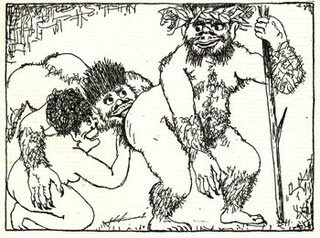
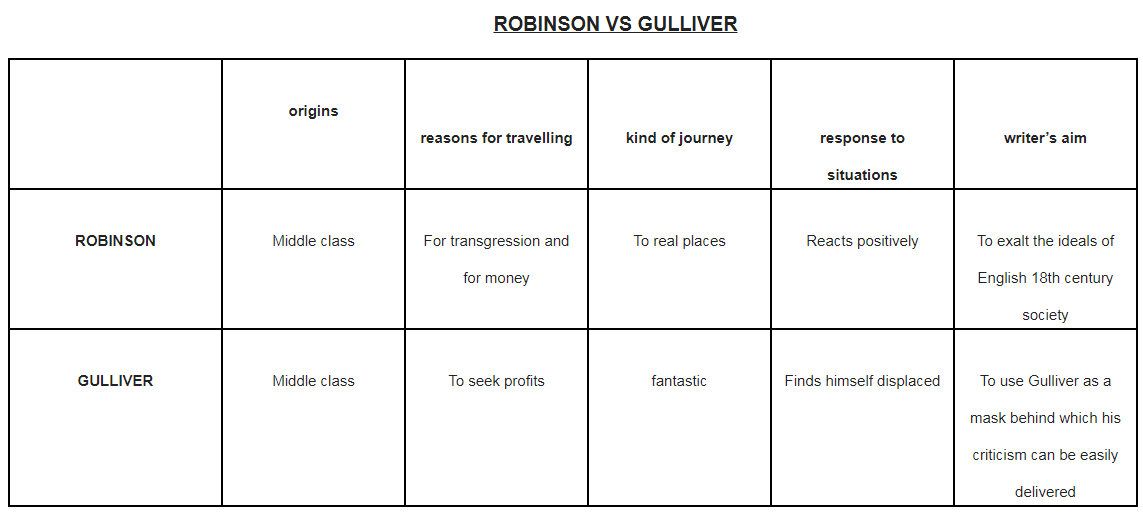
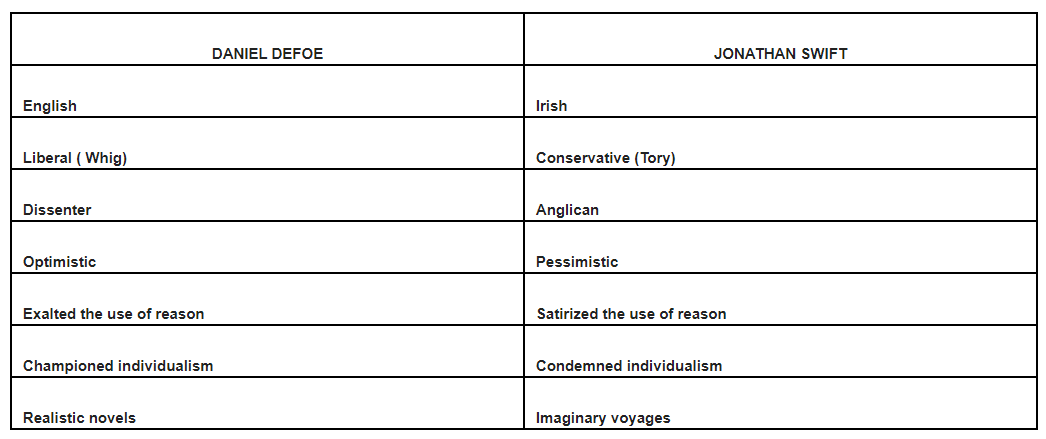

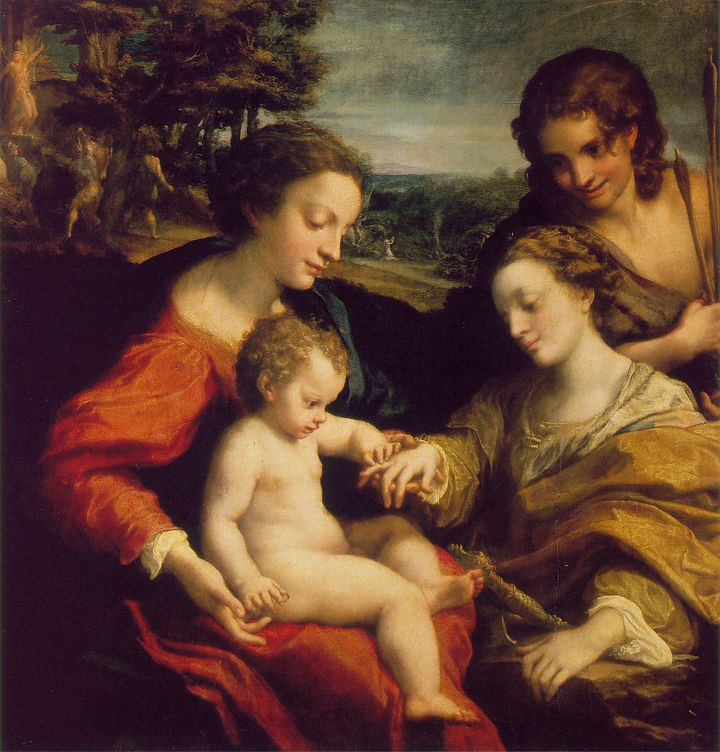
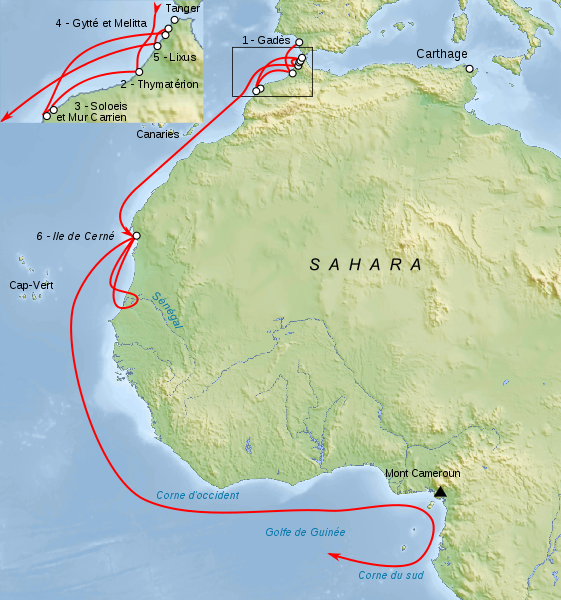
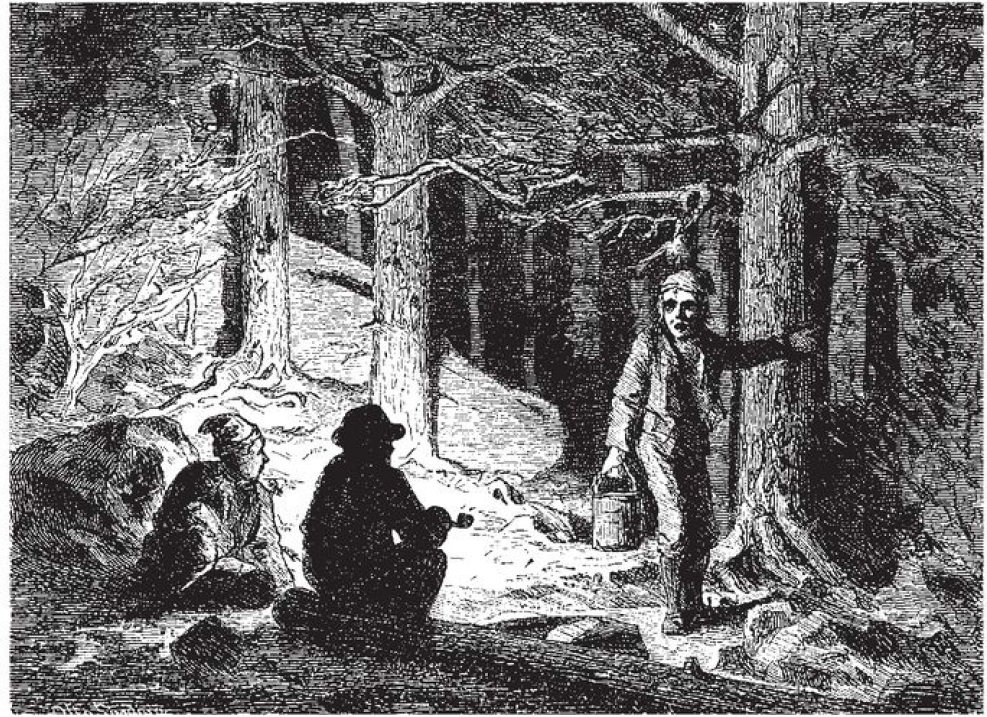

 Seclusão Anagógica